


What is the Depth of Aroma Chemicals Market Size and Growth Rate?
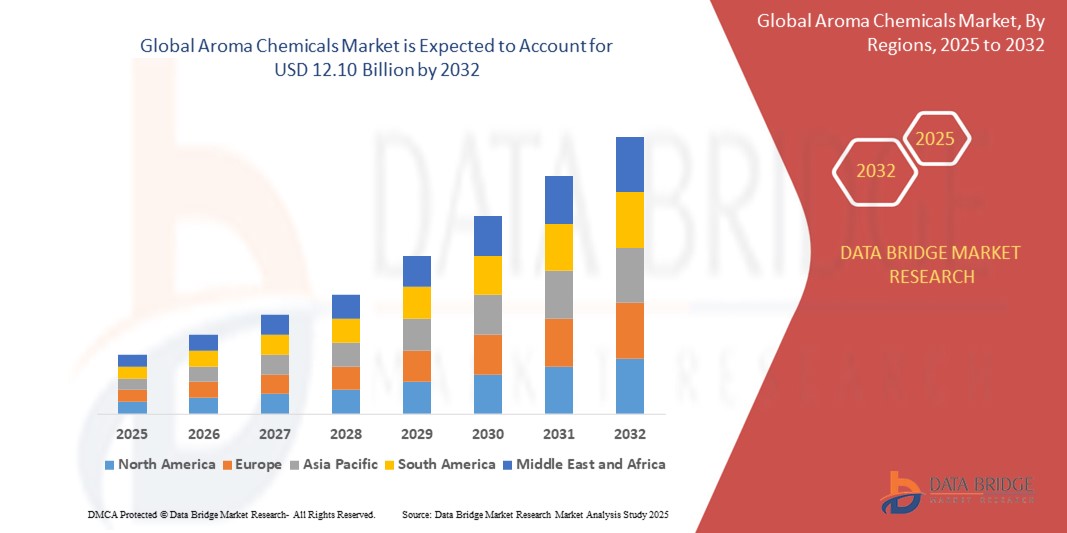
- As per Data Bridge Market Research Analysis the global aroma chemicals market size was valued at USD 6.68 billion in 2024 and is expected to reach USD 12.10 billion by 2032, at a CAGR of 7.70% during the forecast period
- The market growth is primarily driven by the increased use of HDPE wax as a processing aid and dispersing agent in plastics, rubber, and coatings industries, owing to its superior lubricity and thermal stability
- In addition, the growing demand for PVC processing and masterbatch production, especially in developing economies, is fueling the consumption of HDPE wax across industrial applications
Market Size & Forecast
Global Market Value (2024): USD 6.68 billion
Expected Market Value (2032): USD 12.10 billion
Forecast CAGR (2025–2032): 7.70%
What are the Major Takeaways of Depth of Aroma Chemicals Market?
- Aroma chemicals are increasingly vital across various end-use industries such as personal care, food & beverages, household care, and pharmaceuticals, due to their essential role in formulating fragrances and flavors with high stability, performance, and safety
- The rising demand for natural and sustainable fragrances, coupled with evolving consumer preferences for clean-label and plant-based products, is a primary driver of market growth. This trend is supported by innovation in bio-based aroma chemical production and increasing demand in emerging economies across Asia, Latin America, and the Middle East
- Asia-Pacific dominates the aroma chemicals market with the largest revenue share of 38.2% in 2025, driven by rapid urbanization, rising disposable incomes, and a strong manufacturing base in countries like India and China. These nations are witnessing expanding demand for perfumes, cosmetics, and processed foods, encouraging both local production and import of aroma compounds
- Europe holds the second-largest market share at 29.7% in 2025, and remains a key innovation hub, housing global fragrance and flavor giants such as Givaudan, Symrise, and Firmenich. The region benefits from advanced R&D capabilities, strong consumer demand for luxury products, and progressive regulations supporting natural aroma chemicals
- The personal care segment is projected to dominate the market with a market share of 42.3% in 2025, as aroma chemicals are essential in crafting unique and appealing scents in perfumes, lotions, shampoos, and deodorants. The segment is further fueled by premiumization, personalization trends, and demand for long-lasting, skin-safe fragrances
Report Scope and Aroma Chemicals Market Segmentation
|
Attributes |
Aroma Chemicals Key Market Insights |
|
Segments Covered |
|
|
Countries Covered |
North America
Europe
Asia-Pacific
Middle East and Africa
South America
|
|
Key Market Players |
|
|
Market Opportunities |
|
|
Value Added Data Infosets |
In addition to the insights on market scenarios such as market value, growth rate, segmentation, geographical coverage, and major players, the market reports curated by the Data Bridge Market Research also include import export analysis, production capacity overview, production consumption analysis, price trend analysis, climate change scenario, supply chain analysis, value chain analysis, raw material/consumables overview, vendor selection criteria, PESTLE Analysis, Porter Analysis, and regulatory framework |
What is the Key Trend in the Depth of Aroma Chemicals Market?
“Naturalization and Regulatory Compliance in a Risk-Averse Market”
- A prominent trend reshaping the global aroma chemicals market is the rapid shift toward natural, traceable, and regulation-compliant ingredients as regulatory scrutiny intensifies worldwide. With agencies such as IFRA, REACH (EU), and the U.S. FDA tightening standards on synthetic aroma chemicals, manufacturers are racing to “naturalize” their portfolios and ensure full toxicological transparency
- For instance, in December 2023, Firmenich SA launched its NaturalsTogether™ 2.0 initiative, expanding its portfolio of certified natural aroma chemicals sourced from traceable supply chains across Africa and Southeast Asia. The initiative supports compliance with IFRA standards while addressing increasing demand from eco-conscious beauty and wellness brands
- Regulatory developments—such as the EU Green Deal, upcoming microplastic and allergen restrictions, and U.S. clean beauty legislation—are pressuring manufacturers to phase out controversial synthetic ingredients like phthalates, synthetic musks, and certain aldehydes. As a result, companies are reformulating product lines using plant-based alternatives, biofermentation products, and multifunctional natural molecules
- In April 2024, BASF SE unveiled a new line of biodegradable aroma chemicals that meet the criteria for “clean-label” certification in both personal care and food applications. These innovations not only comply with global safety standards but also address growing retailer mandates for ingredient disclosure and environmental safety
- Brands are also prioritizing ingredient traceability and ethical sourcing to build trust with both regulators and consumers. In January 2024, Takasago International Corporation adopted blockchain-backed certification for its Madagascar-sourced vanillin and floral ingredients—ensuring full transparency from farm to formulation while mitigating risks of adulteration and labor exploitation
- The naturalization trend is also prompting investments in bioengineering and enzyme synthesis to reproduce nature-identical molecules from sustainable feedstocks. For example, MANE recently patented a fermentation-derived rose oxide compound that replicates the profile of Bulgarian rose oil without agricultural variability or geopolitical sourcing risks
- These shifts reflect a broader industry evolution where compliance, sustainability, and consumer trust are driving innovation. Market leaders are positioning themselves not just as suppliers of aroma chemicals, but as compliance partners and sustainability stewards, investing in toxicology data, traceable sourcing, and certified green chemistry platforms to remain competitive in a risk-averse regulatory environment
Aroma Chemicals Market Dynamics
Driver
“Rising Demand for Natural Fragrances and Functional Scents across Consumer Industries”
- The global surge in demand for natural, plant-based, and allergen-free fragrances is a key driver propelling the growth of the aroma chemicals market. As consumers become more health-conscious and environmentally aware, the demand for aroma compounds derived from botanicals, essential oils, and fermentation processes is increasing across personal care, cosmetics, food, and home care sectors
- For instance, in March 2024, DSM-Firmenich announced the commercial launch of a fermentation-derived vanillin, catering to clean-label food and fragrance applications while meeting sustainability benchmarks and traceability demands
- The booming personal care and cosmetics industry, especially in emerging markets across Asia-Pacific, Latin America, and the Middle East, is driving large-scale consumption of aroma chemicals used in deodorants, skin creams, shampoos, and perfumes—where olfactive identity plays a central role in brand value
- Additionally, the rise of wellness-based products, such as aromatherapy oils, sleep-enhancing sprays, and emotion-targeted fragrances, is fueling demand for specialized aroma chemicals like linalool, alpha-ionone, and gamma-decalactone, known for their soothing and mood-altering properties
- In the food and beverage sector, aroma chemicals such as esters, ketones, and lactones are increasingly used to replicate natural flavors in plant-based and functional foods, aligning with consumer trends around health and sustainability
- The increased penetration of smart home and automotive fragrance systems—where automated scent diffusion is embedded in devices—is expanding the use of aroma chemicals in non-traditional applications, creating new commercial pathways
- Overall, the intersection of premiumization, personalization, and wellness positioning, coupled with expanding end-use categories, continues to strengthen the global demand for high-performance aroma chemicals
Restraint/Challenge
“Complex Regulatory Landscape and Supply Vulnerability of Natural Raw Materials”
- A major challenge in the aroma chemicals market lies in the complex and evolving regulatory environment surrounding fragrance ingredients. Bodies such as IFRA (International Fragrance Association), REACH (EU), and U.S. FDA impose strict safety evaluations, usage restrictions, and disclosure mandates for both synthetic and natural aroma compounds—making compliance both resource- and cost-intensive
- For instance, the 2023 update to the IFRA Standards introduced new restrictions on several commonly used allergens and synthetic musks, forcing manufacturers to reformulate product lines and invest in compliant alternatives—often at higher costs.
- Another challenge is the supply chain vulnerability of natural feedstocks, such as sandalwood, patchouli, rose, and vanilla, which are subject to climatic disruptions, political instability, and yield variability. These issues contribute to price volatility and inconsistent supply, especially in regions like Madagascar, India, and the Middle East
- The reliance on agriculture-based sourcing also exposes aroma chemical manufacturers to challenges such as deforestation concerns, land use restrictions, and traceability requirements, particularly as brands face mounting pressure from sustainability-conscious consumers
- In the case of synthetic aroma chemicals, public perception issues and increasing restrictions on petrochemical derivatives (e.g., phthalates, nitro musks, and certain aldehydes) are prompting a shift to green chemistry. However, transitioning to bio-based synthesis or fermentation methods often requires significant capital investment and technical innovation
- Additionally, the fragmented global regulatory landscape makes it difficult for producers to develop universally acceptable formulations, especially for multinational brands operating across markets with varying ingredient approval lists and disclosure requirements
- To address these challenges, industry players must invest in compliance expertise, traceable sourcing partnerships, and scalable natural synthesis technologies—all of which are necessary to build resilience and maintain regulatory alignment while meeting evolving market demands
How is the Depth of Aroma Chemicals Market Segmented?
The market is segmented on the basis of chemical type, source, form, color, aroma node, application, product type, and distribution channel.
By Chemical Type
On the basis of chemical type, the aroma chemicals market is segmented into terpenes, benzenoids, musk chemicals, esters, ketones, and others. The Benzenoids segment dominates the largest market revenue share in 2025, driven by its widespread use in fine fragrances and personal care products due to their sweet, floral, and almond-like notes. Benzenoids offer excellent performance in scent longevity and diffusion, making them essential components in perfumes, soaps, and toiletries. The segment benefits from high versatility and compatibility across both natural and synthetic formulations
The Terpenes segment is anticipated to witness the fastest growth rate from 2025 to 2032, fueled by increasing consumer preference for natural and sustainable ingredients in wellness products. Terpenes such as limonene and pinene are gaining traction in aromatherapy, personal care, and food applications, offering therapeutic benefits, biodegradability, and strong market alignment with clean-label trends
• By Source
On the basis of source, the aroma chemicals market is segmented into natural and synthetic. The Synthetic segment held the largest market revenue share in 2025, driven by cost-efficiency, high purity, and consistency in olfactory performance. Synthetic aroma chemicals are widely used in large-scale applications such as air fresheners, detergents, and mass-market perfumes due to their scalability and stable supply
The Natural segment is expected to witness the fastest CAGR from 2025 to 2032, supported by rising demand for plant-based, organic, and allergen-free formulations. Growing awareness of sustainability, coupled with stringent regulatory guidelines around synthetic additives, is accelerating adoption of natural aroma chemicals in premium personal care, clean beauty, and food & beverage sectors
• By Form
On the basis of form, the aroma chemicals market is segmented into dry and liquid. The Liquid segment dominates the largest market share in 2025, owing to its widespread use in formulations such as perfumes, body sprays, and flavorings, where fast blending and precise dosing are essential. Liquid aroma chemicals provide high solubility and versatility across water- and oil-based systems
The Dry segment is projected to grow at the fastest pace during the forecast period, particularly in powdered flavors, solid air fresheners, and dry toiletries. Dry aroma chemicals offer benefits such as ease of handling, longer shelf life, and controlled release, making them ideal for innovative delivery systems and eco-friendly packaging formats
• By Color
On the basis of color, the market is segmented into colorless, white, yellowish, and others. The Colorless segment held the largest market revenue share in 2025, driven by high purity requirements in food-grade and pharmaceutical applications. Colorless aroma chemicals ensure minimal visual impact on final products and are preferred for high-transparency and high-clarity formulations
The Yellowish segment is anticipated to grow at the fastest rate during the forecast period, particularly in applications where natural extracts or complex ester blends are used. The color often signifies richer, more complex profiles and is associated with authenticity in natural and artisanal product lines
• By Aroma Node
On the basis of aroma node, the market is segmented into floral, woody, citrus, fruity, herbal, tropical, and others. The Floral segment dominates the largest market share in 2025, attributed to its central role in fine fragrances, body lotions, and personal care formulations. Floral notes such as rose, jasmine, and lily remain foundational across gender-neutral and luxury product lines
The Citrus segment is expected to witness the fastest CAGR from 2025 to 2032, driven by growing consumer demand for fresh, uplifting, and energizing scents in wellness and home care categories. Citrus aroma chemicals are increasingly used in aromatherapy, room sprays, and natural cleaning products due to their refreshing and antimicrobial properties
• By Application
On the basis of application, the aroma chemicals market is segmented into food, beverages, toiletries, fine fragrances/perfumes, personal care, and others. The Fine Fragrances / Perfumes segment held the largest market revenue share in 2025, supported by growing consumer spending on luxury and niche fragrances, particularly in Asia-Pacific, Europe, and the Middle East. Aroma chemicals offer signature scent profiles, fixative strength, and improved longevity, essential for high-end perfumes
The Personal Care segment is anticipated to register the fastest growth from 2025 to 2032, driven by strong demand in skincare, haircare, and hygiene products. Aroma chemicals enhance sensory appeal and brand differentiation in daily-use cosmetics and toiletries, with clean-label and hypoallergenic innovations fueling segment momentum
• By Product Type
On the basis of product type, the market includes a wide range of compounds such as vainilla vainas madagascar, tixosil 38 x, vainillin, carvacrol, propilenglicol usp, dipropilenglicol, dihidromircenol, cis-3-hexenol, aldehide c-18, linalool, lysmeral, galaxolide, iso e super, geraniol, citronelol, hexylcinnamic aldehyde, phenylethyl alcohol, eugenol, raspberry ketone, timbersilk, diphenyl oxide, cetalox, hedione, alpha ionone, yara yara, ionone beta, ethyl vainilline, canphor, citral, terpinoleones, jasmacyclene, verdox, benzyl acetate, benzyl alcohol, heliotropine, gamma methyl ionone, terpineols, bacdanol, thymol, coumarine, amyl salicylate, methyl salicilate, verdyl propionate, methyl antranilate, methyl cyclo pentenolone, ethylciclopentenolone, butyric acid, aldehydes c-12, aldehydes c-11, rosalin, rose oxyde 90:10, maltol, ethyl maltol, triplal, ethyl caproate, menthol, spearmint 60% and 80%, nerol, exaltolide, strialyl acetate, tetrahydrolinalool, tetrahydromyrcenol, allyl amyl glycolate, tonalid, violiff, tibutyirine, javanol and others
Among these, Linalool, Iso E Super, and Galaxolide collectively capture the highest revenue share in 2025 due to their broad utility in fragrance layering, excellent fixative properties, and favorable safety profiles. Compounds such as Ethyl Vainilline and Raspberry Ketone are gaining fast adoption in food and personal care applications due to their sweet, fruity notes and natural association
• By Distribution Channel
On the basis of distribution channel, the aroma chemicals market is segmented into direct and indirect. The Direct segment holds the largest market share in 2025, as manufacturers increasingly engage with end-users such as FMCG companies, cosmetics brands, and food processors to ensure quality control, customization, and strategic sourcing
The Indirect segment, which includes distributors and third-party suppliers, is expected to witness the fastest growth from 2025 to 2032, particularly in emerging markets and for niche or artisanal product categories. Indirect distribution channels enable reach across small-scale perfumers, regional flavor houses, and boutique cosmetic firms
Which Region Holds the Largest Share of the Depth of Aroma Chemicals Market?
- Asia-Pacific dominates the global Aroma Chemicals market, accounting for the largest revenue share of 38.2% in 2025, driven by rapid growth in the food & beverage, personal care, and fine fragrance industries in countries such as China, India, Japan, and South Korea. The region benefits from a robust consumer base, increasing disposable incomes, and expanding manufacturing hubs specializing in natural and synthetic aroma chemicals
- In addition, substantial investments in R&D and raw material sourcing, along with rising exports of aroma chemical ingredients, are fueling regional market expansion. Leading companies like Takasago International Corporation, Symrise, and Privi Speciality Chemicals are scaling up production and innovating new formulations to cater to the diverse preferences and regulatory requirements of this dynamic market
- The region also benefits from government initiatives encouraging sustainable production, support for bio-based aroma chemicals, and the development of eco-friendly fragrances aligned with growing environmental consciousness. Markets in Southeast Asia and the Middle East are witnessing steady growth, supported by rising demand in food flavoring, toiletries, and personal care segments
Japan Aroma Chemicals Market Insight
The Japan Aroma Chemicals market is driven by the country’s advanced fragrance and flavor manufacturing sector, high standards for product quality, and demand for innovative aroma chemicals in fine fragrances, personal care, and food & beverages. Japanese companies focus on developing unique synthetic and natural aroma compounds, including terpenes and benzenoids, to serve niche applications such as luxury perfumes and high-end toiletries. Additionally, Japan’s commitment to sustainability and green chemistry is increasing the demand for bio-based aroma chemicals and environmentally friendly formulations
China Aroma Chemicals Market Insight
China dominates the Asia-Pacific Aroma Chemicals market, supported by its massive flavor and fragrance manufacturing base, strong raw material availability, and growing consumer demand across food, beverages, and personal care sectors. The country’s expanding exports of synthetic and natural aroma chemicals, combined with investments in R&D and automated production technologies, are driving market growth. Key domestic players are enhancing capacities and adopting eco-friendly processes to comply with increasingly stringent environmental regulations while catering to global supply chains
North America Aroma Chemicals Market Insight
The North America Aroma Chemicals market is witnessing robust growth, fueled by rising demand in personal care, fine fragrances, and food & beverage industries. The region benefits from a mature chemical manufacturing infrastructure and strong innovation capabilities, especially in synthetic musk chemicals, esters, and ketones. Leading companies such as Givaudan and Firmenich are investing heavily in sustainable raw materials and advanced aroma formulations, meeting consumer preferences for natural, clean-label, and low-impact fragrance products
U.S. Aroma Chemicals Market Insight
The U.S. Aroma Chemicals market holds the largest share in North America, supported by well-established flavor and fragrance industries, stringent regulatory frameworks, and high consumer awareness regarding product safety and sustainability. The growing trend towards natural and organic ingredients is pushing the adoption of terpenes, esters, and musk chemicals sourced from bio-based origins. Continuous innovation in aroma nodes such as floral, woody, and citrus profiles is enhancing product differentiation and market expansion in personal care, fine fragrances, and household products
Europe Aroma Chemicals Market Insight
The Europe Aroma Chemicals market is projected to grow steadily, driven by strong regulatory focus on product safety, sustainability, and eco-friendly formulations. Countries like France, Germany, and Italy lead the market with their historic expertise in fine fragrances and natural aroma chemical extraction. Increasing consumer demand for green fragrances and clean-label food flavors is fostering the development of sustainable aroma chemicals, including biodegradable esters and natural musks. Strategic collaborations between aroma chemical manufacturers and cosmetic brands are accelerating innovation and market penetration
U.K. Aroma Chemicals Market Insight
The U.K. Aroma Chemicals market is gaining momentum due to rising demand from the fine fragrances, toiletries, and food flavoring industries. Manufacturers focus on high-purity aroma chemicals with floral, fruity, and herbal aroma nodes to cater to diverse consumer preferences. Government policies supporting green chemistry and sustainability, along with industry-led efforts to reduce VOC emissions, are encouraging the adoption of natural and synthetic aroma chemicals that align with environmental compliance and safety standards
Germany Aroma Chemicals Market Insight
The Germany Aroma Chemicals market is expanding, driven by the country’s strong presence in the personal care, automotive, and food sectors, where aroma chemicals play a crucial role in product formulation. German companies emphasize the production of specialty aroma chemicals such as ketones and benzenoids with enhanced functional properties. Regulatory compliance with EU standards on chemical safety and environmental impact is promoting the shift toward bio-based and sustainable aroma chemicals. Investments in innovation and circular economy practices further support the region’s market growth
Which are the Top Companies in Depth of Aroma Chemicals Market?
The aroma chemicals industry is primarily led by well-established companies, including:
- Takasago International Corporation (Japan)
- BASF SE (Germany)
- DSM (Netherlands)
- Firmenich SA (Switzerland)
- Symrise (Germany)
- Oriental Aromatics (India)
- Bordas S.A. (Spain)
- Privi Speciality Chemicals Limited (India)
- Bell Flavors & Fragrances (U.S.)
- Hindustan Mint & Agro Products Pvt. Ltd. (India)
- Vigon International, Inc (U.S.)
- Cedarome (Canada)
- INOUE PERFUMERY MFG. CO., LTD. (Japan)
- MANE (France)
- De Monchy Aromatics (U.K.)
- Givaudan (Switzerland)
- Kao Corporation (Japan)
What are Latest Developments in Depth of Aroma Chemicals Market?
- In October 2024, Prigiv, a joint venture between Givaudan and Privi, commenced operations at its Mahad Fragrance Ingredients plant. Privi holds a 51% stake, while Givaudan owns the remaining 49%. The facility is designed to produce a diverse range of fragrance ingredients, with plans for gradual expansion over the next two to three years. The plant focuses on advanced chemical synthesis processes, reinforcing Givaudan and Privi’s commitment to innovation in the fragrance industry
- In August 2024, Symrise reported a 6.3% increase in half-year sales, reaching €2.57 billion, aligning with analysts' expectations. The company reaffirmed its annual organic sales growth target of 5%-7% and an EBITDA margin of approximately 20%. CEO Jean-Yves Parisot expressed optimism about Symrise’s new business model, which is expected to drive further improvements in the second half of the year. The Scent & Care division recorded the largest sales increase, rising 12.1% to €993 million, fueled by organic fine and consumer fragrances growth
- In March 2023, BASF announced its investment in a new citral plant at its Verbund site in Zhanjiang, China, set to become operational in 2026. This expansion aims to meet growing global demand for flavor and fragrance products while reinforcing BASF’s commitment to sustainability. The investment will increase BASF’s annual citral production capacity to 118,000 metric tons and support downstream aroma ingredient production. The Zhanjiang site is designed to be powered entirely by renewable electricity by 2025, aligning with BASF’s carbon footprint reduction goals
- In February 2023, Givaudan and Amyris expanded their long-term partnership, strengthening their collaboration in biotechnology-driven cosmetic ingredients. Under this agreement, Amyris continues to produce bio-fermented ingredients, while Givaudan takes the lead in commercializing sustainable beauty solutions. This partnership enhances Givaudan’s Active Beauty portfolio, leveraging Amyris’ innovation capabilities to accelerate the transition to clean, sustainable chemistry
- In November 2022, Mohawk Industries announced its acquisition of Elizabeth Revestimentos, a Brazilian-based ceramic tile manufacturer. This strategic move strengthens Mohawk’s presence in the South American market, enhancing production capabilities and distribution networks. Elizabeth, founded in 1984, operates four manufacturing units across Brazil, optimizing regional distribution. The acquisition, finalized in February 2023, positions Mohawk as the largest ceramic tile producer by revenue in Brazil

- Interactive Data Analysis Dashboard
- Company Analysis Dashboard for high growth potential opportunities
- Research Analyst Access for customization & queries
- Competitor Analysis with Interactive dashboard
- Latest News, Updates & Trend analysis
- Harness the Power of Benchmark Analysis for Comprehensive Competitor Tracking
Global Aroma Chemicals Market, Supply Chain Analysis and Ecosystem Framework
To support market growth and help clients navigate the impact of geopolitical shifts, DBMR has integrated in-depth supply chain analysis into its Global Aroma Chemicals Market research reports. This addition empowers clients to respond effectively to global changes affecting their industries. The supply chain analysis section includes detailed insights such as Global Aroma Chemicals Market consumption and production by country, price trend analysis, the impact of tariffs and geopolitical developments, and import and export trends by country and HSN code. It also highlights major suppliers with data on production capacity and company profiles, as well as key importers and exporters. In addition to research, DBMR offers specialized supply chain consulting services backed by over a decade of experience, providing solutions like supplier discovery, supplier risk assessment, price trend analysis, impact evaluation of inflation and trade route changes, and comprehensive market trend analysis.
Data collection and base year analysis are done using data collection modules with large sample sizes. The stage includes obtaining market information or related data through various sources and strategies. It includes examining and planning all the data acquired from the past in advance. It likewise envelops the examination of information inconsistencies seen across different information sources. The market data is analysed and estimated using market statistical and coherent models. Also, market share analysis and key trend analysis are the major success factors in the market report. To know more, please request an analyst call or drop down your inquiry.
The key research methodology used by DBMR research team is data triangulation which involves data mining, analysis of the impact of data variables on the market and primary (industry expert) validation. Data models include Vendor Positioning Grid, Market Time Line Analysis, Market Overview and Guide, Company Positioning Grid, Patent Analysis, Pricing Analysis, Company Market Share Analysis, Standards of Measurement, Global versus Regional and Vendor Share Analysis. To know more about the research methodology, drop in an inquiry to speak to our industry experts.
Data Bridge Market Research is a leader in advanced formative research. We take pride in servicing our existing and new customers with data and analysis that match and suits their goal. The report can be customized to include price trend analysis of target brands understanding the market for additional countries (ask for the list of countries), clinical trial results data, literature review, refurbished market and product base analysis. Market analysis of target competitors can be analyzed from technology-based analysis to market portfolio strategies. We can add as many competitors that you require data about in the format and data style you are looking for. Our team of analysts can also provide you data in crude raw excel files pivot tables (Fact book) or can assist you in creating presentations from the data sets available in the report.













