


Arthralgia Drugs Market Overview
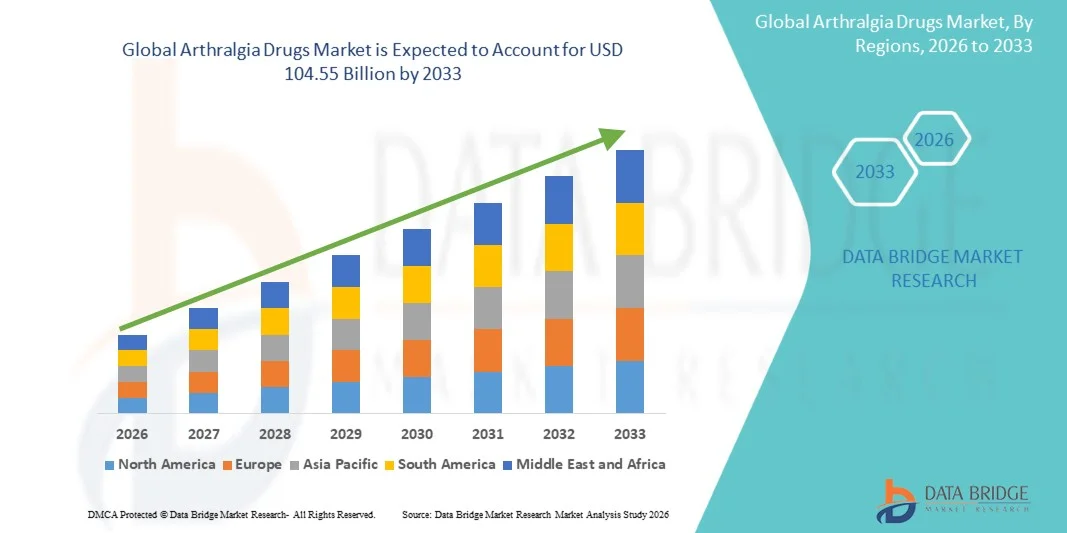
As per Data Bridge Market Research analysis the Arthralgia Drugs Market was valued at USD 75.81 billion in 2025 and is projected to reach USD 104.55 billion by 2033, growing at a CAGR of 4.10% from 2026 to 2033. The market is experiencing steady growth driven by the rising prevalence of joint pain associated with aging populations, increasing incidence of musculoskeletal and autoimmune disorders, and ongoing advancements in pain management therapeutics.
The growing burden of conditions such as osteoarthritis, rheumatoid arthritis, lupus, and post-viral joint pain, combined with increasing awareness of early diagnosis and treatment, is encouraging healthcare providers and patients to adopt effective pharmacological therapies. Nonsteroidal anti-inflammatory drugs (NSAIDs), corticosteroids, disease-modifying antirheumatic drugs (DMARDs), and biologic therapies continue to play a critical role in symptom management and disease control. In addition, expanding research into targeted therapies, improved drug formulations, and broader access to healthcare services are supporting market growth across developed and emerging regions.
Key Market Trends & Insights
- North America dominated the Arthralgia Drugs Market with the largest revenue share of 38.42% in 2025, supported by a high prevalence of arthritis-related disorders, advanced healthcare infrastructure, and strong adoption of innovative pain management therapies.
- The Non-Steroidal Anti-Inflammatory Drugs (NSAIDs) segment led the market with a 39.87% share in 2025, driven by their widespread use as first-line therapy for managing joint pain and inflammation associated with osteoarthritis, rheumatoid arthritis, and other musculoskeletal disorders
- Asia-Pacific is expected to be the fastest-growing region at a CAGR of 7.4% from 2026 to 2033, fueled by a rapidly aging population, improving healthcare access, and increasing diagnosis rates of musculoskeletal disorders across China, India, and Japan.
- Corticosteroids are the fastest-growing drug type, projected to register a CAGR of 7.1%, reflecting the surge in use in patients with severe inflammatory joint conditions requiring rapid symptom control.
- The Tablets segment dominated the dosage form category with a 48.64% revenue share in 2025, led by their convenience, ease of administration, and widespread patient preference for long-term pain management.
- Oral accounted for 52.18% of the market, preferred by the extensive use of oral NSAIDs, corticosteroids, and adjunctive pain management medications
- The Parenteral segment is the fastest-growing route of administration category, with a CAGR of 7.4%, driven by increasing utilization of biologics and advanced injectable therapies.
Market Size & Forecast
- Global Market Value (2025): USD 75.81 Billion
- Expected Market Value (2033): USD 104.55 Billion
- Forecast CAGR (2026–2033): 4.10%
- Leading Region in 2025: North America
- Fastest Growing Region: Asia Pacific
Report Scope and Arthralgia Drugs Market Segmentation
|
Attributes |
Arthralgia Drugs Key Market Insights |
|
Segments Covered |
|
|
Countries Covered |
North America · U.S. · Canada · Mexico Europe · Germany · France · U.K. · Netherlands · Switzerland · Belgium · Russia · Italy · Spain · Turkey · Rest of Europe Asia-Pacific · China · Japan · India · South Korea · Singapore · Malaysia · Australia · Thailand · Indonesia · Philippines · Rest of Asia-Pacific Middle East and Africa · Saudi Arabia · U.A.E. · South Africa · Egypt · Israel · Rest of Middle East and Africa South America · Brazil · Argentina · Rest of South America |
|
Key Market Players |
· AbbVie Inc. (U.S.) · Pfizer Inc. (U.S.) · Eli Lilly and Company (U.S.) · Johnson & Johnson Services, Inc. (U.S.) · Amgen Inc. (U.S.) · Bristol Myers Squibb (U.S.) · Merck & Co., Inc. (U.S.) · Regeneron Pharmaceuticals, Inc. (U.S.) · Biogen Inc. (U.S.) · Gilead Sciences, Inc. (U.S.) · F. Hoffmann-La Roche Ltd (Switzerland) · Novartis AG (Switzerland) · Sandoz AG (Switzerland) · UCB SA (Belgium) · Sanofi (France) · Boehringer Ingelheim International GmbH (Germany) · Bayer AG (Germany) · AstraZeneca (U.K.) · Takeda Pharmaceutical Company Limited (Japan) · Lupin Limited (India) |
|
Market Opportunities |
· Expanding development of targeted biologics and next-generation anti-inflammatory therapies · Growing demand for effective treatments among the rapidly increasing elderly population · Rising adoption of personalized medicine and biomarker-based treatment |
|
Value Added Data Infosets |
In addition to the insights on market scenarios such as market value, growth rate, segmentation, geographical coverage, and major players, the market reports curated by the Data Bridge Market Research also include in-depth expert analysis, patient epidemiology, pipeline analysis, pricing analysis, and regulatory framework. |
Arthralgia Drugs Market Trends
Trend: Growing Adoption of Targeted Biologic Therapies
Healthcare providers are increasingly adopting targeted biologic therapies to improve symptom control, reduce inflammation, and slow disease progression in patients suffering from chronic arthralgia associated with autoimmune and degenerative disorders. The integration of precision medicine approaches enables more individualized treatment selection and improved therapeutic outcomes. Hospitals and specialty clinics are similarly utilizing biologics to manage complex cases through evidence-based treatment pathways, while ongoing advances in drug development are creating innovative therapies that closely address underlying inflammatory mechanisms.
For instance, in March 2024, Johnson & Johnson continued expanding clinical research and commercialization efforts for immunology therapies targeting inflammatory joint conditions, highlighting the growing role of biologic treatments in arthralgia management.
Arthralgia Drugs Market Dynamics
Key Market Driver: Rising Prevalence of Musculoskeletal and Autoimmune Disorders
The increasing prevalence of musculoskeletal disorders and autoimmune diseases has created substantial demand for effective arthralgia drugs that can manage pain, reduce inflammation, and improve patient quality of life across diverse care settings. Pharmaceutical manufacturers, healthcare providers, and research organizations are expanding treatment options as a core component of disease management strategies, improving outcomes, increasing treatment accessibility, and supporting long-term patient care.
For instance, in January 2024, AbbVie reported continued growth in demand for immunology treatments used in inflammatory conditions associated with joint pain, reflecting the broader market driver of increasing disease prevalence.
Key Restraint/Challenge: Safety Concerns and Long-Term Treatment Side Effects
A significant restraint in the Arthralgia Drugs Market is the risk of adverse effects associated with long-term drug therapy. Common treatments may cause gastrointestinal complications, cardiovascular risks, immunosuppression, and other safety concerns, requiring careful monitoring and ongoing clinical evaluation. The overall treatment burden extends to regular physician consultations, laboratory assessments, and therapy adjustments, making long-term management challenging for certain patient populations and healthcare systems.
For instance, in October 2024, regulatory authorities in multiple markets continued reviewing safety data for long-term anti-inflammatory and immunomodulatory therapies, illustrating the ongoing challenge of balancing treatment efficacy with patient safety requirements.
Key Market Opportunity: Expansion of Personalized Medicine and Novel Therapeutics
The integration of personalized medicine in arthralgia treatment presents a significant market opportunity. Biomarker-driven approaches can support targeted therapy selection, provide improved treatment responses, and enable more effective management of complex inflammatory joint disorders. The development of next-generation biologics, biosimilars, and precision therapeutics is further expanding access to advanced care, opening growth opportunities across both developed and emerging healthcare markets.
For instance, in February 2024, Pfizer continued advancing research programs focused on targeted inflammatory disease treatments, demonstrating the growing opportunity for precision-based approaches in arthralgia drug development.
Arthralgia Drugs Market Scope
The arthralgia drugs market is segmented on the basis of drug type, dosage form, route of administration, end-users, and distribution channel.
- By Drug Type
On the basis of drug type, the Arthralgia Drugs Market is segmented into non-steroidal anti-inflammatory (NSAID), corticosteroids, antidepressants, narcotics, anticonvulsants, antibiotics, and others. The Non-Steroidal Anti-Inflammatory Drugs (NSAIDs) segment dominated the market with an estimated 39.87% share in 2025, owing to their widespread use as first-line therapy for managing joint pain and inflammation associated with osteoarthritis, rheumatoid arthritis, and other musculoskeletal disorders. These drugs are highly preferred due to their proven efficacy, rapid symptom relief, and broad availability in both prescription and over-the-counter forms. Their affordability compared to biologic therapies has significantly contributed to high patient adoption globally. NSAIDs are routinely prescribed across hospitals, specialty clinics, and primary care settings. Continuous development of improved formulations with reduced gastrointestinal side effects is further supporting market demand. Their established clinical acceptance and accessibility continue to make them the leading segment worldwide.
The Corticosteroids segment is projected to register the fastest growth at a CAGR of 7.1% from 2026 to 2033, driven by increasing use in patients with severe inflammatory joint conditions requiring rapid symptom control. These drugs provide powerful anti-inflammatory effects and are commonly utilized when conventional pain management therapies fail to achieve adequate outcomes. Growing prevalence of autoimmune disorders such as rheumatoid arthritis and lupus is contributing to rising demand. Advancements in targeted injectable corticosteroid formulations are improving treatment precision and effectiveness. Increased physician focus on reducing disease flare-ups and preserving joint function is further accelerating adoption. Expanding healthcare access in emerging economies is also supporting segment growth.
- By Dosage Form
On the basis of dosage form, the Arthralgia Drugs Market is segmented into injection, tablets, cream, and others. The Tablets segment dominated the market with an estimated 48.64% share in 2025 due to their convenience, ease of administration, and widespread patient preference for long-term pain management. Oral tablets are extensively prescribed for chronic arthralgia treatment because they offer flexible dosing and high accessibility through retail and hospital pharmacies. They are available across multiple drug classes including NSAIDs, corticosteroids, and adjunctive therapies. Their cost-effectiveness makes them suitable for large patient populations globally. Strong patient compliance and established manufacturing infrastructure further support segment dominance. Continuous introduction of extended-release formulations is enhancing therapeutic outcomes and market penetration.
The Injection segment is anticipated to witness the fastest growth at a CAGR of 7.3% from 2026 to 2033, driven by increasing adoption of biologics, monoclonal antibodies, and corticosteroid injections for advanced disease management. Injectable therapies offer superior bioavailability and targeted treatment benefits compared to conventional oral medications. Growing demand for rapid symptom relief in severe arthralgia cases is supporting utilization. Healthcare providers increasingly prefer injectable therapies for patients with chronic inflammatory disorders requiring specialized care. Advancements in self-administration devices and prefilled syringes are improving patient convenience. Rising investment in biologic drug development is further accelerating segment expansion.
- By Route of Administration
On the basis of route of administration, the Arthralgia Drugs Market is segmented into oral, parenteral, topical, and others. The Oral segment accounted for the largest market share of 52.18% in 2025, driven by extensive use of oral NSAIDs, corticosteroids, and adjunctive pain management medications. Oral administration remains the preferred route because it offers convenience, cost-effectiveness, and ease of use for both acute and chronic conditions. Patients can self-administer treatments without requiring specialized healthcare supervision. The route also supports long-term disease management across diverse healthcare settings. Broad availability of oral formulations across developed and emerging markets further strengthens segment leadership. Ongoing innovation in controlled-release and combination therapies continues to enhance treatment effectiveness.
The Parenteral segment is expected to grow at the fastest rate with a CAGR of 7.4% from 2026 to 2033, supported by increasing utilization of biologics and advanced injectable therapies. Parenteral administration enables rapid therapeutic action and improved drug absorption, making it highly effective for moderate-to-severe arthralgia cases. The growing prevalence of autoimmune and inflammatory disorders is driving demand for injectable treatment options. Healthcare providers are increasingly adopting biologics that require intravenous or subcutaneous administration. Advances in drug delivery technologies are improving patient experience and treatment adherence. Expanding biologic approvals across global markets are further contributing to segment growth.
- By End-Users
On the basis of end-users, the Arthralgia Drugs Market is segmented into hospitals, specialty clinics, homecare, and others. The Hospitals segment dominated the market with an estimated 44.72% share in 2025 owing to the availability of multidisciplinary treatment facilities, specialist consultations, and advanced therapeutic options. Hospitals manage a significant proportion of patients suffering from severe arthralgia associated with chronic inflammatory and autoimmune disorders. These settings provide access to diagnostic services, biologic therapies, and comprehensive disease management programs. High patient footfall and strong reimbursement support contribute to segment leadership. Hospitals also serve as key centers for injectable drug administration and monitoring. Their ability to manage complex cases continues to reinforce their dominant market position.
The Homecare segment is projected to register the fastest growth at a CAGR of 7.0% from 2026 to 2033, driven by increasing preference for patient-centered treatment and long-term disease management outside clinical settings. Advancements in self-administered therapies and remote patient monitoring technologies are facilitating home-based care. Patients increasingly seek convenient treatment options that reduce hospital visits and associated healthcare costs. Growing elderly populations and rising prevalence of chronic joint disorders are further supporting demand. Expansion of telehealth services is improving access to medical guidance and follow-up care. The shift toward decentralized healthcare delivery is expected to significantly accelerate segment growth.
- By Distribution Channel
On the basis of distribution channel, the Arthralgia Drugs Market is segmented into hospital pharmacy, retail pharmacy, online pharmacy, and others. The Hospital Pharmacy segment dominated the market with an estimated 56.13% share in 2025, driven by the high volume of prescription medications dispensed through hospitals and specialty care facilities. Hospital pharmacies play a critical role in supplying biologics, injectable therapies, and specialized pain management drugs. They ensure proper storage, handling, and administration of advanced therapeutics requiring clinical oversight. Strong physician prescribing networks and integrated patient care pathways support their market leadership. Hospitals also serve as major procurement centers for chronic disease treatments. Their central role in managing complex arthralgia cases continues to drive segment dominance.
The Online Pharmacy segment is expected to witness the fastest growth at a CAGR of 7.2% from 2026 to 2033, fueled by increasing digital healthcare adoption and growing consumer preference for convenient medicine purchasing platforms. Online pharmacies provide easy access to prescription refills, home delivery services, and competitive pricing structures. Rising internet penetration and smartphone usage are expanding customer reach globally. These platforms improve medication accessibility, particularly for patients with mobility limitations or chronic conditions requiring ongoing treatment. Integration of digital prescription services is enhancing purchasing efficiency. Growing acceptance of e-commerce in healthcare is expected to substantially accelerate segment growth.
Arthralgia Drugs Market Regional Analysis
North America dominated the Arthralgia Drugs Market with the largest revenue share of 38.42% in 2025, supported by a high prevalence of arthritis-related disorders, advanced healthcare infrastructure, and strong adoption of innovative pain management therapies. The region also benefits from favorable reimbursement frameworks, substantial pharmaceutical R&D investments, and the presence of leading biopharmaceutical companies. Growing utilization of biologics, targeted therapies, and personalized treatment approaches across hospitals and specialty clinics continues to drive market expansion. Increasing focus on early diagnosis, long-term disease management, and improved patient outcomes continues to strengthen North America’s leadership position in the global market.
U.S. Arthralgia Drugs Market Insight
The U.S. arthralgia drugs market is witnessing strong growth due to rising prevalence of arthritis, autoimmune disorders, and chronic musculoskeletal conditions. The country’s advanced healthcare infrastructure, robust pharmaceutical industry, and increasing adoption of biologics, targeted therapies, and personalized treatment approaches are driving demand across hospitals, specialty clinics, and homecare settings. In addition, growing emphasis on early diagnosis, effective pain management, and long-term disease control is accelerating the adoption of innovative arthralgia treatment options across the healthcare system.
Europe Arthralgia Drugs Market Insight
The Europe arthralgia drugs market remains a major contributor to global revenue, driven by strong healthcare systems, increasing disease awareness, and high demand for advanced pain management therapies. The widespread use of biologics, anti-inflammatory medications, and disease-modifying treatments in rheumatology and orthopedic care is supporting market expansion across the region. Increasing investments in pharmaceutical innovation, coupled with favorable reimbursement policies and a growing elderly population, continue to enhance the adoption of arthralgia drugs throughout Europe.
U.K. Arthralgia Drugs Market Insight
The U.K. arthralgia drugs market is experiencing steady growth, supported by rising prevalence of chronic joint disorders, increasing healthcare expenditure, and growing access to specialized treatment services. Increasing adoption of biologics, corticosteroids, and advanced pain management therapies is contributing to market growth. Furthermore, integration of precision medicine approaches and expanding clinical research activities are improving treatment outcomes and therapeutic efficiency, positioning the U.K. as a key innovation hub in the arthralgia drugs industry.
Germany Arthralgia Drugs Market Insight
The Germany arthralgia drugs market is expanding steadily due to the country’s advanced healthcare infrastructure, strong pharmaceutical sector, and increasing prevalence of age-related joint disorders. Healthcare providers, research institutions, and pharmaceutical companies are increasingly utilizing innovative therapies for pain management, inflammation control, and long-term disease treatment. Continuous advancements in biologic drug development, personalized medicine, and treatment accessibility, along with strong government support for healthcare innovation, are further driving market growth in Germany.
Asia-Pacific Arthralgia Drugs Market Insight
The Asia-Pacific arthralgia drugs market is expected to witness rapid growth, driven by increasing aging populations, improving healthcare access, and rising prevalence of arthritis and musculoskeletal disorders across countries such as China, India, and Japan. Growing awareness regarding early diagnosis, rising adoption of advanced treatment therapies, and increasing demand for effective and affordable pain management solutions are supporting regional market expansion. In addition, the growing presence of pharmaceutical manufacturing capabilities and expanding healthcare investments are accelerating arthralgia drug adoption across both urban and rural populations.
Japan Arthralgia Drugs Market Insight
The Japan arthralgia drugs market is witnessing consistent growth due to rising prevalence of age-related joint conditions, increasing healthcare investments, and growing demand for advanced therapeutic solutions. Pharmaceutical companies, healthcare providers, and research organizations are increasingly adopting innovative drugs for pain relief, inflammation management, and long-term disease control. Moreover, increasing integration of precision medicine approaches and the country’s focus on healthy aging and quality patient care are further contributing to market growth.
China Arthralgia Drugs Market Insight
The China arthralgia drugs market is growing rapidly, driven by increasing aging demographics, expanding healthcare infrastructure, and rising government focus on chronic disease management and patient care. Growing adoption of biologics, anti-inflammatory therapies, and advanced treatment options across hospitals and specialty clinics is significantly boosting market demand. In addition, rising investments in pharmaceutical research, increasing awareness regarding joint health, and rapid healthcare modernization are positioning China as one of the fastest-growing markets for arthralgia drugs globally.
Arthralgia Drugs Market Share
The arthralgia drugs industry is primarily led by well-established companies, including:
- AbbVie Inc. (U.S.)
- Pfizer Inc. (U.S.)
- Eli Lilly and Company (U.S.)
- Johnson & Johnson Services, Inc. (U.S.)
- Amgen Inc. (U.S.)
- Bristol Myers Squibb (U.S.)
- Merck & Co., Inc. (U.S.)
- Regeneron Pharmaceuticals, Inc. (U.S.)
- Biogen Inc. (U.S.)
- Gilead Sciences, Inc. (U.S.)
- Hoffmann-La Roche Ltd (Switzerland)
- Novartis AG (Switzerland)
- Sandoz AG (Switzerland)
- UCB SA (Belgium)
- Sanofi (France)
- Boehringer Ingelheim International GmbH (Germany)
- Bayer AG (Germany)
- AstraZeneca (U.K.)
- Takeda Pharmaceutical Company Limited (Japan)
- Lupin Limited (India)
Latest Developments in Arthralgia Drugs Market
- In September 2025, AbbVie announced that its blockbuster immunology drug Rinvoq (upadacitinib) secured extended U.S. market exclusivity until 2037 following patent-related settlements. Rinvoq is widely used in rheumatoid arthritis and other inflammatory disorders associated with chronic joint pain. The extension strengthens AbbVie’s position in the arthralgia and autoimmune disease treatment market while supporting continued investment in immunology innovation
- In September 2023, Biogen announced that the U.S. FDA approved TOFIDENCE™ (tocilizumab-bavi), the first biosimilar referencing ACTEMRA®. The product is approved for moderately to severely active rheumatoid arthritis and other inflammatory conditions. The approval marked an important step in expanding access to biologic therapies for patients suffering from chronic inflammatory joint diseases while increasing competition in the biosimilars market
- In July 2023, multiple Humira (adalimumab) biosimilars entered the U.S. market, including products from major biosimilar manufacturers. Humira has long been one of the world's leading therapies for rheumatoid arthritis and related inflammatory diseases. The launch of lower-cost alternatives represented a major development for arthritis treatment accessibility, potentially reducing healthcare costs and broadening patient access to biologic therapies
- In May 2023, Celltrion USA received U.S. FDA approval for YUFLYMA® (adalimumab-aaty), a high-concentration, citrate-free biosimilar to Humira. The therapy was approved for multiple autoimmune indications, including rheumatoid arthritis, juvenile idiopathic arthritis, psoriatic arthritis, and ankylosing spondylitis. The approval strengthened the availability of advanced biologic treatment options for patients experiencing chronic inflammatory joint pain
- In February 2023, Regeneron Pharmaceuticals and Sanofi announced FDA approval of Kevzara® (sarilumab) for adults with polymyalgia rheumatica who had an inadequate response to corticosteroids or could not tolerate steroid tapering. The approval made Kevzara the first and only biologic specifically approved for this inflammatory rheumatic condition, expanding biologic treatment options for patients suffering from persistent musculoskeletal pain and stiffness

- Interactive Data Analysis Dashboard
- Company Analysis Dashboard for high growth potential opportunities
- Research Analyst Access for customization & queries
- Competitor Analysis with Interactive dashboard
- Latest News, Updates & Trend analysis
- Harness the Power of Benchmark Analysis for Comprehensive Competitor Tracking
Data collection and base year analysis are done using data collection modules with large sample sizes. The stage includes obtaining market information or related data through various sources and strategies. It includes examining and planning all the data acquired from the past in advance. It likewise envelops the examination of information inconsistencies seen across different information sources. The market data is analysed and estimated using market statistical and coherent models. Also, market share analysis and key trend analysis are the major success factors in the market report. To know more, please request an analyst call or drop down your inquiry.
The key research methodology used by DBMR research team is data triangulation which involves data mining, analysis of the impact of data variables on the market and primary (industry expert) validation. Data models include Vendor Positioning Grid, Market Time Line Analysis, Market Overview and Guide, Company Positioning Grid, Patent Analysis, Pricing Analysis, Company Market Share Analysis, Standards of Measurement, Global versus Regional and Vendor Share Analysis. To know more about the research methodology, drop in an inquiry to speak to our industry experts.
Data Bridge Market Research is a leader in advanced formative research. We take pride in servicing our existing and new customers with data and analysis that match and suits their goal. The report can be customized to include price trend analysis of target brands understanding the market for additional countries (ask for the list of countries), clinical trial results data, literature review, refurbished market and product base analysis. Market analysis of target competitors can be analyzed from technology-based analysis to market portfolio strategies. We can add as many competitors that you require data about in the format and data style you are looking for. Our team of analysts can also provide you data in crude raw excel files pivot tables (Fact book) or can assist you in creating presentations from the data sets available in the report.












