


Articaine Hydrochloride Market Size
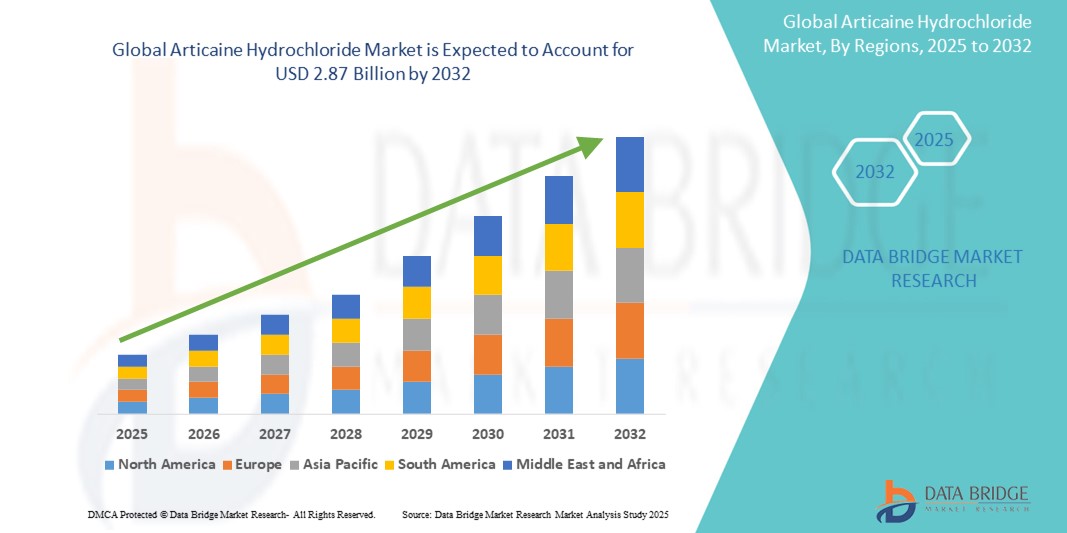
- The Global Articaine Hydrochloride Market size was valued at USD 1.52 billion in 2024 and is expected to reach USD 2.87 billion by 2032, at a CAGR of 8.3% during the forecast period
- The market growth is largely driven by the increasing number of dental procedures worldwide, rising demand for effective and fast-acting local anesthetics, and the expanding use of articaine in both general and specialized dental practices. Articaine’s superior efficacy, rapid onset, and reduced systemic toxicity compared to other anesthetics are key factors contributing to its growing preference among dental professionals.
- Furthermore, the global rise in geriatric populations, higher prevalence of dental disorders, and advancements in anesthesia delivery techniques are fueling the adoption of articaine hydrochloride across hospitals, dental clinics, and academic institutions. These converging factors are accelerating the uptake of articaine-based formulations, thereby significantly boosting the growth of the global articaine hydrochloride market.
Articaine Hydrochloride Market Analysis
- Articaine hydrochloride, a widely used amide-type local anesthetic, has become a critical component in modern dental and oral surgical procedures due to its superior efficacy, rapid onset of action, and favorable safety profile. It is especially valued for procedures requiring deep infiltration and shorter recovery time, making it a preferred choice over traditional anesthetics like lidocaine.
- The growing demand for articaine is primarily fueled by the rising prevalence of dental disorders, increasing number of dental procedures globally, and the growing need for effective pain management solutions in outpatient and surgical dentistry. Its ability to provide localized anesthesia with minimal systemic toxicity is driving preference among dental professionals.
- North America dominates the articaine hydrochloride market with the largest revenue share of 41.5% in 2025, attributed to a high volume of dental surgeries, advanced oral healthcare infrastructure, and widespread adoption of modern anesthetic practices. The U.S. leads the region’s growth, driven by increasing dental insurance coverage, rising cosmetic dentistry trends, and strong market presence of leading pharmaceutical manufacturers.
- Asia-Pacific is expected to be the fastest-growing region in the articaine hydrochloride market during the forecast period, due to improving access to dental care, growing awareness of oral health, and increased investment in healthcare infrastructure across emerging economies like India and China. Rising dental tourism and favorable regulatory pathways are further accelerating regional growth.
- The “20 mg to 100 mg” dosage strength segment is expected to dominate the market with the largest share of 39.6% in 2025, driven by its widespread usage in general dental practice, especially in routine procedures such as fillings, root canals, and tooth extractions. This dosage offers an optimal balance of effectiveness and safety, making it the most frequently prescribed strength in both adult and pediatric populations.
Report Scope and Articaine Hydrochloride Market Segmentation
|
Attributes |
Articaine Hydrochloride Key Market Insights |
|
Segments Covered |
|
|
Countries Covered |
North America
Europe
Asia-Pacific
Middle East and Africa
South America
|
|
Key Market Players |
|
|
Market Opportunities |
|
|
Value Added Data Infosets |
In addition to the insights on market scenarios such as market value, growth rate, segmentation, geographical coverage, and major players, the market reports curated by the Data Bridge Market Research also include in-depth expert analysis, pricing analysis, brand share analysis, consumer survey, demography analysis, supply chain analysis, value chain analysis, raw material/consumables overview, vendor selection criteria, PESTLE Analysis, Porter Analysis, and regulatory framework. |
Articaine Hydrochloride Market Trends
“Growing Adoption of Articaine in Minimally Invasive and Outpatient Dental Procedures”
- A significant and rapidly growing trend in the global articaine hydrochloride market is the increased use of articaine in minimally invasive dental procedures and outpatient surgical settings, owing to its fast onset, high potency, and limited systemic toxicity compared to other local anesthetics.
- For instance, articaine is increasingly preferred for complex procedures such as third molar extractions and endodontic treatments, where deep infiltration and extended numbness are required. Its ability to provide effective anesthesia even in dense cortical bone areas gives it a clinical advantage, especially in oral surgeries and implant dentistry.
- Moreover, dental professionals are favoring articaine over lidocaine, particularly in Europe and North America, due to a growing body of research supporting its superior diffusion capacity and shorter recovery time. This is especially important in high-volume dental clinics and urban outpatient facilities, where patient throughput and safety are critical.
- In pediatric and geriatric dentistry, lower concentrations of articaine are being adopted to provide age-appropriate dosing, minimizing discomfort while ensuring efficient procedures. Manufacturers are responding with pre-measured cartridges, age-specific labeling, and single-use formulations, catering to the expanding base of age-diverse patients.
- The trend is also driven by technological advancements in anesthesia delivery systems, such as computer-controlled local anesthetic delivery (CCLAD) and safety syringes, which enhance the precision and patient comfort when using articaine-based products.
Articaine Hydrochloride Market Dynamics
Driver
“Rising Number of Dental Procedures and Increased Preference for Fast-Acting Anesthetics”
- The surge in global dental procedures, including fillings, root canals, extractions, and implants, is a major driver of demand for articaine hydrochloride. With rising awareness of oral health and increasing access to dental care services, the need for safe, efficient, and rapidly acting local anesthetics is higher than ever.
- According to WHO and FDI World Dental Federation, nearly 3.5 billion people suffer from oral diseases, further reinforcing the need for effective anesthetics during routine and advanced dental interventions.
- Articaine’s superior pharmacological profile—marked by a quick onset of anesthesia, effective nerve block, and minimal systemic exposure—makes it a preferred choice for dental professionals globally. These attributes reduce patient anxiety, enable faster turnover in clinics, and improve overall treatment outcomes.
- Furthermore, the growth of cosmetic dentistry and dental tourism, especially in regions like Asia-Pacific and Latin America, is fueling demand for premium-grade anesthetics like articaine, which offer precision and predictability during short-term procedures.
Restraint/Challenge
“Regulatory Hurdles and Limited Awareness in Developing Regions”
- Despite its clinical advantages, the market faces challenges due to regulatory variations across countries, which affect product approvals, availability, and pricing. In some developing regions, articaine is either underutilized or not approved for use due to limited clinical data submissions or safety concerns related to nerve damage at high concentrations.
- Additionally, limited awareness among general dental practitioners in emerging economies regarding the comparative benefits of articaine over other anesthetics like lidocaine hinders broader adoption. Dentists may stick to traditional agents due to familiarity, cost sensitivity, or lack of access to advanced training.
- Supply chain disruptions, cost-related challenges, and absence of reimbursement policies for newer anesthetic formulations in public healthcare systems also restrict penetration in price-sensitive markets.
- To overcome these challenges, key players are focusing on clinical education programs, expanding regional distribution partnerships, and offering cost-effective generic alternatives to improve accessibility. Regulatory harmonization and localized clinical trials will be essential for expanding the market footprint of articaine hydrochloride in untapped regions.
Articaine Hydrochloride Market Scope
The market is segmented on the basis of anesthesia type, dosage strength, population type, end users, and distribution channel.
• By Anaesthesia Type
On the basis of anaesthesia type, the articaine hydrochloride market is segmented into local, infiltrative, and conductive anesthesia. The infiltrative anesthesia segment dominates the market with the largest revenue share of 45.6% in 2025, due to its widespread use in routine dental procedures such as fillings, extractions, and root canals. Articaine’s ability to diffuse efficiently into soft and hard tissues makes it particularly effective for infiltration techniques, offering quick onset and sufficient duration for outpatient interventions.
The conductive anesthesia segment is anticipated to witness the fastest CAGR of 9.4% from 2025 to 2032, driven by rising demand for complex procedures like wisdom tooth extractions and implant placements that require deep nerve blocks. The growing popularity of full-mouth rehabilitation and maxillofacial surgeries is also contributing to the increased use of conductive techniques, particularly in hospitals and advanced dental clinics.
• By Dosage Strength
On the basis of dosage strength, the market is segmented into 20 mg to 100 mg, 20 mg to 136 mg, and 40 mg to 204 mg. The 20 mg to 100 mg dosage strength segment is expected to dominate the market with the largest revenue share of 39.6% in 2025, driven by its frequent use in general dentistry for both adult and pediatric patients. It is commonly used in cartridge form for everyday procedures, balancing effectiveness with safety.
The 40 mg to 204 mg segment is projected to witness the fastest growth during the forecast period, as demand rises for higher concentrations in more intensive and time-consuming procedures. Its extended action and deeper penetration are particularly beneficial for oral surgeries and long-duration treatments.
• By Population Type
On the basis of population type, the market is segmented into adults and paediatric. The adult segment holds the largest market share in 2025, due to the high number of dental procedures conducted among the adult population, including root canal treatments, implant placements, and extractions.
The paediatric segment is expected to witness the fastest CAGR from 2025 to 2032, owing to increasing focus on child dental care, growing awareness among parents, and the safety of low-dose articaine in pediatric procedures.
• By End Users
On the basis of end users, the market is segmented into dental clinics, hospitals, and academic and research institutes. The dental clinics segment accounted for the largest revenue share in 2025, attributed to the sheer volume of outpatient procedures conducted in these settings. Clinics favor articaine for its quick onset, cost-effectiveness, and ability to complete procedures efficiently in a single visit.
The hospitals segment is projected to register the fastest CAGR, driven by the increasing number of surgical dental procedures and the use of articaine in multidisciplinary treatments such as maxillofacial and emergency dental care.
• By Distribution Channel
On the basis of distribution channel, the market is segmented into direct tender, hospital pharmacy, retail pharmacy, online pharmacy, and others. The hospital pharmacy segment dominates the market in 2025, due to centralized procurement for bulk medical supplies and routine use of anesthetics in clinical and surgical departments.
The online pharmacy segment is expected to experience the fastest growth rate during the forecast period, fueled by the digital transformation in pharmaceutical retail, increased patient preference for doorstep delivery, and the convenience of ordering dental anesthetics online with proper prescriptions.
Articaine Hydrochloride Market Regional Analysis
- North America dominates the articaine hydrochloride market with the largest revenue share of 41.5% in 2024, driven by the high volume of dental procedures, advanced oral healthcare infrastructure, and increased awareness of the benefits of modern local anesthetics among dental professionals.
- Consumers and patients in the region highly value rapid, effective pain management, especially for outpatient dental treatments. The adoption of articaine is supported by widespread insurance coverage, a strong network of dental clinics, and high acceptance of innovative dental technologies and formulations.
- This widespread usage is further bolstered by favorable regulatory policies, increasing investments in cosmetic and restorative dentistry, and a growing preference for minimally invasive procedures. These factors collectively reinforce North America’s leadership in the global articaine hydrochloride market across both hospital and clinical settings.
U.S. Articaine Hydrochloride Market Insight
The U.S. articaine hydrochloride market captured the largest revenue share of 83% within North America in 2025, driven by the high number of dental visits, well-developed healthcare infrastructure, and the broad clinical preference for articaine in both general and surgical dental procedures. Dental professionals in the U.S. favor articaine due to its fast onset, high efficacy, and reduced systemic toxicity. The increasing focus on pain-free dentistry, combined with expanding use in pediatric and geriatric populations, continues to boost demand. Additionally, the U.S. leads in adopting innovative anesthetic delivery systems and is at the forefront of dental research, further supporting market growth.
Europe Articaine Hydrochloride Market Insight
The European articaine hydrochloride market is projected to grow at a steady CAGR during the forecast period, driven by the region’s early adoption of articaine as a preferred dental anesthetic. Countries such as Germany, France, and Italy have already integrated articaine as a standard in dental clinics due to its superior pharmacological profile. The rise in cosmetic and restorative dental procedures, alongside a growing elderly population with oral healthcare needs, is fostering consistent demand. Moreover, the regulatory acceptance and local manufacturing of articaine-based products across Europe are strengthening the market position.
U.K. Articaine Hydrochloride Market Insight
The U.K. articaine hydrochloride market is expected to grow at a notable CAGR during the forecast period, supported by the increasing number of NHS and private dental procedures requiring local anesthetics. Articaine is gaining preference for its improved diffusion in dense bone structures, making it ideal for complex cases. Additionally, awareness of patient safety and comfort is prompting wider adoption in pediatric and community-based dental services. The U.K.'s ongoing efforts to modernize dental care delivery, including digital dentistry and minimally invasive treatments, further promote the use of advanced anesthetics like articaine.
Germany Articaine Hydrochloride Market Insight
The German articaine hydrochloride market is projected to expand at a substantial CAGR, as the country serves as a major hub for dental product innovation and manufacturing in Europe. Germany’s long-standing preference for articaine in dental clinics is supported by well-defined treatment protocols and robust insurance coverage for dental procedures. The increasing demand for outpatient oral surgeries, along with a growing aging population requiring advanced dental care, continues to fuel the need for effective and safe local anesthetics. Furthermore, the country’s emphasis on clinical training and technological integration ensures sustained market expansion.
Asia-Pacific Articaine Hydrochloride Market Insight
The Asia-Pacific articaine hydrochloride market is forecast to grow at the fastest CAGR of over 9.5% in 2025, driven by improving access to dental care, rising disposable incomes, and expanding healthcare infrastructure in countries like China, India, and Japan. The region is experiencing significant growth in dental tourism and cosmetic procedures, which is increasing the need for fast-acting, reliable anesthetic agents like articaine. Government initiatives focused on oral health awareness and the rising number of dental colleges and clinics across emerging economies are expected to further accelerate market growth.
Japan Articaine Hydrochloride Market Insight
The Japan articaine hydrochloride market is gaining traction, supported by the country’s aging population and rising demand for effective dental anesthesia in geriatric care. Japan’s dental clinics are increasingly adopting articaine for its rapid onset and improved patient recovery outcomes. The strong regulatory environment, combined with technological innovations in dental equipment and procedures, is encouraging the use of high-efficacy anesthetics. Moreover, the cultural preference for precision and safety in healthcare makes articaine a favorable choice among Japanese dental practitioners.
China Articaine Hydrochloride Market Insight
The China articaine hydrochloride market accounted for the largest market revenue share in Asia-Pacific in 2025, owing to rapid urbanization, increasing disposable income, and high awareness of dental aesthetics. Articaine is becoming more popular in Chinese dental clinics due to its effectiveness in both basic and advanced dental procedures. With a growing middle-class population and expansion of private dental chains, demand for quality anesthetic agents is on the rise. Additionally, local production capabilities and the government’s push for healthcare modernization are contributing to broader availability and cost-effectiveness of articaine products.
Articaine Hydrochloride Market Share
The Articaine Hydrochloride industry is primarily led by well-established companies, including:
- Dentsply Sirona (U.S.)
- MANUS AKTTEVA BIOPHARMA LLP (India)
- Pierrel S.p.A. (Italy)
- Septodont (France)
- Benco Dental (U.S.)
- SUYOG LIFE SCIENCES PVT. LTD. (India)
- Fengchen Group Co., Ltd. (China)
- Merck KGaA (Germany)
- HEBEI SHUOXI BIOTECHNOLOGY CO., LTD. (China)
- Midas Pharma GmbH (Germany)
- Nortec Quimica (Brazil)
- Patterson Dental (U.S.)
- 3M (U.S.)
- Sanofi-Aventis Germany GmbH (Germany)
- Siegfried Holding AG (Switzerland)
- Anhui BBCA Pharmaceutical Co., Ltd. (China)
- Jinan Chenghui Shuangda Chemical Co., Ltd. (China)

- Interactive Data Analysis Dashboard
- Company Analysis Dashboard for high growth potential opportunities
- Research Analyst Access for customization & queries
- Competitor Analysis with Interactive dashboard
- Latest News, Updates & Trend analysis
- Harness the Power of Benchmark Analysis for Comprehensive Competitor Tracking
Data collection and base year analysis are done using data collection modules with large sample sizes. The stage includes obtaining market information or related data through various sources and strategies. It includes examining and planning all the data acquired from the past in advance. It likewise envelops the examination of information inconsistencies seen across different information sources. The market data is analysed and estimated using market statistical and coherent models. Also, market share analysis and key trend analysis are the major success factors in the market report. To know more, please request an analyst call or drop down your inquiry.
The key research methodology used by DBMR research team is data triangulation which involves data mining, analysis of the impact of data variables on the market and primary (industry expert) validation. Data models include Vendor Positioning Grid, Market Time Line Analysis, Market Overview and Guide, Company Positioning Grid, Patent Analysis, Pricing Analysis, Company Market Share Analysis, Standards of Measurement, Global versus Regional and Vendor Share Analysis. To know more about the research methodology, drop in an inquiry to speak to our industry experts.
Data Bridge Market Research is a leader in advanced formative research. We take pride in servicing our existing and new customers with data and analysis that match and suits their goal. The report can be customized to include price trend analysis of target brands understanding the market for additional countries (ask for the list of countries), clinical trial results data, literature review, refurbished market and product base analysis. Market analysis of target competitors can be analyzed from technology-based analysis to market portfolio strategies. We can add as many competitors that you require data about in the format and data style you are looking for. Our team of analysts can also provide you data in crude raw excel files pivot tables (Fact book) or can assist you in creating presentations from the data sets available in the report.












