


Atrophic Glossitis Treatment Market Size
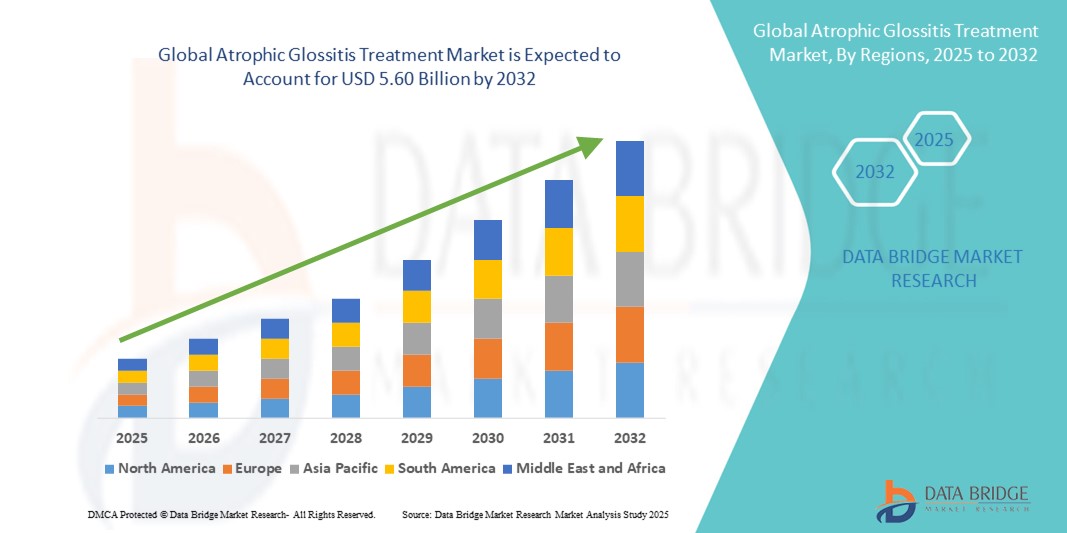
- The global atrophic glossitis treatment market size was valued at USD 3.00 billion in 2024 and is expected to reach USD 5.60 billion by 2032, at a CAGR of 8.10% during the forecast period
- The market growth is primarily driven by increasing awareness of oral health and the rising prevalence of conditions such as Atrophic Glossitis, which necessitate timely and effective treatment solutions
- Furthermore, advancements in therapeutic approaches, including nutritional supplementation, anti-inflammatory medications, and targeted pharmacological interventions, are expanding the treatment options available to healthcare providers. These factors are accelerating the adoption of Atrophic Glossitis treatment solutions, thereby significantly boosting the market's growth
Atrophic Glossitis Treatment Market Analysis
- The rising prevalence of oral and nutritional deficiencies, coupled with increasing awareness of early diagnosis and management of atrophic glossitis, is driving growth in the global market. Atrophic Glossitis treatments are becoming increasingly essential for improving patient quality of life and preventing complications such as oral discomfort, taste disturbances, and secondary infections
- The escalating demand for atrophic glossitis treatments is primarily fueled by growing healthcare awareness, increased accessibility of oral care and nutritional supplementation, and rising focus on preventive dentistry and personalized treatment approaches
- North America dominated the atrophic glossitis treatment market with the largest revenue share of 39.5% in 2024, supported by advanced healthcare infrastructure, high patient awareness, and strong adoption of innovative treatment protocols. The U.S. is witnessing substantial growth due to increasing prevalence of oral and micronutrient-related conditions, enhanced diagnostic facilities, and initiatives promoting early intervention in oral health care
- Asia-Pacific is expected to be the fastest-growing region in the atrophic glossitis treatment market during the forecast period, driven by rapid urbanization, rising disposable incomes, expanding healthcare access, and government initiatives focused on nutritional and oral health awareness. Countries such as China, India, and Japan are increasingly adopting comprehensive treatment and supplementation programs, contributing to strong regional momentum
- Branded drugs dominated the atrophic glossitis treatment market with a 52.6% share in 2024, owing to strong brand reputation, consistent clinical efficacy, and high physician trust. Branded formulations offer standardized dosing, rigorous quality control, and proven therapeutic outcomes, which are crucial for chronic or severe Atrophic Glossitis cases
Report Scope and Atrophic Glossitis Treatment Market Segmentation
|
Attributes |
Atrophic Glossitis Treatment Key Market Insights |
|
Segments Covered |
|
|
Countries Covered |
North America
Europe
Asia-Pacific
Middle East and Africa
South America
|
|
Key Market Players |
|
|
Market Opportunities |
|
|
Value Added Data Infosets |
In addition to the insights on market scenarios such as market value, growth rate, segmentation, geographical coverage, and major players, the market reports curated by the Data Bridge Market Research also include in-depth expert analysis, pricing analysis, brand share analysis, consumer survey, demography analysis, supply chain analysis, value chain analysis, raw material/consumables overview, vendor selection criteria, PESTLE Analysis, Porter Analysis, and regulatory framework. |
Atrophic Glossitis Treatment Market Trends
Rising Focus on Personalized and Targeted Therapeutics
- A significant and accelerating trend in the global atrophic glossitis treatment market is the increasing development and adoption of personalized and targeted therapeutic approaches. This trend is driven by growing awareness of underlying causes such as nutritional deficiencies, autoimmune conditions, and chronic illnesses, which require tailored treatment strategies for effective management
- For instance, vitamin B-complex formulations and combination therapies are being optimized to address specific patient deficiencies, while emerging topical and pharmaceutical treatments focus on accelerating tissue regeneration and reducing inflammation
- Advances in clinical research and diagnostic capabilities enable healthcare providers to recommend more individualized treatment plans, improving patient outcomes and treatment adherence. Some novel therapies are now designed to target specific etiologies, such as iron deficiency or autoimmune-related atrophic glossitis, offering more effective symptom management
- The expansion of patient-centric healthcare services allows easier access to diagnostics, counseling, and follow-up treatments, facilitating better management of the condition across both urban and rural populations
- This trend towards personalized and targeted therapeutics is reshaping expectations for Atrophic Glossitis management, encouraging pharmaceutical companies and healthcare providers to develop innovative treatment options that cater to diverse patient needs
- The demand for such tailored treatments is rising rapidly across both developed and emerging markets, as patients and healthcare professionals increasingly prioritize efficacy, safety, and convenience in disease management
Atrophic Glossitis Treatment Market Dynamics
Driver
Rising Prevalence of Nutritional Deficiencies and Oral Disorders
- The increasing incidence of nutritional deficiencies, including iron, vitamin B12, and folate deficiencies, is a major driver boosting the demand for atrophic glossitis treatments. These deficiencies often lead to oral conditions that require timely intervention, creating a growing patient pool
- For instance, in 2023, several healthcare providers and pharmaceutical companies launched targeted nutritional supplements and therapies specifically designed to manage Atrophic Glossitis, highlighting the industry’s focus on effective treatment solutions. Such initiatives by key players are expected to accelerate the atrophic glossitis treatment market growth during the forecast period
- As awareness of early diagnosis and intervention rises among patients and healthcare professionals, atrophic glossitis treatments are increasingly being recognized for their ability to alleviate symptoms, restore oral health, and improve overall quality of life
- Furthermore, advancements in personalized treatment approaches, combination therapies, and oral health management strategies are reinforcing the adoption of atrophic glossitis treatments across clinics and hospital
- The convenience and effectiveness of these modern treatment options, coupled with increasing availability in both prescription and over-the-counter formats, are key factors driving the adoption of Atrophic Glossitis Treatments across diverse patient demographics
Restraint/Challenge
Limited Awareness and High Treatment Costs
- Limited awareness and understanding of atrophic glossitis among patients, caregivers, and some healthcare providers pose a substantial challenge to market growth. Many cases go undiagnosed or are misdiagnosed, delaying proper intervention and reducing the perceived need for specialized treatments
- In addition to awareness issues, the relatively high cost of advanced therapies—including prescription-based medications, specialized supplements, and combination treatment regimens—can limit accessibility for price-sensitive populations, particularly in developing regions and rural areas with constrained healthcare budgets
- The lack of widespread educational initiatives and clinical guidance further contributes to slow adoption, as patients may not recognize the importance of early intervention or may prefer general oral care remedies over targeted treatments
- Addressing these challenges through patient education programs, awareness campaigns by healthcare providers, and the development of more affordable, clinically validated treatment options is crucial to enhance adoption
- While some lower-cost therapies are emerging, the perceived expense, alongside the complexity of treatment regimens, continues to hinder widespread use, especially among patients with limited healthcare access
- Overcoming these barriers by demonstrating the long-term clinical benefits, improving accessibility, and enhancing patient and provider awareness will be critical for sustained growth and broader market penetration in the Atrophic Glossitis Treatment sector
Atrophic Glossitis Treatment Market Scope
The market is segmented on the basis of symptoms, cause, management, drug type, route of administration, end user and distribution channel.
- By Symptoms
On the basis of symptoms, the atrophic glossitis treatment market is segmented into inflammation, discolouration, itching, and burning tongue. The inflammation segment dominated the market in 2024 with a revenue share of 41.5%, as inflammation is the most common and clinically significant symptom observed in patients with Atrophic Glossitis. Patients experiencing tongue inflammation often require timely intervention to alleviate pain, reduce swelling, and prevent secondary infections that can complicate oral health. Treatment strategies targeting inflammation not only improve patient comfort but also help in restoring normal tongue texture and function. The segment’s dominance is also supported by widespread recognition among healthcare professionals and the availability of multiple anti-inflammatory therapies, including supplements and topical formulations.
The burning tongue segment, on the other hand, is projected to witness the fastest CAGR of 19.2% from 2025 to 2032. This growth is driven by increasing patient awareness of the painful nature of this symptom and the rising availability of targeted treatments. Medical practitioners are focusing on symptom-specific interventions that reduce discomfort, enhance taste perception, and improve overall quality of life. Patients are increasingly seeking therapies that combine symptomatic relief with underlying cause management, thereby boosting demand in this subsegment. Awareness campaigns, improved diagnostic tools, and patient education programs are further accelerating growth, making symptom-targeted treatment a key focus in this market.
- By Cause
On the basis of cause, the atrophic glossitis treatment market is segmented into iron deficiency, vitamin deficiency, anemia, infections, allergic reactions, disorders, medications, and injury to mouth. Vitamin deficiency accounted for the largest market revenue share of 38.7% in 2024, reflecting the high prevalence of deficiencies in B-complex vitamins, particularly B12 and folic acid, which play a central role in maintaining tongue health and preventing atrophy. These deficiencies lead to characteristic symptoms such as a smooth, red tongue and difficulty swallowing, prompting early treatment intervention.
Iron deficiency is anticipated to record the fastest CAGR of 18.5% from 2025 to 2032, as more patients are being diagnosed with iron-deficiency-related Atrophic Glossitis due to advanced diagnostic technologies and increased awareness. Healthcare providers are emphasizing both preventive measures and therapeutic supplementation to correct iron levels and restore oral tissue integrity. Other causes, such as infections, allergic reactions, and certain medications, are also being increasingly identified, prompting tailored treatment plans. The market growth is supported by research initiatives, patient education programs, and the development of specialized supplements and medications targeting specific etiologies. With rising prevalence of nutritional disorders and chronic conditions worldwide, addressing the root cause of Atrophic Glossitis is becoming a primary focus for clinicians, which is driving market expansion across multiple regions.
- By Management
On the basis of management, the atrophic glossitis treatment market is segmented into supplements, homeopathic medicines, topical corticosteroids, topical anaesthetics, antifungal, antiviral, and antibiotic treatments. Supplements held the largest revenue share of 44.3% in 2024, as they are the primary line of treatment for Atrophic Glossitis caused by nutritional deficiencies. These supplements support tissue regeneration, reduce symptom severity, and improve overall oral health, making them widely recommended by healthcare professionals. Patients increasingly prefer supplements due to their ease of administration, proven efficacy, and ability to address multiple deficiencies simultaneously.
Topical corticosteroids are expected to witness the fastest CAGR of 17.8% from 2025 to 2032, as they provide effective localized anti-inflammatory treatment for patients with persistent tongue inflammation. Other therapies, including topical anaesthetics and antifungal treatments, complement these approaches by providing symptomatic relief, reducing pain, and addressing secondary infections. The segment growth is further supported by research and development initiatives, increasing product availability, and rising patient awareness of symptom-specific management. Healthcare providers are focusing on integrated treatment approaches that combine supplements with topical or pharmacological interventions to achieve better outcomes. Moreover, homeopathic and alternative medicines are gaining traction in certain regions, particularly among patients seeking non-invasive or natural treatment methods.
- By Drug Type
On the basis of drug type, the atrophic glossitis treatment market is segmented into branded and generic drugs. Branded drugs dominated the market with a 52.6% share in 2024, owing to strong brand reputation, consistent clinical efficacy, and high physician trust. Branded formulations offer standardized dosing, rigorous quality control, and proven therapeutic outcomes, which are crucial for chronic or severe Atrophic Glossitis cases. Patients and healthcare providers often prefer branded products for their reliability and established safety profiles.
Generic drugs are projected to witness the fastest CAGR of 16.9% from 2025 to 2032, driven by cost-effectiveness, increasing affordability, and rising adoption in price-sensitive markets. Generics are increasingly accepted for routine supplementation and symptom management, particularly in developing regions. The market growth is supported by patent expirations of key branded formulations and the subsequent introduction of high-quality generics. Additionally, government initiatives promoting access to affordable medications are further encouraging the uptake of generic options. With the increasing burden of nutritional deficiencies and chronic conditions worldwide, both branded and generic segments are experiencing robust demand.
- By Route of Administration
On the basis of route of administration, the atrophic glossitis treatment market is segmented into oral, topical, intramuscular, and others. Oral administration accounted for the largest market revenue share of 47.2% in 2024, as oral supplements and medications are convenient, easy to administer, and effective in correcting systemic nutritional deficiencies linked to Atrophic Glossitis. Patients prefer oral routes for long-term therapy, as they allow precise dosing, better absorption, and consistent efficacy.
Topical administration is expected to record the fastest CAGR of 18.1% during 2025–2032, driven by the development of gels, creams, and mouth rinses that provide localized relief, reduce inflammation, and improve patient adherence. Intramuscular routes are also used for severe deficiencies or acute cases, providing rapid correction of nutrient levels. The availability of multiple administration routes allows healthcare providers to tailor treatment plans based on symptom severity, patient preference, and underlying causes. Ongoing research into novel formulations and delivery methods is further enhancing patient compliance and improving therapeutic outcomes across the market.
- By End-Users
On the basis of end-users, the atrophic glossitis treatment market is segmented into hospitals, home healthcare, and others. Hospitals held the largest market share of 49.5% in 2024, owing to their structured treatment protocols, access to trained medical professionals, and advanced diagnostic and therapeutic facilities. Hospitals provide comprehensive care for patients with complex or severe cases of Atrophic Glossitis, often integrating supplementation, topical treatments, and patient education programs.
The home healthcare segment is expected to witness the fastest CAGR of 20.3% from 2025 to 2032, driven by the increasing trend of patient self-management and telemedicine consultations. Home-based treatments, including supplements and topical applications, allow ongoing care without frequent hospital visits, making them convenient and cost-effective. The segment growth is also fueled by rising patient awareness, better monitoring tools, and the availability of home-based healthcare services. Other end-users, such as clinics and community healthcare centers, contribute to the market by providing accessible treatment options in both urban and semi-urban regions.
- By Distribution Channel
On the basis of distribution channel, the atrophic glossitis treatment market is segmented into direct tender, hospital pharmacy, retail pharmacy, online pharmacy, and others. Hospital pharmacies accounted for the largest market revenue share of 45.7% in 2024, as they serve as the primary point for prescription fulfillment, inpatient care, and chronic disease management programs. Hospital pharmacies ensure consistent availability of specialized medications and supplements, making them the preferred choice for healthcare providers.
Online pharmacies are projected to witness the fastest CAGR of 22.4% from 2025 to 2032, driven by growing e-commerce penetration, consumer preference for home delivery, and easy access to product information. Online platforms provide convenience, privacy, and cost savings, particularly in urban and semi-urban areas. Retail pharmacies also contribute significantly by offering immediate access to supplements and medications, while direct tenders cater to institutional procurement. The increasing integration of digital platforms with healthcare delivery is further enhancing market growth and expanding the reach of Atrophic Glossitis treatments globally.
Atrophic Glossitis Treatment Market Regional Analysis
- North America dominated the atrophic glossitis treatment market with the largest revenue share of 39.5% in 2024, supported by advanced healthcare infrastructure
- high patient awareness, and strong adoption of innovative treatment protocols
- In addition, growing emphasis on preventive healthcare, widespread availability of specialized clinics and pharmacies, and an increasing focus on patient education regarding nutritional deficiencies are further driving market adoption across the region
U.S. Atrophic Glossitis Treatment Market Insight
The U.S. atrophic glossitis treatment market captured the largest market revenue share within North America in 2024, driven by the increasing prevalence of oral and micronutrient-related conditions, enhanced diagnostic facilities, and initiatives promoting early intervention in oral healthcare. Consumers and healthcare providers are increasingly prioritizing comprehensive treatment programs, including supplementation and therapeutic interventions for Atrophic Glossitis. Moreover, growing awareness about preventive healthcare, easy access to specialty clinics, and strong adoption of clinically validated treatment protocols are contributing to the rapid expansion of the U.S. market.
Europe Atrophic Glossitis Treatment Market Insight
The Europe atrophic glossitis treatment market is projected to expand at a significant CAGR throughout the forecast period, fueled by heightened awareness of nutritional deficiencies and oral health, as well as well-developed healthcare systems. Countries such as Germany, France, and the U.K. are seeing increasing demand for effective treatment options, supported by favorable reimbursement policies, public health campaigns, and the expansion of dental and clinical care services. The market growth is also reinforced by the rising adoption of standardized treatment protocols and home-based supplementation programs.
U.K. Atrophic Glossitis Treatment Market Insight
C U.K. atrophic glossitis treatment market is anticipated to grow at a notable CAGR during the forecast period, driven by rising awareness of oral and micronutrient deficiencies and government initiatives focused on preventive healthcare. The availability of well-established healthcare services, growing patient interest in early diagnosis, and increasing adoption of clinically validated treatment options are encouraging both hospitals and home healthcare providers to expand offerings for Atrophic Glossitis management.
Germany Atrophic Glossitis Treatment Market Insight
The Germany atrophic glossitis treatment market is expected to expand at a considerable CAGR, supported by high healthcare spending, advanced diagnostic infrastructure, and strong emphasis on evidence-based oral healthcare. The increasing number of specialty clinics and proactive patient screening programs is driving demand for Atrophic Glossitis treatments, particularly therapeutic interventions and nutrient-based supplementation targeting iron, vitamin B12, and folate deficiencies.
Asia-Pacific Atrophic Glossitis Treatment Market Insight
The Asia-Pacific atrophic glossitis treatment market is expected to be the fastest-growing region in the Atrophic Glossitis Treatment market during the forecast period, driven by rapid urbanization, rising disposable incomes, expanding healthcare access, and government initiatives focused on nutritional and oral health awareness. Countries such as China, India, and Japan are increasingly adopting comprehensive treatment and supplementation programs, contributing to strong regional momentum. Furthermore, the growing penetration of healthcare infrastructure, digital health platforms, and awareness campaigns about early diagnosis and preventive care is accelerating market growth across both urban and semi-urban populations.
Japan Atrophic Glossitis Treatment Market Insight
The Japan atrophic glossitis treatment market is gaining momentum due to a technologically advanced healthcare system, increasing awareness of micronutrient deficiencies, and a rapidly aging population with a higher prevalence of oral health issues. Hospitals, specialized clinics, and home healthcare providers are increasingly offering targeted Atrophic Glossitis therapies, including supplementation and therapeutic interventions, while patients are seeking convenient, safe, and clinically validated treatment options.
China Atrophic Glossitis Treatment Market Insight
The China atrophic glossitis treatment market accounted for the largest market revenue share in Asia-Pacific in 2024, driven by rapid urbanization, a growing middle-class population, and rising healthcare awareness. The adoption of Atrophic Glossitis treatments is fueled by government-led nutritional programs, the expansion of hospitals and clinics, and increasing availability of over-the-counter and prescription supplements. Moreover, the focus on preventive healthcare and oral wellness initiatives is supporting robust growth in both residential and commercial healthcare sectors.
India Atrophic Glossitis Treatment Market Insight
The India atrophic glossitis treatment market is witnessing rapid growth and is expected to record the highest CAGR in Asia-Pacific during the forecast period. This growth is driven by increasing awareness of micronutrient deficiencies, rising prevalence of anemia and oral health conditions, and expanding access to healthcare facilities across urban and semi-urban regions. Government initiatives promoting nutritional programs, oral health campaigns, and preventive care are further supporting market expansion. Additionally, the growing availability of prescription and over-the-counter supplements, coupled with rising disposable incomes, is enhancing adoption among patients and healthcare providers alike.
Atrophic Glossitis Treatment Market Share
The Atrophic Glossitis Treatment industry is primarily led by well-established companies, including:
- Overseas Health Care (India)
- Neon Laboratories Limited (India)
- Psychotropics India Limited (India)
- Sanofi (France)
- Mankind (India)
- Macleods Pharmaceuticals Ltd. (India)
- AbbVie Inc. (U.S.)
- Cipla Inc. (India)
- Pfizer Inc. (U.S.)
- Jarrow Formulas, Inc. (U.S.)
- Global Healing (U.S.)
- Novartis AG (Switzerland)
- Merck & Co., Inc. (U.S.)
- Baxter (U.S.)
- Zydus Cadila (India)
- Hikma Pharmaceuticals PLC (U.K.)
- Aspen Holdings (South Africa)
- Endo, Inc. (Ireland)
Latest Developments in Global Atrophic Glossitis Treatment Market
- In April 2023, a study published in BMC Oral Health highlighted the role of vitamin B12 deficiency in the development of atrophic glossitis. The research emphasized the importance of early diagnosis and supplementation to prevent progression to more severe oral conditions
- In February 2025, Blue Cross NC issued a notification regarding vitamin B12 and methylmalonic acid testing. The policy update underscored the significance of detecting vitamin B12 deficiency, a known cause of glossitis, to prevent associated complications such as macrocytic anemia and cognitive deficits
- In October 2023, a review published in MDPI examined the manifestations and treatment of hypovitaminosis in oral health. The study discussed various oral signs and symptoms related to vitamin deficiencies, including atrophic glossitis, and emphasized the need for targeted nutritional interventions
- In March 2024, the American Journal of Physical Medicine & Rehabilitation published an article discussing the tongue as an underestimated tool for clinical diagnosis. The review highlighted how tongue disorders, including atrophic glossitis, can serve as indicators for various systemic conditions, thus aiding in early diagnosis and treatment
- In August 2024, Open Dentistry Journal published a study on the diagnosis of lingual atrophic conditions. The research focused on the associations between atrophic glossitis and underlying systemic diseases, providing insights into the diagnostic challenges and the importance of comprehensive patient evaluation

- Interactive Data Analysis Dashboard
- Company Analysis Dashboard for high growth potential opportunities
- Research Analyst Access for customization & queries
- Competitor Analysis with Interactive dashboard
- Latest News, Updates & Trend analysis
- Harness the Power of Benchmark Analysis for Comprehensive Competitor Tracking
Data collection and base year analysis are done using data collection modules with large sample sizes. The stage includes obtaining market information or related data through various sources and strategies. It includes examining and planning all the data acquired from the past in advance. It likewise envelops the examination of information inconsistencies seen across different information sources. The market data is analysed and estimated using market statistical and coherent models. Also, market share analysis and key trend analysis are the major success factors in the market report. To know more, please request an analyst call or drop down your inquiry.
The key research methodology used by DBMR research team is data triangulation which involves data mining, analysis of the impact of data variables on the market and primary (industry expert) validation. Data models include Vendor Positioning Grid, Market Time Line Analysis, Market Overview and Guide, Company Positioning Grid, Patent Analysis, Pricing Analysis, Company Market Share Analysis, Standards of Measurement, Global versus Regional and Vendor Share Analysis. To know more about the research methodology, drop in an inquiry to speak to our industry experts.
Data Bridge Market Research is a leader in advanced formative research. We take pride in servicing our existing and new customers with data and analysis that match and suits their goal. The report can be customized to include price trend analysis of target brands understanding the market for additional countries (ask for the list of countries), clinical trial results data, literature review, refurbished market and product base analysis. Market analysis of target competitors can be analyzed from technology-based analysis to market portfolio strategies. We can add as many competitors that you require data about in the format and data style you are looking for. Our team of analysts can also provide you data in crude raw excel files pivot tables (Fact book) or can assist you in creating presentations from the data sets available in the report.












