


Autoimmune Hemolytic Anemia Treatment Market Size
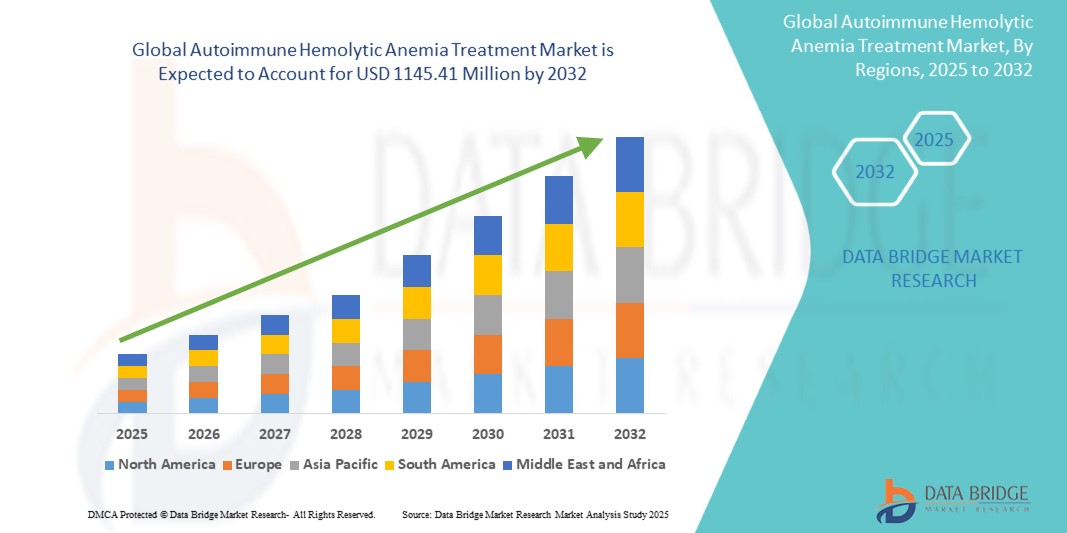
- The global autoimmune hemolytic anemia treatment market was valued at USD 781.19 million in 2024 and is expected to reach USD 1145.41 million by 2032, at a CAGR of 4.90% during the forecast period
- This growth is driven by factors the increase in the health consciousness among population across the globe
Autoimmune Hemolytic Anemia Treatment Market Analysis
- Autoimmune Hemolytic Anemia (AIHA) treatment involves therapeutic approaches aimed at controlling immune-mediated red blood cell destruction, and includes various drug classes such as corticosteroids, immunosuppressants, monoclonal antibodies, and intravenous immunoglobulins (IVIG). These treatments are crucial in managing both primary and secondary AIHA and are widely used across clinical settings to stabilize hemoglobin levels and improve patient outcomes
- The demand for AIHA treatments is significantly driven by the increasing prevalence of autoimmune disorders, rising awareness and early diagnosis, and advancements in immunotherapy, particularly with the development of targeted monoclonal antibodies
- North America is expected to dominate the autoimmune hemolytic anemia treatment market with a share of 39.324%, due to its advanced healthcare infrastructure, strong reimbursement framework, and high adoption of innovative therapies including biologics and personalized medicine
- For instance, the U.S. continues to lead in AIHA-related clinical trials, new drug approvals, and treatment guidelines from hematology societies, contributing to its dominance in this space
- Asia-Pacific is expected to be the fastest-growing region in the autoimmune hemolytic anemia treatment market during the forecast period due to improving healthcare access, increasing awareness of rare hematological conditions, and the growing availability of specialty treatments
- The corticosteroids segment is expected to dominate the market with a market share of 38.05% due to its established use as the first-line therapy, broad clinical familiarity, and rapid efficacy in reducing hemolysis. Despite the availability of newer treatment options such as monoclonal antibodies and IVIG, corticosteroids remain the initial treatment of choice in most healthcare settings because of their cost-effectiveness, predictable response, and wide availability. Their long-standing role in AIHA management continues to support their leading position in the market
Report Scope and Autoimmune Hemolytic Anemia Treatment Market Segmentation
|
Attributes |
Autoimmune Hemolytic Anemia Treatment Key Market Insights |
|
Segments Covered |
|
|
Countries Covered |
North America
Europe
Asia-Pacific
Middle East and Africa
South America
|
|
Key Market Players |
|
|
Market Opportunities |
|
|
Value Added Data Infosets |
In addition to the insights on market scenarios such as market value, growth rate, segmentation, geographical coverage, and major players, the market reports curated by the Data Bridge Market Research also include depth expert analysis, patient epidemiology, pipeline analysis, pricing analysis, and regulatory framework. |
Autoimmune Hemolytic Anemia Treatment Market Trends
“Advancements in Monoclonal Antibodies & Targeted Biologics for AIHA Management”
- One prominent trend in AIHA treatment is the increasing development and use of monoclonal antibodies (e.g., rituximab, sutimlimab) and complement inhibitors that target specific pathways of red blood cell destruction.
- These biologics offer greater efficacy and fewer side effects compared to traditional immunosuppressants, especially in patients with refractory or relapsed AIHA.
- For instance, newly developed complement inhibitors block the classical complement pathway, providing targeted treatment with promising clinical trial results in cold agglutinin disease (CAD), a subtype of AIHA.
- The rise of personalized medicine and precision immunotherapy is reshaping the AIHA treatment paradigm, allowing hematologists to tailor therapies based on patient-specific biomarkers.
- These innovations are transforming chronic autoimmune disease management, leading to better remission rates, fewer relapses, and improved quality of life for patients
Autoimmune Hemolytic Anemia Treatment Market Dynamics
Driver
“Increasing Prevalence of Autoimmune Disorders and Hematologic Conditions”
- The rising global burden of autoimmune diseases, coupled with greater awareness of hematologic abnormalities such as AIHA, is significantly contributing to market growth.
- As diagnostic capabilities improve, more cases of primary and secondary AIHA are being identified and treated, especially in older adults and patients with comorbid conditions such as lupus and lymphomas.
- Corticosteroids remain the first-line treatment, but rising adoption of monoclonal antibodies and second-line immunosuppressants is expanding the therapeutic landscape.
- Ongoing clinical research and real-world data collection are enhancing understanding of AIHA subtypes (warm vs. cold) and their optimal treatments
For instance,
- In March 2024, according to the National Organization for Rare Disorders (NORD), the incidence of warm AIHA is estimated at 1 per 100,000 people annually in the U.S., with cold agglutinin disease affecting about 12,000 individuals in North America. This highlights the increasing burden and unmet need for effective therapies.
- In July 2023, according to the American Society of Hematology (ASH), advancements in hematologic diagnostics and widespread adoption of AI-based diagnostic tools have led to earlier detection of AIHA, improving patient outcomes and driving market demand.
- As the burden of ESRD and associated complications grows, there is a substantial increase in the demand for Autoimmune Hemolytic Anemia Treatment therapies to manage this life-threatening condition effectively.
Opportunity
“Biotech Innovation and AI Integration in Autoimmune Disease Management”
- Artificial Intelligence (AI) and machine learning are transforming rare disease research, particularly in early detection, personalized therapy selection, and disease progression monitoring for autoimmune hemolytic anemia.
- AI-based platforms can help hematologists differentiate AIHA from other anemias using patient lab data patterns, enhancing diagnostic precision and treatment speed.
- In clinical research, AI is accelerating drug development by analyzing vast datasets from registries, EMRs, and genomics to identify biomarkers and optimal drug targets
For instance,
- In January 2025, an article in Frontiers in Immunology highlighted how AI-driven analytics are being employed to identify genetic variants and immune signatures associated with AIHA flares and responses to treatment, aiding in personalized therapy development.
- In November 2023, the National Institutes of Health (NIH) funded a multi-institutional project using AI algorithms to stratify patients with rare autoimmune anemias for targeted monoclonal antibody treatment, significantly reducing relapse rates in trial cohorts
- The increasing focus on research and innovation in rare vascular disorders, along with orphan drug incentives, is expected to create strong growth opportunities in the Autoimmune Hemolytic Anemia Treatment market
Restraint/Challenge
“High Cost of Biologic Therapies and Limited Access in Low-Income Regions”
- The high cost of newer biologics and monoclonal antibody therapies presents a key challenge to wider market penetration, particularly in developing countries with constrained healthcare budgets.
- Unlike corticosteroids and traditional immunosuppressants, advanced therapies such as rituximab or complement inhibitors may not be accessible or affordable in all markets.
- Limited reimbursement policies for rare autoimmune diseases and lack of centralized patient registries further hinder early intervention and treatment accessibility
For instance,
- In November 2024, according to GlobalData, the average annual cost of treatment with rituximab exceeds USD 20,000 per patient in North America, creating affordability concerns for uninsured populations.
- In April 2023, the World Health Organization (WHO) cited the lack of price controls and funding for rare disease treatment in low- and middle-income countries as a key obstacle to equitable access, especially for chronic autoimmune conditions such as AIHA
- Consequently, high treatment costs and limited accessibility continue to hinder market penetration, especially in resource-constrained settings, thereby posing a challenge to the broader adoption of Autoimmune Hemolytic Anemia Treatment therapies
Autoimmune Hemolytic Anemia Treatment Market Scope
- The market is segmented on the basis of Drugs, route of administration, end user, and distribution channel.
|
|
|
|
|
|
|
|
|
|
In 2025, corticosteroids are projected to dominate the market with the largest share in the drugs segment
The corticosteroids segment is expected to lead the global autoimmune hemolytic anemia (AIHA) treatment market in 2025, accounting for the largest market share of 38.2%. This dominance is primarily attributed to their longstanding use as the first-line therapy for AIHA, offering rapid efficacy in reducing hemolysis and managing acute episodes. Corticosteroids are widely available, cost-effective, and familiar to healthcare providers, making them a go-to option, particularly in resource-constrained settings. Despite the rise of targeted therapies such as monoclonal antibodies, corticosteroids remain the mainstay of initial treatment due to their proven track record, ease of administration, and strong clinical outcomes.
Monoclonal antibodies is expected to account for the largest share during the forecast period in drugs segment
In 2025, Monoclonal antibodies are expected to dominate the market due to increasing adoption of targeted biologics such as rituximab, which offer more durable responses and fewer side effects compared to long-term steroid use. Monoclonal antibodies are gaining momentum as second-line and, in some cases, first-line treatments due to evolving clinical guidelines, expanding indications, and growing physician awareness. Additionally, ongoing research and development, coupled with favorable regulatory pathways, are supporting the rapid expansion of this segment in the AIHA treatment landscape
Autoimmune Hemolytic Anemia Treatment Market Regional Analysis
“North America is the Dominant Region in the Autoimmune Hemolytic Anemia Treatment Market”
- North America dominates the Autoimmune Hemolytic Anemia (AIHA) Treatment market, driven by well-established hematology care infrastructure, higher awareness of autoimmune blood disorders, and the strong presence of key pharmaceutical and biotechnology companies.
- The U.S. holds a significant share due to a high prevalence of AIHA, increasing diagnostic rates, and growing use of advanced and targeted therapies such as rituximab, corticosteroids, and investigational monoclonal antibodies.
- The presence of favorable reimbursement frameworks for rare autoimmune diseases, along with active clinical trials for novel biologics, further accelerates market growth in the region.
- Additionally, increased focus on early diagnosis, standardized treatment protocols, and availability of expert hematologists contribute to improved treatment adoption across the region
“Asia-Pacific is Projected to Register the Highest CAGR in the Autoimmune Hemolytic Anemia Treatment market”
- The Asia-Pacific region is expected to witness the highest growth rate in the Autoimmune Hemolytic Anemia Treatment market, supported by rising awareness about rare blood disorders, expanding diagnostic capabilities, and improving access to immunosuppressive therapies.
- Countries such as China, India, and Japan are emerging as key markets due to increasing AIHA detection rates, growing autoimmune disease burden, and improving healthcare infrastructure.
- Japan, with its advanced medical research ecosystem and emphasis on rare disease management, is expected to lead in AIHA-related clinical studies and innovative therapy adoption.
- China and India, with growing healthcare investments and improved access to hematology specialists, are becoming attractive markets for international players. The rise in autoimmune diagnostics and increased patient education is further accelerating regional market development
Autoimmune Hemolytic Anemia Treatment Market Share
The market competitive landscape provides details by competitor. Details included are company overview, company financials, revenue generated, market potential, investment in research and development, new market initiatives, global presence, production sites and facilities, production capacities, company strengths and weaknesses, product launch, product width and breadth, application dominance. The above data points provided are only related to the companies' focus related to market.
The Major Market Leaders Operating in the Market Are:
- Johnson & Johnson (U.S.)
- GlaxoSmithKline plc (U.K.
- Pfizer Inc. (U.S.
- F. Hoffmann-La Roche Ltd. (Switzerland
- Novartis AG (Switzerland)
- Sanofi (France)
- Teva Pharmaceutical Industries Ltd. (Israel)
- Amgen Inc. (U.S.)
- Takeda Pharmaceutical Company Limited (Japan)
- CSL Limited (Australia
- Biogen Inc. (U.S.)
- Alexion Pharmaceuticals (U.S.)
- Grifols, S.A. (Spain)
- UCB S.A. (Belgium)
- Bioverativ (U.S.)
Latest Developments in Global Autoimmune Hemolytic Anemia Treatment Market
- In March 2025, Johnson & Johnson announced a Phase III trial initiation for its anti-CD20 monoclonal antibody therapy aimed at patients with refractory AIHA across North America and Europe
- In August 2024, Novartis reported promising early-stage results for an investigational Syk inhibitor therapy targeting warm AIHA, showing improved hemoglobin levels and reduced hemolysis in preliminary cohorts

- Interactive Data Analysis Dashboard
- Company Analysis Dashboard for high growth potential opportunities
- Research Analyst Access for customization & queries
- Competitor Analysis with Interactive dashboard
- Latest News, Updates & Trend analysis
- Harness the Power of Benchmark Analysis for Comprehensive Competitor Tracking
Data collection and base year analysis are done using data collection modules with large sample sizes. The stage includes obtaining market information or related data through various sources and strategies. It includes examining and planning all the data acquired from the past in advance. It likewise envelops the examination of information inconsistencies seen across different information sources. The market data is analysed and estimated using market statistical and coherent models. Also, market share analysis and key trend analysis are the major success factors in the market report. To know more, please request an analyst call or drop down your inquiry.
The key research methodology used by DBMR research team is data triangulation which involves data mining, analysis of the impact of data variables on the market and primary (industry expert) validation. Data models include Vendor Positioning Grid, Market Time Line Analysis, Market Overview and Guide, Company Positioning Grid, Patent Analysis, Pricing Analysis, Company Market Share Analysis, Standards of Measurement, Global versus Regional and Vendor Share Analysis. To know more about the research methodology, drop in an inquiry to speak to our industry experts.
Data Bridge Market Research is a leader in advanced formative research. We take pride in servicing our existing and new customers with data and analysis that match and suits their goal. The report can be customized to include price trend analysis of target brands understanding the market for additional countries (ask for the list of countries), clinical trial results data, literature review, refurbished market and product base analysis. Market analysis of target competitors can be analyzed from technology-based analysis to market portfolio strategies. We can add as many competitors that you require data about in the format and data style you are looking for. Our team of analysts can also provide you data in crude raw excel files pivot tables (Fact book) or can assist you in creating presentations from the data sets available in the report.












