


Autologous Adipose-Derived Stem Cell Harvesting Systems Market Size
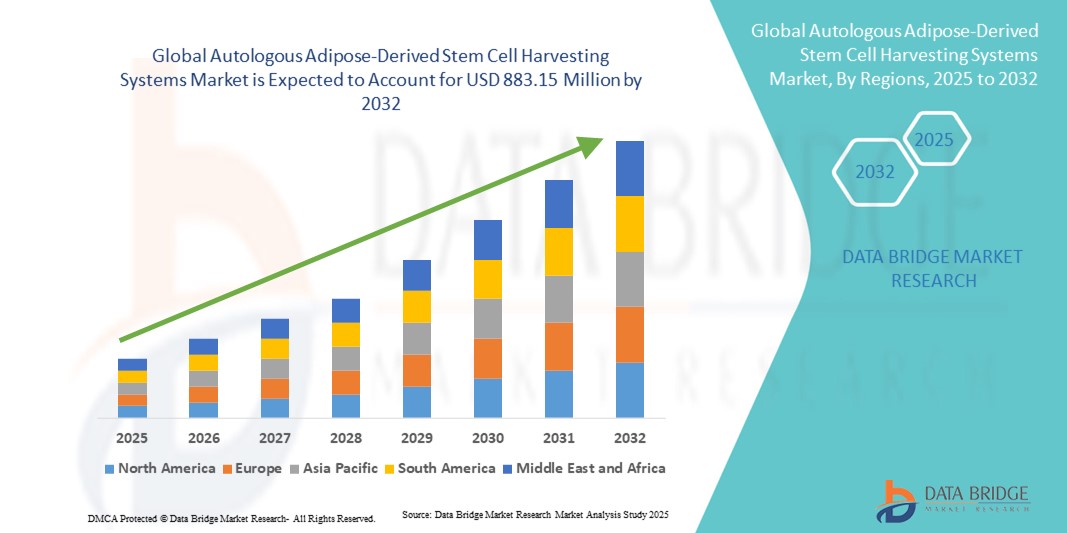
- The global autologous adipose-derived stem cell harvesting systems market size was valued at USD 320 million in 2024 and is expected to reach USD 883.15 million by 2032, at a CAGR of 13.53% during the forecast period
- The market growth is largely fueled by the increasing adoption of regenerative medicine and aesthetic procedures, coupled with technological advancements in stem cell harvesting systems, which enhance the efficiency, safety, and yield of autologous adipose-derived stem cells
- Furthermore, rising demand for minimally invasive procedures, growing applications of ADSCs in orthopedic, cardiovascular, and wound healing therapies, and the expanding cosmetic surgery market are driving the adoption of advanced harvesting systems. These converging factors are accelerating the uptake of autologous adipose-derived stem cell harvesting systems solutions, thereby significantly boosting the industry's growth
Autologous Adipose-Derived Stem Cell Harvesting Systems Market Analysis
- Autologous adipose-derived stem cell harvesting systems, used for the efficient extraction and processing of stem cells from adipose tissue, are increasingly vital components in regenerative medicine, cosmetic surgery, and therapeutic applications due to their enhanced safety, reproducibility, and minimally invasive procedures
- The escalating demand for these systems is primarily fueled by the growing adoption of regenerative therapies, rising applications in orthopedic, cardiovascular, and wound healing treatments, and increasing awareness among healthcare professionals regarding the benefits of autologous stem cell use
- North America dominated the autologous adipose-derived stem cell harvesting systems market with the largest revenue share of 42.55% in 2024, characterized by strong healthcare infrastructure, high adoption of regenerative medicine technologies, and the presence of key industry players. The U.S. accounted for the majority of the regional revenue, driven by established clinical research facilities, widespread use of advanced harvesting devices, and collaborations between hospitals and device manufacturers to improve stem cell yield and processing efficiency
- Asia-Pacific is expected to be the fastest-growing region in the autologous adipose-derived stem cell harvesting systems market during the forecast period, supported by rising healthcare investments, increasing availability of advanced cosmetic and therapeutic procedures, growing urbanization, and expanding awareness of regenerative medicine in countries such as China, India, and Japan
- The regenerative medicine segment dominated the autologous adipose-derived stem cell harvesting systems market with the largest revenue share of 42.7% in 2024, driven by the growing adoption of stem cell therapies for tissue engineering, chronic disease treatment, and personalized medicine
Report Scope and Autologous Adipose-Derived Stem Cell Harvesting Systems Market Segmentation
|
Attributes |
Autologous Adipose-Derived Stem Cell Harvesting Systems Key Market Insights |
|
Segments Covered |
|
|
Countries Covered |
North America
Europe
Asia-Pacific
Middle East and Africa
South America
|
|
Key Market Players |
|
|
Market Opportunities |
|
|
Value Added Data Infosets |
In addition to the insights on market scenarios such as market value, growth rate, segmentation, geographical coverage, and major players, the market reports curated by the Data Bridge Market Research also include in-depth expert analysis, pricing analysis, brand share analysis, consumer survey, demography analysis, supply chain analysis, value chain analysis, raw material/consumables overview, vendor selection criteria, PESTLE Analysis, Porter Analysis, and regulatory framework. |
Autologous Adipose-Derived Stem Cell Harvesting Systems Market Trends
Enhanced Convenience Through Automation and Process Optimization
- A significant and accelerating trend in the global autologous adipose-derived stem cell harvesting systems market is the increasing adoption of automated and semi-automated harvesting technologies, which significantly enhance operational efficiency, reproducibility, and cell viability
- For instance, modern closed-system devices enable streamlined stem cell extraction and processing with minimal manual intervention, ensuring higher consistency and reducing the risk of contamination. Similarly, integrated centrifugation and filtration modules allow precise separation of adipose-derived stem cells for clinical and therapeutic use
- Advanced harvesting systems offer features such as automated monitoring of yield and viability, enabling clinicians to optimize procedures and make real-time adjustments to maximize stem cell recovery. These systems also reduce processing time and improve workflow efficiency in hospital and research settings
- The seamless integration of harvesting systems with laboratory management platforms facilitates centralized tracking of patient samples, device performance, and quality control metrics, ensuring adherence to regulatory standards and improving overall laboratory productivity
- This trend towards more efficient, reliable, and standardized harvesting procedures is fundamentally reshaping expectations in regenerative medicine and cosmetic applications. Consequently, companies are developing next-generation ADSC harvesting devices with enhanced reproducibility, user-friendly interfaces, and compatibility with a range of downstream processing and storage systems
- The demand for automated and optimized stem cell harvesting solutions is growing rapidly across both clinical and research sectors, as hospitals, research institutes, and aesthetic clinics increasingly prioritize procedure reliability, minimal invasiveness, and high-quality cell yield
Autologous Adipose-Derived Stem Cell Harvesting Systems Market Dynamics
Driver
Growing Need Due to Rising Demand for Minimally Invasive and Efficient Stem Cell Harvesting
- The increasing demand for minimally invasive regenerative therapies, coupled with the rising adoption of autologous stem cell procedures, is a significant driver for the heightened need for Autologous Adipose-Derived Stem Cell Harvesting Systems
- For instance, in April 2024, a leading biomedical company introduced an advanced closed-system ADSC harvesting platform, designed to optimize cell yield while minimizing processing time and contamination risks. Such innovations by key companies are expected to drive the Autologous Adipose-Derived Stem Cell Harvesting Systems market growth during the forecast period
- As clinicians and researchers increasingly focus on patient-specific therapies and personalized medicine, efficient harvesting systems provide higher viability of stem cells and standardized output, improving clinical outcomes and supporting research initiatives
- Furthermore, the growing number of aesthetic, reconstructive, and regenerative medicine procedures globally has increased the need for streamlined harvesting processes, which reduce operator dependency and procedural variability
- The convenience of automated or semi-automated systems, combined with user-friendly interfaces and integrated monitoring of cell yield and viability, is propelling the adoption of ADSC harvesting devices in hospitals, cosmetic clinics, and research laboratories
Restraint/Challenge
High Initial Cost and Stringent Regulatory Compliance
- High initial investment costs associated with advanced Autologous Adipose-Derived Stem Cell Harvesting Systems pose a challenge to broader market penetration, particularly in small clinics and emerging markets. These devices often require specialized training, calibrated equipment, and disposable consumables, which contribute to higher operational expenses
- In addition, strict regulatory frameworks governing stem cell collection, processing, and clinical use create barriers to entry for smaller players and limit the speed of adoption in certain regions. Compliance with Good Manufacturing Practices (GMP) and local regulatory standards is essential to ensure patient safety and device reliability, increasing the complexity of deployment
- Addressing these challenges through cost optimization, scalable device options, and comprehensive training programs is crucial for fostering wider adoption. Leading companies are actively focusing on developing modular, easy-to-use platforms with standardized protocols to reduce operational costs and support regulatory compliance
- While prices of certain harvesting systems are gradually becoming more competitive, the perceived high cost and operational complexity can still hinder adoption among budget-conscious healthcare providers or smaller research institutions
- Overcoming these challenges through innovation in device design, user training, and strategic collaborations with healthcare providers and research organizations will be vital for sustaining growth in the Autologous Adipose-Derived Stem Cell Harvesting Systems market in the coming years
Autologous Adipose-Derived Stem Cell Harvesting Systems Market Scope
The market is segmented on the basis of type, processing method, harvesting mechanism, and application.
- By Type
On the basis of type, the autologous adipose-derived stem cell harvesting systems market is segmented into enzymatic, non-enzymatic, closed system, open system, and others. The enzymatic segment dominated the largest market revenue share of 38.5% in 2024, driven by its high efficiency in isolating viable stem cells while minimizing tissue damage. It is widely used in both clinical and research settings due to its reproducibility and ability to provide high cell yields suitable for regenerative therapies. Regulatory approvals for enzymatic kits reinforce its market dominance, ensuring standardized cell processing protocols. Its compatibility with automated and semi-automated platforms allows broader adoption across hospitals, cosmetic surgery centers, and research institutes. Enzymatic systems also support multiple tissue types and processing volumes, making them a flexible choice for diverse applications. Clinicians prefer enzymatic methods for their ability to maintain cell viability, functionality, and overall treatment outcomes. The segment benefits from consistent product availability and strong vendor support worldwide.
The closed system segment is anticipated to witness the fastest growth rate of CAGR 22.1% from 2025 to 2032, driven by increasing demand for sterile, contamination-free harvesting processes. Closed systems minimize operator dependency and significantly reduce microbial contamination, making them ideal for hospital and commercial regenerative medicine applications. Their integration with automated processing units ensures reproducibility and compliance with GMP standards. Closed systems also provide enhanced protection for both the operator and the product, critical in high-volume or sensitive procedures. They are favored in multicenter clinical trials and regulatory environments requiring stringent quality control. Rising investments in advanced bioprocessing equipment are accelerating their adoption globally. These systems are becoming increasingly cost-effective as technology matures. The growth is further fueled by healthcare providers prioritizing patient safety and product consistency.
- By Processing Method
On the basis of processing method, the autologous adipose-derived stem cell harvesting systems market is segmented into manual, semi-automated, automated, and others. The manual segment held the largest revenue share of 41.2% in 2024, due to its widespread use in small clinics and research laboratories where flexible and cost-effective solutions are needed. Manual processing allows operators to maintain direct control over cell isolation procedures, making it ideal for experimental protocols and low-volume clinical applications. Its simplicity and minimal equipment requirements make it accessible to a wide range of healthcare facilities globally. Manual methods also allow for customization in processing protocols based on tissue type and therapeutic application. The segment benefits from strong practitioner familiarity and established training programs. Furthermore, it remains relevant in regions where advanced automated systems are not yet widely available. Despite higher labor intensity, manual processing continues to provide reliable and high-quality stem cell yields.
The automated processing segment is expected to witness the fastest CAGR of 23.5% from 2025 to 2032, as healthcare providers seek standardized, high-throughput solutions. Automated methods reduce variability, improve sterility, and lower operator fatigue, which is critical for large-scale regenerative procedures and clinical trials. Integration with closed systems enhances workflow efficiency and ensures regulatory compliance. Automated platforms also allow remote monitoring and real-time process validation, appealing to research institutions and hospitals. The growing demand for point-of-care cell therapies drives adoption of compact, fully automated systems. Automation reduces human error, improves reproducibility, and accelerates processing time. As technology becomes more affordable and accessible, adoption in emerging markets is expected to grow rapidly. The segment also benefits from strong vendor support and continuous innovation in automation technology.
- By Harvesting Mechanism
On the basis of harvesting mechanism, the autologous adipose-derived stem cell harvesting systems market is segmented into syringe-based, liposuction-based, microcannula-based, mechanical separator, and others. The syringe-based segment dominated with a revenue share of 36.8% in 2024, due to its minimally invasive nature, precision in tissue extraction, and reduced patient discomfort. Syringe-based harvesting is widely preferred in cosmetic and aesthetic procedures because it enables targeted fat collection while maintaining cell viability. Its compatibility with both manual and semi-automated processing ensures consistent outcomes across clinical applications. Syringe-based systems also allow easy integration with regenerative therapy protocols in hospitals and research institutes. They require minimal setup and are preferred in outpatient and office-based procedures. High adoption rates in regions with established cosmetic surgery markets strengthen this segment’s dominance. Clinicians value syringe-based harvesting for its safety, efficiency, and reliability in generating viable stem cell populations.
The mechanical separator segment is anticipated to witness the fastest CAGR of 21.9% from 2025 to 2032, supported by its rapid and enzyme-free isolation of stem cells. Mechanical separation reduces processing time and lowers contamination risks, making it ideal for point-of-care applications and outpatient clinics. The method ensures consistent cell yields and viability without relying on enzymatic reagents, which can be costlier and time-consuming. Its ease of use and reduced labor intensity accelerate adoption in hospitals, cosmetic surgery centers, and research labs. Mechanical separators are increasingly integrated with automated systems to enhance workflow efficiency. Rising demand for minimally manipulated, regulatory-compliant cell products drives this segment’s growth. The approach also aligns with increasing global interest in non-enzymatic, safer harvesting methods.
- By Application
On the basis of application, the autologous adipose-derived stem cell harvesting systems market is segmented into regenerative medicine, orthopedics, cosmetic surgery, wound healing, and others. The regenerative medicine segment accounted for the largest revenue share of 42.7% in 2024, driven by the growing adoption of stem cell therapies for tissue engineering, chronic disease treatment, and personalized medicine. Hospitals, research centers, and specialized regenerative therapy clinics prefer ADSC harvesting systems due to their ability to provide high-quality, viable stem cells. Government initiatives, research funding, and favorable reimbursement policies further support this segment’s dominance. Increasing clinical trial activities in musculoskeletal, cardiovascular, and neurological applications reinforce demand. Compatibility with both manual and automated harvesting platforms ensures operational flexibility. Regenerative medicine also benefits from a well-established regulatory framework for cell therapy adoption.
The cosmetic surgery segment is expected to witness the fastest CAGR of 20.8% from 2025 to 2032, fueled by rising popularity of autologous fat grafting and aesthetic procedures. Minimally invasive harvesting, improved patient outcomes, and higher disposable income are key factors driving adoption. Cosmetic surgeons increasingly rely on advanced harvesting systems to maximize cell yield and tissue viability. The integration of portable, user-friendly harvesting devices allows clinics to perform procedures efficiently. The trend toward outpatient and office-based cosmetic treatments accelerates the segment’s growth. Growing awareness of regenerative aesthetic procedures and technological advancements in harvesting methods further boost adoption rates globally.
Autologous Adipose-Derived Stem Cell Harvesting Systems Market Regional Analysis
- North America dominated the autologous adipose-derived stem cell harvesting systems market with the largest revenue share of 42.55% in 2024. This growth is supported by strong healthcare infrastructure, advanced clinical research facilities, and high adoption of regenerative medicine technologies
- The accounted for the majority of the regional revenue, driven by the widespread use of automated harvesting devices, increasing demand for cosmetic and reconstructive procedures, and collaborations between hospitals and device manufacturers aimed at improving stem cell yield and processing efficiency
- Hospitals, research centers, and aesthetic clinics are increasingly investing in devices that ensure high cell viability and sterility, while government initiatives supporting regenerative medicine further bolster market adoption
U.S. Autologous Adipose-Derived Stem Cell Harvesting Systems Market Insight
The U.S. autologous adipose-derived stem cell harvesting systems market captured the largest revenue share of 80% in North America in 2024, fueled by the rising adoption of regenerative therapies and advanced harvesting devices. Clinical and aesthetic applications, including cosmetic and reconstructive procedures, are expanding rapidly due to the focus on patient safety and improved processing efficiency. Innovations in closed-system devices, automated centrifugation, and high-yield stem cell extraction solutions are driving demand across hospitals, clinics, and research facilities. Strategic collaborations between device manufacturers and medical institutions further accelerate the uptake of cutting-edge harvesting systems, while supportive regulations for regenerative medicine provide a favorable environment for market expansion.
Europe Autologous Adipose-Derived Stem Cell Harvesting Systems Market Insight
The Europe autologous adipose-derived stem cell harvesting systems market is projected to grow at a significant CAGR during the forecast period, underpinned by established healthcare systems, increased investment in regenerative medicine research, and the adoption of advanced harvesting technologies. Countries such as Germany, France, and the U.K. are witnessing steady market adoption in both clinical and cosmetic applications. Hospitals and aesthetic clinics are increasingly integrating automated harvesting systems to enhance stem cell yield, reduce contamination risks, and improve patient outcomes. Additionally, collaborations between device manufacturers and healthcare providers drive innovation in device design and operational efficiency, fueling regional growth.
Germany Autologous Adipose-Derived Stem Cell Harvesting Systems Market Insight
The Germany autologous adipose-derived stem cell harvesting systems market is expected to expand at a considerable CAGR due to the country’s strong emphasis on innovation, quality healthcare infrastructure, and growing awareness of regenerative therapies. Hospitals and clinics are increasingly utilizing automated harvesting devices and closed-system technologies to improve stem cell viability and reduce operational risks. The adoption of advanced systems in cosmetic and reconstructive procedures, coupled with research collaborations between device manufacturers and clinical institutions, further supports the market’s expansion.
U.K. Autologous Adipose-Derived Stem Cell Harvesting Systems Market Insight
The U.K. autologous adipose-derived stem cell harvesting systems market is anticipated to witness notable growth, driven by rising adoption of regenerative medicine in cosmetic, reconstructive, and therapeutic applications. The trend of integrating automated harvesting systems into clinical procedures ensures higher efficiency, safety, and patient outcomes. Furthermore, collaborations between hospitals, aesthetic clinics, and device manufacturers facilitate the development and distribution of innovative solutions, while a robust regulatory environment and advanced healthcare infrastructure continue to stimulate adoption across the country.
Asia-Pacific Autologous Adipose-Derived Stem Cell Harvesting Systems Market Insight
The Asia-Pacific autologous adipose-derived stem cell harvesting systems market is projected to be the fastest-growing region in the autologous adipose-derived stem cell harvesting systems market during the forecast period. Growth is driven by rising healthcare investments, increasing availability of advanced cosmetic and therapeutic procedures, urbanization, and expanding awareness of regenerative medicine in countries such as China, India, and Japan. The region benefits from cost-effective devices, growing medical tourism, and government initiatives promoting regenerative medicine adoption. Hospitals and aesthetic clinics are increasingly implementing advanced harvesting technologies to ensure high stem cell viability and patient safety.
China Autologous Adipose-Derived Stem Cell Harvesting Systems Market Insight
The China autologous adipose-derived stem cell harvesting systems market accounted for the largest revenue share in Asia-Pacific in 2024, attributed to rapid urbanization, increasing healthcare expenditure, and rising demand for cosmetic and reconstructive procedures. Adoption of advanced harvesting devices is fueled by the growing middle class, government support for regenerative medicine, and strong domestic manufacturers. Hospitals and research centers are integrating automated, high-yield systems into clinical workflows to enhance efficiency and patient safety, supporting steady market growth.
Japan Autologous Adipose-Derived Stem Cell Harvesting Systems Market Insight
The Japan autologous adipose-derived stem cell harvesting systems market is growing steadily due to advanced healthcare infrastructure, high patient awareness, and increasing adoption of regenerative therapies. The high-tech culture and rapid urbanization drive demand for automated harvesting systems in clinical and aesthetic applications. Integration with other medical technologies, such as imaging and processing devices, improves efficiency and outcomes. The aging population further supports the need for convenient, safe, and effective harvesting solutions across residential clinics and hospitals.
India Autologous Adipose-Derived Stem Cell Harvesting Systems Market Insight
The India autologous adipose-derived stem cell harvesting systems market is emerging as a high-growth market, supported by rising awareness of regenerative medicine, expanding urban healthcare facilities, and growing demand for cosmetic and therapeutic procedures. Adoption of cost-effective, advanced harvesting devices by hospitals and aesthetic clinics is increasing. Strategic collaborations with global device manufacturers and government initiatives promoting regenerative healthcare further strengthen market growth prospects.
Autologous Adipose-Derived Stem Cell Harvesting Systems Market Share
The autologous adipose-derived stem cell harvesting systems industry is primarily led by well-established companies, including:
- American CryoStem Corporation (U.S.)
- Cellmyx, Inc. (U.S.)
- InGeneron, Inc. (U.S.)
- Cytori Therapeutics Inc. (U.S.)
- Harvest Technology Group (U.S.)
- Lipogems International S.p.A. (Italy)
- Forever Labs (U.S.)
- Aposcience (Germany)
- Arthrex Inc. (U.S.)
- Terumo Corporation (Japan)
Latest Developments in Global Autologous Adipose-Derived Stem Cell Harvesting Systems Market
- In May 2025, a study published in Scientific Reports introduced an enzyme-free method for isolating a large number of adipose-derived stem cells at the bedside. This technique utilizes microlyzers to process adipose tissue, offering a rapid and efficient alternative to traditional enzymatic digestion methods. The approach aims to enhance the accessibility and practicality of stem cell therapies in clinical settings
- In July 2025, research highlighted in Stem Cell Research & Therapy reported significant improvements in hair regeneration for patients with alopecia areata following treatment with autologous adipose-derived stromal vascular cells (ADSVCs). The therapy led to increased hair density and shaft thickness, particularly among female patients, indicating the potential of ADSVCs in regenerative dermatology
- In August 2025, a study in Frontiers in Pharmacology discussed the role of adipose-derived stem cells in regenerative medicine, focusing on their potential to replace bone marrow as a readily available and abundant source of mesenchymal stem cells. The research emphasized the therapeutic applications of ADSCs in various pathologies, highlighting their versatility and clinical relevance

- Interactive Data Analysis Dashboard
- Company Analysis Dashboard for high growth potential opportunities
- Research Analyst Access for customization & queries
- Competitor Analysis with Interactive dashboard
- Latest News, Updates & Trend analysis
- Harness the Power of Benchmark Analysis for Comprehensive Competitor Tracking
Data collection and base year analysis are done using data collection modules with large sample sizes. The stage includes obtaining market information or related data through various sources and strategies. It includes examining and planning all the data acquired from the past in advance. It likewise envelops the examination of information inconsistencies seen across different information sources. The market data is analysed and estimated using market statistical and coherent models. Also, market share analysis and key trend analysis are the major success factors in the market report. To know more, please request an analyst call or drop down your inquiry.
The key research methodology used by DBMR research team is data triangulation which involves data mining, analysis of the impact of data variables on the market and primary (industry expert) validation. Data models include Vendor Positioning Grid, Market Time Line Analysis, Market Overview and Guide, Company Positioning Grid, Patent Analysis, Pricing Analysis, Company Market Share Analysis, Standards of Measurement, Global versus Regional and Vendor Share Analysis. To know more about the research methodology, drop in an inquiry to speak to our industry experts.
Data Bridge Market Research is a leader in advanced formative research. We take pride in servicing our existing and new customers with data and analysis that match and suits their goal. The report can be customized to include price trend analysis of target brands understanding the market for additional countries (ask for the list of countries), clinical trial results data, literature review, refurbished market and product base analysis. Market analysis of target competitors can be analyzed from technology-based analysis to market portfolio strategies. We can add as many competitors that you require data about in the format and data style you are looking for. Our team of analysts can also provide you data in crude raw excel files pivot tables (Fact book) or can assist you in creating presentations from the data sets available in the report.













