


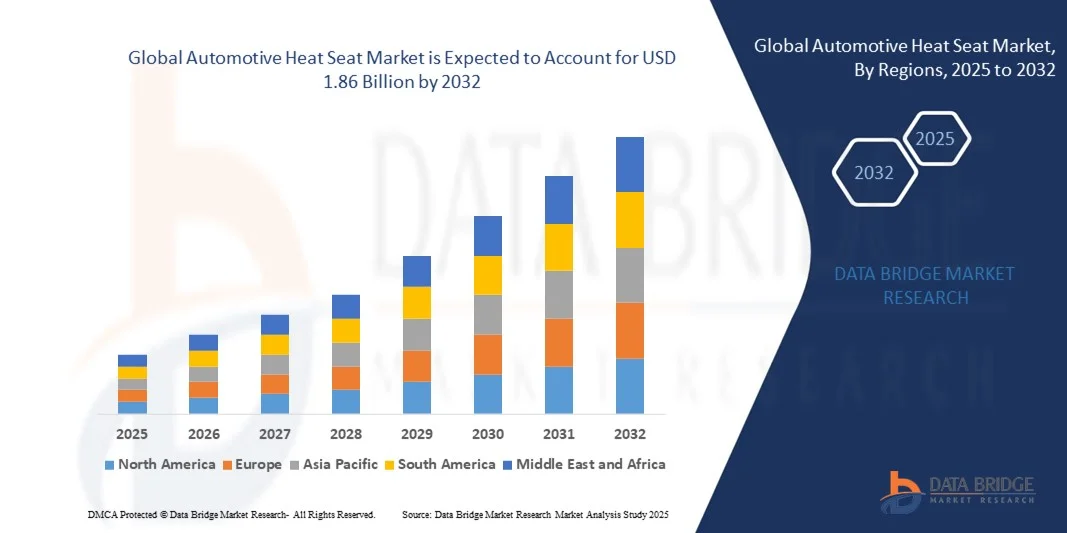
Automotive Heat Seat Market Size
- The global automotive heat seat market size was valued at USD 1.48 billion in 2024 and is expected to reach USD 1.86 billion by 2032, at a CAGR of 2.90% during the forecast period
- The market growth is largely fueled by the increasing adoption of advanced comfort features in vehicles and technological advancements in automotive seat heating systems, leading to enhanced driving comfort and passenger experience across all vehicle segments
- Furthermore, rising consumer demand for energy-efficient, safe, and ergonomic seating solutions, especially in colder regions and electric vehicles, is establishing heated seats as a standard comfort and luxury feature in modern automobiles. These converging factors are accelerating product integration by OEMs and boosting aftermarket demand, thereby driving overall market expansion
Automotive Heat Seat Market Analysis
- Automotive heated seats are electrically powered seating systems that use integrated heating elements to provide controlled warmth to occupants, improving comfort and driving experience in varying climatic conditions. These systems are increasingly incorporated in both passenger and commercial vehicles as part of advanced interior comfort solutions
- The growing popularity of electric and hybrid vehicles, coupled with heightened consumer focus on thermal comfort and energy efficiency, is a key factor propelling demand. In addition, continuous innovation in lightweight materials, intelligent temperature control, and eco-friendly heating technologies further strengthens market growth across global automotive sectors
- Europe dominated the automotive heat seat market with a share of 35.3% in 2024, due to a mature automotive industry, high consumer focus on vehicle comfort, and stringent safety and ergonomics standards
- Asia-Pacific is expected to be the fastest growing region in the automotive heat seat market during the forecast period due to rising vehicle production, growing disposable incomes, and increasing adoption of passenger and electric vehicles in countries such as China, Japan, and India
- Bucket type segment dominated the market with a market share of 66.7% in 2024, due to its ergonomic design, individual comfort control, and widespread adoption in passenger cars and SUVs. Bucket seats allow targeted heating for each occupant, improving user comfort and overall driving experience. Their compatibility with adjustable and memory seat functions further drives demand in mid-to-high-end vehicle segments
Report Scope and Automotive Heat Seat Market Segmentation
|
Attributes |
Automotive Heat Seat Key Market Insights |
|
Segments Covered |
|
|
Countries Covered |
North America
Europe
Asia-Pacific
Middle East and Africa
South America
|
|
Key Market Players |
|
|
Market Opportunities |
|
|
Value Added Data Infosets |
In addition to the market insights such as market value, growth rate, market segments, geographical coverage, market players, and market scenario, the market report curated by the Data Bridge Market Research team includes in-depth expert analysis, import/export analysis, pricing analysis, production consumption analysis, and pestle analysis. |
Automotive Heat Seat Market Trends
Integration of Smart Temperature Control in Seats
- The automotive heat seat market is witnessing a significant transformation with the integration of smart temperature control systems aimed at enhancing passenger comfort, energy efficiency, and overall user experience. Manufacturers are focusing on embedding intelligent sensors and adaptive heating mechanisms that automatically adjust seat temperature according to occupant needs and environmental conditions
- For instance, Gentherm Incorporated has introduced its ClimateSense technology, which uses sensors and AI-based algorithms to create personalized microclimates within the vehicle cabin. Similarly, Lear Corporation is developing smart thermal seating systems with automatic heat adjustment capabilities that respond dynamically to body temperature and surrounding climate variations
- The integration of IoT and advanced control modules allows drivers and passengers to pre-set seat temperatures through mobile applications or voice assistants. These systems ensure consistent comfort levels and reduce unnecessary power consumption, enhancing vehicle efficiency and extending battery life in electric vehicles
- In addition, real-time data analytics and machine learning algorithms are being implemented to optimize seat heating performance based on usage patterns. This data-driven approach enables predictive adjustments, providing both comfort and energy management benefits in modern vehicles
- The adoption of smart seat heating technologies is also becoming a key differentiator for premium and mid-range vehicle segments, as consumers increasingly associate intelligent comfort systems with luxury and innovation. Automakers are incorporating these technologies to strengthen brand perception and appeal to tech-oriented customers
- As the automotive industry moves toward connected and personalized in-cabin experiences, smart temperature control integration in heated seats will continue to expand. This trend is shaping the evolution of next-generation comfort systems, aligning with sustainability objectives and the growing appeal of technology-driven user comfort
Automotive Heat Seat Market Dynamics
Driver
Growing Demand for Premium Comfort Features
- The rising consumer preference for enhanced driving comfort and luxury experiences is a major factor driving the automotive heat seat market. Automakers are continuously upgrading vehicle interiors with advanced comfort features such as temperature-controlled seats to attract buyers seeking premium specifications even in mid-range models
- For instance, Faurecia and Continental AG collaborate with leading car manufacturers to integrate advanced seat heating systems with ergonomic design, ensuring optimal warmth distribution and improved passenger well-being during long drives or extreme weather conditions. These partnerships highlight the growing demand for thermal comfort solutions across global markets
- The rise in disposable income and lifestyle improvements has led customers to increasingly prioritize in-cabin comfort over purely mechanical performance. Heated seats add to luxury appeal and also contribute to driver alertness and reduced fatigue, especially in cold climates where maintaining body warmth is essential for safety
- In addition, the growing adoption of electric and hybrid vehicles is boosting demand for efficient seat heating systems. Compared to conventional cabin heaters, heated seats consume less energy, making them ideal for maintaining thermal comfort while conserving battery power
- As vehicle personalization and comfort technologies become central to consumer preferences, the inclusion of advanced heating systems will continue to be a defining feature across passenger and commercial vehicle segments. The growing emphasis on comfort-oriented automotive design ensures strong long-term market potential for heat seat systems globally
Restraint/Challenge
High Installation Costs
- The high cost associated with integrating advanced seat heating systems poses a significant challenge to market expansion, particularly in cost-sensitive vehicle segments. The need for complex wiring, embedded heating elements, and intelligent control modules significantly raises overall production and installation expenses
- For instance, manufacturers such as Gentherm and Kongsberg Automotive face high development and material costs while engineering flexible heating mats and electronic control units that ensure uniform temperature distribution. These advanced technologies elevate the manufacturing cost per vehicle compared to conventional seat assemblies
- Incorporating heated seats into entry-level models remains difficult due to pricing constraints, as OEMs must balance between offering comfort features and maintaining competitive pricing. The additional expenses associated with thermoelectric materials and safety testing further restrict large-scale adoption in budget segments
- In addition, retrofitting heated seat systems into older vehicles or aftermarket installations involves labor-intensive processes and specialized equipment, increasing total cost for end consumers. This limits the product’s appeal outside of factory-fitted environments and premium models
- Although ongoing technological innovations and process efficiencies are expected to gradually reduce installation costs, affordability remains a critical issue. To achieve broader market penetration, manufacturers will need to adopt cost-effective component sourcing and scalable production strategies while maintaining performance and safety standards
Automotive Heat Seat Market Scope
The market is segmented on the basis of vehicle type, seat material type, electric vehicle type, electric seat type, and sales channel.
- By Vehicle Type
On the basis of vehicle type, the automotive heated seat market is segmented into passenger vehicles and commercial vehicles. The passenger vehicle segment dominated the largest market revenue share in 2024, driven by rising consumer preference for enhanced comfort features in private cars and SUVs. Heated seats are increasingly being perceived as a standard comfort and luxury feature in mid-to-high-end passenger vehicles, encouraging automakers to integrate them in both premium and mainstream models. In addition, colder regions and urban areas with fluctuating climates are boosting demand, as heated seats improve driving comfort and safety during harsh winters. The ease of retrofitting and wide availability of heated seat kits for passenger vehicles further reinforces this segment’s dominance.
The commercial vehicle segment is expected to witness the fastest CAGR from 2025 to 2032, fueled by growing adoption in logistics, long-haul transportation, and passenger transport fleets. Drivers and passengers in commercial vehicles benefit from improved comfort during long journeys, reducing fatigue and enhancing operational efficiency. Increasing focus on driver ergonomics and fleet modernization is accelerating the integration of heated seats in buses, trucks, and vans, particularly in regions with colder climates.
- By Seat Material Type
On the basis of seat material type, the market is segmented into fabric, synthetic leather, and genuine leather. The synthetic leather segment dominated the largest market revenue share in 2024, owing to its balance of cost-effectiveness, durability, and premium feel. Automakers favor synthetic leather for heated seats because it efficiently conducts heat while resisting wear and tear over long-term usage. In addition, synthetic leather allows easy cleaning and maintenance, making it highly suitable for both passenger and commercial vehicles. Its compatibility with various heating mechanisms and ability to support advanced seat features contributes to its widespread adoption.
The genuine leather segment is expected to witness the fastest CAGR from 2025 to 2032, driven by its association with luxury vehicles and premium consumer preferences. Genuine leather offers superior comfort, breathability, and aesthetic appeal, making it an ideal choice for high-end sedans, SUVs, and electric vehicles. Automakers are increasingly integrating advanced heating technologies into genuine leather seats to meet the growing demand for a luxurious in-car experience.
- By Electric Vehicle Type
On the basis of electric vehicle type, the market is segmented into battery electric vehicles (BEVs) and hybrid electric vehicles (HEVs). The BEV segment dominated the largest market revenue share in 2024, supported by the rapid global adoption of fully electric vehicles and growing investments in EV infrastructure. Heated seats are particularly valued in BEVs as they improve passenger comfort while allowing energy-efficient cabin heating, conserving battery life compared to traditional HVAC systems. Increasing consumer awareness about sustainable and efficient vehicle features is further boosting BEV heated seat adoption.
The HEV segment is expected to witness the fastest CAGR from 2025 to 2032, driven by rising production of hybrid vehicles in regions with mixed consumer demand for fuel efficiency and comfort. Heated seats in HEVs offer energy-efficient climate control, enhancing passenger experience without significantly affecting fuel consumption. Expanding hybrid vehicle portfolios from major automakers and growing government incentives for HEVs are accelerating heated seat integration.
- By Electric Seat Type
On the basis of electric seat type, the market is segmented into bucket type and split bench type. The bucket type segment dominated the largest market revenue share of 66.7% in 2024, supported by its ergonomic design, individual comfort control, and widespread adoption in passenger cars and SUVs. Bucket seats allow targeted heating for each occupant, improving user comfort and overall driving experience. Their compatibility with adjustable and memory seat functions further drives demand in mid-to-high-end vehicle segments.
The split bench type segment is expected to witness the fastest CAGR from 2025 to 2032, fueled by increasing adoption in commercial vehicles, pickup trucks, and larger passenger cars. Split bench seats provide flexible seating arrangements and accommodate multiple occupants comfortably while allowing selective heating zones. Manufacturers are incorporating heated split bench seats to enhance passenger comfort and operational convenience in larger vehicles.
- By Sales Channel
On the basis of sales channel, the market is segmented into original equipment manufacturers (OEMs) and aftermarket. The OEM segment dominated the largest market revenue share in 2024, driven by rising consumer demand for factory-fitted comfort features and growing partnerships between automakers and seat heating technology suppliers. OEM integration ensures optimal safety, warranty coverage, and compatibility with vehicle electrical systems, making it the preferred choice for end-users. Enhanced focus on premium trims and rising adoption of heated seats in new vehicle launches further strengthen this segment’s position.
The aftermarket segment is expected to witness the fastest CAGR from 2025 to 2032, driven by increasing demand for retrofitting and upgrading existing vehicles with heated seats. Automotive enthusiasts and fleet operators seek aftermarket solutions to enhance passenger comfort without replacing the entire seating system. Easy availability of plug-and-play kits, growing e-commerce platforms, and competitive pricing are further boosting aftermarket adoption globally.
Automotive Heat Seat Market Regional Analysis
- Europe dominated the automotive heat seat market with the largest revenue share of 35.3% in 2024, driven by a mature automotive industry, high consumer focus on vehicle comfort, and stringent safety and ergonomics standards
- Consumers prioritize heated seats for enhanced comfort, especially in colder regions, improving driving experience during winter and long commutes
- Growth is supported by technological advancements in seat heating systems, integration with electric and hybrid vehicles, and rising adoption in both OEM and aftermarket segments
U.K. Automotive Heated Seat Market Insight
The U.K. market for automotive heated seats is expected to witness significant growth, fueled by consumer preference for premium comfort features in passenger vehicles. Cold weather conditions and increasing awareness of ergonomic seating solutions drive demand. OEMs’ integration of heated seats in mid-to-high-end vehicles, along with aftermarket options, supports market expansion. Rising adoption in both urban and suburban areas further encourages growth.
Germany Automotive Heated Seat Market Insight
Germany held the largest share in the European automotive heated seat market, attributed to its advanced automotive manufacturing sector and high consumer focus on vehicle comfort and safety. Consumers prefer vehicles equipped with technologically advanced heated seats, including multi-zone and adjustable heating options. Integration in premium and electric vehicles, combined with aftermarket retrofitting demand, sustains market growth.
North America Automotive Heated Seat Market Insight
North America holds a significant share of the global automotive heated seat market, driven by a mature automotive industry and strong consumer demand for comfort and convenience features. Widespread adoption in both OEM and aftermarket segments, along with integration into electric and hybrid vehicles, supports growth. The U.S. and Canada lead the market, with rising disposable incomes and emphasis on driver comfort accelerating adoption.
U.S. Automotive Heated Seat Market Insight
The U.S. automotive heated seat market is expected to witness substantial growth, fueled by growing preference for factory-fitted comfort features and retrofitting options. Harsh winter conditions and increasing focus on ergonomics drive consumer adoption. OEM integration in passenger vehicles, SUVs, and electric vehicles, combined with strong aftermarket demand, supports a diverse market ecosystem.
Asia-Pacific Automotive Heated Seat Market Insight
The Asia-Pacific region is expected to witness the fastest growth rate, driven by rising vehicle production, growing disposable incomes, and increasing adoption of passenger and electric vehicles in countries such as China, Japan, and India. Consumers are increasingly valuing comfort features such as heated seats, especially in colder regions or premium vehicles. Government initiatives supporting electric vehicles and modern automotive safety standards further promote adoption.
Japan Automotive Heated Seat Market Insight
Japan’s automotive heated seat market is expected to witness rapid growth due to strong consumer preference for advanced, ergonomically designed seats. Integration of heated seats in OEM vehicles, including electric and hybrid models, accelerates market penetration. Rising interest in aftermarket retrofitting and premium vehicle features further contributes to growth.
China Automotive Heated Seat Market Insight
China holds the largest share of the Asia-Pacific automotive heated seat market, driven by rapid urbanization, increasing vehicle ownership, and growing consumer focus on comfort and convenience. The expanding middle class and emphasis on premium features in passenger and electric vehicles support heated seat adoption. Strong domestic manufacturing and competitive pricing enhance market accessibility and penetration.
Automotive Heat Seat Market Share
The automotive heat seat industry is primarily led by well-established companies, including:
- Continental AG (Germany)
- Faurecia (France)
- Magna International Inc. (Canada)
- Lear Corporation. (U.S.)
- Katzkin Leather, Inc (U.S.)
- Kongsberg Automotive (Norway)
- D&S Automotive (U.S.)
- TACHI-S. (Japan)
- GENTHERM (U.S.)
- TOYOTA BOSHOKU CORPORATION (Japan)
- II-VI Incorporated (U.S.)
- Rostra (U.S.)
- Ultimate Automotive (U.S.)
- Seat Comfort Systems, Inc. (U.S.)
- AUTOMOTIVE CONCEPTS (U.S.)
- Mostrack ltd t/a Motor Mods (U.K.)
- IG Bauerhin (Germany)
- ebm-papst (Germany)
- TrimTechnik (U.S.)
- Check Corporation. (U.S.)
- TS TECH CO.,LTD. (Japan)
Latest Developments in Global Automotive Heat Seat Market
- In December 2024, Adient, Jaguar Land Rover, and Dow collaborated to develop automotive seat foam using closed-loop recycled components. This innovation is significant for the automotive heated seat market as it promotes sustainability by reducing the carbon footprint of vehicles while maintaining comfort and durability. The use of recycled materials demonstrates a shift towards environmentally responsible manufacturing, which is increasingly influencing OEM purchasing decisions. This development sets a benchmark for eco-friendly seat technologies and encourages wider adoption of sustainable materials in both passenger and electric vehicles, strengthening the market’s green credentials
- In September 2024, Gentherm launched a next-generation carbon fiber seat heater designed for rapid heat distribution and lower power consumption. This product directly impacts the market by addressing the growing need for energy-efficient solutions, especially in electric and hybrid vehicles where power management is crucial. Faster heating times and reduced energy usage improve passenger comfort while supporting vehicle efficiency, positioning Gentherm as a leader in advanced thermal management solutions. The innovation also helps OEMs differentiate their vehicles in terms of comfort and eco-friendliness, driving demand for premium heated seat options
- In February 2024, Gentherm introduced WellSense, a software-defined thermal comfort platform for automotive seats. The system uses sensors and machine learning to adapt heating levels to individual passenger preferences. Its impact on the market is substantial, as it enables vehicles to offer personalized comfort, enhancing the overall in-cabin experience and appealing to tech-savvy consumers. WellSense™ also accelerates the integration of smart technologies in vehicles, encouraging automakers to adopt advanced seating solutions to stay competitive in both passenger and electric vehicle segments
- In January 2024, Panasonic developed a carbon fiber-based seat heater that is lightweight and provides rapid heating. This innovation affects the automotive heated seat market by meeting the demand for efficient, fast-heating solutions without compromising energy consumption. Its lightweight design supports vehicle efficiency, particularly in electric vehicles, while delivering enhanced passenger comfort. The technology promotes broader adoption of premium and sustainable materials in vehicle interiors, giving manufacturers the ability to offer differentiated seating options that appeal to environmentally conscious and comfort-focused consumers
- In January 2024, RECARO Automotive, in collaboration with SENSIT!, unveiled FeelTech+, a haptic seating technology that converts sound frequencies into tactile sensations. While primarily designed for performance and simulation seats, its introduction has implications for the heated seat market by enhancing the sensory experience of in-cabin seating. By providing immersive feedback and ergonomic enhancements, this innovation elevates the perceived value of automotive seating. It also encourages OEMs to integrate multi-functional comfort features into premium vehicles, strengthening the market demand for technologically advanced and experiential seating solutions

- Interactive Data Analysis Dashboard
- Company Analysis Dashboard for high growth potential opportunities
- Research Analyst Access for customization & queries
- Competitor Analysis with Interactive dashboard
- Latest News, Updates & Trend analysis
- Harness the Power of Benchmark Analysis for Comprehensive Competitor Tracking
Data collection and base year analysis are done using data collection modules with large sample sizes. The stage includes obtaining market information or related data through various sources and strategies. It includes examining and planning all the data acquired from the past in advance. It likewise envelops the examination of information inconsistencies seen across different information sources. The market data is analysed and estimated using market statistical and coherent models. Also, market share analysis and key trend analysis are the major success factors in the market report. To know more, please request an analyst call or drop down your inquiry.
The key research methodology used by DBMR research team is data triangulation which involves data mining, analysis of the impact of data variables on the market and primary (industry expert) validation. Data models include Vendor Positioning Grid, Market Time Line Analysis, Market Overview and Guide, Company Positioning Grid, Patent Analysis, Pricing Analysis, Company Market Share Analysis, Standards of Measurement, Global versus Regional and Vendor Share Analysis. To know more about the research methodology, drop in an inquiry to speak to our industry experts.
Data Bridge Market Research is a leader in advanced formative research. We take pride in servicing our existing and new customers with data and analysis that match and suits their goal. The report can be customized to include price trend analysis of target brands understanding the market for additional countries (ask for the list of countries), clinical trial results data, literature review, refurbished market and product base analysis. Market analysis of target competitors can be analyzed from technology-based analysis to market portfolio strategies. We can add as many competitors that you require data about in the format and data style you are looking for. Our team of analysts can also provide you data in crude raw excel files pivot tables (Fact book) or can assist you in creating presentations from the data sets available in the report.













