What is the Baby Bath and Shower Product Market Size and Growth Rate?
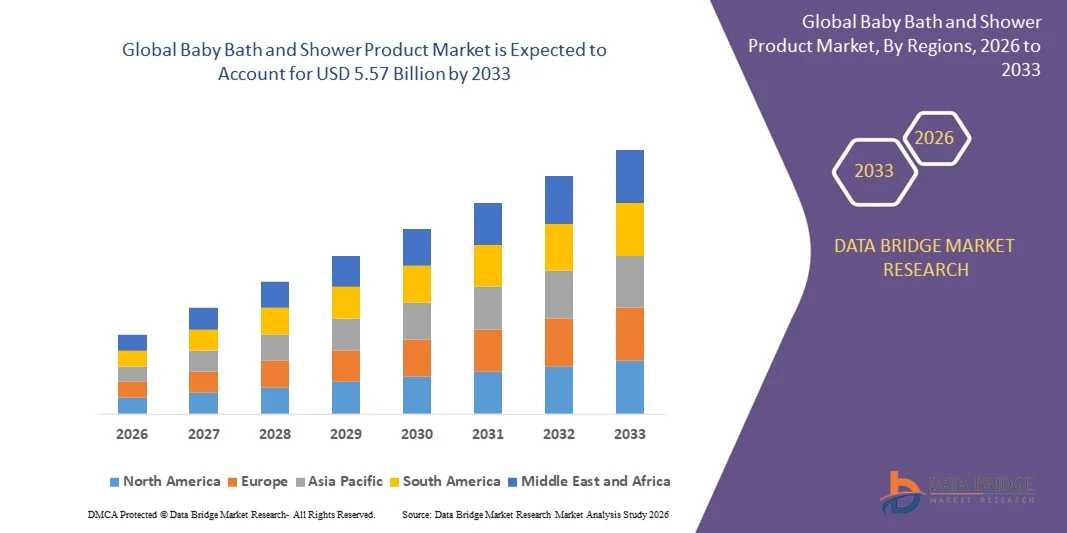
- As per Data Bridge Market Research Analysis the global baby bath and shower product market size was valued at USD 3.90 billion in 2025 and is expected to reach USD 5.57 billion by 2033, at a CAGR of 4.56% during the forecast period
- The market is witnessing steady expansion as manufacturers introduce safer and dermatologically tested formulations tailored for infants
- Increasing awareness of skin sensitivities among new-borns is further driving the adoption of high-quality cleansing products
Market Size & Forecast
- Global Market Value (2025): USD 3.90 billion
- Expected Market Value (2033): USD 5.57 billion
- Forecast CAGR (2026–2033): 4.56%
What are the Major Takeaways of Baby Bath and Shower Product Market?
- Growing preference for natural, hypoallergenic, and chemical-free baby cleansing products. Consumers are increasingly prioritizing clean-label items that minimise irritation risks and support skin health
- Rising influence of e-commerce platforms in boosting global accessibility and product availability
- North America dominated the baby bath and shower product market with the largest revenue share in 2025, driven by increasing parental awareness about infant skin health, the adoption of organic and hypoallergenic formulations, and the growing demand for premium baby care products
- Asia-Pacific region is expected to witness the highest growth rate in the global baby bath and shower product market, driven by rapid urbanization, increasing parental focus on safe and natural baby care formulations, and expanding e-commerce and retail infrastructure across the region
- The Shampoo segment held the largest market revenue share in 2025, driven by its essential role in infant hygiene and widespread adoption across households and childcare facilities. Shampoos formulated with gentle, tear-free, and hypoallergenic ingredients are particularly popular among parents seeking safe daily cleansing options
Report Scope and Baby Bath and Shower Product Market Segmentation
|
Attributes |
Baby Bath and Shower Product Key Market Insights |
|
Segments Covered |
|
|
Countries Covered |
North America
Europe
Asia-Pacific
Middle East and Africa
South America
|
|
Key Market Players |
|
|
Market Opportunities |
|
|
Value Added Data Infosets |
In addition to the insights on market scenarios such as market value, growth rate, segmentation, geographical coverage, and major players, the market reports curated by the Data Bridge Market Research also include in-depth expert analysis, pricing analysis, brand share analysis, consumer survey, demography analysis, supply chain analysis, value chain analysis, raw material/consumables overview, vendor selection criteria, PESTLE Analysis, Porter Analysis, and regulatory framework. |
What is the Key Trend in the Baby Bath and Shower Product Market?
Rise of Gentle and Organic Baby Care Products
- The growing shift toward gentle and organic baby care products is transforming the market by encouraging the use of plant-based, hypoallergenic, and dermatologically tested formulations. These products help reduce skin irritation and allergies, providing safer options for infants and newborns, which in turn boosts parental confidence and adoption
- The increasing demand for natural and chemical-free baby cleansers in both developed and emerging markets is accelerating the introduction of tear-free washes, pH-balanced shampoos, and moisturizing bath solutions. These products are particularly attractive to parents seeking safe and reliable daily care options for their babies
- Affordability and ease of availability of modern baby bath products are making them suitable for regular use in households, nurseries, and childcare facilities. Parents benefit from a wide variety of formulations that cater to sensitive skin, different age groups, and specific needs such as moisturizing or fragrance-free options
- For instance, in 2023, several premium baby care brands in Europe reported higher sales of organic bath washes after introducing plant-based, hypoallergenic variants with gentle fragrances and moisturizing properties. These launches improved consumer trust while increasing brand loyalty
- While organic and gentle formulations are driving market growth, continued innovation in ingredients, packaging, and safety certifications remains essential. Manufacturers must focus on product differentiation and addressing diverse consumer preferences to fully capitalize on this trend
Baby Bath and Shower Product Market Dynamics
Driver
Growing Awareness of Baby Skin Health and Safety
- Increasing parental awareness about infant skin sensitivity and hygiene is prompting more frequent use of gentle bath products. Conditions such as eczema, diaper rash, and dry skin are driving demand for clinically tested and hypoallergenic formulations, encouraging regular usage across different age groups. This trend is also influencing product innovation, with brands developing multi-functional, mild, and tear-free washes to cater to diverse skin needs
- Parents are also motivated by the desire to prevent skin infections, maintain cleanliness, and support overall infant well-being. This has accelerated the adoption of trusted brands and certified organic or chemical-free products. In addition, parental interest in long-term skin health is encouraging repeat purchases and brand loyalty, strengthening market growth
- Regulatory guidelines and endorsements by pediatric associations in many countries further support the safe use of baby bath and shower products. These initiatives encourage manufacturers to produce products meeting safety, quality, and hypoallergenic standards, strengthening market credibility. Compliance with international standards also allows brands to expand into global markets with increased consumer trust
- For instance, in 2022, several North American pediatric councils recommended the use of tear-free, dermatologically tested cleansers, resulting in increased sales and wider adoption of certified gentle products. This endorsement led to enhanced visibility for compliant products and boosted consumer confidence in premium and organic offerings
- While rising awareness is a key driver, accessibility, affordability, and formulation variety remain critical factors to ensure sustained market growth. Manufacturers must continue educating consumers, introducing cost-effective options, and expanding product portfolios to cater to varying consumer preferences and socio-economic segments
Restraint/Challenge
High Cost of Premium Products and Limited Availability in Emerging Regions
- Premium baby bath and shower products often carry higher price points, making them less accessible to middle- and low-income households. This limits widespread adoption in cost-sensitive regions and affects overall market penetration. The price sensitivity also challenges new entrants and smaller brands trying to compete with established premium products
- In several emerging markets, limited retail infrastructure and scarce availability of branded or certified organic products hinder consumer access. Parents may rely on locally produced alternatives, which may lack standardized safety, efficacy, or regulatory compliance. This creates a gap between product demand and market supply, slowing growth in these regions
- Supply chain and distribution challenges further restrict consistent availability, particularly in rural and semi-urban areas. Delays in product delivery, inadequate cold chain or storage facilities, and dependency on third-party distributors affect both reach and consumer trust. These barriers also make it difficult to maintain brand visibility and meet sudden spikes in demand
- For instance, in 2023, surveys in parts of Sub-Saharan Africa and South Asia revealed that over 60% of parents had limited access to certified hypoallergenic baby bath products, citing high costs and distribution gaps as major barriers. This highlights the need for localized production, partnerships with regional distributors, and targeted awareness campaigns
- While innovation and increasing brand presence are improving availability, addressing pricing, distribution, and awareness challenges remains essential for unlocking long-term growth and market potential. Companies focusing on cost-effective organic solutions, e-commerce expansion, and educational initiatives are likely to gain a competitive edge in both developed and emerging markets
How is the Baby Bath and Shower Product Market Segmented?
The market is segmented on the basis of product type, form, price, end user, and distribution channel.
- By Product Type
On the basis of product type, the baby bath and shower product market is segmented into Shampoo, Conditioner, Soap and Shower Gel, Shower Oil, Bath Additives, and Others. The Shampoo segment held the largest market revenue share in 2025, driven by its essential role in infant hygiene and widespread adoption across households and childcare facilities. Shampoos formulated with gentle, tear-free, and hypoallergenic ingredients are particularly popular among parents seeking safe daily cleansing options.
The Soap and Shower Gel segment is expected to witness the fastest growth rate from 2026 to 2033, supported by rising consumer preference for mild, moisturizing cleansers that cater to sensitive skin. Innovative formulations, including natural and organic ingredients, are further boosting demand in both developed and emerging markets.
- By Form
On the basis of form, the market is segmented into Solid, Gel, Liquid, and Others. The Liquid segment held the largest market share in 2025 due to its ease of use, gentle application, and suitability for daily infant care routines. Liquid formulations also allow for enhanced moisturization and infusion of botanical extracts, making them preferred by parents.
The Gel segment is expected to grow at the fastest rate from 2026 to 2033, driven by the popularity of multi-functional cleansing gels that combine bathing and moisturizing benefits. Convenient packaging and portability further increase adoption, especially among working parents and for travel use.
- By Price
On the basis of price, the market is segmented into Premium Baby Care Products and Mass Baby Care Products. The Mass Baby Care Products segment held the largest share in 2025 due to affordability, wide availability, and extensive distribution in both modern and traditional retail channels. These products cater to cost-conscious households while maintaining essential safety and quality standards.
The Premium Baby Care Products segment is expected to witness the fastest growth from 2026 to 2033, supported by increasing demand for organic, natural, and dermatologist-tested formulations. Premium products often emphasize additional features such as tear-free, fragrance-free, and moisturizing benefits, appealing to affluent and health-conscious consumers.
- By End User
On the basis of end user, the market is segmented into Male and Female. The Female segment held the largest market share in 2025, driven by higher awareness of baby care routines among mothers and primary caregivers. Marketing campaigns, targeted packaging, and product education further reinforce adoption in this segment.
The Male segment is expected to grow at the fastest rate from 2026 to 2033, supported by increasing paternal involvement in childcare and rising interest in co-parenting solutions. Manufacturers are introducing gender-neutral and easy-to-use formulations to attract fathers as active buyers.
- By Distribution Channel
On the basis of distribution channel, the market is segmented into Hypermarket and Supermarket, Modern Trade, Specialty Stores, Convenience Stores, Online Retailers, and Others. Hypermarkets and supermarkets held the largest market share in 2025 due to broad product availability, competitive pricing, and convenience for bulk purchasing.
The Online Retailers segment is expected to witness the fastest growth from 2026 to 2033, driven by the convenience of home delivery, extensive product variety, availability of premium and niche brands, and detailed product information including ingredient transparency and reviews.
Baby Bath and Shower Product Market Regional Analysis
- North America dominated the baby bath and shower product market with the largest revenue share in 2025, driven by increasing parental awareness about infant skin health, the adoption of organic and hypoallergenic formulations, and the growing demand for premium baby care products
- Consumers in the region highly value the safety, gentleness, and effectiveness of baby bath products, along with convenience in daily care routines. The availability of tear-free shampoos, moisturizing bath oils, and pH-balanced washes is encouraging widespread adoption
- This strong market presence is further supported by high disposable incomes, a health-conscious population, and the preference for trusted global and local brands, establishing baby bath and shower products as a staple in both household and institutional childcare settings
U.S. Baby Bath and Shower Product Market Insight
The U.S. baby bath and shower product market captured the largest revenue share in 2025 within North America, fueled by the growing preference for organic, chemical-free, and dermatologist-tested formulations. Parents are increasingly prioritizing safe and effective daily cleansing solutions for infants. The trend toward premium and specialized baby bath products, combined with robust online and offline retail availability, is driving market growth. Moreover, marketing campaigns emphasizing product safety and natural ingredients are significantly contributing to the expansion of the market.
Europe Baby Bath and Shower Product Market Insight
The Europe baby bath and shower product market is expected to witness the fastest growth rate from 2026 to 2033, primarily driven by rising awareness of infant skin care, stringent regulatory standards, and the increasing adoption of eco-friendly and hypoallergenic products. Urbanization, dual-income households, and rising disposable incomes are fostering product adoption. The market is also experiencing growth across both mass and premium segments, with baby care products being increasingly incorporated into daily routines in residential and childcare settings.
U.K. Baby Bath and Shower Product Market Insight
The U.K. baby bath and shower product market is expected to witness the fastest growth rate from 2026 to 2033, driven by growing parental focus on safety, hygiene, and natural formulations. Concerns regarding infant skin sensitivity and chemical exposure are motivating parents to choose tear-free, organic, and gentle cleansers. In addition, the U.K.’s well-developed e-commerce and retail infrastructure is expected to further stimulate market growth.
Germany Baby Bath and Shower Product Market Insight
The Germany baby bath and shower product market is expected to witness the fastest growth rate from 2026 to 2033, fueled by high awareness of natural and dermatologically tested products and increasing consumer preference for premium and eco-friendly formulations. Germany’s advanced retail and distribution infrastructure, along with a strong focus on sustainability, promotes the adoption of specialized baby bath and shower products. Integration of moisturizing, fragrance-free, and hypoallergenic products into daily routines is becoming increasingly common.
Asia-Pacific Baby Bath and Shower Product Market Insight
The Asia-Pacific baby bath and shower product market is expected to witness the fastest growth rate from 2026 to 2033, driven by rapid urbanization, rising disposable incomes, and increasing awareness of infant skin health in countries such as China, Japan, and India. The growing inclination toward premium and safe baby care products, supported by government awareness programs and digital retail expansion, is boosting adoption. Furthermore, increasing local manufacturing and availability of cost-effective, gentle formulations are expanding market accessibility.
Japan Baby Bath and Shower Product Market Insight
The Japan baby bath and shower product market is expected to witness the fastest growth rate from 2026 to 2033 due to the country’s high standards for hygiene, safety, and premium baby care products. The increasing number of nuclear families, rising disposable incomes, and urban lifestyle are driving demand. Integration of natural, hypoallergenic, and moisturizing products into infant care routines is fueling market growth, while parents seek easy-to-use and effective solutions.
China Baby Bath and Shower Product Market Insight
The China baby bath and shower product market accounted for the largest revenue share in Asia-Pacific in 2025, attributed to rapid urbanization, expanding middle-class population, and growing awareness of infant skin health. The country represents one of the largest markets for baby care products, with increasing adoption of premium, chemical-free, and organic formulations in both household and commercial childcare settings. Rising e-commerce penetration and the availability of diverse product options are key factors propelling market growth.
Which are the Top Companies in Baby Bath and Shower Product Market?
The Baby Bath and Shower Product industry is primarily led by well-established companies, including:
- KCWW (U.S.)
- Johnson & Johnson Private Limited (U.S.)
- Procter & Gamble (U.S.)
- Unilever (U.K./Netherlands)
- Avon Beauty Products India Pvt Ltd. (India)
- Beiersdorf (Germany)
- Mothercare IN Limited (India)
- Burt's Bees (U.S.)
- Chicco (Italy)
- Babyganics (U.S.)
- The Himalaya Drug Company (India)
- Sebamed (Germany)
- Weleda (Switzerland)
- L'Artisan Parfumeur (France)
- Colgate-Palmolive Company (U.S.)
- The Estée Lauder Companies Inc. (U.S.)
- Henkel AG & Co. KGaA (Germany)
- Natura International Inc. (Brazil)
- Lion Corporation (S) Pte Ltd. (Singapore)
- Reckitt Benckiser (U.K.)

- Interactive Data Analysis Dashboard
- Company Analysis Dashboard for high growth potential opportunities
- Research Analyst Access for customization & queries
- Competitor Analysis with Interactive dashboard
- Latest News, Updates & Trend analysis
- Harness the Power of Benchmark Analysis for Comprehensive Competitor Tracking
Data collection and base year analysis are done using data collection modules with large sample sizes. The stage includes obtaining market information or related data through various sources and strategies. It includes examining and planning all the data acquired from the past in advance. It likewise envelops the examination of information inconsistencies seen across different information sources. The market data is analysed and estimated using market statistical and coherent models. Also, market share analysis and key trend analysis are the major success factors in the market report. To know more, please request an analyst call or drop down your inquiry.
The key research methodology used by DBMR research team is data triangulation which involves data mining, analysis of the impact of data variables on the market and primary (industry expert) validation. Data models include Vendor Positioning Grid, Market Time Line Analysis, Market Overview and Guide, Company Positioning Grid, Patent Analysis, Pricing Analysis, Company Market Share Analysis, Standards of Measurement, Global versus Regional and Vendor Share Analysis. To know more about the research methodology, drop in an inquiry to speak to our industry experts.
Data Bridge Market Research is a leader in advanced formative research. We take pride in servicing our existing and new customers with data and analysis that match and suits their goal. The report can be customized to include price trend analysis of target brands understanding the market for additional countries (ask for the list of countries), clinical trial results data, literature review, refurbished market and product base analysis. Market analysis of target competitors can be analyzed from technology-based analysis to market portfolio strategies. We can add as many competitors that you require data about in the format and data style you are looking for. Our team of analysts can also provide you data in crude raw excel files pivot tables (Fact book) or can assist you in creating presentations from the data sets available in the report.