Baby Cribs Market Size
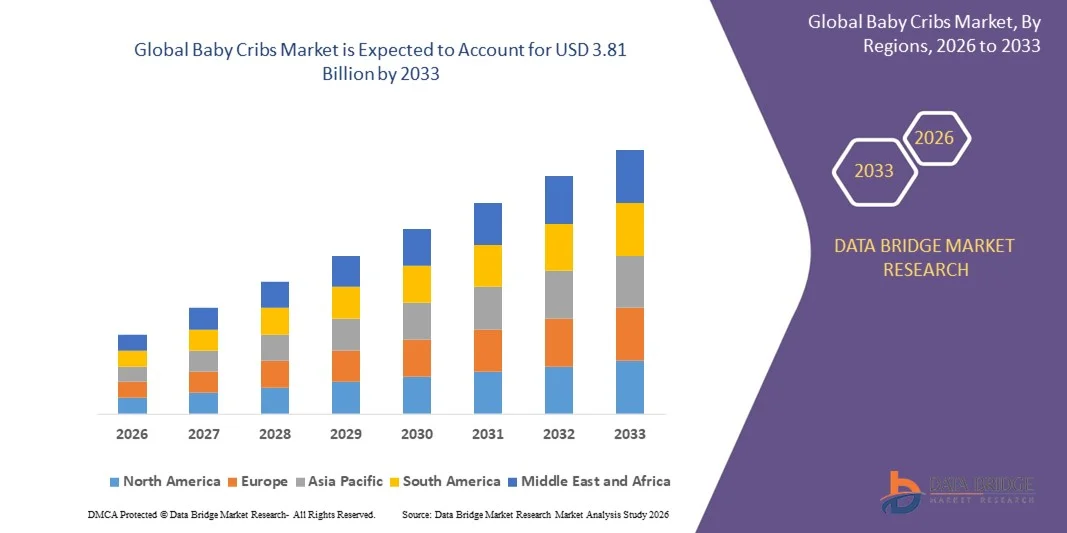
- The global baby cribs market size was valued at USD 2.36 billion in 2025 and is expected to reach USD 3.81 billion by 2033, at a CAGR of 6.2% during the forecast period
- The market growth is primarily driven by the increasing awareness among parents regarding infant safety, comfort, and ergonomically designed sleeping solutions, which is encouraging the adoption of modern and multifunctional baby cribs
- Furthermore, rising consumer preference for smart, convertible, and space-saving crib designs is promoting innovation and product diversification, thereby accelerating market expansion and enhancing the overall value proposition for parents
Baby Cribs Market Analysis
- Baby cribs, providing safe and comfortable sleeping environments for infants and toddlers, are becoming essential nursery furniture due to their focus on safety standards, adjustable features, and aesthetic appeal
- The growing demand for baby cribs is largely fueled by increasing disposable incomes, the rising number of nuclear families, and heightened emphasis on child safety, which is prompting manufacturers to offer innovative designs that meet evolving consumer needs
- North America dominated baby cribs market with a share of over 40% in 2025, due to increasing awareness of infant safety, rising disposable incomes, and the preference for premium, feature-rich cribs
- Asia-Pacific is expected to be the fastest growing region in the baby cribs market during the forecast period due to rising urbanization, increasing disposable incomes, and growing awareness of infant safety and comfort in countries such as China, Japan, and India
- Wood segment dominated the market with a market share of 45.7% in 2025, due to its durability, aesthetic appeal, and compatibility with various nursery décor themes. Wooden cribs are often preferred for their strength, long-lasting nature, and ability to withstand frequent use over multiple years. They also provide a premium feel and stability that parents trust for infant safety. Brands often focus on eco-friendly and non-toxic wooden finishes, further increasing consumer confidence. The availability of customizable designs and finishes enhances the segment’s popularity in residential and commercial settings
Report Scope and Baby Cribs Market Segmentation
|
Attributes |
Baby Cribs Key Market Insights |
|
Segments Covered |
|
|
Countries Covered |
North America
Europe
Asia-Pacific
Middle East and Africa
South America
|
|
Key Market Players |
|
|
Market Opportunities |
|
|
Value Added Data Infosets |
In addition to the insights on market scenarios such as market value, growth rate, segmentation, geographical coverage, and major players, the market reports curated by the Data Bridge Market Research also include in-depth expert analysis, pricing analysis, brand share analysis, consumer survey, demography analysis, supply chain analysis, value chain analysis, raw material/consumables overview, vendor selection criteria, PESTLE Analysis, Porter Analysis, and regulatory framework. |
Baby Cribs Market Trends
Growing Demand for Multifunctional and Convertible Baby Cribs
- A significant trend in the baby cribs market is the increasing demand for multifunctional and convertible cribs that offer extended usability from infancy to toddlerhood, driven by rising parental focus on space optimization and cost-efficiency. These cribs often combine features such as adjustable mattress heights, removable rails, and integration with changing tables, positioning them as essential nursery furniture that caters to evolving family needs
- For instance, Graco Children’s Products Inc. offers convertible cribs that transition into toddler beds, daybeds, and full-sized beds, enabling parents to maximize utility and value from a single purchase. Such multifunctional designs are attracting consumers seeking long-term solutions without frequent replacements
- The demand for eco-friendly and non-toxic crib materials is rising as parents prioritize infant health and safety, influencing manufacturers to adopt sustainable production practices and certifications such as GREENGUARD Gold. This trend is encouraging the development of wooden, low-VOC, and chemical-free crib options across various price ranges
- Baby cribs with integrated smart monitoring features, including sleep tracking, movement sensors, and nightlights, are gaining traction as technology adoption grows among young parents. Companies such as BabyBjörn AB are introducing cribs and bassinets with enhanced monitoring features that combine convenience with safety, reinforcing the integration of technology in nursery furniture
- Retailers and e-commerce platforms are expanding product visibility and accessibility, allowing consumers to compare, customize, and purchase cribs online, which is accelerating market penetration. Major retailers such as Amazon and Walmart are offering extensive crib selections with detailed specifications and customer reviews, boosting informed purchase decisions
- The market is also witnessing innovation in compact and space-saving crib designs that suit urban living conditions with limited nursery space. This rising focus on adaptable and stylish furniture solutions is strengthening consumer preference for cribs that combine functionality, safety, and aesthetic appeal
Baby Cribs Market Dynamics
Driver
Rising Parental Focus on Infant Safety and Comfort
- The growing emphasis on child safety and comfort is driving the demand for high-quality baby cribs designed to meet stringent safety standards, ergonomic guidelines, and durable construction requirements. Parents are increasingly investing in cribs that offer secure sleeping environments and reduce the risk of accidents
- For instance, Stork Craft Manufacturing (USA) Inc. produces cribs with reinforced frames, non-toxic finishes, and adjustable mattress heights to ensure infant safety and parental convenience. Such safety-focused designs are influencing purchasing decisions and reinforcing brand trust
- Awareness campaigns and certifications by organizations such as the Juvenile Products Manufacturers Association (JPMA) are encouraging the adoption of certified cribs that meet rigorous safety criteria. This trend is motivating manufacturers to adhere to standardized testing and improve product reliability
- The rising preference for aesthetically appealing and customizable cribs that match nursery décor is encouraging companies to combine safety with design innovation. Parents are seeking products that provide both functionality and visual appeal, influencing product development strategies
- Increasing disposable incomes and the prioritization of premium nursery products are contributing to sustained growth in the baby cribs market. Parents are willing to invest in cribs that offer comfort, durability, and long-term value, supporting the expansion of both mid-range and high-end segments
Restraint/Challenge
High Cost of Premium and Smart Baby Cribs
- The baby cribs market faces challenges due to the high cost associated with premium and technologically enhanced cribs that incorporate multifunctionality, smart features, and eco-friendly materials. These price points can limit affordability for a significant portion of potential consumers, particularly in emerging markets
- For instance, BabyBjörn AB offers smart cribs with integrated monitoring and ergonomic design at premium prices, which may restrict adoption among cost-sensitive buyers. Such pricing considerations create a barrier to entry for families seeking technologically advanced nursery solutions
- The reliance on sustainable materials, advanced manufacturing techniques, and compliance with strict safety standards increases production costs and impacts overall retail pricing. Manufacturers must balance safety, quality, and affordability to maintain competitive positioning
- Shipping, assembly, and customization requirements for larger or complex crib models further contribute to higher end-user costs, limiting accessibility for some consumers
- The market continues to face constraints in making high-quality, multifunctional, and smart cribs widely available at affordable price points, which may affect overall market penetration and growth potential
Baby Cribs Market Scope
The market is segmented on the basis of product type, material type, price range, application, and distribution channel.
- By Product Type
On the basis of product type, the baby cribs market is segmented into standard, portable, convertible, bassinet, travel, multifunctional, and others. The convertible segment dominated the market with the largest revenue share in 2025, driven by its long-term usability as it can transform from a crib to toddler beds or daybeds. Parents increasingly prefer convertible cribs for their cost-effectiveness and the convenience of adapting to a child’s growth stages. These cribs often feature adjustable mattress heights and durable designs, enhancing safety and practicality. The multifunctional design elements and compatibility with nursery themes further boost the demand for convertible cribs. The segment benefits from widespread availability through both online and offline channels and trusted brand presence.
The portable segment is anticipated to witness the fastest growth rate from 2026 to 2033, fueled by rising urban mobility and the need for flexible sleeping solutions. Portable cribs offer easy assembly, lightweight structure, and travel-friendly designs, making them suitable for frequent relocations or grandparents’ homes. Their compact storage capability and adaptability to limited spaces in apartments and small homes contribute to their increasing adoption. Manufacturers are also integrating smart features and easy-to-clean materials in portable cribs, enhancing convenience for parents. The growing awareness of infant safety during travel further strengthens the adoption of portable cribs globally.
- By Material Type
On the basis of material type, the baby cribs market is segmented into plastic, metal, wood, and others. The wooden segment dominated the market with the largest share of 45.7% in 2025 due to its durability, aesthetic appeal, and compatibility with various nursery décor themes. Wooden cribs are often preferred for their strength, long-lasting nature, and ability to withstand frequent use over multiple years. They also provide a premium feel and stability that parents trust for infant safety. Brands often focus on eco-friendly and non-toxic wooden finishes, further increasing consumer confidence. The availability of customizable designs and finishes enhances the segment’s popularity in residential and commercial settings.
The metal segment is expected to witness the fastest CAGR from 2026 to 2033, driven by its lightweight structure, modern appearance, and ease of maintenance. Metal cribs are particularly preferred in compact spaces and urban households due to their slim frames and foldable designs. Their durability and resistance to wear and tear make them attractive for rental properties and childcare centers. Manufacturers are increasingly introducing powder-coated finishes and innovative design features to improve aesthetics and safety. The segment’s growth is further supported by rising awareness among parents about hygienic and easy-to-clean materials.
- By Price Range
On the basis of price range, the baby cribs market is segmented into economy, mid-range, and premium. The premium segment dominated the market in 2025, fueled by rising disposable incomes and demand for high-quality, safe, and feature-rich cribs. Premium cribs often include adjustable designs, eco-friendly materials, and innovative safety features, meeting both functional and aesthetic requirements. Parents seeking long-term solutions and brand reliability contribute to the sustained demand in this segment. In addition, luxury baby products are increasingly promoted through online platforms, expanding their reach to urban and high-income households. The perception of premium cribs as an investment in child safety and comfort further supports market dominance.
The mid-range segment is anticipated to witness the fastest growth rate from 2026 to 2033, driven by the growing middle-class population seeking quality products at affordable pricing. Mid-range cribs balance durability, functionality, and design at a reasonable cost, making them attractive to a wider consumer base. Retailers and online platforms offer attractive financing options and bundle deals that enhance adoption. Growing awareness about safe sleeping practices and ergonomic designs fuels the preference for mid-range options. Brands are increasingly incorporating multifunctional and adjustable features in this segment, enhancing usability and market appeal.
- By Application
On the basis of application, the baby cribs market is segmented into residential, hospitals, and others. The residential segment dominated the market in 2025, driven by the increasing number of nuclear families and focus on child safety and comfort at home. Residential cribs offer customizable designs, smart features, and compatibility with home décor trends. Parents prioritize products that ensure safety, convenience, and long-term usability, boosting demand for residential cribs. Manufacturers offer wide-ranging designs and materials catering to urban and semi-urban households, further strengthening the segment. Partnerships with e-commerce platforms also enhance product accessibility and convenience for buyers.
The hospitals segment is expected to witness the fastest CAGR from 2026 to 2033, driven by rising institutional requirements for neonatal care and pediatric wards. Hospital cribs are designed for easy sanitization, mobility, and monitoring of infants in clinical settings. Their adoption is increasing due to enhanced safety standards, compliance requirements, and integration with monitoring equipment. Hospitals prefer cribs with adjustable heights, side rails, and lightweight construction for healthcare staff convenience. The segment benefits from growing healthcare infrastructure investments and rising awareness about infant healthcare facilities globally.
- By Distribution Channel
On the basis of distribution channel, the baby cribs market is segmented into wholesalers/distributors, hypermarkets, supermarkets, multi-brand stores, exclusive stores, independent small stores, online retailers, and others. The online retail segment dominated the market in 2025 due to convenience, wider product availability, and the ability to compare features and prices. E-commerce platforms offer detailed product descriptions, customer reviews, and home delivery, enhancing buyer confidence and purchase decisions. Online channels also facilitate access to international brands and customizable crib designs that are not widely available offline. Seasonal sales, discounts, and financing options further drive consumer adoption through digital platforms. The segment continues to benefit from increasing internet penetration and smartphone usage across regions.
The multi-brand store segment is anticipated to witness the fastest growth rate from 2026 to 2033, fueled by increasing consumer preference for physically inspecting products before purchase. Multi-brand stores provide a variety of cribs under one roof, offering both price and design options. These stores also allow consumers to evaluate material quality, finishes, and additional accessories before purchase, enhancing trust. Marketing promotions, in-store financing, and loyalty programs further encourage customer engagement. The segment is gaining traction in urban and semi-urban regions due to the rising presence of organized retail chains and growing consumer purchasing power.
Baby Cribs Market Regional Analysis
- North America dominated the baby cribs market with the largest revenue share of over 40% in 2025, driven by increasing awareness of infant safety, rising disposable incomes, and the preference for premium, feature-rich cribs
- Consumers in the region prioritize products that offer long-term usability, ergonomic designs, and eco-friendly materials, ensuring comfort and safety for newborns and toddlers
- This widespread adoption is further supported by a growing trend of smart and multifunctional nursery furniture, as well as well-established retail and e-commerce networks providing easy access to diverse crib designs
U.S. Baby Cribs Market Insight
The U.S. baby cribs market captured the largest revenue share within North America in 2025, fueled by the increasing number of nuclear families and rising demand for high-quality, convertible, and multifunctional cribs. Parents are increasingly seeking cribs with adjustable mattress heights, safety rails, and sustainable materials that can adapt as the child grows. The growing popularity of online retail platforms, along with easy availability of global crib brands, further supports the market. In addition, rising awareness about safe sleeping practices and nursery ergonomics is significantly contributing to market expansion.
Europe Baby Cribs Market Insight
The Europe baby cribs market is projected to expand at a substantial CAGR during the forecast period, primarily driven by rising urbanization, growing awareness of infant safety standards, and increasing adoption of premium and multifunctional cribs. European consumers value durability, design aesthetics, and eco-friendly materials, which influence their purchasing decisions. The market is experiencing growth across residential households and daycare facilities, with cribs being incorporated into both new constructions and renovations.
U.K. Baby Cribs Market Insight
The U.K. baby cribs market is anticipated to grow at a noteworthy CAGR during the forecast period, driven by rising disposable incomes, heightened awareness of child safety, and a preference for versatile, convertible crib designs. Parents are seeking solutions that provide both functionality and design appeal for modern nurseries. The country’s well-developed e-commerce sector and organized retail network further facilitate easy access to premium and multifunctional crib options, boosting adoption rates.
Germany Baby Cribs Market Insight
The Germany baby cribs market is expected to expand at a considerable CAGR during the forecast period, fueled by increasing awareness of ergonomic and sustainable crib designs. German consumers are particularly focused on safety certifications, eco-friendly materials, and long-lasting products. The integration of multifunctional cribs that can adapt as the child grows, along with robust retail infrastructure and online availability, is encouraging market adoption across residential and institutional segments.
Asia-Pacific Baby Cribs Market Insight
The Asia-Pacific baby cribs market is poised to grow at the fastest CAGR during the forecast period of 2026 to 2033, driven by rising urbanization, increasing disposable incomes, and growing awareness of infant safety and comfort in countries such as China, Japan, and India. The region’s expanding middle-class population, combined with government initiatives promoting child welfare, is boosting the adoption of high-quality and multifunctional cribs.
Japan Baby Cribs Market Insight
The Japan baby cribs market is witnessing steady growth due to rising urbanization, limited living spaces, and demand for compact, portable, and convertible cribs. Japanese consumers emphasize product safety, ease of use, and multifunctionality. The adoption of premium crib designs that integrate space-saving features and modern aesthetics is further driving market expansion.
China Baby Cribs Market Insight
The China baby cribs market accounted for the largest market revenue share in Asia Pacific in 2025, attributed to rapid urbanization, increasing nuclear families, and rising demand for multifunctional and premium cribs. The expanding middle class, coupled with greater awareness of child safety standards, is fueling adoption across residential households. Domestic manufacturers offering innovative, affordable, and customizable crib solutions are significantly contributing to the market’s growth.
Baby Cribs Market Share
The baby cribs industry is primarily led by well-established companies, including:
- Goodbaby International Holdings Ltd. (China)
- Delta Children's Products Corp. (U.S.)
- Graco Children’s Products Inc. (U.S.)
- DAVINCI BABY (U.S.)
- Arm's Reach Concepts (U.S.)
- MILLION DOLLAR BABY (U.S.)
- Dream On Me (U.S.)
- Stork Craft Manufacturing (USA) Inc. (U.S.)
- Sorelle Furniture (U.S.)
- BabyBjörn AB (Sweden)
- Chicco (Italy)
- Natart Juvenile, Inc. (U.S.)
- Kolcraft Enterprises Inc. (U.S.)
- Stokke LLC (Norway)
Latest Developments in Global Baby Cribs Market
- In May 2025, the U.S. government imposed new tariffs on Chinese imports, introducing a 125% reciprocal tariff on baby furniture such as cribs. This resulted in price increases of up to 129% and created significant supply shortages across the U.S. market. Manufacturers such as Delta Children and Newell Brands were forced to halt shipments or raise prices, driving consumers toward U.S.-made or second-hand cribs. The tariff disruption highlighted vulnerabilities in global supply chains, prompting companies to explore relocating production or diversifying sourcing strategies. This development also accelerated the adoption of domestic manufacturing and premium local brands, reshaping competitive dynamics in the baby furniture segment
- In April 2025, Cradlewise, an AI-powered smart crib endorsed by OpenAI’s CEO Sam Altman, officially launched in India at INR 159,900 (~US $1,999). The India launch, paired with Altman’s endorsement, significantly boosted global brand visibility and recognition for Cradlewise. This move accelerated penetration in emerging markets, positioning India as a strategic growth hub for smart crib technology. It also highlighted the increasing demand for premium, technology-driven nursery products outside traditional markets. The launch encouraged other brands to explore AI-enabled features and international expansion, intensifying innovation and competition in the global smart crib segment
- In January 2025, Bosch unveiled its “Revol” smart crib at CES 2025, featuring AI sensors that monitor infant vitals, detect crib hazards, and provide vertical rocking and air-quality monitoring. The product integrates automated soothing and safety alerts, representing a major step forward in intelligent crib solutions. This launch reflects growing consumer interest in comprehensive monitoring and health-focused baby products. By combining safety, comfort, and connectivity, the Revol crib set a new standard in smart crib offerings, influencing competitors to incorporate advanced technology, AI monitoring, and automation in future product development
- In November 2024, Cradlewise announced its India-based manufacturing facility became fully operational, enabling immediate shipping without backlogs. An official update on Reddit highlighted relief among parents awaiting deliveries. This operational expansion strengthened Cradlewise’s reliability, reduced lead times, and enhanced customer trust in the brand. It also reinforced the company’s competitive positioning in the premium smart crib segment, as timely deliveries are critical in the parenting gear market. By ensuring consistent fulfillment, Cradlewise increased customer loyalty and improved its reputation for dependability in a rapidly growing market
- In September 2024, IKEA introduced a new line of modular and convertible baby cribs designed for long-term use, featuring eco-friendly materials and adjustable configurations suitable for growing children. This launch expanded IKEA’s presence in the mid-range crib segment and promoted sustainable, durable, and versatile nursery solutions. By focusing on multifunctionality, adaptability, and environmental responsibility, IKEA influenced market trends toward long-lasting, customizable crib designs. This development encouraged competitors to innovate in modularity, space-saving solutions, and eco-conscious materials, reshaping consumer expectations in the global baby crib market

- Interactive Data Analysis Dashboard
- Company Analysis Dashboard for high growth potential opportunities
- Research Analyst Access for customization & queries
- Competitor Analysis with Interactive dashboard
- Latest News, Updates & Trend analysis
- Harness the Power of Benchmark Analysis for Comprehensive Competitor Tracking
Data collection and base year analysis are done using data collection modules with large sample sizes. The stage includes obtaining market information or related data through various sources and strategies. It includes examining and planning all the data acquired from the past in advance. It likewise envelops the examination of information inconsistencies seen across different information sources. The market data is analysed and estimated using market statistical and coherent models. Also, market share analysis and key trend analysis are the major success factors in the market report. To know more, please request an analyst call or drop down your inquiry.
The key research methodology used by DBMR research team is data triangulation which involves data mining, analysis of the impact of data variables on the market and primary (industry expert) validation. Data models include Vendor Positioning Grid, Market Time Line Analysis, Market Overview and Guide, Company Positioning Grid, Patent Analysis, Pricing Analysis, Company Market Share Analysis, Standards of Measurement, Global versus Regional and Vendor Share Analysis. To know more about the research methodology, drop in an inquiry to speak to our industry experts.
Data Bridge Market Research is a leader in advanced formative research. We take pride in servicing our existing and new customers with data and analysis that match and suits their goal. The report can be customized to include price trend analysis of target brands understanding the market for additional countries (ask for the list of countries), clinical trial results data, literature review, refurbished market and product base analysis. Market analysis of target competitors can be analyzed from technology-based analysis to market portfolio strategies. We can add as many competitors that you require data about in the format and data style you are looking for. Our team of analysts can also provide you data in crude raw excel files pivot tables (Fact book) or can assist you in creating presentations from the data sets available in the report.