Baby diaper Market Size
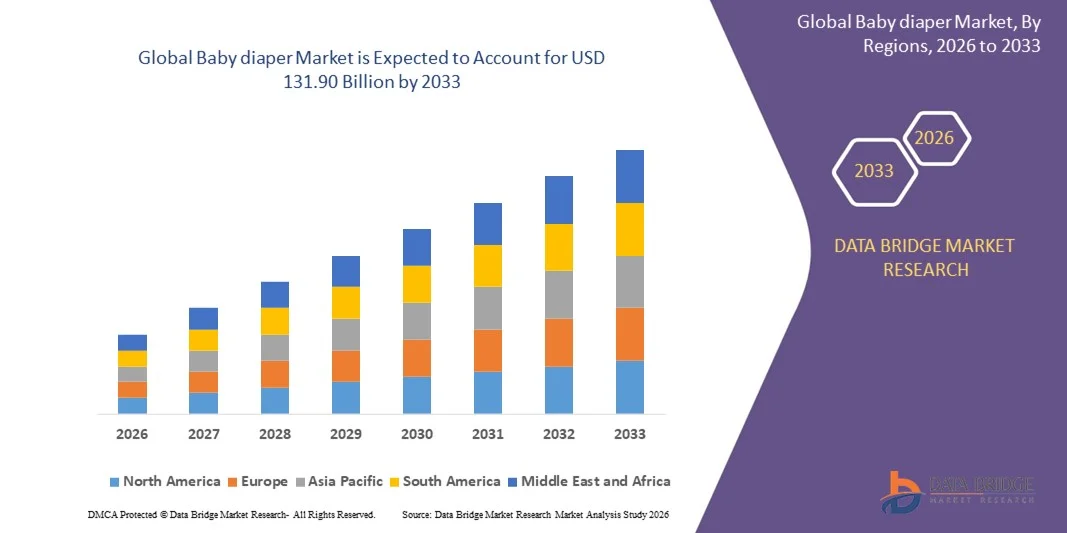
- The global baby diaper market size was valued at USD 76.2 billion in 2025 and is expected to reach USD 131.90 billion by 2033, at a CAGR of 7.1% during the forecast period
- The market growth is largely fueled by rising birth rates in developing economies and increasing awareness regarding infant hygiene and health, leading to higher demand for safe and absorbent diaper products across urban and semi-urban households
- Furthermore, growing participation of women in the workforce and rising disposable incomes are strengthening the preference for convenient and time-saving baby care solutions, establishing disposable diapers as an essential daily-use product. These converging factors are accelerating product adoption, thereby significantly boosting the overall expansion of the baby diaper industry
Baby diaper Market Analysis
- Baby diapers, designed to provide absorbency, leakage protection, and skin comfort for infants and toddlers, have become essential baby care products in both developed and emerging markets due to their role in maintaining hygiene, preventing rashes, and supporting overall child health
- The escalating demand for baby diapers is primarily driven by increasing urbanization, expanding middle-class populations, growing awareness of premium and skin-friendly materials, and a rising preference for convenient, disposable hygiene solutions among modern parents
- North America dominated baby diaper market with a share of 45.3% in 2025, due to high birth-related spending, strong awareness regarding infant hygiene, and widespread availability of premium diaper products
- Asia-Pacific is expected to be the fastest growing region in the baby diaper market during the forecast period due to rising birth rates in developing economies, increasing urbanization, and improving disposable incomes
- Disposable diapers segment dominated the market with a market share of 79.5% in 2025, due to growing preference for convenience, high absorbency, and time-saving hygiene solutions among working parents. Disposable variants offer advanced features such as wetness indicators, breathable layers, and skin-friendly materials, which enhance comfort and reduce the risk of rashes
Report Scope and Baby diaper Market Segmentation
|
Attributes |
Baby diaper Key Market Insights |
|
Segments Covered |
|
|
Countries Covered |
North America
Europe
Asia-Pacific
Middle East and Africa
South America
|
|
Key Market Players |
|
|
Market Opportunities |
|
|
Value Added Data Infosets |
In addition to the insights on market scenarios such as market value, growth rate, segmentation, geographical coverage, and major players, the market reports curated by the Data Bridge Market Research also include in-depth expert analysis, pricing analysis, brand share analysis, consumer survey, demography analysis, supply chain analysis, value chain analysis, raw material/consumables overview, vendor selection criteria, PESTLE Analysis, Porter Analysis, and regulatory framework. |
Baby diaper Market Trends
Increasing Demand for Eco-Friendly and Biodegradable Diapers
- A significant trend in the baby diaper market is the increasing demand for eco-friendly and biodegradable diaper solutions, driven by growing parental awareness regarding environmental sustainability and the long-term impact of plastic waste. This shift is encouraging manufacturers to adopt plant-based materials and reduced-plastic designs in order to align with evolving consumer preferences
- For instance, The Honest Company and DYPER Inc. have introduced plant-based and compostable diaper lines that reduce reliance on conventional petroleum-based materials. These product launches strengthen brand positioning in the premium eco-conscious segment and respond directly to sustainability-focused purchasing behavior
- Major global players are also investing in responsibly sourced raw materials and recyclable packaging to reduce their environmental footprint. This transition is gradually reshaping supply chain strategies and promoting circular economy initiatives within the baby care industry
- Retailers are allocating greater shelf space to sustainable diaper brands, reflecting increasing consumer traction toward green alternatives. This retail support is amplifying product visibility and accelerating mainstream acceptance of biodegradable diaper options
- Innovation in absorbent core technology using bamboo fiber and chlorine-free pulp is further supporting performance parity with traditional disposable diapers. These advancements are positioning sustainable diapers as viable high-performance alternatives rather than niche offerings
- The continued emphasis on sustainability, combined with regulatory pressure to reduce single-use plastic waste, is reinforcing the transition toward environmentally responsible diaper solutions. This trend is reshaping competitive strategies and encouraging long-term investment in eco-friendly product development
Baby diaper Market Dynamics
Driver
Rising Birth Rates and Growing Awareness of Infant Hygiene
- The increasing birth rates across developing economies and heightened awareness regarding infant hygiene are major factors driving the baby diaper market. Parents are prioritizing products that ensure dryness, comfort, and rash prevention to support early childhood health and well-being
- For instance, Procter & Gamble through its Pampers brand continues to expand distribution and introduce advanced absorbent technologies in high-growth markets such as India and Southeast Asia. These initiatives enhance product accessibility and address hygiene needs in densely populated regions
- Government-led maternal and child health awareness programs are also contributing to higher adoption of disposable diapers as part of improved childcare practices. This educational outreach is strengthening consumer understanding of hygiene standards during infancy
- Urbanization and increasing participation of women in the workforce are reinforcing the demand for convenient and time-efficient baby care products. Working parents are increasingly relying on disposable diapers to manage childcare routines more effectively
- The sustained focus on infant health, comfort, and hygiene continues to strengthen this driver, ensuring steady demand for technologically advanced and dermatologist-tested diaper solutions across global markets
Restraint/Challenge
Environmental Concerns Related to Disposable Diaper Waste
- The baby diaper market faces significant challenges due to environmental concerns associated with non-biodegradable diaper waste and landfill accumulation. Conventional disposable diapers contain plastic components that take years to decompose, increasing ecological pressure
- For instance, Ontex Group NV has acknowledged sustainability challenges and committed to reducing the environmental footprint of its products through recyclable packaging and responsible sourcing initiatives. Such measures highlight the industry’s response to mounting regulatory and consumer scrutiny
- Governments in several regions are implementing stricter waste management regulations, increasing compliance requirements for manufacturers. These regulatory frameworks raise operational costs and compel companies to invest in sustainable innovation
- Consumer advocacy groups are also raising awareness about the environmental impact of disposable hygiene products, influencing purchasing decisions toward reusable or biodegradable alternatives. This shift creates competitive pressure on traditional diaper manufacturers
- The ongoing environmental debate surrounding single-use hygiene products continues to pose a structural challenge, compelling industry participants to accelerate sustainability initiatives while managing cost and performance expectations
Baby diaper Market Scope
The market is segmented on the basis of product type, application, size, and distribution channel.
- By Product Type
On the basis of product type, the baby diaper market is segmented into non-disposable diapers and disposable diapers. The disposable diapers segment dominated the market with the largest revenue share of 79.5% in 2025, driven by growing preference for convenience, high absorbency, and time-saving hygiene solutions among working parents. Disposable variants offer advanced features such as wetness indicators, breathable layers, and skin-friendly materials, which enhance comfort and reduce the risk of rashes. Rapid urbanization and rising household incomes have further accelerated their adoption across emerging economies. Strong brand presence and continuous product innovation also support the segment’s leadership position.
The non-disposable diapers segment is anticipated to witness the fastest growth rate from 2026 to 2033, fueled by increasing environmental awareness and demand for sustainable baby care products. Parents are gradually shifting toward reusable cloth diapers due to their cost-effectiveness over the long term and reduced environmental impact. Advancements in organic fabrics and improved absorbent inserts have enhanced their practicality and comfort. Government initiatives promoting eco-friendly products are also contributing to the segment’s accelerating growth trajectory.
- By Application
On the basis of application, the baby diaper market is segmented into open diapers (taped) and closed diapers (pull-up or pants). The open diapers (taped) segment dominated the market with the largest revenue share in 2025, primarily due to their suitability for infants and newborns who require frequent diaper changes. These diapers provide adjustable fastening systems, ensuring a secure fit and minimizing leakage. Parents prefer taped diapers during early developmental stages because they are easier to put on while the baby is lying down. Their wide availability across price ranges further strengthens their market dominance.
The closed diapers (pull-up or pants) segment is expected to witness the fastest growth rate from 2026 to 2033, driven by increasing demand for convenience and ease of use for active toddlers. Pull-up diapers support mobility and are ideal for potty-training phases, allowing children to wear them independently. Their pant-style design reduces diaper-changing time and enhances comfort during movement. Growing awareness regarding hygiene and comfort for older babies is accelerating adoption of this segment.
- By Size
On the basis of size, the baby diaper market is segmented into new born, small, medium, large, and extra large. The medium size segment dominated the market with the largest revenue share in 2025, attributed to the longer duration babies spend in this weight category compared to other stages. Parents tend to purchase medium-sized diapers in bulk due to sustained usage during rapid growth phases. High repeat purchase frequency and strong retail penetration contribute significantly to segment revenue. Manufacturers also focus heavily on this category with varied product offerings and price points.
The extra large segment is projected to witness the fastest growth rate from 2026 to 2033, driven by rising awareness about proper diaper fit for older infants and toddlers. Increasing birth rates in developing regions and improved nutrition are contributing to higher demand for larger sizes. Parents are increasingly prioritizing comfort and leak protection for active toddlers, which supports growth in this category. Expansion of product lines catering specifically to heavier weight ranges further fuels segment expansion.
- By Distribution Channel
On the basis of distribution channel, the baby diaper market is segmented into supermarkets & hypermarkets, pharmacies & drug stores, specialty stores, online, and others. The supermarkets & hypermarkets segment dominated the market with the largest revenue share in 2025, supported by strong consumer preference for one-stop shopping and availability of multiple brands under one roof. Attractive promotional discounts, bulk purchase offers, and immediate product access enhance consumer purchasing decisions. Wide geographical presence and established supply chains further strengthen this segment’s dominance.
The online segment is anticipated to witness the fastest growth rate from 2026 to 2033, driven by rising e-commerce penetration and increasing preference for doorstep delivery. Subscription-based purchasing models and competitive pricing strategies encourage repeat purchases among parents. Digital platforms also provide access to product reviews and detailed specifications, supporting informed buying decisions. Expanding internet access and smartphone usage across emerging economies are accelerating the growth of this channel.
Baby diaper Market Regional Analysis
- North America dominated the baby diaper market with the largest revenue share of 45.3% in 2025, driven by high birth-related spending, strong awareness regarding infant hygiene, and widespread availability of premium diaper products
- Consumers in the region prioritize skin-friendly materials, high absorbency, and advanced features such as wetness indicators and breathable layers, supporting strong demand for branded disposable diapers
- This leadership is further reinforced by high disposable incomes, well-established retail networks, and strong penetration of organized distribution channels, positioning baby diapers as an essential and frequently purchased childcare product across households
U.S. Baby Diaper Market Insight
The U.S. baby diaper market captured the largest revenue share within North America in 2025, fueled by high consumer spending on baby care products and preference for premium, dermatologically tested diapers. Parents increasingly focus on product safety, hypoallergenic materials, and sustainable packaging solutions. The growing demand for convenience products among working parents further strengthens disposable diaper adoption. In addition, the expansion of subscription-based online sales channels significantly contributes to market growth across the country.
Europe Baby Diaper Market Insight
The Europe baby diaper market is projected to expand at a substantial CAGR throughout the forecast period, primarily driven by rising demand for eco-friendly and biodegradable diaper options. Increasing awareness regarding environmental impact and strict regulations on baby care product safety are encouraging manufacturers to introduce sustainable alternatives. Growth in dual-income households and higher hygiene standards are supporting steady product demand. The market is witnessing strong adoption across both Western and Eastern European countries.
U.K. Baby Diaper Market Insight
The U.K. baby diaper market is anticipated to grow at a noteworthy CAGR during the forecast period, driven by increasing preference for premium baby hygiene products and sustainable diaper solutions. Rising awareness regarding infant skin health and comfort is encouraging demand for chemical-free and organic variants. Strong presence of supermarkets, pharmacies, and digital retail platforms supports product accessibility. Continuous promotional campaigns and product innovation are further stimulating market expansion.
Germany Baby Diaper Market Insight
The Germany baby diaper market is expected to expand at a considerable CAGR during the forecast period, fueled by strong emphasis on product quality, sustainability, and environmental responsibility. German consumers demonstrate high preference for biodegradable and reusable diaper options supported by eco-conscious purchasing behavior. Well-developed retail infrastructure and strict product safety standards strengthen consumer confidence. Manufacturers focusing on organic raw materials and reduced plastic usage are gaining competitive advantage in the country.
Asia-Pacific Baby Diaper Market Insight
The Asia-Pacific baby diaper market is poised to grow at the fastest CAGR during the forecast period of 2026 to 2033, driven by rising birth rates in developing economies, increasing urbanization, and improving disposable incomes. Growing awareness regarding infant hygiene and expanding middle-class population are accelerating adoption of branded disposable diapers. Government initiatives supporting maternal and child health programs further contribute to product demand. Expanding local manufacturing capabilities are enhancing product affordability across the region.
Japan Baby Diaper Market Insight
The Japan baby diaper market is gaining momentum due to high product innovation, strong preference for ultra-thin and highly absorbent diapers, and increasing demand for premium baby care products. The country’s focus on advanced hygiene standards and skin-sensitive formulations supports steady consumption. Aging population trends have also encouraged manufacturers to diversify production capabilities, improving technological efficiency. Strong retail penetration and brand loyalty further sustain market growth.
China Baby Diaper Market Insight
The China baby diaper market accounted for the largest market revenue share in Asia Pacific in 2025, attributed to rapid urbanization, expanding middle-class population, and growing spending on infant care products. Rising awareness regarding product quality and safety is encouraging parents to choose branded and premium diaper options. Expansion of e-commerce platforms and domestic manufacturing capabilities enhances product accessibility. Supportive government policies and increasing focus on child health continue to propel market expansion.
Baby diaper Market Share
The baby diaper industry is primarily led by well-established companies, including:
- Procter & Gamble Company (U.S.)
- Kimberly-Clark Corporation (U.S.)
- CHIAUS (Fujian) Industrial Development Co., Ltd. (China)
- Kao Corporation (Japan)
- Unicharm Corporation (Japan)
- Ontex Group NV (Belgium)
- Daio Paper Corporation (Japan)
- Hengan International Group (China)
- WEHOO Hygiene (China)
- Hello Bello (U.S.)
- Babee Greens (U.S.)
- Humble Group AB (Sweden)
- The Honest Company (U.S.)
- Thirsties Inc. (U.S.)
- Nobel Hygiene Pvt. Ltd. (India)
- Mama Bamboo (U.K.)
- Coterie Baby Inc. (U.S.)
- Eco Baby Products Pty Ltd (Australia)
- DYPER Inc. (U.S.)
- Fewer Better Things LLC (U.S.)
Latest Developments in Global Baby diaper Market
- In May 2025, Ontex Group NV introduced a new 360° leak protection system for its baby diapers, designed to deliver enhanced front-to-back and side-to-side coverage for improved dryness and comfort. This innovation strengthens the company’s competitive positioning by addressing one of the primary parental concerns related to leakage protection. By improving performance reliability, the launch is expected to boost brand loyalty and support premium product adoption across key markets. The development reinforces the growing industry focus on advanced absorbent technologies and performance differentiation
- In April 2025, Swara Baby Products, under its Baby Hug Pro brand, launched India’s first tree-free diaper technology, marking a significant advancement in sustainable diaper manufacturing. This introduction positions the company strongly within the eco-friendly baby care segment, catering to rising consumer awareness regarding environmental impact. The innovation supports market expansion in emerging economies where demand for sustainable yet affordable diaper solutions is accelerating. It also intensifies competition among manufacturers to develop biodegradable and resource-efficient alternatives
- In January 2025, Panacea Biotec Pharma, a wholly owned subsidiary of Panacea Biotec, unveiled its new baby diaper brand ‘NikoMom’ to consolidate and strengthen its diaper product portfolio. The launch signals the company’s strategic entry into the organized baby care segment, expanding its presence beyond pharmaceuticals. By leveraging brand integration and distribution capabilities, the company aims to capture a greater share in the growing domestic diaper market. This move is expected to enhance competitive dynamics and broaden consumer choices
- In May 2024, Procter & Gamble’s Pampers brand introduced Swaddlers 360° Diapers, integrating the softness and skin protection of Swaddlers with a pull-on waistband design for easier changes during active baby stages. This product innovation enhances convenience for parents while maintaining high comfort and protection standards, strengthening Pampers’ premium market positioning. The launch supports increased adoption of pant-style diapers and reflects rising demand for user-friendly diapering solutions. It further reinforces the company’s commitment to continuous product enhancement within the baby care industry
- In May 2024, Kimberly-Clark’s Huggies brand launched the Skin Essentials Diaper, developed to address common causes of diaper rash through advanced moisture management and reduced friction. This introduction enhances the brand’s value proposition by focusing on dermatological health and improved skin protection. By targeting a key consumer concern, the launch is expected to drive higher preference among parents seeking medically informed diaper solutions. The development strengthens competitive intensity in the premium and health-focused diaper segment

- Interactive Data Analysis Dashboard
- Company Analysis Dashboard for high growth potential opportunities
- Research Analyst Access for customization & queries
- Competitor Analysis with Interactive dashboard
- Latest News, Updates & Trend analysis
- Harness the Power of Benchmark Analysis for Comprehensive Competitor Tracking
Data collection and base year analysis are done using data collection modules with large sample sizes. The stage includes obtaining market information or related data through various sources and strategies. It includes examining and planning all the data acquired from the past in advance. It likewise envelops the examination of information inconsistencies seen across different information sources. The market data is analysed and estimated using market statistical and coherent models. Also, market share analysis and key trend analysis are the major success factors in the market report. To know more, please request an analyst call or drop down your inquiry.
The key research methodology used by DBMR research team is data triangulation which involves data mining, analysis of the impact of data variables on the market and primary (industry expert) validation. Data models include Vendor Positioning Grid, Market Time Line Analysis, Market Overview and Guide, Company Positioning Grid, Patent Analysis, Pricing Analysis, Company Market Share Analysis, Standards of Measurement, Global versus Regional and Vendor Share Analysis. To know more about the research methodology, drop in an inquiry to speak to our industry experts.
Data Bridge Market Research is a leader in advanced formative research. We take pride in servicing our existing and new customers with data and analysis that match and suits their goal. The report can be customized to include price trend analysis of target brands understanding the market for additional countries (ask for the list of countries), clinical trial results data, literature review, refurbished market and product base analysis. Market analysis of target competitors can be analyzed from technology-based analysis to market portfolio strategies. We can add as many competitors that you require data about in the format and data style you are looking for. Our team of analysts can also provide you data in crude raw excel files pivot tables (Fact book) or can assist you in creating presentations from the data sets available in the report.