


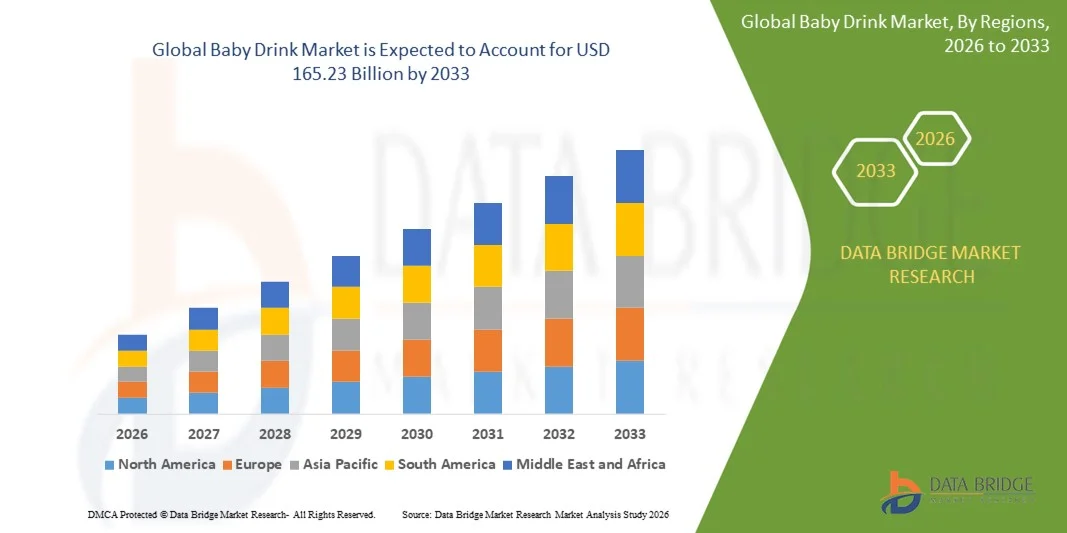
Baby Drink Market Size
- The global baby drink market size was valued at USD 82.92 billion in 2025 and is expected to reach USD 165.23 billion by 2033, at a CAGR of 9.00% during the forecast period
- The market growth is largely fuelled by the increasing awareness among parents about infant nutrition, rising disposable incomes, and the growing demand for fortified and functional baby beverages
- Rapid urbanization and the growing penetration of organized retail and e-commerce channels are further accelerating the availability and accessibility of baby drinks globally
Baby Drink Market Analysis
- The market is witnessing a strong shift toward premium and fortified baby drinks that support immunity, growth, and development in infants and toddlers
- Increasing awareness of pediatric health and nutritional benefits, coupled with lifestyle changes and rising working parents, is boosting demand for convenient, ready-to-drink baby beverages
- North America dominated the baby drink market with the largest revenue share of 35.50% in 2025, driven by increasing awareness about infant nutrition, high disposable incomes, and the growing working parent population seeking convenient feeding solutions
- Asia-Pacific region is expected to witness the highest growth rate in the global baby drink market, driven by rapid population growth, improving healthcare awareness, expanding retail channels, and increasing preference for fortified and functional baby drink products
- The Baby Formula segment held the largest market revenue share in 2025, driven by its widespread use as a primary source of nutrition for infants under one year of age. Baby formulas are enriched with essential vitamins, minerals, and probiotics, offering balanced nutrition and supporting growth and immunity, making them a preferred choice for parents globally
Report Scope and Baby Drink Market Segmentation
|
Attributes |
Baby Drink Key Market Insights |
|
Segments Covered |
|
|
Countries Covered |
North America
Europe
Asia-Pacific
Middle East and Africa
South America
|
|
Key Market Players |
|
|
Market Opportunities |
|
|
Value Added Data Infosets |
In addition to the insights on market scenarios such as market value, growth rate, segmentation, geographical coverage, and major players, the market reports curated by the Data Bridge Market Research also include in-depth expert analysis, pricing analysis, brand share analysis, consumer survey, demography analysis, supply chain analysis, value chain analysis, raw material/consumables overview, vendor selection criteria, PESTLE Analysis, Porter Analysis, and regulatory framework. |
Baby Drink Market Trends
Rise of Fortified and Functional Baby Beverages
- The growing shift toward fortified and functional baby drinks is transforming the baby beverage landscape by enabling enhanced nutrition and overall infant health. Ready-to-drink and powdered formulations allow parents to conveniently provide essential vitamins, minerals, and probiotics, supporting growth and immunity. The trend is further reinforced by rising awareness of childhood nutrition and increased demand for age-specific formulations across all regions
- The high demand for convenient, safe, and nutritious drinks in urban and semi-urban regions is accelerating the adoption of fortified baby beverages. These products are particularly valued where access to diverse natural foods is limited, helping reduce nutritional gaps and support healthy development. Manufacturers are introducing fortified beverages with enhanced flavors, organic ingredients, and easy-to-use packaging to meet evolving consumer preferences
- The affordability and ease of use of modern baby drink formulations are making them attractive for routine feeding. Parents benefit from consistent nutrition without complex preparation, promoting brand loyalty and frequent purchases. Subscription services and e-commerce availability are also facilitating regular access, increasing overall market penetration
- For instance, in 2023, several North American and European baby drink manufacturers reported increased sales of fortified and probiotic-enriched beverages, highlighting growing consumer preference for functional infant nutrition. New launches included products targeting immunity, digestive health, and brain development, demonstrating how product innovation is driving market growth
- While fortified and functional products are accelerating market growth, continued innovation, adherence to regulatory standards, and consumer education are crucial to sustain adoption and long-term expansion. Investments in marketing campaigns emphasizing health benefits and the development of region-specific formulations are further supporting market momentum
Baby Drink Market Dynamics
Driver
Rising Awareness About Infant Nutrition and Growing Working Parent Population
- Increasing awareness about infant health and nutrition is pushing parents to prioritize fortified and functional baby drinks. Products supporting immunity, digestion, and overall growth are driving strong demand in both developed and emerging markets. Educational initiatives and pediatrician endorsements are also contributing to the widespread adoption of nutrient-fortified beverages
- Working parents are increasingly seeking convenient and ready-to-feed options that ensure proper nutrition for infants and toddlers, leading to higher adoption of packaged baby drinks. Busy lifestyles and dual-income households are fueling demand for single-serve packaging and easy-to-prepare formulas, driving sales growth
- Baby drink manufacturers are investing in R&D to develop nutrient-rich, safe, and palatable formulations, strengthening brand differentiation and market growth. Innovations include the incorporation of plant-based proteins, omega-3 fatty acids, and probiotics to address specific health concerns and differentiate offerings in a competitive market
- For instance, in 2022, several companies launched age-specific and immunity-boosting baby drinks enriched with vitamins, minerals, and natural extracts, enhancing market uptake and consumer trust. These launches were accompanied by promotional campaigns highlighting digestive health, immunity, and cognitive development, contributing to higher consumer engagement
- While awareness and convenience are key growth factors, market expansion depends on continued innovation, pricing strategies, and effective communication of health benefits. Companies focusing on premiumization, eco-friendly packaging, and region-specific flavor preferences are likely to capture larger market shares
Restraint/Challenge
High Cost Of Premium Baby Drinks And Regulatory Compliance Requirements
- The high price of fortified and organic baby drinks makes them less accessible to price-sensitive consumers, limiting adoption in certain regions. Premium formulations often carry additional costs due to superior ingredients and advanced processing methods, creating affordability challenges
- Regulatory compliance for ingredient safety, labeling, and quality standards can slow product launches and add operational complexity for manufacturers, especially in cross-border markets. Variations in local regulations across countries may require reformulations or testing, increasing time-to-market and operational costs
- Supply chain limitations, including sourcing of premium ingredients, can affect product availability and increase costs, impacting market expansion. Dependency on imported nutrients or rare natural extracts can create vulnerabilities, particularly in regions with unstable logistics or import restrictions
- For instance, in 2023, several Asia-Pacific manufacturers faced delays in procuring high-quality natural extracts and vitamins, affecting production timelines and market supply. These challenges also led to temporary price increases and limited retail availability, constraining market growth
- While innovation continues to drive product development, addressing cost, regulatory hurdles, and supply chain reliability is essential for sustained growth in the global baby drink market. Strategies such as local sourcing, scalable production technologies, and partnerships with logistics providers are critical to overcoming these challenges
Baby Drink Market Scope
The market is segmented on the basis of product, application, and distribution channel.
- By Product
On the basis of product, the baby drink market is segmented into Baby Formula, Baby Juice, and Baby Electrolyte. The Baby Formula segment held the largest market revenue share in 2025, driven by its widespread use as a primary source of nutrition for infants under one year of age. Baby formulas are enriched with essential vitamins, minerals, and probiotics, offering balanced nutrition and supporting growth and immunity, making them a preferred choice for parents globally.
The Baby Juice segment is expected to witness the fastest growth rate from 2026 to 2033, driven by increasing awareness of complementary nutrition and demand for convenient, ready-to-drink products. Baby juices often contain added nutrients and natural flavors, making them ideal for toddlers and infants transitioning to solid foods while providing hydration and essential micronutrients.
- By Application
On the basis of application, the market is segmented into <6 Months, 6 Months to 12 Months, 12 Months to 36 Months, and >36 Months. The <6 Months segment held the largest revenue share in 2025, owing to high demand for age-specific formulations such as infant milk and starter formulas.
The 12 Months to 36 Months segment is expected to witness the fastest growth, fueled by growing parental preference for toddler-specific beverages enriched with vitamins, minerals, and functional ingredients that support immunity, digestion, and overall development.
- By Distribution Channel
On the basis of distribution channel, the market is segmented into Supermarket and Hypermarket, Pharmacies and Medical Stores, Specialty Stores, Hard Discounter Stores, Online, and Others. The Supermarket and Hypermarket segment dominated the market in 2025, benefiting from extensive retail presence, promotional activities, and bulk purchasing convenience for parents.
The Online segment is anticipated to witness the fastest growth from 2026 to 2033, driven by increasing e-commerce adoption, doorstep delivery, subscription services, and the growing preference for cashless, contactless purchases among busy working parents.
Baby Drink Market Regional Analysis
- North America dominated the baby drink market with the largest revenue share of 35.50% in 2025, driven by increasing awareness about infant nutrition, high disposable incomes, and the growing working parent population seeking convenient feeding solutions
- Consumers in the region highly value fortified, functional, and organic baby drinks that support immunity, digestion, and overall growth, driving frequent purchases and brand loyalty
- This widespread adoption is further supported by the availability of a wide variety of products across retail and online channels, along with strong marketing initiatives by key manufacturers, establishing baby drinks as a preferred nutrition solution for infants and toddlers
U.S. Baby Drink Market Insight
The U.S. baby drink market captured the largest revenue share in 2025 within North America, fueled by rising awareness of infant health and the convenience of ready-to-feed products. Parents increasingly prioritize products enriched with vitamins, minerals, and probiotics to ensure balanced nutrition. The growing adoption of organic and fortified formulations, combined with strong retail distribution and online availability, further propels the market. In addition, promotional campaigns and partnerships with pediatricians are significantly contributing to market expansion.
Europe Baby Drink Market Insight
The Europe baby drink market is expected to witness the fastest growth rate from 2026 to 2033, primarily driven by strict regulatory standards for infant nutrition and rising consumer focus on organic and fortified beverages. Urbanization and increasing dual-income households are fostering demand for convenient, safe, and high-quality baby drinks. The region is experiencing significant growth across both specialty stores and online channels, with manufacturers expanding product portfolios to cater to health-conscious parents.
U.K. Baby Drink Market Insight
The U.K. baby drink market is expected to witness the fastest growth rate from 2026 to 2033, driven by the growing trend of health-focused infant nutrition and convenience-oriented feeding solutions. Parents are increasingly adopting fortified and functional baby drinks to meet specific developmental needs of infants and toddlers. The strong e-commerce infrastructure and widespread awareness campaigns are further supporting market growth in the region.
Germany Baby Drink Market Insight
The Germany baby drink market is expected to witness the fastest growth rate from 2026 to 2033, fueled by rising awareness regarding infant health and high demand for fortified and organic products. Consumers are increasingly seeking baby drinks that support immunity, digestion, and overall growth. Government regulations and quality certifications further reinforce market adoption, while retailers continue to expand premium product offerings for infants and toddlers.
Asia-Pacific Baby Drink Market Insight
The Asia-Pacific baby drink market is expected to witness the fastest growth rate from 2026 to 2033, driven by rising disposable incomes, increasing working parent population, and growing awareness of infant nutrition in countries such as China, India, and Japan. Urbanization and government initiatives promoting infant health are further accelerating adoption. Manufacturers are introducing age-specific and functional baby drinks to cater to diverse nutritional needs, making fortified beverages more accessible to a wider consumer base.
Japan Baby Drink Market Insight
The Japan baby drink market is expected to witness the fastest growth rate from 2026 to 2033 due to the country’s high awareness of infant health, increasing working parents, and strong demand for convenience. Parents are adopting functional and fortified baby drinks to ensure proper growth and immunity. The integration of modern retail and online distribution, combined with educational campaigns on infant nutrition, is fueling market expansion. Moreover, Japan’s aging population is expected to further encourage the development of user-friendly, safe, and nutritious feeding options for infants.
China Baby Drink Market Insight
The China baby drink market accounted for the largest market revenue share in Asia-Pacific in 2025, attributed to the country’s rapidly expanding middle class, high urbanization, and growing awareness of infant nutrition. Baby drinks fortified with vitamins, minerals, and probiotics are becoming increasingly popular among parents seeking convenience and balanced nutrition for their children. The push towards premium, organic, and functional baby drinks, along with strong domestic manufacturing and retail networks, are key factors propelling the market in China.
Baby Drink Market Share
The Baby Drink industry is primarily led by well-established companies, including:
- Nestlé (Switzerland)
- The Kraft Heinz Company (U.S.)
- Mead Johnson & Company, LLC. (U.S.)
- Danone S.A. (France)
- Beingmate Group Co., Ltd. (China)
- CAMPBELL SOUP COMPANY (U.S.)
- Abbott (U.S.)
- Arla Foods amba (Denmark)
- D. Sign Softech Private Limited (India)
- Hain Celestial (U.S.)
- Dana Dairy (U.K.)
- FrieslandCampina (Netherlands)
- HIPP (Germany)
- ORHEI-VIT (Moldova)
- Freed Foods, Inc. (U.S.)
- Holle baby food AG (Switzerland)
- Nature's One (U.S.)
- Organix Brands Limited (U.K.)
- NANNYcare Ltd. (U.K.)
Latest Developments in Global Baby Drink Market
- In August 2024, Abbott, a leading company in the pharmaceutical and baby feed & drinks market, initiated implementation plans for its Pure Bliss by Similac range of organic infant formulas. The development aims to provide parents with a wider variety of formula options tailored to specific infant needs. Abbott also expanded distribution through major retailers such as Amazon, Target, and Walmart, enhancing product accessibility. This move is expected to strengthen Abbott’s market presence, boost consumer trust in organic infant nutrition, and drive growth in the premium baby drinks segment
- In April 2024, Else Nutrition, a prominent player in the plant-based baby cereal and infant formula market, launched its ‘Follow-On’ formula for infants aged 6 to 12 months in Australia. In addition, it introduced a toddler drink product for children aged 12 to 36 months. These developments aim to provide nutrient-rich, plant-based alternatives, supporting healthy growth and meeting the rising demand for sustainable and convenient baby nutrition options. The launches are expected to expand Else Nutrition’s footprint in the Australian market and stimulate adoption of plant-based baby beverages

- Interactive Data Analysis Dashboard
- Company Analysis Dashboard for high growth potential opportunities
- Research Analyst Access for customization & queries
- Competitor Analysis with Interactive dashboard
- Latest News, Updates & Trend analysis
- Harness the Power of Benchmark Analysis for Comprehensive Competitor Tracking
Global Baby Drinks Market, Supply Chain Analysis and Ecosystem Framework
To support market growth and help clients navigate the impact of geopolitical shifts, DBMR has integrated in-depth supply chain analysis into its Global Baby Drinks Market research reports. This addition empowers clients to respond effectively to global changes affecting their industries. The supply chain analysis section includes detailed insights such as Global Baby Drinks Market consumption and production by country, price trend analysis, the impact of tariffs and geopolitical developments, and import and export trends by country and HSN code. It also highlights major suppliers with data on production capacity and company profiles, as well as key importers and exporters. In addition to research, DBMR offers specialized supply chain consulting services backed by over a decade of experience, providing solutions like supplier discovery, supplier risk assessment, price trend analysis, impact evaluation of inflation and trade route changes, and comprehensive market trend analysis.
Data collection and base year analysis are done using data collection modules with large sample sizes. The stage includes obtaining market information or related data through various sources and strategies. It includes examining and planning all the data acquired from the past in advance. It likewise envelops the examination of information inconsistencies seen across different information sources. The market data is analysed and estimated using market statistical and coherent models. Also, market share analysis and key trend analysis are the major success factors in the market report. To know more, please request an analyst call or drop down your inquiry.
The key research methodology used by DBMR research team is data triangulation which involves data mining, analysis of the impact of data variables on the market and primary (industry expert) validation. Data models include Vendor Positioning Grid, Market Time Line Analysis, Market Overview and Guide, Company Positioning Grid, Patent Analysis, Pricing Analysis, Company Market Share Analysis, Standards of Measurement, Global versus Regional and Vendor Share Analysis. To know more about the research methodology, drop in an inquiry to speak to our industry experts.
Data Bridge Market Research is a leader in advanced formative research. We take pride in servicing our existing and new customers with data and analysis that match and suits their goal. The report can be customized to include price trend analysis of target brands understanding the market for additional countries (ask for the list of countries), clinical trial results data, literature review, refurbished market and product base analysis. Market analysis of target competitors can be analyzed from technology-based analysis to market portfolio strategies. We can add as many competitors that you require data about in the format and data style you are looking for. Our team of analysts can also provide you data in crude raw excel files pivot tables (Fact book) or can assist you in creating presentations from the data sets available in the report.













