


Bacteriophage-Based Acne Treatment Market Size
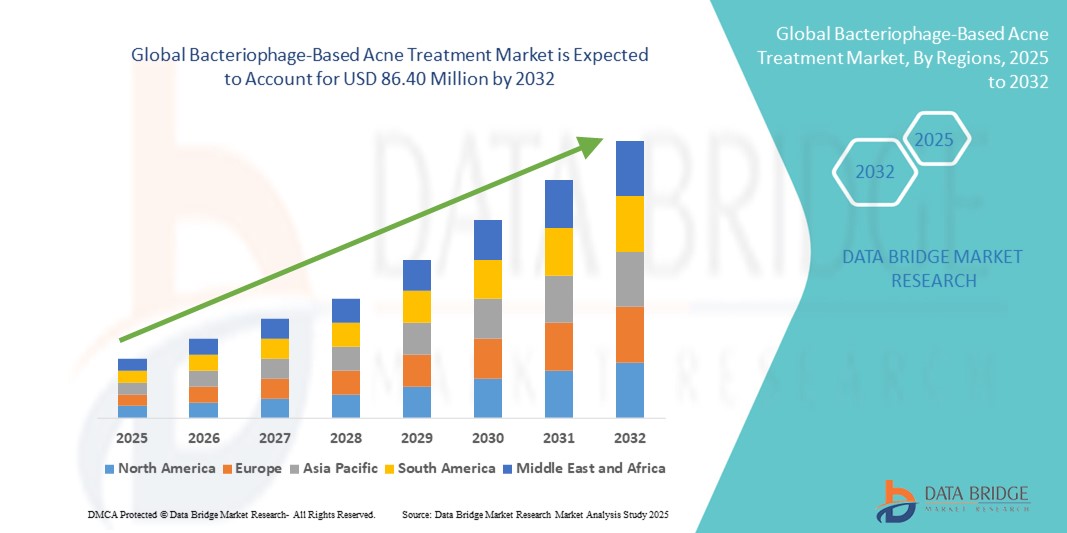
- The global bacteriophage-based acne treatment market size was valued at USD 45.32 million in 2024 and is expected to reach USD 86.40 million by 2032, at a CAGR of 8.40% during the forecast period
- The market growth is largely fueled by the growing adoption and technological progress in microbiome-based therapeutics and precision dermatology, leading to increased interest in natural, targeted solutions for acne management across both clinical and consumer skincare segments
- Furthermore, rising consumer demand for effective, side-effect-free, and antibiotic-alternative acne treatments is establishing bacteriophage-based therapies as a promising innovation in dermatological care. These converging factors are accelerating the uptake of Bacteriophage-Based Acne Treatment solutions, thereby significantly boosting the industry's growth
Bacteriophage-Based Acne Treatment Market Analysis
- Bacteriophage-based acne treatments, utilizing viruses that target and kill acne-causing bacteria such as Cutibacterium acnes (formerly Propionibacterium acnes), are gaining momentum as a promising alternative to antibiotics, particularly amid rising concerns over antimicrobial resistance and the limitations of conventional acne therapies
- The market growth is primarily fueled by increasing prevalence of acne globally, rising demand for targeted and natural treatment options, and a growing pipeline of phage therapy-based dermatological products under clinical evaluation
- North America dominated the bacteriophage-based acne treatment market with the largest revenue share of 41.3% in 2024, owing to strong research and clinical trial activity in the U.S., increased FDA support for bacteriophage therapies, and a surge in consumer demand for microbiome-friendly skincare solutions
- Asia-Pacific is expected to be the fastest growing region in the bacteriophage-based acne treatment market with a CAGR of 23.7% from 2025 to 2032, driven by rising awareness about personalized skincare, growing dermatological investments in countries such as South Korea and Japan, and an expanding cosmetics and dermatology sector
- The Propionibacterium acnes segment dominated the bacteriophage-based acne treatment market with a market share of 57.6% in 2024, as it is the primary bacterium linked to acne development
Report Scope and Bacteriophage-Based Acne Treatment Market Segmentation
|
Attributes |
Bacteriophage-Based Acne Treatment Key Market Insights |
|
Segments Covered |
|
|
Countries Covered |
North America
Europe
Asia-Pacific
Middle East and Africa
South America
|
|
Key Market Players |
|
|
Market Opportunities |
|
|
Value Added Data Infosets |
In addition to the insights on market scenarios such as market value, growth rate, segmentation, geographical coverage, and major players, the market reports curated by the Data Bridge Market Research also include in-depth expert analysis, pricing analysis, brand share analysis, consumer survey, demography analysis, supply chain analysis, value chain analysis, raw material/consumables overview, vendor selection criteria, PESTLE Analysis, Porter Analysis, and regulatory framework. |
Bacteriophage-Based Acne Treatment Market Trends
Personalized Skincare and Targeted Therapies Fuel Market Momentum
- A significant and accelerating trend in the global bacteriophage-based acne treatment market is the increasing demand for precision dermatology and microbiome-friendly skincare solutions. Bacteriophage-based treatments offer a highly targeted mechanism by selectively eliminating acne-causing bacteria without disrupting the overall skin flora, making them a favorable option over traditional broad-spectrum antibiotics
- For instance, several biotech firms are now exploring engineered bacteriophages and phage-derived lysins to combat Cutibacterium acnes (C. acnes), with promising results in both preclinical and early-stage clinical trials. Companies such as PhagoMed and BiomX are investing in phage platforms that are customizable for different skin types and severities of acne
- These advancements allow dermatologists to offer tailored therapies based on the patient’s unique skin microbiome profile, potentially improving outcomes while minimizing side effects. With growing interest in personalized skincare, bacteriophage products are being formulated into gels, serums, and creams suited to specific skin conditions, ethnicities, and hormonal profiles
- Consumer preferences are shifting rapidly toward natural and antibiotic-free solutions, especially among Gen Z and millennial populations concerned with antimicrobial resistance. This shift is further accelerated by increased awareness through skincare influencers and digital health platforms
- Moreover, rising antibiotic resistance in acne treatment is prompting both physicians and patients to explore alternative therapies. Health agencies and dermatology associations globally are also showing support for non-antibiotic options, creating a favorable regulatory landscape for bacteriophage R&D
- Overall, the bacteriophage-based acne treatment market is poised for exponential growth, driven by technological advancements in phage therapy, increasing demand for clean dermatological products, and a growing emphasis on precision and sustainable skincare
Bacteriophage-Based Acne Treatment Market Dynamics
Driver
Growing Need Due to Rising Antibiotic Resistance and Demand for Microbiome-Friendly Therapies
- The increasing prevalence of antibiotic-resistant acne cases, coupled with growing awareness of the skin microbiome's role in dermatological health, is significantly driving the demand for bacteriophage-based acne treatments
- For instance, in April 2024, BiomX Inc. announced promising Phase 1b/2a results from its BX004 bacteriophage therapy targeting C. acnes, with significant bacterial reduction and improved skin clarity observed. Such clinical advancements are expected to bolster the Bacteriophage-Based Acne Treatment Market in the coming years
- As dermatologists and consumers seek alternatives to traditional antibiotics that do not disrupt the skin’s natural flora, phage-based treatments offer precise, targeted action against acne-causing bacteria while preserving beneficial microbes
- Furthermore, the surge in natural and sustainable skincare trends, combined with increasing consumer sensitivity to harsh chemicals, is making phage-based products a compelling option in the clean beauty segment
- The rise in direct-to-consumer teledermatology platforms and e-commerce availability is also enhancing patient access to emerging bacteriophage therapies. Customized and microbiome-tailored skincare regimens featuring phage products are gaining traction among millennials and Gen Z consumers
Restraint/Challenge
Scientific Validation and Regulatory Hurdles
- One of the most pressing challenges for the bacteriophage-based acne treatment market lies in the regulatory uncertainty and the lack of widespread clinical validation. As bacteriophages are biological agents and differ significantly from traditional small-molecule drugs, regulatory bodies like the FDA and EMA are still developing frameworks for their approval
- For instance, while several early-stage trials have shown promise, few products have yet reached late-stage clinical development or secured full commercial approval for dermatological use, especially in North America and Europe
- In addition, standardization of phage cocktails, long-term stability, and production scalability remain technical hurdles. The personalized nature of some phage formulations, while clinically advantageous, can complicate mass-market commercialization
- Cost is another challenge—while prices are likely to fall with broader adoption, current manufacturing and quality control processes for biologics make bacteriophage treatments costlier than conventional topical therapies, limiting accessibility in developing economies.
- To unlock the market’s full potential, firms must invest in robust clinical data, pursue regulatory engagement, and educate both consumers and healthcare professionals about the safety, efficacy, and unique benefits of bacteriophage-based solutions
Bacteriophage-Based Acne Treatment Market Scope
The market is segmented on the basis of type, target bacteria, formulation, end user, and distribution channel.
- By Type
On the basis of type, the bacteriophage-based acne treatment market is segmented into topical bacteriophage therapy, oral bacteriophage therapy, and injectable bacteriophage therapy. The topical bacteriophage therapy segment dominated the market with the largest revenue share of 48.3% in 2024, driven by its ease of use, safety, and high patient compliance.
The injectable therapy segment is projected to grow at the fastest CAGR of 18.4% from 2025 to 2032, due to its increasing use in treating severe or antibiotic-resistant acne cases.
- By Target Bacteria
On the basis of target bacteria, the market is segmented into Propionibacterium acnes, Staphylococcus aureus, and Others. The Propionibacterium acnes segment held a market share of 57.6% in 2024, as it is the primary bacterium linked to acne development.
The Staphylococcus aureus segment is expected to grow at a CAGR of 16.9% during the forecast period, owing to rising concerns over Staph-induced skin complications.
- By Formulation
On the basis of formulation, the market is segmented into creams, gels, lotions, and others. The gel segment led the market with a revenue share of 36.5% in 2024, favored for its rapid absorption and non-greasy feel.
The lotion segment is projected to witness the fastest CAGR of 17.2% from 2025 to 2032, due to rising popularity in combination skincare and hydration-oriented acne solutions.
- By End User
On the basis of end user, the market is segmented into hospitals, dermatology clinics, homecare settings, and others. Dermatology clinics accounted for the largest share of 42.1% in 2024, driven by their role as early adopters of phage therapy and specialist services.
Homecare settings are expected to register the highest CAGR of 19.1% over the forecast period due to increased availability of OTC phage-based products and growing patient preference for at-home acne treatment options.
- By Distribution Channel
On the basis of distribution channel, the market is segmented into hospital pharmacies, retail pharmacies, online pharmacies, and others. Retail pharmacies dominated the market with a share of 41.7% in 2024, due to broad distribution networks and over-the-counter product sales.
Online pharmacies are projected to expand at the fastest CAGR of 20.3% from 2025 to 2032, fueled by e-commerce growth, direct-to-consumer models, and rising demand for discreet acne solutions.
Bacteriophage-Based Acne Treatment Market Regional Analysis
- North America dominated the bacteriophage-based acne treatment market with the largest revenue share of 41.3% in 2024, driven by increasing cases of antibiotic-resistant acne, rising awareness of the skin microbiome, and growing demand for targeted, natural therapies in dermatology
- The region benefits from advanced healthcare infrastructure, strong R&D capabilities, and a growing base of consumers seeking antibiotic alternatives
- This includes increasing clinical trials and product launches from biotech firms focused on microbiome and phage therapy
U.S. Bacteriophage-Based Acne Treatment Market Insight
The U.S. bacteriophage-based acne treatment market captured the largest revenue share of 81% in 2024 within North America, owing to the rising prevalence of acne vulgaris, especially among adolescents and young adults. Favorable FDA regulatory support for novel biologics, coupled with increased investment from startups and pharmaceutical firms in phage therapy, is accelerating market adoption. Additionally, the trend toward personalized and microbiome-friendly skincare is driving demand for phage-based topical solutions available via dermatology clinics and online platforms.
Europe Bacteriophage-Based Acne Treatment Market Insight
The Europe bacteriophage-based acne treatment market is projected to expand at a substantial CAGR during the forecast period due to increasing antibiotic stewardship efforts, supportive government funding for alternative antimicrobial approaches, and the rise of clean beauty trends. The EU’s Horizon funding programs and biotech hubs in countries like France, Germany, and the Netherlands are contributing to the advancement of phage research and dermatological product development.
U.K. Bacteriophage-Based Acne Treatment Market Insight
The U.K. bacteriophage-based acne treatment market is expected to grow at a noteworthy CAGR, supported by the National Health Service (NHS) initiatives to reduce antibiotic prescriptions for non-critical skin conditions. Additionally, rising consumer demand for non-invasive and skin microbiome-preserving treatments is prompting retailers and dermatologists to adopt phage-based acne solutions, especially among teenage and young adult populations.
Germany Bacteriophage-Based Acne Treatment Market Insight
The Germany bacteriophage-based acne treatment market is projected to grow steadily, driven by a strong biotechnology sector, robust clinical trial landscape, and growing awareness of antibiotic resistance risks. Germany's emphasis on sustainability and scientific skincare makes it a favorable market for microbiome-aligned, non-antibiotic acne treatments, including topical phage formulations.
Asia-Pacific Bacteriophage-Based Acne Treatment Market Insight
The Asia-Pacific bacteriophage-based acne treatment market is poised to grow at the fastest CAGR of 23.7% from 2025 to 2032, fueled by a rapidly growing cosmetic dermatology industry, rising incidence of acne among adolescents and adults, and heightened awareness of natural skincare. Countries like China, South Korea, and Japan are investing in biotech innovation, while India is seeing increasing adoption of over-the-counter dermatological phage products through e-commerce and clinics.
Japan Bacteriophage-Based Acne Treatment Market Insight
The Japan bacteriophage-based acne treatment market is gaining momentum due to its high skincare expenditure, widespread acceptance of biotech innovations, and consumer preference for gentle, microbiome-safe therapies. Japanese dermatologists are increasingly participating in clinical research evaluating the efficacy of bacteriophages for resistant acne cases, while cosmetic brands explore phage-infused formulations for sensitive skin types.
China Bacteriophage-Based Acne Treatment Market Insight
The China bacteriophage-based acne treatment market accounted for the largest market revenue share in Asia-Pacific in 2024, driven by a massive teen and young adult population, increased consumer focus on skin health, and growing accessibility of biotech-based acne solutions through online platforms like JD Health and Alibaba. Government support for domestic biologic R&D and increasing public-private collaborations in dermatology are further propelling growth.
Bacteriophage-Based Acne Treatment Market Share
The bacteriophage-based acne treatment industry is primarily led by well-established companies, including:
- PhagoMed Biopharma GmbH (Austria)
- Micreos Human Health (Netherlands)
- Armata Pharmaceuticals, Inc. (U.S.)
- Adaptive Phage Therapeutics (U.S.)
- Intralytix, Inc. (U.S.)
- Locus Biosciences (U.S.)
- Eligo Bioscience (France)
- BiomX Ltd. (Israel)
- EnBiotix, Inc. (U.S.)
- TechnoPhage SA (Portugal)
- ContraFect Corporation (U.S.)
- Felix Biotechnology (U.S.)
- APT Pharmaceuticals (U.S.)
- Amity University (India)
- Nextbiotics (U.S.)
- Pherecydes Pharma (France)
- Queen’s University Belfast (Phage Therapy Research) (U.K.)
- University of Leicester Phage Research (U.K.)
- Shanghai Jiao Tong University Phage Research (China)
- Centre for Phage Therapy, Jagiellonian University (Poland)
Latest Developments in Global Bacteriophage-Based Acne Treatment Market
- In February 2025, Phyla, a U.S.-based biotech skincare company, launched its next-generation Bacteriophage-Based Acne Serum, formulated specifically to target Cutibacterium acnes. This innovation, backed by investment from Shiseido and celebrity Ryan Reynolds, represents a major leap in personalized skincare using phage therapy. The product is now available over-the-counter and has been clinically tested for safety and efficacy, boosting the company's presence in the growing bacteriophage therapeutics market
- In May 2024, BiomX Inc. announced the successful completion of its Phase 1 cosmetic clinical trial for BX001, a topical bacteriophage cocktail targeting C. acnes. The results, published in the Journal of Cosmetic Dermatology, confirmed a significant reduction in bacterial load without skin irritation. This success reinforces BiomX’s strategic direction toward targeted phage-based dermatological solutions, opening the door for Phase 2 trials
- In March 2024, a research team from Harvard Medical School and Brigham and Women's Hospital published findings in Nature Communications on a novel phage therapy that effectively cleared acne lesions in preclinical animal models. The bacteriophages showed 100% efficacy against clinical C. acnes isolates and significantly reduced inflammation, suggesting strong potential for human application
- In April 2024, Eligo Bioscience, a France-based synthetic biology firm, advanced its acne-targeting phage candidate EB005 into preclinical development. The company’s proprietary technology selectively edits the microbiome using CRISPR-guided phages. This development is supported by GlaxoSmithKline and highlights the future of programmable bacteriophage therapeutics in dermatology
- In January 2024, researchers at Peking University published a large-scale surveillance study in Frontiers in Microbiology, revealing that over 88% of Propionibacterium acnes strains were susceptible to custom-formulated bacteriophages. The findings emphasized the rising antibiotic resistance in acne pathogens and the need for phage alternatives—particularly in Asian markets where resistance to clindamycin and erythromycin is widespread

- Interactive Data Analysis Dashboard
- Company Analysis Dashboard for high growth potential opportunities
- Research Analyst Access for customization & queries
- Competitor Analysis with Interactive dashboard
- Latest News, Updates & Trend analysis
- Harness the Power of Benchmark Analysis for Comprehensive Competitor Tracking
Data collection and base year analysis are done using data collection modules with large sample sizes. The stage includes obtaining market information or related data through various sources and strategies. It includes examining and planning all the data acquired from the past in advance. It likewise envelops the examination of information inconsistencies seen across different information sources. The market data is analysed and estimated using market statistical and coherent models. Also, market share analysis and key trend analysis are the major success factors in the market report. To know more, please request an analyst call or drop down your inquiry.
The key research methodology used by DBMR research team is data triangulation which involves data mining, analysis of the impact of data variables on the market and primary (industry expert) validation. Data models include Vendor Positioning Grid, Market Time Line Analysis, Market Overview and Guide, Company Positioning Grid, Patent Analysis, Pricing Analysis, Company Market Share Analysis, Standards of Measurement, Global versus Regional and Vendor Share Analysis. To know more about the research methodology, drop in an inquiry to speak to our industry experts.
Data Bridge Market Research is a leader in advanced formative research. We take pride in servicing our existing and new customers with data and analysis that match and suits their goal. The report can be customized to include price trend analysis of target brands understanding the market for additional countries (ask for the list of countries), clinical trial results data, literature review, refurbished market and product base analysis. Market analysis of target competitors can be analyzed from technology-based analysis to market portfolio strategies. We can add as many competitors that you require data about in the format and data style you are looking for. Our team of analysts can also provide you data in crude raw excel files pivot tables (Fact book) or can assist you in creating presentations from the data sets available in the report.












