


What is the Barakat Syndrome Market Size and Overview?
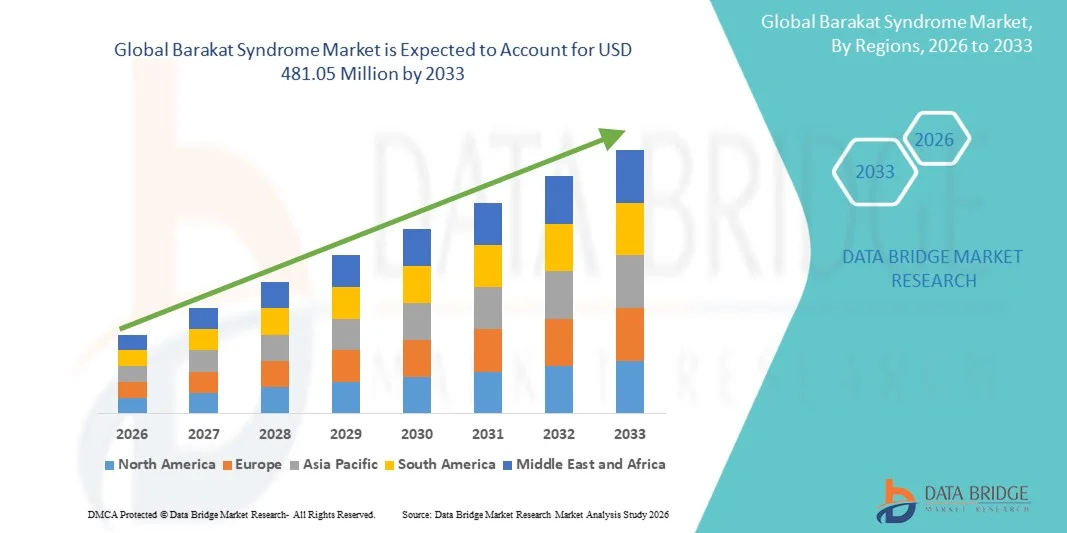
As per Data Bridge Market Research Analysis the Barakat Syndrome Market was valued at USD 236.00 Million in 2025 and is projected to reach USD 481.05 Million by 2033, growing at a CAGR of 9.31% from 2026 to 2033. The Barakat Syndrome Market is witnessing steady but niche-driven growth, primarily supported by increasing recognition of rare genetic and multisystem disorders, improved diagnostic capabilities, and expanding access to advanced genetic testing and nephrology care. Rising awareness among clinicians regarding early identification of Barakat Syndrome (HDR syndrome), which is characterized by hypoparathyroidism, sensorineural deafness, and renal anomalies, is contributing to improved diagnosis rates across pediatric and genetic healthcare settings.
The market is further driven by advancements in genomic sequencing technologies such as next-generation sequencing (NGS), whole exome sequencing, and targeted gene panels, which are enabling earlier and more accurate detection of rare syndromic conditions. Increasing integration of genetic counseling services and multidisciplinary treatment approaches involving nephrologists, endocrinologists, and audiologists is improving long-term patient management outcomes. In addition, growing investments in rare disease research, expanding newborn screening programs in developed regions, and supportive government initiatives for orphan diseases are encouraging better disease registry development and clinical research activities. Although Barakat Syndrome remains underdiagnosed in many regions due to its rarity and overlapping symptoms with other renal and endocrine disorders, improved healthcare infrastructure and expanding access to specialized diagnostic tools are expected to support gradual market expansion globally.
Key Market Trends & Insights
- North America dominated the Barakat Syndrome Market with the largest revenue share of 39.12% in 2025, supported by advanced healthcare infrastructure, high adoption of genetic testing and rare disease diagnostics, strong presence of specialized hospitals, and favorable reimbursement frameworks for orphan diseases. The region also benefits from early diagnosis capabilities using next-generation sequencing (NGS) technologies, strong awareness of genetic syndromes among clinicians, and well-established multidisciplinary care systems involving nephrology, endocrinology, and audiology specialists.
- The cochlear implants segment dominated the market with a revenue share of 46.28% in 2025, owing to the high prevalence of sensorineural hearing loss associated with Barakat (HDR) syndrome and the increasing adoption of advanced auditory rehabilitation technologies.
- Asia-Pacific is the fastest-growing region at a CAGR of 7.9% from 2026 to 2033, fueled by improving healthcare infrastructure, rising awareness of rare genetic disorders, expanding newborn screening programs, and increasing access to advanced diagnostic and treatment facilities across China, India, and Japan. Growing investments in pediatric healthcare and expanding adoption of genetic testing and auditory rehabilitation technologies are further accelerating regional market growth.
- The Hospital Pharmacy segment dominated the distribution channel with a revenue share of 52.14% in 2025, supported by strong hospital-based diagnosis and treatment pathways, availability of multidisciplinary specialists, and direct access to genetic and surgical interventions. Hospitals remain the primary point of care for rare syndromic diseases requiring coordinated long-term management.
- The Online Pharmacies segment is expected to witness the fastest growth at a CAGR of 8.1% from 2026 to 2033, driven by increasing digital healthcare adoption, improved access to rare disease medications, and rising preference for home-based care support solutions. Expanding telemedicine services and e-pharmacy platforms are further enhancing accessibility in both developed and emerging markets.
Market Size & Forecast
- Global Market Value (2025): USD 236.00 Million
- Expected Market Value (2033): USD 481.05 Million
- Forecast CAGR (2026–2033): 9.31%
- Leading Region in 2025: North America
- Fastest Growing Region: Asia-Pacific
Report Scope and Barakat Syndrome Market Segmentation
|
Attributes |
Barakat Syndrome Key Market Insights |
|
Segments Covered |
|
|
Countries Covered |
North America
Europe · Germany · France · U.K. · Netherlands · Switzerland · Belgium · Russia · Italy · Spain · Turkey · Rest of Europe Asia-Pacific · China · Japan · India · South Korea · Singapore · Malaysia · Australia · Thailand · Indonesia · Philippines · Rest of Asia-Pacific Middle East and Africa · Saudi Arabia · U.A.E. · South Africa · Egypt · Israel · Rest of Middle East and Africa South America · Brazil · Argentina · Rest of South America |
|
Key Market Players |
· Cochlear Limited (Australia) · MED-EL Medical Electronics (Austria) · Advanced Bionics (Switzerland/U.S.) · Sonova Holding AG (Switzerland) · GN Store Nord (Denmark) · Demant A/S (Denmark) · Oticon Medical (Denmark) · Starkey Hearing Technologies (U.S.) · WS Audiology (Denmark/Singapore) · Natus Medical Incorporated (U.S.) · Illumina Inc. (U.S.) · Thermo Fisher Scientific Inc. (U.S.) · QIAGEN N.V. (Germany) · Roche Diagnostics (Switzerland) · Abbott Laboratories (U.S.) · Siemens Healthineers AG (Germany) · Bio-Rad Laboratories (U.S.) · Invitae Corporation (U.S.) · Centogene N.V. (Germany) · PerkinElmer Inc. (U.S.) · Eurofins Scientific (Luxembourg) · Ambry Genetics (U.S.) · GeneDx (U.S.) · SRL Diagnostics (India) · Dr. Lal PathLabs Ltd. (India) · Thyrocare Technologies Ltd. (India) · Apollo Hospitals Enterprise Ltd. (India) · Fortis Healthcare Ltd. (India) · Mayo Clinic (U.S.) · Cleveland Clinic (U.S.) · Johns Hopkins Medicine (U.S.) · Massachusetts General Hospital (U.S.) |
|
Market Opportunities |
· Expansion of Advanced Genetic Screening and Early Diagnosis Programs · Growth in Personalized and Multidisciplinary Treatment Approaches · Rising Investment in Rare Disease Research and Orphan Disease Drug Development |
|
Value Added Data Infosets |
In addition to the insights on market scenarios such as market value, growth rate, segmentation, geographical coverage, and major players, the market reports curated by the Data Bridge Market Research also include in-depth expert analysis, geographically represented company-wise production and capacity, network layouts of distributors and partners, detailed and updated price trend analysis and deficit analysis of supply chain and demand. |
What is the Key Trend in the Barakat Syndrome Market?
Trend: Rising Adoption of Precision Genetics and Multidisciplinary Care in Barakat Syndrome
The Barakat syndrome market is witnessing a strong shift toward precision genetics-driven diagnosis and multidisciplinary care models integrating nephrology, audiology, and clinical genetics. Advances in next-generation sequencing (NGS) and whole exome sequencing are enabling earlier detection of HNF1B gene mutations, which are strongly associated with Barakat (HDR) syndrome. According to rare disease genetic studies, a significant share of patients remain undiagnosed or misdiagnosed for years due to overlapping symptoms with isolated renal or hearing disorders.
Hospitals are increasingly adopting integrated rare disease care pathways, where genetic counselling, cochlear implantation for sensorineural deafness, and renal function monitoring are managed in a unified treatment framework. Pediatric hospitals and tertiary care centers in the U.S., Europe, and Japan are establishing rare disease centers of excellence to improve long-term disease management. In addition, advancements in cochlear implant technology (e.g., systems from Cochlear Limited and MED-EL) are improving hearing outcomes in affected patients, while improved imaging and genomic tools are enhancing early diagnosis rates globally.
Barakat Syndrome Market Dynamics
Key Market Driver: Rising Adoption of Advanced Genetic Testing and Early Diagnosis
The increasing availability and affordability of genetic sequencing technologies is a major driver of the Barakat syndrome market. Next-generation sequencing (NGS), chromosomal microarray analysis, and targeted gene panels are being widely used to detect rare disorders linked to HNF1B mutations, which account for a significant proportion of Barakat syndrome cases.
According to clinical genetics research, rare diseases collectively affect over 300 million people worldwide, with a large portion remaining undiagnosed for years due to limited access to molecular diagnostics. Expanding newborn screening programs and hospital-based genetic testing services in North America and Europe are improving early detection rates. Companies such as Illumina Inc., Thermo Fisher Scientific, and QIAGEN are enabling high-throughput and cost-efficient genetic analysis, supporting faster diagnosis and intervention. Early diagnosis is critical, as Barakat syndrome involves renal anomalies, hearing loss, and hypoparathyroidism, where delayed treatment can lead to long-term complications such as chronic kidney disease and irreversible hearing impairment.
Key Restraint/Challenge: Underdiagnosis, Limited Awareness, and High Cost of Genetic Testing
A major challenge in the Barakat syndrome market is underdiagnosis due to low disease awareness and symptom variability. Because the syndrome presents with a combination of renal, auditory, and endocrine abnormalities, it is often misclassified as isolated organ disorders, delaying genetic confirmation.
In addition, high costs associated with advanced genetic testing and sequencing limit accessibility in low- and middle-income countries. Even though sequencing costs have declined significantly over the past decade, comprehensive diagnostic panels remain expensive without insurance coverage or government reimbursement. Another challenge is the lack of standardized treatment protocols, as management is largely symptomatic and supportive rather than curative. Patients often require lifelong multidisciplinary monitoring, increasing the economic burden on healthcare systems and families. Limited availability of specialized rare disease clinics in developing regions further restricts optimal disease management.
Key Market Opportunity: Expansion of Gene-Based Therapies and Rare Disease Research Ecosystem
The Barakat syndrome market presents strong future opportunities through the expansion of gene-based research, precision medicine, and orphan disease programs. The identification of HNF1B gene mutations as a primary genetic driver has opened pathways for targeted research into renal and developmental disorders. Global rare disease initiatives, including the U.S. Orphan Drug Act and the European Rare Disease Plan, are encouraging investment in gene therapy and regenerative medicine. Research institutions are increasingly exploring gene-editing technologies such as CRISPR-Cas9 for correcting monogenic disorders, which could potentially benefit syndromic conditions like Barakat syndrome in the long term. In addition, the growth of digital health platforms and rare disease registries is improving patient tracking, data collection, and clinical trial recruitment. Emerging economies in Asia-Pacific are also expanding genetic diagnostic infrastructure, creating new opportunities for market penetration and early disease management.
How is the Barakat Syndrome Market Segmented?
The Barakat Syndrome market is segmented on the basis of treatment and distributional channel.
- By Treatment
On the basis of treatment, the Barakat Syndrome Market is segmented into genetic counselling, cochlear implants, and surgical therapy. The cochlear implants segment dominated the market with a revenue share of 46.28% in 2025, owing to the high prevalence of sensorineural hearing loss associated with Barakat (HDR) syndrome and the increasing adoption of advanced auditory rehabilitation technologies. Cochlear implantation is widely preferred in pediatric and congenital cases, as it significantly improves speech development and long-term quality of life. Growing availability of next-generation implant systems from manufacturers such as Cochlear Limited and MED-EL Medical Electronics, along with improved surgical outcomes and reimbursement support in developed countries, is further strengthening segment dominance.
The genetic counselling segment is expected to register the fastest growth with a CAGR of 7.4% from 2026 to 2033, driven by increasing awareness of hereditary kidney–ear–parathyroid syndromes and expanding access to genetic testing services. Genetic counselling is becoming a critical component of early diagnosis and family risk assessment, particularly with rising adoption of next-generation sequencing (NGS) for detecting HNF1B gene mutations. Hospitals and rare disease centers in North America and Europe are increasingly integrating counselling services into routine nephrology and audiology care pathways, improving early intervention and disease management outcomes. The surgical therapy segment accounted for 27.16% of the market in 2025, supported by its role in managing renal complications such as structural abnormalities and kidney dysfunction associated with Barakat syndrome. Increasing use of minimally invasive renal and endocrine surgical procedures is improving patient outcomes and reducing hospital stay duration. However, this segment remains limited compared to non-invasive approaches due to the chronic and multisystem nature of the disease.
- By Distribution Channel
On the basis of distribution channel, the Barakat Syndrome Market is segmented into hospital pharmacies, retail pharmacies, online pharmacies, and others. The hospital pharmacy segment dominated the market with a share of 52.84% in 2025, as Barakat syndrome is primarily managed in tertiary care hospitals and specialized rare disease centers. Hospital settings play a central role in genetic diagnosis, cochlear implantation procedures, and long-term renal monitoring, making them the primary channel for treatment access and multidisciplinary care coordination. Increasing hospital-based genetic testing and availability of advanced audiology and nephrology services are further supporting segment dominance.
The online pharmacies segment is expected to witness the fastest CAGR of 8.1% from 2026 to 2033, driven by rising digital healthcare adoption, telemedicine expansion, and improved access to supportive medications for chronic renal and endocrine management. Online platforms are increasingly being used for ordering maintenance medications, supplements, and post-operative care products, particularly in urban regions of Asia-Pacific and North America. Growing integration of e-prescriptions and digital health ecosystems is further accelerating segment growth. The retail pharmacy segment accounted for 28.67% of the market in 2025, supported by its accessibility and widespread presence in both developed and emerging economies. Retail pharmacies play a supporting role in dispensing medications related to calcium regulation, hearing support, and renal care management, especially in outpatient follow-up cases.
Which Region Holds the Largest Share of the Barakat Syndrome Market?
North America dominated the Barakat Syndrome market and accounted for the largest revenue share of 39.12% in 2025, supported by advanced healthcare infrastructure, high adoption of genetic testing and rare disease diagnostics, strong presence of specialized hospitals, and favorable reimbursement frameworks for orphan diseases. The region benefits from early and widespread use of next-generation sequencing (NGS) technologies, enabling faster identification of HNF1B gene mutations associated with Barakat syndrome. In addition, well-established multidisciplinary care systems involving nephrology, endocrinology, and audiology specialists are improving long-term disease management and patient outcomes. Increasing awareness among clinicians and growing integration of rare disease registries are further strengthening regional leadership in the global market.
U.S. Barakat Syndrome Market Insight
The U.S. Barakat Syndrome market is witnessing strong growth due to rising adoption of advanced genetic diagnostics, expansion of rare disease centers of excellence, and increasing utilization of precision medicine approaches. The country’s robust healthcare ecosystem supports widespread use of NGS-based testing, cochlear implantation procedures, and long-term renal monitoring programs for patients with multisystem genetic disorders. In addition, strong government support through orphan disease frameworks and insurance coverage for genetic testing is accelerating early diagnosis and treatment adoption. Research collaborations between academic hospitals and biotechnology companies are further advancing understanding of rare syndromes and improving clinical outcomes.
Europe Barakat Syndrome Market Insight
The Europe Barakat Syndrome market remains a major contributor to global revenue, driven by strong public healthcare systems, advanced genetic research infrastructure, and high awareness of rare genetic disorders. Countries such as Germany, France, and the U.K. have established rare disease networks and genomic medicine programs, supporting early detection and coordinated care. The region also benefits from structured national rare disease registries and government-funded genetic testing initiatives. Increasing integration of cochlear implants and renal disorder management within hospital-based multidisciplinary care pathways continues to support market expansion across Europe.
U.K. Barakat Syndrome Market Insight
The U.K. Barakat Syndrome market is experiencing steady growth, supported by the National Health Service (NHS) rare disease strategy, expanding genomic testing programs, and increasing adoption of precision medicine. The country’s Genomic Medicine Service (GMS) is enabling early identification of rare syndromes, including Barakat syndrome, through large-scale sequencing initiatives. Hospitals are increasingly integrating genetic counselling, audiology services, and nephrology care under coordinated treatment frameworks. Continued investment in rare disease research and digital health infrastructure is strengthening the U.K.’s position in the European market.
Germany Barakat Syndrome Market Insight
The Germany Barakat Syndrome market is expanding steadily due to strong diagnostic infrastructure, advanced laboratory networks, and increasing adoption of genetic sequencing technologies. German university hospitals and specialized medical centers are actively involved in rare disease research, particularly in identifying HNF1B-related syndromes. The country’s strong healthcare reimbursement system and emphasis on precision diagnostics are supporting early detection and long-term disease management. Collaboration between academic institutions and biotech companies is further enhancing innovation in rare disease diagnostics and treatment pathways.
Asia-Pacific Barakat Syndrome Market Insight
The Asia-Pacific Barakat Syndrome market is expected to witness rapid growth, with a CAGR of 7.9% from 2026 to 2033, driven by improving healthcare infrastructure, rising awareness of rare genetic disorders, and expanding access to advanced diagnostic technologies across China, India, and Japan. Increasing investments in pediatric healthcare, expansion of newborn screening programs, and growing availability of genetic testing services are significantly improving early diagnosis rates. Government initiatives to strengthen rare disease frameworks and rising adoption of cochlear implants and renal care treatments are further accelerating regional market growth.
Japan Barakat Syndrome Market Insight
The Japan Barakat Syndrome market is witnessing consistent growth due to advanced healthcare infrastructure, strong genetic research capabilities, and increasing focus on early diagnosis of rare diseases. Japanese hospitals are widely adopting NGS-based genetic testing and integrated rare disease management systems. The country’s aging population and strong emphasis on precision medicine are further supporting demand for multidisciplinary treatment approaches involving renal, auditory, and endocrine care. Continuous research in genomic medicine is enhancing diagnostic accuracy and patient outcomes.
China Barakat Syndrome Market Insight
The China Barakat Syndrome market is growing rapidly, driven by expanding healthcare infrastructure, increasing awareness of rare genetic disorders, and rising government investment in genomic medicine. The adoption of next-generation sequencing (NGS) and expansion of hospital-based genetic testing facilities are improving early detection of rare syndromes. Growing focus on pediatric healthcare, increasing access to cochlear implants, and expansion of tertiary care hospitals are supporting treatment adoption. In addition, national healthcare reforms and rising investments in precision medicine are positioning China as one of the fastest-growing markets in the Asia-Pacific region.
Which are the Top Companies in Barakat Syndrome Market?
The Barakat Syndrome industry is primarily led by well-established companies, including:
- Cochlear Limited (Australia)
- MED-EL Medical Electronics (Austria)
- Advanced Bionics (Switzerland/U.S.)
- Sonova Holding AG (Switzerland)
- GN Store Nord (Denmark)
- Demant A/S (Denmark)
- Oticon Medical (Denmark)
- Starkey Hearing Technologies (U.S.)
- WS Audiology (Denmark/Singapore)
- Natus Medical Incorporated (U.S.)
- Illumina Inc. (U.S.)
- Thermo Fisher Scientific Inc. (U.S.)
- QIAGEN N.V. (Germany)
- Roche Diagnostics (Switzerland)
- Abbott Laboratories (U.S.)
- Siemens Healthineers AG (Germany)
- Bio-Rad Laboratories (U.S.)
- Invitae Corporation (U.S.)
- Centogene N.V. (Germany)
- PerkinElmer Inc. (U.S.)
- Eurofins Scientific (Luxembourg)
- Ambry Genetics (U.S.)
- GeneDx (U.S.)
- SRL Diagnostics (India)
- Dr. Lal PathLabs Ltd. (India)
- Thyrocare Technologies Ltd. (India)
- Apollo Hospitals Enterprise Ltd. (India)
- Fortis Healthcare Ltd. (India)
- Mayo Clinic (U.S.)
- Cleveland Clinic (U.S.)
- Johns Hopkins Medicine (U.S.)
- Massachusetts General Hospital (U.S.)
What are Latest Developments in Barakat Syndrome Market?
- In March 2021, the National Health Service (NHS) England expanded its Genomic Medicine Service (GMS) rollout, strengthening nationwide access to next-generation sequencing (NGS) for rare disease diagnosis. This expansion significantly improved early detection of multisystem genetic disorders such as Barakat syndrome by enabling routine genomic testing in pediatric and nephrology clinics. The initiative integrated genomic sequencing into standard clinical pathways, accelerating diagnosis of conditions linked to HNF1B gene mutations and improving access to personalized care across the UK healthcare system.
- In July 2021, the National Institutes of Health (NIH) Undiagnosed Diseases Network (UDN) continued expanding its multi-institutional rare disease research program in the United States. The initiative focused on improving diagnostic resolution for complex multisystem disorders using whole exome and whole genome sequencing. This contributed to improved identification of rare syndromes with overlapping renal, endocrine, and auditory features, including Barakat syndrome, while strengthening precision medicine approaches in rare disease classification.
- In April 2022, several European reference networks (ERNs), including ERN-RND (Rare Neurological Diseases) and ERKNet (Rare Kidney Diseases), expanded cross-border collaboration programs for rare genetic disorders. These networks enhanced integrated care pathways for patients with syndromic kidney diseases linked to HNF1B mutations. The development improved coordination between nephrologists, geneticists, and audiologists, supporting earlier diagnosis and multidisciplinary treatment of Barakat syndrome across Europe
- In January 2023, the NHS England Genomic Medicine Service advanced its whole genome sequencing (WGS) integration program for pediatric rare diseases. This milestone increased the clinical use of WGS in suspected congenital renal and hearing disorder cases. The expansion directly supported faster identification of Barakat syndrome cases by enabling simultaneous analysis of renal, endocrine, and auditory disorder-linked genes within a single diagnostic workflow
- In September 2023, global adoption of long-read sequencing and advanced next-generation sequencing (NGS) platforms accelerated in academic medical centers and rare disease research institutes. These technologies improved detection of complex structural variations in genes such as HNF1B, which is strongly associated with Barakat syndrome. The advancement enhanced diagnostic yield in patients with unexplained renal cysts, hypoparathyroidism, and sensorineural hearing loss
- In February 2024, multiple pediatric nephrology and genetic research centers in the U.S. and Europe expanded precision medicine programs for congenital kidney disorders. These programs increasingly incorporated genotype-based stratification using NGS, allowing earlier identification of syndromic conditions like Barakat syndrome. Integration of electronic health records with genomic databases improved longitudinal monitoring and family-based genetic counselling adoption
- In June 2025, global rare disease initiatives under organizations such as the Global Alliance for Genomics and Health (GA4GH) strengthened interoperability standards for genomic data sharing. This development enabled better cross-border data exchange for rare multisystem syndromes, improving diagnostic accuracy and accelerating research collaboration for conditions including Barakat syndrome. It also supported AI-driven variant interpretation tools used in rare disease diagnosis

- Interactive Data Analysis Dashboard
- Company Analysis Dashboard for high growth potential opportunities
- Research Analyst Access for customization & queries
- Competitor Analysis with Interactive dashboard
- Latest News, Updates & Trend analysis
- Harness the Power of Benchmark Analysis for Comprehensive Competitor Tracking
Data collection and base year analysis are done using data collection modules with large sample sizes. The stage includes obtaining market information or related data through various sources and strategies. It includes examining and planning all the data acquired from the past in advance. It likewise envelops the examination of information inconsistencies seen across different information sources. The market data is analysed and estimated using market statistical and coherent models. Also, market share analysis and key trend analysis are the major success factors in the market report. To know more, please request an analyst call or drop down your inquiry.
The key research methodology used by DBMR research team is data triangulation which involves data mining, analysis of the impact of data variables on the market and primary (industry expert) validation. Data models include Vendor Positioning Grid, Market Time Line Analysis, Market Overview and Guide, Company Positioning Grid, Patent Analysis, Pricing Analysis, Company Market Share Analysis, Standards of Measurement, Global versus Regional and Vendor Share Analysis. To know more about the research methodology, drop in an inquiry to speak to our industry experts.
Data Bridge Market Research is a leader in advanced formative research. We take pride in servicing our existing and new customers with data and analysis that match and suits their goal. The report can be customized to include price trend analysis of target brands understanding the market for additional countries (ask for the list of countries), clinical trial results data, literature review, refurbished market and product base analysis. Market analysis of target competitors can be analyzed from technology-based analysis to market portfolio strategies. We can add as many competitors that you require data about in the format and data style you are looking for. Our team of analysts can also provide you data in crude raw excel files pivot tables (Fact book) or can assist you in creating presentations from the data sets available in the report.












