Baseball Equipment Market Size
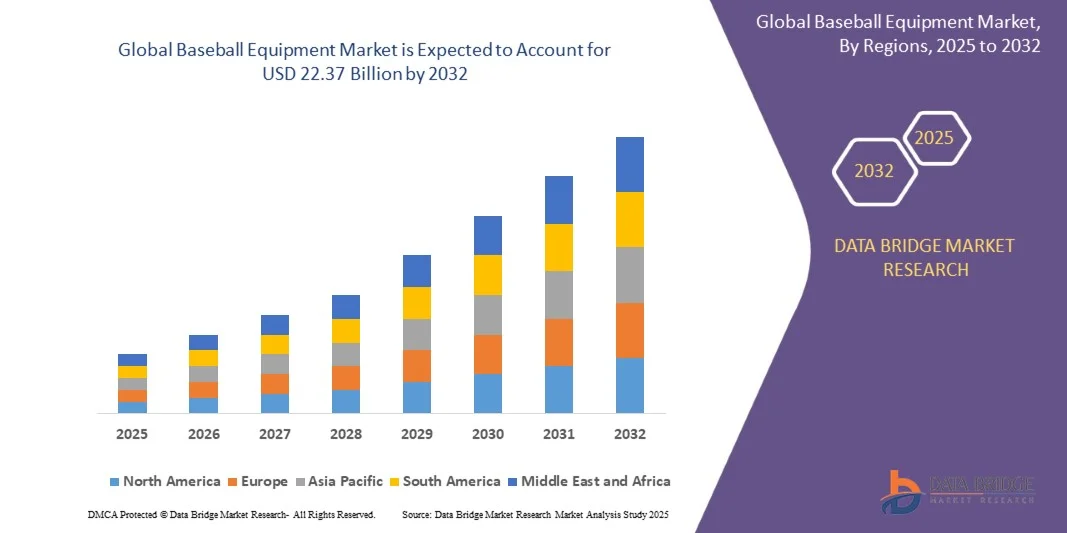
- The global baseball equipment market size was valued at USD 17.69 billion in 2024 and is expected to reach USD 22.37 billion by 2032, at a CAGR of 2.98% during the forecast period
- The market growth is largely fuelled by the increasing popularity of baseball among youth and professional players, rising participation in leagues, and the adoption of advanced, performance-enhancing equipment
- Growing awareness of player safety, technological innovations in gear, and the rising trend of sports training academies are further supporting market expansion
Baseball Equipment Market Analysis
- The market is witnessing a shift toward advanced materials, ergonomic designs, and smart equipment integrated with sensors to enhance player performance, durability, and safety
- Rising participation in amateur and professional baseball across age groups is creating consistent demand for bats, gloves, balls, protective gear, and training equipment
- North America dominated the baseball equipment market with the largest revenue share in 2024, driven by increasing participation in organized leagues, youth academies, and amateur tournaments, as well as heightened awareness of player safety and performance-enhancing equipment
- Asia-Pacific region is expected to witness the highest growth rate in the global baseball equipment market, driven by urbanization, rising disposable incomes, growing sports participation, and increased investment in baseball infrastructure and training programs
- The bat segment held the largest market revenue share in 2024, driven by high demand across professional and amateur leagues and its critical role in the sport. Bats are widely available in different materials and weight specifications, offering players options to enhance performance and comply with league regulations
Report Scope and Baseball Equipment Market Segmentation
|
Attributes |
Baseball Equipment Key Market Insights |
|
Segments Covered |
|
|
Countries Covered |
North America
Europe
Asia-Pacific
Middle East and Africa
South America
|
|
Key Market Players |
|
|
Market Opportunities |
|
|
Value Added Data Infosets |
In addition to the insights on market scenarios such as market value, growth rate, segmentation, geographical coverage, and major players, the market reports curated by the Data Bridge Market Research also include in-depth expert analysis, pricing analysis, brand share analysis, consumer survey, demography analysis, supply chain analysis, value chain analysis, raw material/consumables overview, vendor selection criteria, PESTLE Analysis, Porter Analysis, and regulatory framework. |
Baseball Equipment Market Trends
“Increasing Adoption of Advanced and Performance-Enhancing Equipment”
- The growing shift toward advanced baseball equipment is transforming the sports landscape by improving player performance, safety, and durability. Lightweight bats, ergonomic gloves, and protective gear enable athletes to perform optimally while minimizing injury risks, driving widespread adoption across youth and professional leagues. In addition, technological innovations in materials and design are extending equipment lifespan and enhancing comfort, further boosting market acceptance
- The high demand for technologically improved and customizable baseball equipment is accelerating the development of smart and sensor-integrated gear. These innovations provide real-time performance insights and training feedback, which are particularly valuable for academies, clubs, and competitive teams. Furthermore, integration with mobile apps and analytics platforms is enabling coaches to monitor progress and tailor training programs effectively
- The affordability and improved accessibility of modern baseball equipment are making it attractive for both amateur and professional players. Players and teams benefit from durable, high-quality gear that enhances game experience without incurring prohibitive costs. Wider distribution channels and e-commerce platforms are making it easier for consumers to access premium equipment in remote areas
- For instance, in 2023, several baseball brands launched sensor-embedded bats and gloves that track swing speed, ball trajectory, and grip pressure, gaining significant traction among training academies and professional leagues. These innovations have also helped reduce injury rates and improve overall team performance, attracting attention from schools and sporting clubs globally
- While advanced and performance-focused equipment is driving market growth, continuous innovation, safety compliance, and effective marketing strategies will be essential for sustaining long-term adoption. Manufacturers must also focus on customization, sustainable materials, and training support to maintain competitiveness and cater to diverse player needs
Baseball Equipment Market Dynamics
Driver
“Rising Popularity of Baseball and Growing Focus on Player Safet”
- The increasing popularity of baseball globally is encouraging schools, clubs, and professional teams to invest in high-quality equipment. Participation in organized leagues and amateur tournaments is driving consistent demand for bats, balls, gloves, and protective gear. Government initiatives promoting youth sports and international tournaments are further boosting equipment adoption worldwide
- Players, coaches, and parents are increasingly aware of injury prevention and the benefits of performance-enhancing equipment. This awareness is driving adoption of certified and technologically advanced baseball gear. Continuous campaigns and training programs highlighting safety standards are encouraging more players to upgrade from traditional equipment
- Manufacturers are focusing on producing lightweight, durable, and ergonomically designed equipment to meet evolving player needs. Emphasis on material innovation and safety standards is enhancing customer trust and brand loyalty. Companies are also investing in R&D to introduce eco-friendly and recyclable materials, appealing to environmentally conscious consumers
- For instance, in 2022, Major League Baseball (MLB) clubs reported increased procurement of safety-certified helmets and protective gear for youth academies, highlighting the focus on injury prevention and performance. Similar trends were observed in Europe and Asia, where training centers and leagues prioritized player safety and equipment quality
- While rising participation and safety awareness are propelling the market, continued product innovation, adherence to standards, and widespread distribution will be crucial for sustained growth. Collaborations between manufacturers, sports associations, and educational institutions are essential to ensure market penetration and consistent equipment quality
Restraint/Challenge
“High Cost of Advanced Equipment and Limited Accessibility in Emerging Regions”
- The high cost of technologically advanced baseball equipment, such as sensor-embedded bats and high-performance gloves, limits accessibility for small clubs, schools, and amateur players in emerging markets. This cost barrier remains a significant challenge for market penetration. Many youth programs rely on basic equipment due to budget constraints, which restricts participation in competitive training
- In several regions, limited access to certified suppliers and a lack of sports infrastructure restrict the availability of high-quality baseball equipment. Players often rely on locally made or imported low-cost alternatives, which may compromise safety and performance. Moreover, inconsistent maintenance and replacement of worn-out equipment further exacerbate safety concerns
- Supply chain constraints, including delays in sourcing premium materials and equipment components, further hinder market expansion, particularly in remote or underdeveloped areas. Natural disasters, transport limitations, and geopolitical factors can disrupt the supply of critical materials such as carbon fiber, leather, and high-grade metals, affecting production schedules
- For instance, in 2023, baseball associations in parts of Southeast Asia reported difficulties in sourcing standardized equipment for youth leagues, affecting overall training and competition quality. Similar challenges were noted in Latin America and Africa, where clubs struggled to acquire certified protective gear and bats in time for seasonal tournaments
- While innovations in equipment design and materials continue to evolve, addressing cost, accessibility, and supply chain challenges remains critical for ensuring broader adoption and long-term market sustainability. Manufacturers and distributors need to collaborate with governments, sports organizations, and NGOs to improve affordability, infrastructure, and availability in underserved regions
Baseball Equipment Market Scope
The market is segmented on the basis of product, sales channel, and buyer type.
• By Product
On the basis of product, the baseball equipment market is segmented into bat, helmet, gloves, equipment bag, and accessories. The bat segment held the largest market revenue share in 2024, driven by high demand across professional and amateur leagues and its critical role in the sport. Bats are widely available in different materials and weight specifications, offering players options to enhance performance and comply with league regulations.
The gloves segment is expected to witness the fastest growth rate from 2025 to 2032, driven by increasing participation in youth and amateur baseball and rising focus on player safety. Gloves designed for ergonomic fit, durability, and advanced materials are particularly preferred, helping players improve grip, performance, and injury prevention.
• By Sales Channel
On the basis of sales channel, the market is segmented into independent sports outlets, franchised sports outlets, modern trade channels, direct to customer brand outlets, direct to customer online channels, direct to customer institutional channels, and third-party online channels. The direct to customer online channel held the largest revenue share in 2024 due to the growing trend of e-commerce, convenience of home delivery, and access to product variety. Online platforms also allow for customer reviews, customization options, and easy comparisons, enhancing purchase confidence.
The third-party online channel is expected to witness the fastest growth from 2025 to 2032, driven by increasing digital penetration and partnerships between manufacturers and e-commerce marketplaces. This channel enables global reach, competitive pricing, and promotional offers that attract individual and institutional buyers alike.
• By Buyer Type
On the basis of buyer type, the market is segmented into individual, institutional, and promotional buyers. The individual segment held the largest market revenue share in 2024, fueled by growing personal interest in baseball, participation in local leagues, and recreational play. Individual buyers often seek high-quality, performance-enhancing equipment tailored to their skill level and requirements.
The institutional segment is expected to witness the fastest growth rate from 2025 to 2032, driven by schools, sports academies, and professional clubs increasingly investing in bulk orders for training, tournaments, and player development programs. Institutional buyers prioritize certified, durable, and standardized equipment to ensure safety, compliance, and optimal performance across teams.
Baseball Equipment Market Regional Analysis
- North America dominated the baseball equipment market with the largest revenue share in 2024, driven by increasing participation in organized leagues, youth academies, and amateur tournaments, as well as heightened awareness of player safety and performance-enhancing equipment
- Players, coaches, and parents in the region highly value the durability, safety, and technological enhancements offered by modern baseball gear, including lightweight bats, protective gloves, and sensor-integrated equipment
- This widespread adoption is further supported by strong sports infrastructure, well-established distribution networks, and a growing culture of professional and recreational baseball, establishing advanced equipment as a preferred choice for both individual and institutional players
U.S. Baseball Equipment Market Insight
The U.S. baseball equipment market captured the largest revenue share in 2024 within North America, fueled by the popularity of Major League Baseball (MLB), youth training programs, and competitive school tournaments. Players increasingly prioritize high-quality, ergonomically designed, and performance-focused equipment. The growing use of sensor-enabled bats and gloves, along with smart training devices, further drives market expansion. In addition, the integration of technology in player development and coaching platforms is boosting demand for advanced baseball gear across amateur and professional segments.
Europe Baseball Equipment Market Insight
The Europe baseball equipment market is expected to witness the fastest growth rate from 2025 to 2032, primarily driven by rising interest in baseball in countries such as the Netherlands, Italy, and Germany. Increased urbanization, organized leagues, and growing adoption of safety-focused equipment are fueling market expansion. European consumers are also drawn to technologically advanced and certified gear for both amateur and professional use. The region is experiencing steady growth across youth academies, clubs, and schools, with advanced equipment being incorporated into both training and competitive play.
U.K. Baseball Equipment Market Insight
The U.K. baseball equipment market is expected to witness the fastest growth rate from 2025 to 2032, driven by the rising popularity of baseball in schools, clubs, and community leagues. Concerns regarding player safety and performance are encouraging coaches and parents to invest in high-quality gear. The U.K.’s growing adoption of technology-enhanced training methods, combined with e-commerce availability, is expected to continue stimulating demand for bats, gloves, helmets, and protective equipment.
Germany Baseball Equipment Market Insight
The Germany baseball equipment market is expected to witness significant growth from 2025 to 2032, fueled by the expansion of youth baseball programs and the increasing focus on injury prevention. Germany’s well-developed sports infrastructure and emphasis on quality and safety standards promote the adoption of advanced baseball equipment, particularly for training academies and competitive leagues. Technologically integrated equipment, such as sensor-enabled bats and performance-monitoring gloves, is gaining popularity, aligning with local expectations for professional-grade sports gear.
Asia-Pacific Baseball Equipment Market Insight
The Asia-Pacific baseball equipment market is expected to witness the fastest growth rate from 2025 to 2032, driven by increasing urbanization, rising disposable incomes, and the growing popularity of baseball in countries such as Japan, South Korea, China, and Australia. The region’s adoption of organized leagues, academies, and school programs is expanding the demand for high-quality and performance-enhancing equipment. Furthermore, APAC’s emergence as a manufacturing hub for baseball gear is improving affordability and accessibility, allowing advanced equipment to reach a wider range of players.
Japan Baseball Equipment Market Insight
The Japan baseball equipment market is expected to witness the fastest growth rate from 2025 to 2032 due to the country’s strong baseball culture, widespread youth participation, and high-tech sports training ecosystem. The Japanese market emphasizes safety, performance, and ergonomic design, driving the adoption of sensor-integrated bats, gloves, and protective gear. Integration with smart coaching tools and technology-assisted performance tracking is further accelerating market expansion, particularly in youth and professional leagues.
China Baseball Equipment Market Insight
The China baseball equipment market accounted for the largest revenue share in Asia-Pacific in 2024, attributed to growing interest in baseball, increasing youth and school participation, and rising investment in sports infrastructure. China is becoming a key market for performance-focused and technologically enhanced baseball gear, including sensor-enabled bats, gloves, and helmets. The development of professional leagues and amateur training programs, coupled with the presence of domestic manufacturers offering affordable equipment, are major factors driving the market’s growth.
Baseball Equipment Market Share
The Baseball Equipment industry is primarily led by well-established companies, including:
- Under Armour, Inc. (U.S.)
- Nike, Inc. (U.S.)
- Newell Brands (U.S.)
- Amer Sports (Finland)
- Mizuno Corporation (Japan)
- Schutt Sports (U.S.)
- Emmanuel Sports (U.K.)
- RK Mahajan Exports (India)
Latest Developments in Global Baseball Equipment Market
- In April 2023, Nike, Inc. entered into a sponsorship agreement with Major League Baseball (MLB) for the Reviving Baseball in Inner Cities (RBI) Program. This development aimed to provide baseball and softball opportunities for youth in underserved communities. Through this partnership, branded as Nike RBI, the company planned to support existing RBI events, including the Nike RBI Regionals and World Series. The initiative is expected to enhance youth engagement in baseball, promote sports participation, and strengthen Nike’s presence in the baseball equipment and apparel market. This collaboration is likely to drive brand visibility, foster community development, and positively impact market growth in youth sports segments

- Interactive Data Analysis Dashboard
- Company Analysis Dashboard for high growth potential opportunities
- Research Analyst Access for customization & queries
- Competitor Analysis with Interactive dashboard
- Latest News, Updates & Trend analysis
- Harness the Power of Benchmark Analysis for Comprehensive Competitor Tracking
Data collection and base year analysis are done using data collection modules with large sample sizes. The stage includes obtaining market information or related data through various sources and strategies. It includes examining and planning all the data acquired from the past in advance. It likewise envelops the examination of information inconsistencies seen across different information sources. The market data is analysed and estimated using market statistical and coherent models. Also, market share analysis and key trend analysis are the major success factors in the market report. To know more, please request an analyst call or drop down your inquiry.
The key research methodology used by DBMR research team is data triangulation which involves data mining, analysis of the impact of data variables on the market and primary (industry expert) validation. Data models include Vendor Positioning Grid, Market Time Line Analysis, Market Overview and Guide, Company Positioning Grid, Patent Analysis, Pricing Analysis, Company Market Share Analysis, Standards of Measurement, Global versus Regional and Vendor Share Analysis. To know more about the research methodology, drop in an inquiry to speak to our industry experts.
Data Bridge Market Research is a leader in advanced formative research. We take pride in servicing our existing and new customers with data and analysis that match and suits their goal. The report can be customized to include price trend analysis of target brands understanding the market for additional countries (ask for the list of countries), clinical trial results data, literature review, refurbished market and product base analysis. Market analysis of target competitors can be analyzed from technology-based analysis to market portfolio strategies. We can add as many competitors that you require data about in the format and data style you are looking for. Our team of analysts can also provide you data in crude raw excel files pivot tables (Fact book) or can assist you in creating presentations from the data sets available in the report.