What is the Bath Salts Market Size and Growth Rate?
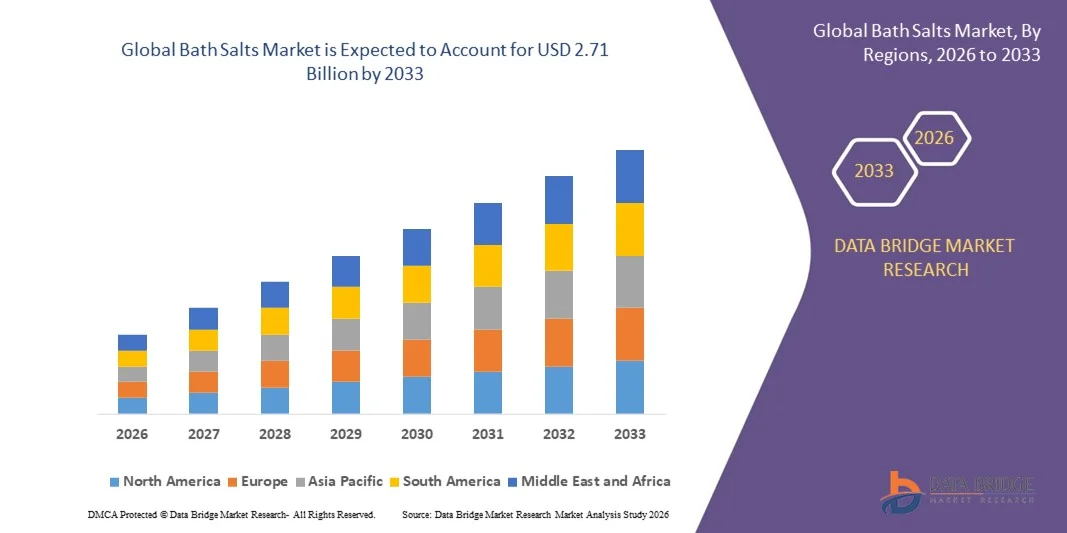
- As per Data Bridge Market Research Analysis the global bath salts market size was valued at USD 1.36 billion in 2025 and is expected to reach USD 2.71 billion by 2033, at a CAGR of 8.99% during the forecast period
- The market growth is largely fuelled by the rising consumer inclination toward wellness and self-care products that promote relaxation and stress relief
- Increasing demand for natural and mineral-rich bath additives that offer therapeutic and skincare benefits is further propelling market expansion
Market Size & Forecast
Global Market Value (2025): USD 1.36 billion
Expected Market Value (2033): USD 2.71 billion
Forecast CAGR (2026–2033): 8.99%
What are the Major Takeaways of Bath Salts Market?
- The market is witnessing strong growth due to the growing popularity of aromatherapy and spa treatments at home, with consumers seeking affordable luxury and holistic wellness experiences
- Manufacturers are increasingly focusing on product innovations such as the inclusion of essential oils, CBD, and organic ingredients to cater to evolving consumer preferences and enhance the perceived health benefits of bath salts
- North America dominated the bath salts market with the largest revenue share of 38.62% in 2025, driven by the rising popularity of wellness and self-care products, coupled with a strong demand for natural and organic personal care solutions
- Asia-Pacific region is expected to witness the highest growth rate in the global bath salts market, driven by increasing urbanization, growing e-commerce penetration, and rising interest in luxury and therapeutic bath products
- The Epsom Salt segment held the largest market revenue share in 2025, driven by its widespread use in relaxation and pain relief therapies. Epsom salts are rich in magnesium sulfate, which helps reduce inflammation and muscle soreness, making them a preferred choice for therapeutic and personal care applications. The segment’s growth is further supported by its inclusion in spa and wellness products across residential and commercial sectors
Report Scope and Bath Salts Market Segmentation
|
Attributes |
Bath Salts Key Market Insights |
|
Segments Covered |
|
|
Countries Covered |
North America
Europe
Asia-Pacific
Middle East and Africa
South America
|
|
Key Market Players |
|
|
Market Opportunities |
|
|
Value Added Data Infosets |
In addition to the insights on market scenarios such as market value, growth rate, segmentation, geographical coverage, and major players, the market reports curated by the Data Bridge Market Research also include in-depth expert analysis, pricing analysis, brand share analysis, consumer survey, demography analysis, supply chain analysis, value chain analysis, raw material/consumables overview, vendor selection criteria, PESTLE Analysis, Porter Analysis, and regulatory framework. |
What is the Key Trend in the Bath Salts Market?
Rising Demand For Aromatherapy And Wellness-Based Bath Products
- The increasing consumer focus on relaxation, stress relief, and holistic well-being is driving the demand for bath salts infused with essential oils and natural fragrances. Aromatherapy-based bath salts are gaining traction due to their soothing effects on the body and mind, promoting better sleep and reduced anxiety. The trend aligns with the growing popularity of self-care routines and spa-like experiences at home, particularly among working professionals and urban consumers seeking daily relaxation remedies
- Consumers are shifting toward products that combine therapeutic benefits with indulgent experiences, such as Epsom and Himalayan bath salts enriched with lavender, eucalyptus, and rose. These products help alleviate muscle soreness, improve skin health, and enhance mood through natural scents. The appeal of these products lies in their dual functionality—providing both physical and emotional relief—making them popular across multiple age groups and lifestyles
- The rising influence of social media wellness trends and beauty influencers has further amplified consumer interest in aesthetically appealing and sensorial bath products. Brands are now incorporating visually attractive packaging, vibrant colors, and unique scent combinations to attract a younger demographic. This marketing shift is helping redefine bath salts as premium lifestyle products rather than basic hygiene essentials
- For instance, in 2024, several skincare brands launched multifunctional bath salts combining exfoliating minerals with natural moisturizers such as coconut and shea butter, offering both relaxation and skincare benefits. These innovative formulations cater to consumers seeking all-in-one self-care solutions. Such developments are also expanding product availability across online retail platforms, increasing accessibility to global consumers
- While aromatherapy-based bath salts continue to gain traction, sustained growth depends on ingredient transparency, eco-friendly packaging, and product safety to attract health-conscious consumers. Companies investing in sustainable sourcing practices and clean labeling are likely to build stronger consumer trust. In addition, collaborations with wellness spas and influencers are expected to further enhance market visibility and brand credibility
Bath Salts Market Dynamics
Driver
Growing Preference For Natural And Organic Personal Care Products
- The shift toward natural and organic personal care formulations is significantly driving the bath salts market. Consumers are increasingly avoiding synthetic chemicals and artificial fragrances, opting for mineral-rich salts derived from natural sources such as Dead Sea or Himalayan origins. This movement aligns with the broader clean beauty trend emphasizing health, sustainability, and ethical sourcing
- Bath salts with plant-based and cruelty-free certifications are witnessing rising adoption, particularly among consumers seeking sustainable beauty products. The growing popularity of vegan lifestyles is also contributing to demand for products free from animal-derived ingredients. Manufacturers are responding by innovating with botanical blends and eco-friendly formulations to appeal to conscious buyers
- The expanding premium skincare market is also boosting demand for high-quality bath salts that provide detoxification, skin rejuvenation, and relaxation benefits. These premium offerings are marketed as self-care essentials that deliver spa-grade experiences at home. Their inclusion in gifting sets and wellness hampers further enhances their commercial appeal in both retail and e-commerce channels
- For instance, in 2023, a leading wellness brand introduced a line of vegan bath salts infused with sea minerals and botanical extracts, targeting consumers looking for chemical-free alternatives. This innovation reflected the growing emphasis on ingredient transparency and sustainability. The success of such launches is prompting competitors to invest in eco-conscious product lines
- As natural and organic trends continue to dominate, manufacturers must maintain ingredient purity and transparency to strengthen consumer loyalty. Strategic partnerships with certified suppliers and the use of biodegradable packaging will be key growth enablers. Brands that emphasize authenticity and environmental responsibility are expected to gain a competitive advantage in the evolving personal care landscape
Restraint/Challenge
High Competition And Availability Of Alternative Bathing Products
- The bath salts market faces intense competition from alternative products such as bath bombs, oils, and bubble baths that offer similar relaxation and skincare benefits. These substitutes often attract consumers through novelty, colorful aesthetics, and interactive experiences, especially appealing to younger demographics. This has compelled bath salt manufacturers to focus on innovation and differentiation to sustain market relevance
- Frequent price fluctuations in raw materials such as sea salts and essential oils can impact production costs and profitability. Geopolitical factors and supply chain disruptions further influence import costs, affecting global manufacturers. Small and medium-sized producers often face challenges in maintaining product consistency and pricing competitiveness under such volatile conditions
- The growing concern regarding counterfeit or low-quality products in unregulated markets also affects consumer confidence. These imitations often contain artificial additives or harmful chemicals, which can cause skin irritation and damage brand reputation. To counter this, legitimate brands are investing in traceability systems and digital verification methods to ensure authenticity and quality assurance
- For instance, in 2024, several regulatory authorities in Asia-Pacific issued warnings about counterfeit bath salts containing harmful chemicals, leading to stricter enforcement of labeling and quality standards. This regulatory tightening has encouraged established brands to adopt transparent ingredient disclosures. It has also opened opportunities for certified producers to position themselves as safe and trustworthy alternatives
- To overcome these challenges, companies are focusing on innovation, transparent branding, and premiumization strategies that emphasize authenticity, wellness benefits, and sustainable sourcing. Collaborations with dermatologists and wellness professionals are also helping validate product claims. By aligning with clean beauty values, brands can enhance consumer trust and ensure long-term competitiveness in the global bath salts market
How is the Bath Salts Market Segmented?
The global bath salts market is segmented on the basis of type, form, distribution channel, and application.
- By Type
On the basis of type, the bath salts market is segmented into Atlantic Salt, Crystal Salt, Dead Sea Salt, Epsom Salt, and Others. The Epsom Salt segment held the largest market revenue share in 2025, driven by its widespread use in relaxation and pain relief therapies. Epsom salts are rich in magnesium sulfate, which helps reduce inflammation and muscle soreness, making them a preferred choice for therapeutic and personal care applications. The segment’s growth is further supported by its inclusion in spa and wellness products across residential and commercial sectors.
The Dead Sea Salt segment is expected to witness the fastest growth rate from 2026 to 2033, driven by its high mineral content and skin-rejuvenating properties. Dead Sea salts are extensively used in premium skincare and beauty formulations due to their ability to detoxify and nourish the skin. The rising demand for luxury bath and spa experiences, coupled with growing awareness of natural skincare ingredients, is further propelling the expansion of this segment.
- By Form
On the basis of form, the bath salts market is segmented into Granular, Powder, Coarse, and Others. The Granular segment accounted for the largest market revenue share in 2025, owing to its high solubility and versatility in therapeutic and cosmetic uses. Granular bath salts dissolve easily in water, releasing minerals and fragrances effectively, enhancing the bathing experience. They are widely used in both residential and professional spa environments due to their balanced texture and consistent performance.
The Coarse segment is anticipated to grow at the fastest rate from 2026 to 2033, supported by increasing adoption in exfoliating and scrubbing applications. Coarse bath salts are favored for their textural benefits and ability to remove dead skin cells, improving skin texture and circulation. The growing consumer preference for natural exfoliants over synthetic alternatives is expected to further accelerate this segment’s demand.
- By Distribution Channel
On the basis of distribution channel, the bath salts market is segmented into Store-Based and Non-Store-Based. The Store-Based segment dominated the market in 2025, as consumers continue to prefer purchasing personal care and wellness products through supermarkets, hypermarkets, and specialty beauty stores. Physical retail outlets allow consumers to experience fragrance, texture, and packaging firsthand, which strongly influences purchase decisions.
The Non-Store-Based segment is projected to witness the fastest growth rate from 2026 to 2033, driven by the rapid expansion of e-commerce platforms and online wellness retailers. Increasing smartphone penetration and the growing popularity of digital wellness subscriptions are boosting online sales. Furthermore, direct-to-consumer strategies and influencer-driven marketing are helping brands strengthen their presence across global online marketplaces.
- By Application
On the basis of application, the bath salts market is segmented into Therapeutic, Aromatherapy, Home Care and Bath Care, and Fertilizer. The Therapeutic segment held the largest market share in 2025 due to the extensive use of bath salts for pain relief, muscle recovery, and detoxification treatments. Their anti-inflammatory and relaxing properties make them a staple in wellness centers and rehabilitation facilities worldwide.
The Aromatherapy segment is expected to experience the fastest growth from 2026 to 2033, fuelled by the rising consumer inclination toward self-care and relaxation through essential oil-infused bath products. Aromatherapy bath salts enriched with lavender, eucalyptus, and chamomile are gaining immense popularity for their stress-relief and mood-enhancing benefits. The segment’s growth is further amplified by the trend of home spa experiences and the adoption of holistic wellness practices globally.
Which Region Holds the Largest Share of the Bath Salts Market?
- North America dominated the bath salts market with the largest revenue share of 38.62% in 2025, driven by the rising popularity of wellness and self-care products, coupled with a strong demand for natural and organic personal care solutions
- Consumers in the region are increasingly seeking bath salts infused with essential oils and minerals that promote relaxation, stress relief, and skin rejuvenation
- The widespread adoption of luxury spa-like home experiences and growing awareness of aromatherapy benefits continue to strengthen the market position of bath salts across the region
U.S. Bath Salts Market Insight
The U.S. bath salts market captured the largest revenue share in 2025 within North America, supported by the growing preference for wellness-based and aromatherapy-infused products. Consumers are increasingly adopting bath salts formulated with Epsom and Dead Sea minerals for muscle relaxation, skincare, and stress reduction. The expanding clean beauty movement, coupled with rising disposable incomes, is boosting the popularity of premium and organic bath salts. Furthermore, the trend of self-care and home spa treatments continues to drive sustained demand across the country.
Europe Bath Salts Market Insight
The Europe bath salts market is expected to witness the fastest growth rate from 2026 to 2033, driven by the growing demand for sustainable and organic body care solutions. European consumers are showing increased interest in products that combine therapeutic and cosmetic benefits. The region’s established spa culture and rising focus on mental well-being are propelling market growth. Moreover, stringent regulations promoting natural ingredients and eco-friendly packaging are encouraging manufacturers to innovate and expand their offerings.
U.K. Bath Salts Market Insight
The U.K. bath salts market is expected to witness the fastest growth rate from 2026 to 2033, fuelled by the growing adoption of aromatherapy and wellness products. The rising trend of at-home relaxation treatments and the popularity of premium natural skincare brands are major contributors to this growth. Increasing consumer awareness about the benefits of magnesium-rich salts and essential oils is further enhancing market demand. In addition, the strong presence of e-commerce platforms and beauty retailers supports product accessibility and expansion.
Germany Bath Salts Market Insight
The Germany bath salts market is expected to witness the fastest growth rate from 2026 to 2033, driven by heightened interest in holistic wellness and sustainable personal care. German consumers are particularly inclined toward natural bath salts derived from Dead Sea and Himalayan sources. The increasing demand for vegan and cruelty-free bath products, coupled with the country’s strong wellness and spa culture, is fostering market expansion. Furthermore, local brands emphasizing eco-friendly packaging and transparency are gaining a competitive edge.
Asia-Pacific Bath Salts Market Insight
The Asia-Pacific bath salts market is expected to witness the fastest growth rate from 2026 to 2033, driven by rising disposable incomes, growing awareness of skincare benefits, and the expanding influence of Western self-care trends. Countries such as Japan, China, and India are leading the regional adoption of therapeutic and aromatherapy bath salts. The region’s rapid urbanization and growing demand for affordable luxury wellness products are further supporting market penetration. In addition, increasing online retail availability is making bath salts more accessible to a wider consumer base.
Japan Bath Salts Market Insight
The Japan bath salts market is expected to witness the fastest growth rate from 2026 to 2033 due to the country’s deep-rooted bathing culture and emphasis on relaxation and skincare. Consumers are gravitating toward mineral-rich bath salts that promote detoxification, stress relief, and improved blood circulation. The rising preference for naturally sourced ingredients and the integration of aromatherapy oils are fueling innovation. Moreover, Japan’s aging population is contributing to higher demand for therapeutic bath products that support muscle and joint health.
China Bath Salts Market Insight
The China bath salts market accounted for the largest market revenue share in Asia-Pacific in 2025, attributed to the country’s expanding middle class, increasing focus on personal wellness, and rapid urbanization. Bath salts infused with traditional Chinese herbs and essential oils are gaining traction among consumers seeking natural and rejuvenating skincare solutions. The strong growth of online beauty and wellness retail platforms is also boosting accessibility. Furthermore, domestic manufacturers are increasingly introducing innovative, affordable bath salts catering to local preferences, supporting market expansion.
Which are the Top Companies in Bath Salts Market?
The Bath Salts industry is primarily led by well-established companies, including:
- L'OCCITANE EN PROVENCE (France)
- BATHCLIN CORPORATION (Japan)
- Borghese (U.S.)
- Shiseido Co., Ltd. (Japan)
- Watsons (Hong Kong)
- Kneipp (Germany)
- STENDERS (Latvia)
- Soothing Touch (U.S.)
- PDC Brands (U.S.)
- Westlab (U.K.)
- Cornish Sea Salt (U.K.)
- Street Bargains Limited (U.K.)
- Salts & Co (France)
- KAO CORPORATION (Japan)
- Dadakarides S.A. (Greece)
What are Latest Developments in Bath Salts Market?
- In September 2023, SaltWorks announced the expansion of its Ultra Epsom product line with the launch of a eucalyptus-scented Epsom salt in the U.S. The new variant, made with premium magnesium sulfate and pure eucalyptus essential oil, is designed to relax muscles, rejuvenate the skin, and deliver refreshing aromatherapy benefits. Certified OU Kosher and available in resealable packaging, this product enhances the brand’s wellness-focused portfolio. The launch strengthens SaltWorks’ position in the premium bath salts segment by catering to rising consumer demand for spa-like, natural self-care solutions at home
- In May 2023, Saint Jane Beauty launched its Deep Sleep Bath Salts, a new skincare and wellness innovation aimed at promoting relaxation and skin nourishment. Formulated with sea salts, magnesium, peptides, and hyaluronic acid, the product helps ease muscle tension while hydrating and softening the skin. Infused with floral extracts such as lavender, jasmine, and sacred lotus, it delivers a calming sensory experience. The launch, available through Sephora, reinforces Saint Jane Beauty’s reputation in the luxury self-care market, meeting growing consumer interest in holistic nighttime wellness rituals

- Interactive Data Analysis Dashboard
- Company Analysis Dashboard for high growth potential opportunities
- Research Analyst Access for customization & queries
- Competitor Analysis with Interactive dashboard
- Latest News, Updates & Trend analysis
- Harness the Power of Benchmark Analysis for Comprehensive Competitor Tracking
Data collection and base year analysis are done using data collection modules with large sample sizes. The stage includes obtaining market information or related data through various sources and strategies. It includes examining and planning all the data acquired from the past in advance. It likewise envelops the examination of information inconsistencies seen across different information sources. The market data is analysed and estimated using market statistical and coherent models. Also, market share analysis and key trend analysis are the major success factors in the market report. To know more, please request an analyst call or drop down your inquiry.
The key research methodology used by DBMR research team is data triangulation which involves data mining, analysis of the impact of data variables on the market and primary (industry expert) validation. Data models include Vendor Positioning Grid, Market Time Line Analysis, Market Overview and Guide, Company Positioning Grid, Patent Analysis, Pricing Analysis, Company Market Share Analysis, Standards of Measurement, Global versus Regional and Vendor Share Analysis. To know more about the research methodology, drop in an inquiry to speak to our industry experts.
Data Bridge Market Research is a leader in advanced formative research. We take pride in servicing our existing and new customers with data and analysis that match and suits their goal. The report can be customized to include price trend analysis of target brands understanding the market for additional countries (ask for the list of countries), clinical trial results data, literature review, refurbished market and product base analysis. Market analysis of target competitors can be analyzed from technology-based analysis to market portfolio strategies. We can add as many competitors that you require data about in the format and data style you are looking for. Our team of analysts can also provide you data in crude raw excel files pivot tables (Fact book) or can assist you in creating presentations from the data sets available in the report.