BBQ Seasoning Market Size
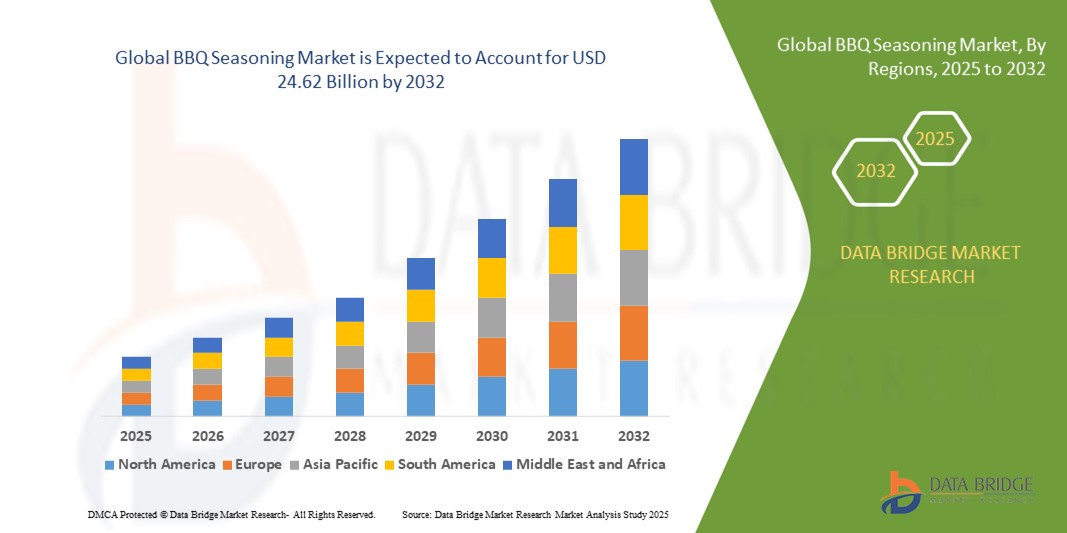
- The global BBQ seasoning market size was valued at USD 16.41 billion in 2024 and is projected to reach USD 24.62 billion by 2032, growing at a CAGR of 5.20% during the forecast period.
- Market growth is primarily driven by rising consumer interest in international cuisines and outdoor cooking trends, alongside a growing preference for flavorful and convenient meal solutions.
- Additionally, increasing demand for clean-label, organic, and customized spice blends is pushing innovation among manufacturers, helping BBQ seasonings expand across retail, foodservice, and online channels. These dynamics are collectively propelling the market forward, reinforcing BBQ seasonings as a key category in the global food flavoring industry.
BBQ Seasoning Market Analysis
- BBQ seasonings, composed of blended spices and herbs tailored for grilled and smoked dishes, are increasingly essential in both household and commercial kitchens due to their ability to enhance flavor profiles, ease of use, and compatibility with diverse cuisines and cooking styles.
- The rising demand for BBQ seasonings is primarily driven by the growing popularity of outdoor cooking, increasing consumption of meat-based dishes, and a heightened interest in global and regional flavors among consumers.
- North America led the BBQ seasoning market with the largest revenue share in 2024, supported by a strong barbecue culture, consumer preference for bold flavors, and a well-established distribution network across retail and foodservice channels, particularly in the U.S., where innovation in dry rubs and organic blends continues to grow.
- Asia-Pacific is projected to be the fastest growing region in the BBQ seasoning market during the forecast period due to expanding urban populations, rising incomes, and growing exposure to Western-style barbecue through media, travel, and global food trends.
- Dry rub segment dominated the BBQ seasoning market with a market share of 47.6% in 2024, driven by its versatility, long shelf life, and growing consumer preference for customizable, mess-free flavor solutions suitable for both home cooking and professional use.
Report Scope and Market Segmentation
|
Attributes |
BBQ Seasoning Key Market Insights |
|
Segments Covered |
|
|
Countries Covered |
|
|
Key Market Players |
|
|
Market Opportunities |
|
|
Value Added Data Infosets |
In addition to the insights on market scenarios such as market value, growth rate, segmentation, geographical coverage, and major players, the market reports curated by the Data Bridge Market Research also include in-depth expert analysis, pricing analysis, brand share analysis, consumer survey, demography analysis, supply chain analysis, value chain analysis, raw material/consumables overview, vendor selection criteria, PESTLE Analysis, Porter Analysis, and regulatory framework. |
BBQ Seasoning Market Trends
Flavor Innovation Through Global Influences and Health-Conscious Ingredients
- A prominent and rapidly growing trend in the global BBQ seasoning market is the fusion of traditional barbecue flavors with global culinary influences and health-forward formulations. This evolution is reshaping consumer expectations for flavor diversity and ingredient transparency.
- For example, brands like McCormick and Kinder’s are expanding their product lines with globally inspired blends such as Korean BBQ, Jamaican jerk, and Mediterranean herb rubs. These seasonings appeal to adventurous consumers seeking authentic and bold taste experiences at home.
- Simultaneously, there is a notable shift toward clean-label and health-conscious BBQ seasonings, with many products now featuring low-sodium, sugar-free, gluten-free, and non-GMO formulations. Companies are reformulating classic blends using natural ingredients and organic spices to cater to wellness-focused consumers without sacrificing flavor.
- Plant-based BBQ options are also fueling demand for specialized seasonings designed to complement vegetables and alternative proteins. Brands are responding with formulations that enhance grilling versatility, such as umami-rich mushroom blends and spicy citrus rubs tailored for tofu, jackfruit, or plant-based burgers.
- This trend toward flavor innovation and ingredient transparency is driving product diversification and premiumization in the BBQ seasoning market. Companies like Spiceology are leveraging chef-driven recipes and customizable spice kits to offer unique, gourmet experiences for home cooks and grill enthusiasts.
- The growing consumer appetite for international flavors, health-focused eating, and grilling experimentation is pushing manufacturers to innovate continuously. As a result, both mainstream and artisanal brands are expanding their portfolios to meet evolving demands across residential, retail, and foodservice segments.
BBQ Seasoning Market Dynamics
Driver
Rising Demand for Global Flavors and At-Home Culinary Experiences
- The growing consumer interest in international cuisines and at-home cooking experiences is a key driver for the expanding BBQ seasoning market. As more people explore global flavors and seek restaurant-style results at home, demand for diverse and high-quality BBQ seasonings continues to surge.
- For example, in 2024, brands like Meat Church and Hardcore Carnivore saw increased sales of their regionally inspired rubs, including Texas-style brisket blends and Argentinian chimichurri seasonings, reflecting strong consumer appetite for authenticity and experimentation.
- This trend is further fueled by the popularity of outdoor cooking and grilling, particularly in North America and Europe, where seasonal BBQ traditions drive consistent consumer demand. The rise of cooking influencers and recipe-sharing platforms also promotes the use of premium seasonings, contributing to broader market visibility.
- Health-conscious consumers are also driving the demand for cleaner, more transparent ingredient lists, encouraging brands to offer low-sodium, organic, and additive-free options. Additionally, the expanding availability of BBQ seasoning products in retail, e-commerce, and specialty food outlets is making it easier for consumers to access a variety of options tailored to different dietary and flavor preferences.
- The increased interest in cooking at home post-pandemic and the desire for customizable flavor experiences are pushing BBQ seasoning manufacturers to innovate and diversify, supporting steady market growth across both mainstream and niche consumer segments.
Restraint/Challenge
Regulatory Hurdles and Consumer Sensitivities Around Ingredients
- Despite growing demand, the BBQ seasoning market faces challenges related to regulatory compliance, ingredient sensitivities, and changing consumer expectations. Regulatory standards around food labeling, allergens, and permissible additives vary across regions, requiring manufacturers to carefully formulate and market their products for global distribution.
- For instance, concerns about artificial flavor enhancers, MSG, preservatives, and allergenic ingredients like gluten or soy can limit the appeal of certain BBQ seasonings. As consumers increasingly scrutinize product labels, brands are under pressure to reformulate existing products or introduce clean-label alternatives to maintain consumer trust.
- Additionally, the complexity of sourcing high-quality, ethically produced spices can result in supply chain issues and higher production costs, which may be passed on to consumers. This can be a deterrent for price-sensitive buyers, particularly in emerging markets or among casual home cooks who may opt for lower-cost alternatives or bulk spice blends instead.
- Smaller or niche BBQ seasoning brands may also struggle with limited distribution, brand visibility, and the cost of meeting organic or non-GMO certifications, hindering their ability to scale.
- To overcome these barriers, companies must invest in transparent sourcing, clear labeling, and consumer education around health and sustainability benefits. Success will also depend on creating flavorful yet compliant seasoning options that cater to a wide range of dietary needs without compromising taste or authenticity.
BBQ Seasoning Market Scope
The market is segmented on the basis of type, flavour profile, product type, and end user.
- By Type
On the basis of type, the BBQ seasoning market is segmented into dry rubs, marinades, sauces, and blended spices. The dry rubs segment dominated the market with the largest market revenue share of 47.6% in 2024, driven by their convenience, long shelf life, and increasing preference among consumers and chefs for quick flavor enhancement without the need for wet ingredients. Dry rubs are particularly popular in North America, where grilling culture emphasizes bold, crust-forming seasonings. They are often composed of a mixture of herbs, spices, and salt, making them highly customizable for various meat and plant-based proteins.
The marinades segment is projected to witness the fastest growth rate of 20.9% from 2025 to 2032, as consumers increasingly seek deeper flavor penetration and moisture retention in grilled foods. Ready-to-use liquid marinades are gaining popularity for their ease of application and ability to tenderize tougher meat cuts, especially in emerging BBQ markets.
- By Flavor Profile
On the basis of flavor profile, the BBQ seasoning market is segmented into sweet, savory, spicy, smoky, and tangy. The savory segment held the largest market revenue share of 33.7% in 2024, driven by consumer preference for umami-rich, meat-enhancing flavors that complement various protein types. Savory profiles often include garlic, onion, soy, and herb combinations, aligning with global BBQ styles. The versatility of savory seasonings in both dry and wet formats contributes to their dominance across residential and commercial settings.
The spicy segment is anticipated to witness the fastest CAGR of 22.3% from 2025 to 2032, reflecting growing consumer interest in bold, heat-forward experiences influenced by global cuisines such as Korean, Mexican, and Indian BBQ styles. Millennials and Gen Z consumers in particular are driving demand for fiery BBQ flavors, fueling innovation in chili blends, pepper infusions, and hot sauces.
- By Product Type
On the basis of product type, the BBQ seasoning market is segmented into organic and conventional BBQ seasoning. The conventional BBQ seasoning segment dominated the market with the largest revenue share of 72.1% in 2024, primarily due to its affordability, wide availability, and established consumer base. Conventional seasonings are mass-produced and favored by both household consumers and commercial foodservice providers for their consistent taste and cost-effectiveness.
The organic BBQ seasoning segment is expected to witness the fastest growth rate of 24.8% from 2025 to 2032, driven by increasing health consciousness and the rising demand for clean-label and non-GMO products. Consumers are becoming more aware of additives and synthetic preservatives, and organic BBQ options—often free from artificial colors and flavors—are being increasingly adopted by niche and premium market segments.
- By End User
On the basis of end user, the BBQ seasoning market is segmented into residential and commercial use. The residential segment accounted for the largest market revenue share of 64.6% in 2024, driven by the rising trend of home grilling, increased interest in home cooking during and after the pandemic, and the availability of DIY BBQ kits. Consumers are experimenting with regional BBQ styles, leading to higher sales of versatile and specialty seasoning blends for home use.
The commercial segment is projected to witness the fastest CAGR of 21.1% from 2025 to 2032, fueled by the expansion of BBQ-centric restaurants, food trucks, catering services, and fast-casual dining chains. Commercial users require bulk, consistent, and sometimes proprietary blends that deliver signature flavor profiles, driving demand for custom and high-quality BBQ seasonings.
BBQ Seasoning Market Regional Analysis
- North America led the BBQ seasoning market in 2024, accounting for the largest revenue share of 38.76%, fueled by strong grilling culture, rising interest in culinary experimentation, and a growing appetite for diverse flavor profiles.
- Consumers in the region demonstrate a high demand for both traditional and globally inspired BBQ seasonings, favoring premium blends, clean-label ingredients, and customizable spice options to elevate their at-home cooking experiences.
- The market is further supported by a well-established retail infrastructure, widespread availability of BBQ products, and strong seasonal sales spikes during summer months and holidays, reinforcing North America’s dominant position in the global BBQ seasoning landscape.
U.S. BBQ Seasoning Market Insight
The U.S. BBQ seasoning market captured the largest revenue share of 79% in 2024 within North America, driven by a deep-rooted barbecue culture, high consumer interest in culinary experimentation, and increasing demand for premium and globally inspired flavors. The rise in home cooking, grilling traditions, and outdoor dining has significantly boosted the consumption of spice blends and rubs. Additionally, growing health consciousness has led to increased demand for organic, low-sodium, and additive-free BBQ seasonings. The strong presence of both established and emerging brands, combined with robust e-commerce and retail distribution, further strengthens the U.S. market.
Europe BBQ Seasoning Market Insight
The Europe BBQ seasoning market is projected to witness steady growth throughout the forecast period, driven by increasing interest in ethnic cuisines, clean-label products, and artisanal spice blends. The region’s evolving food culture, influenced by global flavors and rising consumer demand for gourmet experiences at home, is fueling the uptake of specialty seasonings. Growth is further supported by an expanding foodservice sector and barbecue’s growing popularity in urban areas. Additionally, European consumers are increasingly seeking seasonings with sustainable, organic, and locally sourced ingredients, aligning with broader environmental and health trends.
U.K. BBQ Seasoning Market Insight
The U.K. BBQ seasoning market is anticipated to grow at a robust CAGR over the forecast period, fueled by a rising interest in outdoor cooking, world cuisines, and health-forward spice formulations. British consumers are embracing bold flavors such as peri-peri, Caribbean jerk, and Korean BBQ, reflecting a shift toward more adventurous palates. The expansion of food delivery services and meal kits, many of which include seasoning sachets, also supports market growth. Furthermore, growing demand for vegan and gluten-free BBQ seasonings aligns with evolving dietary trends and boosts product diversification.
Germany BBQ Seasoning Market Insight
The Germany BBQ seasoning market is expected to expand steadily, driven by the country’s strong food innovation culture and increasing interest in healthier, organic seasoning options. German consumers are highly focused on ingredient quality and sustainability, prompting demand for spice blends that are organic, locally produced, and free from artificial additives. The trend toward plant-based grilling is also influencing product offerings, with BBQ seasonings tailored for vegetables and meat alternatives gaining traction. The popularity of summer grilling and food festivals supports retail and seasonal sales spikes across the country.
Asia-Pacific BBQ Seasoning Market Insight
The Asia-Pacific BBQ seasoning market is poised to grow at the fastest CAGR of 22% from 2025 to 2032, fueled by rising disposable incomes, growing urban populations, and increased exposure to international cuisines. Countries like China, India, South Korea, and Australia are experiencing a surge in grilling culture, both at home and in foodservice. The influence of Western-style barbecue, combined with traditional Asian marinades and spice profiles, is creating a diverse and innovative market landscape. E-commerce expansion and growing interest in premium, ready-to-use spice blends are further driving regional growth.
Japan BBQ Seasoning Market Insight
The Japan BBQ seasoning market is gaining traction as consumers increasingly embrace outdoor cooking and gourmet home meals. The demand for convenient, high-quality seasonings is rising, particularly those that blend traditional Japanese flavors like miso, yuzu, and soy with Western-style barbecue influences. Health-conscious preferences and small-space urban living are leading to more compact, easy-to-use spice formats. Japan’s strong convenience food culture, along with growing awareness of global food trends, is expected to drive further innovation and market growth in BBQ seasonings.
China BBQ Seasoning Market Insight
The China BBQ seasoning market held the largest revenue share in Asia-Pacific in 2024, supported by rapid urbanization, a growing middle class, and a booming foodservice sector. As Western-style grilling gains popularity alongside traditional Chinese barbecue styles, demand for both imported and domestically produced seasonings is accelerating. Regional flavor preferences and the rising popularity of hot pot, skewers, and outdoor grilling contribute to diverse seasoning offerings. Domestic brands are capitalizing on this growth with innovative product formats and flavors, while the rise of live-stream cooking and e-commerce continues to broaden market access.
BBQ Seasoning Market Share
BBQ Seasoning Market Leaders Operating in the Market Are:
- McCormick & Company, Inc. (U.S.)
- Kerry Group (Ireland), Olam Group (Singapore)
- The Kraft Heinz Company (U.S.)
- General Mills, Inc. (U.S.)
- Bertolli (Part of the Unilever Group) (U.K.)
- Badia Spices, Inc. (U.S.)
- C.F. Sauer Company (U.S.)
- Pitmaster’s Choice (U.S.)
- Conagra Brands, Inc. (U.S.)
- Tajín Internacional S.A. de C.V. (Mexico)
- Eurosauce S.A. (Belgium)
Recent Developments in Global BBQ Seasoning Market
- In May 2023, McCormick & Company launched a new line of globally inspired BBQ seasoning blends under its Grill Mates brand, featuring flavors like Korean BBQ, Argentine Chimichurri, and Caribbean Jerk. This expansion reflects the company’s strategic focus on delivering diverse, internationally influenced flavors to meet the evolving palates of consumers seeking adventurous home grilling experiences. The launch reinforces McCormick’s leadership in flavor innovation and its responsiveness to global culinary trends in the BBQ seasoning market.
- In April 2023, Spiceology, a rapidly growing chef-focused spice company, partnered with celebrity chefs and influencers to co-create limited-edition BBQ seasoning blends. These collaborations are aimed at bringing gourmet restaurant flavors to the home cook, offering unique rubs and spice mixes that blend creativity with culinary expertise. The initiative highlights the brand's focus on premium, small-batch innovation and its strategy to engage a wider audience through influencer-driven marketing and experiential cooking trends.
- In March 2023, Simply Organic, known for its certified organic herbs and spices, introduced a new range of USDA-certified organic BBQ rubs targeting health-conscious and sustainability-minded consumers. With options such as Organic Mesquite, Sweet Paprika BBQ, and Spicy Chipotle, the line aligns with growing demand for clean-label and additive-free products. This launch showcases Simply Organic’s commitment to transparency, wellness, and environmentally responsible product development within the BBQ seasoning segment.
- In February 2023, Kinder’s, a California-based BBQ sauce and seasoning brand, expanded its retail footprint by securing shelf space in major U.S. supermarkets including Kroger and Walmart. Alongside this expansion, Kinder’s introduced several new rubs and blends such as Brown Sugar BBQ and Lemon Garlic, aimed at capturing flavor-forward consumers. The brand’s rapid retail growth highlights its rising prominence in the mainstream seasoning market and growing consumer loyalty.
- In January 2023, Australian spice company Beerenberg Farm launched a premium BBQ seasoning range using locally sourced ingredients tailored to regional flavor preferences. Flavors like Bush Tomato BBQ and Smoked Peppercorn reflect native Australian tastes and the brand’s emphasis on provenance and authenticity. This development supports Beerenberg’s strategy to strengthen its position in the Asia-Pacific market and cater to rising demand for locally inspired, high-quality BBQ seasonings.

- Interactive Data Analysis Dashboard
- Company Analysis Dashboard for high growth potential opportunities
- Research Analyst Access for customization & queries
- Competitor Analysis with Interactive dashboard
- Latest News, Updates & Trend analysis
- Harness the Power of Benchmark Analysis for Comprehensive Competitor Tracking
Global Bbq Seasoning Market, Supply Chain Analysis and Ecosystem Framework
To support market growth and help clients navigate the impact of geopolitical shifts, DBMR has integrated in-depth supply chain analysis into its Global Bbq Seasoning Market research reports. This addition empowers clients to respond effectively to global changes affecting their industries. The supply chain analysis section includes detailed insights such as Global Bbq Seasoning Market consumption and production by country, price trend analysis, the impact of tariffs and geopolitical developments, and import and export trends by country and HSN code. It also highlights major suppliers with data on production capacity and company profiles, as well as key importers and exporters. In addition to research, DBMR offers specialized supply chain consulting services backed by over a decade of experience, providing solutions like supplier discovery, supplier risk assessment, price trend analysis, impact evaluation of inflation and trade route changes, and comprehensive market trend analysis.
Data collection and base year analysis are done using data collection modules with large sample sizes. The stage includes obtaining market information or related data through various sources and strategies. It includes examining and planning all the data acquired from the past in advance. It likewise envelops the examination of information inconsistencies seen across different information sources. The market data is analysed and estimated using market statistical and coherent models. Also, market share analysis and key trend analysis are the major success factors in the market report. To know more, please request an analyst call or drop down your inquiry.
The key research methodology used by DBMR research team is data triangulation which involves data mining, analysis of the impact of data variables on the market and primary (industry expert) validation. Data models include Vendor Positioning Grid, Market Time Line Analysis, Market Overview and Guide, Company Positioning Grid, Patent Analysis, Pricing Analysis, Company Market Share Analysis, Standards of Measurement, Global versus Regional and Vendor Share Analysis. To know more about the research methodology, drop in an inquiry to speak to our industry experts.
Data Bridge Market Research is a leader in advanced formative research. We take pride in servicing our existing and new customers with data and analysis that match and suits their goal. The report can be customized to include price trend analysis of target brands understanding the market for additional countries (ask for the list of countries), clinical trial results data, literature review, refurbished market and product base analysis. Market analysis of target competitors can be analyzed from technology-based analysis to market portfolio strategies. We can add as many competitors that you require data about in the format and data style you are looking for. Our team of analysts can also provide you data in crude raw excel files pivot tables (Fact book) or can assist you in creating presentations from the data sets available in the report.