Beard Oil Market Size
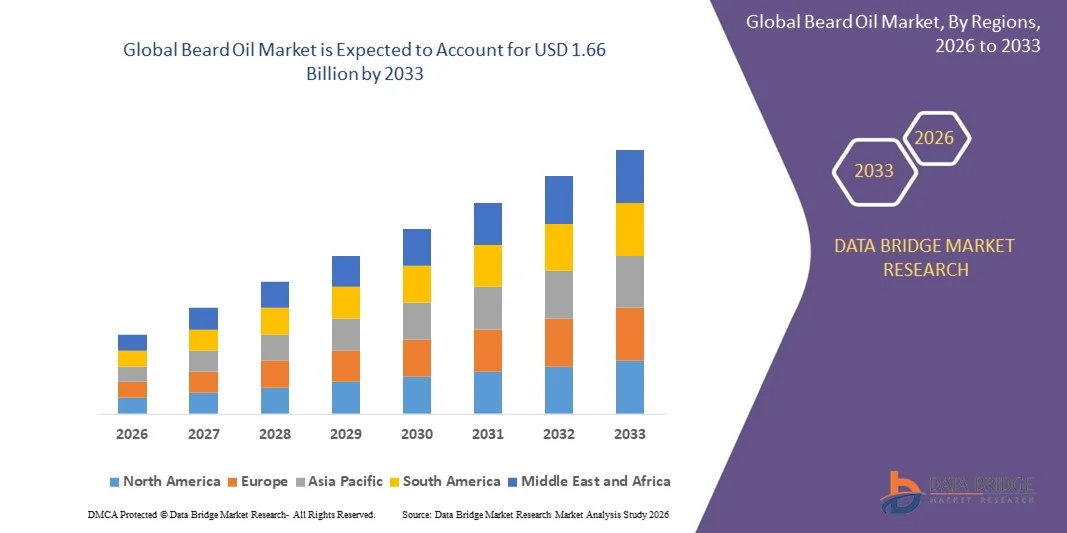
- The global beard oil market size was valued at USD 1.03 billion in 2025 and is expected to reach USD 1.66 billion by 2033, at a CAGR of 6.05% during the forecast period
- The market growth is largely fuelled by the rising demand for premium grooming products among men, supported by increasing awareness of beard care and personal hygiene
- Growing influence of social media, grooming trends, and endorsements by influencers is further accelerating product adoption across urban and semi-urban regions
Beard Oil Market Analysis
- The market is supported by rising consumer preference for multifunctional grooming oils offering moisturization, growth enhancement, and skin nourishment
- Increasing innovation in fragrances, packaging, and ingredient blends is helping brands differentiate and capture wider consumer segments
- North America dominated the beard oil market with the largest revenue share in 2025, driven by the rising popularity of grooming products among men and the increasing adoption of premium personal care solutions
- America dominated the beard oil market with the largest revenue share of
- Asia-Pacific region is expected to witness the highest growth rate in the global beard oil market, driven by growing disposable incomes, evolving grooming habits, and a surge in demand for natural and herbal beard care products across emerging economies such as India, China, and Indonesia
- The Conventional segment held the largest market revenue share in 2025 driven by its wide availability, affordable pricing, and strong consumer acceptance across mass retail channels. Conventional beard oils remain popular among users seeking basic grooming solutions with familiar formulations and consistent performance
Report Scope and Beard Oil Market Segmentation
|
Attributes |
Beard Oil Key Market Insights |
|
Segments Covered |
|
|
Countries Covered |
North America
Europe
Asia-Pacific
Middle East and Africa
South America
|
|
Key Market Players |
|
|
Market Opportunities |
|
|
Value Added Data Infosets |
In addition to the insights on market scenarios such as market value, growth rate, segmentation, geographical coverage, and major players, the market reports curated by the Data Bridge Market Research also include in-depth expert analysis, pricing analysis, brand share analysis, consumer survey, demography analysis, supply chain analysis, value chain analysis, raw material/consumables overview, vendor selection criteria, PESTLE Analysis, Porter Analysis, and regulatory framework. |
Beard Oil Market Trends
Rise of Point-of-Care Testing in Livestock Diagnostics
- The increasing adoption of point-of-care testing is reshaping the livestock diagnostics market by enabling rapid, on-site detection of diseases. Portable and fast-responding devices help farmers make immediate decisions, improving herd management and reducing disease-related losses. These tools reduce dependence on centralized laboratories, supporting timely field-level interventions. They further strengthen overall herd health monitoring by providing continuous and real-time insights. As farms modernize, POC systems are becoming an essential part of routine health protocols
- The growing need for quick diagnostic solutions in remote and resource-limited regions is accelerating the use of handheld kits and mobile diagnostic platforms. These tools are particularly beneficial where access to full-scale veterinary laboratories is limited, ensuring timely identification and control of infections. Their portability allows veterinarians to conduct field visits more efficiently, reducing turnaround times. Increased governmental focus on rural veterinary support is also encouraging widespread deployment. By bridging infrastructure gaps, these solutions improve disease containment in high-risk zones
- The cost-effectiveness and user-friendly design of modern POC devices are encouraging routine screening across herds. This leads to better disease surveillance and helps farmers detect issues early without significant financial or operational burdens. Their simple workflows reduce the need for specialized training, enabling widespread usage among small-scale farmers. Regular adoption supports proactive health management rather than reactive treatment. This shift toward preventive diagnostics enhances long-term productivity and profitability
- For instance, in 2023, several dairy cooperatives in rural India reported improved milk quality and reduced treatment costs after adopting on-farm mastitis testing kits developed by domestic biotechnology firms. These kits enabled faster disease detection, minimizing contamination risks. Their affordability improved adoption among smaller cooperatives and individual farmers. The success of these kits highlights the market potential for localized, low-cost diagnostic innovation. It also reflects rising acceptance of portable diagnostics in emerging economies
- While POC diagnostics are boosting early detection and supporting strong biosecurity measures, sustained impact will depend on continuous technological innovation, farmer training, and affordability across diverse livestock environments. Advancements in sensor technologies and data integration will enhance diagnostic accuracy. Wider distribution networks are essential to ensure consistent availability of kits and reagents. Training programs will help farmers maximize the benefits of POC tools. Overall, long-term success requires collaborative efforts among manufacturers, veterinarians, and regulatory bodies
Beard Oil Market Dynamics
Driver
Growing Prevalence of Zoonotic Diseases and Rising Awareness Among Farmers
- The increasing occurrence of zoonotic diseases is pushing governments and livestock producers to prioritize diagnostics as a key preventive tool. Conditions such as brucellosis and bovine tuberculosis require early detection due to their potential cross-species transmission risks. The economic impact of outbreaks has heightened the focus on biosecurity. Rising global trade has also increased the urgency for stringent disease monitoring. This trend is prompting more investment in innovative and rapid diagnostic systems
- Farmers are becoming more aware of the financial and operational risks associated with untreated infections, including productivity losses, animal mortality, and export restrictions. This rising awareness is driving higher adoption of diagnostic kits even in small and mid-sized farms. Educational programs and digital platforms are playing a crucial role in disseminating information. Increased transparency in livestock value chains is boosting adoption of health-monitoring practices. Farmers are moving toward preventive care strategies to protect long-term profitability
- Government programs and international agencies are strengthening diagnostic infrastructure through subsidized testing, disease surveillance systems, and nationwide detection initiatives, helping farmers respond more effectively to outbreaks. Collaborative projects with NGOs are improving access to critical diagnostic resources. Digital reporting platforms are enhancing real-time disease tracking. Investments in modern veterinary centers are expanding testing capacity. Such initiatives are accelerating adoption across both commercial and smallholder farms
- For instance, in 2022, the European Union implemented mandatory zoonotic disease testing across commercial farms, significantly increasing demand for portable analyzers and rapid diagnostic tools. This regulatory mandate created a surge in demand for advanced testing products. Manufacturers responded by expanding product availability and scaling production capacity. The policy also encouraged technological upgrades within veterinary facilities. It demonstrated the influence of strong regulatory frameworks in accelerating diagnostic adoption
- While awareness and institutional support continue to drive market expansion, improved affordability, stronger connectivity in rural regions, and integrated diagnostic practices are essential for long-term adoption. Streamlined supply chains will ensure faster kit delivery to underserved areas. Digital training modules can educate farmers on optimal diagnostic usage. Integrated health management systems will enhance decision-making and disease control. Addressing these factors is key for sustainable market growth
Restraint/Challenge
High Cost of Advanced Diagnostic Equipment and Limited Access in Rural Regions
- The high cost of sophisticated diagnostic equipment such as PCR analyzers and ELISA systems limits accessibility, especially for small-scale farmers and financially constrained veterinary centers. These tools are often restricted to large commercial farms or laboratories. High maintenance costs further add to financial burdens. Limited financing options prevent smallholders from adopting advanced systems. This cost barrier slows down market penetration in emerging regions
- Rural areas frequently face shortages of trained professionals who can operate or maintain advanced diagnostic instruments. Limited infrastructure and logistical barriers result in delayed disease detection and higher vulnerability to outbreaks. Training gaps prevent optimal usage of available tools. Power shortages and poor connectivity hinder adoption of digital diagnostics. These factors collectively weaken disease surveillance in rural communities
- Supply chain inconsistencies in remote regions make it difficult to access necessary reagents and diagnostic kits consistently. As a result, many farmers rely on symptomatic treatment, which can increase mortality and reduce productivity. Seasonal shortages often disrupt planned testing cycles. High transportation costs raise the final price of diagnostic products. Limited distribution networks further restrict availability in remote clusters
- For instance, in 2023, livestock authorities in Sub-Saharan Africa reported that more than 70% of small farmers lacked access to formal diagnostic services, primarily due to high equipment costs and inadequate infrastructure. These limitations contributed to frequent outbreaks and prolonged recovery periods. International organizations highlighted the need for decentralized diagnostic programs. This data emphasizes the necessity of affordable and portable diagnostic alternatives. It also reveals structural gaps that hinder global disease management efforts
- While diagnostic technologies continue to advance, addressing challenges related to affordability, skill gaps, and rural accessibility is essential. Expanding decentralized testing models and deploying mobile diagnostic solutions will be key to unlocking market potential. Partnerships with NGOs and local governments can extend diagnostic reach. Innovations in low-cost testing devices will support adoption among smallholders. Solving these challenges will enable equitable access and strengthen livestock health systems
Beard Oil Market Scope
The market is segmented on the basis of product type, distribution channel, price range, and packaging type
- By Product Type
On the basis of product type, the beard oil market is segmented into Conventional and Organic. The Conventional segment held the largest market revenue share in 2025 driven by its wide availability, affordable pricing, and strong consumer acceptance across mass retail channels. Conventional beard oils remain popular among users seeking basic grooming solutions with familiar formulations and consistent performance.
The Organic segment is expected to witness the fastest growth rate from 2026 to 2033, fuelled by rising demand for chemical-free grooming products and increasing consumer preference for natural ingredients such as essential oils and plant-based extracts. Organic beard oils are gaining traction due to their skin-friendly properties and enhanced appeal among environmentally conscious consumers.
- By Distribution Channel
On the basis of distribution channel, the beard oil market is segmented into Online and Offline. The Online segment held the largest market revenue share in 2025 driven by rapid growth in e-commerce platforms, easy product accessibility, and frequent promotional offers. Online channels attract consumers due to wide brand variety, doorstep delivery, and availability of premium and niche grooming products.
The Offline segment is expected to witness steady growth from 2026 to 2033, supported by the expansion of specialty grooming stores, supermarkets, and barber shop retail setups. Offline distribution continues to benefit from physical product trials, expert recommendations, and rising adoption of men’s grooming products in urban and semi-urban retail spaces.
- By Price Range
On the basis of price range, the beard oil market is segmented into Low, Mid-Range, and Premium Range. The Mid-Range segment held the largest market revenue share in 2025 due to its balance of affordability and enhanced product quality, appealing to a wide male grooming consumer base. Mid-range beard oils dominate retail shelves as they offer effective formulations at competitive prices.
The Premium Range segment is expected to record the fastest growth from 2026 to 2033, driven by rising demand for luxury grooming products featuring high-quality essential oils, exotic ingredients, and dermatologist-approved formulations. Premium offerings are increasingly preferred by consumers seeking superior fragrance, long-lasting nourishment, and brand exclusivity.
- By Packaging Type
On the basis of packaging type, the beard oil market is segmented into Bottled, Jars Packaging, and Tubes Packaging. The Bottled segment held the largest market revenue share in 2025 driven by its convenience, controlled dispensing through droppers, and suitability for liquid-based formulations. Bottled packaging remains the most widely adopted format in both mass and premium product categories.
The Tubes Packaging segment is expected to witness significant growth from 2026 to 2033, supported by rising demand for travel-friendly designs, spill-resistant formats, and user convenience. Tube-based beard oils are increasingly preferred by consumers looking for compact, mess-free grooming solutions suitable for on-the-go usage.
Beard Oil Market Regional Analysis
- North America dominated the beard oil market with the largest revenue share in 2025, driven by the rising popularity of grooming products among men and the increasing adoption of premium personal care solutions
- Consumers in the region prioritize natural formulations, convenient application, and multifunctional benefits offered by beard oils such as hydration, frizz control, and skin nourishment
- This strong demand is further supported by high disposable incomes, a well-established grooming culture, and the growing influence of trends such as men’s skincare and beard maintenance, reinforcing steady market expansion across retail and e-commerce channels
U.S. Beard Oil Market Insight
The U.S. beard oil market captured the largest revenue share in North America in 2025, fuelled by a robust grooming culture and increasing preference for natural and organic formulations. Men are increasingly investing in beard care routines to improve beard texture and appearance. The rising popularity of premium grooming brands, along with strong online retail penetration and influencer-driven marketing, further accelerates product adoption. In addition, innovations in scent profiles and targeted solutions such as growth-stimulating oils continue to shape market demand.
Europe Beard Oil Market Insight
The Europe beard oil market is expected to witness a strong growth rate from 2026 to 2033, driven by rising awareness of men’s grooming and increasing demand for beard care essentials across urban populations. The growing trend toward personal styling, combined with the adoption of organic and vegan grooming products, supports the expanding consumer base. Beard oils are gaining traction in both specialty grooming stores and online platforms, with Europe seeing significant uptake across young professionals and fashion-conscious consumers.
U.K. Beard Oil Market Insight
The U.K. beard oil market is projected to witness notable growth from 2026 to 2033 due to the rising trend of beard grooming and heightened preference for high-quality care products. Concerns related to beard dryness, patchiness, and skin irritation are driving consumers toward nourishing beard oils. The country’s thriving barbershop culture, coupled with strong e-commerce penetration, is further propelling product sales. Growing interest in premium grooming kits and subscription-based grooming boxes is also supporting market expansion.
Germany Beard Oil Market Insight
The Germany beard oil market is expected to witness strong growth from 2026 to 2033, driven by increasing consumer focus on natural, dermatologically safe, and eco-friendly grooming products. Germany’s emphasis on sustainability and clean-label formulations is fostering demand for beard oils made from botanical extracts and plant-based oils. The widespread influence of grooming trends across metropolitan cities and the rise of male-centric skincare routines continue to bolster the market, particularly within the premium and organic product categories.
Asia-Pacific Beard Oil Market Insight
The Asia-Pacific beard oil market is expected to witness the fastest growth rate from 2026 to 2033, driven by rising urbanization, evolving grooming habits, and growing acceptance of beard styling among younger consumers. Countries such as India, China, and Japan are experiencing a rapid shift in male personal care preferences due to increased exposure to global grooming trends. Expanding e-commerce channels, influencer marketing, and the availability of affordable beard care products contribute significantly to the region’s strong growth outlook.
Japan Beard Oil Market Insight
The Japan beard oil market is projected to grow rapidly from 2026 to 2033 due to the country’s increasing interest in premium grooming solutions and clean formulations. Although traditionally a low-beard-density region, the rising influence of global trends and expanding male grooming culture are driving adoption. Japanese consumers favour lightweight, non-greasy oils with sophisticated fragrances and skin-friendly ingredients. Innovations in multifunctional grooming oils and personalized care kits are further shaping the market landscape.
China Beard Oil Market Insight
The China beard oil market accounted for one of the largest revenue shares in Asia-Pacific in 2025, supported by rising disposable incomes, an expanding male grooming population, and strong demand for personal care products across urban centres. China’s rapidly growing e-commerce ecosystem enables extensive brand visibility and consumer outreach, boosting sales of both mass and premium beard oils. The presence of domestic grooming brands, combined with the influence of fashion trends and social media, continues to accelerate market penetration across the region.
Beard Oil Market Share
The Beard Oil industry is primarily led by well-established companies, including:
• Bossman Brands, Inc (U.S.)
• Brickell Men's Products (U.S.)
• Leven Rose (U.S.)
• Mountaineer Brand Products (U.S.)
• Bo International (India)
• VCos Cosmetics Pvt Ltd (India)
• Kazima Perfumers (India)
• Arlak Biotech Private Limited (India)
• A.G. Industries (India)
• Aditya Enterprise (India)
• Aaranyam Natural Cosmetic Private Limited (India)
• The Good Karma Co. (U.K.)
Latest Developments in Global Beard Oil Market
- In April 2024, Piramal Pharma’s Consumer Products Division introduced a new product expansion with the launch of its BOHEM men’s grooming line. This development features products such as Beard Growth Oil, Hair Removal Spray, and an Underarm Roll-On, aimed at strengthening the company’s presence in the male personal care segment. The launch is designed to promote inclusive self-care habits among men by offering multifunctional and easy-to-use grooming solutions. This initiative is expected to attract a wider male consumer base seeking premium yet accessible grooming products. The expansion is also likely to intensify competition in the men’s grooming market, encouraging further innovation and accelerating category growth.

- Interactive Data Analysis Dashboard
- Company Analysis Dashboard for high growth potential opportunities
- Research Analyst Access for customization & queries
- Competitor Analysis with Interactive dashboard
- Latest News, Updates & Trend analysis
- Harness the Power of Benchmark Analysis for Comprehensive Competitor Tracking
Data collection and base year analysis are done using data collection modules with large sample sizes. The stage includes obtaining market information or related data through various sources and strategies. It includes examining and planning all the data acquired from the past in advance. It likewise envelops the examination of information inconsistencies seen across different information sources. The market data is analysed and estimated using market statistical and coherent models. Also, market share analysis and key trend analysis are the major success factors in the market report. To know more, please request an analyst call or drop down your inquiry.
The key research methodology used by DBMR research team is data triangulation which involves data mining, analysis of the impact of data variables on the market and primary (industry expert) validation. Data models include Vendor Positioning Grid, Market Time Line Analysis, Market Overview and Guide, Company Positioning Grid, Patent Analysis, Pricing Analysis, Company Market Share Analysis, Standards of Measurement, Global versus Regional and Vendor Share Analysis. To know more about the research methodology, drop in an inquiry to speak to our industry experts.
Data Bridge Market Research is a leader in advanced formative research. We take pride in servicing our existing and new customers with data and analysis that match and suits their goal. The report can be customized to include price trend analysis of target brands understanding the market for additional countries (ask for the list of countries), clinical trial results data, literature review, refurbished market and product base analysis. Market analysis of target competitors can be analyzed from technology-based analysis to market portfolio strategies. We can add as many competitors that you require data about in the format and data style you are looking for. Our team of analysts can also provide you data in crude raw excel files pivot tables (Fact book) or can assist you in creating presentations from the data sets available in the report.