


What is the Bedtime Snacks Market Size and Growth Rate?
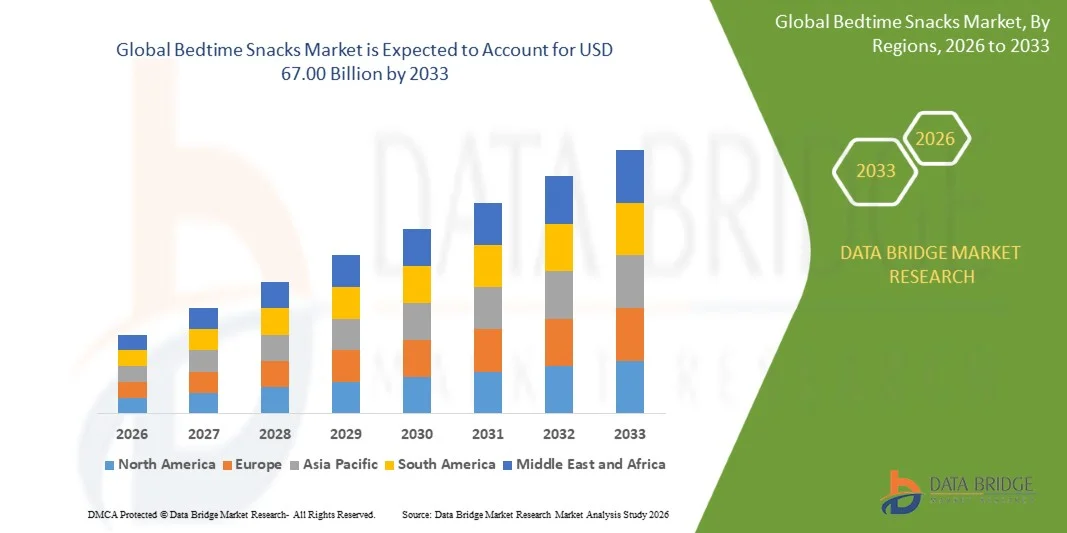
- As per Data Bridge Market Research analysis, the bedtime snacks market was valued at USD 42.04 billion in 2025 and is projected to reach USD 67.00 billion by 2033, growing at a CAGR of 6.00% from 2026 to 2033.
- The market is experiencing consistent growth driven by rising consumer demand for healthy and convenient nighttime snacks, increasing preference for low-sugar and protein-rich foods, and expanding availability of functional snack products through supermarkets, convenience stores, and online retail channels.
- The increasing focus on sleep quality, balanced nutrition, and healthier eating habits, combined with growing demand for clean-label, gluten-free, vegan, and low-fat products, is encouraging food manufacturers to introduce innovative bedtime snack options. Products such as snack bars, yogurt, nuts and seeds, whole grains, low-fat milk, and other nutrient-dense snacks are gaining attention as consumers increasingly replace traditional indulgent evening foods with healthier alternatives.
Market Size & Forecast
- Global Market Value (2025): USD 42.04 Billion
- Expected Market Value (2033): USD 67.00 Billion
- Forecast CAGR (2026–2033): 6.00%
- Leading Region in 2025: North America
- Fastest Growing Region: Asia Pacific
What are the Major Takeaways of the Bedtime Snacks Market?
- North America dominated the bedtime snacks market with the largest revenue share of 33.84% in 2025, supported by high consumer awareness of healthy snacking, strong demand for functional foods, and widespread availability of convenient nighttime snack products.
- Asia-Pacific is expected to be the fastest-growing region at a CAGR of 9.56% from 2026 to 2033, fueled by urbanization, rising disposable incomes, expanding modern retail, and growing consumer interest in healthier snack options.
- The yogurt segment led the market with a 30% share in 2025, driven by its combination of protein, calcium, probiotics, and convenience as a night-time snack.
- Whole grains are the fastest-growing product type, projected to register a CAGR of 7.0%, reflecting the surge in consumer preference for fiber-rich and nutrient-dense bedtime foods.
- The low-fat segment dominated the claim category with a 35% revenue share in 2025, led by increasing consumer awareness of calorie intake and healthier night-time eating habits.
- Casein protein accounted for 38% of the market share in 2025, preferred by growing consumer demand for protein-rich night-time nutrition
- The magnesium segment is the fastest-growing functional ingredient category, with a CAGR of 8.0%, driven by increasing consumer interest in nutrients associated with relaxation, sleep, and overall wellness.
Report Scope and Bedtime Snacks Market Segmentation
|
Attributes |
Bedtime Snacks Key Market Insights |
|
Segments Covered |
|
|
Countries Covered |
North America
Europe
Asia-Pacific
Middle East and Africa
South America
|
|
Key Market Players |
|
|
Market Opportunities |
|
|
Value Added Data Infosets |
In addition to the insights on market scenarios such as market value, growth rate, segmentation, geographical coverage, and major players, the market reports curated by the Data Bridge Market Research also include in-depth expert analysis, pricing analysis, brand share analysis, consumer survey, demography analysis, supply chain analysis, value chain analysis, raw material/consumables overview, vendor selection criteria, PESTLE Analysis, Porter Analysis, and regulatory framework. |
What is the Key Trend in the Bedtime Snacks Market?
- Consumers are increasingly shifting toward functional and wellness-oriented bedtime snacks that combine convenient nighttime eating with nutritional benefits, particularly products containing protein, magnesium, tryptophan, and other ingredients associated with relaxation and sleep support.
- For instance, in July 2025, Health.com highlighted the growing use of nutrient-dense nighttime snacks such as Greek yogurt bark, trail mix, banana with peanut butter, cottage cheese, and low-sodium jerky, reflecting the shift toward protein-, fiber-, antioxidant-, and mineral-rich bedtime snack choices.
- The trend is being reinforced by growing consumer awareness of sleep hygiene and personalized wellness, with bedtime snacks increasingly positioned as part of a broader evening self-care routine rather than simply an indulgent late-night food.
- Snack manufacturers are responding by developing low-sugar, high-protein, clean-label, gluten-free, and naturally formulated products that appeal to health-conscious consumers seeking lighter options before sleep.
- Functional ingredients such as magnesium, tryptophan, melatonin-rich foods, chamomile, and lavender are gaining attention as manufacturers explore products specifically designed around relaxation and nighttime wellness.
- For instance, in October 2025, EatingWell identified strained Greek-style yogurt with berries as a suitable late-night snack because one cup provides nearly 25 grams of protein, while berries contribute fiber, demonstrating the growing emphasis on balanced, functional nutrition for nighttime consumption.
- Yogurt, nuts, seeds, whole grains, fruits, and protein-based snacks are gaining relevance because they can provide protein, complex carbohydrates, magnesium, or tryptophan while fitting into lighter nighttime eating occasions.
What are the Key Drivers of the Bedtime Snacks Market?
- The growing focus on sleep quality and healthy nighttime routines is increasing demand for convenient snacks that provide nutrition while supporting relaxation and satiety before bedtime.
- For instance, in March 2025, EatingWell highlighted seven dietitian-recommended bedtime snacks, including Greek yogurt with pumpkin seeds and tart cherries, chia pudding, edamame, and banana with almond butter, demonstrating growing consumer interest in nutrient-rich foods containing tryptophan, magnesium, fiber, and other nutrients associated with sleep and relaxation.
- Consumers are increasingly incorporating food into broader wellness routines, creating demand for bedtime products positioned around sleep support, relaxation, protein intake, and balanced nutrition rather than conventional indulgent snacking.
- The expansion of functional nutrition is encouraging manufacturers to incorporate ingredients and nutrients such as magnesium, tryptophan, protein, and naturally occurring melatonin into nighttime-oriented food products.
- Rising demand for healthier snacking is also supporting products with lower sugar, clean-label ingredients, natural formulations, and higher nutritional density, particularly among younger and health-conscious consumers.
- The availability of bedtime snack options through supermarkets, convenience stores, specialty retailers, and e-commerce platforms is improving accessibility and enabling brands to target consumers seeking specific dietary and wellness benefits.
- For instance, in April 2024, a study published in Sleep compared five commercially available nighttime snacks among 77 adults over a five-week crossover trial; the study found that the formulated Nightfood snack was associated with better sleep quality and fewer difficulties initiating or returning to sleep than no snack, supporting demand for purpose-designed bedtime snacks.
- With consumers increasingly viewing food as part of preventive health and daily wellness, the growing overlap between functional nutrition and sleep management is expected to remain a major demand driver for bedtime snacks globally.
Which Factors are Challenging the Growth of the Bedtime Snacks Market?
- Consumer concerns regarding added sugar, excessive calories, caffeine, high sodium, and heavy ingredients can restrict demand for conventional bedtime snacks, particularly among health-conscious consumers.
- For instance, in July 2023, a study published in the Journal of Human Nutrition and Dietetics involving 605 Japanese women found that 17.2% had GERD, while longer overnight fasting was associated with lower odds of GERD, highlighting potential concerns around eating too close to sleep.
- The effectiveness of individual foods and ingredients for improving sleep remains inconclusive, making it challenging for manufacturers to communicate sleep-related benefits without creating unsupported health expectations.
- Regulatory requirements surrounding functional, nutritional, and sleep-related claims can increase product-development complexity and limit the types of benefits manufacturers can communicate on packaging and marketing materials.
- Consumers may also avoid eating close to bedtime because large or heavy meals can cause indigestion, reflux, or sleep disruption, creating a need for products that are appropriately portioned and nutritionally balanced.
- The market also faces competition from traditional snacks and beverages, including chips, cookies, ice cream, and other indulgent products that remain popular nighttime choices despite growing health awareness.
- For instance, in August 2023, a study published in Nutrients found that midnight snacks were reported as a GERD symptom trigger by 30.0% of patients with non-erosive reflux disease, compared with 17.4% of patients with reflux esophagitis, demonstrating that nighttime snacking can be problematic for some consumers.
- The uncertainty surrounding sleep-related health benefits, consumer dietary concerns, regulatory requirements, and competition from conventional indulgent snacks continues to challenge market expansion, making scientifically supported formulations and transparent nutritional positioning increasingly important for bedtime snack manufacturers.
How is the Bedtime Snacks Market Segmented?
The bedtime snacks market is segmented on the basis of product type, claim, functional ingredient, and distribution channel.
- By Product Type
On the basis of product type, the bedtime snacks market is segmented into scrambled eggs, whole grains, peanut butter sandwich, low-fat milk, yogurt, seafood, and meat and poultry. The yogurt segment dominated the market with 30% share in 2025, supported by its combination of protein, calcium, probiotics, and convenience as a nighttime snack. Yogurt is widely consumed as a light evening food because it provides satiety without requiring extensive preparation. Greek yogurt and other high-protein varieties are gaining particular attention among consumers focused on healthier snacking. Manufacturers are also introducing low-sugar and functional yogurt formulations to address changing dietary preferences. Increasing awareness of gut health and protein intake is further strengthening demand.
The whole grains segment is projected to witness the fastest growth at a CAGR of 7.0% from 2026 to 2033, driven by increasing consumer preference for fiber-rich and nutrient-dense bedtime foods. Whole-grain products provide complex carbohydrates and dietary fiber, making them attractive to consumers seeking balanced nighttime nutrition. Growing awareness of the relationship between diet quality and overall wellness is encouraging consumers to replace highly processed evening snacks with healthier alternatives. Manufacturers are incorporating oats, whole-grain cereals, and other grain-based ingredients into convenient bedtime snack formats. Demand is further supported by increasing interest in plant-based and minimally processed foods. The expansion of clean-label and high-fiber product offerings is creating additional opportunities for the segment.
- By Claim
On the basis of claim, the bedtime snacks market is segmented into gluten-free, low-fat, sugar-free, and others. The low-fat segment dominated the market with 35% share in 2025, supported by increasing consumer awareness of calorie intake and healthier nighttime eating habits. Consumers increasingly prefer snacks that provide satiety without excessive fat content before bedtime. Low-fat formulations are particularly attractive to individuals following weight-management and balanced-diet routines. Manufacturers are developing low-fat yogurt, milk-based products, and other snack formulations to address this demand. Growing awareness of healthy dietary patterns is also encouraging consumers to monitor their intake of high-fat foods.
The sugar-free segment is projected to register the fastest growth at a CAGR of 7.2% from 2026 to 2033, driven by increasing concerns regarding excessive sugar consumption and demand for healthier nighttime eating. Consumers are increasingly seeking snacks with reduced or no added sugar as part of healthier dietary routines. The growing prevalence of weight-management diets and metabolic-health awareness is encouraging manufacturers to reformulate traditional snacks. Sugar-free yogurt, protein products, and other functional snack formulations are gaining popularity among health-conscious consumers. Advances in natural and alternative sweeteners are enabling manufacturers to maintain taste while reducing conventional sugar content. Increasing demand for clean-label and better-for-you products is further supporting innovation.
- By Functional Ingredient
On the basis of functional ingredient, the bedtime snacks market is segmented into casein protein, magnesium, L-theanine, tryptophan, herbal extracts, and others. The casein protein segment dominated the functional-ingredient category with 38% share in 2025, supported by growing consumer demand for protein-rich nighttime nutrition. Casein is a slow-digesting protein that is particularly relevant to evening consumption and is widely associated with sustained protein availability. Protein-rich bedtime products appeal to consumers focused on satiety, fitness, muscle recovery, and balanced nutrition. Manufacturers are incorporating casein into protein snacks, dairy products, and specialized nighttime formulations. Growing participation in fitness and wellness activities is further expanding demand for convenient protein-based snacks.
The magnesium segment is projected to witness the fastest growth at a CAGR of 8.0% from 2026 to 2033, driven by increasing consumer interest in nutrients associated with relaxation, sleep, and overall wellness. Magnesium is increasingly incorporated into functional foods and beverages targeting consumers interested in nighttime health routines. Growing awareness of micronutrient intake is encouraging manufacturers to develop products with added magnesium and other wellness-oriented ingredients. The ingredient is attractive for functional snack formulations because it can be incorporated into beverages, dairy products, bars, and other convenient formats. Rising interest in sleep-supportive nutrition is further increasing consumer attention toward magnesium-containing products. Expansion of functional and fortified food categories is creating additional opportunities for manufacturers.
- By Distribution Channel
On the basis of distribution channel, the bedtime snacks market is segmented into supermarkets and hypermarkets, retail stores, wholesalers, online channel, and others. The supermarkets and hypermarkets segment dominated the market with 42% share in 2025, supported by extensive product assortment and strong consumer reach. These stores provide consumers with access to multiple bedtime snack categories, including yogurt, milk, whole grains, and packaged functional foods. Established retail infrastructure and promotional campaigns encourage consumers to purchase packaged snacks during routine grocery trips. Supermarkets also provide manufacturers with significant shelf visibility for newly launched health-oriented products. Their ability to offer competitive prices and multiple brands strengthens consumer accessibility.
The online channel is projected to register the fastest growth at a CAGR of 8.0% from 2026 to 2033, driven by increasing e-commerce penetration and growing consumer preference for convenient home delivery. Online platforms allow consumers to access specialized bedtime snacks, functional foods, sugar-free products, and dietary-specific formulations that may have limited availability in physical stores. Digital channels also enable manufacturers to communicate nutritional attributes and functional benefits directly to consumers. Subscription models and personalized product recommendations are creating additional opportunities for nighttime nutrition products. Increasing smartphone usage and digital payment adoption are further supporting online food purchases. The channel is particularly attractive for emerging brands targeting health-conscious and digitally engaged consumers.
Which Region Holds the Largest Share of the Bedtime Snacks Market?
- North America dominated the bedtime snacks market with the largest revenue share of 33.84% in 2025, supported by high consumer awareness of healthy snacking, strong demand for functional foods, and widespread availability of convenient nighttime snack products.
- The region also benefits from strong adoption of protein-rich, low-sugar, and functional snack products, alongside widespread supermarket, convenience-store, and online distribution networks. Growing consumer interest in sleep health and wellness, combined with increasing demand for better-for-you snacks, continues to strengthen North America's position in the global bedtime snacks market.
U.S. Bedtime Snacks Market Insight
The U.S. bedtime snacks market is witnessing strong growth due to rising consumer interest in healthy nighttime eating, functional nutrition, and convenient snack formats. The country's mature packaged-food industry, along with increasing demand for protein-rich, low-sugar, and clean-label products, is driving demand across supermarkets, convenience stores, and online channels. In addition, growing consumer awareness of sleep quality, balanced nutrition, and wellness routines is accelerating adoption of specialized bedtime snack products. The expansion of functional foods containing ingredients such as magnesium, protein, and herbal extracts is further supporting market development.
Asia-Pacific Bedtime Snacks Market Insight
The Asia-Pacific bedtime snacks market is expected to witness rapid growth, driven by rising urbanization, changing dietary habits, and increasing consumer spending on healthier and convenient food products across countries such as China, India, and Japan. Growing awareness regarding nutrition, sleep wellness, and functional foods, alongside expanding modern retail and e-commerce infrastructure, is supporting regional market expansion. In addition, the growing presence of domestic snack manufacturers and increasing availability of low-sugar, high-protein, and clean-label products are accelerating bedtime snack adoption across urban and health-conscious consumer groups.
Japan Bedtime Snacks Market Insight
The Japan bedtime snacks market is witnessing consistent growth due to rising consumer interest in balanced nutrition, healthy aging, and convenient food products. Consumers are increasingly choosing lighter nighttime options such as yogurt, whole grains, low-fat milk, and other nutrient-dense snacks as part of structured dietary routines. Moreover, increasing interest in functional foods containing protein, magnesium, and herbal ingredients, combined with Japan's mature convenience-store and e-commerce networks, is further contributing to market growth.
China Bedtime Snacks Market Insight
The China bedtime snacks market is growing rapidly, driven by increasing urbanization, rising disposable incomes, and changing consumer preferences toward healthier and more convenient food choices. Growing adoption of online grocery platforms and modern retail channels is significantly improving access to functional and premium snack products. In addition, rising awareness of nutrition, fitness, sleep wellness, and weight management is encouraging consumers to seek protein-rich, low-sugar, and nutrient-dense bedtime snacks, positioning China as one of the fastest-growing markets for healthier nighttime food products.
U.K. Bedtime Snacks Market Insight
The U.K. bedtime snacks market is experiencing steady growth, supported by rising consumer demand for healthier snacking, functional nutrition, and convenient nighttime food options. Increasing interest in low-sugar, high-protein, gluten-free, and plant-based products is contributing to market expansion across supermarkets, specialty retailers, and online channels. Furthermore, growing consumer focus on sleep quality and wellness routines is encouraging manufacturers to introduce products incorporating functional ingredients and nutritional benefits, strengthening the U.K.'s position as an important market for bedtime snacks.
Germany Bedtime Snacks Market Insight
The Germany bedtime snacks market is expanding steadily due to strong consumer interest in healthy eating, functional foods, and high-quality nutritional products. Consumers are increasingly seeking low-sugar, organic, protein-rich, and minimally processed snacks suitable for evening consumption. The country's established supermarket networks, discount retailers, and growing e-commerce sector are improving product accessibility. Continuous innovation in functional nutrition, clean-label formulations, and sustainable food products, along with growing awareness of balanced nighttime eating, is further driving market growth in Germany.
Which are the Top Companies in Bedtime Snacks Market?
The bedtime snacks industry is primarily led by well-established companies, including:
- ITC Limited (India)
- Kambly SA (Switzerland)
- Mondelēz International, (U.S.)
- PepsiCo, Inc. (U.S.)
- The Kraft Heinz Company (U.S.)
- Parle Products Pvt. Limited (India)
- Patanjali Ayurved Limited (India)
- Britannia Industries Limited (India)
- pladis global (U.K.)
- Walker’s Shortbread Ltd (U.K.)
- Lotus Bakeries nv (Belgium)
- Nestlé (Switzerland)
- General Mills Inc. (U.S.)
- Danone (France)
- Chobani, LLC (U.S.)
- FAGE USA Dairy Industry, Inc. (U.S.)
- Groupe Lactalis (France)
- The Hershey Company (U.S.)
- Conagra Brands, Inc. (U.S.)
- The Simply Good Foods Company (U.S.)
What are Latest Developments in Bedtime Snacks Market?
- In March 2025, FoodNavigator-USA reported that sleep and wellness were emerging as important functional-food positioning opportunities at Natural Products Expo West 2025, with brands increasingly incorporating benefits such as sleep support into food and beverage innovation. The coverage highlighted growing consumer interest in products positioned around sleep, digestion, hydration, and other wellness benefits. This development supports the increasing convergence of functional nutrition and nighttime consumption, creating opportunities for bedtime snack manufacturers to incorporate ingredients and claims associated with relaxation and sleep.
- In November 2024, EatingWell published a collection of 12 healthy late-night snack ideas, including peanut-butter yogurt cups, pistachio and peach toast, cottage-cheese snack jars, yogurt-fruit parfaits, and high-fiber snack options. The article emphasized convenient, nutrient-dense formats that can be prepared in 15 minutes or less, reflecting consumer demand for healthier alternatives to conventional late-night snacks. The development demonstrates continued innovation around protein-, fiber-, and nutrient-rich foods suitable for nighttime consumption.
- In February 2023, Post Consumer Brands launched Sweet Dreams, a bedtime cereal formulated with a nighttime herbal blend of lavender and chamomile. The product was specifically positioned as an evening cereal to complement consumers' bedtime routines and was designed around the growing interest in foods associated with relaxation and sleep. The launch represents a notable example of a mainstream food manufacturer creating a product specifically for the nighttime consumption occasion.
- In January 2022, EatingWell highlighted tart cherries as a potential sleep-supportive nighttime snack, noting their natural melatonin content and incorporating them into a tart-cherry “nice cream” recipe. The article demonstrates how traditionally consumed foods are being repositioned into convenient snack formats with sleep-related nutritional attributes. This development reinforces the growing connection between functional ingredients, healthier indulgence, and bedtime snacking.
- In September 2021, EatingWell reported on an Ohio State University study involving nearly 20,000 adults that linked insufficient sleep with less healthy snack choices, including greater consumption of snacks containing added sugar and caffeine. The findings highlighted the relationship between sleep behavior and food choices and supported the importance of healthier snack alternatives. This development provides a research-based foundation for the growing focus on nutritious, lower-sugar, and sleep-conscious nighttime snack options.

- Interactive Data Analysis Dashboard
- Company Analysis Dashboard for high growth potential opportunities
- Research Analyst Access for customization & queries
- Competitor Analysis with Interactive dashboard
- Latest News, Updates & Trend analysis
- Harness the Power of Benchmark Analysis for Comprehensive Competitor Tracking
Global Bedtime Snacks Market, Supply Chain Analysis and Ecosystem Framework
To support market growth and help clients navigate the impact of geopolitical shifts, DBMR has integrated in-depth supply chain analysis into its Global Bedtime Snacks Market research reports. This addition empowers clients to respond effectively to global changes affecting their industries. The supply chain analysis section includes detailed insights such as Global Bedtime Snacks Market consumption and production by country, price trend analysis, the impact of tariffs and geopolitical developments, and import and export trends by country and HSN code. It also highlights major suppliers with data on production capacity and company profiles, as well as key importers and exporters. In addition to research, DBMR offers specialized supply chain consulting services backed by over a decade of experience, providing solutions like supplier discovery, supplier risk assessment, price trend analysis, impact evaluation of inflation and trade route changes, and comprehensive market trend analysis.
Data collection and base year analysis are done using data collection modules with large sample sizes. The stage includes obtaining market information or related data through various sources and strategies. It includes examining and planning all the data acquired from the past in advance. It likewise envelops the examination of information inconsistencies seen across different information sources. The market data is analysed and estimated using market statistical and coherent models. Also, market share analysis and key trend analysis are the major success factors in the market report. To know more, please request an analyst call or drop down your inquiry.
The key research methodology used by DBMR research team is data triangulation which involves data mining, analysis of the impact of data variables on the market and primary (industry expert) validation. Data models include Vendor Positioning Grid, Market Time Line Analysis, Market Overview and Guide, Company Positioning Grid, Patent Analysis, Pricing Analysis, Company Market Share Analysis, Standards of Measurement, Global versus Regional and Vendor Share Analysis. To know more about the research methodology, drop in an inquiry to speak to our industry experts.
Data Bridge Market Research is a leader in advanced formative research. We take pride in servicing our existing and new customers with data and analysis that match and suits their goal. The report can be customized to include price trend analysis of target brands understanding the market for additional countries (ask for the list of countries), clinical trial results data, literature review, refurbished market and product base analysis. Market analysis of target competitors can be analyzed from technology-based analysis to market portfolio strategies. We can add as many competitors that you require data about in the format and data style you are looking for. Our team of analysts can also provide you data in crude raw excel files pivot tables (Fact book) or can assist you in creating presentations from the data sets available in the report.













