


Behavioral Rehabilitation Market Size
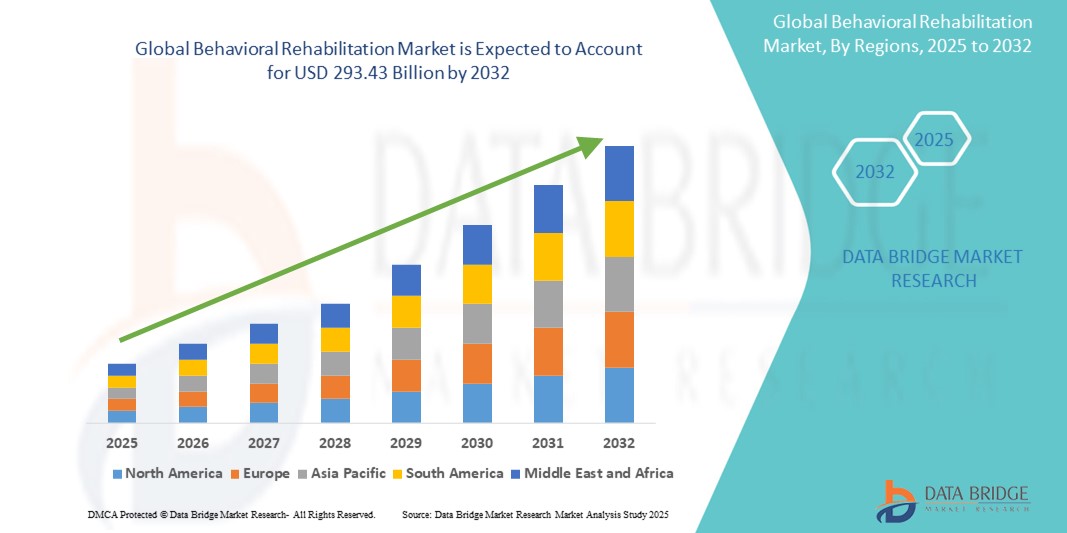
- The global behavioral rehabilitation market size was valued at USD 227.89 billion in 2024 and is expected to reach USD 293.43 billion by 2032, at a CAGR of 3.21% during the forecast period
- The market growth is largely fueled by the rising prevalence of behavioral disorders such as anxiety, depression, and substance abuse, alongside increasing societal awareness and government-led mental health initiatives across major economies
- Furthermore, the growing adoption of telehealth platforms, integration of AI and digital tracking technologies in treatment, and a shift toward outpatient and community-based care models are accelerating the expansion of behavioral rehabilitation services, thereby significantly boosting the industry’s growth
Behavioral Rehabilitation Market Analysis
- Behavioral rehabilitation involves structured treatment programs aimed at managing and improving mental health and behavioral disorders through a combination of counseling, medication, and support services. These programs are delivered across outpatient, inpatient, and residential settings, often tailored to specific disorders such as substance abuse, mood disorders, and ADHD
- The escalating demand for behavioral rehabilitation is primarily driven by increasing mental health challenges globally, expanding healthcare coverage for psychiatric services, and rising investments in technologically integrated care platforms that improve treatment outcomes and patient engagement
- North America dominated the behavioral rehabilitation market with a share of 42.42% due to increased awareness of mental health issues and a robust network of rehabilitation facilities
- Asia-Pacific is expected to be the fastest growing region in the behavioral rehabilitation market during the forecast period due to rising mental health awareness, growing urban stressors, and government-led healthcare reforms in countries such as China, India, and Japan
- Outpatient behavioral rehabilitation segment dominated the market with a market share of 74.57% due to its cost-effectiveness, flexibility, and suitability for patients with mild to moderate conditions. Outpatient programs allow individuals to maintain daily responsibilities while receiving structured therapy sessions, making them an attractive option for working professionals and students
Report Scope and Behavioral Rehabilitation Market Segmentation
|
Attributes |
Behavioral Rehabilitation Key Market Insights |
|
Segments Covered |
|
|
Countries Covered |
North America
Europe
Asia-Pacific
Middle East and Africa
South America
|
|
Key Market Players |
|
|
Market Opportunities |
|
|
Value Added Data Infosets |
In addition to the insights on market scenarios such as market value, growth rate, segmentation, geographical coverage, and major players, the market reports curated by the Data Bridge Market Research also include depth expert analysis, patient epidemiology, pipeline analysis, pricing analysis, and regulatory framework. |
Behavioral Rehabilitation Market Trends
“Increasing Awareness of Mental Health Disorders”
- The growing recognition of mental health issues as critical public health concerns is significantly increasing the demand for behavioral rehabilitation services across diverse patient groups and age brackets
- For instance, the Texas Health and Human Services Commission (HHSC) launched an eLearning behavioral health education series aimed at increasing awareness, offering early intervention, and guiding families on accessing care resources—highlighting how awareness campaigns are driving service utilization
- Social media, corporate wellness programs, and mental health influencers are playing a strong role in reducing stigma and encouraging early diagnosis and treatment of anxiety, depression, PTSD, and behavioral addiction disorders
- Mental health is becoming a policy priority globally, as seen with the World Health Organization’s (WHO) “Comprehensive Mental Health Action Plan,” which mandates awareness and access to quality behavioral rehabilitation services
- Schools and workplaces are increasingly adopting behavioral sensitivity training and screening protocols, encouraging earlier access to behavioral rehabilitation services among adolescents and working professionals
- The emergence of support networks, mental health hotlines, online therapy platforms, and nationwide mental health days reflects a cultural shift toward open dialogue and proactive mental wellness management
Behavioral Rehabilitation Market Dynamics
Driver
“Rising Focus on Preventive Care”
- Preventive care is becoming central to healthcare policy and mental health management strategies, aimed at identifying behavioral health issues before they escalate into chronic conditions, thus increasing the demand for rehabilitation services tailored toward early-stage intervention
- For instance, in countries such as the United States and Canada, public investment in early detection programs such as behavioral screening in schools and routine psychological check-ups in primary care settings have helped increase access to rehabilitation at earlier stages of illness
- Advancements in tracking tools, mobile behavioral health apps, and remote therapy platforms now allow for preventive monitoring and early warning alerts, enabling clinicians to intervene swiftly
- Employers across sectors are implementing mental health days and Employee Assistance Programs (EAPs) to detect and address behavioral issues before they lead to burnout, absenteeism, or workplace disruption
- The growing integration of behavioral rehabilitation into preventive health insurance policies and reimbursement schemes gives patients more affordable access to necessary support, increasing overall patient engagement
Restraint/Challenge
“Complexity of Conditions”
- Behavioral health disorders often present with comorbid physical, emotional, and psychological symptoms, making effective diagnosis and treatment planning difficult, especially in time-limited or resource-constrained clinical environments
- For instance, numerous rehabilitation centers report that dual-diagnosis patients—those with co-existing mental illness and substance dependencies—require multi-level intervention models, involving cognitive therapy, medication, family support, and relapse management, which drive up time and resource demand
- The subjective nature of behavioral disorders means that response to therapy varies widely from patient to patient, necessitating customized treatment plans that may take longer to show results and require ongoing adjustment
- In many regions, including rural and underserved urban communities, there is a substantial shortage of licensed mental health counselors, psychologists, and behavioral therapists, which undermines the implementation of broad-scale behavioral rehabilitation programs
- The lack of uniform insurance coverage, reimbursement delays, and government funding gaps for behavioral and mental health provisions continue to create significant access barriers, particularly for low-income and minority populations
Behavioral Rehabilitation Market Scope
The market is segmented on the basis of treatment method, type of behavioral disorder, and healthcare setting.
- By Treatment Method
On the basis of treatment method, the behavioral rehabilitation market is segmented into counseling, medication, support services, and other treatment methods. The counseling segment dominated the largest market revenue share in 2024, owing to its foundational role in treating a wide range of behavioral disorders and its adaptability across outpatient, inpatient, and residential care settings. Counseling is widely recognized for addressing root psychological causes through cognitive behavioral therapy (CBT), dialectical behavior therapy (DBT), and other psychotherapeutic approaches, making it a preferred method for long-term recovery. The increasing demand for mental health professionals and tele-counseling platforms has further reinforced the segment’s stronghold in the market.
The medication segment is anticipated to witness the fastest growth rate from 2025 to 2032, driven by advancements in pharmacological research and increasing clinical acceptance of drug-assisted therapies. Medications targeting neurotransmitter imbalances are increasingly used to manage symptoms of mood, anxiety, and attention disorders, helping stabilize patients before or during therapy. The rise of combination treatment models integrating medication with therapy and the growing adoption of personalized medicine approaches are expected to accelerate this segment’s expansion.
- By Type of Behavioral Disorder
On the basis of type of behavioral disorder, the market is categorized into anxiety disorder, mood disorder, substance abuse disorder, personality disorder, and attention deficit disorder. The substance abuse disorder segment accounted for the largest revenue share in 2024, driven by rising global incidences of drug and alcohol addiction and the urgent public health response to the opioid crisis in various countries. This segment benefits from increasing government funding for rehabilitation programs, community-based interventions, and expanding insurance coverage, enabling more individuals to access specialized treatment centers.
The attention deficit disorder (ADD) segment is projected to witness the fastest CAGR from 2025 to 2032, fueled by increased diagnosis rates among children and adults and growing awareness among parents, educators, and healthcare providers. Technological advances in brain imaging and diagnostics have also contributed to early detection, while the rise in structured behavioral interventions and targeted pharmaceutical treatments has made ADD more manageable, thereby boosting the demand for specialized rehabilitation services.
- By Healthcare Setting
On the basis of healthcare setting, the behavioral rehabilitation market is segmented into outpatient behavioral rehabilitation, inpatient behavioral rehabilitation, and residential behavioral rehabilitation. The outpatient behavioral rehabilitation segment captured the highest revenue share of 74.57% in 2024, supported by its cost-effectiveness, flexibility, and suitability for patients with mild to moderate conditions. Outpatient programs allow individuals to maintain daily responsibilities while receiving structured therapy sessions, making them an attractive option for working professionals and students.
The residential behavioral rehabilitation segment is expected to experience the fastest growth rate during the forecast period from 2025 to 2032, propelled by rising demand for immersive, 24/7 care environments that cater to severe and chronic behavioral disorders. These facilities offer a controlled setting that fosters recovery through personalized care plans, peer support, and constant clinical supervision. Increasing preference among families and caregivers for long-term recovery outcomes is further bolstering the demand for residential treatment programs.
Behavioral Rehabilitation Market Regional Analysis
- North America dominated the behavioral rehabilitation market with the largest revenue share of 42.42% in 2024, driven by increased awareness of mental health issues and a robust network of rehabilitation facilities
- The region benefits from well-established healthcare infrastructure, favorable reimbursement policies, and strong government and private sector investments in behavioral health services
- Rising rates of substance abuse, anxiety, and depression, coupled with destigmatization efforts and growing public discourse around mental health, continue to drive the demand for behavioral rehabilitation services
U.S. Behavioral Rehabilitation Market Insight
The U.S. behavioral rehabilitation market captured the largest revenue share in 2024 within North America, supported by increasing prevalence of behavioral disorders and strong demand for outpatient and residential treatment programs. Key growth drivers include expanding insurance coverage under the Mental Health Parity Act, the integration of telebehavioral health services, and public health initiatives targeting opioid and substance abuse. The U.S. is also witnessing a rise in private investments and digital therapeutic platforms, further strengthening the country’s leadership in behavioral rehabilitation.
Europe Behavioral Rehabilitation Market Insight
The Europe behavioral rehabilitation market is projected to register steady growth over the forecast period, driven by supportive mental health policies, rising prevalence of mood and anxiety disorders, and improved access to behavioral care. The European Union’s initiatives toward mental well-being and suicide prevention have led to the expansion of national rehabilitation programs. Increasing awareness, early intervention strategies, and a rise in co-occurring disorders have further bolstered demand for both inpatient and community-based rehabilitation services.
U.K. Behavioral Rehabilitation Market Insight
The U.K. behavioral rehabilitation market is anticipated to grow at a healthy CAGR during the forecast period, backed by the National Health Service’s (NHS) investments in mental health infrastructure and expanding digital therapy platforms. A growing focus on youth and adolescent behavioral disorders, coupled with rising demand for outpatient and home-based care, is contributing to market expansion. The country's push to integrate mental health with primary care services is also fostering a holistic approach to rehabilitation.
Germany Behavioral Rehabilitation Market Insight
The Germany behavioral rehabilitation market is expected to witness moderate but steady growth, driven by increasing societal focus on mental well-being and workplace-related stress management programs. Germany's universal healthcare system facilitates access to rehabilitation services, while rising cases of substance use and depression are prompting the expansion of inpatient and residential treatment centers. Technological adoption, such as digital CBT tools and remote therapy options, is also gaining traction.
Asia-Pacific Behavioral Rehabilitation Market Insight
The Asia-Pacific behavioral rehabilitation market is poised to expand at the fastest CAGR during the forecast period from 2025 to 2032, fueled by rising mental health awareness, growing urban stressors, and government-led healthcare reforms in countries such as China, India, and Japan. The increasing burden of untreated behavioral disorders and stigma reduction initiatives are driving demand for counseling, medication, and structured rehabilitation services. The region’s improving access to healthcare and the emergence of affordable digital therapy platforms are widening the reach of behavioral rehabilitation.
Japan Behavioral Rehabilitation Market Insight
The Japan behavioral rehabilitation market is witnessing growth due to the country’s aging population, rising cases of mood and anxiety disorders, and high societal pressure contributing to stress-related conditions. There is increasing investment in tele-counseling services and outpatient care models to address growing demand. Public health campaigns promoting mental wellness and early intervention are also enhancing the visibility and acceptance of behavioral rehabilitation programs.
China Behavioral Rehabilitation Market Insight
The China behavioral rehabilitation market accounted for the largest revenue share in Asia Pacific in 2024, driven by a growing mental health burden, rapid urbanization, and national healthcare reforms. The Chinese government is actively expanding psychiatric infrastructure and promoting community-based rehabilitation to reduce stigma and improve accessibility. As awareness increases, particularly among younger populations and urban professionals, the demand for both private and public rehabilitation services continues to rise across the country.
Behavioral Rehabilitation Market Share
The behavioral rehabilitation industry is primarily led by well-established companies, including:
- Acadia Healthcare (U.S.)
- American Addiction Centers (U.S.)
- Aurora Behavioral Health System (U.S.)
- BHG Holdings, LLC. (U.S.)
- Haven Corporate (U.S.)
- Magellan Health, Inc. (U.S.)
- Niznik Behavioral Health (U.S.)
- Advanced Psychiatric Solutions (U.S.)
- Promises Behavioral Health (U.S.)
- Springstone, Inc. (U.S.)
- Universal Health Services, Inc. (U.S.)
Latest Developments in Global Behavioral Rehabilitation Market
- In September 2023, Discovery Behavioral Health launched the A.I.-driven Discovery365 platform in partnership with Brigham and Women’s Hospital, marking a major advancement in post-treatment care within the behavioral rehabilitation market. Powered by Videra Health technology, the platform tracks patient progress for 12 months following discharge, addressing the critical "one-year recovery gap" where relapse rates are highest. This innovation introduces a paradigm shift by emphasizing data-driven, long-term recovery monitoring, enhancing patient outcomes, and reinforcing the growing importance of continuous care in behavioral health treatment
- In February 2023, Lupin Limited inaugurated Atharv Ability, an advanced neuro-rehabilitation center in Mumbai, India, featuring robotic and computer-assisted technologies. As one of the most sophisticated facilities in the country, it represents a significant investment in India’s behavioral rehabilitation infrastructure. The launch of this multi-disciplinary center enhances the quality of care available and signals the growing demand for technologically integrated rehabilitation services, positioning India as a rising hub for modern, patient-centric behavioral and neuro care
- In October 2022, the Biden-Harris Administration announced the allocation of approximately USD 300 million to expand the reach of Certified Community Behavioral Health Clinics (CCBHCs) across the U.S. This funding strengthens the national behavioral rehabilitation landscape by increasing access to comprehensive, community-based mental health services. It supports the integration of behavioral and physical health care, reduces treatment delays, and drives expansion in underserved areas, demonstrating strong federal commitment to mental health infrastructure
- In October 2022, the Government of India launched the National Tele-Mental Health Program to provide accessible, technology-enabled behavioral health services nationwide. This initiative is set to reshape the delivery model of behavioral rehabilitation by leveraging digital platforms to reach remote and underserved populations. By promoting early intervention, reducing stigma, and improving availability of professional support, the program is expected to significantly accelerate the adoption of telehealth solutions and broaden the behavioral rehabilitation market’s reach in India
- In March 2021, Acadia Healthcare formed a strategic partnership with Indiana’s Lutheran Health Network to expand and integrate behavioral health services across the state. This collaboration is designed to streamline patient care, improve treatment coordination, and expand access through a more connected healthcare delivery system. It reflects a larger trend toward consolidation and value-based care in the U.S. behavioral rehabilitation market, enhancing operational efficiency and boosting the quality and reach of specialized treatment services

- Interactive Data Analysis Dashboard
- Company Analysis Dashboard for high growth potential opportunities
- Research Analyst Access for customization & queries
- Competitor Analysis with Interactive dashboard
- Latest News, Updates & Trend analysis
- Harness the Power of Benchmark Analysis for Comprehensive Competitor Tracking
Data collection and base year analysis are done using data collection modules with large sample sizes. The stage includes obtaining market information or related data through various sources and strategies. It includes examining and planning all the data acquired from the past in advance. It likewise envelops the examination of information inconsistencies seen across different information sources. The market data is analysed and estimated using market statistical and coherent models. Also, market share analysis and key trend analysis are the major success factors in the market report. To know more, please request an analyst call or drop down your inquiry.
The key research methodology used by DBMR research team is data triangulation which involves data mining, analysis of the impact of data variables on the market and primary (industry expert) validation. Data models include Vendor Positioning Grid, Market Time Line Analysis, Market Overview and Guide, Company Positioning Grid, Patent Analysis, Pricing Analysis, Company Market Share Analysis, Standards of Measurement, Global versus Regional and Vendor Share Analysis. To know more about the research methodology, drop in an inquiry to speak to our industry experts.
Data Bridge Market Research is a leader in advanced formative research. We take pride in servicing our existing and new customers with data and analysis that match and suits their goal. The report can be customized to include price trend analysis of target brands understanding the market for additional countries (ask for the list of countries), clinical trial results data, literature review, refurbished market and product base analysis. Market analysis of target competitors can be analyzed from technology-based analysis to market portfolio strategies. We can add as many competitors that you require data about in the format and data style you are looking for. Our team of analysts can also provide you data in crude raw excel files pivot tables (Fact book) or can assist you in creating presentations from the data sets available in the report.













