


Bio Based Polymethyl Methacrylate Market Size
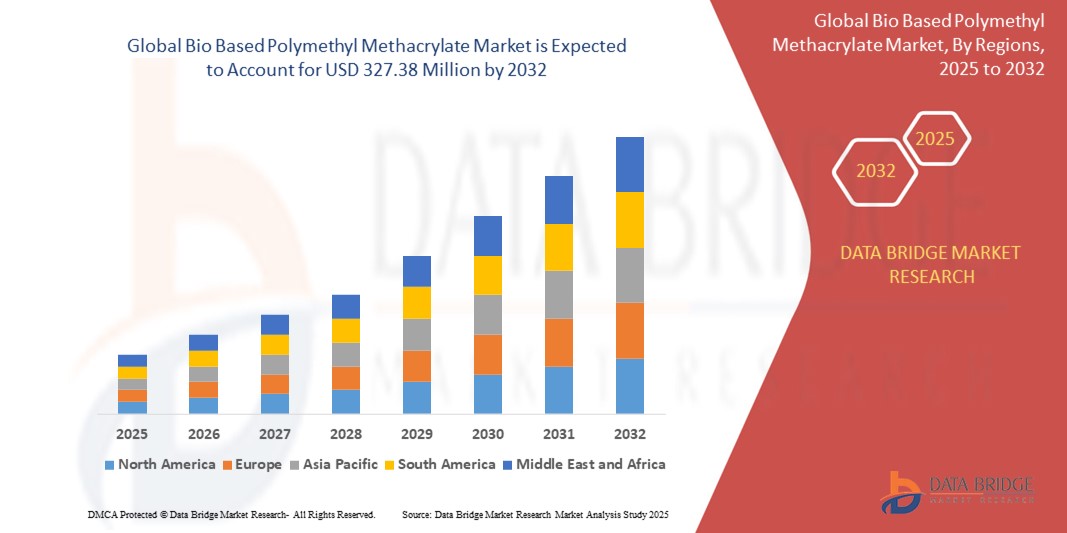
- The global bio based polymethyl methacrylate market size was valued at USD 90.2 million in 2024 and is expected to reach USD 327.38 million by 2032, at a CAGR of 15.4% during the forecast period
- The market growth is largely fueled by the increasing shift toward sustainable materials and the growing environmental awareness among manufacturers and consumers, leading to rising adoption of bio-based polymethyl methacrylate in automotive, construction, and electronics sectors
- Furthermore, regulatory pressure to reduce reliance on fossil-based plastics and the expanding application of bio-based polymethyl methacrylate in lightweight, high-performance products across medical devices, displays, and green buildings are accelerating demand, thereby significantly boosting the industry’s growth
Bio Based Polymethyl Methacrylate Market Analysis
- Bio-based polymethyl methacrylate is a renewable alternative to conventional polymethyl methacrylate, derived from feedstocks such as sugar, lactic acid, and plant oils. It offers properties such as high transparency, weather resistance, and recyclability, making it suitable for use in automotive components, optical displays, medical implants, and eco-friendly packaging
- The rising demand for low-carbon, high-durability materials and the growing alignment of industrial production with circular economy principles are key factors driving the market forward, as companies increasingly invest in biopolymer innovation and green processing technologies
- North America dominated the bio based polymethyl methacrylate market with a share of 30.5% in 2024, due to strong demand from automotive, electronics, healthcare, and construction industries
- Asia-Pacific is expected to be the fastest growing region in the bio based polymethyl methacrylate market during the forecast period due to rapid industrialization, increasing urbanization, and rising demand in automotive and construction sectors
- Automotive segment dominated the market with a market share of 45.5% in 2024, due to the increasing demand for lightweight, durable, and transparent materials in vehicle lighting systems, displays, and interior components. Bio-based polymethyl methacrylate serves as a sustainable alternative to petroleum-derived plastics, aligning with the automotive industry’s shift toward greener materials without compromising performance or design flexibility
Report Scope and Bio Based Polymethyl Methacrylate Market Segmentation
|
Attributes |
Bio Based Polymethyl Methacrylate Key Market Insights |
|
Segments Covered |
|
|
Countries Covered |
North America
Europe
Asia-Pacific
Middle East and Africa
South America
|
|
Key Market Players |
|
|
Market Opportunities |
|
|
Value Added Data Infosets |
In addition to the insights on market scenarios such as market value, growth rate, segmentation, geographical coverage, and major players, the market reports curated by the Data Bridge Market Research also include import export analysis, production capacity overview, production consumption analysis, price trend analysis, climate change scenario, supply chain analysis, value chain analysis, raw material/consumables overview, vendor selection criteria, PESTLE Analysis, Porter Analysis, and regulatory framework. |
Bio Based Polymethyl Methacrylate Market Trends
“Rising Demand for Sustainable Polymers and Eco-Friendly Materials”
- A significant and accelerating trend in the bio-based polymethyl methacrylate (Bio- polymethyl methacrylate) market is the growing demand for sustainable, environmentally friendly polymers as industries seek alternatives to petrochemical-based plastics
- For instance, leading companies such as Evonik Industries AG, Arkema SA, and Mitsubishi Rayon Company are investing in the development and commercialization of bio-based polymethyl methacrylate products, targeting applications in automotive, electronics, construction, and medical devices to meet both regulatory requirements and consumer demand for green materials
- The adoption of bio-based polymethyl methacrylate is being driven by its unique properties—such as lightweight, shatter resistance, UV stability, and optical clarity—which make it an attractive glass alternative for signs, displays, LED screens, and automotive components
- The trend is further supported by volatile petrochemical prices, depleting fossil fuel reserves, and increasing government regulations aimed at reducing the environmental impact of plastic production and waste
- As sustainability becomes a core focus, bio-based polymethyl methacrylate is gaining traction in regions with strong environmental mandates, such as Europe and North America, where manufacturers are advancing production technologies and expanding their portfolios to include more bio-based solutions
- Companies are also exploring new applications, such as bio-adhesive polymethyl methacrylate micro-devices for controlled drug delivery, highlighting the potential for innovation and growth in niche markets
Bio Based Polymethyl Methacrylate Market Dynamics
Driver
“Increasing Demand for Sustainable and High-Performance Materials”
- The rising demand for sustainable and high-performance materials across industries such as automotive, construction, and electronics is a major driver for the bio-based polymethyl methacrylate market
- For instance, Evonik Industries AG, Arkema SA, and Mitsubishi Rayon Company are expanding their bio- polymethyl methacrylate offerings to supply lightweight, durable, and eco-friendly alternatives to traditional plastics, helping manufacturers meet both regulatory and consumer expectations for sustainability
- The automotive sector is incorporating bio- polymethyl methacrylate for lightweight components to improve fuel efficiency and reduce emissions, while the construction and electronics sectors are using it for glazing, LED screens, and displays due to its optical clarity and weather resistance
- Advancements in manufacturing technologies, such as improved polymerization methods and automation, are making bio-based polymethyl methacrylate more cost-effective and accessible for a wide range of applications
- The market is also benefiting from increased investment in R&D, with companies focusing on product innovation and expanding into new application areas, including medical devices and specialty coatings
Restraint/Challenge
“High Cost and Supply Chain Constraints for Raw Materials”
- High production costs and supply chain constraints for bio-based raw materials present significant challenges for the bio- polymethyl methacrylate market, impacting scalability and price competitiveness
- For instance, although bio-based polymethyl methacrylate is generally cheaper than petrochemical-derived alternatives, fluctuations in the availability and cost of natural feedstocks can hinder large-scale adoption, especially in price-sensitive industries
- Companies such as Arkema SA and Mitsubishi Rayon Company face ongoing pressure to optimize manufacturing processes and secure reliable sources of bio-based inputs to maintain consistent quality and supply
- The complexity of scaling up bio-based production and integrating new technologies can also result in higher initial investment and operational costs, potentially limiting market penetration in regions with less developed infrastructure
- Overcoming these challenges will require continued innovation in feedstock sourcing, process efficiency, and supply chain management, as well as collaboration with stakeholders across the value chain to ensure long-term growth and competitiveness in the bio-based polymethyl methacrylate market
Bio Based Polymethyl Methacrylate Market Scope
The market is segmented on the basis of bio-based feedstock, application, end-use industry, and processing technology.
- By Bio-based Feedstock
On the basis of bio-based feedstock, the bio-based polymethyl methacrylate market is segmented into sugar, cellulose, lactic acid, plant oils, and others. The sugar segment accounted for the largest revenue share in 2024, owing to its abundant availability and established use in fermentation-based production routes. Sugar-derived monomers serve as a cost-effective and sustainable alternative to petrochemical inputs, making them highly attractive for commercial-scale polymethyl methacrylate manufacturing. The simplicity of sugar fermentation and its integration with existing bioprocessing infrastructure further support its dominant position in the market.
The lactic acid segment is anticipated to witness the fastest CAGR from 2025 to 2032, driven by rising interest in biodegradable and biocompatible materials across medical and packaging sectors. Lactic acid-derived polymethyl methacrylate variants offer enhanced environmental performance and are gaining traction among manufacturers focused on reducing carbon emissions and dependence on fossil resources. Technological advances in lactic acid polymerization are also improving material properties and expanding its application potential.
- By Application
On the basis of application, the market is categorized into automotive, construction, medical, packaging, electronics, and others. The automotive segment held the largest market share of 45.5% in 2024, driven by the increasing demand for lightweight, durable, and transparent materials in vehicle lighting systems, displays, and interior components. Bio-based polymethyl methacrylate serves as a sustainable alternative to petroleum-derived plastics, aligning with the automotive industry’s shift toward greener materials without compromising performance or design flexibility.
The medical segment is projected to register the fastest growth rate between 2025 and 2032, fueled by the growing adoption of biocompatible polymethyl methacrylate in dental implants, bone cement, and medical devices. The reduced toxicity and renewable origin of bio-based polymethyl methacrylate make it highly suited for sensitive healthcare applications, while ongoing R&D efforts are further enhancing its purity, sterilizability, and strength for clinical use.
- By End-Use Industry
On the basis of end-use industry, the bio-based polymethyl methacrylate market is segmented into automotive, construction, medical, electronics, consumer products, and others. Automotive emerged as the dominant sector in 2024 due to consistent demand for sustainable materials that can meet stringent safety and aesthetic requirements. The integration of bio-based polymethyl methacrylate supports OEMs in achieving regulatory compliance and sustainability targets while maintaining product quality.
The electronics segment is expected to grow at the fastest pace from 2025 to 2032, driven by increased usage of bio-based polymethyl methacrylate in displays, light diffusers, and optical components. The material’s high clarity, scratch resistance, and thermal stability make it ideal for next-generation electronic devices. In addition, rising consumer preference for eco-friendly gadgets is prompting manufacturers to adopt renewable material solutions in their product lines.
- By Processing Technology
On the basis of processing technology, the market is segmented into fermentation, chemical synthesis, biosynthesis, advanced manufacturing, and others. The fermentation segment accounted for the highest market share in 2024, supported by its wide-scale industrial use and compatibility with sugar- and starch-based feedstocks. Fermentation-based routes provide a low-carbon pathway to monomer production and are increasingly being adopted in large-scale biorefineries.
The biosynthesis segment is projected to expand at the fastest CAGR from 2025 to 2032, propelled by technological breakthroughs in synthetic biology and metabolic engineering. This method allows for precise control over polymer structure and performance, leading to tailored bio-based polymethyl methacrylate formulations for high-value applications. As industries move toward closed-loop and cell-based production systems, biosynthesis is set to play a crucial role in reshaping the polymethyl methacrylate landscape.
Bio Based Polymethyl Methacrylate Market Regional Analysis
- North America dominated the bio based polymethyl methacrylate market with the largest revenue share of 30.5% in 2024, driven by strong demand from automotive, electronics, healthcare, and construction industries
- The region benefits from advanced manufacturing infrastructure, high R&D investment, and favorable environmental policies encouraging the use of sustainable materials
- The preference for eco-friendly alternatives in end-use applications such as vehicle parts, LED displays, and energy-efficient building materials further propels market growth
U.S. Bio-Based Polymethyl Methacrylate Market Insight
The U.S. captured the largest share within North America, supported by a mature polymer industry, proactive adoption of green technologies, and consistent innovation. Key growth areas include medical devices, automotive interiors, and architectural glazing, with demand also rising for high-clarity and lightweight materials in consumer electronics.
Europe Bio-Based Polymethyl Methacrylate Market Insight
Europe held the second-largest share of the bio-based polymethyl methacrylate market in 2024, underpinned by stringent environmental regulations and strong consumer inclination toward sustainability. The region's commitment to reducing plastic waste and promoting circular economy initiatives encourages manufacturers to adopt bio-based polymethyl methacrylate across sectors such as automotive, construction, and packaging. The integration of bio-based polymethyl methacrylate into lightweight vehicle components and optical devices is particularly notable in countries such as Germany and France.
Germany Bio-Based Polymethyl Methacrylate Market Insight
Germany is a major contributor to the European market, with strong emphasis on sustainable manufacturing and precision engineering. Applications in electronics and industrial design continue to grow, supported by the country’s push for energy-efficient and low-emission materials.
Asia-Pacific Bio-Based Polymethyl Methacrylate Market Insight
Asia-Pacific is projected to grow at the fastest CAGR from 2025 to 2032, with countries such as China, Japan, and India leading adoption. Factors such as rapid industrialization, increasing urbanization, and rising demand in automotive and construction sectors are fueling market expansion. Government initiatives supporting green materials and rising investments in local manufacturing further bolster regional growth.
China Bio-Based Polymethyl Methacrylate Market Insight
China accounted for the largest revenue share in Asia-Pacific in 2024, driven by large-scale production, growing middle-class demand, and extensive use in residential, commercial, and industrial applications. The rise of smart city projects and strong domestic supply capabilities are accelerating adoption across construction and consumer electronics segments.
Japan Bio-Based Polymethyl Methacrylate Market Insight
Japan’s market is expanding steadily due to its high-tech infrastructure and aging population, which creates demand for biocompatible and user-friendly materials in healthcare and home improvement. Smart material integration and innovation in optical applications are additional growth drivers.
Bio Based Polymethyl Methacrylate Market Share
The bio based polymethyl methacrylate industry is primarily led by well-established companies, including:
- Evonik Industries AG (Germany)
- Mitsubishi Chemical Group Corporation (Japan)
- LG Chem Ltd. (South Korea)
- Chi Mei Corporation (Taiwan)
- Sumitomo Chemical Co., Ltd. (Japan)
- Arkema S.A. (France)
- Kolon Industries, Inc. (South Korea)
- Polycasa N.V. (Belgium)
- Makevale Group (UK)
- Plaskolite LLC (U.S.)
- Röhm GmbH (Germany)
- The Dow Chemical Company (U.S.)
- Asahi Kasei Corporation (Japan)
- 3A Composites GmbH (Germany)
- Asian Acrylics (India)
- Trinseo S.A. (U.S.)
- Shanghai Jingqi Chemical Co., Ltd. (China)
- Guangzhou Chemical Reagent Factory Co., Ltd. (China)
Latest Developments in Global Bio Based Polymethyl Methacrylate Market
- In March 2024, Mitsubishi Chemical Group launched a new grade of bio-based polymethyl methacrylate under its “Sustainable Product Series.” The new product offers the same optical clarity and durability as traditional polymethyl methacrylate but is derived from renewable raw materials, significantly reducing its carbon footprint. This development highlights the company’s continued efforts to lead in environmentally responsible material solutions and strengthen its position in the evolving global polymethyl methacrylate landscape
- In February 2024, Trinseo introduced a new high-impact polymethyl methacrylate resin designed for automotive lighting and glazing applications. The advanced formulation enhances impact resistance while maintaining the transparency and UV stability for which polymethyl methacrylate is known. This product launch caters to the increasing demand for lightweight, durable materials in electric vehicles, further solidifying Trinseo’s commitment to innovation in the mobility sector
- In January 2024, LG Chem announced its entry into the polymethyl methacrylate recycling space through a joint venture with a European recycling firm. The initiative focuses on recovering polymethyl methacrylate from post-consumer and industrial waste and reprocessing it into high-grade material for reuse in electronics and construction. This collaboration marks a significant step toward closing the loop in the polymethyl methacrylate value chain and aligns with global circular economy goals
- In December 2023, Chi Mei Corporation revealed plans to expand its polymethyl methacrylate operations in Southeast Asia, citing increasing regional demand across display panels, automotive components, and sanitary ware. The new production facility in Vietnam is expected to enhance supply chain responsiveness and reduce lead times for regional customers, reinforcing Chi Mei’s role as a leading global POLYMETHYL METHACRYLATE supplier
- In February 2022, Mitsubishi Chemical Corp. announced the strengthening of its global MMA operations. Mitsubishi Chemical Corp. has chosen to centralize pertinent head office responsibilities in Singapore and renamed the subsidiary to Mitsubishi Chemical Methacrylate, which will specifically deal with subjects related to polymethyl methacrylate

- Interactive Data Analysis Dashboard
- Company Analysis Dashboard for high growth potential opportunities
- Research Analyst Access for customization & queries
- Competitor Analysis with Interactive dashboard
- Latest News, Updates & Trend analysis
- Harness the Power of Benchmark Analysis for Comprehensive Competitor Tracking
Global Bio Based Polymethyl Methacrylate Market, Supply Chain Analysis and Ecosystem Framework
To support market growth and help clients navigate the impact of geopolitical shifts, DBMR has integrated in-depth supply chain analysis into its Global Bio Based Polymethyl Methacrylate Market research reports. This addition empowers clients to respond effectively to global changes affecting their industries. The supply chain analysis section includes detailed insights such as Global Bio Based Polymethyl Methacrylate Market consumption and production by country, price trend analysis, the impact of tariffs and geopolitical developments, and import and export trends by country and HSN code. It also highlights major suppliers with data on production capacity and company profiles, as well as key importers and exporters. In addition to research, DBMR offers specialized supply chain consulting services backed by over a decade of experience, providing solutions like supplier discovery, supplier risk assessment, price trend analysis, impact evaluation of inflation and trade route changes, and comprehensive market trend analysis.
Data collection and base year analysis are done using data collection modules with large sample sizes. The stage includes obtaining market information or related data through various sources and strategies. It includes examining and planning all the data acquired from the past in advance. It likewise envelops the examination of information inconsistencies seen across different information sources. The market data is analysed and estimated using market statistical and coherent models. Also, market share analysis and key trend analysis are the major success factors in the market report. To know more, please request an analyst call or drop down your inquiry.
The key research methodology used by DBMR research team is data triangulation which involves data mining, analysis of the impact of data variables on the market and primary (industry expert) validation. Data models include Vendor Positioning Grid, Market Time Line Analysis, Market Overview and Guide, Company Positioning Grid, Patent Analysis, Pricing Analysis, Company Market Share Analysis, Standards of Measurement, Global versus Regional and Vendor Share Analysis. To know more about the research methodology, drop in an inquiry to speak to our industry experts.
Data Bridge Market Research is a leader in advanced formative research. We take pride in servicing our existing and new customers with data and analysis that match and suits their goal. The report can be customized to include price trend analysis of target brands understanding the market for additional countries (ask for the list of countries), clinical trial results data, literature review, refurbished market and product base analysis. Market analysis of target competitors can be analyzed from technology-based analysis to market portfolio strategies. We can add as many competitors that you require data about in the format and data style you are looking for. Our team of analysts can also provide you data in crude raw excel files pivot tables (Fact book) or can assist you in creating presentations from the data sets available in the report.













