


Bio-Based Polypropylene (PP) Market Overview
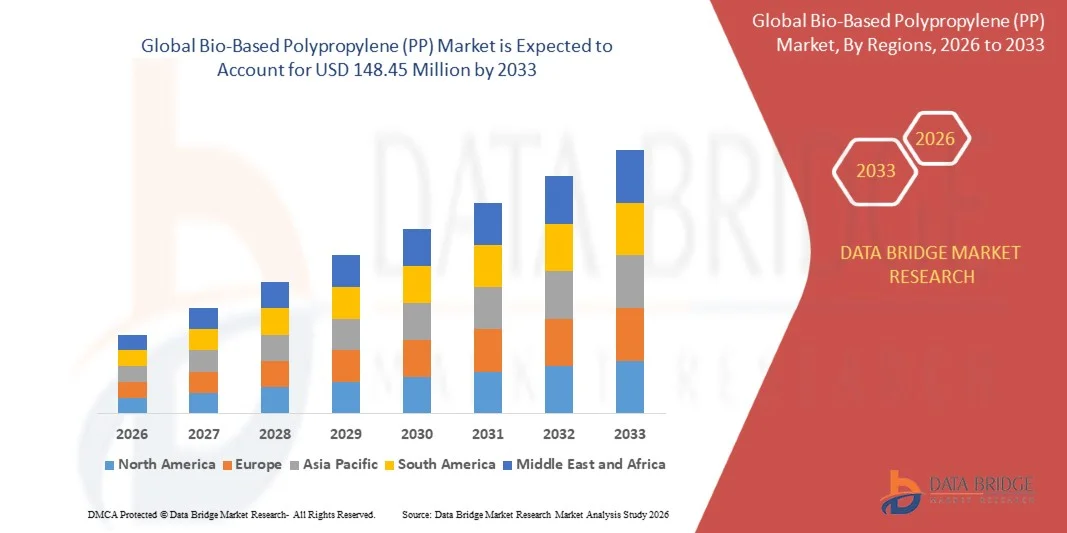
As per Data Bridge Market Research Analysis the global bio-based polypropylene (PP) market was valued at USD 92.23 million in 2025 and is projected to reach USD 148.45 million by 2033, growing at a CAGR of 6.13% from 2026 to 2033. The global bio-based polypropylene (PP) market is experiencing steady growth driven by rising environmental concerns regarding the use of conventional plastics and the increasing replacement of fossil-based feedstock with renewable materials. Bio-based polypropylene is a polymer manufactured from natural materials such as vegetable oil and biomass, offering similar properties to synthetic polypropylene while reducing environmental impact.
Government regulations promoting bio-based products, high investment by major companies in R&D activities, and growing demand from end-use industries for lowering carbon footprint are major factors anticipated to drive market growth. The emerging food and beverage industry, coupled with high adoption of bio-based PP for printing, coating, and laminating processes, is further supporting market expansion
Key Market Trends & Insights
- North America dominated the bio-based polypropylene (PP) market with a significant revenue share in 2025, supported by increasing demand for sustainable plastics, stringent environmental regulations, and growing adoption of renewable materials across various industries.
- The Asia-Pacific bio-based polypropylene (PP) market is expected to witness the fastest growth rate from 2026 to 2033, supported by rapid industrialization, expanding manufacturing activities, increasing environmental concerns, and rising demand for sustainable plastic alternatives.
- The injection molding segment dominated the market in 2025, owing to the extensive use of bio-based polypropylene in automotive components, consumer goods, household products, and industrial applications.
- The films segment is projected to register the fastest growth from 2026 to 2033, driven by increasing demand for sustainable packaging solutions across food & beverage, healthcare, and consumer goods industries.
- The non-edible source segment accounted for a significant market share in 2025, supported by its ability to provide sustainable feedstock without competing with food resources.
- The starch-based source segment is expected to witness the fastest growth from 2026 to 2033, driven by increasing availability of renewable starch feedstocks and rising demand for environmentally friendly plastic alternatives.
Market Size & Forecast
- Global Market Value (2025): USD 92.23 Million
- Expected Market Value (2033): USD 148.45 Million
- Forecast CAGR (2026–2033): 6.13%
- Leading Region in 2025: North America
- Fastest Growing Region: Asia-Pacific
Report Scope and Bio-Based Polypropylene (PP) Market Segmentation
|
Attributes |
Bio-Based Polypropylene (PP) Market Key Market Insights |
|
Segments Covered |
|
|
Countries Covered |
North America
Europe
Asia-Pacific
Middle East and Africa
South America
|
|
Key Market Players |
|
|
Market Opportunities |
|
|
Value Added Data Infosets |
In addition to the insights on market scenarios such as market value, growth rate, segmentation, geographical coverage, and major players, the market reports curated by the Data Bridge Market Research also include import export analysis, production capacity overview, production consumption analysis, price trend analysis, climate change scenario, supply chain analysis, value chain analysis, raw material/consumables overview, vendor selection criteria, PESTLE Analysis, Porter Analysis, and regulatory framework. |
Bio-Based Polypropylene (PP) Market Trends
Trend: Rising Adoption of Bio-Based PP in Injection Molding Applications
Injection molding is becoming one of the leading application areas for bio-based polypropylene (Bio-PP) due to its ability to manufacture lightweight, durable, and dimensionally accurate components with high production efficiency. Industries such as automotive, packaging, consumer goods, healthcare, and electrical & electronics are increasingly adopting Bio-PP as a sustainable alternative to conventional polypropylene while maintaining comparable mechanical performance. As Bio-PP can be processed using existing injection molding equipment without major modifications, manufacturers can reduce product carbon footprints without significant investments in new production infrastructure.
For instance, in September 2024, Braskem introduced WENEW Bio-Circular Polypropylene (PP) in North America. Produced using renewable feedstocks such as used cooking oil through an ISCC PLUS-certified mass balance approach, the material is designed for food packaging, consumer goods, and other injection-molded applications.
This development reflects the increasing adoption of renewable polypropylene in high-volume injection molding applications, supporting the shift toward more sustainable plastic manufacturing.
Bio-Based Polypropylene (PP) Market Dynamics
Key Market Driver: Growing Regulatory Support for Low-Carbon and Renewable Plastics
Increasing regulatory pressure to reduce greenhouse gas emissions and promote a circular economy is driving the global Bio-PP market. Produced from renewable feedstocks such as bio-naphtha and waste-based oils, Bio-PP enables manufacturers to lower lifecycle carbon emissions while offering properties similar to conventional polypropylene. Its compatibility with existing manufacturing processes makes it an attractive solution for packaging, automotive, healthcare, and consumer goods industries pursuing sustainability goals.
For instance, in October 2024, Neste and Braskem expanded their partnership to supply renewable and recycled feedstocks for producing circular and bio-circular polymers, including polypropylene, under Braskem's WENEW portfolio.
The collaboration highlights the growing industry focus on renewable feedstocks and supports the wider commercialization of low-carbon polypropylene.
Key Market Restraint/Challenge: High Production Costs of Bio-Based Polypropylene
Higher production costs remain a major challenge for the Bio-PP market. Renewable feedstocks such as bio-naphtha and waste-based oils are generally more expensive than fossil-based raw materials, while limited production capacity and certification requirements further increase manufacturing costs. As a result, Bio-PP adoption remains constrained in price-sensitive markets despite its environmental advantages.
For instance, in February 2024, European Bioplastics stated that higher production costs, limited economies of scale, and feedstock availability continue to restrict the commercialization of bio-based plastics, emphasizing the need for expanded production capacity and technological advancements.
This highlights that improving production efficiency and scaling manufacturing will be essential for increasing the affordability and adoption of Bio-PP.
Key Market Opportunity: Expansion of Sustainable Packaging Applications
Growing demand for sustainable packaging is creating significant opportunities for the Bio-PP market. Food and beverage, personal care, healthcare, and consumer goods companies are increasingly replacing fossil-based plastics with renewable alternatives to meet sustainability targets. Since Bio-PP offers processing characteristics similar to conventional polypropylene, it can be integrated into existing injection molding, extrusion, and thermoforming operations without major infrastructure changes.
For instance, in September 2024, Braskem launched WENEW Bio-Circular Polypropylene (PP) produced from used cooking oil through an ISCC PLUS-certified mass balance approach for food packaging, restaurant packaging, and consumer goods applications.
The launch demonstrates the expanding commercial potential of Bio-PP in sustainable packaging and is expected to support future market growth driven by renewable material adoption.
Bio-Based Polypropylene (PP) Market Scope
The bio-based polypropylene (PP) market is segmented on the basis of application, source and end-use industry.
- By Application
On the basis of application, the global bio-based polypropylene (PP) market is segmented into injection molding, textiles, and films. The injection molding segment dominated the market in 2025, owing to the extensive use of bio-based polypropylene in automotive components, consumer goods, household products, and industrial applications. The increasing demand for lightweight, durable, and sustainable materials, along with growing efforts by manufacturers to replace fossil-based plastics with renewable alternatives, is supporting the adoption of bio-based PP in injection molding applications. Additionally, advancements in bio-based polymer processing technologies are enhancing material performance and expanding its utilization across various end-use sectors.
The films segment is projected to register the fastest growth from 2026 to 2033, driven by increasing demand for sustainable packaging solutions across food & beverage, healthcare, and consumer goods industries. Rising environmental concerns regarding conventional plastic waste, coupled with regulatory initiatives promoting recyclable and bio-based packaging materials, are encouraging manufacturers to adopt bio-based polypropylene films. Furthermore, the growing preference for flexible packaging with improved barrier properties and reduced carbon footprint is expected to accelerate segment growth.
- By Source
On the basis of source, the global bio-based polypropylene (PP) market is segmented into edible and non-edible sources, and starch-based sources. The non-edible source segment accounted for a significant market share in 2025, supported by its ability to provide sustainable feedstock without competing with food resources. The increasing focus on developing renewable polymers from agricultural residues, biomass waste, and industrial by-products is driving the adoption of non-edible sources for bio-based polypropylene production. Moreover, companies are investing in advanced bio-refinery technologies to improve production efficiency and reduce dependency on petroleum-based raw materials.
The starch-based source segment is expected to witness the fastest growth from 2026 to 2033, driven by increasing availability of renewable starch feedstocks and rising demand for environmentally friendly plastic alternatives. The use of starch-derived materials supports sustainable polymer development by reducing greenhouse gas emissions and dependence on fossil resources. Additionally, advancements in polymer modification technologies are improving the mechanical properties and commercial viability of starch-based bio-polypropylene solutions.
- By End-Use Industry
On the basis of end-use industry, the global bio-based polypropylene (PP) market is segmented into construction, automotive, consumer goods, and packaging. The Packaging segment dominated the market in 2025, attributed to the rising demand for sustainable packaging materials across food & beverage, personal care, and e-commerce industries. Increasing regulations on plastic waste reduction, growing consumer preference for eco-friendly packaging, and the adoption of circular economy practices are encouraging companies to shift toward bio-based polypropylene solutions. Furthermore, bio-based PP offers properties such as durability, lightweight structure, and recyclability, making it suitable for various packaging applications.
The automotive segment is anticipated to witness the fastest growth from 2026 to 2033, driven by increasing demand for lightweight and sustainable materials in vehicle manufacturing. Automotive manufacturers are increasingly adopting bio-based polypropylene for interior components, trims, and structural parts to reduce vehicle weight and improve environmental performance. Additionally, the growing focus on electric vehicles, carbon emission reduction targets, and sustainable automotive manufacturing practices is expected to further support the expansion of bio-based polypropylene adoption in the automotive sector.
Bio-Based Polypropylene (PP) Market Regional Analysis
North America Bio-Based Polypropylene (PP) Market Insight
North America dominated the bio-based polypropylene (PP) market with a significant revenue share in 2025, supported by increasing demand for sustainable plastics, stringent environmental regulations, and growing adoption of renewable materials across various industries. Manufacturers in the region are increasingly focusing on reducing dependence on fossil-based polymers and lowering carbon emissions by incorporating bio-based polypropylene into packaging, automotive, consumer goods, and industrial applications. Additionally, strong investments in advanced polymer technologies, circular economy initiatives, and the presence of key chemical and material companies are accelerating the adoption of bio-based PP solutions across the region.
U.S. Bio-Based Polypropylene (PP) Market Insight
The U.S. bio-based polypropylene (PP) market accounted for the largest revenue share in North America in 2025, driven by rising sustainability initiatives, increasing demand for eco-friendly packaging materials, and growing emphasis on reducing plastic waste. The adoption of bio-based polypropylene is expanding across automotive components, flexible packaging, textiles, and consumer products due to its lightweight, durable, and recyclable properties. Furthermore, government initiatives promoting renewable materials, corporate sustainability goals, and increasing investments in bio-based polymer production technologies are significantly contributing to market growth in the U.S.
Europe Bio-Based Polypropylene (PP) Market Insight
The Europe bio-based polypropylene (PP) market is expected to witness the fastest growth rate from 2026 to 2033, primarily driven by stringent environmental regulations, rising demand for sustainable plastics, and increasing focus on achieving carbon neutrality targets. European industries are actively transitioning toward renewable and circular material solutions to reduce plastic waste and greenhouse gas emissions. The growing adoption of bio-based PP in packaging, automotive, and consumer goods applications, along with strong government support for bioeconomy initiatives, is fostering market expansion across the region.
U.K. Bio-Based Polypropylene (PP) Market Insight
The U.K. bio-based polypropylene (PP) market is expected to witness strong growth from 2026 to 2033, supported by increasing environmental awareness, rising demand for sustainable packaging solutions, and government efforts to promote plastic recycling and low-carbon materials. The growing preference among manufacturers and consumers for environmentally responsible products is encouraging the adoption of bio-based polymers across packaging, textiles, and consumer goods industries. Additionally, advancements in sustainable material development and increasing investments in green manufacturing technologies are expected to further support market growth in the U.K.
Germany Bio-Based Polypropylene (PP) Market Insight
The Germany bio-based polypropylene (PP) market is expected to experience significant growth from 2026 to 2033, fueled by the country’s strong focus on sustainability, advanced manufacturing capabilities, and increasing adoption of renewable materials in industrial applications. Germany’s automotive and packaging industries are increasingly incorporating bio-based polypropylene to reduce environmental impact and meet sustainability objectives. Moreover, the country’s emphasis on circular economy practices, recycling infrastructure, and innovation in bio-based polymer technologies is promoting the integration of sustainable polypropylene solutions across multiple end-use sectors.
Asia-Pacific Bio-Based Polypropylene (PP) Market Insight
The Asia-Pacific bio-based polypropylene (PP) market is expected to witness the fastest growth rate from 2026 to 2033, supported by rapid industrialization, expanding manufacturing activities, increasing environmental concerns, and rising demand for sustainable plastic alternatives. Countries such as China, Japan, India, and South Korea are witnessing growing adoption of bio-based materials across packaging, automotive, consumer goods, and textile industries. Furthermore, the region’s strong chemical manufacturing base, increasing investments in renewable feedstock technologies, and government initiatives promoting sustainable development are improving the availability and affordability of bio-based polypropylene solutions.
Japan Bio-Based Polypropylene (PP) Market Insight
The Japan bio-based polypropylene (PP) market is expected to witness significant growth from 2026 to 2033 due to the country’s strong focus on technological innovation, sustainability, and advanced material development. Japanese manufacturers are increasingly adopting bio-based polypropylene for automotive components, packaging materials, and consumer products to reduce carbon emissions and improve material sustainability. Additionally, Japan’s emphasis on circular economy practices, development of bio-refinery technologies, and growing demand for environmentally friendly products are supporting the expansion of bio-based PP applications across residential, commercial, and industrial sectors.
China Bio-Based Polypropylene (PP) Market Insight
The China bio-based polypropylene (PP) market accounted for a significant share of the Asia-Pacific market in 2025, attributed to the country’s expanding manufacturing sector, growing demand for sustainable plastics, and increasing investments in renewable material technologies. China’s large packaging, automotive, and consumer goods industries are driving the adoption of bio-based polypropylene as companies seek alternatives to conventional petroleum-based plastics. Furthermore, government initiatives supporting carbon reduction targets, advancements in domestic bio-based polymer production, and the presence of major chemical manufacturers are key factors accelerating market growth in China.
Bio-Based Polypropylene (PP) Market Share
The bio-based polypropylene (PP) industry is primarily led by well-established companies, including:
- Braskem S.A. (Brazil)
- LyondellBasell Industries N.V. (Netherlands)
- Mitsui Chemicals, Inc. (Japan)
- Prime Polymer Co., Ltd. (Japan)
- Borealis GmbH (Austria)
- Citroniq, LLC (USA)
- FKuR Kunststoff GmbH (Germany)
- SABIC (Saudi Arabia)
- INEOS Group (U.K.)
Latest Developments in Bio-Based Polypropylene (PP) Market
- In October 2025, Braskem highlighted its latest bio-based innovations and strategic collaborations at K 2025, showcasing renewable polyolefin solutions and partner-led projects focused on reusable packaging and low-carbon drop-in materials for packaging converters and consumer brands.
- In September 2024, Citroniq secured funding to accelerate the development of its planned bio-based polypropylene production facility in the United States, supporting commercial-scale Bio-PP manufacturing and strengthening domestic renewable feedstock supply.
- In September 2025, LyondellBasell Industries Holdings B.V. partnered with Futamura Chemical and Iwatani Corporation to incorporate its bio-based polypropylene into cosmetic packaging for Shiseido, expanding the use of renewable PP in high-value consumer packaging applications.

- Interactive Data Analysis Dashboard
- Company Analysis Dashboard for high growth potential opportunities
- Research Analyst Access for customization & queries
- Competitor Analysis with Interactive dashboard
- Latest News, Updates & Trend analysis
- Harness the Power of Benchmark Analysis for Comprehensive Competitor Tracking
Global Bio Based Polypropylene Pp Market, Supply Chain Analysis and Ecosystem Framework
To support market growth and help clients navigate the impact of geopolitical shifts, DBMR has integrated in-depth supply chain analysis into its Global Bio Based Polypropylene Pp Market research reports. This addition empowers clients to respond effectively to global changes affecting their industries. The supply chain analysis section includes detailed insights such as Global Bio Based Polypropylene Pp Market consumption and production by country, price trend analysis, the impact of tariffs and geopolitical developments, and import and export trends by country and HSN code. It also highlights major suppliers with data on production capacity and company profiles, as well as key importers and exporters. In addition to research, DBMR offers specialized supply chain consulting services backed by over a decade of experience, providing solutions like supplier discovery, supplier risk assessment, price trend analysis, impact evaluation of inflation and trade route changes, and comprehensive market trend analysis.
Data collection and base year analysis are done using data collection modules with large sample sizes. The stage includes obtaining market information or related data through various sources and strategies. It includes examining and planning all the data acquired from the past in advance. It likewise envelops the examination of information inconsistencies seen across different information sources. The market data is analysed and estimated using market statistical and coherent models. Also, market share analysis and key trend analysis are the major success factors in the market report. To know more, please request an analyst call or drop down your inquiry.
The key research methodology used by DBMR research team is data triangulation which involves data mining, analysis of the impact of data variables on the market and primary (industry expert) validation. Data models include Vendor Positioning Grid, Market Time Line Analysis, Market Overview and Guide, Company Positioning Grid, Patent Analysis, Pricing Analysis, Company Market Share Analysis, Standards of Measurement, Global versus Regional and Vendor Share Analysis. To know more about the research methodology, drop in an inquiry to speak to our industry experts.
Data Bridge Market Research is a leader in advanced formative research. We take pride in servicing our existing and new customers with data and analysis that match and suits their goal. The report can be customized to include price trend analysis of target brands understanding the market for additional countries (ask for the list of countries), clinical trial results data, literature review, refurbished market and product base analysis. Market analysis of target competitors can be analyzed from technology-based analysis to market portfolio strategies. We can add as many competitors that you require data about in the format and data style you are looking for. Our team of analysts can also provide you data in crude raw excel files pivot tables (Fact book) or can assist you in creating presentations from the data sets available in the report.













