


What is the Bio Based Polytrimethylene Terephthalate (PTT) Market Size and Overview?
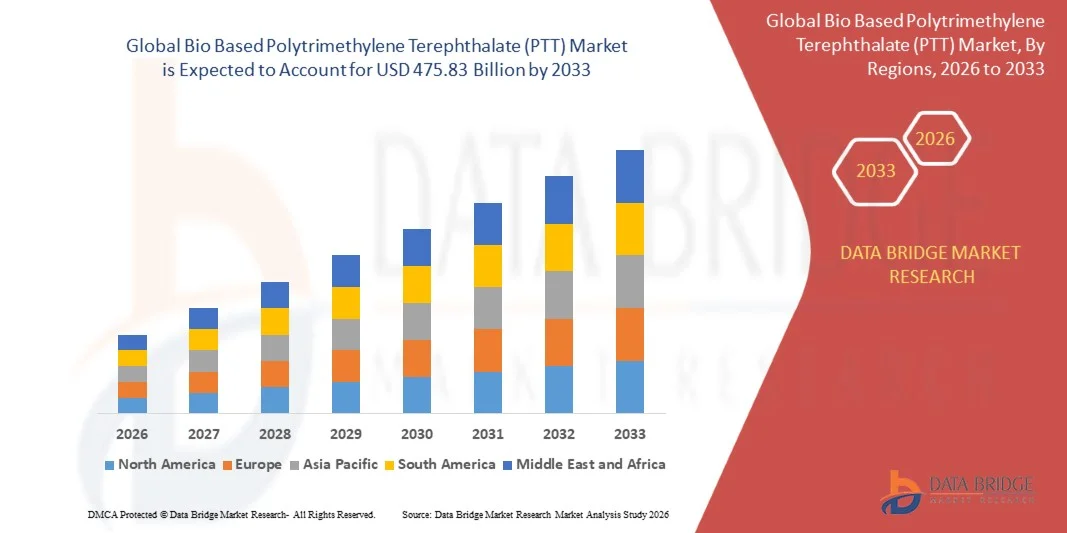
As per Data Bridge Market Research Analysis the bio based polytrimethylene terephthalate (PTT) market was valued at USD 279.01 billion in 2025 and is projected to reach USD 475.83 billion by 2033, growing at a CAGR of 6.90% from 2026 to 2033. The market is experiencing steady growth, driven by the increasing demand for sustainable, high-performance, and bio-based engineering polymers across the textile, automotive, consumer goods, and industrial sectors. Growing environmental concerns, stringent sustainability regulations, and rising preference for renewable raw materials are accelerating the adoption of bio-based PTT as an alternative to conventional petroleum-based polymers.
Furthermore, continuous advancements in bio-based 1,3-propanediol (PDO) production technologies, increasing investments in sustainable polymer manufacturing, and expanding applications in engineering plastics, fibers, and film materials are creating significant growth opportunities for market participants. The excellent properties of bio-based PTT, including high resilience, dimensional stability, stain resistance, chemical resistance, and recyclability, make it well-suited for textiles, automotive components, electrical & electronics, film & coatings, and consumer goods. In addition, increasing demand for eco-friendly materials, circular economy initiatives, and innovations in bio-based polymer technologies are enabling manufacturers to strengthen their product portfolios and expand the adoption of bio-based PTT across diverse end-use industries.
Market Size & Forecast
- Market Value (2025): USD 279.01 Million
- Expected Market Value (2033): USD 475.83 Million
- Forecast CAGR (2026–2033): 6.90%
- Leading Region in 2025: Asia-Pacific
- Fastest Growing Region: North America
Key Market Trends & Insights
- Asia-Pacific dominated the bio based polytrimethylene terephthalate (PTT) market with the largest revenue share of 48.7% in 2025, driven by its well-established textile manufacturing industry, expanding production of bio-based polymers, and increasing demand for sustainable fibers and engineering plastics.
- North America bio based polytrimethylene terephthalate (ptt) market is expected to witness the fastest growth rate from 2026 to 2033 during the forecast period, primarily driven by increasing demand for sustainable engineering plastics, expanding adoption of bio-based fibers in apparel and home furnishings, and rising investments in renewable polymer technologies.
- The fiber segment held the largest market revenue share of approximately 43% in 2025 driven by its extensive use in apparel, carpets, home furnishings, and performance textiles. Bio based PTT fibers provide excellent stretch recovery, softness, stain resistance, durability, and moisture management, making them a preferred sustainable alternative to conventional polyester and nylon fibers.
- The engineering plastics segment is expected to witness the fastest growth during the forecast period from 2026 to 2033 driven by increasing demand for lightweight, high-strength, and chemically resistant materials across the automotive, electrical & electronics, and industrial sectors.
- The textile segment held the largest market revenue share of approximately 39.8% in 2025 driven by increasing demand for sustainable fibers in apparel, carpets, home furnishings, and performance textiles. The superior elasticity, softness, stain resistance, and durability of bio based PTT fibers, together with growing consumer preference for environmentally friendly materials and sustainability commitments from leading fashion brands, continue to support the segment's dominance.
- The automotive segment is expected to witness the fastest growth during the forecast period from 2026 to 2033 driven by increasing adoption of lightweight and sustainable engineering materials in vehicle interiors, seat fabrics, trim components, and engineering plastic applications.
Report Scope and Bio Based Polytrimethylene Terephthalate (PTT) Market Segmentation
|
Attributes |
Bio Based Polytrimethylene Terephthalate (PTT) Key Market Insights |
|
Segments Covered |
|
|
Countries Covered |
North America
Europe
Asia-Pacific
Middle East and Africa
South America
|
|
Key Market Players |
|
|
Market Opportunities |
|
|
Value Added Data Infosets |
In addition to the insights on market scenarios such as market value, growth rate, segmentation, geographical coverage, and major players, the market reports curated by the Data Bridge Market Research also include import export analysis, production capacity overview, production consumption analysis, price trend analysis, climate change scenario, supply chain analysis, value chain analysis, raw material/consumables overview, vendor selection criteria, PESTLE Analysis, Porter Analysis, and regulatory framework. |
What is the Key Trend in the Bio Based Polytrimethylene Terephthalate (PTT) Market?
Trend: Rising Adoption of Bio-Based PTT in Sustainable High-Performance Textiles
The bio based polytrimethylene terephthalate (PTT) market is witnessing strong growth as textile manufacturers and apparel brands increasingly adopt bio-based PTT fibers for sustainable apparel, carpets, home furnishings, and performance textiles. Growing demand for renewable materials with superior stretch recovery, softness, durability, stain resistance, and lower greenhouse gas emissions is accelerating the replacement of conventional petroleum-based polyester and nylon. Rising corporate sustainability commitments and stricter environmental regulations are further driving the adoption of bio-based PTT across the global textile value chain.
For instance, in September 2025, Covation Biomaterials released an updated third-party reviewed Life Cycle Assessment (LCA) for its Sorona polymer, demonstrating 44% lower energy consumption than nylon 6 and 41% fewer greenhouse gas emissions than PET. The company also showcased Sorona applications with 15 global apparel brands at Intertextile Shanghai, highlighting the growing commercial adoption of sustainable PTT-based fibers.
The rising adoption of bio-based PTT in sustainable high-performance textiles is expected to drive long-term growth of the bio based polytrimethylene terephthalate (PTT) market.
Bio Based Polytrimethylene Terephthalate (PTT) Market Dynamics
Key Market Driver: Rising Demand for Sustainable High-Performance Fibers Across the Textile and Apparel Industry
The bio based polytrimethylene terephthalate (PTT) market is experiencing significant growth due to the increasing demand for sustainable, renewable, and high-performance fibers across the textile, apparel, carpet, and home furnishing industries. Manufacturers are increasingly adopting bio-based PTT because it provides excellent stretch recovery, softness, durability, stain resistance, and moisture management while reducing dependence on petroleum-based materials. Growing consumer preference for environmentally responsible products, corporate sustainability initiatives, and the transition toward circular textile manufacturing continue to support market expansion.
For instance, in June 2023, Oscar Chandler & Co., Inc. collaborated with Covation Biomaterials LLC to add Sorona polymer to its yarn portfolio across North and Central America, expanding the commercialization of bio-based PTT yarns for socks, sweaters, knitted fabrics, and other apparel applications.
Rising demand for sustainable high-performance fibers across the textile and apparel industry is expected to remain a key driver of the bio based polytrimethylene terephthalate (PTT) market.
Key Restraint/Challenge: High Production Costs and Limited Availability of Bio-Based 1,3-Propanediol (Bio-PDO)
The bio based polytrimethylene terephthalate (PTT) market faces significant challenges due to the high production cost and limited commercial availability of bio-based 1,3-propanediol (Bio-PDO), the key renewable feedstock used in PTT manufacturing. Specialized fermentation processes, advanced purification technologies, and dependence on agricultural feedstocks increase production costs and create supply chain constraints. These factors limit price competitiveness and slow the large-scale adoption of bio-based PTT across textile, automotive, engineering plastics, and industrial applications.
For instance, Technip and METabolic EXPLORER announced a collaboration to evaluate an integrated PDO and PTT technology package, emphasizing that the growth of the PTT market is constrained by the limited commercial availability of PDO, the essential monomer used in PTT production.
High production costs and limited availability of Bio-PDO are expected to remain major challenges for the bio based polytrimethylene terephthalate (PTT) market.
Key Market Opportunity: Expanding Adoption of Sustainable High-Performance Textile Materials
The growing emphasis on sustainability, circular economy initiatives, and low-carbon manufacturing is creating significant growth opportunities for the bio based polytrimethylene terephthalate (PTT) market. Textile manufacturers and apparel brands are increasingly adopting renewable, high-performance fibers that offer superior stretch recovery, softness, durability, and reduced environmental impact. Increasing investments in sustainable textile technologies, bio-based polymer innovation, and eco-friendly product development are expected to accelerate the commercialization of bio-based PTT across apparel, sportswear, home furnishings, and industrial textile applications.
For instance, in June 2025, Teijin Frontier Co., Ltd. introduced a next-generation stretch fabric based on SOLOTEX PTT fiber, incorporating plant-derived raw materials and recycled polyester for outdoor, sportswear, and lifestyle apparel applications beginning with the Fall/Winter 2026 season.
The expanding adoption of sustainable high-performance textile materials is expected to create substantial long-term growth opportunities for the bio based polytrimethylene terephthalate (PTT) market.
How is the Bio Based Polytrimethylene Terephthalate (PTT) Market Segmented?
The bio based polytrimethylene terephthalate (PTT) market is segmented on the basis of application and end user.
- By Application
On the basis of application, the bio based polytrimethylene terephthalate (PTT) market is segmented into fiber, engineering plastics, and film material. The fiber segment held the largest market revenue share of approximately 43% in 2025 driven by its extensive use in apparel, carpets, home furnishings, and performance textiles. Bio based PTT fibers provide excellent stretch recovery, softness, stain resistance, durability, and moisture management, making them a preferred sustainable alternative to conventional polyester and nylon fibers. Growing consumer preference for eco-friendly textiles and increasing adoption of renewable materials by apparel manufacturers continue to strengthen the segment's market leadership.
The engineering plastics segment is expected to witness the fastest growth during the forecast period from 2026 to 2033 driven by increasing demand for lightweight, high-strength, and chemically resistant materials across the automotive, electrical & electronics, and industrial sectors. Rising electric vehicle production, growing adoption of sustainable engineering polymers, and continuous advancements in bio-based polymer technologies are expected to accelerate demand for bio based PTT engineering plastics.
- By End User
On the basis of end user, the bio based polytrimethylene terephthalate (PTT) market is segmented into textile, automotive, film and coating, consumer goods, industrial, electrical & electronics, and others. The textile segment held the largest market revenue share of approximately 40.3% in 2025 driven by increasing demand for sustainable fibers in apparel, carpets, home furnishings, and performance textiles. The superior elasticity, softness, stain resistance, and durability of bio based PTT fibers, together with growing consumer preference for environmentally friendly materials and sustainability commitments from leading fashion brands, continue to support the segment's dominance.
The automotive segment is expected to witness the fastest growth during the forecast period from 2026 to 2033 driven by increasing adoption of lightweight and sustainable engineering materials in vehicle interiors, seat fabrics, trim components, and engineering plastic applications. Rising electric vehicle production, stringent vehicle emission regulations, and manufacturers' focus on reducing vehicle weight and improving fuel efficiency are expected to accelerate the demand for bio based PTT in the automotive sector.
Which Region Holds the Largest Share of the Bio Based Polytrimethylene Terephthalate (PTT) Market?
Asia-Pacific Bio Based Polytrimethylene Terephthalate (PTT) Market Insight
Asia-Pacific dominated the bio based polytrimethylene terephthalate (PTT) market with the largest revenue share of 48.7% in 2025, driven by its well-established textile manufacturing industry, expanding production of bio-based polymers, and increasing demand for sustainable fibers and engineering plastics. Countries including China, Japan, South Korea, and India continue to drive regional demand through large-scale textile production, growing automotive manufacturing, and rising investments in renewable materials. Increasing adoption of bio based PTT in apparel, carpets, home furnishings, automotive interiors, and consumer goods continues to strengthen the region's market leadership.
China Bio Based Polytrimethylene Terephthalate (PTT) Market Insight
China accounted for the largest share of the Asia-Pacific bio based polytrimethylene terephthalate (PTT) market in 2025, driven by its position as the world's largest textile and apparel manufacturing hub and increasing government support for sustainable manufacturing. Growing demand for eco-friendly fibers, rapid expansion of the automotive industry, and rising investments in bio-based materials are accelerating the adoption of bio based PTT across textile, engineering plastics, and industrial applications. Continuous advancements in polymer manufacturing and increasing exports of value-added textile products further support market growth.
Japan Bio Based Polytrimethylene Terephthalate (PTT) Market Insight
Japan is expected to witness the fastest growth rate from 2026 to 2033, supported by its strong expertise in advanced polymer technologies and high-performance textile manufacturing. Growing demand for sustainable fibers in premium apparel, increasing adoption of lightweight engineering plastics in automotive applications, and continuous investments in innovative bio-based materials are supporting market expansion. The presence of leading material manufacturers and ongoing product innovation continue to strengthen Japan's position in the regional market.
North America Bio Based Polytrimethylene Terephthalate (PTT) Market Insight
North America bio based polytrimethylene terephthalate (ptt) market is expected to witness the fastest growth rate from 2026 to 2033, primarily driven by increasing demand for sustainable engineering plastics, expanding adoption of bio-based fibers in apparel and home furnishings, and rising investments in renewable polymer technologies. Growing sustainability initiatives, favorable government policies promoting bio-based materials, and increasing consumer preference for environmentally friendly products are expected to further accelerate regional market growth. Expanding applications across automotive, consumer goods, and industrial sectors also continue to support market expansion.
U.S. Bio Based Polytrimethylene Terephthalate (PTT) Market Insight
The U.S. is expected to witness the fastest growth rate from 2026 to 2033, driven by increasing investments in bio-based polymer innovation, sustainable textile manufacturing, and high-performance engineering plastics. Rising adoption of renewable fibers in apparel, carpets, and consumer goods, coupled with growing demand for lightweight automotive materials, continues to support market expansion. Furthermore, the presence of leading bio-based material developers and increasing corporate sustainability commitments are creating favorable opportunities for bio based PTT adoption across multiple industries.
Europe Bio Based Polytrimethylene Terephthalate (PTT) Market Insight
Europe is expected to witness the fastest growth rate from 2026 to 2033, driven by stringent environmental regulations, increasing adoption of circular economy practices, and strong demand for sustainable textile and engineering plastic materials. Countries including Germany, France, Italy, and the Netherlands are investing in bio-based manufacturing technologies to reduce carbon emissions and dependence on fossil-based polymers. Rising demand for eco-friendly fibers in apparel, automotive interiors, consumer goods, and industrial applications is expected to support long-term market growth across the region.
Germany Bio Based Polytrimethylene Terephthalate (PTT) Market Insight
Germany is expected to witness the fastest growth rate from 2026 to 2033, supported by its strong automotive manufacturing base, advanced polymer processing industry, and increasing adoption of sustainable engineering materials. Growing investments in bio-based polymer innovation, lightweight automotive components, and high-performance textile materials continue to drive demand for bio based PTT. The country's strong focus on circular economy initiatives and industrial sustainability is expected to further strengthen market growth.
U.K. Bio Based Polytrimethylene Terephthalate (PTT) Market Insight
The U.K. bio based polytrimethylene terephthalate (PTT) market is expected to witness the fastest growth rate from 2026 to 2033, driven by increasing demand for sustainable textiles, growing investments in bio-based materials, and rising adoption of environmentally friendly polymers across consumer goods and industrial applications. Expanding sustainability initiatives, increasing research into renewable materials, and growing demand for low-carbon manufacturing solutions are expected to support the adoption of bio based PTT across multiple end-use industries.
Which are the Top Companies in Bio Based Polytrimethylene Terephthalate (PTT) Market?
The bio based polytrimethylene terephthalate (PTT) market Analysis is primarily led by well-established companies, including:
- DuPont de Nemours, Inc. (U.S.)
- Covation Biomaterials LLC (U.S.)
- Toray Industries, Inc. (Japan)
- SK chemicals Co., Ltd. (South Korea)
- Teijin Limited (Japan)
- Mitsui Chemicals, Inc. (Japan)
- BASF SE (Germany)
- Huvis Corporation (South Korea)
- Far Eastern New Century Corporation (Taiwan)
- Indorama Ventures Public Company Limited (Thailand)
- Covestro AG (Germany)
- Nan Ya Plastics Corporation (Taiwan)
- Reliance Industries Limited (India)
- Eastman Chemical Company (U.S.)
- Celanese Corporation (U.S.)
What are Latest Developments in Bio Based Polytrimethylene Terephthalate (PTT) Market?
- In June 2025, Teijin Limited introduced SOLOTEX LIBERTE, a lightweight and stretchable fabric based on polytrimethylene terephthalate (PTT). The material offers excellent elasticity, soft texture, and lightweight comfort, making it suitable for sportswear, casual apparel, and other high-performance textile applications while supporting the shift toward sustainable materials.
- In January 2024, A leading bio-polymer manufacturer partnered with a textile company to develop bio-based PTT yarns for sportswear, carpets, and performance apparel. The collaboration focuses on improving stretch recovery, durability, and sustainability, supporting the growing demand for renewable and high-performance textile fibers.
- In April 2023, Technip Energies secured a contract from Ningbo Juhua Chemical & Science Co., Ltd. to build a 150 KTA polytrimethylene terephthalate (PTT) production facility in Ningbo, China. The plant utilizes Technip Energies' proprietary Zimmer PTT technology, expanding global production capacity and strengthening the supply of advanced PTT materials.
- In May 2022, Manufacturers announced new bio-based PTT production capacity expansions across the Asia-Pacific region to meet rising demand from the textile and apparel industries. The investments aim to increase manufacturing output, reduce greenhouse gas emissions, and accelerate the adoption of sustainable polymer materials.

- Interactive Data Analysis Dashboard
- Company Analysis Dashboard for high growth potential opportunities
- Research Analyst Access for customization & queries
- Competitor Analysis with Interactive dashboard
- Latest News, Updates & Trend analysis
- Harness the Power of Benchmark Analysis for Comprehensive Competitor Tracking
Global Bio Based Polytrimethylene Terephthalate Ptt Market, Supply Chain Analysis and Ecosystem Framework
To support market growth and help clients navigate the impact of geopolitical shifts, DBMR has integrated in-depth supply chain analysis into its Global Bio Based Polytrimethylene Terephthalate Ptt Market research reports. This addition empowers clients to respond effectively to global changes affecting their industries. The supply chain analysis section includes detailed insights such as Global Bio Based Polytrimethylene Terephthalate Ptt Market consumption and production by country, price trend analysis, the impact of tariffs and geopolitical developments, and import and export trends by country and HSN code. It also highlights major suppliers with data on production capacity and company profiles, as well as key importers and exporters. In addition to research, DBMR offers specialized supply chain consulting services backed by over a decade of experience, providing solutions like supplier discovery, supplier risk assessment, price trend analysis, impact evaluation of inflation and trade route changes, and comprehensive market trend analysis.
Data collection and base year analysis are done using data collection modules with large sample sizes. The stage includes obtaining market information or related data through various sources and strategies. It includes examining and planning all the data acquired from the past in advance. It likewise envelops the examination of information inconsistencies seen across different information sources. The market data is analysed and estimated using market statistical and coherent models. Also, market share analysis and key trend analysis are the major success factors in the market report. To know more, please request an analyst call or drop down your inquiry.
The key research methodology used by DBMR research team is data triangulation which involves data mining, analysis of the impact of data variables on the market and primary (industry expert) validation. Data models include Vendor Positioning Grid, Market Time Line Analysis, Market Overview and Guide, Company Positioning Grid, Patent Analysis, Pricing Analysis, Company Market Share Analysis, Standards of Measurement, Global versus Regional and Vendor Share Analysis. To know more about the research methodology, drop in an inquiry to speak to our industry experts.
Data Bridge Market Research is a leader in advanced formative research. We take pride in servicing our existing and new customers with data and analysis that match and suits their goal. The report can be customized to include price trend analysis of target brands understanding the market for additional countries (ask for the list of countries), clinical trial results data, literature review, refurbished market and product base analysis. Market analysis of target competitors can be analyzed from technology-based analysis to market portfolio strategies. We can add as many competitors that you require data about in the format and data style you are looking for. Our team of analysts can also provide you data in crude raw excel files pivot tables (Fact book) or can assist you in creating presentations from the data sets available in the report.













