Global Biologics Market
Market Size in USD Billion
CAGR :
% 
 USD
376.08 Billion
USD
763.22 Billion
2025
2033
USD
376.08 Billion
USD
763.22 Billion
2025
2033
 Forecast Period Forecast Period |
2026 - 2033 |
 Market Size (Base Year) Market Size (Base Year) |
USD 376.08 Billion |
 Market Size (Forecast Year) Market Size (Forecast Year) |
USD 763.22 Billion |
 CAGR CAGR |
% |
| Major Markets Players |
|
Biologics Market Overview
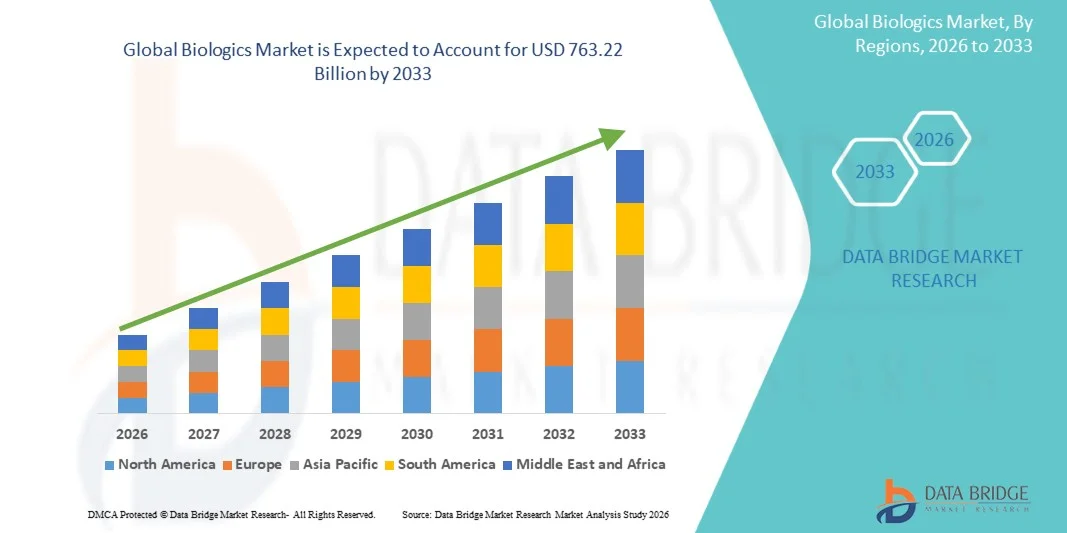
As per Data Bridge Market Research analysis the Biologics Market was valued at USD 376.08 billion in 2025 and is projected to reach USD 763.22 billion by 2033, growing at a CAGR of 9.25% from 2026 to 2033. The market is experiencing robust growth driven by the increasing prevalence of chronic and autoimmune diseases, rising demand for targeted therapies, and continuous advancements in biotechnology and biopharmaceutical manufacturing.
The growing burden of cancer, diabetes, rheumatoid arthritis, and other complex diseases, combined with expanding investments in biologics research and development, is accelerating the adoption of innovative biologic therapies worldwide. Monoclonal antibodies, recombinant proteins, vaccines, and cell and gene therapies are increasingly replacing conventional treatment approaches in many therapeutic areas, offering improved efficacy, precision, and long-term clinical outcomes. Furthermore, supportive regulatory frameworks, expanding biosimilar pipelines, and increasing healthcare expenditure across emerging and developed economies continue to strengthen market growth prospects.
Key Market Trends & Insights
- North America dominated the Biologics Market with the largest revenue share of 42.38% in 2025, supported by a strong biopharmaceutical industry, advanced healthcare infrastructure, and significant investments in biotechnology research and development
- The Tumor Necrosis Factor (TNF) Inhibitor segment led the market with a 34.28% share in 2025, driven by its extensive use in the treatment of rheumatoid arthritis, psoriasis, ankylosing spondylitis, and inflammatory bowel diseases.
- Asia-Pacific is expected to be the fastest-growing region at a CAGR of 10.8% from 2026 to 2033, fueled by expanding healthcare expenditure, increasing biologics manufacturing capacity, and growing patient access in China, India, and Southeast Asian countries.
- Gene Therapy are the fastest-growing drug class type, projected to register a CAGR of 15.2%, reflecting the surge in demand for curative treatments targeting genetic and rare diseases.
- The Oncology segment dominated the therapeutic application category with a 32.67% revenue share in 2025, led by the increasing global burden of cancer and growing adoption of biologic therapies for targeted treatment
- Mammalian accounted for 61.24% of the market, preferred by its widespread use in the production of complex biologics such as monoclonal antibodies, recombinant proteins, and advanced therapeutic products.
- The Outsourced segment is the fastest-growing manufacturing category, with a CAGR of 11.4%, driven by increasing reliance on contract development and manufacturing organizations (CDMOs).
Market Size & Forecast
- Global Market Value (2025): USD 376.08 Billion
- Expected Market Value (2033): USD 763.22 Billion
- Forecast CAGR (2026–2033): 9.25%
- Leading Region in 2025: North America
- Fastest Growing Region: Asia Pacific
Report Scope and Biologics Market Segmentation
|
Attributes |
Biologics Key Market Insights |
|
Segments Covered |
|
|
Countries Covered |
North America · U.S. · Canada · Mexico Europe · Germany · France · U.K. · Netherlands · Switzerland · Belgium · Russia · Italy · Spain · Turkey · Rest of Europe Asia-Pacific · China · Japan · India · South Korea · Singapore · Malaysia · Australia · Thailand · Indonesia · Philippines · Rest of Asia-Pacific Middle East and Africa · Saudi Arabia · U.A.E. · South Africa · Egypt · Israel · Rest of Middle East and Africa South America · Brazil · Argentina · Rest of South America |
|
Key Market Players |
· Merck & Co., Inc. (U.S.) · Bristol Myers Squibb (U.S.) · AbbVie Inc. (U.S.) · Amgen Inc. (U.S.) · Pfizer Inc. (U.S.) · Johnson & Johnson Services, Inc. (U.S.) · Eli Lilly and Company (U.S.) · Gilead Sciences, Inc. (U.S.) · Biogen Inc. (U.S.) · Regeneron Pharmaceuticals, Inc. (U.S.) · Genentech, Inc. (U.S.) · F. Hoffmann-La Roche Ltd (Switzerland) · Novartis AG (Switzerland) · Sanofi (France) · AstraZeneca (U.K.) · GSK plc (U.K.) · Bayer AG (Germany) · Takeda Pharmaceutical Company Limited (Japan) · CSL Limited (Australia) · Samsung Bioepis Co., Ltd. (South Korea) |
|
Market Opportunities |
· Expansion of biosimilar adoption in emerging economies · Commercialization of cell and gene therapies · Growth of contract development and manufacturing organizations (CDMOs) |
|
Value Added Data Infosets |
In addition to the insights on market scenarios such as market value, growth rate, segmentation, geographical coverage, and major players, the market reports curated by the Data Bridge Market Research also include in-depth expert analysis, patient epidemiology, pipeline analysis, pricing analysis, and regulatory framework. |
Biologics Market Trends
Trend: Rising Adoption of Cell and Gene Therapies
Cell and gene therapies are increasingly transforming the biologics landscape by offering targeted and potentially curative treatment options for complex diseases, including genetic disorders, cancers, and rare conditions. Advances in gene-editing technologies, viral vector development, and personalized medicine are accelerating clinical adoption and commercial investment. Biopharmaceutical companies are expanding their pipelines while healthcare providers are integrating these innovative therapies into treatment protocols, supported by growing regulatory approvals and favorable reimbursement pathways in key markets.
For instance, in April 2025, Novartis announced expanded investments in advanced cell and gene therapy manufacturing capabilities to support the growing global demand for precision biologic treatments.
Biologics Market Dynamics
Key Market Driver: Increasing Prevalence of Chronic and Autoimmune Diseases
The rising global burden of chronic diseases and autoimmune disorders has created substantial demand for biologic therapies that offer targeted mechanisms of action and improved clinical outcomes compared to conventional treatments. Healthcare providers and patients are increasingly adopting monoclonal antibodies, recombinant proteins, and immunotherapies for conditions such as cancer, rheumatoid arthritis, psoriasis, and inflammatory bowel disease. Growing disease prevalence, aging populations, and expanding access to advanced healthcare services continue to strengthen long-term demand for biologic products worldwide.
For instance, in March 2025, AbbVie reported continued growth in global demand for its immunology biologics portfolio, reflecting the increasing adoption of advanced therapies for autoimmune disease management.
Key Restraint/Challenge: High Development and Manufacturing Costs of Biologics
A significant restraint in the Biologics Market is the substantial investment required for research, clinical development, and large-scale biologic manufacturing. Complex production processes involving living cells, specialized facilities, stringent quality controls, and cold-chain logistics contribute to higher costs compared with traditional pharmaceuticals. The total cost burden extends to regulatory compliance, process validation, and facility expansion, creating barriers for smaller biotechnology firms and limiting affordability in price-sensitive healthcare systems across several regions.
For instance, in February 2025, Samsung Biologics announced additional investments in large-scale biomanufacturing infrastructure, highlighting the significant capital requirements associated with biologics production expansion.
Key Market Opportunity: Expansion of Biosimilars and Emerging Market Access
The expansion of biosimilars presents a significant market opportunity by improving affordability and increasing patient access to advanced biologic therapies. Patent expirations of major biologic drugs are enabling manufacturers to introduce cost-effective alternatives across oncology, immunology, and chronic disease segments. Growing regulatory support, healthcare cost-containment initiatives, and expanding healthcare infrastructure in emerging economies are further accelerating biosimilar adoption, creating new growth opportunities for manufacturers seeking to penetrate underserved and rapidly developing pharmaceutical markets.
For instance, in January 2025, Biocon Biologics expanded its biosimilar portfolio in multiple international markets, supporting broader patient access to biologic treatments while strengthening global market penetration.
Biologics Market Scope
The biologics market is segmented on the basis of type, drug class, therapeutic application, source, manufacturing, drug type, mode of purchase, dosage form, route of administration, end-users, and distribution channel.
- By Type
On the basis of type, the Biologics Market is segmented into tumor necrosis factor (TNF) inhibitor, T-cell inhibitor, selective co-stimulation modulators, interleukin-6 (IL-6) or interleukin-17 blocker, interleukin-1 (IL-1) blocker, and B-cell inhibitor. The Tumor Necrosis Factor (TNF) Inhibitor segment dominated the market with a 34.28% share in 2025, driven by its extensive use in the treatment of rheumatoid arthritis, psoriasis, ankylosing spondylitis, and inflammatory bowel diseases. TNF inhibitors have demonstrated strong clinical efficacy and long-term disease control across multiple autoimmune conditions. Growing prevalence of chronic inflammatory disorders continues to support demand worldwide. The segment benefits from established physician confidence and broad reimbursement coverage across developed healthcare systems. Continuous product improvements and expanded indications are further strengthening adoption. Their proven therapeutic outcomes and widespread clinical acceptance continue to maintain segment leadership.
The Interleukin-6 (IL-6) or Interleukin-17 Blocker segment is projected to register the fastest growth at a CAGR of 11.6% from 2026 to 2033, driven by increasing demand for highly targeted biologic therapies. These agents offer superior efficacy in specific autoimmune and inflammatory conditions where conventional treatments show limitations. Rising diagnosis rates and growing awareness of advanced biologic options are accelerating adoption. Pharmaceutical companies are actively investing in next-generation cytokine-targeting therapies to improve treatment outcomes. Expanding clinical approvals across multiple indications are creating new growth opportunities. Their ability to provide precision treatment with favorable safety profiles is expected to sustain strong market expansion.
- By Drug Class
On the basis of drug class, the Biologics Market is segmented into monoclonal antibody, recombinant insulin, vaccine, blood factor, human growth hormone, erythropoietin, fusion protein, recombinant enzyme, interferon, colony-stimulating factor, gene therapy, cell therapy, oligonucleotides, and others. The Monoclonal Antibody segment dominated the market with a 39.84% share in 2025, driven by its extensive use across oncology, autoimmune diseases, inflammatory disorders, and infectious disease management. Monoclonal antibodies offer high target specificity, improved therapeutic efficacy, and reduced off-target effects compared with conventional therapies. Strong clinical success rates and a robust product pipeline have encouraged significant investments from biopharmaceutical companies. Growing regulatory approvals and increasing adoption of precision medicine are further supporting market expansion. The segment also benefits from continuous innovation in antibody engineering and next-generation biologics development. Its broad therapeutic applicability and strong commercial performance continue to reinforce its market leadership globally.
The Gene Therapy segment is projected to register the fastest growth at a CAGR of 15.2% from 2026 to 2033, driven by increasing demand for curative treatments targeting genetic and rare diseases. Gene therapies address the underlying causes of disease rather than merely managing symptoms, creating significant clinical value. Advancements in gene-editing technologies, viral vector platforms, and genomic research are accelerating product development. Rising regulatory support and increasing investment in personalized medicine are further boosting adoption. Pharmaceutical companies are expanding gene therapy pipelines to address unmet medical needs across multiple therapeutic areas. Growing commercialization and improving reimbursement frameworks are expected to sustain rapid segment growth over the forecast period.
- By Therapeutic Application
On the basis of therapeutic application, the Biologics Market is segmented into oncology, autoimmune/immunologic diseases, metabolic disorders, ophthalmic diseases, respiratory disorders, inflammatory bowel diseases (IBDs), neurological disorders, cardiovascular diseases (CVDs), musculoskeletal disorders (MSDs), infectious diseases, and others. The Oncology segment dominated the market with a 32.67% share in 2025, supported by the increasing global burden of cancer and growing adoption of biologic therapies for targeted treatment. Biologics such as monoclonal antibodies, immune checkpoint inhibitors, and cell-based therapies have transformed cancer care by improving survival outcomes and treatment precision. Rising investments in oncology research and expanding clinical trial activity continue to strengthen segment growth. The availability of innovative biologic therapies for multiple cancer indications is driving widespread adoption. Increasing awareness of personalized cancer treatment is further supporting demand. Strong reimbursement support in developed healthcare markets also contributes to the segment’s leadership position.
The Autoimmune/Immunologic Diseases segment is expected to witness the fastest growth at a CAGR of 10.8% from 2026 to 2033, driven by rising prevalence of rheumatoid arthritis, psoriasis, Crohn’s disease, and other chronic immune-mediated disorders. Biologics have become a preferred treatment option due to their ability to selectively target inflammatory pathways. Continuous development of novel biologic agents is expanding therapeutic choices for patients. Improved diagnosis rates and growing healthcare access are increasing treatment uptake globally. Favorable clinical outcomes compared with traditional therapies are encouraging physician preference. Expanding patient populations and long-term treatment requirements continue to accelerate segment growth.
- By Source
On the basis of source, the Biologics Market is segmented into microbial, mammalian, and others. The Mammalian segment dominated the market with a 61.24% share in 2025 due to its widespread use in the production of complex biologics such as monoclonal antibodies, recombinant proteins, and advanced therapeutic products. Mammalian cell systems provide superior protein folding, post-translational modifications, and biological activity compared with alternative production methods. These characteristics are essential for ensuring product efficacy and safety. Growing demand for highly sophisticated biologic therapies continues to support the segment. Biopharmaceutical manufacturers are investing heavily in mammalian cell culture technologies to improve production efficiency. The segment remains the preferred platform for commercial-scale biologics manufacturing worldwide.
The Microbial segment is projected to grow at the fastest rate with a CAGR of 10.5% from 2026 to 2033, driven by increasing demand for cost-effective biologic production and advancements in microbial expression technologies. Microbial systems offer faster production cycles, lower operational costs, and high scalability. These advantages make them attractive for manufacturing recombinant proteins, enzymes, and selected therapeutic biologics. Continuous improvements in genetic engineering are enhancing production yields and product quality. Expanding adoption among biotechnology companies is further supporting growth. Rising focus on manufacturing efficiency is expected to accelerate demand throughout the forecast period.
- By Manufacturing
On the basis of manufacturing, the Biologics Market is segmented into outsourced and in-house. The In-House segment dominated the market with a 57.89% share in 2025 owing to the need for strict quality control, intellectual property protection, and regulatory compliance. Large biopharmaceutical companies prefer maintaining direct oversight of biologics manufacturing processes to ensure consistency and reliability. In-house production supports efficient process optimization and supply chain management. The growing complexity of biologic therapies has further encouraged manufacturers to retain critical production capabilities internally. Significant investments in advanced manufacturing facilities continue to strengthen this segment. Its ability to support large-scale commercial production reinforces market dominance.
The Outsourced segment is anticipated to register the fastest growth at a CAGR of 11.4% from 2026 to 2033, driven by increasing reliance on contract development and manufacturing organizations (CDMOs). Outsourcing allows companies to reduce capital expenditure, accelerate product development timelines, and access specialized expertise. Growing biologics pipelines are creating substantial demand for external manufacturing capacity. Smaller biotechnology firms particularly benefit from flexible production arrangements. Expansion of global CDMO infrastructure is further supporting adoption. Cost optimization and operational efficiency continue to drive segment growth.
- By Drug Type
On the basis of drug type, the Biologics Market is segmented into branded drugs and generic drugs. The Branded Drugs segment dominated the market with a 72.46% share in 2025 due to the strong presence of patented biologic therapies with established clinical efficacy and physician trust. These products command premium pricing and generate significant revenue across major therapeutic areas. Continuous innovation and robust research investments support the development of next-generation biologics. Strong intellectual property protection further strengthens market leadership. Healthcare providers often prefer branded biologics for complex disease management due to extensive clinical evidence. Their broad commercial success continues to sustain segment dominance.
The Generic Drugs (Biosimilars) segment is expected to witness the fastest growth at a CAGR of 12.6% from 2026 to 2033, driven by increasing patent expirations of major biologic products and rising healthcare cost-containment efforts. Biosimilars provide comparable efficacy and safety at lower costs, improving patient access to advanced therapies. Regulatory agencies are streamlining approval pathways to encourage market entry. Growing physician confidence and expanding reimbursement support are accelerating adoption. Emerging markets are increasingly incorporating biosimilars into treatment programs. These factors collectively contribute to strong growth prospects.
- By Mode of Purchase
On the basis of mode of purchase, the Biologics Market is segmented into prescription drugs and over-the-counter (OTC) drugs. The Prescription Drugs segment dominated the market with a 91.83% share in 2025, owing to the highly specialized nature of biologic therapies and the need for physician supervision during treatment. Most biologics are used for complex chronic and life-threatening conditions requiring precise diagnosis and dosing protocols. Regulatory authorities mandate prescription-based access to ensure patient safety and therapeutic effectiveness. Hospitals and specialty clinics remain the primary channels for biologic administration and monitoring. Growing adoption of advanced biologic therapies across oncology and autoimmune diseases continues to support segment dominance. The requirement for professional oversight remains a key factor driving market leadership.
The Over-The-Counter (OTC) Drugs segment is projected to witness the fastest growth at a CAGR of 8.7% from 2026 to 2033, driven by the gradual expansion of biologic-derived consumer health products and preventive healthcare solutions. Growing consumer awareness regarding self-care and wellness is supporting demand. Advances in biologic formulations are enabling broader product accessibility. Regulatory developments are facilitating commercialization of selected biologic-based healthcare products. Increasing digital pharmacy penetration is also contributing to segment growth. Continued innovation in preventive healthcare is expected to create future opportunities.
- By Dosage Form
On the basis of dosage form, the Biologics Market is segmented into injection, tablets, and others. The Injection segment dominated the market with a 78.54% share in 2025, as most biologics require parenteral delivery to maintain stability, efficacy, and bioavailability. Injectable formulations provide rapid therapeutic action and precise dosing control. They are widely utilized across oncology, immunology, and rare disease treatment applications. Healthcare professionals prefer injectable biologics due to their established clinical performance. Continuous innovations in prefilled syringes and autoinjectors are improving patient convenience. The segment continues to benefit from the expanding portfolio of injectable biologic therapies.
The Tablets segment is expected to register the fastest growth at a CAGR of 13.1% from 2026 to 2033, driven by increasing research into oral biologic delivery technologies. Oral dosage forms offer improved patient compliance and greater convenience compared with injectable alternatives. Advances in drug delivery platforms are helping overcome biological barriers associated with oral administration. Pharmaceutical companies are investing heavily in next-generation formulations to expand treatment accessibility. Growing demand for patient-friendly therapies is further supporting adoption. Successful commercialization of oral biologics is expected to unlock substantial growth potential.
- By Route of Administration
On the basis of route of administration, the Biologics Market is segmented into oral, parenteral, and others. The Parenteral segment dominated the market with a 81.26% share in 2025, supported by the widespread use of intravenous, subcutaneous, and intramuscular biologic therapies. Parenteral administration ensures optimal bioavailability and therapeutic effectiveness for complex biologic molecules. It remains the preferred route for monoclonal antibodies, vaccines, and cell-based therapies. Healthcare providers rely on parenteral delivery for precise dosing and predictable clinical outcomes. Expanding use in specialty care settings continues to strengthen demand. Its established clinical reliability supports long-term market dominance.
The Oral segment is projected to witness the fastest growth at a CAGR of 12.8% from 2026 to 2033, driven by ongoing innovation in oral biologic drug delivery systems. Researchers are developing technologies that improve molecule stability and absorption within the gastrointestinal tract. Oral administration significantly enhances patient convenience and treatment adherence. Growing demand for non-invasive therapies is encouraging pharmaceutical investment. Expanding clinical pipelines for oral biologics are creating new commercial opportunities. Continued technological advancements are expected to accelerate adoption over the forecast period.
- By End-Users
On the basis of end-users, the Biologics Market is segmented into hospitals, specialty clinics, homecare, and others. The Hospitals segment dominated the market with a 48.93% share in 2025 due to the widespread administration of biologics in inpatient and specialized treatment settings. Many biologic therapies require professional supervision, advanced infusion facilities, and continuous patient monitoring. Hospitals provide comprehensive infrastructure for managing complex diseases and biologic treatment protocols. Rising patient volumes and increasing utilization of advanced therapies support segment growth. Strong integration with specialty care services further enhances adoption. The availability of multidisciplinary healthcare teams continues to reinforce hospital dominance.
The Homecare segment is projected to register the fastest growth at a CAGR of 11.1% from 2026 to 2033, driven by increasing demand for convenient and patient-centered treatment options. Advances in self-administration devices and biologic formulations are enabling treatment outside traditional healthcare settings. Homecare reduces hospitalization costs while improving patient comfort and adherence. Growing prevalence of chronic diseases is supporting long-term home-based therapy adoption. Healthcare systems are increasingly promoting decentralized care models to improve efficiency. These trends are expected to accelerate segment expansion significantly.
- By Distribution Channel
On the basis of distribution channel, the Biologics Market is segmented into hospital pharmacy, retail pharmacy, online pharmacy, and others. The Hospital Pharmacy segment dominated the market with a 54.11% share in 2025, supported by the specialized handling, storage, and dispensing requirements associated with biologic products. Many biologics require cold-chain management and professional oversight before administration. Hospital pharmacies play a critical role in ensuring product integrity and regulatory compliance. The growing use of biologics in oncology and specialty care settings further strengthens demand. Hospitals remain the primary point of distribution for complex biologic therapies. Their established infrastructure continues to support segment leadership globally.
The Online Pharmacy segment is expected to experience the fastest growth at a CAGR of 11.8% from 2026 to 2033, driven by increasing digital healthcare adoption and expanding e-pharmacy infrastructure. Online platforms offer improved accessibility, convenience, and medication management services for patients receiving long-term biologic therapies. Growing internet penetration and smartphone usage are supporting market expansion. Integration of telemedicine services is further enhancing adoption. Regulatory advancements and secure cold-chain delivery solutions are improving operational capabilities. These factors position online pharmacies as a rapidly growing distribution channel in the biologics market.
Biologics Market Regional Analysis
North America dominated the Biologics Market with the largest revenue share of 42.38% in 2025, supported by a strong biopharmaceutical industry, advanced healthcare infrastructure, and significant investments in biotechnology research and development. The region also benefits from advanced healthcare infrastructure, strong regulatory support for innovative biologic therapies, and high adoption of monoclonal antibodies, cell therapies, and gene therapies across multiple therapeutic areas. Increasing prevalence of chronic diseases, expanding biologics pipelines, and growing demand for precision medicine continue to strengthen North America’s leadership position in the global market.
U.S. Biologics Market Insight
The U.S. biologics market is witnessing strong growth due to rising investments in biotechnology research, increasing prevalence of chronic diseases, and growing adoption of advanced biologic therapies. The country’s mature biopharmaceutical ecosystem, along with expanding use of monoclonal antibodies, gene therapies, and cell therapies, is driving demand across multiple therapeutic areas. In addition, strong regulatory support, robust clinical trial activity, and increasing focus on precision medicine are accelerating biologics adoption across healthcare providers and pharmaceutical manufacturers.
Europe Biologics Market Insight
The Europe biologics market remains a major contributor to global revenue, driven by strong healthcare infrastructure, continuous biopharmaceutical innovation, and high demand for advanced therapeutic solutions. The widespread use of biologics in oncology, autoimmune diseases, and rare disease treatment programs is supporting market expansion across the region. Increasing investments in biotechnology research, coupled with favorable regulatory frameworks and growing biosimilar adoption, continue to enhance the utilization of biologic therapies throughout Europe.
U.K. Biologics Market Insight
The U.K. biologics market is experiencing steady growth, supported by rising adoption of innovative biologic therapies, expanding research activities, and increasing demand for personalized treatment solutions. Growing investments in advanced biomanufacturing infrastructure and strong focus on biotechnology innovation are contributing to market growth. Furthermore, integration of precision medicine approaches and increasing availability of novel biologics are improving treatment outcomes, positioning the U.K. as a key innovation hub in the biologics industry.
Germany Biologics Market Insight
The Germany biologics market is expanding steadily due to the country’s strong pharmaceutical manufacturing base, advanced research capabilities, and increasing adoption of next-generation biologic therapies. Biopharmaceutical companies, research institutes, and healthcare providers are increasingly utilizing biologics for cancer treatment, autoimmune disease management, and rare disease therapies. Continuous advancements in biotechnology, cell culture technologies, and biosimilar development, along with strong government support for healthcare innovation, are further driving market growth in Germany.
Asia-Pacific Biologics Market Insight
The Asia-Pacific biologics market is expected to witness rapid growth, driven by expanding healthcare infrastructure, increasing biopharmaceutical production, and rising investments in biotechnology research across countries such as China, India, and Japan. Growing awareness regarding advanced treatment options, rising adoption of innovative biologics, and increasing demand for cost-effective healthcare solutions are supporting regional market expansion. In addition, the growing presence of biologics manufacturing facilities and expanding clinical research activities are accelerating biologics adoption across healthcare and pharmaceutical sectors.
Japan Biologics Market Insight
The Japan biologics market is witnessing consistent growth due to rising investments in biotechnology innovation, advanced healthcare technologies, and precision medicine initiatives. Pharmaceutical manufacturers, research organizations, and healthcare institutions are increasingly adopting biologic therapies for oncology, immunology, and rare disease treatment applications. Moreover, increasing integration of regenerative medicine technologies and the country’s focus on improving patient outcomes are further contributing to market growth.
China Biologics Market Insight
The China biologics market is growing rapidly, driven by expanding healthcare expenditure, increasing biotechnology investments, and rising government support for pharmaceutical innovation. Growing adoption of monoclonal antibodies, biosimilars, and advanced biologic therapies across hospitals and specialty care centers is significantly boosting market demand. In addition, rising investments in biopharmaceutical manufacturing, increasing awareness regarding innovative treatment options, and rapid technological advancements are positioning China as one of the fastest-growing markets for biologics globally.
Biologics Market Share
The biologics industry is primarily led by well-established companies, including:
- Merck & Co., Inc. (U.S.)
- Bristol Myers Squibb (U.S.)
- AbbVie Inc. (U.S.)
- Amgen Inc. (U.S.)
- Pfizer Inc. (U.S.)
- Johnson & Johnson Services, Inc. (U.S.)
- Eli Lilly and Company (U.S.)
- Gilead Sciences, Inc. (U.S.)
- Biogen Inc. (U.S.)
- Regeneron Pharmaceuticals, Inc. (U.S.)
- Genentech, Inc. (U.S.)
- Hoffmann-La Roche Ltd (Switzerland)
- Novartis AG (Switzerland)
- Sanofi (France)
- AstraZeneca (U.K.)
- GSK plc (U.K.)
- Bayer AG (Germany)
- Takeda Pharmaceutical Company Limited (Japan)
- CSL Limited (Australia)
- Samsung Bioepis Co., Ltd. (South Korea)
Latest Developments in Biologics Market
- In December 2025, the U.S. Food and Drug Administration (FDA) approved Yartemlea (narsoplimab-wuug), a novel biologic therapy for hematopoietic stem cell transplant-associated thrombotic microangiopathy. The approval expanded treatment options for a severe and life-threatening condition with limited therapeutic alternatives. The biologic represents continued innovation in targeted therapies and highlights the growing role of advanced biologics in addressing rare diseases. The approval also reflects the increasing number of novel biologics entering the market through accelerated regulatory pathways
- In August 2025, Mesoblast announced the successful commercial launch of Ryoncil®, the first FDA-approved mesenchymal stromal cell (MSC) therapy in the United States. The biologic was approved for the treatment of steroid-refractory acute graft-versus-host disease in pediatric patients. This milestone marked a significant advancement in cell-based biologics and regenerative medicine, creating new opportunities for cellular therapies in the treatment of severe immune-mediated disorders
- In June 2024, the FDA proposed eliminating the switching-study requirement for biosimilars seeking interchangeable status. The regulatory change is expected to simplify biosimilar development, reduce clinical trial burdens, and accelerate market access for lower-cost biologic alternatives. The proposal supports broader biosimilar adoption while increasing competition in the biologics sector and improving patient access to advanced therapies
- In May 2024, Eisai and Biogen initiated a rolling FDA submission for a subcutaneous version of Leqembi, a biologic therapy for Alzheimer’s disease. The new formulation was designed to enable more convenient administration compared with intravenous infusions. The development reflects the industry’s growing focus on improving biologic delivery methods, patient adherence, and accessibility of advanced neurological treatments
- In March 2024, the FDA approved Merck’s Winrevair (sotatercept-csrk), a first-in-class biologic fusion protein for pulmonary arterial hypertension (PAH). The therapy introduced a novel mechanism of action aimed at addressing the underlying vascular dysfunction associated with PAH. The approval strengthened the biologics pipeline in cardiovascular and rare disease therapeutics while demonstrating continued innovation in recombinant protein-based treatments
SKU-
Get online access to the report on the World's First Market Intelligence Cloud

- Interactive Data Analysis Dashboard
- Company Analysis Dashboard for high growth potential opportunities
- Research Analyst Access for customization & queries
- Competitor Analysis with Interactive dashboard
- Latest News, Updates & Trend analysis
- Harness the Power of Benchmark Analysis for Comprehensive Competitor Tracking
Research Methodology
Data collection and base year analysis are done using data collection modules with large sample sizes. The stage includes obtaining market information or related data through various sources and strategies. It includes examining and planning all the data acquired from the past in advance. It likewise envelops the examination of information inconsistencies seen across different information sources. The market data is analysed and estimated using market statistical and coherent models. Also, market share analysis and key trend analysis are the major success factors in the market report. To know more, please request an analyst call or drop down your inquiry.
The key research methodology used by DBMR research team is data triangulation which involves data mining, analysis of the impact of data variables on the market and primary (industry expert) validation. Data models include Vendor Positioning Grid, Market Time Line Analysis, Market Overview and Guide, Company Positioning Grid, Patent Analysis, Pricing Analysis, Company Market Share Analysis, Standards of Measurement, Global versus Regional and Vendor Share Analysis. To know more about the research methodology, drop in an inquiry to speak to our industry experts.
Customization Available
Data Bridge Market Research is a leader in advanced formative research. We take pride in servicing our existing and new customers with data and analysis that match and suits their goal. The report can be customized to include price trend analysis of target brands understanding the market for additional countries (ask for the list of countries), clinical trial results data, literature review, refurbished market and product base analysis. Market analysis of target competitors can be analyzed from technology-based analysis to market portfolio strategies. We can add as many competitors that you require data about in the format and data style you are looking for. Our team of analysts can also provide you data in crude raw excel files pivot tables (Fact book) or can assist you in creating presentations from the data sets available in the report.