


Biomaterial Wound Dressing Market Analysis
The biomaterial wound dressing market is witnessing substantial growth, driven by several factors such as the increasing incidence of chronic wounds such as diabetic foot ulcers and pressure ulcers, an aging population that is more susceptible to chronic conditions affecting skin integrity, and technological advancements in wound care. These innovations enhance antimicrobial activity and moisture management, creating an optimal healing environment. Additionally, the rise in accidents and surgical procedures globally is fuelling demand for effective wound care products. However, challenges such as limited reimbursement policies and stringent regulatory requirements could impede market growth. Despite these hurdles, the market's future outlook remains positive, with continued investments in research and development to innovate and expand product portfolios, meeting the rising demand for advanced wound care solutions.
Biomaterial Wound Dressing Market Size
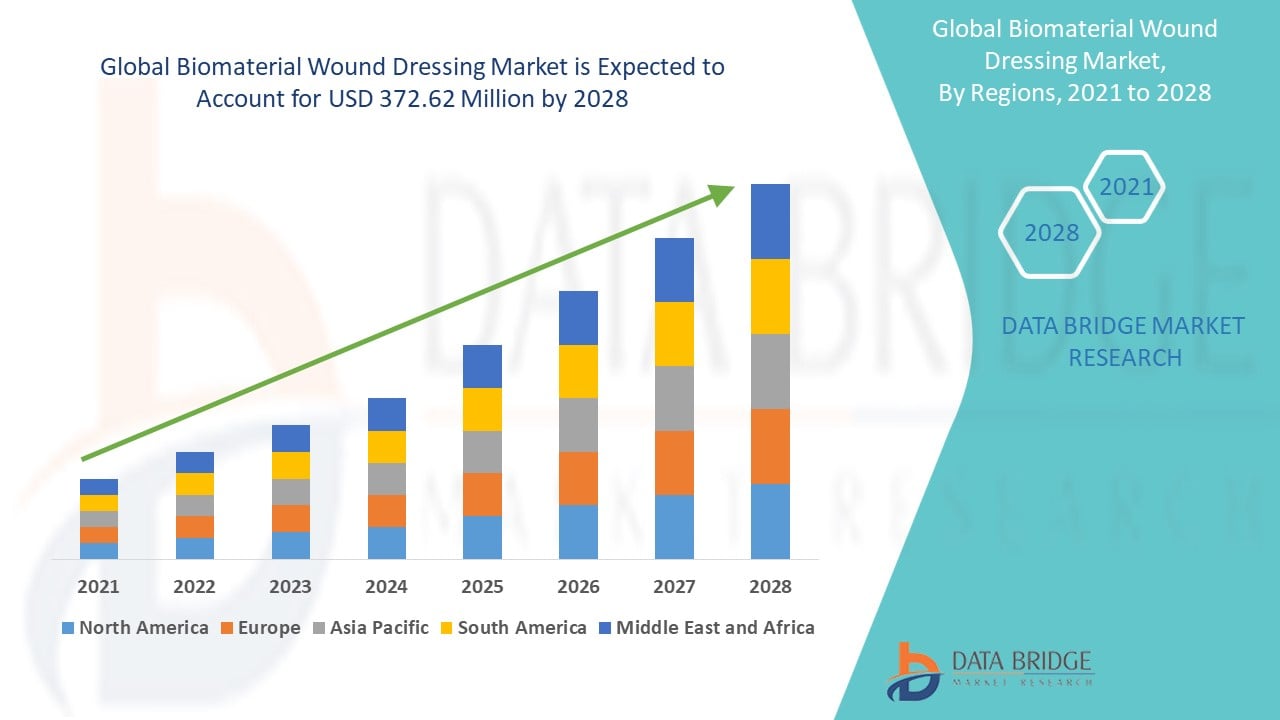
The global biomaterial wound dressing market size was valued at USD 6.53 billion in 2024 and is projected to reach USD 9.61 billion by 2032, with a CAGR of 9.94%during the forecast period of 2025 to 2032. In addition to the insights on market scenarios such as market value, growth rate, segmentation, geographical coverage, and major players, the market reports curated by the Data Bridge Market Research also include depth expert analysis, patient epidemiology, pipeline analysis, pricing analysis, and regulatory framework.
Biomaterial Wound Dressing Market Trends
“Harnessing Innovation for Superior Healing and Sustainability”
Technological advancements in the biomaterial wound dressing market are revolutionizing wound care with several significant innovations. Enhanced antimicrobial properties are being achieved through the incorporation of agents such as silver nanoparticles and natural compounds, effectively preventing infections. Improved moisture management is facilitated by materials such as hydrocolloids and hydrogels, which maintain an optimal moisture balance in the wound bed. Advancements in tissue regeneration involve bioactive dressings with growth factors, collagen, or stem cells to promote new tissue formation. The emergence of smart dressings that monitor the wound environment and release therapeutic agents in response to changes is a groundbreaking development. Additionally, 3D printing technology enables the creation of customized wound dressings tailored to the wound's shape and size. The focus on biodegradable materials is also growing, aiming to reduce the need for dressing changes and minimize environmental impact. These innovations are paving the way for more effective wound care solutions, ultimately improving patient outcomes and quality of life.
Report Scope and Biomaterial Wound Dressing Market Segmentation
|
Attributes |
Biomaterial Wound Dressing Key Market Insights |
|
Segments Covered |
|
|
Countries Covered |
U.S., Canada and Mexico in North America, Germany, France, U.K., Netherlands, Switzerland, Belgium, Russia, Italy, Spain, Turkey, Rest of Europe in Europe, China, Japan, India, South Korea, Singapore, Malaysia, Australia, Thailand, Indonesia, Philippines, Rest of Asia-Pacific (APAC) in the Asia-Pacific (APAC), Saudi Arabia, U.A.E, South Africa, Egypt, Israel, Rest of Middle East and Africa (MEA) as a part of Middle East and Africa (MEA), Brazil, Argentina and Rest of South America as part of South America |
|
Key Market Players |
3M (U.S.), ConvaTec Inc (U.K.), DermaRite Industries LLC (U.S.), B. Braun Melsungen AG (Germany), Hollister Incorporated (U.S.), Johnson & Johnson Private Limited (U.S.), Medtronic (Ireland), Molnlycke Health Care AB (Sweden), Smith+Nephew (U.K.), Integra LifeSciences (U.S.), Messe-Düsseldorf GmbH (Germany), Bio Patrika (India), AnteoTech (Australia), ANYGEN (South Korea), Aphios Corporation (U.S.), Minifab (AUST) Pty Ltd (Australia), ATDBio Ltd (U.K.), AparnaBio (India), and Mirexus (Canada). |
|
Market Opportunities |
|
|
Value Added Data Infosets |
In addition to the insights on market scenarios such as market value, growth rate, segmentation, geographical coverage, and major players, the market reports curated by the Data Bridge Market Research also include depth expert analysis, patient epidemiology, pipeline analysis, pricing analysis, and regulatory framework. |
Biomaterial Wound Dressing Market Definition
The biomaterial wound dressing market refers to the industry that focuses on creating and distributing advanced dressings made from biomaterials to treat and manage wounds. These dressings, made from natural or synthetic materials, are designed to promote healing, protect against infection, and maintain an optimal environment for wound recovery. Biomaterial dressings can be highly absorbent, help maintain moisture, and may include antimicrobial properties to prevent infections. They are commonly used for treating chronic wounds, burns, surgical wounds, and diabetic ulcers. The growth of this market is fueled by the increasing demand for effective wound care solutions, particularly as the aging population rises and chronic conditions become more prevalent.
Biomaterial Wound Dressing Market Dynamics
Drivers
- Biocompatibility of Biomaterial Wound Dressings
Biocompatibility is a crucial aspect of biomaterial wound dressings. These dressings are made from natural or synthetic materials that are compatible with the human body, promoting healing and reducing the risk of infections. By mimicking the natural environment of the skin, these materials can speed up the healing process. Since they are designed to integrate seamlessly with the body's tissues, there's a lower chance of the immune system rejecting the dressing, which in turn reduces the risk of infections. Additionally, biocompatible materials are less likely to cause irritation or inflammation, common issues with traditional wound dressings. This compatibility enhances patient comfort and leads to better overall patient outcomes, representing a significant advancement in wound care.
- Cost-Effectiveness of Biomaterial Wound Dressings
Biomaterial wound dressings offer cost-effective solutions compared to traditional wound care methods. These dressings are designed to be affordable while still providing high-quality care. The materials used in biomaterial dressings often require less frequent changes, reducing the overall cost of treatment. Additionally, their advanced properties, such as enhanced absorbency and durability, mean that they can often replace multiple layers of traditional dressings. This efficiency not only lowers the cost for healthcare providers and patients but also leads to better resource management in medical facilities. By promoting faster healing and reducing the need for additional interventions, biomaterial wound dressings represent a financially viable option for modern wound care.
Opportunities
- Natural Polymers in Biomaterial Wound Dressings
The development of natural polymers for wound dressings is opening up exciting new opportunities for innovation in the field of wound care. Natural polymers, derived from sources such as algae, chitosan (from crustacean shells), and plant materials, are biocompatible and biodegradable. These materials can provide a range of benefits, including enhanced healing properties and reduced risk of allergic reactions. Natural polymers can also be tailored to possess specific properties such as improved absorbency, flexibility, and antimicrobial activity. This adaptability makes them ideal for creating advanced wound dressings that cater to a variety of wound types and healing stages. The ongoing research and development in this area are paving the way for more effective, eco-friendly, and patient-centered wound care solutions.
- Improving Patient Outcomes through Advanced Wound Care Solutions
A major focus in the development of advanced wound care solutions is improving patient outcomes. These innovative treatments aim to enhance the healing process, reduce pain, and minimize complications. Advanced wound care products, such as biomaterial dressings, are designed to create an optimal healing environment by maintaining proper moisture levels, preventing infections, and promoting tissue regeneration. By addressing specific wound characteristics and patient needs, these solutions can significantly shorten healing times and reduce the likelihood of chronic wounds. Moreover, advanced wound care approaches often incorporate technologies such as antimicrobial agents and smart sensors that monitor wound conditions in real-time, allowing for timely interventions. This patient-centered approach ensures better overall health outcomes, greater comfort, and improved quality of life for patients undergoing wound care treatments.
Restraints/Challenges
- Limited Awareness about biomaterial wound
In some regions, the lack of awareness about the benefits of biomaterial wound dressings significantly hampers their adoption. Patients and healthcare providers often stick to traditional wound care methods due to a lack of education and information about the advanced alternatives available. This is particularly evident in developing countries where access to healthcare information is limited, and medical professionals may not be fully trained in using newer technologies. Additionally, cultural factors and resistance to change play a role, as people tend to rely on familiar methods rather than exploring new ones. The perceived high cost of biomaterial wound dressings, combined with inadequate knowledge about their long-term cost-effectiveness and superior healing properties, further discourages their use. Without targeted educational campaigns and training programs to bridge this knowledge gap, the full potential of biomaterial wound dressings remains underutilized. Therefore, increasing awareness through workshops, conferences, and public health initiatives is crucial in ensuring that more patients can benefit from these advanced wound care solutions, ultimately improving patient outcomes and reducing the burden on healthcare systems.
- Competition from Traditional Products
Traditional wound care products such as gauze and bandages have long been the mainstays of wound management due to their simplicity, cost-effectiveness, and widespread availability. This entrenched usage poses a significant hurdle for the adoption of biomaterial wound dressings, which, despite their advanced healing properties, come with higher costs. Healthcare providers may be hesitant to transition to these new solutions, given the familiar efficacy and low expense of conventional products. Furthermore, the limited awareness and understanding of the benefits of biomaterial dressings among medical professionals add to the reluctance. The lengthy regulatory approval processes and the need for substantial clinical evidence to support new biomaterials only compound these challenges. Additionally, patient preference for traditional, proven methods and potential biocompatibility issues with new materials can further hinder market penetration. For biomaterial wound dressings to gain a foothold, it is crucial to demonstrate their long-term cost-effectiveness through improved patient outcomes and to provide robust education and training for healthcare providers. Overcoming these barriers requires concerted efforts to shift perceptions and showcase the superior benefits of advanced wound care technologies. The journey towards widespread acceptance of biomaterial dressings is arduous but holds promise for enhanced wound care.
This market report provides details of new recent developments, trade regulations, import-export analysis, production analysis, value chain optimization, market share, impact of domestic and localized market players, analyses opportunities in terms of emerging revenue pockets, changes in market regulations, strategic market growth analysis, market size, category market growths, application niches and dominance, product approvals, product launches, geographic expansions, technological innovations in the market. To gain more info on the market contact Data Bridge Market Research for an Analyst Brief, our team will help you take an informed market decision to achieve market growth.
Biomaterial Wound Dressing Market Scope
The market is segmented on the basis of product, Dressing, application, and end user. The growth amongst these segments will help you analyze meagre growth segments in the industries and provide the users with a valuable market overview and market insights to help them make strategic decisions for identifying core market applications.
Product
- Hydrocolloids
- Alginate Dressing
- Skin Substitutes
- Others
Dressing
- Primary
- Secondary
Application
- Wounds, Burns
- Ulcers, Traumatic
- Surgical
- Diabetic Foot
- Others
End User
- Hospitals
- Clinics
- Ambulatory Surgical Centres
- Homecare Hospitals Pharmaceutical Manufacturers
Biomaterial Wound Dressing Market Regional Analysis
The market is analysed and market size insights and trends are provided by country, product, dressing, application, and end user as referenced above.
The countries covered in the market report are U.S., Canada, Mexico in North America, Germany, Sweden, Poland, Denmark, Italy, U.K., France, Spain, Netherland, Belgium, Switzerland, Turkey, Russia, Rest of Europe in Europe, Japan, China, India, South Korea, New Zealand, Vietnam, Australia, Singapore, Malaysia, Thailand, Indonesia, Philippines, Rest of Asia-Pacific (APAC) in Asia-Pacific (APAC), Brazil, Argentina, Rest of South America as a part of South America, U.A.E, Saudi Arabia, Oman, Qatar, Kuwait, South Africa, Rest of Middle East and Africa (MEA) as a part of Middle East and Africa (MEA).
The North America is the dominating market for biomaterial wound dressing market. This leadership is fueled by significant domestic demand, supportive government policies, and a robust manufacturing base. Additionally, the region benefits from a large patient pool, rising healthcare expenditure, and increasing awareness about advanced wound care solutions. Investments in research and development, along with collaborations between academic institutions and industry players, further bolster market growth. The presence of major market players and the rapid adoption of innovative technologies also contribute to the Asia-Pacific region's dominance in the biomaterial wound dressing market.
The Asia-Pacific region is the fastest-growing market for biomaterial wound dressings. This growth is driven by factors such as increasing healthcare expenditure, a rising aging population, and a growing prevalence of chronic wounds such as diabetic ulcers and pressure ulcers. Additionally, advancements in wound care products and favorable government initiatives are contributing to the market's expansion. The region's rapid economic development and improving healthcare infrastructure further support this growth.
The country section of the report also provides individual market impacting factors and changes in regulation in the market domestically that impacts the current and future trends of the market. Data points such as down-stream and upstream value chain analysis, technical trends and porter's five forces analysis, case studies are some of the pointers used to forecast the market scenario for individual countries. Also, the presence and availability of global brands and their challenges faced due to large or scarce competition from local and domestic brands, impact of domestic tariffs and trade routes are considered while providing forecast analysis of the country data.
Biomaterial Wound Dressing Market Share
The market competitive landscape provides details by competitor. Details included are company overview, company financials, revenue generated, market potential, investment in research and development, new market initiatives, global presence, production sites and facilities, production capacities, company strengths and weaknesses, product launch, product width and breadth, application dominance. The above data points provided are only related to the companies' focus related to market.
Biomaterial Wound Dressing Market Leaders Operating in the Market Are:
- 3M (U.S.)
- ConvaTec Inc (U.K.)
- DermaRite Industries LLC (U.S.)
- B. Braun Melsungen AG (Germany)
- Hollister Incorporated (U.S.)
- Johnson & Johnson Private Limited (U.S.)
- Medtronic (Ireland)
- Molnlycke Health Care AB (Sweden)
- Smith+Nephew (U.K.)
- Integra LifeSciences (U.S.)
- Messe-Düsseldorf GmbH (Germany)
- Bio Patrika (India)
- AnteoTech (Australia)
- ANYGEN (South Korea)
- Aphios Corporation (U.S.)
- Minifab (AUST) Pty Ltd (Australia)
- ATDBio Ltd (U.K.)
- AparnaBio (India)
- Mirexus (Canada)
Latest Developments in Biomaterial Wound Dressing Market
- In October 2023, DuPont introduced an innovative soft skin adhesive (SSA), DuPont Liveo MG 7-9960, designed to enhance the performance of wound care dressings and medical devices. This advanced adhesive features higher adhesion strength while reducing the presence of cyclic silicone, offering a more reliable and comfortable solution. The Liveo MG 7-9960 is specifically engineered for longer wear times and gentle removal, making it ideal for applications that require prolonged skin contact, such as wound care dressings and devices attached to the skin. This product is expected to improve patient comfort and convenience by reducing irritation and allowing for more effective wound management
- In June 2023, JeNaCell launched the Epicite Balancing Wound Dressing in the German market. This advanced dressing is specifically designed for the management of chronic wounds with low to medium levels of exudation. It is particularly effective for treating conditions such as soft tissue lesions, diabetic foot ulcers, venous leg ulcers, and arterial leg ulcers. The Epicite dressing works by maintaining a balanced moisture environment, which supports optimal healing conditions for chronic wounds. Its unique formulation aids in wound management by absorbing exudate while promoting a healing environment that helps reduce the risk of infection and encourages tissue regeneration

- Interactive Data Analysis Dashboard
- Company Analysis Dashboard for high growth potential opportunities
- Research Analyst Access for customization & queries
- Competitor Analysis with Interactive dashboard
- Latest News, Updates & Trend analysis
- Harness the Power of Benchmark Analysis for Comprehensive Competitor Tracking
Data collection and base year analysis are done using data collection modules with large sample sizes. The stage includes obtaining market information or related data through various sources and strategies. It includes examining and planning all the data acquired from the past in advance. It likewise envelops the examination of information inconsistencies seen across different information sources. The market data is analysed and estimated using market statistical and coherent models. Also, market share analysis and key trend analysis are the major success factors in the market report. To know more, please request an analyst call or drop down your inquiry.
The key research methodology used by DBMR research team is data triangulation which involves data mining, analysis of the impact of data variables on the market and primary (industry expert) validation. Data models include Vendor Positioning Grid, Market Time Line Analysis, Market Overview and Guide, Company Positioning Grid, Patent Analysis, Pricing Analysis, Company Market Share Analysis, Standards of Measurement, Global versus Regional and Vendor Share Analysis. To know more about the research methodology, drop in an inquiry to speak to our industry experts.
Data Bridge Market Research is a leader in advanced formative research. We take pride in servicing our existing and new customers with data and analysis that match and suits their goal. The report can be customized to include price trend analysis of target brands understanding the market for additional countries (ask for the list of countries), clinical trial results data, literature review, refurbished market and product base analysis. Market analysis of target competitors can be analyzed from technology-based analysis to market portfolio strategies. We can add as many competitors that you require data about in the format and data style you are looking for. Our team of analysts can also provide you data in crude raw excel files pivot tables (Fact book) or can assist you in creating presentations from the data sets available in the report.













