


Bioprosthetics Market Overview
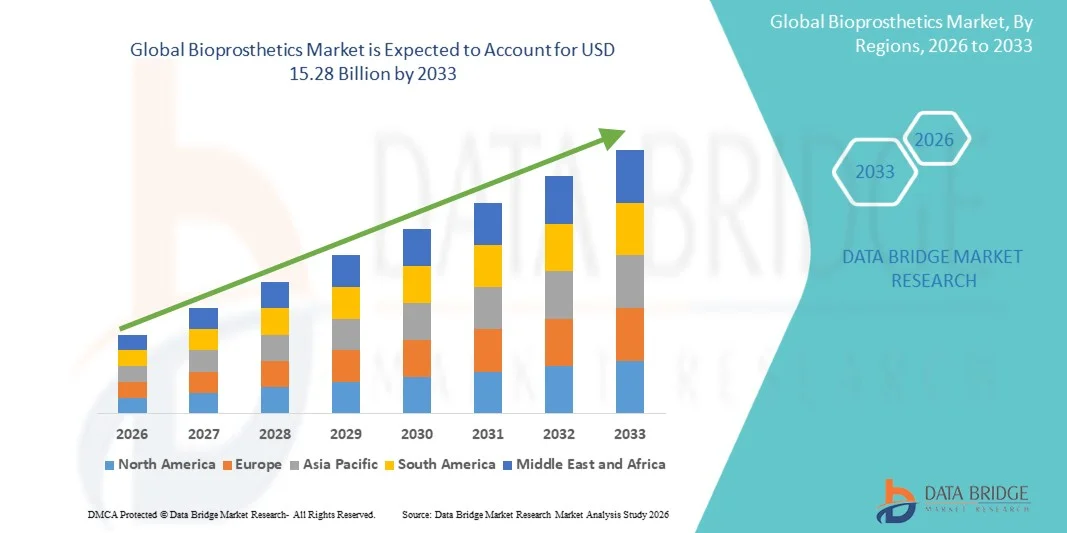
The Bioprosthetics Market was valued at USD 6.68 billion in 2025 and is projected to reach USD 15.28 billion by 2033, growing at a CAGR of 10.90% from 2026 to 2033. The market is experiencing consistent growth driven by rising prevalence of cardiovascular diseases, increasing demand for minimally invasive heart valve replacement procedures, advancements in tissue engineering and biomaterial technologies, and expanding applications of bioprosthetic implants in cardiac care.
The growing incidence of valvular heart diseases, combined with an aging global population and increasing preference for biological heart valves over mechanical alternatives, is encouraging healthcare providers to adopt advanced bioprosthetic solutions. Transcatheter and surgical bioprosthetic valves are increasingly replacing traditional treatment approaches in many markets, offering improved hemodynamic performance, reduced need for lifelong anticoagulation therapy, and enhanced patient quality of life. Continuous innovation in valve design, increasing adoption of transcatheter aortic valve replacement (TAVR) procedures, and rising investments in cardiovascular healthcare infrastructure are further accelerating the growth of the Bioprosthetics Market.
Key Market Trends & Insights
- North America dominated the Bioprosthetics Market with the largest revenue share of 38.2% in 2025, supported by advanced healthcare infrastructure, high adoption of transcatheter and minimally invasive valve replacement procedures, strong presence of leading cardiovascular device manufacturers, and increasing investments in research and development of advanced bioprosthetic heart valves and tissue-based implants.
- The Xenograft segment dominated the market with a significant share of 55% in 2025, owing to its widespread adoption in cardiovascular valve replacement procedures, availability of advanced tissue-engineered solutions, and improved durability compared with traditional biological graft options.
- Asia-Pacific is expected to be the fastest-growing region at a CAGR of 8.7% from 2026 to 2033, fueled by increasing cardiovascular disease burden, improving access to advanced cardiac procedures, rising healthcare expenditure, growing medical tourism, and expanding adoption of bioprosthetic implants in countries such as China, India, Japan, and South Korea.
- Transcatheter bioprosthetic implants are the fastest-growing product type, projected to register a CAGR reflecting increasing demand for minimally invasive cardiac procedures, shorter recovery times, reduced surgical risks, and growing adoption of transcatheter aortic valve replacement (TAVR) technologies among high-risk and elderly patient populations.
- The cardiovascular applications segment dominates the application category with a 58.9% revenue share in 2025, led by increasing use of bioprosthetic heart valves, rising prevalence of valvular heart diseases, growing geriatric population, and advancements in implantable tissue-based cardiovascular devices that provide improved patient outcomes.
Market Size & Forecast
- Global Market Value (2025): USD 6.68 Billion
- Expected Market Value (2033): USD 15.28 Billion
- Forecast CAGR (2026–2033): 10.90%
- Leading Region in 2025: North America
- Fastest Growing Region: Asia-Pacific
Report Scope and Bioprosthetics Market Segmentation
|
Attributes |
Bioprosthetics Key Market Insights |
|
Segments Covered |
|
|
Countries Covered |
North America · U.S. · Canada · Mexico Europe · Germany · France · U.K. · Netherlands · Switzerland · Belgium · Russia · Italy · Spain · Turkey · Rest of Europe Asia-Pacific · China · Japan · India · South Korea · Singapore · Malaysia · Australia · Thailand · Indonesia · Philippines · Rest of Asia-Pacific Middle East and Africa · Saudi Arabia · U.A.E. · South Africa · Egypt · Israel · Rest of Middle East and Africa South America · Brazil · Argentina · Rest of South America |
|
Key Market Players |
• Edwards Lifesciences (U.S.) |
|
Market Opportunities |
· Increasing Adoption of Transcatheter Heart Valve Replacement Procedures · Advancements in Biomaterials and Tissue Engineering Technologies · Rising Demand for Cardiovascular Treatments Due to Aging Population |
|
Value Added Data Infosets |
In addition to the insights on market scenarios such as market value, growth rate, segmentation, geographical coverage, and major players, the market reports curated by the Data Bridge Market Research also include in-depth expert analysis, geographically represented company-wise production and capacity, network layouts of distributors and partners, detailed and updated price trend analysis and deficit analysis of supply chain and demand. |
Bioprosthetics Market Trends
Trend: Rising Adoption of Transcatheter and Minimally Invasive Bioprosthetic Implants
Healthcare providers are increasingly adopting advanced bioprosthetic solutions, particularly transcatheter heart valves and tissue-based implants, to address the growing burden of cardiovascular diseases and valvular heart disorders. The increasing preference for minimally invasive procedures such as transcatheter aortic valve replacement (TAVR) is transforming the bioprosthetics landscape by reducing surgical risks, shortening hospital stays, and improving patient recovery outcomes. The growing geriatric population and rising prevalence of aortic stenosis are major factors accelerating adoption of bioprosthetic heart valves. According to global cardiovascular disease trends, millions of patients require valve replacement procedures annually, creating strong demand for durable biological implants. Recent advancements in tissue engineering, anti-calcification technologies, and next-generation valve designs are further improving implant longevity and clinical performance. Companies are also focusing on developing smaller delivery systems and improved valve materials to expand treatment options for high-risk and elderly patient populations.
Bioprosthetics Market Dynamics
Key Market Driver: Increasing Prevalence of Cardiovascular Diseases and Growing Demand for Biological Implants
The rising incidence of cardiovascular diseases, particularly valvular heart diseases, is creating significant demand for Bioprosthetics solutions globally. Aging populations, lifestyle-related health conditions, and increasing diagnosis rates of heart valve disorders are driving the need for replacement procedures. Bioprosthetic heart valves are increasingly preferred over mechanical valves due to reduced requirement for lifelong anticoagulation therapy and improved suitability for elderly patients. Healthcare systems across North America, Europe, and Asia-Pacific are expanding access to advanced cardiac procedures, supporting market growth. For instance, the increasing adoption of transcatheter aortic valve replacement (TAVR) procedures has significantly expanded the use of bioprosthetic valves in patients who were previously considered unsuitable for open-heart surgery. In addition, continuous innovation by cardiovascular device manufacturers in tissue processing and implant design is improving patient outcomes and accelerating adoption.
Key Restraint/Challenge: High Cost of Advanced Bioprosthetic Implants and Limited Accessibility in Emerging Markets
A major challenge in the Bioprosthetics Market is the high cost associated with advanced biological implants, transcatheter delivery systems, and specialized cardiac procedures. The development of bioprosthetic valves requires complex manufacturing processes, including tissue harvesting, processing, sterilization, and quality control, increasing overall production costs. In addition, procedures such as TAVR require specialized healthcare infrastructure, trained cardiac specialists, and advanced hospital facilities, which may limit accessibility in low- and middle-income countries. The requirement for long-term clinical monitoring and follow-up care further increases the overall treatment burden. Limited reimbursement coverage and unequal availability of advanced cardiovascular care infrastructure remain key barriers to widespread adoption.
Key Market Opportunity: Advancements in Tissue Engineering, Regenerative Medicine, and Next-Generation Bioprosthetic Technologies
The integration of tissue engineering, regenerative medicine, and advanced biomaterials presents a significant growth opportunity for the Bioprosthetics market. Researchers and manufacturers are increasingly focusing on developing next-generation implants with improved durability, reduced immune response, and enhanced compatibility with the human body. Emerging technologies such as bioengineered tissues, decellularized scaffolds, and regenerative approaches are expected to transform future implant development. For example, ongoing research in engineered heart valves aims to create living implants capable of growth and repair, particularly benefiting younger patient populations. In addition, advancements in digital health, imaging technologies, and personalized medicine are enabling improved patient selection and treatment planning. The increasing adoption of minimally invasive cardiac procedures and expansion of cardiovascular care infrastructure across Asia-Pacific, Latin America, and the Middle East are expected to create new market opportunities.
Bioprosthetics Market Scope
The Bioprosthetics market is segmented on the basis of type and application.
- By Type
On the basis of type, the Bioprosthetics Market is segmented into Allograft, Xenograft, Porcine, and Bovine. The Xenograft segment dominated the market with a significant share of 55% in 2025, owing to its widespread adoption in cardiovascular valve replacement procedures, availability of advanced tissue-engineered solutions, and improved durability compared with traditional biological graft options. Xenograft-based bioprosthetic valves, particularly porcine and bovine-derived tissues, are widely used due to their favorable hemodynamic performance, reduced thrombogenicity, and lower requirement for long-term anticoagulation therapy. Increasing prevalence of valvular heart diseases, rising geriatric population, and growing adoption of minimally invasive cardiac procedures are further supporting segment growth. Continuous advancements in tissue processing, anti-calcification technologies, and valve design are enhancing the clinical effectiveness of xenograft bioprosthetics.
The Porcine segment is expected to witness the fastest growth at a CAGR of 7.0% from 2026 to 2033, driven by increasing preference for porcine tissue-based heart valves due to their anatomical similarity to human valves, reliable performance, and growing use in transcatheter and surgical valve replacement procedures. Advancements in tissue preservation techniques, improved durability, and increasing adoption of transcatheter aortic valve replacement (TAVR) procedures are accelerating demand for porcine bioprosthetic solutions. In addition, rising investments by medical device companies in next-generation biological valve technologies are expected to further support segment expansion.
- By Application
On the basis of application, the Bioprosthetics Market is segmented into Cardiovascular, Plastic Surgery, and Wound Healing. The Cardiovascular segment dominated the market with a major share of 45% in 2025, due to the increasing prevalence of cardiovascular diseases, growing number of heart valve replacement procedures, and rising adoption of bioprosthetic heart valves over mechanical alternatives. The segment growth is supported by increasing demand for minimally invasive procedures, including TAVR, which offers shorter recovery time and improved patient outcomes. Aging population, rising incidence of valvular disorders, and advancements in regenerative medicine are further driving adoption of cardiovascular bioprosthetics. In addition, continuous product innovations by leading medical device manufacturers are strengthening the use of biological implants in cardiac care.
The Wound Healing segment is expected to register the fastest CAGR of 8.0% from 2026 to 2033, driven by increasing demand for advanced wound management solutions, rising prevalence of chronic wounds, diabetic ulcers, and surgical wounds. Bioprosthetic materials are increasingly being adopted in wound healing applications due to their ability to support tissue regeneration, improve healing outcomes, and provide effective biological scaffolding. Growing healthcare expenditure, increasing adoption of regenerative medicine approaches, and advancements in collagen-based and tissue-engineered products are creating new growth opportunities for this segment. Furthermore, rising demand for advanced wound care products across hospitals and specialty clinics is expected to accelerate market expansion.
Bioprosthetics Market Regional Analysis
North America dominated the Bioprosthetics Market and accounted for the largest revenue share of 38.2% in 2025, supported by advanced healthcare infrastructure, high adoption of transcatheter and minimally invasive valve replacement procedures, strong presence of leading cardiovascular device manufacturers, and increasing investments in research and development of advanced bioprosthetic heart valves and tissue-based implants. The region benefits from a high prevalence of cardiovascular diseases, well-established reimbursement systems, and widespread availability of advanced cardiac care facilities. Increasing adoption of transcatheter aortic valve replacement (TAVR), growing geriatric population, and continuous innovation in biological implant technologies are further strengthening North America’s leading position in the global market.
U.S. Bioprosthetics Market Insight
The U.S. Bioprosthetics market is witnessing significant growth due to rising demand for advanced cardiovascular implants, increasing prevalence of valvular heart diseases, and strong adoption of minimally invasive cardiac procedures. The country’s advanced healthcare infrastructure, presence of leading medical device companies, and high availability of specialized cardiac centers are driving market expansion. Increasing utilization of transcatheter heart valve replacement procedures, including TAVR, is accelerating the adoption of bioprosthetic valves among elderly and high-risk patients. In addition, strong investments in cardiovascular research, tissue engineering, and next-generation implant technologies are supporting continuous innovation in the U.S. Bioprosthetics market.
Europe Bioprosthetics Market Insight
The Europe Bioprosthetics market remains a major contributor to global revenue, driven by increasing cardiovascular disease burden, advanced healthcare systems, and growing adoption of biological heart valve replacements. Countries across the region are witnessing rising demand for minimally invasive cardiac procedures due to an aging population and increasing awareness regarding advanced treatment options. Strong regulatory frameworks, high adoption of innovative medical technologies, and increasing investments in cardiovascular research are supporting market growth. In addition, European healthcare providers are increasingly adopting transcatheter and tissue-based implant solutions to improve patient outcomes and reduce procedural risks.
U.K. Bioprosthetics Market Insight
The U.K. Bioprosthetics market is experiencing steady growth, supported by increasing demand for advanced cardiac treatment solutions, rising adoption of minimally invasive valve replacement procedures, and expanding access to specialized cardiovascular care. The country’s focus on improving cardiac healthcare outcomes and reducing the burden of cardiovascular diseases is encouraging adoption of advanced implant technologies. Growing investments in healthcare innovation, clinical research, and regenerative medicine are contributing to market development. Furthermore, increasing use of transcatheter bioprosthetic valves and improved availability of specialized cardiac centers are strengthening market growth across the U.K.
Germany Bioprosthetics Market Insight
The Germany Bioprosthetics market is expanding steadily due to its strong healthcare infrastructure, advanced medical research capabilities, and increasing adoption of innovative cardiovascular technologies. The country has a well-developed cardiac care ecosystem with high adoption of minimally invasive procedures and advanced implantable medical devices. Increasing demand for bioprosthetic heart valves, rising healthcare expenditure, and strong presence of medical technology companies are driving market growth. In addition, Germany’s focus on medical innovation, clinical research, and development of next-generation tissue-based implants is further supporting expansion of the Bioprosthetics market.
Asia-Pacific Bioprosthetics Market Insight
The Asia-Pacific Bioprosthetics market is expected to witness rapid growth at a CAGR of 8.7% from 2026 to 2033, driven by increasing cardiovascular disease burden, improving access to advanced cardiac procedures, rising healthcare expenditure, growing medical tourism, and expanding adoption of bioprosthetic implants across countries such as China, India, Japan, and South Korea. The region is experiencing increasing demand for minimally invasive cardiovascular treatments due to a growing elderly population and rising awareness of advanced healthcare solutions. Expanding healthcare infrastructure, increasing investments in specialty cardiac hospitals, and growing adoption of transcatheter valve replacement procedures are creating significant growth opportunities across emerging economies.
Japan Bioprosthetics Market Insight
The Japan Bioprosthetics market is witnessing consistent growth due to the country’s aging population, high prevalence of cardiovascular disorders, and strong adoption of advanced medical technologies. Japan’s healthcare system is increasingly incorporating minimally invasive cardiac procedures and advanced bioprosthetic implants to improve patient outcomes. Growing investments in cardiovascular research, regenerative medicine, and medical device innovation are supporting market expansion. Furthermore, increasing adoption of transcatheter heart valves and advanced tissue-based implants among elderly patients is contributing to sustained market growth.
China Bioprosthetics Market Insight
The China Bioprosthetics market is growing rapidly, driven by increasing cardiovascular disease incidence, expanding healthcare infrastructure, rising healthcare expenditure, and growing adoption of advanced cardiac procedures. Government initiatives focused on improving healthcare access and modernization of medical facilities are supporting market growth. Increasing investments in cardiovascular treatment centers, rising adoption of transcatheter valve replacement technologies, and growing presence of domestic and international medical device companies are accelerating market development. In addition, China’s expanding medical technology sector and increasing demand for minimally invasive cardiac solutions are positioning the country as one of the fastest-growing markets for Bioprosthetics globally.
Bioprosthetics Market Share
The Bioprosthetics industry is primarily led by well-established companies, including:
- Edwards Lifesciences (U.S.)
- Medtronic plc (Ireland)
- Abbott Laboratories (U.S.)
- Boston Scientific Corporation (U.S.)
- LivaNova PLC (United Kingdom)
- Getinge AB (Sweden)
- Terumo Corporation (Japan)
- CryoLife Inc. (U.S.)
- Artivion Inc. (U.S.)
- CorMatrix Cardiovascular Inc. (U.S.)
- Braile Biomédica (Brazil)
- Sorin Group (Italy)
- Micro Interventional Devices (U.S.)
- Meril Life Sciences (India)
- S3V Vascular Technologies (India)
- W. L. Gore & Associates (U.S.)
- LeMaitre Vascular (U.S.)
- Zhongshan Biodegradable Medical (China)
- Jenavalve Technology (Germany)
- HighLife SAS (France)
- Braun Melsungen AG (Germany)
- Shenzhen Lifetech Scientific (China)
- Venus Medtech (China)
- MicroPort Scientific Corporation (China)
- Valcare Medical (Israel)
- AtriCure Inc. (U.S.)
- Lepu Medical Technology (China)
- Collagen Matrix Inc. (U.S.)
- RTI Surgical (U.S.)
- Zimmer Biomet (U.S.)
- Integra LifeSciences (U.S.)
- Organogenesis Inc. (U.S.)
- MediGraft (Switzerland)
Latest Developments in Bioprosthetics Market
- In June 2021, Edwards Lifesciences announced the U.S. FDA approval of the RESILIA tissue technology-based INSPIRIS RESILIA aortic valve for broader clinical adoption in younger patients requiring surgical aortic valve replacement. The valve incorporates advanced tissue preservation technology designed to improve durability and reduce calcification compared with traditional tissue valves. This development strengthened the adoption of next-generation bioprosthetic heart valves by addressing long-term performance concerns associated with biological implants
- In February 2022, Medtronic announced positive clinical results from its Evolut PRO+ transcatheter aortic valve replacement (TAVR) platform, supporting continued expansion of minimally invasive bioprosthetic valve procedures. The advancement highlighted the growing shift toward transcatheter bioprosthetic solutions that provide improved procedural outcomes, shorter recovery periods, and treatment options for patients at different surgical risk levels.
- In May 2022, Abbott announced expanded clinical progress for its TriClip transcatheter edge-to-edge repair system for tricuspid valve disease. The development supported the broader growth of structural heart therapies by demonstrating increasing adoption of catheter-based biological and repair technologies for complex cardiovascular conditions. The advancement reflects the industry’s focus on less invasive approaches beyond traditional open-heart procedures
- In March 2023, Edwards Lifesciences announced new clinical data supporting the durability and performance of its SAPIEN 3 transcatheter heart valve platform. The findings reinforced the role of transcatheter bioprosthetic valves in treating aortic valve disease and supported continued expansion of TAVR adoption globally. The development further strengthened demand for advanced tissue-based cardiovascular implants
- In May 2024, Edwards Lifesciences announced the launch of the SAPIEN 3 Ultra RESILIA valve in the U.K., incorporating RESILIA tissue technology designed to enhance valve durability. The product combines the company’s transcatheter valve platform with advanced tissue technology and received CE Mark approval for patients with calcific aortic stenosis and failed prior bioprosthetic valves. The launch highlighted continued innovation toward longer-lasting bioprosthetic heart valve solutions
- In July 2024, Edwards Lifesciences announced agreements to acquire JenaValve Technology and Endotronix to expand its structural heart disease portfolio. The acquisitions were aimed at strengthening Edwards’ presence in transcatheter heart valve therapies, including solutions for aortic and heart failure-related conditions. This strategic expansion reflects increasing competition and investment in advanced bioprosthetic and structural heart technologies
- In April 2025, Edwards Lifesciences announced that its SAPIEN M3 transcatheter mitral valve replacement system received CE Mark approval, becoming the first approved transfemoral transcatheter mitral valve replacement system. The technology represents a major advancement in bioprosthetic valve replacement by providing a minimally invasive option for patients with symptomatic mitral regurgitation who are unsuitable for traditional surgery or other therapies
- In May 2025, Edwards Lifesciences continued expansion of its RESILIA tissue-based valve technology following increasing adoption of its surgical and transcatheter bioprosthetic valve portfolio. The company’s focus on improving tissue durability and reducing structural valve deterioration reflects the broader market trend toward advanced biomaterial-based cardiovascular implants
- In July 2025, Edwards Lifesciences reported continued commercial growth across its structural heart portfolio, supported by increasing adoption of TAVR, PASCAL, EVOQUE, and SAPIEN M3 technologies. The company highlighted strong demand for transcatheter repair and replacement therapies, demonstrating the growing shift toward minimally invasive bioprosthetic cardiovascular procedures worldwide

- Interactive Data Analysis Dashboard
- Company Analysis Dashboard for high growth potential opportunities
- Research Analyst Access for customization & queries
- Competitor Analysis with Interactive dashboard
- Latest News, Updates & Trend analysis
- Harness the Power of Benchmark Analysis for Comprehensive Competitor Tracking
Data collection and base year analysis are done using data collection modules with large sample sizes. The stage includes obtaining market information or related data through various sources and strategies. It includes examining and planning all the data acquired from the past in advance. It likewise envelops the examination of information inconsistencies seen across different information sources. The market data is analysed and estimated using market statistical and coherent models. Also, market share analysis and key trend analysis are the major success factors in the market report. To know more, please request an analyst call or drop down your inquiry.
The key research methodology used by DBMR research team is data triangulation which involves data mining, analysis of the impact of data variables on the market and primary (industry expert) validation. Data models include Vendor Positioning Grid, Market Time Line Analysis, Market Overview and Guide, Company Positioning Grid, Patent Analysis, Pricing Analysis, Company Market Share Analysis, Standards of Measurement, Global versus Regional and Vendor Share Analysis. To know more about the research methodology, drop in an inquiry to speak to our industry experts.
Data Bridge Market Research is a leader in advanced formative research. We take pride in servicing our existing and new customers with data and analysis that match and suits their goal. The report can be customized to include price trend analysis of target brands understanding the market for additional countries (ask for the list of countries), clinical trial results data, literature review, refurbished market and product base analysis. Market analysis of target competitors can be analyzed from technology-based analysis to market portfolio strategies. We can add as many competitors that you require data about in the format and data style you are looking for. Our team of analysts can also provide you data in crude raw excel files pivot tables (Fact book) or can assist you in creating presentations from the data sets available in the report.













