


Biphasic Hyaluronic Acid Injectable Fillers Market Size
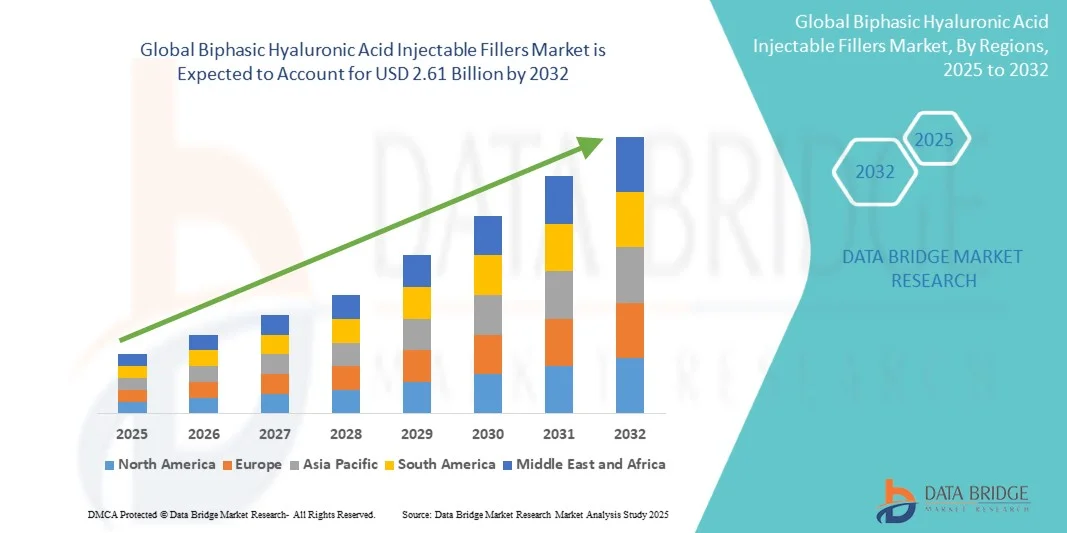
- The global biphasic hyaluronic acid injectable fillers market size was valued at USD 1.19 billion in 2024 and is expected to reach USD 2.61 billion by 2032, at a CAGR of 10.30% during the forecast period
- The market growth is largely fueled by the rising demand for minimally invasive aesthetic procedures and advancements in dermal filler technologies, leading to increased adoption of biphasic hyaluronic acid injectable fillers across medical and cosmetic applications
- Furthermore, growing consumer preference for long-lasting, natural-looking results, coupled with the expanding influence of beauty standards and social media, is positioning biphasic hyaluronic acid injectable fillers as a preferred choice for facial rejuvenation. These converging factors are accelerating the uptake of biphasic hyaluronic acid injectable fillers treatments, thereby significantly boosting the industry's growth
Biphasic Hyaluronic Acid Injectable Fillers Market Analysis
- Biphasic Hyaluronic Acid Injectable Fillers, known for their unique combination of elasticity and viscosity, are increasingly vital components in modern aesthetic and reconstructive treatments due to their ability to provide natural volume restoration, contouring, and wrinkle correction with long-lasting results
- The escalating demand for biphasic hyaluronic acid injectable fillers is primarily fueled by the growing popularity of non-surgical cosmetic procedures, rising awareness of facial aesthetics, and technological advancements in filler formulations that enhance durability and safety
- North America dominated the biphasic hyaluronic acid injectable fillers market with the largest revenue share of 41.3% in 2024, driven by the high prevalence of aesthetic procedures, increasing adoption of advanced dermal filler technologies, and strong presence of leading pharmaceutical and cosmetic companies. The U.S. continues to lead the region due to the growing demand for minimally invasive treatments and a strong network of dermatology and aesthetic clinics
- Asia-Pacific is expected to be the fastest-growing region in the biphasic hyaluronic acid injectable fillers market during the forecast period, with a projected CAGR of 10.4%, attributed to rapid urbanization, increasing disposable incomes, and expanding medical tourism in countries such as China, South Korea, and India
- The Biphasic Fillers segment dominated the largest market revenue share of 58.4% in 2024, driven by their advanced rheological properties and superior ability to maintain volume over extended periods
Report Scope and Biphasic Hyaluronic Acid Injectable Fillers Market Segmentation
|
Attributes |
Biphasic Hyaluronic Acid Injectable Fillers Key Market Insights |
|
Segments Covered |
|
|
Countries Covered |
North America
Europe
Asia-Pacific
Middle East and Africa
South America
|
|
Key Market Players |
|
|
Market Opportunities |
|
|
Value Added Data Infosets |
In addition to the insights on market scenarios such as market value, growth rate, segmentation, geographical coverage, and major players, the market reports curated by the Data Bridge Market Research also include in-depth expert analysis, patient epidemiology, pipeline analysis, pricing analysis, and regulatory framework. |
Biphasic Hyaluronic Acid Injectable Fillers Market Trends
“Enhanced Outcomes Through AI and Precision-Based Aesthetic Solutions”
- A significant and accelerating trend in the global biphasic hyaluronic acid injectable fillers market is the integration of artificial intelligence (AI) and advanced imaging technologies to enhance aesthetic precision and patient satisfaction. These innovations enable dermatologists and aesthetic practitioners to simulate treatment outcomes and optimize filler placement for more natural results
- For instance, several companies, including Allergan Aesthetics and Revance Therapeutics, have introduced AI-driven facial mapping tools that analyze facial symmetry, volume loss, and skin elasticity before treatment, ensuring customized and balanced filler applications
- AI-assisted diagnostics in aesthetic dermatology help practitioners predict the longevity of fillers and tailor treatment intervals based on real-time skin condition data. This has led to improved treatment outcomes and higher patient confidence in injectable procedures
- Moreover, companies are developing smart syringe systems that provide precise dosage control, pressure feedback, and injection depth monitoring to reduce the risk of overcorrection or uneven filler distribution
- This shift towards data-driven, precision-based filler application represents a transformative change in the aesthetic industry, aligning with growing patient expectations for safety, natural results, and procedural efficiency
- As a result, leading manufacturers such as Merz Aesthetics, Galderma, and Teoxane are investing in AI-based R&D collaborations to develop next-generation biphasic hyaluronic acid fillers with optimized rheological properties and personalized treatment compatibility
- The demand for advanced injectable fillers that integrate precision diagnostics and real-time treatment visualization is expanding rapidly across clinics and medical spas worldwide, driven by rising consumer interest in minimally invasive aesthetic solutions
Biphasic Hyaluronic Acid Injectable Fillers Market Dynamics
Driver
“Rising Demand for Non-Surgical Aesthetic Enhancements and Longer-Lasting Results”
- The growing global preference for minimally invasive aesthetic treatments, fueled by increasing beauty consciousness and technological innovation, is a major driver for the Biphasic Hyaluronic Acid Injectable Fillers market
- For instance, in March 2024, Galderma launched its Restylane Eyelight in new global markets, designed to address under-eye hollows using stabilized biphasic hyaluronic acid for durable correction and natural appearance
- Patients are increasingly choosing injectable fillers over surgical procedures due to shorter recovery times, affordability, and reduced complication risks. The durability and elasticity of biphasic fillers make them particularly suitable for contouring and volumizing applications in facial aesthetics
- In addition, social media influence and the rise of medical aesthetics among younger demographics have expanded the target audience for filler treatments. Clinics are responding by offering personalized filler regimens supported by digital consultations and post-treatment tracking
- The trend toward achieving natural, subtle enhancements is driving continuous product innovation with improved cross-linking technology and high cohesivity, ensuring better longevity and tissue integration
- These factors collectively position biphasic hyaluronic acid fillers as a cornerstone of the evolving global aesthetic medicine industry
Restraint/Challenge
“Concerns Regarding Adverse Effects and Regulatory Barriers”
- Despite robust market growth, concerns surrounding post-injection complications such as swelling, bruising, or vascular occlusion pose challenges to widespread adoption. These issues often stem from improper injection techniques or low-quality, unregulated filler products
- Regulatory discrepancies between regions further complicate market entry for new products. In several emerging economies, limited oversight of aesthetic procedures increases risks associated with counterfeit or substandard fillers
- For instance, multiple health authorities, including the U.S. FDA and the European Medicines Agency (EMA), have issued updated guidelines between 2023 and 2024 emphasizing stricter clinical testing and post-market surveillance for injectable fillers
- The high cost of advanced biphasic fillers, particularly those incorporating next-generation cross-linking agents and purification technologies, can also limit accessibility in price-sensitive regions
- Overcoming these challenges requires increased professional training, standardization of safety practices, and the development of more affordable, clinically validated filler formulations
- Companies such as Teoxane and Merz Aesthetics are focusing on education-driven marketing and regulatory compliance initiatives to build consumer trust and ensure sustained global market expansion
Biphasic Hyaluronic Acid Injectable Fillers Market Scope
The market is segmented on the basis of product type, application, and end user.
• By Product Type
On the basis of product type, the Biphasic Hyaluronic Acid Injectable Fillers market is segmented into Monophasic Fillers, Biphasic Fillers, and Others. The Biphasic Fillers segment dominated the largest market revenue share of 58.4% in 2024, driven by their advanced rheological properties and superior ability to maintain volume over extended periods. These fillers combine both cross-linked and non-cross-linked hyaluronic acid molecules, which provide enhanced lift, contouring precision, and durability. They are particularly favored for correcting deep wrinkles, facial folds, and volume restoration in areas such as cheeks and jawlines. The segment benefits from ongoing innovations in filler formulations that improve tissue integration and reduce the risk of migration. Increasing demand for long-lasting aesthetic results and expanding use in reconstructive treatments also contribute to dominance. The segment’s market growth is reinforced by rising consumer awareness of safe, reversible procedures and the growing number of certified injectors worldwide. Furthermore, global aesthetic companies are investing heavily in R&D to introduce next-generation biphasic fillers with improved viscoelastic balance and patient comfort, further strengthening their market position.
The Monophasic Fillers segment is anticipated to witness the fastest CAGR of 10.8% from 2025 to 2032, supported by the growing preference for smooth, uniform gels designed for subtle volume restoration and fine line correction. These fillers are known for their soft texture, natural-looking outcomes, and ease of injection, making them ideal for sensitive facial regions such as the lips, perioral lines, and under-eye hollows. Rising awareness of preventive aesthetics among younger consumers and increasing availability of monophasic fillers in dermatology clinics are driving adoption. The segment’s growth is also supported by an expanding range of formulations tailored for superficial to mid-dermal applications. Monophasic fillers’ ability to provide consistent results with minimal bruising and swelling enhances patient satisfaction, boosting repeat treatment rates. In addition, continuous advancements in hyaluronic acid stabilization technologies are improving filler longevity and flexibility, further accelerating market expansion across both developed and emerging regions.
• By Application
On the basis of application, the Biphasic Hyaluronic Acid Injectable Fillers market is segmented into Wrinkle Reduction and Fine Lines, Lip Augmentation, Facial Contouring, and Others. The Wrinkle Reduction and Fine Lines segment accounted for the largest market revenue share of 39.7% in 2024, owing to the increasing global demand for non-invasive aesthetic procedures that offer immediate rejuvenation with minimal downtime. Consumers seek fillers to correct age-related volume loss, smooth dynamic lines, and restore youthful skin texture without surgical intervention. The availability of diverse product ranges customized for specific wrinkle depths and facial areas drives broad clinical adoption. Growing acceptance among both men and women, coupled with increased social media influence and celebrity endorsements, is reinforcing procedural popularity. Dermatologists favor biphasic fillers for their higher elasticity and better lifting ability in treating deep nasolabial folds and marionette lines. The global expansion of aesthetic clinics and advancements in minimally invasive injection techniques further propel market growth. In addition, the segment benefits from expanding awareness campaigns promoting aesthetic dermatology as a safe, medically supervised option for natural-looking rejuvenation.
The Lip Augmentation segment is projected to witness the fastest CAGR of 11.5% from 2025 to 2032, driven by rising consumer focus on facial symmetry, youthful appearance, and subtle enhancement trends popularized by influencers. Patients are increasingly opting for soft-tissue fillers that deliver plumper, hydrated lips while maintaining natural expression and movement. Technological innovations have led to lip-specific filler formulations with improved cohesiveness and hydration retention, enhancing comfort and durability. Growing acceptance of non-surgical enhancements among millennials and Gen Z, combined with shorter procedure times and minimal recovery, are boosting treatment adoption. In addition, the availability of certified injectors and personalized injection techniques focusing on proportion and definition have improved treatment outcomes. The surge in social media awareness and aesthetic tourism across Asia-Pacific and Latin America also contributes to the segment’s rapid expansion. Furthermore, product launches focused on soft, flexible gels are enhancing market penetration globally.
• By End User
On the basis of end user, the Biphasic Hyaluronic Acid Injectable Fillers market is segmented into Hospitals and Clinics, Dermatology and Aesthetic Clinics, and Medical Spas and Cosmetic Centers. The Dermatology and Aesthetic Clinics segment dominated the market with the largest revenue share of 52.1% in 2024, supported by the growing network of professional dermatologists and plastic surgeons offering advanced filler treatments. These clinics are equipped with specialized facilities and expert practitioners capable of delivering precise, tailored aesthetic outcomes. The segment benefits from the increasing adoption of combination therapies that pair fillers with botulinum toxin or laser-based rejuvenation, maximizing anti-aging results. Rising patient awareness regarding certified dermatologic care and safety standards has further strengthened clinical preference. Moreover, aesthetic clinics continuously introduce innovative filler brands and participate in training programs to ensure standardized injection techniques. The growing trend of non-surgical cosmetic correction among both younger and middle-aged demographics is fueling appointment volumes. Increasing disposable incomes, medical tourism, and access to high-quality aesthetic care in regions such as North America, Europe, and Asia-Pacific further contribute to sustained segment growth.
The Medical Spas and Cosmetic Centers segment is expected to register the fastest CAGR of 12.4% from 2025 to 2032, fueled by the expanding popularity of aesthetic treatments in lifestyle-oriented settings. Medical spas provide a bridge between clinical expertise and luxury experiences, attracting a broad range of clients seeking minimally invasive facial enhancements. The segment’s rapid expansion is supported by the availability of certified injectors, flexible service pricing, and increased accessibility for walk-in clients. Growing acceptance of cosmetic procedures as part of self-care and wellness routines is reshaping market dynamics. Furthermore, the convenience of same-day treatments, personalized consultation models, and aesthetic memberships are driving repeat visits. The proliferation of franchised medical spa chains in the U.S., Europe, and Asia is enhancing consumer trust and awareness. Continuous social media engagement, influencer marketing, and treatment transparency are further encouraging demand for filler procedures in these settings.
Biphasic Hyaluronic Acid Injectable Fillers Market Regional Analysis
- North America dominated the biphasic hyaluronic acid injectable fillers market with the largest revenue share of 41.3% in 2024, driven by the high prevalence of aesthetic procedures, increasing adoption of advanced dermal filler technologies, and strong presence of leading pharmaceutical and cosmetic companies
- Consumers in the region exhibit strong demand for minimally invasive aesthetic treatments aimed at reducing wrinkles, fine lines, and facial volume loss. The market benefits from high consumer spending power, established healthcare infrastructure, and strong awareness regarding anti-aging solutions
- Furthermore, technological innovations such as long-lasting and cross-linked fillers, coupled with FDA approvals for new products, are supporting market expansion across the region
U.S. Biphasic Hyaluronic Acid Injectable Fillers Market Insight
The U.S. Biphasic Hyaluronic Acid Injectable Fillers market captured the largest share in 2024 within North America, fueled by the rising preference for minimally invasive aesthetic procedures and the widespread availability of certified dermatology and aesthetic clinics. Growing awareness about appearance enhancement, coupled with social media influence, has increased the adoption of injectable fillers among both men and women. Moreover, the country’s strong R&D pipeline, presence of leading brands such as Allergan Aesthetics and Revance Therapeutics, and a favorable regulatory environment contribute to its dominant market position.
Europe Biphasic Hyaluronic Acid Injectable Fillers Market Insight
The Europe biphasic hyaluronic acid injectable fillers market is expected to expand at a steady CAGR during the forecast period, driven by the rising demand for facial rejuvenation procedures and the increasing aging population seeking non-surgical solutions. Regulatory approvals and product standardization by authorities such as the European Medicines Agency (EMA) ensure product safety and boost consumer trust. Growing adoption in medical spas and dermatology clinics, along with advancements in filler formulations offering longer-lasting and more natural results, further strengthen market growth across the continent.
U.K. Biphasic Hyaluronic Acid Injectable Fillers Market Insight
The U.K. biphasic hyaluronic acid injectable fillers market is projected to grow at a notable CAGR throughout the forecast period, driven by heightened aesthetic awareness and the growing number of licensed practitioners offering injectable treatments. Demand is increasing among younger consumers seeking preventive anti-aging solutions, while older demographics prefer fillers for facial contouring and wrinkle reduction. The expanding presence of medical aesthetic chains and the influence of celebrity-endorsed beauty standards continue to boost the adoption of hyaluronic acid-based fillers.
Germany Biphasic Hyaluronic Acid Injectable Fillers Market Insight
The Germany biphasic hyaluronic acid injectable fillers market is anticipated to witness robust growth during the forecast period, supported by the country’s strong healthcare infrastructure, high consumer safety standards, and preference for clinically proven aesthetic products. German consumers increasingly favor natural-looking outcomes and biodegradable filler solutions, prompting greater demand for biphasic formulations. Additionally, growing acceptance of aesthetic medicine among both male and female populations, combined with the presence of skilled dermatologists, is driving continuous market expansion.
Asia-Pacific Biphasic Hyaluronic Acid Injectable Fillers Market Insight
The Asia-Pacific biphasic hyaluronic acid injectable fillers market is projected to grow at the fastest CAGR of 10.4% from 2025 to 2032, propelled by rising disposable incomes, expanding medical tourism, and an increasing preference for non-surgical cosmetic enhancements. The region’s growing beauty and wellness industry, coupled with the influence of K-beauty trends and social media aesthetics, is fostering high adoption rates. Government support for the development of cosmetic and dermatology sectors, along with affordability of treatments in emerging economies, is further accelerating market growth.
Japan Biphasic Hyaluronic Acid Injectable Fillers Market Insight
The Japan biphasic hyaluronic acid injectable fillers market is gaining traction due to the country’s strong focus on aesthetic precision, safety, and quality. Demand is being driven by an aging population seeking non-invasive rejuvenation treatments and younger consumers influenced by beauty-conscious culture. The availability of advanced formulations, local R&D in dermal filler technologies, and the popularity of natural, subtle enhancement procedures contribute to steady market expansion. Furthermore, the integration of aesthetic medicine into mainstream healthcare practices enhances accessibility and awareness.
China Biphasic Hyaluronic Acid Injectable Fillers Market Insight
The China biphasic hyaluronic acid injectable fillers market accounted for the largest revenue share in Asia-Pacific in 2024, attributed to rapid urbanization, growing middle-class population, and increasing acceptance of aesthetic procedures among younger demographics. China’s flourishing beauty industry, combined with strong domestic manufacturing of injectable fillers, makes it a key regional growth driver. Expanding medical tourism, favorable regulatory reforms, and collaborations between global and local aesthetic brands continue to enhance market penetration across both tier-1 and tier-2 cities.
Biphasic Hyaluronic Acid Injectable Fillers Market Share
The Biphasic Hyaluronic Acid Injectable Fillers industry is primarily led by well-established companies, including:
- Galderma (Switzerland)
- Merz Pharma (Germany)
- Revance Therapeutics, Inc. (U.S.)
- Hugel Inc. (South Korea)
- Teoxane Laboratories (Switzerland)
- Croma-Pharma GmbH (Austria)
- Sinclair Pharma (U.K.)
- BioPlus Co., Ltd. (South Korea)
- Prollenium Medical Technologies (Canada)
- Medytox Inc. (South Korea)
- IMEIK Technology Development Co., Ltd. (China)
- Bloomage Biotechnology (China)
- Vivacy Laboratories (France)
- Anika Therapeutics, Inc. (U.S.)
- Suneva Medical (U.S.)
- Revitrane (South Korea)
- Dermax Co., Ltd. (China)
- Revanesse (Canada)
- Shandong Bloomage Hyinc Technology Co., Ltd. (China)
Latest Developments in Global Biphasic Hyaluronic Acid Injectable Fillers Market
- In February 2022, Allergan Aesthetics, a part of AbbVie Inc., received U.S. FDA approval for its Juvéderm Volbella XC filler for the treatment of infraorbital hollows. This milestone marked one of the first hyaluronic acid-based fillers approved for this indication, demonstrating growing innovation in precision aesthetic treatments
- In January 2023, Allergan officially launched its Juvéderm Volux XC injectable gel in the U.S. for the enhancement and correction of jawline definition in adults. This launch expanded the application of biphasic HA fillers toward more structural and contouring uses, catering to the rising demand for minimally invasive facial sculpting procedures
- In October 2024, the Juvéderm Voluma XC filler entered the U.S. market for the correction of temple hollowing following its approval earlier that year. This launch reflected the industry’s movement toward targeted, region-specific filler applications, highlighting advances in formulation and durability for longer-lasting aesthetic outcome
- In November 2024, a detailed pipeline report on biphasic hyaluronic acid fillers was released, outlining multiple products in various stages of development, from clinical trials to regulatory approval. The report emphasized the strong research and development activity in this segment, driven by the demand for safer, longer-lasting, and customizable filler solutions

- Interactive Data Analysis Dashboard
- Company Analysis Dashboard for high growth potential opportunities
- Research Analyst Access for customization & queries
- Competitor Analysis with Interactive dashboard
- Latest News, Updates & Trend analysis
- Harness the Power of Benchmark Analysis for Comprehensive Competitor Tracking
Data collection and base year analysis are done using data collection modules with large sample sizes. The stage includes obtaining market information or related data through various sources and strategies. It includes examining and planning all the data acquired from the past in advance. It likewise envelops the examination of information inconsistencies seen across different information sources. The market data is analysed and estimated using market statistical and coherent models. Also, market share analysis and key trend analysis are the major success factors in the market report. To know more, please request an analyst call or drop down your inquiry.
The key research methodology used by DBMR research team is data triangulation which involves data mining, analysis of the impact of data variables on the market and primary (industry expert) validation. Data models include Vendor Positioning Grid, Market Time Line Analysis, Market Overview and Guide, Company Positioning Grid, Patent Analysis, Pricing Analysis, Company Market Share Analysis, Standards of Measurement, Global versus Regional and Vendor Share Analysis. To know more about the research methodology, drop in an inquiry to speak to our industry experts.
Data Bridge Market Research is a leader in advanced formative research. We take pride in servicing our existing and new customers with data and analysis that match and suits their goal. The report can be customized to include price trend analysis of target brands understanding the market for additional countries (ask for the list of countries), clinical trial results data, literature review, refurbished market and product base analysis. Market analysis of target competitors can be analyzed from technology-based analysis to market portfolio strategies. We can add as many competitors that you require data about in the format and data style you are looking for. Our team of analysts can also provide you data in crude raw excel files pivot tables (Fact book) or can assist you in creating presentations from the data sets available in the report.












