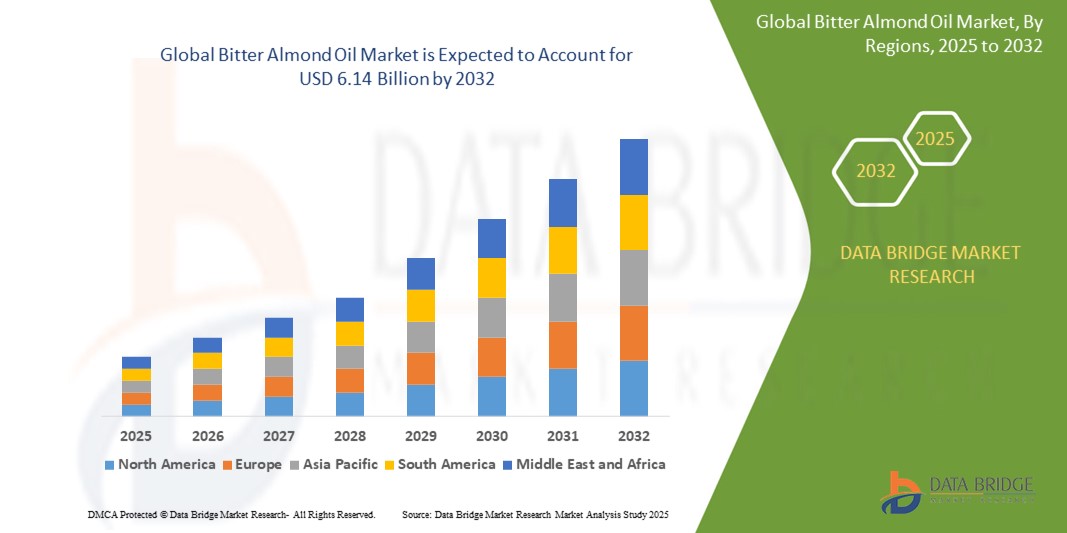
Bitter Almond Oil Market Size
- The global bitter almond oil market size was valued at USD 3.20 billion in 2024 and is expected to reach USD 6.14 billion by 2032, at a CAGR of 8.50% during the forecast period
- The market growth is largely fuelled by the rising demand for natural and organic ingredients in personal care and cosmetic products, coupled with increasing awareness regarding the therapeutic and aromatic benefits of essential oils
- In addition, expanding applications of bitter almond oil in the food and beverage industry as a flavoring agent and in pharmaceuticals for its medicinal properties are supporting market growth
Bitter Almond Oil Market Analysis
- The market is witnessing a growing preference for plant-based and clean-label solutions among consumers, encouraging manufacturers to invest in product innovation and sustainable sourcing
- Increasing disposable income and wellness trends are further driving demand in emerging economies, particularly in Asia-Pacific and Latin America, where natural remedies and holistic health practices are gaining momentum
- North America dominated the bitter almond oil market with the largest revenue share in 2024, driven by the rising demand for plant-based and organic ingredients across personal care, food, and pharmaceutical applications
- Asia-Pacific region is expected to witness the highest growth rate in the global bitter almond oil market, driven by increasing consumer preference for herbal and natural remedies, a surge in skincare and wellness product demand, and expanding e-commerce platforms.
- The industrial grade segment held the largest market revenue share of 68.5% in 2024, driven by its extensive use in the cosmetic and pharmaceutical sectors. This type of oil is widely incorporated in products such as lotions, creams, soaps, and massage oils due to its emollient and anti-inflammatory properties. Manufacturers prefer industrial grade bitter almond oil for its cost-effectiveness and suitability for topical formulations. Its growing application in aromatherapy and wellness treatments is also supporting its dominance in the market
Report Scope and Bitter Almond Oil Market Segmentation
|
Attributes |
Bitter Almond Oil Key Market Insights |
|
Segments Covered |
|
|
Countries Covered |
North America
Europe
Asia-Pacific
Middle East and Africa
South America
|
|
Key Market Players |
|
|
Market Opportunities |
• Rising Demand for Natural Ingredients in Cosmetics • Expanding Applications in Aromatherapy and Pharmaceuticals |
|
Value Added Data Infosets |
In addition to the insights on market scenarios such as market value, growth rate, segmentation, geographical coverage, and major players, the market reports curated by the Data Bridge Market Research also include in-depth expert analysis, pricing analysis, brand share analysis, consumer survey, demography analysis, supply chain analysis, value chain analysis, raw material/consumables overview, vendor selection criteria, PESTLE Analysis, Porter Analysis, and regulatory framework. |
Bitter Almond Oil Market Trends
“Health Concerns Over Cyanide Content in Bitter Almond Oil”
- Consumers are increasingly choosing clean-label and organic skincare and cosmetic products that avoid synthetic chemicals and artificial additives
- Bitter almond oil is gaining attention due to its natural origin, mild fragrance, and skin-nourishing benefits such as moisturizing and anti-aging properties
- Major personal care brands are incorporating bitter almond oil into their product formulations to appeal to eco-conscious customers
- Growing awareness about ethical and sustainable sourcing has led consumers to favor plant-based oils with proven dermatological safety
- For instance, The Body Shop launched a skincare range featuring almond oil to align with its clean-label and cruelty-free positioning
Bitter Almond Oil Market Dynamics
Driver
“Rising Demand for Natural and Therapeutic Oils Across Industries”
- Increasing health and wellness awareness is encouraging consumers to prefer natural ingredients in personal care, food, and aromatherapy products
- Bitter almond oil is used in cosmetics and skin treatments due to its antibacterial, antifungal, and moisturizing capabilities
- Spas and wellness centers are witnessing a surge in demand for essential oils, including bitter almond oil, for massage therapies and aromatherapy applications
- The rise in clean-label food trends has contributed to limited but growing use of bitter almond oil in specific food-grade formulations (after detoxification)
- For instance, wellness centers in Brazil and India now widely use bitter almond oil in spa treatments, highlighting its popularity in emerging economies
Restraint/Challenge
“Health Concerns Over Cyanide Content in Bitter Almond Oil”
- Bitter almond oil naturally contains amygdalin, which can convert into toxic hydrogen cyanide if not properly processed
- Many regulatory agencies have imposed strict restrictions or bans on the use of bitter almond oil in edible or ingestible products
- The need for specialized detoxification processes increases production costs, limiting its accessibility for small or emerging producers
- Consumer skepticism over safety in both food and personal care uses has led to slower adoption in certain regions
- For instance, the U.S. Food and Drug Administration (FDA) considers bitter almonds unsafe for consumption unless thoroughly processed, restricting their use in the food industry
Bitter Almond Oil Market Scope
The market is segmented on the basis of type, application, and distribution channel.
- By Type
On the basis of type, the bitter almond oil market is segmented into edible grade and industrial grade. The industrial grade segment held the largest market revenue share of 68.5% in 2024, driven by its extensive use in the cosmetic and pharmaceutical sectors. This type of oil is widely incorporated in products such as lotions, creams, soaps, and massage oils due to its emollient and anti-inflammatory properties. Manufacturers prefer industrial grade bitter almond oil for its cost-effectiveness and suitability for topical formulations. Its growing application in aromatherapy and wellness treatments is also supporting its dominance in the market.
The edible grade segment is expected to witness the fastest growth rate from 2025 to 2032, owing to the rising demand for natural food ingredients and flavorings. Despite regulatory restrictions, regions where detoxified forms are permitted are witnessing increasing usage in confectionery and baked goods. The shift toward plant-based, minimally processed ingredients is further enhancing its appeal in health-conscious consumer markets.
- By Application
On the basis of application, the market is segmented into food preparation, cosmetic, pharmaceuticals, and others. The cosmetic segment accounted for the largest revenue share in 2024, driven by the growing demand for clean-label beauty products and natural oils. Bitter almond oil’s nourishing, anti-aging, and moisturizing characteristics make it a key ingredient in facial care, body care, and hair care products.
The pharmaceutical segment is expected to witness the fastest growth rate from 2025 to 2032, supported by increased use in herbal formulations and natural remedies. Its application in pain relief ointments, skin-soothing agents, and traditional medicine blends is gaining momentum, especially in Europe and parts of Asia.
- By Distribution Channel
On the basis of distribution channel, the bitter almond oil market is segmented into hypermarkets and supermarkets, food specialty stores, pharmacy, cosmetic discounters, and others. The pharmacy segment held the largest share in 2024 due to the high demand for therapeutic-grade essential oils and wellness products. Pharmacies provide consumer access to regulated, high-quality oils backed by health claims and trusted sourcing.
Cosmetic discounters is expected to witness the fastest growth rate from 2025 to 2032, driven by growing e-commerce penetration and consumer preference for affordable natural skincare solutions. These channels offer a broad selection of branded and private-label almond oil products, catering to value-conscious consumers seeking performance and purity.
Bitter Almond Oil Market Regional Analysis
- North America dominated the bitter almond oil market with the largest revenue share in 2024, driven by the rising demand for plant-based and organic ingredients across personal care, food, and pharmaceutical applications
- Consumers in the region are increasingly drawn toward natural health and beauty products, boosting the adoption of bitter almond oil for its anti-inflammatory, antibacterial, and soothing properties
- The presence of well-established cosmetic brands, increasing preference for clean-label products, and heightened awareness about aromatherapy and herbal formulations are further contributing to market growth across the U.S. and Canada
U.S. Bitter Almond Oil Market Insight
The U.S. bitter almond oil market captured the largest revenue share in 2024 within North America, fuelled by the surge in consumer preference for natural skincare and wellness solutions. The increasing use of bitter almond oil in pharmaceutical-grade applications, such as cough syrups and muscle relaxants, is also supporting the market. Furthermore, expanding retail distribution and e-commerce channels have made premium-quality essential oils more accessible, driving demand from both end-users and businesses in the natural products sector.
Europe Bitter Almond Oil Market Insight
The Europe bitter almond oil market is expected to witness the fastest growth rate from 2025 to 2032, supported by the region's strong focus on herbal cosmetics, clean beauty, and eco-conscious consumerism. Bitter almond oil is widely used in skincare and therapeutic aromatherapy due to its detoxifying and soothing properties. Countries such as France, Germany, and Italy are at the forefront of organic product usage, while increasing investments in natural personal care brands are supporting broader market penetration.
U.K. Bitter Almond Oil Market Insight
The U.K. bitter almond oil market is expected to witness the fastest growth rate from 2025 to 2032, backed by increasing awareness about holistic wellness and green cosmetics. The growing demand for sustainable and cruelty-free beauty products has encouraged local and international brands to incorporate natural oils such as bitter almond into their formulations. In addition, rising interest in aromatherapy practices and spa treatments is contributing to increased usage of essential oils in both home and commercial settings.
Germany Bitter Almond Oil Market Insight
The Germany bitter almond oil market is expected to witness the fastest growth rate from 2025 to 2032, owing to the increasing demand for plant-derived oils in healthcare and personal care sectors. Germany’s strong regulatory emphasis on organic certification and sustainable sourcing aligns with the preferences of its health-conscious consumer base. Bitter almond oil is being widely adopted for use in therapeutic massage, dermatological products, and herbal formulations, further supported by the country’s mature natural health product market and wellness tourism industry.
Asia-Pacific Bitter Almond Oil Market Insight
The Asia-Pacific bitter almond oil market is expected to witness the fastest growth rate from 2025 to 2032, driven by rapid urbanization, a growing middle-class population, and rising disposable incomes across countries such as China, India, and Japan. The expansion of traditional medicine practices and increasing popularity of herbal skincare and dietary supplements are boosting demand for bitter almond oil. Government initiatives promoting local essential oil production and rising awareness of natural wellness alternatives are enhancing market potential across the region.
Japan Bitter Almond Oil Market Insight
The Japan bitter almond oil market is expected to witness the fastest growth rate from 2025 to 2032, due to rising consumer inclination towards holistic skincare, aromatherapy, and functional wellness. The oil's versatility in treating dry skin, soothing inflammation, and providing relaxation makes it a popular component in premium health and beauty products. In addition, Japanese consumers’ preference for clean beauty and minimalist formulations is spurring the use of plant-based oils such as bitter almond in both traditional remedies and modern self-care solutions.
China Bitter Almond Oil Market Insight
The China bitter almond oil market held the largest revenue share in Asia Pacific in 2024, supported by its widespread use in Traditional Chinese Medicine (TCM) and growing integration into cosmetics and pharmaceutical products. China’s vast consumer base, increasing interest in natural therapies, and the rising popularity of do-it-yourself beauty routines are significantly contributing to demand. Moreover, domestic manufacturers and e-commerce platforms are actively promoting pure bitter almond oil products, boosting accessibility and adoption across both urban and rural regions.
Bitter Almond Oil Market Share
The Bitter Almond Oil industry is primarily led by well-established companies, including:
- Frontier Co-op (U.S.)
- Plenty Foods (Australia)
- Dabur (India)
- K.K. Enterprise (India)
- Aromantic Natural Skin Care (U.K.)
- Now Foods (U.S.)
- Spectrum Chemical (U.S.)
- Twasa Cosmetics (India)
- Ashwin Fine Chemicals & Pharmaceuticals (India)
Latest Developments in Global Bitter Almond Oil Market
- In 2022, Shree Ram Proteins Ltd announced a strategic diversification plan with the construction of a new oil refinery. The company is set to launch edible refined oils, including Rape Seed Oil, Groundnut Oil, and Cottonseed Oil, using a state-of-the-art refining plant by January 2023. This move signifies Shree Ram Proteins' expansion into the domestic market and an enhanced product portfolio, displaying its commitment to business growth
- In 2021, Cargill bolstered its presence in Southern India by acquiring an edible oil refinery in Nellore, Andhra Pradesh. This strategic move aimed to strengthen Cargill's existing supply chain in the region, reflecting the company's commitment to expanding its footprint and optimizing its operations in the dynamic edible oil market

- Interactive Data Analysis Dashboard
- Company Analysis Dashboard for high growth potential opportunities
- Research Analyst Access for customization & queries
- Competitor Analysis with Interactive dashboard
- Latest News, Updates & Trend analysis
- Harness the Power of Benchmark Analysis for Comprehensive Competitor Tracking
Global Bitter Almond Oil Market, Supply Chain Analysis and Ecosystem Framework
To support market growth and help clients navigate the impact of geopolitical shifts, DBMR has integrated in-depth supply chain analysis into its Global Bitter Almond Oil Market research reports. This addition empowers clients to respond effectively to global changes affecting their industries. The supply chain analysis section includes detailed insights such as Global Bitter Almond Oil Market consumption and production by country, price trend analysis, the impact of tariffs and geopolitical developments, and import and export trends by country and HSN code. It also highlights major suppliers with data on production capacity and company profiles, as well as key importers and exporters. In addition to research, DBMR offers specialized supply chain consulting services backed by over a decade of experience, providing solutions like supplier discovery, supplier risk assessment, price trend analysis, impact evaluation of inflation and trade route changes, and comprehensive market trend analysis.
Data collection and base year analysis are done using data collection modules with large sample sizes. The stage includes obtaining market information or related data through various sources and strategies. It includes examining and planning all the data acquired from the past in advance. It likewise envelops the examination of information inconsistencies seen across different information sources. The market data is analysed and estimated using market statistical and coherent models. Also, market share analysis and key trend analysis are the major success factors in the market report. To know more, please request an analyst call or drop down your inquiry.
The key research methodology used by DBMR research team is data triangulation which involves data mining, analysis of the impact of data variables on the market and primary (industry expert) validation. Data models include Vendor Positioning Grid, Market Time Line Analysis, Market Overview and Guide, Company Positioning Grid, Patent Analysis, Pricing Analysis, Company Market Share Analysis, Standards of Measurement, Global versus Regional and Vendor Share Analysis. To know more about the research methodology, drop in an inquiry to speak to our industry experts.
Data Bridge Market Research is a leader in advanced formative research. We take pride in servicing our existing and new customers with data and analysis that match and suits their goal. The report can be customized to include price trend analysis of target brands understanding the market for additional countries (ask for the list of countries), clinical trial results data, literature review, refurbished market and product base analysis. Market analysis of target competitors can be analyzed from technology-based analysis to market portfolio strategies. We can add as many competitors that you require data about in the format and data style you are looking for. Our team of analysts can also provide you data in crude raw excel files pivot tables (Fact book) or can assist you in creating presentations from the data sets available in the report.