


What is the Body Fluid Analysis Market Size and Growth Rate?
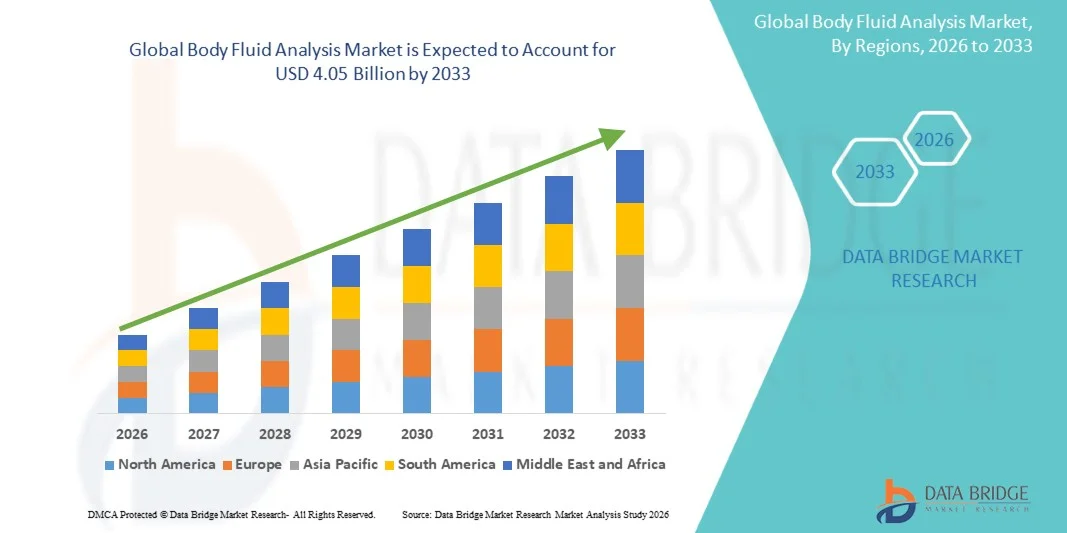
- As per Data Bridge Market Research analysis, the body fluid analysis market was valued at USD 2.45 billion in 2025 and is projected to reach USD 4.05 billion by 2033, growing at a CAGR of 6.50% from 2026 to 2033.
- The market is experiencing consistent growth driven by rising demand for early disease detection, increasing adoption of minimally invasive diagnostic techniques, advancements in molecular diagnostics, and expanding applications of body fluid analysis across clinical diagnostics, research, and therapeutic monitoring.
- The increasing burden of chronic diseases, growing geriatric population, and rising need for accurate and rapid diagnostic solutions are compelling healthcare providers and diagnostic laboratories to adopt advanced body fluid analysis technologies. Automated analyzers, molecular testing platforms, and biomarker-based analysis are enhancing diagnostic accuracy and efficiency, supporting wider adoption of body fluid testing across hospitals, laboratories, and research institutions.
Market Size & Forecast
- Global Market Value (2025): USD 2.45 Billion
- Expected Market Value (2033): USD 4.05 Billion
- Forecast CAGR (2026–2033): 6.50%
- Leading Region in 2025: North America
- Fastest Growing Region: Asia Pacific
What are the Major Takeaways of the Body Fluid Analysis Market?
- North America dominated the body fluid collection and diagnostics market with the largest revenue share of 44.45% in 2025, supported by advanced healthcare infrastructure, increasing adoption of diagnostic technologies, and the presence of major market participants
- Asia-Pacific is expected to be the fastest-growing region at a CAGR of 8.0% from 2026 to 2033, fueled by rising healthcare expenditure, increasing prevalence of chronic diseases, expanding diagnostic laboratory networks, and growing adoption of advanced diagnostic solutions across emerging economies
- The consumables segment led the market with a 67.7% share in 2025, driven by recurring demand for reagents, assay kits, testing cartridges, and laboratory supplies used in body fluid analysis procedures.
- Instruments are the fastest-growing product type, projected to register a CAGR of 8.0%, reflecting the surge in adoption of automated analyzers, advanced diagnostic platforms, and high-throughput laboratory systems.
- The polymerase chain reaction (PCR) segment dominated the technology category with a 57.5% revenue share in 2025, led by its high sensitivity, specificity, and extensive application in molecular diagnostics.
- Blood accounted for 75.7% of the market share in 2025, preferred by the widespread application of blood-based testing for disease diagnosis, biomarker detection, and clinical monitoring.
- The research segment is the fastest-growing application category, with a CAGR of 9.0%, driven by increasing applications of body fluid analysis in biomarker discovery, drug development, and precision medicine research
Report Scope and Body Fluid Analysis Market Segmentation
|
Attributes |
Body Fluid Analysis Key Market Insights |
|
Segments Covered |
|
|
Countries Covered |
North America
Europe
Asia-Pacific
Middle East and Africa
South America
|
|
Key Market Players |
|
|
Market Opportunities |
|
|
Value Added Data Infosets |
In addition to the insights on market scenarios such as market value, growth rate, segmentation, geographical coverage, and major players, the market reports curated by the Data Bridge Market Research also include in-depth expert analysis, patient epidemiology, pipeline analysis, pricing analysis, and regulatory framework. |
What is the Key Trend in the Body Fluid Analysis Market?
- Liquid biopsy and biomarker-based body fluid analysis are increasingly gaining adoption for early disease detection, cancer monitoring, and personalized medicine applications due to their minimally invasive nature and ability to provide real-time molecular insights.
- For instance, in June 2025, Guardant Health received FDA Breakthrough Device Designation for its Shield Multi-Cancer Detection (MCD) test, a blood-based test designed to detect multiple cancer types, supporting the growing adoption of liquid biopsy and circulating biomarker-based diagnostics.
- Advanced molecular technologies enable healthcare providers to analyze circulating biomarkers, genetic material, and disease indicators from body fluids with improved accuracy and sensitivity.
- Diagnostic laboratories and research institutions are increasingly integrating automated analyzers, next-generation sequencing, and artificial intelligence-based platforms to enhance body fluid testing efficiency.
- For instance, in May 2025, Guardant Health expanded the capabilities of its Guardant360 Liquid Test with new smart liquid biopsy applications, using multiomic profiling and AI-based analysis to improve biomarker identification and cancer treatment selection.
- As healthcare systems continue shifting toward early diagnosis, precision medicine, and minimally invasive testing approaches, the adoption of advanced body fluid analysis technologies is expected to accelerate, reinforcing liquid-based diagnostics as a key component of modern healthcare.
What are the Key Drivers of the Body Fluid Analysis Market?
- The rising prevalence of chronic diseases, cancer, infectious diseases, and neurological disorders has significantly increased demand for accurate and efficient body fluid analysis solutions for diagnosis, monitoring, and treatment decisions.
- For instance, in March 2025, the World Health Organization highlighted that limited access to essential health technologies remains a significant barrier in preventing, detecting, and treating noncommunicable diseases, emphasizing the need for improved diagnostic capacity and healthcare technologies.
- Hospitals, diagnostic laboratories, and research organizations are increasingly adopting automated body fluid analyzers and molecular diagnostic platforms to improve workflow efficiency, reduce testing time, and enhance clinical accuracy.
- For instance, in January 2025, Roche Diagnostics received FDA clearance and CLIA waiver for its cobas liat molecular testing panels, expanding access to rapid PCR-based diagnostic testing and supporting improved disease detection through decentralized testing settings.
- With healthcare providers increasingly focusing on early disease detection, precision diagnostics, and personalized treatment strategies, body fluid analysis technologies will remain essential for improving patient outcomes and advancing clinical decision-making.
Which Factors are Challenging the Growth of the Body Fluid Analysis Market?
- Advanced body fluid analysis technologies require significant investment due to the high cost of automated analyzers, molecular diagnostic platforms, specialized reagents, and laboratory infrastructure.
- For instance, in July 2024, the World Health Organization (WHO) highlighted that access to appropriate, affordable, and effective health technologies remains a major challenge in low-resource settings, with limited infrastructure and affordability barriers affecting the adoption of advanced diagnostic solutions.
- These high costs limit adoption among smaller diagnostic laboratories, healthcare facilities, and organizations operating in developing regions with limited healthcare budgets.
- The requirement for skilled laboratory professionals, complex testing workflows, and regulatory compliance further increases operational challenges for widespread implementation of advanced body fluid analysis systems.
- For instance, in May 2024, the U.S. Food and Drug Administration (FDA) issued a final rule increasing regulatory oversight of laboratory-developed tests (LDTs), requiring laboratories to comply with additional quality, registration, reporting, and premarket review requirements, increasing operational and compliance costs for diagnostic developers.
- The high capital investment, operational complexity, and regulatory requirements associated with advanced body fluid analysis platforms continue to restrict adoption, particularly among smaller healthcare providers and price-sensitive emerging markets.
How is the Body Fluid Analysis Market Segmented?
The body fluid analysis market is segmented on the basis of product, technology, fluid type, application, and end user.
- By Product
On the basis of product, the body fluid analysis market is segmented into consumables and instruments. The consumables segment dominated the market with 67.7% revenue share in 2025, supported by recurring demand for reagents, assay kits, testing cartridges, and laboratory supplies used in body fluid analysis procedures. Consumables are extensively used across hospitals, diagnostic laboratories, and research facilities for routine testing and disease monitoring applications. Increasing diagnostic testing volumes due to the rising prevalence of chronic diseases and infectious disorders are driving continuous consumption of these products. The growing adoption of molecular diagnostics, immunoassays, and automated testing platforms is further increasing demand for specialized consumables. Their frequent replacement cycle and essential role in diagnostic workflows continue to support segment dominance.
The instruments segment is expected to register the fastest growth at a CAGR of 8.0% from 2026 to 2033, driven by increasing adoption of automated analyzers, advanced diagnostic platforms, and high-throughput laboratory systems. Instruments such as automated analyzers, flow cytometers, and molecular diagnostic systems are improving testing accuracy, efficiency, and turnaround time. Rising demand for laboratory automation is encouraging healthcare providers to upgrade diagnostic infrastructure. Technological advancements in precision diagnostics and artificial intelligence integration are enhancing instrument capabilities. Growing investments in clinical laboratories and research facilities are supporting expansion of this segment. Increasing demand for rapid and reliable testing solutions is expected to accelerate instrument adoption.
- By Technology
On the basis of technology, the body fluid analysis market is segmented into immunoassay, polymerase chain reaction (PCR), and flow cytometry. The PCR segment dominated the market with 57.5% revenue share in 2025, owing to its high sensitivity, specificity, and extensive application in molecular diagnostics. PCR-based body fluid analysis is widely used for detecting infectious diseases, genetic abnormalities, and cancer-related biomarkers. Increasing demand for accurate and early disease detection is supporting adoption of PCR technologies across diagnostic laboratories. Continuous advancements in real-time PCR and multiplex PCR platforms are improving testing efficiency. The growing focus on precision medicine and biomarker identification is further strengthening PCR adoption.
The immunoassay segment is expected to witness the fastest growth at a CAGR of 8.5% from 2026 to 2033, driven by increasing utilization in clinical diagnostics, hormone testing, infectious disease detection, and biomarker analysis. Immunoassays provide high specificity and are widely adopted due to their cost-effectiveness and compatibility with automated laboratory systems. Rising demand for point-of-care testing and rapid diagnostic solutions is supporting market expansion. Advancements in chemiluminescence immunoassay technologies are improving diagnostic accuracy. Growing applications in chronic disease monitoring and personalized healthcare are creating new growth opportunities. Increasing laboratory automation is further contributing to immunoassay adoption.
- By Fluid Type
On the basis of fluid type, the body fluid analysis market is segmented into blood, cerebrospinal fluid (CSF), pleural fluid, synovial fluid, peritoneal fluid, and semen. The blood segment dominated the overall body fluid diagnostics market with 75.7% revenue share in 2025, while CSF represents a major specialized fluid type due to increasing neurological diagnostic applications. CSF analysis plays an important role in detecting conditions such as meningitis, multiple sclerosis, Alzheimer’s disease, and other neurological disorders. Growing prevalence of neurological diseases is increasing demand for accurate CSF testing solutions. Advances in biomarker analysis are improving the diagnostic potential of CSF-based testing. Increasing research activities in neurodegenerative disease detection are further supporting segment growth.
The cerebrospinal fluid (CSF) segment is expected to register significant growth at a CAGR of 7.5% from 2026 to 2033, driven by increasing prevalence of neurological disorders and rising demand for advanced neurological diagnostics. CSF analysis is increasingly used for identifying biomarkers associated with neurodegenerative and infectious diseases. Growing investments in neuroscience research are supporting innovation in CSF-based diagnostic methods. Advancements in proteomics and molecular analysis are improving disease detection capabilities. Increasing awareness regarding early diagnosis of neurological conditions is creating additional demand. The expansion of specialized neurological testing is expected to support segment growth.
- By Application
On the basis of application, the body fluid analysis market is segmented into clinical diagnostics, forensic, and research. The clinical diagnostics segment dominated the market with 60% revenue share in 2025, supported by increasing demand for disease diagnosis, treatment monitoring, and early detection solutions. Body fluid analysis is widely used in hospitals and laboratories for identifying infectious diseases, cancer biomarkers, metabolic disorders, and other health conditions. Rising prevalence of chronic diseases is increasing the requirement for accurate diagnostic testing. Growing adoption of personalized medicine is further expanding clinical applications. Advances in molecular diagnostics and automation are improving testing efficiency. Increasing healthcare expenditure and diagnostic infrastructure development are supporting segment dominance.
The research segment is expected to witness the fastest growth at a CAGR of 9.0% from 2026 to 2033, driven by increasing applications of body fluid analysis in biomarker discovery, drug development, and precision medicine research. Research institutions and pharmaceutical companies are increasingly utilizing body fluids for identifying disease mechanisms and therapeutic targets. Growing investments in oncology research and molecular biology are accelerating adoption. Advancements in liquid biopsy and genomic analysis are creating new opportunities for research applications. Increasing collaborations between academic institutions and biotechnology companies are further supporting growth. The rising focus on personalized therapeutics is expected to strengthen research-based body fluid analysis demand.
- By End User
On the basis of end user, the body fluid analysis market is segmented into hospitals, clinics, diagnostic laboratories, and research institutes. The diagnostic laboratories segment dominated the market with 40.45% revenue share in 2025, owing to increasing outsourcing of diagnostic testing and rising demand for specialized laboratory services. Diagnostic laboratories handle high volumes of body fluid testing and utilize advanced analyzers for accurate disease detection. Growing healthcare screening programs are increasing testing demand worldwide. Expansion of laboratory networks in emerging economies is further supporting segment growth. Adoption of automation and advanced molecular technologies is improving laboratory efficiency. Increasing demand for faster turnaround time continues to strengthen diagnostic laboratory adoption.
The research institutes segment is expected to witness the fastest growth at a CAGR of 9.2% from 2026 to 2033, driven by increasing investments in biomedical research, biomarker discovery, and development of novel diagnostic technologies. Research institutes are increasingly using body fluid analysis for studying disease pathways and developing targeted therapies. Growth in genomics, proteomics, and molecular biology research is expanding applications. Increasing government and private funding for healthcare research is supporting segment development. Collaboration between research organizations and biotechnology companies is accelerating innovation. Growing emphasis on precision medicine is expected to create additional opportunities for research institutes.
Which Region Holds the Largest Share of the Body Fluid Analysis Market?
- North America dominated the body fluid collection and diagnostics market with the largest revenue share of 44.45% in 2025, supported by advanced healthcare infrastructure, increasing adoption of diagnostic technologies, and the presence of major market participants
- The region also benefits from the rising prevalence of chronic diseases, increasing demand for early disease detection, growing utilization of biomarker-based testing, and widespread adoption of automated laboratory systems across hospitals and diagnostic laboratories. Increasing investments in precision medicine, liquid biopsy research, and advanced in-vitro diagnostic technologies continue to strengthen North America’s leadership position in the global body fluid analysis market.
U.S. Body Fluid Analysis Market Insight
The U.S. body fluid analysis market is witnessing strong growth due to increasing demand for advanced diagnostic testing, rising prevalence of chronic diseases, and growing adoption of molecular diagnostics and biomarker-based analysis. The country’s advanced healthcare infrastructure, extensive network of clinical laboratories, and strong presence of diagnostic technology companies are driving demand across clinical diagnostics, research, and personalized medicine applications. In addition, increasing investments in liquid biopsy, precision medicine, and laboratory automation are accelerating the adoption of body fluid analysis technologies across healthcare settings. The National Cancer Institute highlighted the growing importance of liquid biopsy approaches, including blood-based biomarker analysis, for cancer detection and monitoring, supporting the expansion of body fluid-based diagnostics in the U.S.
Asia-Pacific Body Fluid Analysis Market Insight
The Asia-Pacific body fluid analysis market is expected to witness rapid growth, driven by increasing healthcare expenditure, rising burden of chronic diseases, expanding diagnostic laboratory infrastructure, and growing adoption of advanced molecular testing technologies across countries such as China, India, and Japan. Growing awareness regarding early disease detection, increasing government initiatives for healthcare access, and rising demand for cost-effective diagnostic solutions are supporting regional market expansion. In addition, increasing investments in biotechnology research and precision medicine are accelerating adoption of body fluid analysis technologies across hospitals, research institutes, and diagnostic centers. The World Health Organization reported that the Asia-Pacific region continues to experience a growing burden of noncommunicable diseases, increasing the need for improved screening, diagnosis, and monitoring capabilities.
Japan Body Fluid Analysis Market Insight
The Japan body fluid analysis market is witnessing consistent growth due to rising investments in advanced diagnostics, aging population-related healthcare needs, and increasing adoption of molecular testing technologies. Hospitals, research institutes, and biotechnology companies are increasingly utilizing body fluid analysis for disease monitoring, biomarker discovery, and precision medicine applications. Moreover, Japan’s strong focus on healthcare innovation, regenerative medicine, and advanced laboratory technologies is further contributing to market growth. National Institute of Biomedical Innovation, Health and Nutrition (NIBIOHN) continued supporting research programs focused on advanced biomedical technologies, including biomarker discovery and translational research.
China Body Fluid Analysis Market Insight
The China body fluid analysis market is growing rapidly, driven by increasing healthcare investments, rising prevalence of cancer and chronic diseases, and expansion of diagnostic testing capabilities. Growing adoption of molecular diagnostics, liquid biopsy technologies, and automated laboratory systems across hospitals and diagnostic centers is significantly boosting market demand. In addition, government initiatives supporting biotechnology innovation, healthcare modernization, and precision medicine development are positioning China as one of the fastest-growing markets for body fluid analysis globally. China’s National Health Commission continued strengthening cancer prevention and early diagnosis programs, increasing demand for advanced diagnostic technologies and screening solutions.
U.K. Body Fluid Analysis Market Insight
The U.K. body fluid analysis market is experiencing steady growth, supported by rising adoption of advanced diagnostic technologies, increasing demand for early disease detection, and strong research activities in molecular diagnostics. The country’s well-established healthcare system, including the National Health Service (NHS), supports widespread utilization of laboratory testing and advanced diagnostic solutions. Furthermore, increasing investments in genomics, personalized medicine, and biomarker research are improving the adoption of body fluid analysis technologies. Genomics England expanded genomic medicine initiatives through the NHS, supporting the integration of advanced molecular diagnostics into clinical care pathways.
Germany Body Fluid Analysis Market Insight
The Germany body fluid analysis market is expanding steadily due to the country’s strong healthcare infrastructure, advanced diagnostic laboratory network, and increasing investments in molecular diagnostics and biomedical research. Hospitals, research organizations, and diagnostic companies are increasingly adopting body fluid analysis technologies for clinical testing, biomarker identification, and disease monitoring applications. Continuous advancements in laboratory automation, precision medicine, and in-vitro diagnostics, along with Germany’s focus on healthcare innovation, are further driving market growth. Germany’s Federal Ministry of Education and Research (BMBF) continued funding precision medicine and biomedical research initiatives aimed at advancing diagnostics and personalized healthcare solutions.
Which are the Top Companies in Body Fluid Analysis Market?
The body fluid analysis industry is primarily led by well-established companies, including:
- F. Hoffmann-La Roche Ltd (Switzerland)
- Abbott (U.S.)
- Siemens Healthineers AG (Germany)
- Beckman Coulter, Inc. (U.S.)
- Sysmex Corporation (Japan)
- BIOMÉRIEUX (France)
- Bio-Rad Laboratories, Inc. (U.S.)
- Danaher (U.S.)
- BD (U.S.)
- Thermo Fisher Scientific Inc. (U.S.)
- Agilent Technologies, Inc. (U.S.)
- Illumina, Inc. (U.S.)
- QIAGEN (Netherlands)
- Revvity, Inc. (U.S.)
- Hologic, Inc. (U.S.)
- QuidelOrtho Corporation (U.S.)
- Werfen (Spain)
- Randox Laboratories Ltd. (U.K.)
- Sekisui Diagnostics, LLC (U.S.)
- Trinity Biotech plc (Ireland)
What are Latest Developments in Body Fluid Analysis Market?
- In May 2025, Guardant Health introduced new Smart Liquid Biopsy applications for its Guardant360 Liquid Test, expanding blood-based cancer analysis capabilities through the Guardant Infinity platform. The enhanced test uses multiomic profiling and AI-powered analysis to improve biomarker identification, tumor classification, and treatment selection, supporting the growing adoption of circulating tumor DNA (ctDNA)-based body fluid analysis in precision oncology.
- In April 2025, Guardant Health launched Guardant360 Tissue, a molecular profiling test incorporating comprehensive multiomic analysis of DNA, RNA, AI-powered PD-L1, and genome-wide methylation data. The product launch expanded advanced biomarker analysis capabilities by providing deeper insights into tumor biology and supporting precision treatment decisions with reduced tissue requirements.
- In May 2023, Labcorp launched its Plasma Focus liquid biopsy test, enabling genomic profiling of circulating tumor DNA (ctDNA) from blood samples to support treatment selection for patients with advanced or metastatic solid tumors. The test provides oncologists with molecular insights through a minimally invasive blood-based approach, supporting the increasing adoption of liquid biopsy technologies in cancer diagnostics.
- In August 2022, Roche launched the Digital LightCycler System, its first digital PCR platform designed to accurately quantify ultra-rare DNA and RNA targets for oncology, infectious diseases, and genetic research. The system enables highly sensitive molecular analysis from clinical samples, including body fluids, supporting earlier disease detection and precision diagnostics.
- In July 2022, Roche launched the Elecsys HCV Duo immunoassay, the first commercially available diagnostic test capable of simultaneously detecting hepatitis C virus antigen and antibody from a single plasma or serum sample. The assay enables earlier identification of active HCV infection and strengthens blood- and body fluid-based infectious disease diagnostics by reducing the need for multiple sequential tests.

- Interactive Data Analysis Dashboard
- Company Analysis Dashboard for high growth potential opportunities
- Research Analyst Access for customization & queries
- Competitor Analysis with Interactive dashboard
- Latest News, Updates & Trend analysis
- Harness the Power of Benchmark Analysis for Comprehensive Competitor Tracking
Data collection and base year analysis are done using data collection modules with large sample sizes. The stage includes obtaining market information or related data through various sources and strategies. It includes examining and planning all the data acquired from the past in advance. It likewise envelops the examination of information inconsistencies seen across different information sources. The market data is analysed and estimated using market statistical and coherent models. Also, market share analysis and key trend analysis are the major success factors in the market report. To know more, please request an analyst call or drop down your inquiry.
The key research methodology used by DBMR research team is data triangulation which involves data mining, analysis of the impact of data variables on the market and primary (industry expert) validation. Data models include Vendor Positioning Grid, Market Time Line Analysis, Market Overview and Guide, Company Positioning Grid, Patent Analysis, Pricing Analysis, Company Market Share Analysis, Standards of Measurement, Global versus Regional and Vendor Share Analysis. To know more about the research methodology, drop in an inquiry to speak to our industry experts.
Data Bridge Market Research is a leader in advanced formative research. We take pride in servicing our existing and new customers with data and analysis that match and suits their goal. The report can be customized to include price trend analysis of target brands understanding the market for additional countries (ask for the list of countries), clinical trial results data, literature review, refurbished market and product base analysis. Market analysis of target competitors can be analyzed from technology-based analysis to market portfolio strategies. We can add as many competitors that you require data about in the format and data style you are looking for. Our team of analysts can also provide you data in crude raw excel files pivot tables (Fact book) or can assist you in creating presentations from the data sets available in the report.













