


What is the Bone Metastasis Market Size and Growth Rate?
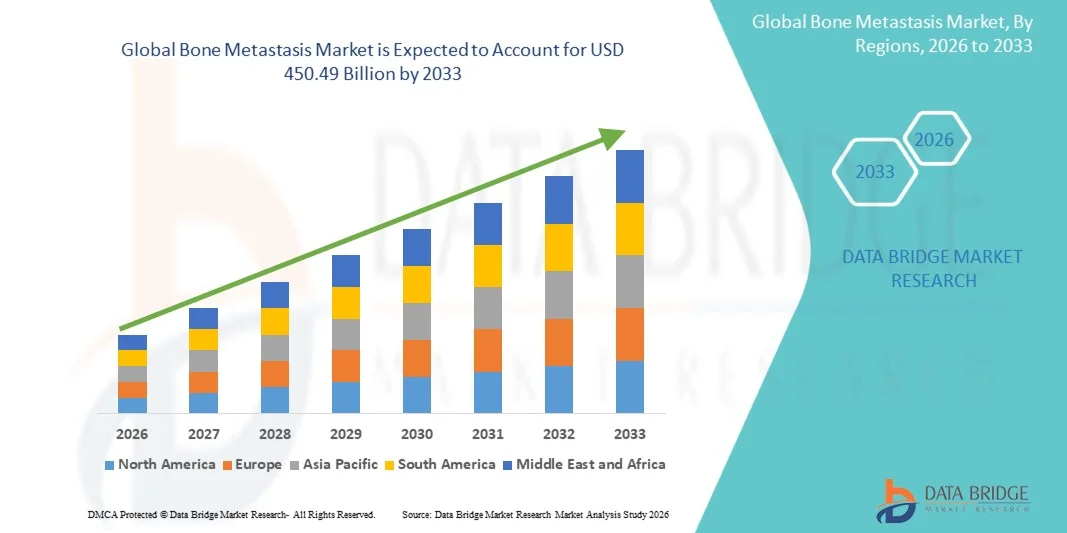
- As per Data Bridge Market Research analysis, the global bone metastasis market size was valued at USD 243.21 billion in 2025 and is expected to reach USD 450.49 billion by 2033, at a CAGR of 8.01% during the forecast period
- The market growth is largely fueled by the increasing prevalence of cancer and advancements in targeted therapies and diagnostic imaging, leading to improved detection and management of bone metastasis in both clinical and outpatient settings
- Furthermore, rising demand for minimally invasive procedures, personalized treatment approaches, and supportive care solutions is driving the adoption of Bone Metastasis treatments, thereby significantly boosting the industry's growth
Market Size & Forecast
- Global Market Value (2025): USD 243.21 billion
- Expected Market Value (2033): USD 450.49 billion
- Forecast CAGR (2026-2033): 8.01%
What are the Major Takeaways of the Bone Metastasis Market?
- Bone-targeted therapies, advanced radiopharmaceuticals, and minimally invasive surgical procedures are increasingly vital components of modern cancer management in both clinical and outpatient settings due to their enhanced efficacy, reduced side effects, and improved patient quality of life
- The escalating demand for bone metastasis market is primarily fueled by the growing prevalence of metastatic cancers, increasing geriatric population, and rising awareness of personalized and targeted treatment approaches
- North America dominated the bone metastasis market with the largest revenue share of 38.7% in 2025, characterized by advanced healthcare infrastructure, high R&D investments, and strong adoption of innovative therapies, with the U.S. experiencing substantial growth in Bone Metastasis treatments due to early adoption of targeted therapies and precision medicine
- Asia-Pacific is expected to be the fastest growing region in the Bone Metastasis market during the forecast period, driven by increasing cancer incidence, rising healthcare expenditures, and growing availability of advanced treatment modalities, particularly in China and India
- Imaging dominated with a revenue share of 51% in 2025, driven by the widespread use of X-rays, CT scans, MRI, and PET imaging in oncology workflows
Report Scope and Bone Metastasis Market Segmentation
|
Attributes |
Bone Metastasis Key Market Insights |
|
Segments Covered |
|
|
Countries Covered |
North America
Europe
Asia-Pacific
Middle East and Africa
South America
|
|
Key Market Players |
|
|
Market Opportunities |
|
|
Value Added Data Infosets |
In addition to the insights on market scenarios such as market value, growth rate, segmentation, geographical coverage, and major players, the market reports curated by the Data Bridge Market Research also include in-depth expert analysis, patient epidemiology, pipeline analysis, pricing analysis, and regulatory framework. |
What is the Key Trend in the Bone Metastasis Market?
“Rising Adoption of Minimally Invasive Surgical Techniques and Advanced Therapies”
- A significant and accelerating trend in the global bone metastasis market is the increasing adoption of minimally invasive surgical procedures combined with advanced therapeutic interventions. These techniques allow for improved patient outcomes, reduced recovery times, and lower complication rates
- For instance, the use of percutaneous vertebroplasty and radiofrequency ablation in patients with spinal metastases is becoming more common, enabling precise treatment of affected bone areas while minimizing damage to surrounding tissues. Similarly, targeted radiotherapy is being combined with immunotherapy in several clinical trials, showing improved pain management and slower disease progression
- Advancements in imaging technologies, such as MRI, PET-CT, and bone scintigraphy, are facilitating early detection, precise localization, and continuous monitoring of metastatic lesions, supporting personalized treatment planning. For instance, a recent study in Europe demonstrated that PET-CT-guided interventions significantly improved surgical accuracy in femoral metastasis cases
- The integration of multidisciplinary care, combining oncology, radiology, orthopedic surgery, and palliative care, is becoming increasingly important, providing patients with comprehensive management strategies tailored to individual needs
- There is also a growing focus on combination therapies, including bisphosphonates, denosumab, and newer bone-targeted radiopharmaceuticals, which are reshaping clinical practice by improving skeletal-related outcomes and overall quality of life
Bone Metastasis Market Dynamics
Driver
“Increasing Incidence of Cancer and Rising Patient Population”
- The growing prevalence of primary cancers such as breast, prostate, and lung cancer, which frequently metastasize to bone, is a significant driver for the Bone Metastasis market. The rising global cancer burden directly increases the demand for bone-targeted therapies and supportive interventions
- For instance, according to global oncology statistics, more than 70% of patients with advanced breast and prostate cancer develop bone metastases during the course of their disease, emphasizing the critical need for early diagnosis and treatment. Similarly, in the U.S., increasing awareness among oncologists regarding skeletal-related complications has led to higher adoption rates of advanced bone-targeted drugs
- Rising awareness among clinicians and patients about the importance of early intervention, routine screening, and palliative care is accelerating the adoption of bone metastasis therapies. In countries such as Germany and Japan, hospitals are implementing specialized bone metastasis clinics to provide timely treatment and improve patient outcomes
- Furthermore, increasing healthcare expenditure and access to specialized oncology centers are enabling more patients to receive advanced treatments, thereby expanding the market. For instance, government initiatives in China and India are funding oncology centers to improve access to both surgical and pharmacological interventions for bone metastasis
- Growing clinical research, development of new drugs, and regulatory approvals for therapies such as denosumab, radiopharmaceuticals, and targeted antibodies are also fueling market growth during the forecast period
Restraint/Challenge
“High Treatment Costs and Limited Access in Developing Regions”
- High costs associated with advanced bone metastasis treatments, including radiotherapy, surgery, targeted therapies, and immunotherapies, pose a key challenge to market expansion. In many cases, treatment costs can exceed tens of thousands of dollars per patient per year
- Patients in developing countries often face limited access to specialized oncology centers, imaging facilities, and advanced therapeutics, restricting adoption. For instance, in rural India and parts of Africa, delayed diagnosis and lack of bone metastasis treatment infrastructure result in suboptimal patient care and higher mortality rates
- In addition, the side effects of certain therapies, such as chemotherapy, radiopharmaceuticals, or bisphosphonate infusions, may limit patient compliance and treatment continuity, reducing overall efficacy. For instance, prolonged use of bisphosphonates can lead to osteonecrosis of the jaw, causing some patients to discontinue therapy
- The need for multidisciplinary care involving multiple specialists can increase treatment complexity, coordination challenges, and overall expenses, especially for elderly patients with comorbidities
- Addressing these challenges through government support, insurance coverage, training programs for healthcare providers, and expansion of oncology infrastructure in emerging regions will be crucial for sustained market growth. For instance, initiatives like India’s National Cancer Grid are helping standardize care and improve access to bone metastasis treatments across multiple states
How is the Bone Metastasis Market Segmented?
The market is segmented on the basis of Type, Product, Origin, Diagnosis, Treatment, and End User.
• By Type
On the basis of type, the Bone Metastasis market is segmented into Osteolytic Bone Metastasis, Osteoblastic Bone Metastasis, Mixed Bone Metastasis, and Others. The Osteolytic segment dominated the market with a revenue share of 46.3% in 2025, driven by its high prevalence in breast and lung cancer patients and associated skeletal complications. Hospitals and oncology centers prioritize osteolytic lesions for early detection and management to prevent fractures and bone pain. The segment benefits from well-established treatment protocols and insurance coverage. Rising incidence of breast and lung cancers, early diagnosis programs, and growing awareness of palliative care are fueling growth. Research and development in bone-targeted therapies strengthen adoption. Patient preference for minimally invasive monitoring also supports the segment. Clinical guidelines recommend continuous bone health evaluation. Advanced imaging technologies further aid early identification. Osteolytic lesions’ severity and impact on quality of life make it a high-priority area. Multi-disciplinary oncology teams are increasingly involved in treatment planning.
The Osteoblastic Bone Metastasis segment is expected to witness the fastest CAGR of 10.2% from 2026 to 2033, driven by rising prostate cancer prevalence and the increasing adoption of targeted therapies. Hospitals are implementing proactive screening and early intervention programs. Technological advancements in imaging and molecular diagnostics enable accurate detection. Emerging markets with growing oncology infrastructure are adopting osteoblastic lesion management. Clinical trials supporting new therapeutics are encouraging adoption. Awareness campaigns on skeletal complications are boosting demand. Cost-effective treatment protocols in smaller centers are supporting growth. Patient preference for bone-protective medications is increasing. Healthcare provider training enhances clinical decision-making. Regulatory approvals of bone-modifying agents further strengthen market growth.
• By Product
On the basis of product, the market is segmented into Pain Relievers, Bone-Building Medications, and Targeted Therapy Agents. Pain Relievers dominated with a revenue share of 48% in 2025, driven by high patient demand for symptom management and quality-of-life improvement. Hospitals and clinics prescribe analgesics for pain control across various bone metastasis types. The segment benefits from standardized dosing, regulatory approvals, and insurance reimbursement. Palliative care programs in oncology centers further strengthen adoption. Patient preference for non-invasive interventions supports growth. Pain management guidelines encourage consistent use in metastatic patients. Increasing awareness about opioid and non-opioid analgesics expands usage. Multi-disciplinary care approaches ensure integration of pain relief. Chronic skeletal complications drive repeated prescriptions. Telemedicine and home care programs are enabling wider access.
Targeted Therapy Agents are expected to witness the fastest CAGR of 11.5% from 2026 to 2033, driven by molecularly guided treatment approaches, personalized medicine, and adoption of bone-specific inhibitors. Clinical trials demonstrating efficacy are boosting hospital adoption. Advanced cancer centers prioritize personalized therapies for improved outcomes. Technological innovations in drug delivery enhance efficacy and reduce side effects. Growing investment in research and development supports rapid adoption. Regulatory approvals of new agents accelerate market penetration. Emerging regions are increasingly incorporating targeted therapies. Patient preference for tailored treatments fuels demand. Pharmaceutical companies are expanding product portfolios.
• By Origin
On the basis of origin, the Bone Metastasis market is segmented into Breast, Lung, Thyroid, Kidney, Prostate, and Others. Breast cancer-origin metastasis dominated with a revenue share of 35.7% in 2025, due to its high prevalence among women and the associated skeletal complications such as fractures, bone pain, and spinal cord compression. Oncology centers emphasize early detection and integrated bone management strategies to reduce morbidity. Hospitals commonly adopt a combination of drug therapy and surgical interventions for breast cancer-related bone metastases. Awareness campaigns and screening initiatives are increasing early diagnosis rates. Patient adherence to bone-protective agents like bisphosphonates and denosumab improves clinical outcomes. Research in metastasis prevention and bone-targeted therapies supports segment growth. Breast cancer patient volume continues to rise globally, especially in developed and emerging markets. Advanced imaging modalities such as PET-CT and MRI facilitate early detection. Integration of multidisciplinary care teams ensures optimal treatment planning. Insurance coverage and government health initiatives further support access to care. Clinical guidelines recommend regular monitoring of bone health in breast cancer patients.
Prostate cancer-origin metastasis is expected to witness the fastest CAGR of 9.8% from 2026 to 2033, driven by increasing prevalence in aging male populations and proactive bone health screening programs. Hospitals are integrating bone health monitoring into standard oncology protocols. Bone-targeted therapies are rapidly gaining adoption. Technological advancements in imaging, including MRI and nuclear scans, enhance early detection. Patient education and awareness campaigns on bone complications are supporting growth. Emerging oncology centers in Asia-Pacific and Latin America are expanding services for prostate cancer bone metastases. Preventive measures and early intervention protocols are becoming standard. Adoption of combination therapies improves survival rates. Clinical trials on novel therapeutics are boosting market confidence. Healthcare professionals are emphasizing quality-of-life management. Government reimbursement policies for bone-protective drugs encourage patient access.
• By Diagnosis
On the basis of diagnosis, the Bone Metastasis market is segmented into Biopsy, Blood Test, Imaging, and Others. Imaging dominated with a revenue share of 51% in 2025, driven by the widespread use of X-rays, CT scans, MRI, and PET imaging in oncology workflows. Imaging enables accurate detection, staging, and treatment monitoring of bone lesions. Hospitals and diagnostic centers prioritize imaging for precise planning of surgical or pharmacological interventions. Integration with robotic-assisted procedures enhances surgical precision. Imaging facilitates early identification of fractures, lesions, and structural compromise. Clinical guidelines recommend periodic imaging for high-risk oncology patients. Advanced imaging also allows monitoring of therapy response and progression. Technological innovations such as 3D reconstruction improve procedural accuracy. Hospitals invest in high-end imaging platforms to support multidisciplinary care. Early detection reduces hospitalization duration and improves patient outcomes. Patient preference for non-invasive monitoring supports segment growth.
Biopsy is expected to witness the fastest CAGR of 10.6% from 2026 to 2033, driven by minimally invasive procedures and adoption of molecular profiling for personalized treatment. Emerging oncology centers are expanding biopsy capabilities. Image-guided core needle biopsies are gaining popularity. Biopsies help determine lesion type, origin, and molecular markers. Adoption of personalized medicine strategies supports segment expansion. Patient demand for precise diagnosis without extensive surgery is growing. Regulatory approvals for molecular assays accelerate growth. Clinical training programs for biopsy techniques enhance adoption. Integration with electronic health records improves monitoring. Biopsy-based diagnostics enable early intervention and therapy optimization. Expansion of oncology networks in emerging markets drives demand.
• By Treatment
On the basis of treatment, the Bone Metastasis market is segmented into Drug Treatment, Osteoplasty, Orthopedic Fixation, Medical Therapies, Surgical Treatment, Medication, and Others. Drug Treatment dominated with a revenue share of 49% in 2025, driven by the widespread use of bisphosphonates, denosumab, and other bone-modifying agents. Hospitals rely on pharmacological management to reduce fracture risk and manage bone pain. Standardized treatment protocols, insurance coverage, and availability of generic drugs encourage adoption. Patient adherence, multidisciplinary care models, and integration with palliative care reinforce growth. Clinical guidelines recommend drug treatment for all high-risk patients. Hospital pharmacy programs ensure continuous supply. Home care programs support outpatient therapy. Advanced research in targeted therapies is strengthening clinical confidence. Drug therapy reduces hospitalization and surgical interventions. Patient quality-of-life improvements drive demand. Government and private healthcare initiatives promote access.
Surgical Treatment is expected to witness the fastest CAGR of 11.2% from 2026 to 2033, supported by minimally invasive orthopedic interventions, peripheral bone procedures, and image-guided surgery. Hospitals increasingly adopt robotic-assisted and navigation-based surgical techniques. Emerging centers are expanding surgical oncology capabilities. Patient preference for shorter recovery times drives adoption. Clinical trials on novel fixation devices enhance confidence. Cost-effective surgical solutions are gaining popularity in emerging regions. Post-operative care and rehabilitation services are improving patient outcomes. Multi-disciplinary surgical teams ensure precise interventions. Insurance coverage for surgical procedures supports uptake. Training programs for orthopedic surgeons boost procedural adoption. Technological advancements in implants and biomaterials strengthen segment growth. Hospital infrastructure expansion facilitates higher surgical volumes.
• By End User
On the basis of end user, the Bone Metastasis market is segmented into Hospitals, Clinics, Diagnostic Centers, and Ambulatory Surgical Centers. Hospitals dominated with a revenue share of 52% in 2025, driven by high patient volumes, advanced infrastructure, integrated oncology services, and availability of specialized orthopedic and radiology departments. Hospitals provide both pharmacological and surgical management of bone metastasis. Multi-disciplinary teams, advanced imaging, and robotic surgical support ensure quality care. Hospitals participate in clinical trials, driving adoption of new therapies. Insurance coverage and government health schemes improve accessibility. Hospitals have established procurement and supply chain systems. Rising incidence of cancer and bone complications drives high patient inflow. Patient preference for hospital-based treatment ensures continuous demand.
Ambulatory Surgical Centers are expected to witness the fastest CAGR of 10.5% from 2026 to 2033, supported by the growing preference for outpatient interventions, minimally invasive procedures, and cost-effective care. Centers offer convenient access, reduced hospital stay, and lower treatment costs. Expansion of outpatient oncology services in urban regions fuels growth. Advanced surgical techniques are enabling complex procedures in ambulatory settings. Insurance reimbursement policies encourage outpatient treatments. Patient awareness of shorter recovery times drives adoption. Integration of telemedicine and remote monitoring supports care. Emerging markets are seeing a rise in ambulatory surgical centers. Adoption of standardized protocols ensures patient safety. Cost-efficient operations support market expansion.
Which Region Holds the Largest Share of the Bone Metastasis Market?
- North America dominated the bone metastasis market with the largest revenue share of 38.7% in 2025, characterized by advanced healthcare infrastructure, high R&D investments, and strong adoption of innovative therapies. The U.S. leads the regional market, benefiting from early adoption of targeted therapies, precision medicine, and well-established oncology treatment centers
- For instance, several U.S.-based cancer centers are implementing advanced radiopharmaceutical therapies and combination regimens for bone metastasis, improving patient survival rates and quality of life. Similarly, clinical trials focusing on novel bone-targeted monoclonal antibodies and immunotherapy combinations have accelerated treatment options for metastatic patients
- The region’s robust healthcare reimbursement policies and government funding for oncology research further enhance market growth, ensuring broader patient access to advanced treatments
U.S. Bone Metastasis Market Insight
The U.S. bone metastasis market captured the largest revenue share within North America in 2025, driven by a strong focus on precision medicine, early detection programs, and the adoption of targeted therapies for breast, prostate, and lung cancers—the primary sources of bone metastasis. For instance, hospitals in the U.S. are increasingly using advanced imaging modalities such as PET-CT and MRI-guided interventions to detect skeletal lesions early, enabling timely therapeutic interventions. Similarly, specialized bone metastasis clinics are implementing multidisciplinary treatment strategies combining surgical, radiotherapeutic, and pharmacologic approaches for better patient outcomes. The growing investment in oncology R&D and the launch of innovative drugs like denosumab and bone-targeted radiopharmaceuticals are contributing significantly to market expansion. Increased patient awareness, government-sponsored screening programs, and robust healthcare infrastructure collectively support high treatment penetration and market growth in the U.S.
Europe Bone Metastasis Market Insight
The Europe bone metastasis market is projected to expand at a substantial CAGR during the forecast period, primarily driven by strong regulatory support, advanced healthcare systems, and a rising prevalence of metastatic cancers. For instance, leading European oncology centers in Germany and France are adopting stereotactic body radiotherapy (SBRT) and minimally invasive surgical interventions for patients with spinal and long-bone metastases. Similarly, combination therapies involving bisphosphonates and targeted antibodies are increasingly used to manage skeletal-related complications. The rise in cancer awareness campaigns and the availability of national health insurance schemes facilitate broader access to bone metastasis treatments. European countries are also investing in research collaborations and clinical trials, promoting the development of next-generation therapies for metastatic bone disease.
U.K. Bone Metastasis Market Insight
The U.K. bone metastasis market is anticipated to grow at a noteworthy CAGR, supported by advanced oncology centers, growing adoption of palliative care strategies, and increased public awareness of bone-related complications in cancer patients. For instance, NHS-funded programs are focusing on integrating multidisciplinary care, combining oncology, radiology, and orthopedic interventions to improve patient management. Similarly, research institutions in the U.K. are conducting clinical trials on bone-targeted radiopharmaceuticals and combination therapies to improve skeletal outcomes. The increasing incidence of breast and prostate cancer in the U.K., coupled with early diagnosis and improved patient education, is driving demand for effective bone metastasis treatments.
Germany Bone Metastasis Market Insight
The Germany bone metastasis market is expected to expand at a considerable CAGR, fueled by strong healthcare infrastructure, high R&D spending, and adoption of advanced therapeutic modalities. For instance, German oncology centers are employing a combination of surgical resection, radiotherapy, and pharmacological agents to manage metastatic lesions, particularly in the spine and pelvis. Similarly, ongoing research in Germany focuses on bone-targeted monoclonal antibodies and radiopharmaceuticals to reduce skeletal-related events. Germany’s emphasis on personalized medicine, high patient awareness, and government-backed healthcare initiatives are accelerating adoption rates of innovative bone metastasis therapies.
Asia-Pacific Bone Metastasis Market Insight
The Asia-Pacific bone metastasis market is poised to grow at the fastest CAGR during the forecast period, driven by increasing cancer incidence, rising healthcare expenditures, and greater availability of advanced treatment modalities in countries such as China and India. For instance, specialized oncology hospitals in China and India are integrating minimally invasive surgeries with bone-targeted therapies to improve patient outcomes. Similarly, the expansion of private healthcare facilities and government programs supporting cancer treatment access are increasing treatment adoption. The growing patient population, urbanization, and enhanced diagnostic capabilities are further contributing to the rapid expansion of the bone metastasis market across the region.
Japan Bone Metastasis Market Insight
The Japan bone metastasis market is gaining momentum due to the country’s aging population, high cancer prevalence, and focus on technologically advanced therapeutic approaches. For instance, Japanese medical centers are utilizing image-guided surgeries and novel radiopharmaceuticals for metastatic lesions, while ongoing research focuses on immunotherapy combinations for improved bone outcomes. High healthcare spending, early adoption of precision medicine, and structured palliative care programs are supporting market growth in Japan.
China Bone Metastasis Market Insight
The China bone metastasis market accounted for the largest market revenue share in Asia-Pacific in 2025, supported by increasing healthcare infrastructure, rising cancer prevalence, and government initiatives promoting advanced treatments. For instance, oncology hospitals in urban centers are expanding access to radiotherapy, minimally invasive surgeries, and bone-targeted therapies, while clinical research programs are being conducted in collaboration with international institutions. China’s investment in oncology R&D, expanding middle-class patient base, and increasing healthcare awareness are key factors driving market growth.
Which are the Top Companies in Bone Metastasis Market?
The Bone Metastasis industry is primarily led by well-established companies, including:
• Novartis (Switzerland)
• Johnson & Johnson (U.S.)
• Pfizer (U.S.)
• Roche (Switzerland)
• Bayer (Germany)
• Bristol-Myers Squibb (U.S.)
• Astellas Pharma (Japan)
• Ipsen (France)
• Sanofi (France)
• Eli Lilly and Company (U.S.)
• Takeda Pharmaceutical (Japan)
• Medtronic (U.S.)
• Stryker (U.S.)
• Kyowa Kirin (Japan)
• Spectrum Pharmaceuticals (U.S.)
• Incyte Corporation (U.S.)
• Radius Health (U.S.)
• Hologic (U.S.)
• Bone Therapeutics (Belgium)
What are Latest Developments in Global Bone Metastasis Market?
- In December 2021, Zetagen Therapeutics received a Breakthrough Device designation from the U.S. FDA’s Center for Devices and Radiological Health for its ZetaMet technology, a novel therapeutic approach targeting metastatic bone lesions and related conditions, aiming to speed development and regulatory review for bone metastasis treatment
- In January 2023, Amgen received U.S. FDA approval for an innovative therapy targeting bone metastasis in breast cancer patients, expanding treatment options for a patient population with limited late‑stage therapies and reinforcing its leadership in bone metastasis oncology
- In March 2024, Sandoz disclosed that the U.S. FDA approved Wyost (denosumab‑bbdz) to prevent skeletal‑related events in patients with multiple myeloma and bone metastases from solid tumors, marking an important biosimilar entry into bone metastasis supportive care
- In March 2025, the U.S. FDA approved Stoboclo and Osenvelt (denosumab‑bmwo) — biosimilars referencing the RANKL‑targeting denosumab — for all indications covered by the reference product, including the prevention of skeletal‑related events in patients with bone metastases, increasing treatment accessibility and options
- In March 2025, Novartis announced a strategic collaboration with Progenics Pharmaceuticals to co‑develop and commercialize PSMA‑targeted radiopharmaceutical therapies for cancers characterized by bone‑dominant metastases, aiming to broaden therapeutic approaches in metastatic disease management
- In June 2025, collaborations were expanded between major players, including Roche partnering with Ipca Laboratories to accelerate development and supply of radiopharmaceuticals and companion diagnostics targeting bone metastases, aiming to extend access particularly in emerging markets
- In June 2025, clinical development in the bone metastasis pipeline increased with a Phase Ib/IIa multicenter trial announced by Shenyang Sunshine Pharmaceutical Co. Ltd. evaluating SSS40 injection in patients with moderate‑to‑severe bone metastatic cancer pain, reflecting active therapeutic innovation

- Interactive Data Analysis Dashboard
- Company Analysis Dashboard for high growth potential opportunities
- Research Analyst Access for customization & queries
- Competitor Analysis with Interactive dashboard
- Latest News, Updates & Trend analysis
- Harness the Power of Benchmark Analysis for Comprehensive Competitor Tracking
Data collection and base year analysis are done using data collection modules with large sample sizes. The stage includes obtaining market information or related data through various sources and strategies. It includes examining and planning all the data acquired from the past in advance. It likewise envelops the examination of information inconsistencies seen across different information sources. The market data is analysed and estimated using market statistical and coherent models. Also, market share analysis and key trend analysis are the major success factors in the market report. To know more, please request an analyst call or drop down your inquiry.
The key research methodology used by DBMR research team is data triangulation which involves data mining, analysis of the impact of data variables on the market and primary (industry expert) validation. Data models include Vendor Positioning Grid, Market Time Line Analysis, Market Overview and Guide, Company Positioning Grid, Patent Analysis, Pricing Analysis, Company Market Share Analysis, Standards of Measurement, Global versus Regional and Vendor Share Analysis. To know more about the research methodology, drop in an inquiry to speak to our industry experts.
Data Bridge Market Research is a leader in advanced formative research. We take pride in servicing our existing and new customers with data and analysis that match and suits their goal. The report can be customized to include price trend analysis of target brands understanding the market for additional countries (ask for the list of countries), clinical trial results data, literature review, refurbished market and product base analysis. Market analysis of target competitors can be analyzed from technology-based analysis to market portfolio strategies. We can add as many competitors that you require data about in the format and data style you are looking for. Our team of analysts can also provide you data in crude raw excel files pivot tables (Fact book) or can assist you in creating presentations from the data sets available in the report.













