


Bone Substitutes Market Overview
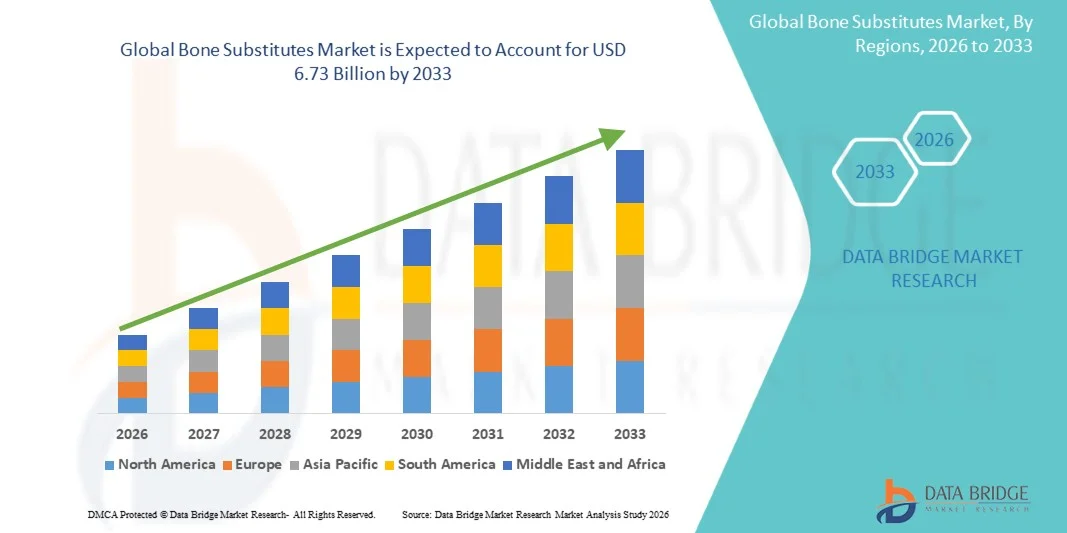
the Bone Substitutes Market was valued at USD 3.92 billion in 2025 and is projected to reach USD 6.73 billion by 2033, growing at a CAGR of 7.00% from 2026 to 2033. The market is witnessing steady growth driven by the increasing prevalence of orthopedic disorders, rising number of spinal fusion and joint reconstruction procedures, and growing demand for advanced biomaterials in bone regeneration applications.
The rising incidence of trauma injuries, osteoporosis, and degenerative bone diseases worldwide, along with the growing aging population, is encouraging hospitals and orthopedic surgeons to adopt synthetic and biologic bone graft substitutes for improved surgical outcomes. Technological advancements in ceramic-based biomaterials, bioactive glass, stem cell-based grafts, and 3D-printed bone scaffolds are further accelerating market expansion by providing enhanced osteoconductive and osteoinductive properties, reduced donor site complications, and faster bone healing in orthopedic, dental, and craniomaxillofacial procedures.
Key Market Trends & Insights
- North America dominated the Bone Substitutes Market with the largest revenue share of 38.46% in 2025, supported by a high volume of orthopedic procedures, advanced healthcare infrastructure, and strong adoption of synthetic graft materials.
- The Synthetic segment led the market with a 44.18% share in 2025, driven by increasing preference for biocompatible materials, lower risk of disease transmission, and growing adoption in orthopedic and spinal fusion procedures.
- Asia-Pacific is expected to be the fastest-growing region at a CAGR of 7.5% from 2026 to 2033, fueled by rising healthcare expenditures, expanding orthopedic patient population, and growing medical tourism in China, India, and Japan.
- Allografts are the fastest-growing product type, projected to register a CAGR of 7.4%, reflecting the surge in demand for natural bone-derived graft materials in reconstructive and spinal procedures.
- The Spinal Fusion segment dominated the application category with a 39.84% revenue share in 2025, led by the growing prevalence of spinal disorders, degenerative disc diseases, and increasing demand for minimally invasive spine surgeries.
- Ceramic-Based deployment accounted for 36.92% of the market, preferred by its superior osteoconductive properties, biocompatibility, and extensive application across orthopedic and dental surgeries.
- The Growth Factor-Based segment is the fastest-growing material type category, with a CAGR of 7.6%, driven by increasing adoption of regenerative medicine technologies and biologically active graft solutions.
Market Size & Forecast
- Global Market Value (2025): USD 3.92 Billion
- Expected Market Value (2033): USD 6.73 Billion
- Forecast CAGR (2026–2033): 7.00%
- Leading Region in 2025: North America
- Fastest Growing Region: Asia Pacific
Report Scope and Bone Substitutes Market Segmentation
|
Attributes |
Bone Substitutes Key Market Insights |
|
Segments Covered |
|
|
Countries Covered |
North America · U.S. · Canada · Mexico Europe · Germany · France · U.K. · Netherlands · Switzerland · Belgium · Russia · Italy · Spain · Turkey · Rest of Europe Asia-Pacific · China · Japan · India · South Korea · Singapore · Malaysia · Australia · Thailand · Indonesia · Philippines · Rest of Asia-Pacific Middle East and Africa · Saudi Arabia · U.A.E. · South Africa · Egypt · Israel · Rest of Middle East and Africa South America · Brazil · Argentina · Rest of South America |
|
Key Market Players |
· Medtronic (Ireland) · Stryker (U.S.) · Zimmer Biomet (U.S.) · DePuy Synthes (U.S.) · Orthofix Medical Inc. (U.S.) · Integra LifeSciences Corporation (U.S.) · Bioventus LLC (U.S.) · Xtant Medical Holdings, Inc. (U.S.) · Bone Biologics Corporation (U.S.) · AlloSource (U.S.) · Geistlich Pharma AG (Switzerland) · BONESUPPORT AB (Sweden) · Biomatlante (France) · Biocomposites Ltd (U.K.) · Teknimed (France) · BioHorizons, Inc. (U.S.) · Dentsply Sirona Inc. (U.S.) · ZimVie Inc. (U.S.) · Smith+Nephew (U.K.) · Exactech, Inc. (U.S.) |
|
Market Opportunities |
· Rising adoption of 3D-printed patient-specific bone graft substitutes · Increasing demand for synthetic and bioactive bone substitutes in minimally invasive spinal fusion surgeries · Growing investments in regenerative medicine and stem cell-based bone graft technologies |
|
Value Added Data Infosets |
In addition to the insights on market scenarios such as market value, growth rate, segmentation, geographical coverage, and major players, the market reports curated by the Data Bridge Market Research also include in-depth expert analysis, patient epidemiology, pipeline analysis, pricing analysis, and regulatory framework. |
Bone Substitutes Market Trends
Trend: Rising Adoption of Bioactive and Regenerative Bone Graft Materials
Healthcare providers are increasingly adopting bioactive and regenerative bone substitutes to improve bone healing, reduce surgical complications, and enhance long-term implant stability across orthopedic and dental applications. The integration of advanced biomaterials such as bioactive glass, calcium phosphate ceramics, and stem cell-enhanced grafts enables superior osteoconductive and osteoinductive performance compared to conventional grafting techniques. Hospitals and specialty clinics are similarly utilizing synthetic substitutes to minimize donor site morbidity and infection risks, while 3D-printing technologies create customized graft structures that closely replicate natural bone architecture. For instance, in March 2024, Orthofix Medical launched the OsteoCove bioactive synthetic graft, designed to support bone regeneration in spine and orthopedic procedures through advanced osteoconductive properties.
Bone Substitutes Market Dynamics
Key Market Driver: Increasing Number of Orthopedic and Spinal Fusion Procedures
The rising prevalence of osteoporosis, traumatic injuries, and degenerative bone disorders has created substantial demand for advanced bone substitutes that support bone regeneration and structural stability in complex surgical procedures. Hospitals, orthopedic centers, and spine surgeons are increasingly utilizing synthetic grafts and biologics as essential components of treatment protocols, reducing dependence on autografts while improving patient recovery outcomes. Growing adoption of minimally invasive orthopedic procedures is further accelerating product demand, enabling faster healing, lower infection risks, and improved surgical precision across aging patient populations globally. For instance, in January 2025, Stryker expanded its orthopedic biologics portfolio with enhanced synthetic bone graft solutions targeting spinal fusion and trauma reconstruction applications across major healthcare markets..
Key Restraint/Challenge: High Cost and Limited Reimbursement for Advanced Bone Substitutes
A significant restraint in the Bone Substitutes Market is the high treatment cost associated with advanced graft materials and regenerative biomaterials used in orthopedic and dental reconstruction procedures. Modern bone substitute products incorporate sophisticated biomaterial engineering, growth factors, and cell-based technologies, requiring substantial investment in product development, clinical validation, and regulatory approvals. The overall financial burden extends to surgical implementation costs, specialized handling requirements, and limited reimbursement support in several developing healthcare systems, making adoption challenging for smaller hospitals and cost-sensitive patient groups.
For instance, in September 2024, several European healthcare providers reported reimbursement limitations for premium bioactive bone graft products, reflecting ongoing affordability challenges impacting wider adoption in regional healthcare facilities.
Key Market Opportunity: Expansion of 3D-Printed and Stem Cell-Based Bone Regeneration Technologies
The advancement of 3D-printing and stem cell-based regenerative technologies presents a significant market opportunity. Advanced scaffold manufacturing platforms can produce patient-specific graft structures, improve biological integration, and support complex bone defect reconstruction with enhanced precision and healing efficiency. The development of biomimetic materials and tissue-engineered graft substitutes is further expanding access to personalized orthopedic treatments, opening growth opportunities across trauma care, dental reconstruction, and spinal surgery applications in emerging and developed healthcare markets. For instance, in June 2024, CollPlant partnered with regenerative medicine developers to advance 3D-bioprinted bone tissue solutions intended for future orthopedic and reconstructive surgery applications.
Bone Substitutes Market Scope
The bone substitutes market is segmented on the basis of product, application, material type, and end user.
- By Product
On the basis of product, the Bone Substitutes Market is segmented into autotransplantation, allografts, synthetic, and xenotrans plantation. The Synthetic segment dominated the market with a 44.18% share in 2025, owing to increasing preference for biocompatible materials, lower risk of disease transmission, and growing adoption in orthopedic and spinal fusion procedures. Synthetic bone substitutes are widely utilized due to their consistent availability and ability to mimic natural bone regeneration properties. These materials also eliminate complications associated with donor site harvesting in autografts. Continuous advancements in calcium phosphate ceramics, bioactive glass, and composite biomaterials are further improving product effectiveness. Increasing use in trauma repair, dental grafting, and minimally invasive surgeries is strengthening market demand. Their scalability, cost efficiency, and enhanced osteoconductive performance continue to support segment dominance globally.
The Allografts segment is projected to register the fastest growth at a CAGR of 7.4% from 2026 to 2033, driven by rising demand for natural bone-derived graft materials in reconstructive and spinal procedures. These grafts provide excellent structural support and biological compatibility for complex orthopedic surgeries. Increasing availability of processed donor tissues through tissue banks is supporting wider adoption across hospitals and specialty clinics. Technological advancements in sterilization and preservation techniques are improving graft safety and clinical outcomes. Growing aging populations and increasing incidence of bone degenerative disorders are further accelerating demand. Expanding acceptance of biologic grafting solutions among surgeons is also contributing to rapid segment growth worldwide.
- By Application
On the basis of application, the Bone Substitutes Market is segmented into spinal fusion, joint reconstruction, foot and ankle, and others. The Spinal Fusion segment dominated the market with a 39.84% revenue share in 2025, driven by the growing prevalence of spinal disorders, degenerative disc diseases, and increasing demand for minimally invasive spine surgeries. Bone substitutes are extensively used in spinal fusion procedures to enhance bone healing and provide structural stability. Rising geriatric populations and increasing incidence of osteoporosis-related spinal conditions are significantly supporting procedure volumes. Technological advancements in bioactive graft materials and regenerative biologics are improving fusion success rates and patient outcomes. Hospitals and orthopedic centers are increasingly adopting synthetic and biologic graft substitutes to reduce surgical complications and recovery times. Strong investment in spinal care infrastructure continues to reinforce the segment’s market leadership.
The Joint Reconstruction segment is expected to witness the fastest growth at a CAGR of 7.1% from 2026 to 2033, fueled by rising cases of osteoarthritis, sports injuries, and joint degeneration globally. Increasing demand for hip and knee replacement surgeries is driving the use of advanced bone graft substitutes in reconstructive procedures. Bone substitutes help improve implant fixation, bone regeneration, and long-term surgical performance. Growing awareness regarding early orthopedic intervention and mobility restoration is further accelerating adoption. Continuous improvements in biomaterial engineering and customized graft technologies are enhancing procedural outcomes. Expanding healthcare access and rising orthopedic procedure volumes in emerging economies are also supporting segment expansion.
- By Material Type
On the basis of material type, the Bone Substitutes Market is segmented into ceramic-based, polymer-based, metal-based, composite materials, growth factor-based, and bioactive glasses. The Ceramic-Based segment dominated the market with a 36.92% share in 2025, owing to its superior osteoconductive properties, biocompatibility, and extensive application across orthopedic and dental surgeries. Ceramic materials such as hydroxyapatite and tricalcium phosphate closely resemble natural bone minerals, making them highly suitable for bone regeneration procedures. These substitutes are widely used in spinal fusion, trauma repair, and dental grafting due to their structural stability and safety profile. Increasing advancements in porous ceramic scaffold technologies are further enhancing bone integration and healing performance. Hospitals and surgeons continue to prefer ceramic substitutes because of their low immunogenicity and predictable clinical outcomes. Strong demand for synthetic biomaterials in minimally invasive orthopedic procedures is sustaining segment dominance globally.
The Growth Factor-Based segment is projected to register the fastest growth at a CAGR of 7.6% from 2026 to 2033, driven by increasing adoption of regenerative medicine technologies and biologically active graft solutions. These materials stimulate cellular proliferation and accelerate natural bone healing processes in complex orthopedic surgeries. Rising clinical success of bone morphogenetic proteins and other biologic agents is supporting broader use in spinal fusion and trauma reconstruction procedures. Continuous research activities and product innovations are improving efficacy and reducing treatment complications. Growing demand for advanced regenerative therapies in aging populations is further strengthening segment growth. Expanding investments in tissue engineering and personalized medicine applications are also accelerating market opportunities worldwide.
- By End User
On the basis of end user, the Bone Substitutes Market is segmented into hospitals and specialty clinics. The Hospitals segment dominated the market with a 61.47% share in 2025, supported by the high volume of orthopedic, spinal fusion, and trauma surgeries performed in multispecialty healthcare facilities. Hospitals possess advanced surgical infrastructure and specialized orthopedic departments capable of handling complex reconstructive procedures. These facilities also benefit from greater access to advanced biomaterials, regenerative graft technologies, and skilled healthcare professionals. Increasing hospitalization rates associated with trauma injuries and age-related bone disorders are further driving demand for bone substitute products. Government healthcare investments and rising adoption of minimally invasive orthopedic procedures continue to strengthen hospital-based treatment volumes. Their strong reimbursement capabilities and integrated postoperative care services maintain segment leadership globally.
The Specialty Clinics segment is anticipated to witness the fastest growth at a CAGR of 6.8% from 2026 to 2033, driven by increasing preference for focused orthopedic and dental care services. Specialty clinics offer personalized treatment approaches, shorter waiting times, and cost-effective surgical solutions for bone regeneration procedures. Growing adoption of outpatient orthopedic surgeries and minimally invasive interventions is significantly supporting demand in these facilities. Technological advancements in imaging, implant planning, and regenerative therapies are improving procedural efficiency in specialty settings. Rising patient awareness regarding specialized musculoskeletal care is further accelerating clinic visits and treatment adoption. Expanding private healthcare investments and increasing availability of advanced orthopedic services are also contributing to rapid segment growth.
Bone Substitutes Market Regional Analysis
North America dominated the Bone Substitutes Market with the largest revenue share of 38.46% in 2025, supported by a high volume of orthopedic procedures, advanced healthcare infrastructure, and strong adoption of synthetic graft materials. The region also benefits from strong adoption of synthetic graft technologies, increasing investments in regenerative medicine, and growing utilization of bone substitutes across orthopedic, dental, and trauma repair applications. Rising prevalence of osteoporosis, sports injuries, and degenerative bone disorders continues to drive procedural demand across hospitals and specialty clinics. Increasing focus on minimally invasive surgeries and technologically advanced regenerative biomaterials continues to strengthen North America’s leadership position in the global market.
U.S. Bone Substitutes Market Insight
The U.S. bone substitutes market is witnessing strong growth due to rising prevalence of orthopedic disorders, increasing spinal fusion and joint replacement procedures, and growing adoption of advanced regenerative biomaterials. The country’s well-established healthcare infrastructure, along with increasing use of synthetic grafts, bioactive glass materials, and stem cell-based bone regeneration technologies, is driving demand across orthopedic, dental, and trauma care applications. In addition, growing emphasis on minimally invasive surgeries and faster patient recovery outcomes is accelerating bone substitute adoption across hospitals, specialty clinics, and ambulatory surgical centers.
Europe Bone Substitutes Market Insight
The Europe bone substitutes market remains a major contributor to global revenue, driven by strong healthcare infrastructure, technological innovation, and rising demand for advanced orthopedic reconstruction procedures. The widespread use of synthetic graft materials and biologic bone substitutes in spinal fusion, dental grafting, and trauma surgeries is supporting market expansion across the region. Increasing investments in regenerative medicine technologies, coupled with growing aging populations and rising incidence of osteoporosis-related disorders, continue to enhance the adoption of bone substitutes throughout Europe.
U.K. Bone Substitutes Market Insight
The U.K. bone substitutes market is experiencing steady growth, supported by rising adoption of regenerative biomaterials in orthopedic surgeries, spinal procedures, and dental reconstruction applications. Increasing investments in advanced surgical technologies and growing demand for minimally invasive and cost-effective treatment solutions are contributing to market growth. Furthermore, integration of bioactive ceramics, stem cell-based graft technologies, and tissue engineering innovations is improving clinical outcomes and treatment efficiency, positioning the U.K. as a key innovation hub in the bone substitutes industry.
Germany Bone Substitutes Market Insight
The Germany bone substitutes market is expanding steadily due to the country’s advanced healthcare infrastructure, strong medical device manufacturing capabilities, and increasing adoption of next-generation regenerative biomaterials. Hospitals, orthopedic centers, and research institutions are increasingly utilizing bone substitutes for trauma repair, spinal fusion, and reconstructive surgeries. Continuous advancements in ceramic biomaterials, bioactive graft technologies, and 3D-printed bone scaffolds, along with strong government focus on healthcare innovation and surgical efficiency, are further driving market growth in Germany.
Asia-Pacific Bone Substitutes Market Insight
The Asia-Pacific bone substitutes market is expected to witness rapid growth, driven by increasing healthcare expenditures, expanding orthopedic patient populations, and rising investments in advanced surgical infrastructure across countries such as China, India, and Japan. Growing awareness regarding bone regeneration therapies, rising adoption of synthetic graft technologies, and increasing demand for affordable and effective orthopedic treatment solutions are supporting regional market expansion. In addition, the growing presence of medical device manufacturers and rising incidence of trauma injuries and osteoporosis are accelerating bone substitute adoption across hospitals and specialty clinics.
Japan Bone Substitutes Market Insight
The Japan bone substitutes market is witnessing consistent growth due to rising investments in regenerative medicine technologies, orthopedic innovation, and advanced spinal surgery procedures. Healthcare providers, research institutes, and orthopedic centers are increasingly adopting synthetic graft materials and biologic bone substitutes for trauma reconstruction, dental grafting, and joint replacement applications. Moreover, increasing integration of bioactive materials and the country’s focus on advanced healthcare solutions and aging population care are further contributing to market growth.
China Bone Substitutes Market Insight
The China bone substitutes market is growing rapidly, driven by increasing aging populations, expanding healthcare infrastructure, and rising government focus on orthopedic care and regenerative medicine development. Growing adoption of synthetic and bioactive bone graft materials across orthopedic, dental, and trauma surgery applications is significantly boosting market demand. In addition, rising investments in medical biomaterials research, increasing awareness regarding advanced bone regeneration treatments, and rapid healthcare modernization are positioning China as one of the fastest-growing markets for bone substitutes globally.
Bone Substitutes Market Share
The Bone Substitutes industry is primarily led by well-established companies, including:
- Medtronic (Ireland)
- Stryker (U.S.)
- Zimmer Biomet (U.S.)
- DePuy Synthes (U.S.)
- Orthofix Medical Inc. (U.S.)
- Integra LifeSciences Corporation (U.S.)
- Bioventus LLC (U.S.)
- Xtant Medical Holdings, Inc. (U.S.)
- Bone Biologics Corporation (U.S.)
- AlloSource (U.S.)
- Geistlich Pharma AG (Switzerland)
- BONESUPPORT AB (Sweden)
- Biomatlante (France)
- Biocomposites Ltd (U.K.)
- Teknimed (France)
- BioHorizons, Inc. (U.S.)
- Dentsply Sirona Inc. (U.S.)
- ZimVie Inc. (U.S.)
- Smith+Nephew (U.K.)
- Exactech, Inc. (U.S.)
Latest Developments in Bone Substitutes Market
- In April 2025, CGBIO, a bio-regenerative medicine company, announced that its NOVOSIS PUTTY bone graft substitute received U.S. FDA Investigational Device Exemption (IDE) approval for pivotal spinal fusion clinical trials. The product incorporates rhBMP-2 technology designed to improve bone regeneration and accelerate fusion outcomes in orthopedic procedures. This milestone strengthens the company’s expansion into the U.S. spinal bone graft market and highlights increasing innovation in biologic bone substitute technologies
- In April 2025, BONESUPPORT, a leading orthobiologics company, announced the FDA submission for CERAMENT® V, an antibiotic-eluting bone graft substitute intended for the treatment of bone infections. The product combines bone regeneration capabilities with localized antibiotic delivery to improve infection management and bone healing outcomes. This development reflects the growing demand for multifunctional bone substitute materials in orthopedic and trauma surgery applications
- In March 2025, Elute announced FDA clearance for BonVie+, a synthetic resorbable bone void filler developed for controlled resorption and replacement by natural bone tissue. The product is designed to overcome limitations associated with traditional bone cement and calcium sulfate graft materials by supporting predictable bone restoration and improved healing performance. The launch demonstrates the increasing focus on advanced synthetic biomaterials within the Bone Substitutes Market
- In November 2024, Acuitive Technologies received FDA 510(k) clearance for CITREPORE™, a synthetic bioactive bone void filler developed using its proprietary CITREGEN® biomaterial platform. The product features highly porous architecture and bioactive properties intended to improve bone healing and tissue integration in orthopedic procedures. This clearance highlights ongoing advancements in bioactive synthetic graft technologies designed to enhance regenerative outcomes
- In May 2024, Biogennix announced FDA 510(k) clearance for expanded indications of its Agilon Moldable and Morpheus Moldable bone graft products for use in intervertebral spinal fusion procedures. The products utilize biomimetic architecture and hydroxycarbanoapatite surface technology to improve cellular healing and graft performance. This approval supports the growing use of moldable synthetic bone substitutes in spinal and orthopedic reconstruction surgeries

- Interactive Data Analysis Dashboard
- Company Analysis Dashboard for high growth potential opportunities
- Research Analyst Access for customization & queries
- Competitor Analysis with Interactive dashboard
- Latest News, Updates & Trend analysis
- Harness the Power of Benchmark Analysis for Comprehensive Competitor Tracking
Data collection and base year analysis are done using data collection modules with large sample sizes. The stage includes obtaining market information or related data through various sources and strategies. It includes examining and planning all the data acquired from the past in advance. It likewise envelops the examination of information inconsistencies seen across different information sources. The market data is analysed and estimated using market statistical and coherent models. Also, market share analysis and key trend analysis are the major success factors in the market report. To know more, please request an analyst call or drop down your inquiry.
The key research methodology used by DBMR research team is data triangulation which involves data mining, analysis of the impact of data variables on the market and primary (industry expert) validation. Data models include Vendor Positioning Grid, Market Time Line Analysis, Market Overview and Guide, Company Positioning Grid, Patent Analysis, Pricing Analysis, Company Market Share Analysis, Standards of Measurement, Global versus Regional and Vendor Share Analysis. To know more about the research methodology, drop in an inquiry to speak to our industry experts.
Data Bridge Market Research is a leader in advanced formative research. We take pride in servicing our existing and new customers with data and analysis that match and suits their goal. The report can be customized to include price trend analysis of target brands understanding the market for additional countries (ask for the list of countries), clinical trial results data, literature review, refurbished market and product base analysis. Market analysis of target competitors can be analyzed from technology-based analysis to market portfolio strategies. We can add as many competitors that you require data about in the format and data style you are looking for. Our team of analysts can also provide you data in crude raw excel files pivot tables (Fact book) or can assist you in creating presentations from the data sets available in the report.













