What is the Bonsai Market Size and Growth Rate?
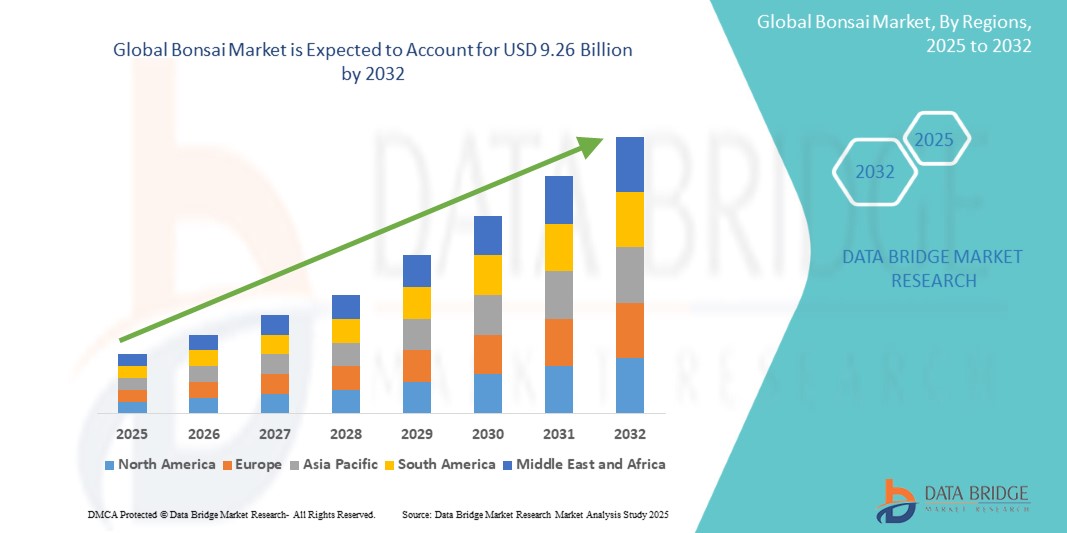
- As per Data Bridge Market Research Analysis the global bonsai market was valued at USD 5.63 billion in 2024 and is expected to reach USD 9.26 billion by 2032
- During the forecast period of 2025 to 2032 the market is likely to grow at a CAGR of 6.40% primarily driven by the increasing demand for aesthetic and decorative plants
- This growth is driven by factors such as rising interest in home gardening, the growing trend of indoor plants, and the increasing popularity of bonsai as a form of art and relaxation
Market Size & Forecast
- Global Market Value (2024): USD USD 5.63 Billion
- Expected Market Value (2032): USD 9.26 Billion
- Forecast CAGR (2025–2032): 6.40%
What are the Major Takeaways of Bonsai Market?
- The bonsai market has shown consistent growth, driven by the increasing popularity of these miniature trees across various regions
- Bonsai trees, originally from Japan, have become symbols of art, patience, and relaxation. They are now widely appreciated globally, especially in urban areas where space is limited but the desire for greenery is high
- The growing trend in home gardening has significantly contributed to the bonsai market’s expansion. Many people are now choosing bonsai as a hobby, particularly because these trees can be grown in small spaces such as apartments or offices
- Indoor plants, including bonsai, are highly sought after due to their aesthetic appeal and the belief that they improve indoor air quality
- For instance, in cities such as New York and Tokyo, indoor plant shops report a surge in bonsai sales as more people look for ways to incorporate nature into their homes
- Online platforms have made it easier to buy bonsai trees, tools, and accessories, catering to both beginners and experienced enthusiasts. Websites such as Etsy and specialized bonsai retailers have helped increase global accessibility to high-quality bonsai products
- Many people today consider bonsai cultivation a form of meditation. The process of pruning and shaping the tree is seen as a relaxing, therapeutic activity. This shift toward wellness-oriented hobbies has increased interest in bonsai
- With increasing awareness of the environmental and mental health benefits of engaging with nature, the bonsai market is positioned to grow even further
- For instance, bonsai workshops and clubs are becoming more popular in major cities, fostering communities of bonsai enthusiasts
Report Scope and Bonsai Market Segmentation
|
Attributes |
Bonsai Key Market Insights |
|
Segments Covered |
|
|
Countries Covered |
North America
Europe
Asia-Pacific
Middle East and Africa
South America
|
|
Key Market Players |
|
|
Market Opportunities |
|
|
Value Added Data Infosets |
In addition to the insights on market scenarios such as market value, growth rate, segmentation, geographical coverage, and major players, the market reports curated by the Data Bridge Market Research also include import export analysis, production capacity overview, production consumption analysis, price trend analysis, climate change scenario, supply chain analysis, value chain analysis, raw material/consumables overview, vendor selection criteria, PESTLE Analysis, Porter Analysis, and regulatory framework. |
What is the Key Trend in the Bonsai Market?
“Rising Demand for Small, Easy-To-Care-For Bonsai Varieties”
- The rising demand for small, easy-to-care-for bonsai varieties is a key trend in the bonsai market, particularly as more people seek low-maintenance plants for their homes
- These compact and resilient varieties are highly appealing to beginners and individuals with busy lifestyles who want to enjoy bonsai without needing extensive gardening knowledge or time commitment
- Ficus, juniper, and Chinese elm are among the most popular easy-to-care-for bonsai species
- For instance, the ficus bonsai is widely chosen for its tolerance to low light conditions and resilience to overwatering, making it ideal for apartment dwellers in cities such as New York or London, where space and natural light may be limited
- These small bonsai varieties typically require less pruning and maintenance, making them perfect for people new to bonsai cultivation
- For instance, the juniper bonsai is appreciated for its simplicity and hardiness, even thriving indoors with basic care
- Online bonsai retailers such as The Bonsai Outlet and platforms such as Etsy offer a wide range of these easy-to-care-for bonsai, providing new enthusiasts with convenient access to high-quality plants. These platforms often include care guides to support the growing number of individuals interested in starting bonsai cultivation
- The trend is also evident in urban gardening workshops, where classes frequently focus on these low-maintenance bonsai options, helping individuals learn how to care for them without feeling overwhelmed
- As more people engage with home gardening and indoor plants, these easy-to-care-for bonsai varieties are expected to remain a prominent choice for those wanting to incorporate nature into their living spaces with minimal effort
Bonsai Market Dynamics
Driver
“Increasing Interest in Home Gardening and Indoor Plants”
- One of the primary drivers of the bonsai market is the growing interest in home gardening and indoor plants, as more people embrace gardening as a hobby to create greener spaces
- Bonsai trees, with their unique artistic appeal and minimal space requirements, have become particularly popular in urban areas where outdoor space is limited, making them ideal for apartment dwellers
- The rise of indoor gardening has been significant as bonsai trees are well-suited for indoor environments. They thrive in varied lighting conditions, making them suitable for spaces with limited natural light, such as in New York City apartments
Many people are transforming their homes into green sanctuaries where bonsai trees symbolize peace, tranquility, and mindfulness
- For instance, the trend of having bonsai trees in living rooms has become common in cities such as Los Angeles as part of home decor
- The growing recognition of mental and physical health benefits linked to plants, such as improved air quality, stress reduction, and enhanced focus, is bolstering the popularity of bonsai trees
- The accessibility of bonsai trees through online platforms has expanded their availability. Websites such as Etsy and Amazon offer a wide selection of bonsai trees, tools, and accessories, making the hobby accessible to a larger audience
- E-commerce platforms have allowed consumers to purchase bonsai products conveniently, and some sites even offer care guides, providing a more personalized experience for first-time buyers
- This surge in interest is particularly notable in North America and Europe, where the demand for indoor plants has risen significantly, with bonsai trees becoming a prominent feature in interior decor and well-being initiatives
Opportunity
“Expansion of Bonsai Education and Workshops”
- The growth of bonsai education and workshops presents a significant opportunity for the bonsai market as the popularity of bonsai cultivation continues to rise
- Many individuals are eager to learn the techniques involved in cultivating and maintaining bonsai trees, leading to the rise of bonsai-related educational programs worldwide
- Bonsai workshops and learning centers are becoming increasingly common, offering hands-on experiences where enthusiasts can learn proper bonsai care, pruning, and shaping techniques. These workshops cater to people of all skill levels, from beginners to experienced hobbyists, fostering a deeper understanding of bonsai cultivation
- By offering structured learning environments, workshops help demystify the process of bonsai care, making it more accessible to newcomers and encouraging them to adopt the hobby
- For instance, Bonsai workshops in cities such as Tokyo and San Francisco are attracting large groups of enthusiasts looking to deepen their understanding of bonsai artistry
- The growth of online bonsai courses and tutorials has further expanded the reach of bonsai education, making it easier for individuals to access information regardless of location. Platforms such as YouTube and Udemy offer instructional videos and courses, helping people gain the confidence needed to care for their bonsai trees
- This trend also opens up business opportunities for retail stores and online platforms. Bonsai retailers can create partnerships with educational institutions or offer their own classes to attract more customers
- For instances, businesses could pair workshops with product sales, allowing customers to learn about bonsai care and purchase the tools they need in one seamless experience
Restraint/Challenge
“Long Growth Period”
- One of the primary challenges faced by the bonsai market is the long growth period required for cultivating bonsai trees
- Bonsai trees have a long growth period, with some species taking years to mature. For instance, a Japanese maple bonsai may take 5-10 years to fully develop, requiring years of consistent care and attention
- Bonsai cultivation involves regular pruning, shaping, repotting, and ensuring optimal conditions such as sunlight, humidity, and water. New gardeners, or those with limited time, may find the commitment overwhelming, often leading to abandonment of the hobby.
- Maintaining bonsai trees requires quality tools, fertilizers, and special soil mixes, which add up over time. The financial investment, particularly for beginners, can be discouraging.
- Bonsai care demands knowledge of horticulture and techniques such as wiring and trimming. A novice may find it challenging to master these skills, leading to dissatisfaction.
- The long growth period, coupled with high maintenance costs and the time investment required, makes bonsai cultivation an expensive hobby. This limits its appeal, especially to individuals who seek low-maintenance plants or are on a budget.
How is the Bonsai Market Segmented?
The market is segmented on the basis of species, structure, application, and distribution channel.
|
Segmentation |
Sub-Segmentation |
|
By Species |
|
|
By Structure |
|
|
By Application |
|
|
By Distribution Channel |
|
Which Region Holds the Largest Share of the Bonsai Market?
“Asia Pacific is the Dominant Region in the Bonsai Market”
- The Asia Pacific region is the dominating region in the global bonsai market, largely due to its cultural significance and deep-rooted traditions surrounding bonsai cultivation
- Bonsai originated in China over a thousand years ago and was refined in Japan, where it became an essential part of the cultural fabric
- Japan, China, and Taiwan hold a substantial share of the global bonsai market, contributing to the region’s long-standing dominance in bonsai cultivation
- In Japan, bonsai is considered an ancient art form, symbolizing patience, precision, and aesthetic value
- The Omiya Bonsai Village in Japan is globally renowned as the heart of bonsai cultivation, with over 100 nurseries dedicated to producing high-quality bonsai trees
- The region hosts numerous bonsai festivals, workshops, and exhibitions, further enhancing the global appeal of bonsai
- For instance, the Ueno Bonsai Festival in Tokyo attracts thousands of enthusiasts each year
- Bonsai is not only a domestic hobby in Japan but also a significant cultural export, with Japanese bonsai being highly sought after in international markets such as the U.S. and Europe
- In China, bonsai is closely linked with traditional practices such as feng shui, where bonsai trees are believed to bring harmony and prosperity to living spaces
- Chinese medicine also incorporates bonsai trees, further enhancing their cultural importance and increasing demand within the region
- The robust demand for bonsai in countries such as Japan and China, combined with the rich history and cultural significance, solidifies the Asia Pacific region as the leading player in the global bonsai market
“North America and Europe is Projected to Register the Highest Growth Rate”
- The North American and European markets are the fastest-growing regions in the global bonsai industry
- The rising interest in home gardening and the increasing popularity of indoor plants in these regions are major contributing factors to this growth
- In places such as the U.S. and the U.K., the increasing trend of urban gardening has led to a surge in demand for bonsai trees as people seek to add greenery to their indoor spaces
- In North America, bonsai is becoming a popular hobby for those living in apartments or smaller living spaces, where conventional gardening may not be practical
- The easy care of indoor bonsai varieties, such as ficus and jade, has made bonsai an accessible option for beginners looking for low-maintenance plants
- The growing focus on sustainability and eco-friendly living in North America has made bonsai a popular choice among environmentally-conscious consumers. Bonsai’s long-lasting and low-maintenance nature aligns well with the sustainability movement, fueling its demand
- Similarly, in Europe, the bonsai market has gained momentum due to a shift towards natural and wellness-oriented lifestyles
- People in Europe are increasingly turning to bonsai as a way to create a peaceful, stress-free environment within their homes
- Workshops, online tutorials, and social media platforms such as Instagram have contributed to the growing popularity of bonsai as an art form and hobby across Germany, France, and the U.K.
- Bonsai’s association with relaxation and mindfulness, coupled with its aesthetic appeal, has boosted its demand in these regions
- The rise of online retailers and educational platforms has made it easier for enthusiasts to access bonsai products and care guides, further fueling the market’s growth
- This combination of cultural shifts, increased interest in indoor plants, and a growing focus on wellness makes North America and Europe the fastest-growing regions for bonsai cultivation
Bonsai Market Share
The market competitive landscape provides details by competitor. Details included are company overview, company financials, revenue generated, market potential, investment in research and development, new market initiatives, global presence, production sites and facilities, production capacities, company strengths and weaknesses, product launch, product width and breadth, application dominance. The above data points provided are only related to the companies' focus related to market.
The Major Market Leaders Operating in the Market Are:
- MiniGardens Bonsai NZ Ltd (New Zealand)
- Circle City Trees (U.S.)
- Lodder Bonsai BV (Netherlands)
- Dongyi Artificial Plants Co., Limited (China)
- Eastern Leaf (U.S.)
- Brussel's Bonsai (U.S.)
- Love My Bonsai (U.K.)
- abana homes (India)
- Bonsai Direct (U.K.)
- House of Bonsai (U.S.)
- Kaizen Bonsai (U.K.)
- Bonsai Sensation Nursery (Australia)
- Ganga Nursery (India)
- Bonsai2U (U.K.)
What are Latest Developments in Bonsai Market?
- In February 2023, Harsha Hinduja Art of Bonsai launched a new initiative focused on educating urban populations about the art of bonsai through workshops and training programs. The initiative aims to make bonsai cultivation more accessible, particularly to beginners and hobbyists, by providing knowledge on pruning, shaping, and repotting techniques. This development is set to increase global demand for bonsai trees and related products, promoting sustainable urban gardening practices. The initiative's impact is expected to expand the market by attracting new consumers, fostering a global bonsai community, and driving growth through online platforms and educational outreach

- Interactive Data Analysis Dashboard
- Company Analysis Dashboard for high growth potential opportunities
- Research Analyst Access for customization & queries
- Competitor Analysis with Interactive dashboard
- Latest News, Updates & Trend analysis
- Harness the Power of Benchmark Analysis for Comprehensive Competitor Tracking
Data collection and base year analysis are done using data collection modules with large sample sizes. The stage includes obtaining market information or related data through various sources and strategies. It includes examining and planning all the data acquired from the past in advance. It likewise envelops the examination of information inconsistencies seen across different information sources. The market data is analysed and estimated using market statistical and coherent models. Also, market share analysis and key trend analysis are the major success factors in the market report. To know more, please request an analyst call or drop down your inquiry.
The key research methodology used by DBMR research team is data triangulation which involves data mining, analysis of the impact of data variables on the market and primary (industry expert) validation. Data models include Vendor Positioning Grid, Market Time Line Analysis, Market Overview and Guide, Company Positioning Grid, Patent Analysis, Pricing Analysis, Company Market Share Analysis, Standards of Measurement, Global versus Regional and Vendor Share Analysis. To know more about the research methodology, drop in an inquiry to speak to our industry experts.
Data Bridge Market Research is a leader in advanced formative research. We take pride in servicing our existing and new customers with data and analysis that match and suits their goal. The report can be customized to include price trend analysis of target brands understanding the market for additional countries (ask for the list of countries), clinical trial results data, literature review, refurbished market and product base analysis. Market analysis of target competitors can be analyzed from technology-based analysis to market portfolio strategies. We can add as many competitors that you require data about in the format and data style you are looking for. Our team of analysts can also provide you data in crude raw excel files pivot tables (Fact book) or can assist you in creating presentations from the data sets available in the report.