Global Botanical Based Biological Seed Treatment Market Size
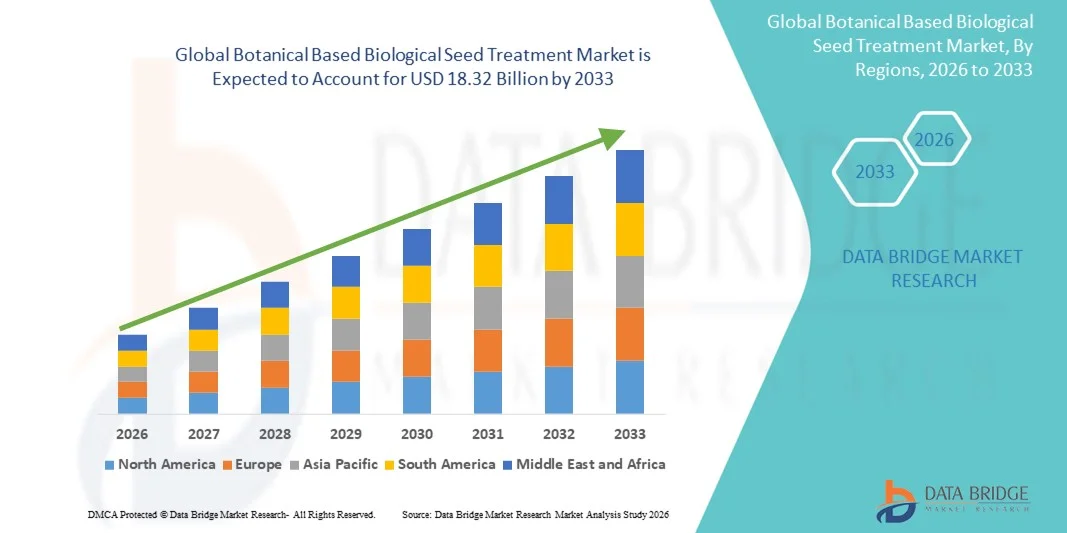
- The global Botanical Based Biological Seed Treatment Market size was valued at USD 7.84 billion in 2025 and is expected to reach USD 18.32 billion by 2033, at a CAGR of 11.20% during the forecast period.
- The market growth is primarily driven by increasing awareness of sustainable agriculture practices and the rising demand for eco-friendly crop protection solutions, which promote higher yield and soil health.
- Additionally, advancements in biotechnology, coupled with government initiatives supporting organic farming and reduced chemical pesticide usage, are encouraging the adoption of botanical-based seed treatments across major crop segments. These factors are collectively accelerating market expansion, thereby significantly boosting industry growth.
Global Botanical Based Biological Seed Treatment Market Analysis
- Botanical-based biological seed treatments, which utilize natural plant extracts and beneficial microorganisms to enhance seed health and crop productivity, are increasingly important in sustainable agriculture due to their eco-friendly nature, effectiveness against pathogens, and ability to improve soil quality.
- The rising adoption of organic and sustainable farming practices, coupled with increasing awareness about the harmful effects of chemical pesticides, is driving the growing demand for botanical-based seed treatments globally.
- North America dominated the Global Botanical Based Biological Seed Treatment Market with the largest revenue share of 36% in 2025, attributed to advanced agricultural practices, high awareness of eco-friendly crop protection solutions, and strong presence of key market players developing innovative bio-based seed treatments for major crops such as corn, soy, and wheat.
- Asia-Pacific is expected to be the fastest-growing region in the Global Botanical Based Biological Seed Treatment Market during the forecast period due to increasing agricultural modernization, supportive government initiatives, and rising demand for sustainable farming solutions.
- The corn segment dominated the market with the largest revenue share of 38.5% in 2025, driven by the high global cultivation of corn and the extensive use of botanical-based seed treatments to protect seeds from fungal and bacterial pathogens.
Report Scope and Global Botanical Based Biological Seed Treatment Market Segmentation
|
Attributes |
Botanical Based Biological Seed Treatment Key Market Insights |
|
Segments Covered |
|
|
Countries Covered |
North America
Europe
Asia-Pacific
Middle East and Africa
South America
|
|
Key Market Players |
• Bayer Crop Science (Germany) |
|
Market Opportunities |
|
|
Value Added Data Infosets |
In addition to the insights on market scenarios such as market value, growth rate, segmentation, geographical coverage, and major players, the market reports curated by the Data Bridge Market Research also include import export analysis, production capacity overview, production consumption analysis, price trend analysis, climate change scenario, supply chain analysis, value chain analysis, raw material/consumables overview, vendor selection criteria, PESTLE Analysis, Porter Analysis, and regulatory framework. |
Global Botanical Based Biological Seed Treatment Market Trends
Enhanced Efficiency Through AI-Driven Seed Treatment Solutions
- A significant and accelerating trend in the global Botanical Based Biological Seed Treatment Market is the growing integration of artificial intelligence (AI) and precision agriculture technologies. This combination is enhancing the efficiency, predictability, and effectiveness of seed treatments, allowing farmers to optimize crop yield while minimizing environmental impact.
- For instance, AI-powered platforms can analyze soil health, weather patterns, and seed performance data to recommend the most effective botanical-based seed treatments for specific crops and regions. Similarly, precision delivery systems ensure that seeds are treated uniformly with bioactive compounds, maximizing germination rates and plant health.
- AI integration in seed treatment enables predictive insights, such as identifying potential disease outbreaks before they occur or suggesting optimal planting schedules based on historical and real-time data. For example, some platforms use AI to monitor seedling growth and provide actionable alerts to farmers if treatment adjustments are needed, improving overall crop resilience.
- The seamless integration of AI with farm management systems allows centralized monitoring and control of seed treatment applications, irrigation, and other agronomic practices. Through a single interface, farmers can manage multiple aspects of crop production, enhancing operational efficiency and sustainability.
- This trend towards more intelligent, data-driven, and interconnected agricultural practices is fundamentally reshaping expectations for crop management and yield optimization. Consequently, companies such as Corteva Agriscience and Indigo Agriculture are developing AI-enabled seed treatment solutions with features such as automated treatment recommendations and real-time crop monitoring.
- The demand for botanical-based seed treatments enhanced with AI and precision agriculture technologies is growing rapidly across both large-scale commercial farms and smallholder farms, as producers increasingly prioritize sustainability, efficiency, and crop productivity.
Global Botanical Based Biological Seed Treatment Market Dynamics
Driver
Growing Need Due to Sustainable Agriculture Practices and Rising Demand for Eco-Friendly Solutions
- The increasing focus on sustainable agriculture practices, coupled with rising awareness of the negative environmental impact of chemical pesticides, is a significant driver for the heightened demand for botanical-based biological seed treatments.
- For instance, in 2025, Corteva Agriscience expanded its range of microbial and botanical seed treatment solutions for corn and soybean crops, aiming to reduce chemical pesticide use while improving crop resilience. Such initiatives by key companies are expected to drive the growth of the botanical-based seed treatment market during the forecast period.
- As farmers become more aware of soil health, environmental sustainability, and consumer preference for organic produce, botanical-based seed treatments offer effective protection against pathogens, promote germination, and enhance crop growth, providing a compelling alternative to conventional chemical treatments.
- Furthermore, the increasing adoption of precision agriculture and integrated farm management systems is making botanical seed treatments an integral component of modern crop production, offering compatibility with other bio-inputs and digital farming tools.
- The ease of application, compatibility with existing seeds, and effectiveness in promoting plant health are key factors propelling the adoption of botanical-based seed treatments across both large-scale commercial farms and smallholder farms. The growing availability of user-friendly and cost-effective products further contributes to market growth.
Restraint/Challenge
Concerns Regarding Efficacy, Regulatory Compliance, and Initial Costs
- Concerns surrounding the variable efficacy of botanical-based biological seed treatments under different soil and climatic conditions pose a significant challenge to broader market penetration. Farmers may hesitate to adopt bio-based solutions if they perceive inconsistent results compared to chemical alternatives.
- For instance, reports of reduced effectiveness in certain crops or regions have made some farmers cautious about switching entirely to botanical treatments without adequate field trial data.
- Addressing these concerns through rigorous product testing, regulatory approvals, and clear usage guidelines is crucial for building farmer confidence. Companies such as Bayer Crop Science and Novozymes emphasize proven field results, standardized formulations, and adherence to local agricultural regulations to reassure potential users. Additionally, the relatively high initial cost of some advanced bio-based seed treatment products compared to conventional chemical treatments can be a barrier for price-sensitive farmers, particularly in developing regions.
- While prices are gradually becoming more competitive, the perceived premium for environmentally friendly technologies can still hinder widespread adoption, especially for farmers who prioritize immediate cost savings over long-term sustainability benefits.
- Overcoming these challenges through increased awareness, demonstration of consistent efficacy, regulatory support, and development of more affordable formulations will be vital for sustained market growth.
Global Botanical Based Biological Seed Treatment Market Scope
The botanical based biological seed treatment market is segmented on the basis of crop type and function.
- By Crop Type
On the basis of crop type, the Global Botanical Based Biological Seed Treatment Market is segmented into corn, cotton, wheat, soybean, sunflower, vegetable crops, and others. The corn segment dominated the market with the largest revenue share of 38.5% in 2025, driven by the high global cultivation of corn and the extensive use of botanical-based seed treatments to protect seeds from fungal and bacterial pathogens. Corn farmers increasingly adopt bio-based seed treatments to enhance germination, improve stress tolerance, and reduce reliance on chemical pesticides. The soybean segment is expected to witness the fastest CAGR of 19.8% from 2026 to 2033, fueled by the rising global demand for soy-based products, adoption of sustainable farming practices, and growing awareness about soil health. The expanding soybean cultivation in North America, South America, and Asia-Pacific regions, along with technological advancements in bioformulations, is further accelerating the uptake of botanical seed treatments for this crop.
- By Function
On the basis of function, the Global Botanical Based Biological Seed Treatment Market is segmented into seed protection and seed enhancement. The seed protection segment held the largest market revenue share of 55.2% in 2025, driven by the critical need to safeguard seeds against fungal, bacterial, and insect-related damage, thereby ensuring higher germination rates and better crop productivity. Farmers increasingly prefer botanical-based solutions as they offer effective protection while being environmentally sustainable, reducing chemical pesticide dependency. The seed enhancement segment is expected to witness the fastest CAGR of 21.3% from 2026 to 2033, fueled by the growing demand for bio-stimulants and natural growth promoters that improve seed vigor, early growth, and stress tolerance. Enhanced awareness of sustainable agriculture practices and adoption of precision farming techniques are further boosting the use of seed enhancement treatments across major crops globally.
Global Botanical Based Biological Seed Treatment Market Regional Analysis
- North America dominated the Global Botanical Based Biological Seed Treatment Market with the largest revenue share of 36% in 2025, driven by the region’s advanced agricultural practices, high adoption of sustainable farming methods, and strong awareness of eco-friendly crop protection solutions.
- Farmers in the region increasingly prioritize the use of botanical-based seed treatments for their effectiveness in enhancing germination, protecting seeds from pathogens, and improving soil health without relying on chemical pesticides.
- This widespread adoption is further supported by well-established agricultural infrastructure, high investment in research and development, and the presence of key market players offering innovative bio-based seed treatment products, establishing botanical seed treatments as a preferred solution for both large-scale commercial farms and smallholder farmers.
U.S. Botanical Based Biological Seed Treatment Market Insight
The U.S. botanical-based biological seed treatment market captured the largest revenue share of 38% in 2025 within North America, driven by the country’s advanced agricultural practices, growing adoption of sustainable farming methods, and increasing awareness of eco-friendly crop protection solutions. Farmers are prioritizing botanical seed treatments to enhance seed germination, improve stress tolerance, and reduce dependency on chemical pesticides. Additionally, government initiatives promoting organic farming and sustainable agriculture, combined with strong R&D investments by key market players, are further propelling market growth. The integration of bio-based treatments into precision agriculture and farm management systems is enhancing efficiency and predictability, making these solutions increasingly popular across both large-scale commercial farms and smallholder farms.
Europe Botanical Based Biological Seed Treatment Market Insight
The Europe market is projected to expand at a significant CAGR during the forecast period, primarily driven by strict agricultural regulations promoting reduced chemical pesticide use and the growing demand for sustainable farming solutions. Increasing awareness about soil health and environmental impact, combined with rising adoption of organic and bio-based crop inputs, is fostering the uptake of botanical-based seed treatments. The market is witnessing strong growth in major farming countries such as France, Germany, and Italy, with applications across cereals, oilseeds, and vegetable crops. Technological advancements and farmer education programs are also encouraging adoption of these eco-friendly solutions.
U.K. Botanical Based Biological Seed Treatment Market Insight
The U.K. market is anticipated to grow at a noteworthy CAGR during the forecast period, fueled by rising concerns over soil degradation, chemical pesticide restrictions, and the demand for higher-yielding, resilient crops. Adoption of botanical seed treatments is further driven by the government’s support for sustainable and organic agriculture, alongside strong awareness among farmers regarding crop protection and soil conservation. The presence of leading agricultural biotech companies and increasing integration of bio-based treatments with precision farming tools are expected to accelerate market growth in both commercial and smallholder farm segments.
Germany Botanical Based Biological Seed Treatment Market Insight
The Germany market is expected to expand at a considerable CAGR during the forecast period, supported by the country’s emphasis on environmental sustainability, organic farming, and advanced agricultural practices. German farmers are increasingly adopting botanical seed treatments for cereals, oilseeds, and vegetable crops due to their effectiveness in controlling pathogens and enhancing seed vigor. The integration of bio-based treatments into smart farming and digital agriculture solutions is also promoting adoption. Regulatory support, strong R&D infrastructure, and environmentally conscious consumer demand further strengthen the market in Germany.
Asia-Pacific Botanical Based Biological Seed Treatment Market Insight
The Asia-Pacific market is poised to grow at the fastest CAGR of 22% during the forecast period of 2026 to 2033, driven by rising agricultural modernization, urbanization, and increasing disposable incomes in countries such as China, India, and Japan. The growing demand for sustainable agriculture practices, coupled with government initiatives promoting organic and bio-based crop protection solutions, is accelerating adoption. Furthermore, APAC serves as a manufacturing hub for botanical seed treatment products, increasing affordability and accessibility for farmers. Expanding cultivation of major crops such as rice, corn, and soybean is further driving market growth across the region.
Japan Botanical Based Biological Seed Treatment Market Insight
The Japan market is gaining momentum due to the country’s technologically advanced agriculture, rising adoption of precision farming, and increasing awareness about eco-friendly crop protection. Japanese farmers are focusing on maximizing yield while minimizing chemical pesticide use, which is driving the adoption of botanical seed treatments. Integration with digital agriculture platforms, soil monitoring technologies, and controlled environment farming further supports growth. Additionally, government incentives for sustainable farming practices are encouraging both commercial and small-scale farmers to adopt bio-based seed treatment solutions.
China Botanical Based Biological Seed Treatment Market Insight
The China market accounted for the largest revenue share in the Asia-Pacific region in 2025, driven by rapid urbanization, rising agricultural modernization, and increasing awareness of sustainable farming practices. The country’s large-scale cultivation of corn, soybean, and rice, combined with the growing middle-class demand for organic and chemical-free food, is fueling the adoption of botanical-based seed treatments. Strong domestic production capabilities, government support for eco-friendly agriculture, and increasing availability of affordable bio-based seed treatment products further propel the market in China.
Global Botanical Based Biological Seed Treatment Market Share
The Botanical Based Biological Seed Treatment industry is primarily led by well-established companies, including:
• Bayer Crop Science (Germany)
• Syngenta (Switzerland)
• Corteva Agriscience (U.S.)
• Valent BioSciences (U.S.)
• BASF SE (Germany)
• Novozymes (Denmark)
• UPL Limited (India)
• Arysta LifeScience (Japan)
• ADAMA Agricultural Solutions (Israel)
• Bioceres (Argentina)
• Provivi (U.S.)
• AgBiome (U.S.)
• Bioworks (U.S.)
• Verdesian Life Sciences (U.S.)
• Indigo Agriculture (U.S.)
• Alltech Crop Science (U.S.)
• Kanematsu Corporation (Japan)
• Chr. Hansen (Denmark)
• Marrone Bio Innovations (U.S.)
• Enko Chem (India)
What are the Recent Developments in Global Botanical Based Biological Seed Treatment Market?
- In April 2024, Bayer Crop Science, a global leader in agricultural biotechnology, launched a new line of botanical-based seed treatments in Brazil aimed at enhancing crop resilience and reducing reliance on chemical pesticides. This initiative underscores the company’s commitment to sustainable agriculture and highlights its focus on providing innovative, eco-friendly solutions tailored to regional crop protection needs. By leveraging advanced bioformulation technologies, Bayer is strengthening its position in the rapidly growing global Botanical Based Biological Seed Treatment Market.
- In March 2024, Corteva Agriscience introduced an advanced microbial seed treatment product in the U.S., specifically designed for corn and soybean crops. The solution enhances seed germination, protects against fungal and bacterial pathogens, and improves stress tolerance, reflecting Corteva’s commitment to developing high-performance, environmentally sustainable agricultural technologies for farmers.
- In March 2024, Novozymes expanded its operations in India by deploying its botanical seed treatment solutions across rice and vegetable crops, focusing on increasing yield and soil health. This project demonstrates Novozymes’ dedication to leveraging biotechnology innovations to support sustainable farming practices and improve crop productivity in emerging markets.
- In February 2024, Valent BioSciences announced a strategic partnership with agricultural cooperatives in Southeast Asia to promote the adoption of botanical-based seed treatments for soybean and corn. The collaboration aims to enhance awareness, provide farmer training, and facilitate widespread use of eco-friendly seed protection solutions, reflecting Valent BioSciences’ commitment to sustainable agriculture and operational efficiency.
- In January 2024, UPL Limited launched its next-generation botanical seed treatment solutions at the International Agritech Expo 2024. Equipped with improved bioactive formulations, the products enhance seed protection and vigor, allowing farmers to achieve higher yields with minimal chemical inputs. This launch highlights UPL’s focus on integrating advanced biological technologies into crop production to meet the growing demand for sustainable and efficient farming solutions.

- Interactive Data Analysis Dashboard
- Company Analysis Dashboard for high growth potential opportunities
- Research Analyst Access for customization & queries
- Competitor Analysis with Interactive dashboard
- Latest News, Updates & Trend analysis
- Harness the Power of Benchmark Analysis for Comprehensive Competitor Tracking
Data collection and base year analysis are done using data collection modules with large sample sizes. The stage includes obtaining market information or related data through various sources and strategies. It includes examining and planning all the data acquired from the past in advance. It likewise envelops the examination of information inconsistencies seen across different information sources. The market data is analysed and estimated using market statistical and coherent models. Also, market share analysis and key trend analysis are the major success factors in the market report. To know more, please request an analyst call or drop down your inquiry.
The key research methodology used by DBMR research team is data triangulation which involves data mining, analysis of the impact of data variables on the market and primary (industry expert) validation. Data models include Vendor Positioning Grid, Market Time Line Analysis, Market Overview and Guide, Company Positioning Grid, Patent Analysis, Pricing Analysis, Company Market Share Analysis, Standards of Measurement, Global versus Regional and Vendor Share Analysis. To know more about the research methodology, drop in an inquiry to speak to our industry experts.
Data Bridge Market Research is a leader in advanced formative research. We take pride in servicing our existing and new customers with data and analysis that match and suits their goal. The report can be customized to include price trend analysis of target brands understanding the market for additional countries (ask for the list of countries), clinical trial results data, literature review, refurbished market and product base analysis. Market analysis of target competitors can be analyzed from technology-based analysis to market portfolio strategies. We can add as many competitors that you require data about in the format and data style you are looking for. Our team of analysts can also provide you data in crude raw excel files pivot tables (Fact book) or can assist you in creating presentations from the data sets available in the report.