


Botanical Ingredients Market Size
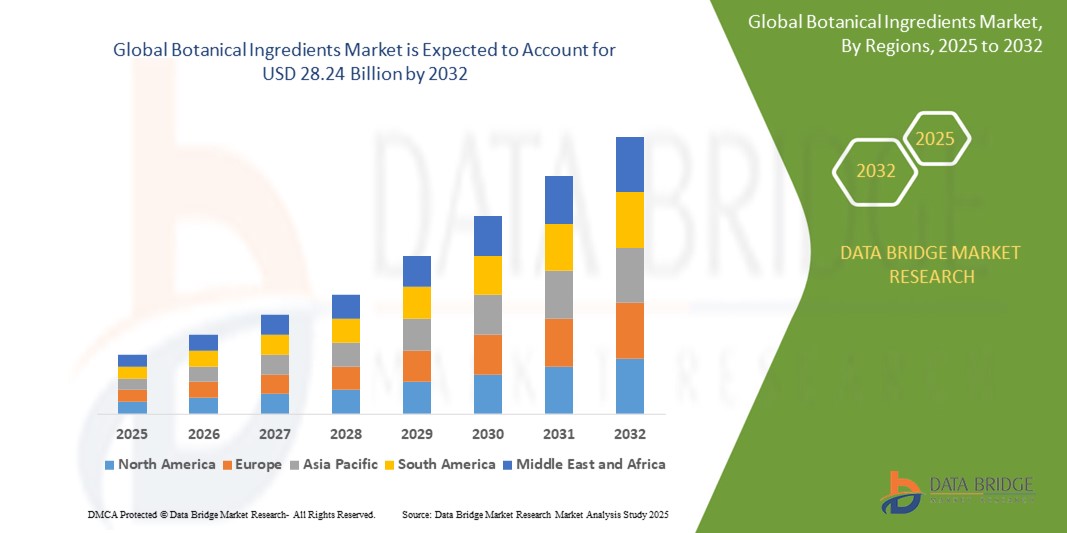
- The global botanical ingredients market size was valued at USD 8.92 billion in 2024 and is expected to reach USD 28.24 billion by 2032, at a CAGR of 15.50% during the forecast period
- The market growth is primarily driven by increasing consumer preference for natural and organic products, growing awareness of health and wellness, and the rising demand for sustainable and eco-friendly ingredients across various industries
- The surge in demand for clean-label products and the incorporation of botanical ingredients in functional foods, cosmetics, and pharmaceuticals are key factors accelerating market expansion
Botanical Ingredients Market Analysis
- Botanical ingredients, derived from plants such as herbs, fruits, vegetables, and flowers, are increasingly integral to industries such as food and beverages, cosmetics, and pharmaceuticals due to their natural properties, sustainability, and consumer appeal
- The growing trend toward plant-based diets, coupled with rising demand for natural personal care products and dietary supplements, is fueling the adoption of botanical ingredients globally
- North America dominated the botanical ingredients market with the largest revenue share of 38.5% in 2024, driven by high consumer awareness, strong demand for organic products, and the presence of key market players
- Asia-Pacific is expected to be the fastest-growing region during the forecast period, propelled by rapid urbanization, increasing disposable incomes, and growing consumer preference for natural and herbal products
- The plant extracts segment dominated the largest market revenue share of approximately 40% in 2024, driven by their widespread use across food, beverage, cosmetic, and pharmaceutical industries due to their bioactive compounds and health benefits
Report Scope and Botanical Ingredients Market Segmentation
|
Attributes |
Botanical Ingredients Key Market Insights |
|
Segments Covered |
|
|
Countries Covered |
North America
Europe
Asia-Pacific
Middle East and Africa
South America
|
|
Key Market Players |
|
|
Market Opportunities |
|
|
Value Added Data Infosets |
In addition to the insights on market scenarios such as market value, growth rate, segmentation, geographical coverage, and major players, the market reports curated by the Data Bridge Market Research also include in-depth expert analysis, pricing analysis, brand share analysis, consumer survey, demography analysis, supply chain analysis, value chain analysis, raw material/consumables overview, vendor selection criteria, PESTLE Analysis, Porter Analysis, and regulatory framework. |
Botanical Ingredients Market Trends
“Increasing Integration of Advanced Extraction Technologies and Data Analytics”
- The global botanical ingredients market is experiencing a significant trend toward the integration of advanced extraction technologies and data analytics to enhance product quality and innovation
- Technologies such as supercritical CO2 extraction and nanotechnology enable precise extraction of bioactive compounds, improving yield and preserving delicate properties of botanical ingredients such as essential oils and antioxidants
- Data analytics is being utilized to optimize supply chains, track consumer preferences, and ensure sustainable sourcing, providing deeper insights into market demands and ingredient efficacy
- For instance, companies are leveraging analytics to develop customized botanical formulations, such as personalized skincare products or tailored dietary supplements, based on consumer health and wellness trends
- This trend enhances the value proposition of botanical ingredients, making them more appealing to manufacturers in food, cosmetics, and pharmaceutical industries
- Advanced algorithms analyze consumer behavior and ingredient performance, enabling the creation of innovative products such as functional beverages with herbs or anti-aging creams with floral extracts
Botanical Ingredients Market Dynamics
Driver
“Rising Demand for Natural and Organic Products”
- Increasing consumer preference for natural and organic products, driven by health consciousness and sustainability concerns, is a major driver for the global botanical ingredients market
- Botanical ingredients, such as herbal extracts, plant oils, and floral extracts, are valued for their therapeutic, nutritional, and eco-friendly properties, boosting their use in food and beverages, dietary supplements, personal care, cosmetics, and pharmaceuticals
- Regulatory support for clean-label and non-GMO products, particularly in regions such as North America, is accelerating the adoption of botanical ingredients
- The proliferation of e-commerce platforms and growing awareness of holistic health solutions are further expanding the market, enabling faster access to botanical-based products such as herbal teas and natural skincare
- Manufacturers are increasingly incorporating botanical ingredients as standard components in products to meet consumer expectations for sustainable and health-oriented solutions
Restraint/Challenge
“High Costs of Extraction and Sustainability Concerns”
- The high initial investment required for advanced extraction technologies, such as supercritical fluid extraction, and sustainable sourcing practices can be a significant barrier, particularly for small-scale manufacturers in emerging markets
- Implementing eco-friendly farming and ethical sourcing to meet consumer demand for sustainable botanical ingredients adds complexity and cost to production processes
- In addition, concerns about supply chain transparency and environmental impact pose challenges. The reliance on specific plant sources raises issues related to overharvesting, biodiversity loss, and compliance with varying international regulations on sustainable practices
- The fragmented regulatory landscape across countries regarding organic certifications and environmental standards complicates operations for global manufacturers and suppliers
- These factors may deter market expansion, particularly in regions with limited infrastructure or where cost sensitivity and regulatory compliance are significant concerns
Botanical Ingredients market Scope
The market is segmented on the basis of product type, primary ingredients, application, ingredients source, and ingredients form.
- By Product Type
On the basis of product type, the global botanical ingredients market is segmented into emulsifier, plant oils, plant colorants, fragrances, resin extracts, and plant extracts. The plant extracts segment dominated the largest market revenue share of approximately 40% in 2024, driven by their widespread use across food, beverage, cosmetic, and pharmaceutical industries due to their bioactive compounds and health benefits. Their versatility in applications such as antioxidants, flavorings, and therapeutic agents supports this dominance.
The fragrances segment is expected to witness the fastest growth rate of around 9.5% from 2025 to 2032, propelled by increasing demand for natural fragrances in cosmetics, personal care products, and aromatherapy. Advancements in extraction technologies, such as supercritical CO2 extraction, enhance the quality and appeal of botanical fragrances, driving adoption.
- By Primary Ingredients
On the basis of primary ingredients type, the global botanical ingredients market is segmented into fruits and vegetables extracts, grain extracts, herbal extracts, tea extracts, and floral extracts. The herbal extracts segment accounted for the largest market revenue share of 38% in 2024, driven by their extensive use in dietary supplements, pharmaceuticals, and cosmetics for their therapeutic properties, such as anti-inflammatory and antioxidant effects. Consumer preference for natural remedies, including ginseng and turmeric, further boosts this segment.
The floral extracts segment is anticipated to experience the fastest growth rate of approximately 10.2% from 2025 to 2032, fueled by rising demand for natural fragrances and skin-soothing ingredients such as lavender, rose, and chamomile in cosmetics and wellness products. The growing popularity of aromatherapy and clean beauty trends supports this growth.
- By Application
On the basis of application type, the global botanical ingredients market is segmented into food and beverages, dietary supplements, Personal Care and Cosmetics, Pharmaceuticals, and Others. The food and beverages segment dominated with a market revenue share of 42% in 2024, driven by the increasing use of botanical ingredients as natural flavorings, colorants, and preservatives in products such as herbal teas, functional beverages, and snacks. The clean-label trend and consumer demand for organic products further fuel this segment.
The personal care and cosmetics segment is expected to grow at the fastest rate of 9.8% from 2025 to 2032, propelled by rising consumer preference for natural and sustainable skincare and haircare products. Botanical ingredients such as aloe vera, green tea, and hibiscus, valued for their moisturizing and anti-aging properties, are driving innovation in this sector.
- By Ingredients Source
On the basis of ingredients source type, the global botanical ingredients market is segmented into herbs, leaves, spices, flowers, and others. The herbs segment held the largest market revenue share of 35% in 2024, attributed to their extensive use in traditional medicines, dietary supplements, and food products. Herbs such as turmeric, ginger, and rosemary are valued for their health benefits and flavor profiles, supporting widespread adoption.
The flowers segment is projected to witness the fastest growth rate of 10.5% from 2025 to 2032, driven by their increasing use in cosmetics, aromatherapy, and functional beverages. Flowers such as lavender, chamomile, and hibiscus are gaining popularity for their calming, antioxidant, and aesthetic properties, aligning with consumer demand for natural and wellness-focused products.
- By Ingredients Form
On the basis of ingredients form type, the global botanical ingredients market is segmented into powder and liquid. The powder segment dominated with a market revenue share of 60.5% in 2024, owing to its versatility, long shelf life, and ease of use in applications such as food flavoring, dietary supplements, and cosmetic formulations. Powdered botanicals are widely used as natural additives and nutritional enhancers.
The liquid segment is expected to grow at the fastest rate of 9.3% from 2025 to 2032, driven by the rising demand for liquid botanical extracts, such as essential oils and tinctures, in cosmetics, fragrances, and pharmaceuticals. Their high potency and ease of integration into formulations enhance their appeal across industries.
Botanical Ingredients Market Regional Analysis
- North America dominated the botanical ingredients market with the largest revenue share of 38.5% in 2024, driven by high consumer awareness, strong demand for organic products, and the presence of key market players
- Consumers prioritize botanical ingredients for their health benefits, sustainability, and versatility in applications such as dietary supplements, personal care, and pharmaceuticals, particularly in regions with high health awareness
- Growth is supported by advancements in extraction technologies, such as supercritical CO2 extraction, and rising adoption in both food and beverage and cosmetic industries
U.S. Botanical Ingredients Market Insight
The U.S. botanical ingredients market captured the largest revenue share of 86.1% in 2024 within North America, fueled by strong demand for natural ingredients in functional foods, dietary supplements, and cosmetics. Growing consumer awareness of health and wellness, coupled with a trend toward plant-based products, drives market expansion. Regulatory support for clean-label and organic certifications further boosts the market, with both manufacturers and consumers favoring sustainable sourcing.
Europe Botanical Ingredients Market Insight
The Europe botanical ingredients market is expected to witness significant growth, supported by stringent regulations promoting natural and sustainable ingredients. Consumers demand botanical extracts for their functional benefits in food, beverages, and personal care products, with a focus on eco-friendly and organic options. Growth is prominent in both new product formulations and reformulation projects, with countries such as Germany and France leading due to strong consumer demand for natural cosmetics and health supplements.
U.K. Botanical Ingredients Market Insight
The U.K. market for botanical ingredients is expected to witness rapid growth, driven by increasing demand for natural personal care products and functional foods in urban and suburban settings. Rising awareness of the health benefits of botanical extracts, such as herbal and floral extracts, encourages adoption. Evolving regulations promoting sustainable and clean-label products influence consumer preferences, balancing efficacy with compliance.
Germany Botanical Ingredients Market Insight
Germany is expected to witness significant growth in the botanical ingredients market, attributed to its advanced food and beverage and cosmetics manufacturing sectors and high consumer focus on health, wellness, and sustainability. German consumers prefer technologically advanced botanical ingredients, such as plant extracts and essential oils,that contribute to health benefits and environmental sustainability. The integration of these ingredients in premium products and aftermarket formulations supports sustained market growth.
Asia-Pacific Botanical Ingredients Market Insight
The Asia-Pacific region is expected to witness the fastest growth rate, driven by expanding food and beverage production, rising disposable incomes, and growing consumer awareness of natural and health-focused products in countries such as China, India, and Japan. Increasing demand for botanical ingredients in dietary supplements, cosmetics, and pharmaceuticals, coupled with government initiatives promoting sustainable sourcing, boosts market growth. The region’s rich biodiversity and traditional use of botanicals further enhance adoption.
Japan Botanical Ingredients Market Insight
Japan’s botanical ingredients market is expected to witness rapid growth due to strong consumer preference for high-quality, natural ingredients that enhance health and wellness. The presence of major food, beverage, and cosmetic manufacturers, along with the integration of botanical ingredients in premium products, accelerates market penetration. Rising interest in natural and organic aftermarket products also contributes to growth.
China Botanical Ingredients Market Insight
China holds the largest share of the Asia-Pacific botanical ingredients market, propelled by rapid urbanization, increasing health consciousness, and growing demand for natural ingredients in food, beverages, and personal care products. The country’s expanding middle class and focus on wellness and sustainability support the adoption of advanced botanical extracts. Strong domestic manufacturing capabilities and competitive pricing enhance market accessibility.
Botanical Ingredients Market Share
The botanical ingredients industry is primarily led by well-established companies, including:
- GrainCorp (Australia)
- Malteurop (France)
- Rahr Corporation (U.S.)
- Boortmalt (Belgium)
- Indesso (Spain)
- Lipoid-Kosmetik (Germany)
- The Herbarie at Stoney Hill Farm, Inc. (U.S.)
- International Flavors& Fragrances, Inc. (Netherlands)
- Bell Flavors& Fragrances (France)
- Rutland Biodynamics Ltd. (Scotland)
- Prakruti Products Pvt. Ltd (India)
- AmbePhytoextractsPvt. Ltd. (Austria)
- The Green Labs LLC (Nethelands)
- Berje, Inc. (Italy)
- Umalaxmi Organics Pvt. Ltd. (India)
- DSM (Netherlands)
What are the Recent Developments in Global Botanical Ingredients Market?
- In January 2025, the U.S. FDA issued a public warning after discovering that several Tejocote root supplements were adulterated with toxic yellow oleander, a poisonous plant known to cause severe neurological, gastrointestinal, and cardiovascular effects. Marketed as Crataegus mexicana, these mislabeled products pose serious health risks, including potential fatalities. The alert underscores growing concerns over product mislabeling and adulteration in the botanical supplement industry, prompting the FDA to pursue regulatory actions and encourage voluntary recalls. Consumers are urged to stop using these products immediately and consult healthcare providers if exposed
- In October 2024, Evonik Industries AG, a German specialty chemicals leader, acquired Botanica, a Swiss company renowned for its sustainable botanical extracts used in personal care products. With operations in Switzerland, France, and Germany, Botanica brings deep expertise in plant-based actives, aligning with Evonik’s strategy to become a sustainable specialties partner. The acquisition enhances Evonik’s Care Solutions business line, enabling the development of customizable, eco-friendly ingredients and expanding its footprint in the natural ingredients market. Botanica’s integration supports Evonik’s goal of increasing system solutions and reinforces its leadership in botanical innovation across Europe
- In July 2024, the U.S. FDA issued a public health alert warning consumers not to use OPMS Black Liquid Kratom, a product sold online and in some retail stores under the label Optimized Plant Mediated Solutions. The alert followed reports of serious adverse health effects, including one death, linked to the product. The FDA cited concerns over the presence of kratom alkaloids—mitragynine and 7-hydroxymitragynine—which act on the same brain receptors as opioids. Reported side effects include addiction, withdrawal symptoms, digestive issues, and aggressive behavior. This warning highlights the urgent need for consumer caution and regulatory oversight in the botanical supplement market
- In July 2024, Nuherbs Co., a U.S.-based manufacturer and distributor of Chinese herbal supplements, launched a wholesale B2B e-commerce platform powered by Spree Commerce. Designed with a mobile-first user experience, the platform streamlines order processing, inventory management, and accounting, offering 24/7 access to over 300 botanical products. It caters to both repeat buyers—with features such as bulk ordering and personalized views—and first-time customers, who benefit from educational content and intuitive navigation. Integrated with Kingdee ERP, the system enhances operational efficiency and supports Nuherbs’ mission to deliver traceable, high-quality herbal ingredients to businesses worldwide
- In May 2024, an Ireland-based nutrition and supplement company introduced a botanical blend specifically formulated to help manage multiple sclerosis (MS) symptoms. This innovative product features boswellic acid and curcuminoids, two plant-derived compounds known for their anti-inflammatory and neuroprotective properties. Boswellic acid, extracted from frankincense, has shown promise in reducing inflammation, while curcuminoids—active components of turmeric—are recognized for supporting cognitive function and immune modulation. This launch reflects a growing trend in the nutraceutical industry toward condition-specific, plant-based therapies, offering natural alternatives to support individuals living with chronic neurological conditions such as MS

- Interactive Data Analysis Dashboard
- Company Analysis Dashboard for high growth potential opportunities
- Research Analyst Access for customization & queries
- Competitor Analysis with Interactive dashboard
- Latest News, Updates & Trend analysis
- Harness the Power of Benchmark Analysis for Comprehensive Competitor Tracking
Global Botanical Ingredients Market, Supply Chain Analysis and Ecosystem Framework
To support market growth and help clients navigate the impact of geopolitical shifts, DBMR has integrated in-depth supply chain analysis into its Global Botanical Ingredients Market research reports. This addition empowers clients to respond effectively to global changes affecting their industries. The supply chain analysis section includes detailed insights such as Global Botanical Ingredients Market consumption and production by country, price trend analysis, the impact of tariffs and geopolitical developments, and import and export trends by country and HSN code. It also highlights major suppliers with data on production capacity and company profiles, as well as key importers and exporters. In addition to research, DBMR offers specialized supply chain consulting services backed by over a decade of experience, providing solutions like supplier discovery, supplier risk assessment, price trend analysis, impact evaluation of inflation and trade route changes, and comprehensive market trend analysis.
Data collection and base year analysis are done using data collection modules with large sample sizes. The stage includes obtaining market information or related data through various sources and strategies. It includes examining and planning all the data acquired from the past in advance. It likewise envelops the examination of information inconsistencies seen across different information sources. The market data is analysed and estimated using market statistical and coherent models. Also, market share analysis and key trend analysis are the major success factors in the market report. To know more, please request an analyst call or drop down your inquiry.
The key research methodology used by DBMR research team is data triangulation which involves data mining, analysis of the impact of data variables on the market and primary (industry expert) validation. Data models include Vendor Positioning Grid, Market Time Line Analysis, Market Overview and Guide, Company Positioning Grid, Patent Analysis, Pricing Analysis, Company Market Share Analysis, Standards of Measurement, Global versus Regional and Vendor Share Analysis. To know more about the research methodology, drop in an inquiry to speak to our industry experts.
Data Bridge Market Research is a leader in advanced formative research. We take pride in servicing our existing and new customers with data and analysis that match and suits their goal. The report can be customized to include price trend analysis of target brands understanding the market for additional countries (ask for the list of countries), clinical trial results data, literature review, refurbished market and product base analysis. Market analysis of target competitors can be analyzed from technology-based analysis to market portfolio strategies. We can add as many competitors that you require data about in the format and data style you are looking for. Our team of analysts can also provide you data in crude raw excel files pivot tables (Fact book) or can assist you in creating presentations from the data sets available in the report.













