


Botulism Treatment Market Size
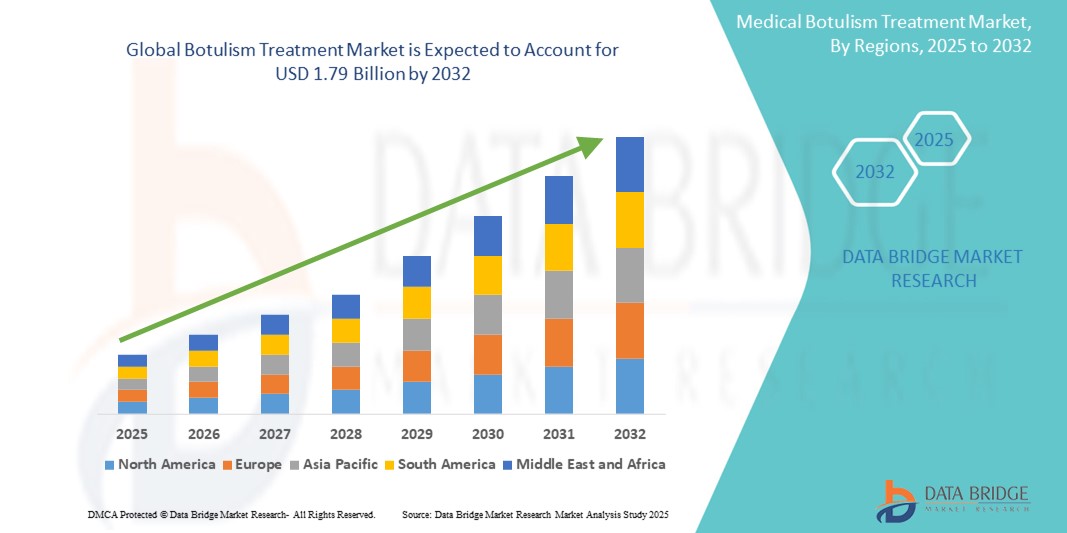
- The global botulism treatment market size was valued at USD 1.08 billion in 2024 and is expected to reach USD 1.79 billion by 2032, at a CAGR of 6.50% during the forecast period
- The market growth is largely fuelled by the rising incidence of foodborne botulism, increasing awareness about early diagnosis and treatment, and the growing demand for botulinum antitoxins and supportive care therapies.
- In addition, expanding government initiatives for bioterrorism preparedness and antitoxin stockpiling are expected to create sustained demand for botulism treatment solutions worldwide
Botulism Treatment Market Analysis
- Botulism is a rare but potentially fatal illness caused by botulinum toxin, requiring immediate medical intervention, typically with antitoxins and intensive care support
- The demand for botulism treatment is increasing due to a rise in food safety concerns and accidental exposure cases, especially in under-regulated regions
- North America dominated the botulism treatment market with the largest revenue share of 38.7% in 2024, driven by the strong presence of pharmaceutical manufacturers, advanced healthcare systems, and the strategic stockpiling of botulinum antitoxins for bioterrorism preparedness
- Asia-Pacific region is expected to witness the highest growth rate in the global botulism treatment market, driven by rising incidences of foodborne infections, increasing investments in healthcare infrastructure, and growing public health initiatives focused on toxin-related diseases
- The food borne botulism segment dominated the market with the largest revenue share of 38.5% in 2024, driven by the increasing incidence of food contamination and improper food preservation techniques. The widespread occurrence of food-related outbreaks, especially in low- and middle-income regions, makes this the most commonly treated form of botulism. Public health initiatives focused on food safety are further amplifying the demand for prompt treatment and antitoxin availability
Report Scope and Botulism Treatment Market Segmentation
|
Attributes |
Botulism Treatment Key Market Insights |
|
Segments Covered |
|
|
Countries Covered |
North America
Europe
Asia-Pacific
Middle East and Africa
South America
|
|
Key Market Players |
|
|
Market Opportunities |
• Rising Demand for Botulinum Toxin in Emerging Markets • Advancements in Antitoxin Production and Distribution |
|
Value Added Data Infosets |
In addition to the insights on market scenarios such as market value, growth rate, segmentation, geographical coverage, and major players, the market reports curated by the Data Bridge Market Research also include depth expert analysis, patient epidemiology, pipeline analysis, pricing analysis, and regulatory framework. |
Botulism Treatment Market Trends
“Increased Government Preparedness for Bioterrorism and Stockpiling of Botulinum Antitoxins”
- Governments are increasingly prioritizing botulism as a bioterrorism threat due to the high toxicity of botulinum toxin
- Strategic stockpiling of antitoxins is being implemented to ensure immediate response capabilities during outbreaks or attacks
- Public health agencies are entering into long-term contracts with pharmaceutical companies for reliable antitoxin supply
- Investments are being made in cold chain infrastructure and emergency distribution channels to support national preparedness
- For instance, The U.S. Strategic National Stockpile maintains reserves of botulinum antitoxins to support bioterrorism response plans
Botulism Treatment Market Dynamics
Driver
“Rising Incidence of Foodborne Botulism and Need for Rapid Medical Response”
- The growing number of foodborne botulism outbreaks is increasing the need for timely treatment interventions
- Hospitals and emergency care centers are focusing on early detection and rapid antitoxin administration to reduce fatality rates
- Increased investments are being made in food safety surveillance and public health training to identify and respond to cases
- Pharmaceutical manufacturers are expanding production and storage of antitoxins to meet surging demand during outbreaks
- For instance, A botulism outbreak in Ohio in 2015 resulted in multiple hospitalizations, highlighting the need for immediate access to antitoxins and improved food handling practices
Restraint/Challenge
“Limited Awareness and Delayed Diagnosis in Endemic and Remote Regions”
- Lack of public and medical awareness often leads to misdiagnosis or late treatment of botulism cases
- Symptoms of botulism overlap with other neurological disorders, making clinical identification difficult without proper training
- Remote and underserved regions face challenges in accessing diagnostic tools and emergency medical supplies
- Poor infrastructure and absence of local antitoxin stockpiles delay timely treatment and increase the risk of complications
- For instance, In rural parts of Southeast Asia, delayed diagnosis and the unavailability of antitoxins have led to increased botulism-related mortality during localized outbreaks
Botulism Treatment Market Scope
The botulism treatment market is segmented into four notable segments based on type, treatment, end-users, and distribution channel.
• By Type
On the basis of type, the botulism treatment market is segmented into food borne botulism, infant botulism, inhalation botulism, wound botulism, and others. The food borne botulism segment dominated the market with the largest revenue share of 38.5% in 2024, driven by the increasing incidence of food contamination and improper food preservation techniques. The widespread occurrence of food-related outbreaks, especially in low- and middle-income regions, makes this the most commonly treated form of botulism. Public health initiatives focused on food safety are further amplifying the demand for prompt treatment and antitoxin availability.
The infant botulism segment is expected to witness the fastest growth rate from 2025 to 2032, fueled by rising awareness of pediatric health risks and improved diagnostic capabilities. Infant botulism primarily results from the ingestion of spores, often from sources such as honey, and is most prevalent in infants under one year of age. Growing healthcare access and early treatment adoption are supporting this segment’s rapid expansion.
• By Treatment
On the basis of treatment, the botulism treatment market is segmented into anti toxin, antibiotics, and others. The anti toxin segment accounted for the largest revenue share in 2024, owing to its critical role in neutralizing botulinum toxin and preventing progression of paralysis. Antitoxins are the frontline treatment, especially when administered early, and are stockpiled by governments for emergency preparedness. The availability of heptavalent botulinum antitoxin (HBAT) and its broad serotype coverage enhances its widespread clinical use.
The antibiotics segment is expected to witness the fastest growth rate from 2025 to 2032, driven by its increasing use in treating wound botulism and secondary infections. Although antibiotics are not effective against the toxin itself, they are essential in managing infections that may arise alongside botulism. Expanding clinical guidelines and supportive therapy protocols are contributing to the segment’s growth.
• By End-Users
On the basis of end-users, the botulism treatment market is segmented into hospitals, homecare, specialty clinics, and others. The hospitals segment led the market in 2024 with the highest revenue share, supported by the need for intensive care facilities, immediate diagnosis, and intravenous administration of antitoxins. Hospitals remain the primary care setting for botulism treatment due to the severity of symptoms and the need for respiratory support in many cases.
The homecare segment is expected to witness the fastest growth rate from 2025 to 2032, driven by an increasing shift toward at-home management of non-severe cases and recovery support following hospital discharge. Advancements in telemedicine and portable health monitoring are also enabling safer patient care in home environments.
• By Distribution Channel
On the basis of distribution channel, the botulism treatment market is segmented into hospital pharmacy, online pharmacy, and retail pharmacy. The hospital pharmacy segment held the largest revenue share in 2024, owing to the urgent nature of botulism treatment and the necessity for immediate antitoxin availability within hospital settings. Hospital’s stock critical care drugs for emergencies, making them the primary distribution channel.
The online pharmacy segment is expected to witness the fastest growth rate from 2025 to 2032, supported by growing e-commerce penetration, convenience, and the ability to deliver prescription therapies to remote and underserved locations. In addition, increased digital literacy and access to teleconsultations are facilitating faster and more reliable treatment pathways through online platforms.
Botulism Treatment Market Regional Analysis
• North America dominated the botulism treatment market with the largest revenue share of 38.7% in 2024, driven by the strong presence of pharmaceutical manufacturers, advanced healthcare systems, and the strategic stockpiling of botulinum antitoxins for bioterrorism preparedness
• The region benefits from early diagnosis capabilities, robust clinical infrastructure, and government-led initiatives to ensure rapid response in case of public health threats
• In addition, increased awareness, widespread access to emergency medical care, and regulatory support for fast-track approval of rare disease therapies further strengthen North America's market position
U.S. Botulism Treatment Market Insight
The U.S. botulism treatment market captured the largest revenue share of 81.6% in 2024 within North America, driven by high demand for antitoxin therapies and strong government investments in emergency preparedness. The Strategic National Stockpile maintains large reserves of heptavalent botulinum antitoxin (HBAT) to respond to bioterrorism threats and rare natural outbreaks. Public health agencies work closely with pharmaceutical companies to ensure quick distribution and training for healthcare professionals, ensuring readiness for both foodborne and inhalation botulism cases.
Europe Botulism Treatment Market Insight
The Europe botulism treatment market is expected to witness the fastest growth rate from 2025 to 2032, supported by strict food safety standards and growing focus on rare disease treatment. Government health agencies across the region are collaborating with biotech firms to develop and stockpile advanced therapeutic solutions. The increasing number of awareness programs, coupled with improvement in diagnostic capabilities, is expected to strengthen the region’s ability to manage botulism cases effectively across both urban and rural populations.
U.K. Botulism Treatment Market Insight
The U.K. botulism treatment market is expected to witness the fastest growth rate from 2025 to 2032, driven by increased emphasis on public health security and early-stage clinical preparedness. The country is investing in disease surveillance and rare toxin management, particularly through collaboration with the NHS and academic research centers. In addition, growing access to specialized hospital care and public awareness around infant botulism and home canning-related risks are supporting market growth.
Germany Botulism Treatment Market Insight
The Germany botulism treatment market is expected to witness the fastest growth rate from 2025 to 2032, driven by strong public health regulations, robust biopharmaceutical R&D activity, and the country's preparedness for biological threats. The presence of established hospitals and laboratory networks enhances the early identification and treatment of botulism cases. In addition, Germany’s active participation in EU-wide health security initiatives and its investments in diagnostic infrastructure are contributing to market expansion, particularly in managing foodborne and wound-related botulism.
Asia-Pacific Botulism Treatment Market Insight
The Asia-Pacific botulism treatment market is expected to witness the fastest growth rate from 2025 to 2032, driven by rapid urbanization, increasing food safety concerns, and rising healthcare investments in countries such as China, Japan, and India. The demand for accessible and affordable treatment options is surging due to the higher incidence of foodborne and infant botulism in developing regions. In addition, regional governments are enhancing clinical response systems and collaborating with international health agencies to improve antitoxin distribution and availability.
Japan Botulism Treatment Market Insight
The Japan botulism treatment market is expected to witness the fastest growth rate from 2025 to 2032, due to the country’s well-developed healthcare system, high hygiene standards, and rapid response mechanisms for rare diseases. Government-backed surveillance systems and medical infrastructure allow for early detection and intervention. In addition, Japan’s aging population and its focus on food quality and biological safety drive demand for secure supply chains of antitoxins and advanced clinical training in handling neuromuscular emergencies.
China Botulism Treatment Market Insight
The China botulism treatment market accounted for the largest revenue share in Asia-Pacific in 2024, supported by a growing middle class, expanding healthcare access, and increased food safety regulation. While cases of foodborne botulism are more frequent in certain rural regions, national health authorities are scaling antitoxin availability and awareness efforts. In addition, China’s domestic pharmaceutical industry is increasingly involved in manufacturing and distributing antitoxins, improving affordability and treatment coverage across diverse population segments.
Botulism Treatment Market Share
The Botulism Treatment industry is primarily led by well-established companies, including:
- XOMA Corporation (U.S.)
- Microbiotix (U.S.)
- Bausch Health Companies Inc (Canada)
- Eisai Inc. (U.S.)
- Merz Pharma (Germany)
- GALDERMA (Switzerland)
- Abbvie, Inc (U.S.)
- Molecular Targeting Technologies, Inc. (U.S.)
- Alphavax Inc. (U.S.)
- Morphotek Inc. (U.S.)
Latest Developments in Global Botulism Treatment Market
- In May 2021, Maypharm announced the launch of METOX, a novel botulinum toxin developed to reduce moderate to severe facial wrinkles caused by everyday expressions. This product introduction represents a strategic advancement in cosmetic dermatology, offering enhanced efficacy in aesthetic treatments. The development is expected to strengthen Maypharm’s presence in the global botulinum toxin market and cater to growing consumer demand for minimally invasive cosmetic solutions
- In 2021, Sihuan Pharmaceutical Holdings Group Ltd. received regulatory approval for its botulinum toxin product, Letybo50U. This milestone reflects the company’s ongoing efforts to expand its dermatological product line. The approval is likely to enhance Sihuan’s competitive position in the aesthetic medicine market, while also meeting the rising demand for effective anti-wrinkle treatments across key Asian markets

- Interactive Data Analysis Dashboard
- Company Analysis Dashboard for high growth potential opportunities
- Research Analyst Access for customization & queries
- Competitor Analysis with Interactive dashboard
- Latest News, Updates & Trend analysis
- Harness the Power of Benchmark Analysis for Comprehensive Competitor Tracking
Data collection and base year analysis are done using data collection modules with large sample sizes. The stage includes obtaining market information or related data through various sources and strategies. It includes examining and planning all the data acquired from the past in advance. It likewise envelops the examination of information inconsistencies seen across different information sources. The market data is analysed and estimated using market statistical and coherent models. Also, market share analysis and key trend analysis are the major success factors in the market report. To know more, please request an analyst call or drop down your inquiry.
The key research methodology used by DBMR research team is data triangulation which involves data mining, analysis of the impact of data variables on the market and primary (industry expert) validation. Data models include Vendor Positioning Grid, Market Time Line Analysis, Market Overview and Guide, Company Positioning Grid, Patent Analysis, Pricing Analysis, Company Market Share Analysis, Standards of Measurement, Global versus Regional and Vendor Share Analysis. To know more about the research methodology, drop in an inquiry to speak to our industry experts.
Data Bridge Market Research is a leader in advanced formative research. We take pride in servicing our existing and new customers with data and analysis that match and suits their goal. The report can be customized to include price trend analysis of target brands understanding the market for additional countries (ask for the list of countries), clinical trial results data, literature review, refurbished market and product base analysis. Market analysis of target competitors can be analyzed from technology-based analysis to market portfolio strategies. We can add as many competitors that you require data about in the format and data style you are looking for. Our team of analysts can also provide you data in crude raw excel files pivot tables (Fact book) or can assist you in creating presentations from the data sets available in the report.












