


Brain Hematomas Market Size
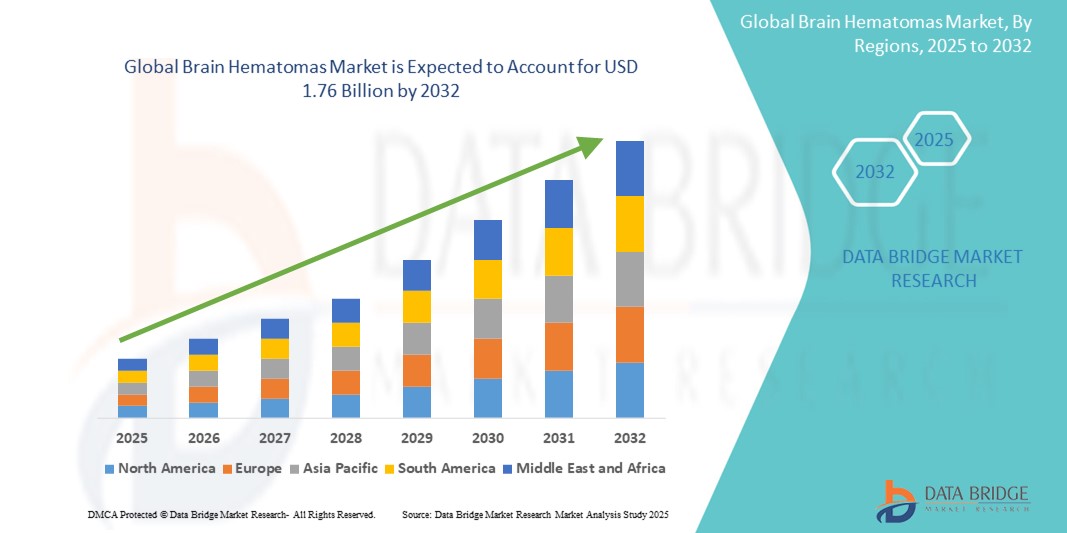
- The global brain hematomas market size was valued at USD 1.14 billion in 2024 and is expected to reach USD 1.76 billion by 2032, at a CAGR of 5.64% during the forecast period
- The market growth is largely fueled by the growing adoption of advanced neuroimaging technologies and technological progress in neurosurgical procedures, leading to improved diagnosis and treatment of brain hematomas in both emergency and specialized care settings
- Furthermore, rising patient demand for accurate, minimally invasive, and timely interventions is establishing neurocritical care solutions as the preferred treatment strategy for brain injuries. These converging factors are accelerating the uptake of Brain Hematomas solutions, thereby significantly boosting the industry's growth
Brain Hematomas Market Analysis
- Brain hematomas—including epidural, subdural, and intracerebral hematomas—are increasingly recognized in clinical settings due to aging populations, rising head trauma incidents, and improved diagnostic imaging technologies such as CT and MRI
- The escalating prevalence of neurological disorders and traumatic brain injuries, combined with growing awareness among patients and medical professionals, is driving demand for advanced diagnostics, minimally invasive surgical techniques, and rehabilitation services
- North America dominated the brain hematomas market with the largest revenue share of 38.6% in 2024, supported by a mature healthcare infrastructure, high patient access to imaging modalities, and strong investment in neurosurgical technology. The U.S. continues to lead regional growth, leveraging AI‑enhanced imaging tools, neuro-navigation systems, and digital patient monitoring solutions
- Asia‑Pacific is expected to be the fastest‑growing region in the brain hematomas market during the forecast period, with a projected CAGR of 7.1%, driven by increasing urbanization, expanding healthcare coverage, and rising incomes in countries such as China, India, and Southeast Asia
- The subdural hematomas segment dominated the brain hematomas market with a market share of 46.7% in 2024, owing to its higher prevalence, particularly among the elderly and individuals with traumatic brain injuries. The widespread use of advanced imaging modalities, such as CT and MRI scans, has significantly improved early detection and diagnosis, contributing to increased treatment rates and market growth
Report Scope and Brain Hematomas Market Segmentation
|
Attributes |
Brain Hematomas Key Market Insights |
|
Segments Covered |
|
|
Countries Covered |
North America
Europe
Asia-Pacific
Middle East and Africa
South America
|
|
Key Market Players |
|
|
Market Opportunities |
|
|
Value Added Data Infosets |
In addition to the insights on market scenarios such as market value, growth rate, segmentation, geographical coverage, and major players, the market reports curated by the Data Bridge Market Research also include in-depth expert analysis, pricing analysis, brand share analysis, consumer survey, demography analysis, supply chain analysis, value chain analysis, raw material/consumables overview, vendor selection criteria, PESTLE Analysis, Porter Analysis, and regulatory framework. |
Brain Hematomas Market Trends
“Increasing Demand for Advanced Neurological Monitoring and Early Diagnosis”
- A significant and accelerating trend in the global Brain Hematomas market is the rising demand for advanced neurological monitoring and diagnostic technologies. Continuous improvements in imaging tools such as CT, MRI, and intracranial pressure monitors are enabling faster, more accurate detection and classification of hematomas, enhancing patient outcomes
- For instance, modern portable CT scanners are increasingly used in emergency and remote care settings, enabling rapid brain imaging at the point of care. Similarly, tele-radiology platforms are helping clinicians interpret brain scans in real-time, even in underserved regions
- Innovations in diagnostic technologies are also enabling better differentiation between subdural, epidural, and intracerebral hematomas, which is critical in determining appropriate treatment protocols. Some devices now incorporate automated volume measurement and AI-based hemorrhage detection, reducing diagnostic errors and supporting early intervention
- Hospitals and trauma centers are integrating digital neuro-assessment tools that can track patient consciousness levels and neurological signs post-injury, helping healthcare teams prioritize treatment in acute scenarios
- Furthermore, the expansion of neurocritical care units (NCCUs) and increasing demand for continuous monitoring in post-surgical or ICU settings are contributing to the adoption of sophisticated brain monitoring systems across healthcare facilities globally
- This growing focus on early diagnosis and neurological surveillance is reshaping how clinicians approach hematoma management and is encouraging healthcare systems to invest in comprehensive diagnostic ecosystems, ultimately improving survival and reducing long-term disabilities
Brain Hematomas Market Dynamics
Driver
“Rising Incidence of Traumatic Brain Injuries and Aging Population”
- The growing prevalence of traumatic brain injuries (TBIs) due to road accidents, falls, and sports-related injuries is a major driver fueling the Brain Hematomas market. According to WHO, TBIs will become a leading cause of death and disability by 2030, intensifying the demand for effective diagnostics and treatment options for brain hematomas
- For instance, in March 2024, Medtronic plc announced a collaboration with trauma centers across Europe to deploy AI-powered imaging solutions for early detection of intracranial hematomas. Such strategic partnerships are expected to accelerate diagnosis rates and improve patient outcomes, propelling market growth during the forecast period
- In addition, the increasing geriatric population, which is more prone to falls and co-morbidities like hypertension and bleeding disorders, is amplifying the occurrence of intracranial hemorrhages and related complications such as subdural and epidural hematomas
- Advancements in minimally invasive neurosurgical procedures, neuroimaging technologies (CT/MRI), and emergency care infrastructure are further fostering adoption of Brain Hematoma treatment solutions worldwide
Restraint/Challenge
“High Cost of Advanced Treatment and Limited Accessibility in Low-Income Regions”
- The high cost associated with neurosurgical interventions, diagnostic imaging, and post-operative care remains a major barrier in the widespread adoption of Brain Hematoma treatments, particularly in developing and under-resourced countries
- For instance, a single cranial surgery can cost between USD 15,000 to USD 100,000 USD depending on complexity, location, and healthcare infrastructure, which limits affordability and access for many patients
- Limited availability of trained neurosurgeons, especially in rural and low-income regions, significantly hampers timely diagnosis and treatment of brain hematomas, leading to higher mortality and morbidity
- In addition, the market faces challenges related to late diagnosis, as symptoms like confusion, headaches, or dizziness are often mistaken for general fatigue or aging symptoms, delaying intervention
- Overcoming these challenges requires greater investment in affordable imaging technology, capacity-building in neurosurgery, and public awareness campaigns for early symptom recognition and emergency care access
Brain Hematomas Market Scope
The brain hematomas market is segmented on the basis of type, treatment, diagnosis, dosage, route of administration, symptoms, end-users, and distribution channel.
- By Type
On the basis of type, the brain hematomas market is segmented into epidural hematomas, subdural hematomas, and intracerebral hematomas. The subdural hematomas segment held the largest market revenue share of 46.7% in 2024, owing to its higher prevalence, especially among the elderly and individuals with head injuries. Early diagnosis and rising use of imaging modalities have improved detection rates.
The intracerebral hematomas segment is expected to witness the fastest CAGR of 7.9% from 2025 to 2032, driven by the rising burden of stroke and hypertension-related complications across developing countries.
- By Treatment
On the basis of treatment, the brain hematomas market is segmented into anticonvulsants, diuretics, corticosteroids, surgery, catheter, physical therapy, speech therapy, vitamin K therapy, and others. The surgery segment accounted for the highest revenue share of 38.2% in 2024, due to the critical nature of hematomas that require surgical evacuation.
Meanwhile, the anticonvulsants segment is projected to grow at the fastest CAGR of 8.5% from 2025 to 2032, as seizures are a common complication, especially in post-traumatic and postoperative patients.
- By Diagnosis
On the basis of diagnosis, the brain hematomas market is segmented into computed tomography (CT) scan, magnetic resonance imaging (MRI), angiogram, and others. The computed tomography (CT) scan segment dominated the market with a revenue share of 51.4% in 2024, driven by its rapid availability, cost-effectiveness, and effectiveness in detecting acute hemorrhages.
The MRI segment is expected to witness the fastest CAGR from 2025 to 2032, due to its high-resolution imaging and preference in subacute or chronic hematoma assessments.
- By Dosage
On the basis of dosage, the brain hematomas market is segmented into tablet, injection, and others. The injection segment captured the largest market share of 54.6% in 2024, attributed to the immediate action required for critical medications administered intravenously in emergency cases.
The Tablet segment is expected to witness the fastest CAGR from 2025 to 2032, particularly for follow-up anticonvulsant and corticosteroid therapy.
- By Route of Administration
On the basis of route of administration, the brain hematomas market is segmented into oral, intravenous, and others. The intravenous route accounted for the dominant revenue share of 63.1% in 2024, due to its application in emergency management and surgical settings.
The oral route is expected to witness the fastest CAGR from 2025 to 2032 since it is gaining traction in outpatient and rehabilitation scenarios, especially for long-term therapies.
- By Symptoms
On the basis of symptoms, the brain hematomas market is segmented into seizures, change in behavior, headache, nausea, confusion, dizziness, vomiting, lethargy, apathy, weakness, and others. The headache segment held the largest revenue share of 28.9% in 2024, being one of the earliest and most reported symptoms.
The seizures segment is projected to grow at the fastest CAGR from 2025 to 2032, as post-traumatic seizures are common in moderate to severe cases, necessitating long-term monitoring and treatment.
- By End-Users
On the basis of end-users, the brain hematomas market is segmented into Clinic, Hospital, and Others.
The Hospital segment accounted for the highest market share of 61.7% in 2024, owing to the availability of advanced diagnostic and surgical facilities and the increasing rate of emergency trauma care admissions.
The Clinic segment is expected to witness the fastest CAGR from 2025 to 2032, as post-discharge management and rehabilitation gain prominence.
- By Distribution Channel
On the basis of distribution channel, the brain hematomas market is segmented into hospital pharmacy, retail pharmacy, and online pharmacy. The hospital pharmacy segment led the market with a share of 49.8% in 2024, supported by inpatient care and post-surgical medication needs.
The online pharmacy segment is expected to witness the fastest CAGR of 10.3%, driven by digital health adoption, e-prescriptions, and improved access to medications in remote areas.
Brain Hematomas Market Regional Analysis
- North America dominated the brain hematomas market with the largest revenue share of 38.6% in 2024, driven by a high prevalence of traumatic brain injuries (TBIs), an aging population, and increased access to advanced diagnostic technologies like CT and MRI
- The region's robust healthcare infrastructure, high healthcare expenditure, and presence of leading pharmaceutical and medical device companies continue to support research and adoption of new treatment protocols
- Awareness campaigns by health organizations and easy access to emergency care services are further supporting early diagnosis and treatment
U.S. Brain Hematomas Market Insight
The U.S. brain hematomas market captured a dominant 65% share of the North American market in 2024, due to the country's leading role in neurosurgery advancements, high rate of fall-related injuries among elderly individuals, and frequent use of blood thinners that increase hematoma risks. Innovations in minimally invasive hematoma evacuation techniques, strong insurance coverage, and the high availability of diagnostic imaging centers have all fueled market expansion. Moreover, academic collaborations and ongoing clinical trials in top U.S. hospitals and trauma centers are contributing to innovation and better patient outcomes.
Europe Brain Hematomas Market Insight
The Europe brain hematomas market is projected to grow at a substantial CAGR from 2025 to 2032, supported by the increasing incidence of TBIs and intracranial hemorrhages due to aging demographics and road accidents. The presence of universal healthcare systems, government-supported screening programs, and investments in digital health technologies are improving early detection and treatment of hematomas. Countries such as Germany, the U.K., and France are leading in adopting AI-assisted imaging technologies for diagnosis.
U.K. Brain Hematomas Market Insight
The U.K. brain hematomas market is anticipated to register a noteworthy CAGR during the forecast period, owing to increased awareness of head injury risks and improved emergency response protocols in the NHS. Government investments in AI-powered CT diagnostics and faster trauma care access in urban centers are key growth contributors. The U.K. also plays a significant role in EU-wide clinical research on non-invasive hematoma management.
Germany Brain Hematomas Market Insight
The Germany brain hematomas market is forecasted to grow at a considerable CAGR during the forecast period, driven by increasing demand for high-precision neuroimaging and a strong network of neurosurgery centers. The country's emphasis on innovation, medical research funding, and well-integrated hospital systems makes it a central player in Europe’s brain injury management sector.
Asia-Pacific Brain Hematomas Market Insight
The Asia-Pacific brain hematomas market is expected to grow at the fastest CAGR of 7.1% from 2025 to 2032, propelled by rising cases of road accidents, large geriatric population, and growing healthcare investments across China, Japan, and India. Improved trauma care access, expansion of private healthcare infrastructure, and national policies on head injury treatment are fostering rapid adoption of hematoma management solutions. Increasing local manufacturing of neurosurgical and imaging devices is also reducing treatment costs, making care more accessible.
Japan Brain Hematomas Market Insight
The Japan brain hematomas market is expanding steadily due to the country’s rapidly aging population and strong emphasis on early neurological care. High availability of advanced imaging technologies and precision neurosurgical facilities in urban centers is facilitating faster diagnosis and intervention. In addition, Japanese companies are investing in robotic-assisted hematoma surgery and AI-based post-op monitoring systems.
China Brain Hematomas Market Insight
The China brain hematomas market held the largest revenue share in the Asia-Pacific region in 2024, thanks to a growing middle class, increased public health investments, and high accident rates in urban and industrial areas. Government-backed smart hospital initiatives and expansion of rural trauma centers are driving accessibility. Domestic manufacturers are producing cost-effective CT scanners and surgical tools, further boosting treatment availability.
Brain Hematomas Market Share
The brain hematomas industry is primarily led by well-established companies, including:
- Novartis AG (Switzerland)
- Sanofi S.A. (France)
- GSK plc (U.K.)
- Takeda Pharmaceutical Company Limited (Japan)
- Cipla Ltd. (India)
- Pfizer Inc. (U.S.)
- Johnson & Johnson Services, Inc. (U.S.)
- Abbott (U.S.)
- Teva Pharmaceutical Industries Ltd. (Israel)
- Bausch Health Companies Inc. (Canada)
- Jazz Pharmaceuticals plc (U.K.)
- H. Lundbeck A/S (Denmark)
- Sumitomo Pharma Co., Ltd. (Japan)
- Biocon Limited (India)
- Merck KGaA (Germany)
- Cadila Pharmaceuticals Ltd. (India)
- Eisai Co., Ltd. (Japan)
- Glenmark Pharmaceuticals Ltd. (India)
- F. Hoffmann-La Roche Ltd. (Switzerland)
- Sun Pharmaceutical Industries Ltd. (India)
Latest Developments in Global Brain Hematomas Market
- In June 2025, Researchers from the University of Cincinnati and Case Western Reserve University received an Air Force Research Laboratory grant to test platelet-inspired nanotherapeutics (synthetic liposome-based platelets) for treating traumatic brain injury hemorrhages, including subdural hematomas, paving the way for non-blood-based clotting solutions in emergency care
- In April 2025, A collaboration between the Uniformed Services University and Johns Hopkins University produced two portable devices: a cranial burr hole evacuation tool and a handheld scanner for rapid detection and treatment of epidural and subdural hemorrhages in austere environments, with both receiving patents

- Interactive Data Analysis Dashboard
- Company Analysis Dashboard for high growth potential opportunities
- Research Analyst Access for customization & queries
- Competitor Analysis with Interactive dashboard
- Latest News, Updates & Trend analysis
- Harness the Power of Benchmark Analysis for Comprehensive Competitor Tracking
Data collection and base year analysis are done using data collection modules with large sample sizes. The stage includes obtaining market information or related data through various sources and strategies. It includes examining and planning all the data acquired from the past in advance. It likewise envelops the examination of information inconsistencies seen across different information sources. The market data is analysed and estimated using market statistical and coherent models. Also, market share analysis and key trend analysis are the major success factors in the market report. To know more, please request an analyst call or drop down your inquiry.
The key research methodology used by DBMR research team is data triangulation which involves data mining, analysis of the impact of data variables on the market and primary (industry expert) validation. Data models include Vendor Positioning Grid, Market Time Line Analysis, Market Overview and Guide, Company Positioning Grid, Patent Analysis, Pricing Analysis, Company Market Share Analysis, Standards of Measurement, Global versus Regional and Vendor Share Analysis. To know more about the research methodology, drop in an inquiry to speak to our industry experts.
Data Bridge Market Research is a leader in advanced formative research. We take pride in servicing our existing and new customers with data and analysis that match and suits their goal. The report can be customized to include price trend analysis of target brands understanding the market for additional countries (ask for the list of countries), clinical trial results data, literature review, refurbished market and product base analysis. Market analysis of target competitors can be analyzed from technology-based analysis to market portfolio strategies. We can add as many competitors that you require data about in the format and data style you are looking for. Our team of analysts can also provide you data in crude raw excel files pivot tables (Fact book) or can assist you in creating presentations from the data sets available in the report.












