Global Brain Ischemia Market
Market Size in USD Million
CAGR :
% 
 USD
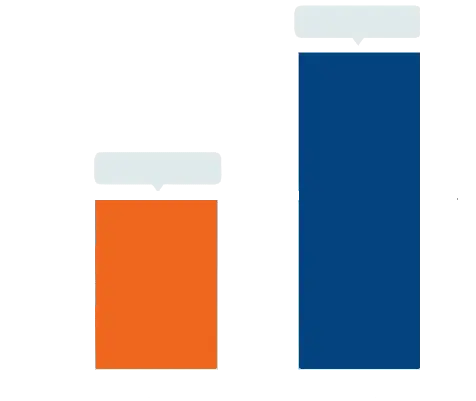
920.65 Million
USD
1,482.95 Million
2025
2033
USD
920.65 Million
USD
1,482.95 Million
2025
2033
 Forecast Period Forecast Period |
2026 –2033 |
 Market Size (Base Year) Market Size (Base Year) |
USD 920.65 Million |
 Market Size (Forecast Year) Market Size (Forecast Year) |
USD 1,482.95 Million |
 CAGR CAGR |
% |
| Major Markets Players |
|
Brain Ischemia Market Size
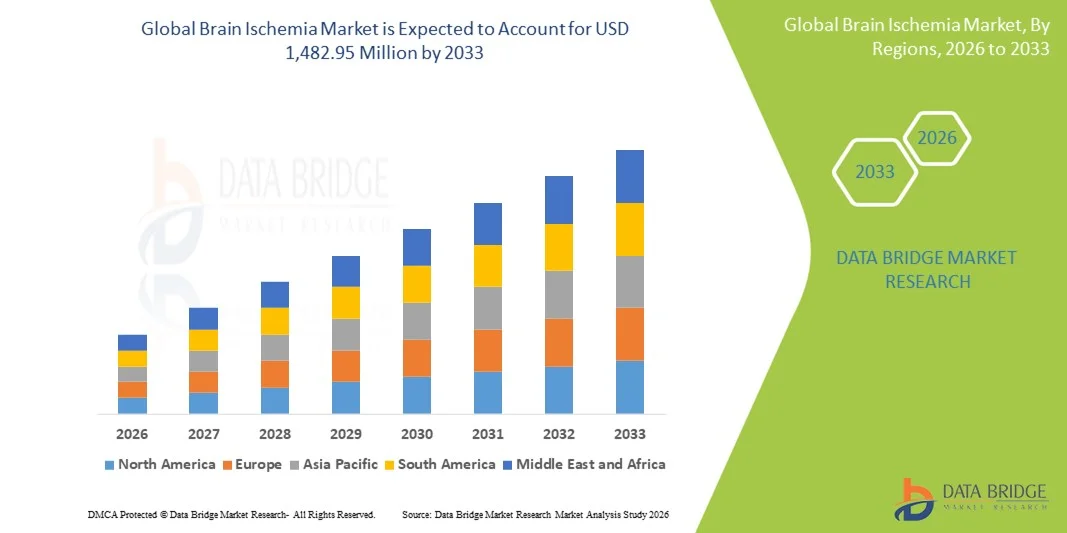
- The global brain ischemia market size was valued at USD 920.65 million in 2025 and is expected to reach USD 1,482.95 million by 2033, at a CAGR of 6.14% during the forecast period
- The market growth is largely fueled by the rising incidence of cerebrovascular conditions such as ischemic stroke and transient ischemic attacks, coupled with advancements in diagnostics and therapeutic interventions including imaging technologies and endovascular treatments
- Furthermore, increasing awareness of early diagnosis, expanding healthcare infrastructure investment, and technological progress in minimally invasive procedures and neuroprotective therapies are driving demand for effective management solutions for brain ischemia
Brain Ischemia Market Analysis
- Brain ischemia, caused by reduced blood flow to the brain, is a critical medical condition requiring timely diagnosis and intervention, with applications spanning emergency care, neurology, and rehabilitation centers due to its high prevalence and potential for severe neurological damage
- The escalating demand for effective brain ischemia management is primarily fueled by the increasing incidence of ischemic strokes, rising geriatric population, and growing awareness about early diagnosis and advanced therapeutic options, including angioplasty, beta blockers, and ACE inhibitors
- North America dominated the brain ischemia market with the largest revenue share of 38.7% in 2025, driven by advanced healthcare infrastructure, widespread adoption of cutting-edge diagnostic imaging, and a strong presence of key market players developing innovative therapies and devices for stroke management
- Asia-Pacific is expected to be the fastest growing region in the brain ischemia market during the forecast period due to rising prevalence of cerebrovascular disorders, improving healthcare access, and increasing investment in neurovascular research and stroke care facilities
- Focal brain ischemia segment dominated the brain ischemia market in 2025 with a share of 56.2%, driven by its higher incidence compared to global brain ischemia and the need for targeted therapeutic interventions in localized cerebral regions
Report Scope and Brain Ischemia Market Segmentation
|
Attributes |
Brain Ischemia Key Market Insights |
|
Segments Covered |
|
|
Countries Covered |
North America
Europe
Asia-Pacific
Middle East and Africa
South America
|
|
Key Market Players |
|
|
Market Opportunities |
|
|
Value Added Data Infosets |
In addition to the insights on market scenarios such as market value, growth rate, segmentation, geographical coverage, and major players, the market reports curated by the Data Bridge Market Research also include in-depth expert analysis, patient epidemiology, pipeline analysis, pricing analysis, and regulatory framework |
Brain Ischemia Market Trends
Advancements in AI-Enabled Diagnosis and Monitoring
- A significant and accelerating trend in the global brain ischemia market is the integration of artificial intelligence (AI) and machine learning into diagnostic imaging and patient monitoring systems, significantly improving early detection and treatment planning
- For instance, AI-powered imaging software can analyze CT and MRI scans to identify ischemic regions faster than traditional methods, enabling clinicians to initiate timely interventions and improve patient outcomes
- AI integration also enables predictive modeling of patient risk factors, automated interpretation of neurological data, and intelligent alerts for abnormal brain activity, supporting clinicians in making more informed decisions
- The seamless integration of AI with electronic health records and tele-neurology platforms allows centralized management of patient data, stroke risk assessment, and post-stroke rehabilitation, creating a more connected and efficient healthcare workflow
- This trend toward smarter, data-driven, and integrated diagnostic and monitoring systems is fundamentally reshaping clinical practices for brain ischemia management
- The demand for AI-enabled diagnostic and monitoring solutions is growing rapidly across hospitals, clinics, and research institutes, as healthcare providers increasingly prioritize early intervention and improved patient care
- Collaborations between tech companies and healthcare providers to develop cloud-based AI platforms are facilitating data sharing and large-scale predictive analytics for stroke prevention and treatment optimization
Brain Ischemia Market Dynamics
Driver
Rising Incidence of Ischemic Stroke and Aging Population
- The increasing prevalence of ischemic strokes worldwide, coupled with the growing geriatric population, is a significant driver for the heightened demand for brain ischemia diagnostic and therapeutic solutions
- For instance, hospitals and clinics are increasingly investing in advanced imaging modalities and interventional procedures to manage the rising number of ischemic stroke cases
- As awareness about stroke symptoms and the benefits of early intervention grows, more patients are seeking timely treatment, which boosts demand for thrombolytic therapy, angioplasty, and neuroprotective interventions
- Furthermore, government healthcare initiatives and insurance coverage for stroke management are making advanced care more accessible, fueling market expansion
- The growing focus on preventive care, rehabilitation services, and home-based monitoring solutions for post-stroke patients further drives adoption of innovative brain ischemia management tools
- Rising research funding and clinical trials targeting novel neuroprotective drugs and minimally invasive interventions are accelerating innovation and expanding treatment options
- Increasing patient preference for outpatient stroke care and minimally invasive procedures is driving the development and adoption of user-friendly, rapid-response therapeutic solutions
Restraint/Challenge
High Treatment Costs and Limited Access in Emerging Markets
- The high cost of advanced imaging, interventional procedures, and specialized therapies for brain ischemia poses a significant challenge to broader market penetration, particularly in developing regions
- For instance, smaller hospitals and clinics in emerging markets may lack access to AI-enabled imaging systems or catheter-based interventions due to budget constraints, limiting patient reach
- In addition, disparities in healthcare infrastructure, shortage of trained neurologists, and limited awareness about early diagnosis contribute to delayed treatment and reduced adoption of advanced solutions
- While technological advancements continue to improve outcomes, the overall treatment cost and accessibility remain a barrier for price-sensitive patients and under-resourced healthcare providers
- Overcoming these challenges through affordable diagnostic solutions, telemedicine adoption, and capacity-building programs will be vital for sustained growth in the brain ischemia market
- Regulatory hurdles for approval of new devices, drugs, and AI-based diagnostic tools can delay market entry and limit the availability of cutting-edge solutions in some region
- Variability in patient response and the complexity of individualized treatment plans make standardization difficult, posing challenges for large-scale adoption and consistent outcomes
Brain Ischemia Market Scope
The market is segmented on the basis of condition type, treatment, and end user.
- By Condition Type
On the basis of condition type, the brain ischemia market is segmented into focal brain ischemia and global brain ischemia. The focal brain ischemia segment dominated the market with the largest revenue share of 56.2% in 2025, driven by its higher prevalence compared to global brain ischemia. Focal brain ischemia involves localized cerebral regions, making targeted interventions such as angioplasty or thrombolytic therapy more feasible and clinically effective. Hospitals and specialized clinics often prioritize focal ischemia treatments due to their better prognosis with timely intervention. The segment’s dominance is also supported by advanced imaging technologies that enable accurate localization and monitoring of affected brain areas. Increasing awareness about stroke symptoms and early intervention has further amplified the adoption of therapies addressing focal brain ischemia. Moreover, clinical research and innovations are more focused on focal brain ischemia, creating a steady pipeline of advanced treatments.
The global brain ischemia segment is expected to witness the fastest CAGR of 8.1% from 2026 to 2033, owing to the growing geriatric population and rising prevalence of systemic cerebrovascular complications. Global brain ischemia, which affects larger brain regions, often requires complex therapeutic approaches and continuous monitoring, boosting the adoption of advanced hospital-based treatment solutions. Increasing research into neuroprotective drugs and rehabilitation technologies is also driving growth. Emerging markets with improving healthcare infrastructure are seeing heightened demand for comprehensive management of global brain ischemia. Tele-neurology and remote monitoring solutions further support the rising uptake in both urban and semi-urban areas.
- By Treatment
On the basis of treatment, the brain ischemia market is segmented into angioplasty, beta blockers, angiotensin-converting enzyme (ACE) inhibitors, and others. The angioplasty segment dominated the market with a share of 41.5% in 2025, attributed to its established effectiveness in restoring blood flow in ischemic stroke patients. Angioplasty is widely adopted in hospitals and specialized neurointerventional centers due to its minimally invasive nature and high success rate in focal ischemia cases. Its dominance is further supported by increasing investments in catheter-based technologies and skilled neurointerventionalists. Hospitals prefer angioplasty for rapid intervention in acute ischemic events, and its integration with AI-based imaging solutions improves patient outcomes. The procedure is also gaining traction due to clinical guidelines emphasizing early reperfusion therapy for eligible patients.
The ACE inhibitors segment is expected to witness the fastest CAGR of 9.2% from 2026 to 2033, driven by their preventive potential in reducing recurrent ischemic events. ACE inhibitors are increasingly prescribed in combination with other cardiovascular therapies to manage underlying hypertension and prevent further cerebrovascular complications. Rising awareness of preventive care and outpatient management strategies contributes to segment growth. Pharmaceutical innovations and generics availability are also making ACE inhibitors more accessible across developed and emerging markets. In addition, their role in neuroprotection and post-stroke rehabilitation is gaining clinical recognition, supporting faster adoption.
- By End User
On the basis of end user, the brain ischemia market is segmented into hospitals and clinics, research and academic institutes, and others. The hospitals and clinics segment dominated the market with a share of 62.5% in 2025, driven by the high influx of ischemic stroke patients requiring emergency care and long-term management. Hospitals leverage advanced imaging modalities, angioplasty suites, and AI-based monitoring tools to provide comprehensive treatment for both focal and global brain ischemia. The dominance is supported by increasing investments in neurology departments and stroke care units in developed regions. Growing patient awareness about timely intervention further strengthens hospital adoption. In addition, the need for multidisciplinary care, including rehabilitation and follow-up monitoring, consolidates hospital demand.
The research and academic institutes segment is expected to witness the fastest CAGR of 10.1% from 2026 to 2033, fueled by rising clinical trials and neurovascular research initiatives. These institutions are at the forefront of developing novel therapeutics, AI diagnostic platforms, and preventive strategies. Increasing funding for cerebrovascular research, particularly in emerging economies, accelerates the adoption of advanced tools and technologies. Collaborations between hospitals and research institutes enhance the practical application of experimental therapies. The growing focus on personalized medicine and predictive analytics in stroke care also contributes to segment growth.
Brain Ischemia Market Regional Analysis
- North America dominated the brain ischemia market with the largest revenue share of 38.7% in 2025, driven by advanced healthcare infrastructure, widespread adoption of cutting-edge diagnostic imaging, and a strong presence of key market players developing innovative therapies and devices for stroke management
- Healthcare providers in the region prioritize timely diagnosis and management of ischemic strokes using advanced imaging, AI-assisted monitoring, and minimally invasive procedures, ensuring better patient outcomes and driving market demand
- This widespread adoption is further supported by substantial healthcare spending, well-established neurology centers, and the presence of leading medical device and pharmaceutical companies, making North America a key market for both hospitals and research institutes focused on brain ischemia management
U.S. Brain Ischemia Market Insight
The U.S. brain ischemia market captured the largest revenue share of 82% in North America in 2025, fueled by widespread adoption of advanced neuroimaging technologies, minimally invasive interventions, and AI-assisted diagnostic tools. Hospitals and specialized stroke centers are increasingly prioritizing early detection and rapid reperfusion therapies to improve patient outcomes. The growing prevalence of ischemic stroke among the aging population, coupled with rising awareness about stroke symptoms and preventive care, is driving demand. In addition, integration of tele-neurology and remote monitoring systems allows timely intervention, further expanding market growth. Robust healthcare infrastructure and high R&D investment by key pharmaceutical and medical device companies reinforce the U.S. market dominance.
Europe Brain Ischemia Market Insight
The Europe brain ischemia market is projected to expand at a substantial CAGR during the forecast period, driven by increasing prevalence of ischemic stroke, rising geriatric population, and government initiatives promoting cerebrovascular disease awareness. Advanced healthcare systems and stringent clinical guidelines for stroke management are supporting adoption of diagnostic imaging and interventional therapies. Growth is also fueled by rising investment in neuroprotective drug development and minimally invasive treatment options. The region is witnessing significant uptake across hospitals, rehabilitation centers, and research institutes, with stroke care integrated into both public and private healthcare settings. Enhanced patient education and telemedicine adoption are further driving market expansion.
U.K. Brain Ischemia Market Insight
The U.K. brain ischemia market is anticipated to grow at a noteworthy CAGR during the forecast period, supported by increasing incidence of ischemic stroke and rising healthcare expenditure. The trend of early intervention and preventive care is encouraging hospitals and clinics to adopt advanced imaging and treatment solutions. Growing awareness among patients and caregivers regarding stroke symptoms and post-stroke rehabilitation is boosting demand. In addition, government initiatives for stroke prevention, coupled with the availability of neuroprotective therapies and outpatient management services, are stimulating market growth. Research collaborations between academic institutes and hospitals further enhance adoption of innovative treatments.
Germany Brain Ischemia Market Insight
The Germany brain ischemia market is expected to expand at a considerable CAGR during the forecast period, driven by increasing incidence of cerebrovascular disorders and rising investment in healthcare infrastructure. Germany’s strong emphasis on medical innovation, advanced neuroimaging, and minimally invasive interventions promotes the adoption of effective ischemia management solutions. Hospitals and stroke care units are increasingly integrating AI-based diagnostic tools and telemonitoring systems to improve patient outcomes. The growing focus on preventive neurology and post-stroke rehabilitation further supports market growth. Awareness campaigns and insurance coverage for advanced treatments also contribute to increased adoption.
Asia-Pacific Brain Ischemia Market Insight
The Asia-Pacific brain ischemia market is poised to grow at the fastest CAGR of 9.5% during 2026–2033, driven by rising prevalence of ischemic stroke, expanding geriatric population, and improving healthcare infrastructure in countries such as China, Japan, and India. Government initiatives promoting stroke awareness, tele-neurology, and digital health solutions are accelerating adoption. Increasing urbanization and higher disposable incomes are supporting access to advanced diagnostic and therapeutic options. In addition, collaborations between hospitals and research institutes for clinical trials and innovative treatment development are driving market expansion. Growing awareness of early intervention and rehabilitation programs is further boosting demand across the region.
Japan Brain Ischemia Market Insight
The Japan brain ischemia market is gaining momentum due to the country’s aging population, increasing prevalence of ischemic stroke, and demand for advanced healthcare solutions. Hospitals are adopting AI-assisted imaging, minimally invasive interventions, and telemonitoring to enhance patient outcomes. Integration of digital health tools and preventive care programs is fueling market growth. Moreover, public awareness campaigns and stroke rehabilitation initiatives support adoption across residential and clinical settings. Japan’s high healthcare spending and focus on research and development in neuroprotective therapies further drive market expansion.
India Brain Ischemia Market Insight
The India brain ischemia market accounted for the largest market revenue share in Asia-Pacific in 2025, attributed to rising incidence of ischemic stroke, rapid urbanization, and improving healthcare access. Hospitals and clinics are increasingly investing in advanced imaging, interventional procedures, and tele-neurology platforms. Government initiatives promoting stroke awareness and preventive care are supporting adoption of effective treatment solutions. India’s expanding middle class and growing health-conscious population further boost demand. Collaboration with international research institutes and availability of cost-effective therapies enhance accessibility and treatment reach. The market is also driven by increasing private healthcare investment and integration of AI-assisted diagnostic tools.
Brain Ischemia Market Share
The Brain Ischemia industry is primarily led by well-established companies, including:
- Medtronic (Ireland)
- Abbott (U.S.)
- Siemens Healthineers AG (Germany)
- GE Healthcare (U.S.)
- Biogen Inc. (U.S.)
- Genentech, Inc. (U.S.)
- Bayer AG (Germany)
- Boehringer Ingelheim International GmbH (Germany)
- AstraZeneca (U.K.)
- Merck & Co., Inc. (U.S.)
- Sanofi (France)
- Daiichi Sankyo Company, Limited (Japan)
- Stryker (U.S.)
- Penumbra, Inc. (U.S.)
- Athersys, Inc. (U.S.)
- NoNO Inc. (U.S.)
- Acticor Biotech (France)
- F. Hoffmann La Roche Ltd (Switzerland)
What are the Recent Developments in Global Brain Ischemia Market?
- In December 2025, Health Canada authorized TNKase® (tenecteplase) for treatment of acute ischemic stroke (AIS) in adults, providing the first new stroke treatment authorized in nearly 27 years and expanding global access to advanced thrombolytic therapy
- In November 2025, Bayer reported positive Phase III trial results for its anticoagulant asundexian, showing that daily treatment significantly reduced the risk of ischemic stroke compared with placebo, a major milestone for stroke prevention therapies after earlier setbacks
- In March 2025, the U.S. Food and Drug Administration (FDA) approved tenecteplase (TNKase) for the treatment of acute ischemic stroke in adults, marking the first new FDA‑approved thrombolytic for this indication in nearly 30 years and offering a faster, single‑bolus clot‑dissolving option compared to the previous standard of care
- In October 2024, Penumbra, Inc. announced completion of patient enrollment in its THUNDER IDE clinical study, evaluating advanced computer‑assisted vacuum thrombectomy technology with Thunderbolt aspiration tubing for acute ischemic stroke, a key milestone toward potential regulatory submission
- In October 2024, Reuters reported on a new wearable rehabilitation device designed to help stroke survivors regain motor control, highlighting innovations in post‑stroke neurological rehabilitation aimed at improving long‑term functional outcomes
- In February 2024, Lumosa Therapeutics and CHI Memorial initiated a Phase 2b clinical trial of LT3001 (intravenous odatroltide) for acute ischemic stroke, a novel therapy combining clot‑busting and neuroprotective effects designed to extend the therapeutic window up to 24 hours after symptom onset
SKU-
Get online access to the report on the World's First Market Intelligence Cloud

- Interactive Data Analysis Dashboard
- Company Analysis Dashboard for high growth potential opportunities
- Research Analyst Access for customization & queries
- Competitor Analysis with Interactive dashboard
- Latest News, Updates & Trend analysis
- Harness the Power of Benchmark Analysis for Comprehensive Competitor Tracking
Research Methodology
Data collection and base year analysis are done using data collection modules with large sample sizes. The stage includes obtaining market information or related data through various sources and strategies. It includes examining and planning all the data acquired from the past in advance. It likewise envelops the examination of information inconsistencies seen across different information sources. The market data is analysed and estimated using market statistical and coherent models. Also, market share analysis and key trend analysis are the major success factors in the market report. To know more, please request an analyst call or drop down your inquiry.
The key research methodology used by DBMR research team is data triangulation which involves data mining, analysis of the impact of data variables on the market and primary (industry expert) validation. Data models include Vendor Positioning Grid, Market Time Line Analysis, Market Overview and Guide, Company Positioning Grid, Patent Analysis, Pricing Analysis, Company Market Share Analysis, Standards of Measurement, Global versus Regional and Vendor Share Analysis. To know more about the research methodology, drop in an inquiry to speak to our industry experts.
Customization Available
Data Bridge Market Research is a leader in advanced formative research. We take pride in servicing our existing and new customers with data and analysis that match and suits their goal. The report can be customized to include price trend analysis of target brands understanding the market for additional countries (ask for the list of countries), clinical trial results data, literature review, refurbished market and product base analysis. Market analysis of target competitors can be analyzed from technology-based analysis to market portfolio strategies. We can add as many competitors that you require data about in the format and data style you are looking for. Our team of analysts can also provide you data in crude raw excel files pivot tables (Fact book) or can assist you in creating presentations from the data sets available in the report.