


Bronchial Carcinoid Market Size
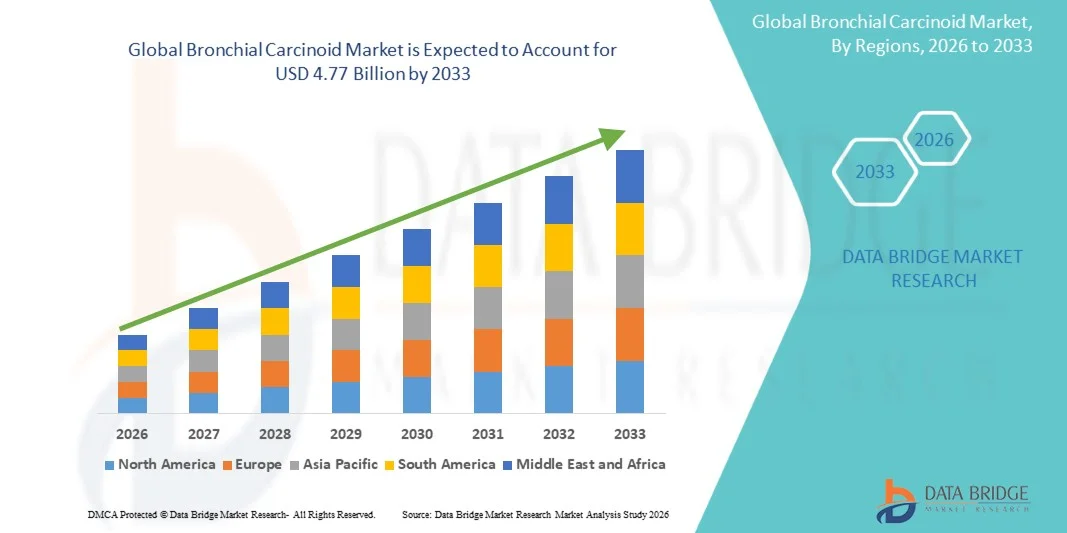
- The global bronchial carcinoid market size was valued at USD 2.15 billion in 2025and is expected to reach USD 4.77 billion by 2033, at a CAGR of 10.50% during the forecast period
- The market growth is largely fueled by the increasing incidence of neuroendocrine tumors, including bronchial carcinoid, along with advancements in diagnostic imaging and molecular testing techniques, leading to earlier and more accurate disease detection and improved treatment planning
- Furthermore, rising adoption of targeted therapies, immunotherapy approaches, and minimally invasive surgical techniques, along with growing clinical research in rare lung cancers, are establishing bronchial carcinoid management solutions as essential components of modern oncology care. These converging factors are accelerating the uptake of bronchial carcinoid treatment solutions, thereby significantly boosting the industry's growth
Bronchial Carcinoid Market Analysis
- Bronchial carcinoid, a subtype of neuroendocrine tumor of the lung, is increasingly managed through advanced diagnostic imaging, surgical resection techniques, and targeted therapies due to improved understanding of tumor biology and earlier detection rates
- The escalating demand for bronchial carcinoid treatment is primarily fueled by rising incidence of neuroendocrine tumors, growing awareness among clinicians, advancements in molecular diagnostics, and increasing adoption of personalized oncology therapies
- North America dominated the bronchial carcinoid market with the largest revenue share of 38.7% in 2025, characterized by advanced oncology infrastructure, high adoption of precision medicine, strong presence of key pharmaceutical and biotech players, and increasing clinical research activities in rare lung cancers
- Asia-Pacific is expected to be the fastest growing region in the bronchial carcinoid market during the forecast period due to improving cancer care infrastructure, rising healthcare expenditure, increasing awareness of rare cancers, and expanding access to advanced diagnostic and treatment options
- The Surgery segment held the largest market revenue share of 64.9% in 2025, driven by its role as the primary curative treatment option for localized tumors
Report Scope and Bronchial Carcinoid Market Segmentation
|
Attributes |
Bronchial Carcinoid Key Market Insights |
|
Segments Covered |
|
|
Countries Covered |
North America · U.S. · Canada · Mexico Europe · Germany · France · U.K. · Netherlands · Switzerland · Belgium · Russia · Italy · Spain · Turkey · Rest of Europe Asia-Pacific · China · Japan · India · South Korea · Singapore · Malaysia · Australia · Thailand · Indonesia · Philippines · Rest of Asia-Pacific Middle East and Africa · Saudi Arabia · U.A.E. · South Africa · Egypt · Israel · Rest of Middle East and Africa South America · Brazil · Argentina · Rest of South America |
|
Key Market Players |
· F. Hoffmann-La Roche Ltd. (Switzerland) · Novartis AG (Switzerland) · Pfizer Inc. (U.S.) · Merck & Co., Inc. (U.S.) · AstraZeneca plc (U.K.) · Bristol-Myers Squibb Company (U.S.) · Eli Lilly and Company (U.S.) · Sanofi S.A. (France) · Amgen Inc. (U.S.) · AbbVie Inc. (U.S.) · Takeda Pharmaceutical Company Limited (Japan) · Boehringer Ingelheim International GmbH (Germany) · Johnson & Johnson (U.S.) · Sun Pharmaceutical Industries Ltd. (India) · Cipla Limited (India) · Dr. Reddy’s Laboratories Ltd. (India) · Lupin Limited (India) · Hikma Pharmaceuticals plc (U.K.) · Zydus Lifesciences Ltd. (India) · Ipsen S.A. (France) |
|
Market Opportunities |
· Advancement in Targeted Therapies and Immuno-Oncology · Rising Adoption of Early Diagnostic Imaging and Biomarker Testing |
|
Value Added Data Infosets |
In addition to the insights on market scenarios such as market value, growth rate, segmentation, geographical coverage, and major players, the market reports curated by the Data Bridge Market Research also include in-depth expert analysis, patient epidemiology, pipeline analysis, pricing analysis, and regulatory framework. |
Bronchial Carcinoid Market Trends
“Advancing Patient Care Through AI-Enabled Precision and Digital Integration”
- A significant and accelerating trend in the global bronchial carcinoid market is the increasing adoption of precision medicine approaches supported by artificial intelligence (AI)-driven diagnostic and treatment planning tools. These technologies are improving early detection accuracy, refining tumor classification, and enabling more personalized therapeutic decision-making for better clinical outcomes
- For instance, advanced AI-enabled imaging platforms and pathology analysis tools are being used to enhance the interpretation of CT scans, PET-CT, and histopathological slides in bronchial carcinoid cases. This is helping clinicians identify tumor grade and progression patterns earlier, thereby supporting timely and targeted intervention strategies
- AI integration in bronchial carcinoid management is also enabling predictive analytics for disease progression, helping physicians anticipate tumor behavior and optimize treatment pathways. These systems can analyze large datasets from electronic health records and clinical trials to suggest more effective combinations of therapies such as somatostatin analogs and targeted agents
- The growing integration of digital health platforms with oncology workflows is facilitating more centralized and coordinated patient management across multidisciplinary teams. Through unified clinical dashboards, oncologists can monitor imaging results, biomarker trends, and treatment responses in a more streamlined and efficient manner
- This shift toward data-driven and highly personalized oncology care is fundamentally reshaping expectations in the management of neuroendocrine tumors such as bronchial carcinoid. Consequently, healthcare providers are increasingly adopting molecular profiling and advanced imaging techniques to improve diagnostic precision and therapeutic outcomes
- The demand for advanced diagnostic and therapeutic solutions in bronchial carcinoid management is growing rapidly across hospitals and specialty oncology centers, as clinicians increasingly prioritize precision-based treatment strategies and improved patient survival outcomes
Bronchial Carcinoid Market Dynamics
Driver
“Rising Incidence, Improved Diagnostics, and Expanding Treatment Landscape”
- The increasing incidence of neuroendocrine tumors, including bronchial carcinoid, is a major driver contributing to the growth of the global market. This rise is further supported by improved diagnostic capabilities that are enabling earlier and more accurate detection of the disease
- For instance, advancements in imaging modalities such as Ga-68 PET/CT scans and endobronchial ultrasound have significantly improved the identification and staging of bronchial carcinoid tumors. These innovations are expected to enhance treatment planning and improve long-term patient outcomes across clinical settings
- The growing availability of targeted therapies such as somatostatin analogs, everolimus, and peptide receptor radionuclide therapy (PRRT) is expanding the treatment landscape for bronchial carcinoid patients. These therapies are offering improved disease control and extended progression-free survival compared to traditional chemotherapy approaches
- Increasing awareness among healthcare professionals regarding neuroendocrine tumors is also contributing to higher diagnosis rates and earlier intervention. This is particularly important in improving prognosis, as bronchial carcinoid tumors often progress slowly but require timely management to prevent complications
- The rising investment in oncology research and clinical trials is further accelerating innovation in treatment strategies for bronchial carcinoid. This is leading to the development of next-generation targeted therapies and combination regimens aimed at improving patient outcomes
Restraint/Challenge
“High Treatment Costs, Limited Awareness, and Clinical Complexity”
- One of the key challenges in the bronchial carcinoid market is the high cost associated with advanced diagnostic procedures and targeted therapies. These expenses can limit access to optimal treatment, particularly in low- and middle-income healthcare settings
- For instance, therapies such as PRRT and targeted biologics often require specialized infrastructure and long-term administration, increasing the overall financial burden on patients and healthcare systems. This can result in delayed or incomplete treatment in resource-constrained regions
- The complexity of disease management, which often requires multidisciplinary coordination between oncologists, pulmonologists, and radiologists, can further slow down treatment initiation. This complexity also increases the need for specialized care centers, which may not be widely accessibl
- In addition, regulatory challenges and lengthy approval processes for novel therapies can delay the introduction of new treatment options into the market. This slows down innovation adoption and restricts timely access to potentially life-improving therapies for patients
Bronchial Carcinoid Market Scope
The market is segmented on the basis of types, treatment, route of administration, end-users, and distribution channel.
- By Types
On the basis of types, the Bronchial Carcinoid market is segmented into Central Bronchial Carcinoids, Peripheral Bronchial Carcinoids, and Others. The Central Bronchial Carcinoids segment dominated the largest market revenue share of 57.4% in 2025, driven by its higher prevalence and earlier detection due to airway obstruction symptoms. These tumors are more clinically significant as they often present with cough, hemoptysis, and respiratory distress, leading to early diagnosis. Increased use of bronchoscopy and imaging techniques supports higher detection rates. Surgical resection is more frequently performed in central cases, boosting treatment demand. Rising awareness among clinicians improves identification rates. Strong hospital-based diagnosis infrastructure supports segment dominance. Increasing incidence in smoking populations further contributes to growth. Advanced diagnostic imaging enhances detection accuracy. Growing healthcare access improves early intervention. Continuous improvement in thoracic oncology care supports outcomes. Expanding clinical screening programs further strengthen demand.
The Peripheral Bronchial Carcinoids segment is expected to witness the fastest CAGR of 22.6% from 2026 to 2033, driven by improved imaging technologies such as CT and PET scans. These tumors are often asymptomatic, leading to increased incidental detection. Rising adoption of advanced diagnostic tools improves identification rates. Increasing awareness among healthcare professionals supports early diagnosis. Growth in minimally invasive biopsy techniques accelerates detection. Expanding oncology screening programs further boost identification. Advancements in radiological imaging enhance accuracy. Increasing healthcare infrastructure in emerging economies supports diagnosis. Rising incidence of lung-related disorders contributes to detection. Improved pathology services strengthen confirmation rates. Growing focus on rare tumor diagnosis fuels expansion.
- By Treatment
On the basis of treatment, the Bronchial Carcinoid market is segmented into Surgery, Radiation, Chemotherapy, and Others. The Surgery segment held the largest market revenue share of 64.9% in 2025, driven by its role as the primary curative treatment option for localized tumors. Surgical resection offers high survival rates in early-stage cases. Increasing use of minimally invasive thoracic surgery supports adoption. Advancements in robotic-assisted procedures improve outcomes. Rising diagnosis of operable tumors boosts surgical volume. Strong hospital infrastructure supports complex surgeries. Favorable treatment guidelines recommend surgical intervention. Increasing awareness of early-stage detection enhances eligibility. Expanding oncology surgical expertise supports demand. Improved post-operative care increases success rates. Growing healthcare investments strengthen surgical capacity.
The Chemotherapy segment is expected to witness the fastest CAGR of 21.8% from 2026 to 2033, driven by rising cases of advanced and metastatic bronchial carcinoid tumors. Chemotherapy is essential for non-operable cases. Increasing use of combination therapies improves outcomes. Advancements in targeted drug development enhance efficacy. Rising cancer burden globally supports demand. Growing clinical trials for novel agents accelerate adoption. Expanding oncology treatment access in developing regions boosts usage. Improved diagnostic staging increases therapy selection. Rising awareness of systemic treatment benefits supports growth. Increasing healthcare expenditure strengthens adoption. Development of personalized treatment regimens further drives expansion.
- By Route of Administration
On the basis of route of administration, the Bronchial Carcinoid market is segmented into Oral, Parenteral, and Others. The Oral segment dominated the largest market revenue share of 52.3% in 2025, driven by ease of administration and strong patient compliance. Oral therapies are widely used in long-term cancer management. Convenience and outpatient suitability support adoption. Increasing availability of oral targeted therapies enhances usage. Strong preference for non-invasive treatment boosts demand. Expanding pharmaceutical innovations improve drug formulations. Growing shift toward home-based care supports oral administration. Improved adherence programs enhance treatment outcomes. Rising cancer therapy accessibility supports uptake. Favorable reimbursement policies strengthen adoption. Expanding oncology drug pipelines further support growth.
The Parenteral segment is expected to witness the fastest CAGR of 20.9% from 2026 to 2033, driven by increasing use in advanced-stage and aggressive tumor cases. Injectable therapies provide rapid systemic action. Hospital-based administration ensures controlled dosing. Rising use of biologics and monoclonal antibodies supports growth. Increasing incidence of metastatic tumors boosts demand. Advancements in infusion technologies improve safety. Expanding oncology infusion centers enhance accessibility. Growth in targeted parenteral therapies accelerates adoption. Improved clinical protocols support effectiveness. Rising investment in cancer biologics strengthens pipeline development. Expanding hospital infrastructure further drives growth.
- By End-Users
On the basis of end-users, the Bronchial Carcinoid market is segmented into Hospitals, Homecare, Specialty Centres, and Others. The Hospitals segment accounted for the largest market revenue share of 61.2% in 2025, driven by advanced diagnostic and treatment infrastructure. Hospitals manage most surgical and complex oncology cases. Availability of multidisciplinary teams supports effective treatment. Increasing hospital admissions for cancer care boosts demand. Strong oncology departments enhance treatment outcomes. Government healthcare support strengthens hospital utilization. Availability of advanced imaging and surgical tools supports dominance. High patient inflow increases service volume. Established referral systems improve access. Expanding hospital oncology units further drive growth.
The Specialty Centres segment is expected to witness the fastest CAGR of 23.1% from 2026 to 2033, driven by increasing demand for specialized cancer care. These centres offer advanced targeted therapies and precision oncology. Rising preference for specialized treatment improves adoption. Expanding cancer care infrastructure supports growth. Increasing availability of expert oncologists enhances outcomes. Growth in personalized medicine boosts demand. Improved diagnostic capabilities strengthen specialization. Rising awareness of rare tumor management supports expansion. Development of advanced treatment protocols enhances care quality. Increasing investment in oncology centres drives growth. Expanding patient preference for specialized care further accelerates adoption.
- By Distribution Channel
On the basis of distribution channel, the Bronchial Carcinoid market is segmented into Hospital Pharmacy, Online Pharmacy, and Retail Pharmacy. The Hospital Pharmacy segment held the largest market revenue share of 48.7% in 2025, driven by strong linkage with hospital-based cancer treatment programs. Controlled drug dispensing ensures treatment compliance. High inpatient treatment volumes support demand. Government oncology programs rely on hospital pharmacies. Centralized procurement systems improve availability. Strong integration with oncology departments enhances efficiency. Established supply chains support distribution. Increasing hospital cancer cases boost consumption. Structured treatment protocols reinforce usage.
The Online Pharmacy segment is expected to witness the fastest CAGR of 24.2% from 2026 to 2033, driven by rising digital healthcare adoption. Increasing e-pharmacy penetration supports accessibility. Home delivery of oncology supportive drugs boosts convenience. Growing internet and smartphone usage accelerates adoption. Telemedicine integration enhances prescription access. Rising patient preference for privacy supports growth. Expansion of digital health platforms improves availability. Partnerships between pharma companies and online retailers strengthen supply chains. Improved logistics infrastructure supports timely delivery. Increasing shift toward digital healthcare ecosystems drives rapid expansion.
Bronchial Carcinoid Market Regional Analysis
- North America dominated the Bronchial Carcinoid market with the largest revenue share of 38.7% in 2025, characterized by advanced oncology infrastructure, high adoption of precision medicine, strong presence of key pharmaceutical and biotech companies, and increasing clinical research activities in rare lung cancers
- The region benefits from well-established cancer care networks, early adoption of targeted therapies, and robust regulatory support for orphan drug development. In addition, ongoing advancements in molecular diagnostics and personalized treatment approaches are further strengthening market growth, with the U.S. leading due to strong research pipelines and improved patient access to specialized oncology care
- Patients and healthcare providers in the region highly value the availability of targeted therapies, improved diagnostic accuracy, and access to multidisciplinary cancer care centers. The increasing use of advanced imaging, biomarker-based testing, and minimally invasive treatment approaches is enhancing early detection and treatment outcomes for bronchial carcinoid tumors. This is further supported by high healthcare expenditure, strong clinical trial activity, and continuous innovation in oncology drug development
U.S. Bronchial Carcinoid Market Insight
The U.S. Bronchial Carcinoid market captured the largest revenue share in 2025 within North America, driven by strong oncology research infrastructure, high adoption of novel targeted therapies, and increasing diagnosis rates of neuroendocrine lung tumors. The country is witnessing growing utilization of precision medicine approaches, including somatostatin analogs and peptide receptor radionuclide therapy (PRRT). In addition, the presence of leading pharmaceutical companies, active clinical trials, and favorable reimbursement policies are significantly contributing to market expansion.
Europe Bronchial Carcinoid Market Insight
The Europe Bronchial Carcinoid market is projected to expand at a substantial CAGR throughout the forecast period, primarily driven by increasing awareness of rare cancers, strong healthcare systems, and growing adoption of advanced oncology treatments. The region’s focus on early diagnosis, combined with expanding access to specialized cancer care centers, is supporting market growth. Furthermore, rising investments in oncology research and cross-border collaboration in rare cancer studies are enhancing treatment availability and innovation.
U.K. Bronchial Carcinoid Market Insight
The U.K. Bronchial Carcinoid market is anticipated to grow at a noteworthy CAGR during the forecast period, driven by improved cancer screening programs, rising awareness of neuroendocrine tumors, and strong National Health Service (NHS) support for oncology care. The increasing availability of advanced diagnostic tools and targeted therapies is improving patient outcomes. In addition, ongoing research initiatives in rare cancers are supporting market development.
Germany Bronchial Carcinoid Market Insight
The Germany Bronchial Carcinoid market is expected to expand at a considerable CAGR during the forecast period, supported by advanced healthcare infrastructure, strong oncology expertise, and increasing focus on precision medicine. The country’s emphasis on early cancer detection and access to innovative treatment options is driving adoption of advanced therapies. Moreover, growing participation in clinical trials for rare cancers is further contributing to market growth.
Asia-Pacific Bronchial Carcinoid Market Insight
The Asia-Pacific Bronchial Carcinoid market is expected to be the fastest growing region during the forecast period, driven by improving cancer care infrastructure, rising healthcare expenditure, increasing awareness of rare cancers, and expanding access to advanced diagnostic and treatment options. Rapid improvements in oncology services and government initiatives to strengthen cancer care systems are significantly supporting regional growth.
Japan Bronchial Carcinoid Market Insight
The Japan Bronchial Carcinoid market is gaining momentum due to the country’s advanced healthcare system, strong focus on early cancer detection, and increasing adoption of precision oncology approaches. The availability of sophisticated diagnostic imaging and targeted treatment options is improving disease management. In addition, Japan’s aging population is contributing to higher demand for specialized cancer care services.
China Bronchial Carcinoid Market Insight
The China Bronchial Carcinoid market accounted for the largest market revenue share in Asia Pacific in 2025, attributed to rapid improvements in healthcare infrastructure, increasing cancer awareness, and growing access to advanced diagnostic technologies. The country is witnessing rising adoption of targeted therapies and expanding oncology treatment capabilities. Government support for cancer research and the presence of domestic pharmaceutical companies are key factors driving market growth in China.
China Bronchial Carcinoid Market Insight
- North America dominated the bronchial carcinoid market with the largest revenue share of 38.7% in 2025, characterized by advanced oncology infrastructure, high adoption of precision medicine, strong presence of key pharmaceutical and biotech companies, and increasing clinical research activities in rare lung cancers
- The region benefits from well-established cancer care networks, early adoption of targeted therapies, and robust regulatory support for orphan drug development. In addition, ongoing advancements in molecular diagnostics and personalized treatment approaches are further strengthening market growth, with the U.S. leading due to strong research pipelines and improved patient access to specialized oncology care
- Patients and healthcare providers in the region highly value the availability of targeted therapies, improved diagnostic accuracy, and access to multidisciplinary cancer care centers. The increasing use of advanced imaging, biomarker-based testing, and minimally invasive treatment approaches is enhancing early detection and treatment outcomes for bronchial carcinoid tumors. This is further supported by high healthcare expenditure, strong clinical trial activity, and continuous innovation in oncology drug development
U.S. Bronchial Carcinoid Market Insight
The U.S. bronchial carcinoid market captured the largest revenue share in 2025 within North America, driven by strong oncology research infrastructure, high adoption of novel targeted therapies, and increasing diagnosis rates of neuroendocrine lung tumors. The country is witnessing growing utilization of precision medicine approaches, including somatostatin analogs and peptide receptor radionuclide therapy (PRRT). In addition, the presence of leading pharmaceutical companies, active clinical trials, and favorable reimbursement policies are significantly contributing to market expansion.
Europe Bronchial Carcinoid Market Insight
The Europe bronchial carcinoid market is projected to expand at a substantial CAGR throughout the forecast period, primarily driven by increasing awareness of rare cancers, strong healthcare systems, and growing adoption of advanced oncology treatments. The region’s focus on early diagnosis, combined with expanding access to specialized cancer care centers, is supporting market growth. Furthermore, rising investments in oncology research and cross-border collaboration in rare cancer studies are enhancing treatment availability and innovation.
U.K. Bronchial Carcinoid Market Insight
The U.K. bronchial carcinoid market is anticipated to grow at a noteworthy CAGR during the forecast period, driven by improved cancer screening programs, rising awareness of neuroendocrine tumors, and strong National Health Service (NHS) support for oncology care. The increasing availability of advanced diagnostic tools and targeted therapies is improving patient outcomes. In addition, ongoing research initiatives in rare cancers are supporting market development.
Germany Bronchial Carcinoid Market Insight
The Germany bronchial carcinoid market is expected to expand at a considerable CAGR during the forecast period, supported by advanced healthcare infrastructure, strong oncology expertise, and increasing focus on precision medicine. The country’s emphasis on early cancer detection and access to innovative treatment options is driving adoption of advanced therapies. Moreover, growing participation in clinical trials for rare cancers is further contributing to market growth.
Asia-Pacific Bronchial Carcinoid Market Insight
The Asia-Pacific bronchial carcinoid market is expected to be the fastest growing region during the forecast period, driven by improving cancer care infrastructure, rising healthcare expenditure, increasing awareness of rare cancers, and expanding access to advanced diagnostic and treatment options. Rapid improvements in oncology services and government initiatives to strengthen cancer care systems are significantly supporting regional growth.
Japan Bronchial Carcinoid Market Insight
The Japan bronchial carcinoid market is gaining momentum due to the country’s advanced healthcare system, strong focus on early cancer detection, and increasing adoption of precision oncology approaches. The availability of sophisticated diagnostic imaging and targeted treatment options is improving disease management. In addition, Japan’s aging population is contributing to higher demand for specialized cancer care services.
China Bronchial Carcinoid Market Insight
The China bronchial carcinoid market accounted for the largest market revenue share in Asia Pacific in 2025, attributed to rapid improvements in healthcare infrastructure, increasing cancer awareness, and growing access to advanced diagnostic technologies. The country is witnessing rising adoption of targeted therapies and expanding oncology treatment capabilities. Government support for cancer research and the presence of domestic pharmaceutical companies are key factors driving market growth in China.
Bronchial Carcinoid Market Share
The Bronchial Carcinoid industry is primarily led by well-established companies, including:
- Hoffmann-La Roche Ltd. (Switzerland)
- Novartis AG (Switzerland)
- Pfizer Inc. (U.S.)
- Merck & Co., Inc. (U.S.)
- AstraZeneca plc (U.K.)
- Bristol-Myers Squibb Company (U.S.)
- Eli Lilly and Company (U.S.)
- Sanofi S.A. (France)
- Amgen Inc. (U.S.)
- AbbVie Inc. (U.S.)
- Takeda Pharmaceutical Company Limited (Japan)
- Boehringer Ingelheim International GmbH (Germany)
- Johnson & Johnson (U.S.)
- Sun Pharmaceutical Industries Ltd. (India)
- Cipla Limited (India)
- Reddy’s Laboratories Ltd. (India)
- Lupin Limited (India)
- Hikma Pharmaceuticals plc (U.K.)
- Zydus Lifesciences Ltd. (India)
- Ipsen S.A. (France)
Latest Developments in Global Bronchial Carcinoid Market
- In June 2021, global neuroendocrine tumor treatment guidelines highlighted the growing role of somatostatin analogs such as octreotide and lanreotide for bronchial carcinoid tumors, especially in symptom control and disease stabilization in patients with somatostatin receptor–positive lung neuroendocrine tumors
- In November 2021, the North American Neuroendocrine Tumor Society (NANETS) released updated consensus recommendations stating that peptide receptor radionuclide therapy (PRRT), including lutetium-177 dotatate, may be considered for somatostatin receptor–positive bronchopulmonary neuroendocrine tumors, although its use was still largely recommended within clinical trial settings due to limited evidence
- In June 2022, clinical oncology updates emphasized expanding use of targeted therapies such as everolimus and sunitinib in advanced lung neuroendocrine tumors, including bronchial carcinoids, particularly in progressive or metastatic disease where surgery and somatostatin analogs are insufficient
- In May 2022, Novartis temporarily suspended production of radiopharmaceutical therapies including Lutathera (lutetium Lu 177 dotatate) due to manufacturing quality reviews, impacting supply of PRRT used in somatostatin receptor–positive neuroendocrine tumors, including bronchial carcinoid cases in selected advanced patients
- In April 2024, the U.S. FDA expanded approval of Lutathera (lutetium Lu 177 dotatate) to include pediatric patients aged 12 years and older with somatostatin receptor–positive neuroendocrine tumors, further strengthening the role of PRRT in neuroendocrine tumors, including bronchial carcinoid spectrum diseases
- In October 2024, FDA approvals in lung cancer and neuroendocrine tumor management highlighted increased use of combination immunotherapy and targeted therapy approaches, reinforcing a broader shift toward personalized treatment strategies in pulmonary neuroendocrine tumors, including atypical and typical bronchial carcinoids
- In May 2025, the FDA approved belzutifan (HIF-2α inhibitor) for metastatic or unresectable pheochromocytoma and paraganglioma, marking a broader advancement in hypoxia-pathway targeting therapies that are also being investigated across neuroendocrine tumor subtypes, including pulmonary carcinoid disease research pipelines

- Interactive Data Analysis Dashboard
- Company Analysis Dashboard for high growth potential opportunities
- Research Analyst Access for customization & queries
- Competitor Analysis with Interactive dashboard
- Latest News, Updates & Trend analysis
- Harness the Power of Benchmark Analysis for Comprehensive Competitor Tracking
Data collection and base year analysis are done using data collection modules with large sample sizes. The stage includes obtaining market information or related data through various sources and strategies. It includes examining and planning all the data acquired from the past in advance. It likewise envelops the examination of information inconsistencies seen across different information sources. The market data is analysed and estimated using market statistical and coherent models. Also, market share analysis and key trend analysis are the major success factors in the market report. To know more, please request an analyst call or drop down your inquiry.
The key research methodology used by DBMR research team is data triangulation which involves data mining, analysis of the impact of data variables on the market and primary (industry expert) validation. Data models include Vendor Positioning Grid, Market Time Line Analysis, Market Overview and Guide, Company Positioning Grid, Patent Analysis, Pricing Analysis, Company Market Share Analysis, Standards of Measurement, Global versus Regional and Vendor Share Analysis. To know more about the research methodology, drop in an inquiry to speak to our industry experts.
Data Bridge Market Research is a leader in advanced formative research. We take pride in servicing our existing and new customers with data and analysis that match and suits their goal. The report can be customized to include price trend analysis of target brands understanding the market for additional countries (ask for the list of countries), clinical trial results data, literature review, refurbished market and product base analysis. Market analysis of target competitors can be analyzed from technology-based analysis to market portfolio strategies. We can add as many competitors that you require data about in the format and data style you are looking for. Our team of analysts can also provide you data in crude raw excel files pivot tables (Fact book) or can assist you in creating presentations from the data sets available in the report.












