


Buschke–Ollendorff Syndrome Market Size
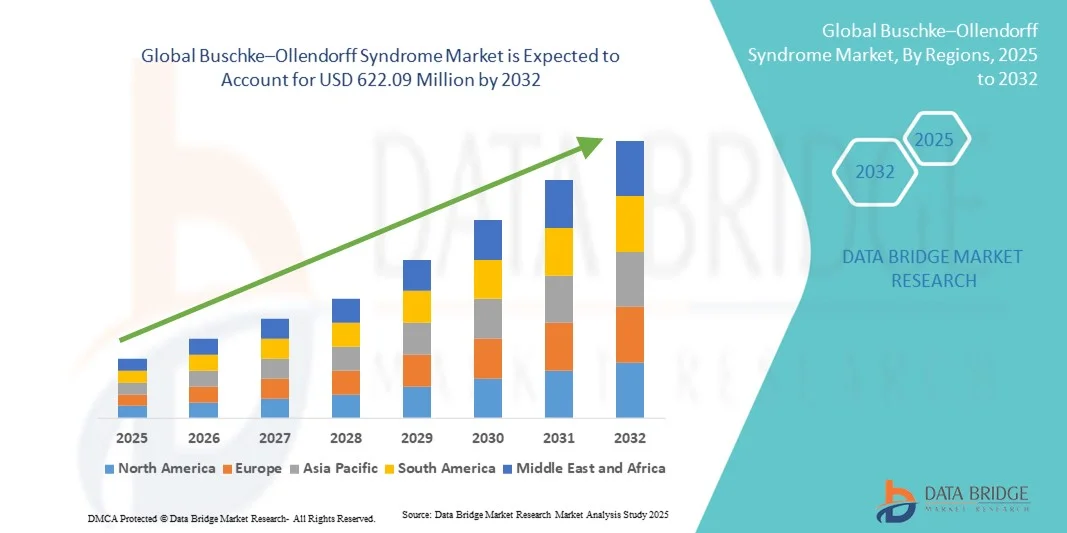
- The global Buschke–Ollendorff Syndrome market size was valued at USD 458.07 million in 2024 and is expected to reach USD 622.09 million by 2032, at a CAGR of 3.90% during the forecast period
- The market growth is largely fueled by increasing awareness, early diagnosis, and advancements in therapeutic interventions for rare genetic disorders, including Buschke–Ollendorff Syndrome. Improved understanding of the disease pathology is enabling better clinical management and patient outcomes
- Furthermore, rising demand for effective treatment options, supportive care, and personalized management plans is driving the adoption of Buschke–Ollendorff Syndrome solutions. Expansion of specialized clinics, growing availability of diagnostic tools, and advancements in medical research are significantly contributing to market growth
Buschke–Ollendorff Syndrome Market Analysis
- Buschke–Ollendorff Syndrome, a rare connective tissue disorder, is gaining increasing attention in healthcare due to rising awareness, improved diagnostic techniques, and advances in treatment options. The market growth is largely driven by the need for early diagnosis and effective management of symptoms to improve patient quality of life
- The escalating demand for effective Buschke–Ollendorff Syndrome therapies is primarily fueled by growing awareness among clinicians and patients, increasing prevalence of connective tissue disorders, and the expansion of specialized treatment centers offering pharmacological, surgical, and genetic counseling interventions
- North America dominated the Buschke–Ollendorff Syndrome market with the largest revenue share of 45% in 2024, supported by advanced healthcare infrastructure, high awareness of rare connective tissue disorders, and the presence of key pharmaceutical and medical device players, with the U.S. showing notable growth in both hospital and outpatient treatment settings
- Asia-Pacific is expected to be the fastest-growing region in the Buschke–Ollendorff Syndrome market during the forecast period, driven by rising healthcare access, increasing disposable incomes, and the expansion of specialized treatment centers in countries such as India, China, and Japan
- The oral segment dominated the Buschke–Ollendorff Syndrome market with the largest market revenue share of 61.2% in 2024, attributed to the convenience, patient compliance, and ease of self-administration associated with oral medications
Report Scope and Buschke–Ollendorff Syndrome Market Segmentation
|
Attributes |
Buschke–Ollendorff Syndrome Key Market Insights |
|
Segments Covered |
|
|
Countries Covered |
North America
Europe
Asia-Pacific
Middle East and Africa
South America
|
|
Market Opportunities |
|
|
Value Added Data Infosets |
In addition to the insights on market scenarios such as market value, growth rate, segmentation, geographical coverage, and major players, the market reports curated by the Data Bridge Market Research also include in-depth expert analysis, pricing analysis, brand share analysis, consumer survey, demography analysis, supply chain analysis, value chain analysis, raw material/consumables overview, vendor selection criteria, PESTLE Analysis, Porter Analysis, and regulatory framework. |
Buschke–Ollendorff Syndrome Market Trends
Rising Awareness and Advancements in Diagnosis and Treatment
- A significant and accelerating trend in the global Buschke–Ollendorff Syndrome market is the increasing awareness of the disorder among healthcare professionals and patients, coupled with advances in diagnostic techniques such as imaging and genetic testing. This is significantly enhancing early detection and timely intervention
- For instance, specialized centers and hospitals are now integrating multidisciplinary approaches combining pharmacological management, surgical interventions, and genetic counseling to offer comprehensive care for patients with Buschke–Ollendorff Syndrome
- Advancements in treatment options, including innovative medications and minimally invasive procedures, are improving patient outcomes and quality of life, while also driving demand for specialized healthcare services
- The growing prevalence of connective tissue disorders and the associated complications, such as skin lesions and skeletal abnormalities, are encouraging healthcare providers to adopt targeted management strategies, ensuring better monitoring and care
- Healthcare providers are increasingly focusing on patient education and awareness campaigns to promote early diagnosis and adherence to treatment protocols, which is reshaping the expectations for disease management
- The demand for specialized therapies and treatment programs is growing rapidly across hospitals, clinics, and specialty centers, as patients and caregivers seek effective management solutions for Buschke–Ollendorff Syndrome
Buschke–Ollendorff Syndrome Market Dynamics
Driver
Growing Need Due to Rising Awareness and Advanced Treatment Options
- The increasing recognition of Buschke–Ollendorff Syndrome among healthcare professionals and patients, coupled with advancements in diagnostic and treatment methods, is a significant driver for the heightened demand in the market
- For instance, in April 2024, specialized clinics in the U.S. expanded their diagnostic services by integrating advanced imaging and genetic testing technologies, enhancing early detection and management strategies for Buschke–Ollendorff Syndrome. Such initiatives by key medical institutions are expected to drive market growth in the forecast period
- As patients and caregivers become more aware of potential complications, including skeletal abnormalities and connective tissue manifestations, the demand for comprehensive treatment options—including medication, surgical interventions, and genetic counseling—is rising, providing a compelling opportunity for healthcare providers
- Furthermore, the increasing focus on patient education, awareness campaigns, and early intervention programs is improving disease management outcomes and driving adoption of specialized therapies across clinics and hospitals
- The availability of multidisciplinary care programs, combining medication, surgery, and ongoing monitoring, is a key factor propelling market growth, as patients seek integrated solutions for effective management of Buschke–Ollendorff Syndrome
Restraint/Challenge
Limited Awareness, High Treatment Costs, and Accessibility Constraints
- Limited awareness of Buschke–Ollendorff Syndrome, along with the rarity of the condition, results in delayed diagnosis and treatment, which poses a challenge to broader market penetration
- The high cost of specialized diagnostic procedures, genetic testing, and advanced treatment options can be prohibitive, particularly in developing regions or for uninsured patients
- Limited availability of expert clinicians and specialized treatment centers constrains access to optimal care, reducing treatment adoption rates
- Awareness campaigns and physician education are still underdeveloped in many regions, further limiting early intervention and management
- High treatment costs also affect patient adherence and uptake of newer therapies, while inconsistent insurance coverage for rare disease management exacerbates the challenge
- Patient hesitancy and lack of understanding about disease progression reduce early diagnosis and timely treatment adoption
- Addressing these challenges through cost reduction strategies, expansion of specialized care centers, and increased awareness initiatives will be crucial for sustained market growth
Buschke–Ollendorff Syndrome Market Scope
The market is segmented on the basis of diagnosis, treatment, route of administration, distribution channel, and end-users.
- By Diagnosis
On the basis of diagnosis, the Buschke–Ollendorff Syndrome market is segmented into physical examination and biopsy. The physical examination segment dominated the largest market revenue share of 52.3% in 2024, driven by the accessibility, cost-effectiveness, and reliability of clinical evaluations in detecting characteristic skin and connective tissue manifestations. Physical examinations allow clinicians to identify hallmark nodules and skin elasticity changes, facilitating early intervention and improved patient management. Routine examinations in specialty clinics and hospitals, coupled with physician familiarity with syndrome indicators, reinforce its widespread adoption. The segment’s dominance is further supported by its integration into initial patient screening protocols and follow-up visits, ensuring consistent monitoring.
The biopsy segment is expected to witness the fastest CAGR of 22.5% from 2025 to 2032, fueled by the increasing need for confirmatory diagnostic tests, particularly in complex or atypical presentations. Biopsies provide definitive histopathological evidence, aiding in precise treatment planning. Growing awareness among healthcare providers regarding the benefits of biopsy-driven diagnosis, combined with advancements in minimally invasive sampling techniques, is driving adoption. Furthermore, patient preference for accurate, evidence-based diagnosis and the rising number of specialized dermatology and genetic clinics contribute to rapid growth in this segment.
- By Treatment
On the basis of treatment, the Buschke–Ollendorff Syndrome market is segmented into medication and surgery. The medication segment dominated the largest market revenue share of 58.7% in 2024, owing to its non-invasive nature and effectiveness in managing symptoms such as pain, joint stiffness, and connective tissue abnormalities. Medications, including anti-inflammatory and pain-relieving therapies, are widely used across hospitals and specialty clinics, enhancing patient compliance and long-term management. The segment’s dominance is reinforced by the availability of standardized treatment protocols, affordability compared to surgical interventions, and ease of administration across diverse patient demographics.
The surgery segment is expected to witness the fastest CAGR of 19.8% from 2025 to 2032, driven by the rising demand for corrective procedures in patients with severe skeletal deformities or functional impairments. Technological advancements in minimally invasive surgical techniques and growing expertise among orthopedic and genetic specialists are supporting this trend. Increasing patient awareness about corrective options and the expansion of specialty surgical centers further accelerate adoption, particularly in urbanized regions with advanced healthcare infrastructure. In addition, favorable reimbursement policies and insurance coverage for surgical interventions are encouraging more patients to opt for these procedures, contributing to market growth.
- By Route of Administration
On the basis of route of administration, the Buschke–Ollendorff Syndrome market is segmented into oral and intravenous. The oral segment dominated the largest market revenue share of 61.2% in 2024, attributed to the convenience, patient compliance, and ease of self-administration associated with oral medications. Oral therapies are particularly preferred for long-term symptom management and are widely prescribed across hospitals and homecare settings. The availability of standardized dosing regimens and patient education programs reinforces its leading position in the market.
The intravenous segment is expected to witness the fastest CAGR of 21.4% from 2025 to 2032, driven by the growing use of IV-administered therapies for severe or acute cases. Hospitals and specialty clinics are increasingly adopting intravenous administration for rapid therapeutic effects, especially in patients unresponsive to oral medication. The trend is further supported by advancements in IV formulations, improved safety protocols, and expanding healthcare infrastructure in emerging regions. Moreover, increasing physician preference for controlled dosing and personalized treatment regimens is propelling adoption. Rising patient awareness about the efficacy and faster onset of IV therapies is also contributing to the segment’s growth.
- By Distribution Channel
On the basis of distribution channel, the Buschke–Ollendorff Syndrome market is segmented into hospital pharmacy, retail pharmacy, and online pharmacy. The hospital pharmacy segment dominated the largest market revenue share of 54.8% in 2024, driven by the centralized availability of medications, specialized guidance from healthcare professionals, and integration with hospital treatment protocols. Hospitals ensure that patients receive prescriptions immediately after consultations, promoting adherence to treatment plans. They also provide counseling on correct usage, side effects, and follow-up monitoring. The presence of multidisciplinary teams and access to advanced therapies further reinforces patient trust. In addition, hospital pharmacies benefit from established supply chains, ensuring consistent availability of rare or specialized medications. Their role in post-surgical and chronic care management makes them indispensable in syndrome-specific treatment. Institutional purchasing agreements and collaborations with pharmaceutical companies further strengthen their dominance in the market.
The online pharmacy segment is expected to witness the fastest CAGR of 23.1% from 2025 to 2032, fueled by the increasing adoption of digital health platforms and convenience of home delivery. Online pharmacies are particularly appealing to patients in remote or underserved regions, enabling access to specialized medications that may not be locally available. Subscription services and repeat-order features enhance patient adherence and convenience. The privacy offered by online channels is important for sensitive conditions, while teleconsultations complement online medication delivery. Digital platforms often provide detailed product information, dosage guidance, and reminders for follow-ups, increasing patient engagement. E-commerce expansion and smartphone penetration further accelerate adoption. Growing consumer comfort with online healthcare services supports rapid growth. Flexible payment options and wider geographic reach make online pharmacies a key growth driver for the market.
- By End-Users
On the basis of end-users, the Buschke–Ollendorff Syndrome market is segmented into hospitals, homecare, specialty clinics, and others. The hospitals segment dominated the largest market revenue share of 57.5% in 2024, driven by the concentration of diagnostic facilities, multidisciplinary treatment teams, and the ability to manage severe and complex cases effectively. Hospitals offer integrated care including diagnosis, treatment, and follow-up, providing patients with confidence in clinical outcomes. They also host clinical trials and access to experimental therapies, further enhancing their appeal. Patient trust is reinforced by structured treatment protocols and availability of advanced equipment. High patient inflow and insurance coverage facilitate wider adoption. Hospitals often collaborate with pharmaceutical companies to ensure the availability of rare medications. Specialized departments within hospitals, such as genetics and orthopedics, contribute to comprehensive syndrome management. The combination of expertise, infrastructure, and patient support services solidifies hospital dominance.
The specialty clinics segment is expected to witness the fastest CAGR of 20.7% from 2025 to 2032, owing to increasing specialization in genetic disorders and connective tissue diseases. Specialty clinics provide targeted care, advanced diagnostics, and personalized treatment plans, attracting patients seeking expert management beyond general hospital services. They often focus on rare syndromes, offering counseling, genetic testing, and ongoing monitoring. Awareness campaigns highlighting clinic-specific services are driving patient preference. Clinics provide flexible appointments, shorter wait times, and tailored therapies, enhancing patient satisfaction. Collaboration with research institutes and access to innovative treatment protocols further bolster their credibility. Expansion of specialty networks in urban and semi-urban areas is accelerating adoption. Patient outcomes and satisfaction rates promote trust, contributing to rapid growth in this segment.
Buschke–Ollendorff Syndrome Market Regional Analysis
- North America dominated the Buschke–Ollendorff Syndrome market with the largest revenue share of 45% in 2024, supported by advanced healthcare infrastructure, high awareness of rare connective tissue disorders, and the presence of key pharmaceutical and medical device players
- The market demonstrated notable growth in both hospital and outpatient treatment settings, driven by the increasing availability of diagnostic services, specialized clinics, and early intervention programs
- Rising investments in rare disease research and the development of targeted therapies further strengthened market adoption. The well-established healthcare network, coupled with high patient awareness and demand for effective management of genetic connective tissue disorders, continues to sustain market dominance in the region
U.S. Buschke–Ollendorff Syndrome Market Insight
The U.S. Buschke–Ollendorff Syndrome market is has a significant share during the forecast period, driven by increasing awareness of rare connective tissue disorders and the presence of advanced healthcare infrastructure. Widespread adoption of specialized diagnostic methods and treatment protocols in hospitals and outpatient centers is supporting market growth. Rising investments in rare disease research, coupled with growing patient awareness and early intervention programs, are further contributing to the expansion. The U.S. continues to see significant opportunities across both hospital and specialty clinic settings, particularly in regions with strong healthcare networks and active participation from key pharmaceutical and medical device players.
Europe Buschke–Ollendorff Syndrome Market Insight
The Europe Buschke–Ollendorff syndrome market is projected to expand at a substantial CAGR during the forecast period, primarily due to growing awareness about rare connective tissue disorders and increasing investment in healthcare infrastructure. Countries such as Germany, France, and the U.K. are witnessing enhanced adoption of advanced diagnostic methods and treatment protocols. Rising urbanization and increasing access to specialized clinics are supporting market growth. In addition, healthcare policies promoting rare disease management and a focus on early diagnosis are driving the region’s expansion. Europe continues to see significant opportunities across both hospital and outpatient settings, particularly in countries with strong healthcare systems.
U.K. Buschke–Ollendorff Syndrome Market Insight
The U.K. Buschke–Ollendorff syndrome market is anticipated to grow at a noteworthy CAGR during the forecast period, fueled by increasing awareness of rare connective tissue disorders and the availability of specialized treatment centers. Enhanced screening programs, coupled with the country’s well-developed healthcare infrastructure, encourage timely diagnosis and management. Rising investments in research, patient support initiatives, and clinical trials further bolster market growth. The focus on rare disease management and government-backed programs for genetic disorders also contributes to increasing adoption in hospitals and specialty clinics.
Germany Buschke–Ollendorff Syndrome Market Insight
The Germany Buschke–Ollendorff syndrome market is expected to expand at a considerable CAGR during the forecast period, driven by increasing awareness of rare connective tissue disorders and growing adoption of advanced diagnostic technologies. Germany’s robust healthcare infrastructure, emphasis on innovation, and availability of specialized treatment facilities promote the management of Buschke–Ollendorff Syndrome. Enhanced patient access to hospitals and outpatient care centers, along with ongoing research initiatives and collaborations with pharmaceutical companies, are key factors supporting market growth.
Asia-Pacific Buschke–Ollendorff Syndrome Market Insight
The Asia-Pacific Buschke–Ollendorff syndrome market is expected to be the fastest-growing region in the Buschke–Ollendorff Syndrome market during the forecast period, with a CAGR, driven by rising healthcare access, increasing disposable incomes, and the expansion of specialized treatment centers in countries such as India, China, and Japan. Rapid urbanization, growing patient awareness, and improving healthcare infrastructure are supporting the adoption of diagnostic and treatment services. Government initiatives for rare disease management, along with increasing investment by private healthcare providers, are further accelerating growth. The market is witnessing a surge in hospital and specialty clinic capabilities, enabling better treatment outcomes and wider patient reach.
Japan Buschke–Ollendorff Syndrome Market Insight
Japan Buschke–Ollendorff syndrome market is experiencing steady market growth due to its high-quality healthcare system, rising patient awareness, and availability of specialized treatment options. Increasing urbanization and demand for timely management of rare connective tissue disorders are boosting the adoption of diagnostic and therapeutic services. Japan’s focus on genetic research and patient support programs, combined with advanced hospital and outpatient facilities, contributes to the country’s expanding market presence.
China Buschke–Ollendorff Syndrome Market Insight
China Buschke–Ollendorff syndrome market accounted for the largest market revenue share in the Asia-Pacific region in 2024, attributed to increasing healthcare access, a growing middle class, and rising awareness of rare connective tissue disorders. The expansion of specialized treatment centers, improved diagnostic capabilities, and enhanced healthcare infrastructure are key factors driving market growth. In addition, increased government focus on rare disease management and growing investments from domestic and international pharmaceutical players are further propelling the market in China.
Latest Developments in Global Buschke–Ollendorff Syndrome Market
- In August 2025, Acta Dermato-Venereologica published a case series on Buschke–Ollendorff Syndrome, presenting six patients and highlighting the clinical and histopathological characteristics of the syndrome. This study aims to improve early recognition and management of BOS, providing clinicians with better diagnostic guidance
- In August 2025, Dermatology Reports reported a case of Buschke–Ollendorff Syndrome, describing asymptomatic yellowish papules and leg length discrepancy in a patient. The publication emphasizes the importance of early diagnosis for effective management and clinical awareness of BOS
- In August 2025, Endocrine Abstracts published a report on a rare case of Buschke–Ollendorff Syndrome in a 6-year-old girl, highlighting the genetic features and clinical presentation. The study underscores the significance of genetic testing and awareness of BOS in pediatric populations
- In February 2024, Lincoln Park Foot Doctor highlighted clinical manifestations of Buschke–Ollendorff Syndrome in the feet, including skin lesions and bone abnormalities. The report stresses early detection and management to improve patient outcomes
- In August 2023, the International Journal of Medical Sciences and Clinical Research Systems published a study on BOS, focusing on the role of LEMD3 gene mutations in its pathophysiology. This research provides deeper insights into the genetic basis of the syndrome and its clinical implications

- Interactive Data Analysis Dashboard
- Company Analysis Dashboard for high growth potential opportunities
- Research Analyst Access for customization & queries
- Competitor Analysis with Interactive dashboard
- Latest News, Updates & Trend analysis
- Harness the Power of Benchmark Analysis for Comprehensive Competitor Tracking
Data collection and base year analysis are done using data collection modules with large sample sizes. The stage includes obtaining market information or related data through various sources and strategies. It includes examining and planning all the data acquired from the past in advance. It likewise envelops the examination of information inconsistencies seen across different information sources. The market data is analysed and estimated using market statistical and coherent models. Also, market share analysis and key trend analysis are the major success factors in the market report. To know more, please request an analyst call or drop down your inquiry.
The key research methodology used by DBMR research team is data triangulation which involves data mining, analysis of the impact of data variables on the market and primary (industry expert) validation. Data models include Vendor Positioning Grid, Market Time Line Analysis, Market Overview and Guide, Company Positioning Grid, Patent Analysis, Pricing Analysis, Company Market Share Analysis, Standards of Measurement, Global versus Regional and Vendor Share Analysis. To know more about the research methodology, drop in an inquiry to speak to our industry experts.
Data Bridge Market Research is a leader in advanced formative research. We take pride in servicing our existing and new customers with data and analysis that match and suits their goal. The report can be customized to include price trend analysis of target brands understanding the market for additional countries (ask for the list of countries), clinical trial results data, literature review, refurbished market and product base analysis. Market analysis of target competitors can be analyzed from technology-based analysis to market portfolio strategies. We can add as many competitors that you require data about in the format and data style you are looking for. Our team of analysts can also provide you data in crude raw excel files pivot tables (Fact book) or can assist you in creating presentations from the data sets available in the report.












