Calcium Fortified Food Market Size
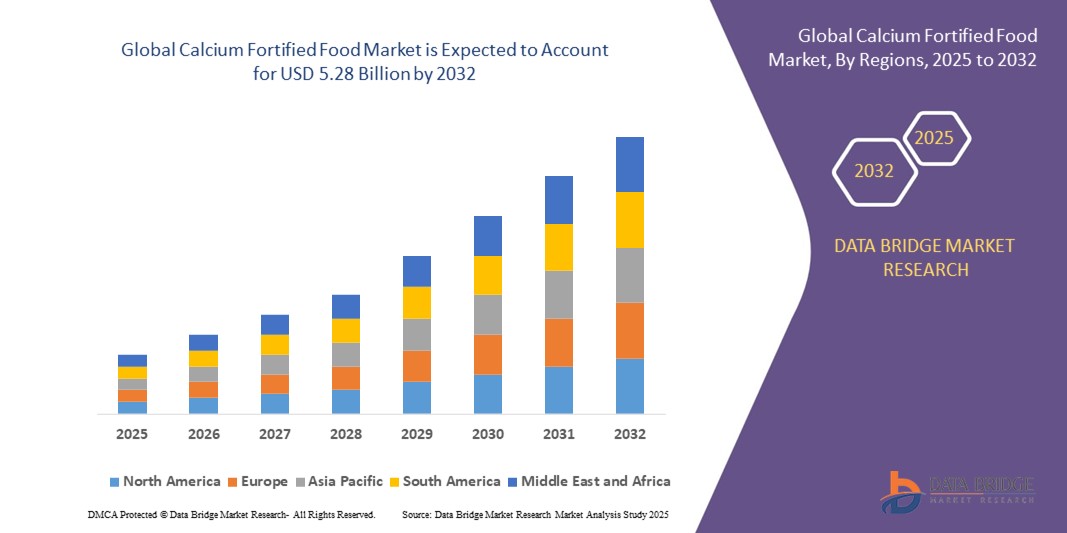
- The global calcium fortified food market size was valued at USD 3.55 billion in 2024 and is expected to reach USD 5.28 billion by 2032, at a CAGR of 5.10% during the forecast period
- The market growth is largely fueled by rising awareness of bone health, increasing prevalence of osteoporosis, and growing consumer preference for functional and fortified foods that support overall wellness
- Demand for convenient, nutrient-enriched products such as dairy alternatives, cereals, snacks, and beverages is driving adoption across urban and health-conscious populations
Calcium Fortified Food Market Analysis
- The global calcium fortified food market is witnessing strong growth, driven by increasing consumer awareness of bone health, rising cases of osteoporosis, and growing demand for functional foods that support overall wellness
- Consumers are increasingly seeking nutrient-enriched products such as fortified dairy, plant-based alternatives, cereals, and beverages to maintain calcium intake, especially in aging populations and among children
- North America dominated the calcium fortified food market with the largest revenue share of 38.75% in 2024, driven by rising health awareness, strong demand for functional foods, and increasing prevalence of bone-related health issues
- Asia-Pacific region is expected to witness the highest growth rate in the global calcium fortified food market, driven by rapid urbanization, expanding retail infrastructure, rising disposable incomes, and government initiatives promoting fortified and functional foods
- The dairy products segment held the largest market revenue share in 2024, driven by the widespread consumption of milk, yogurt, and cheese fortified with calcium. Dairy-based fortified foods offer convenient and reliable sources of calcium, appealing to both children and adults seeking bone health benefits
Report Scope and Calcium Fortified Food Market Segmentation
|
Attributes |
Calcium Fortified Food Key Market Insights |
|
Segments Covered |
|
|
Countries Covered |
North America
Europe
Asia-Pacific
Middle East and Africa
South America
|
|
Key Market Players |
|
|
Market Opportunities |
• Rising Demand For Functional And Fortified Foods |
|
Value Added Data Infosets |
In addition to the insights on market scenarios such as market value, growth rate, segmentation, geographical coverage, and major players, the market reports curated by the Data Bridge Market Research also include in-depth expert analysis, pricing analysis, brand share analysis, consumer survey, demography analysis, supply chain analysis, value chain analysis, raw material/consumables overview, vendor selection criteria, PESTLE Analysis, Porter Analysis, and regulatory framework. |
Calcium Fortified Food Market Trends
Increasing Consumer Preference For Calcium-Enriched Products
• The growing focus on bone health and nutritional wellness is transforming the calcium fortified food market, with consumers seeking products that provide essential calcium to support bone strength, dental health, and overall well-being. The integration of calcium into everyday foods allows for convenient daily intake, especially in populations at risk of deficiency, resulting in improved public health outcomes
• Rising awareness about osteoporosis, vitamin D deficiencies, and age-related bone disorders is accelerating the demand for fortified foods, including dairy products, plant-based beverages, cereals, and snacks. These products are particularly important for children, adults, and the elderly who require regular calcium supplementation
• The affordability and easy incorporation of calcium into various food products are making fortified foods increasingly popular in both urban and semi-urban markets. Manufacturers are innovating with flavors, textures, and formats to appeal to diverse consumer preferences, improving market penetration and daily consumption rates
• For instance, in 2023, several U.S. food brands reported a surge in sales of calcium-enriched plant-based milk and yogurt, highlighting the growing adoption of functional foods that combine convenience with health benefits. These products have helped consumers meet their daily nutritional requirements without altering their eating habits
• While consumer awareness and product innovation are driving market growth, sustained adoption depends on continued education, affordability, and taste optimization. Food manufacturers must focus on localized product development and strategic marketing campaigns to fully leverage this growing demand
Calcium Fortified Food Market Dynamics
Driver
Increasing Health Awareness And Focus On Bone Health
• Rising awareness about the importance of calcium in preventing bone-related disorders is driving demand for fortified foods globally. Consumers are increasingly prioritizing functional foods that provide preventive health benefits, leading to steady growth in the market. In addition, growing health consciousness and interest in nutritional supplements among millennials and aging populations are boosting product adoption across diverse demographics
• The prevalence of osteoporosis, especially among women and aging populations, is boosting the demand for calcium-fortified products. Healthcare professionals and nutritionists are recommending fortified foods as a convenient alternative to supplements, creating a strong consumption base. This trend is further supported by government initiatives and educational campaigns promoting bone health and nutritional wellness
• Marketing campaigns, wellness programs, and influencer endorsements are amplifying awareness about calcium-rich diets, thereby increasing product adoption across households, schools, and fitness communities. Social media platforms and online health communities are playing a key role in disseminating information, leading to more informed consumer choices and increased trial of fortified products
• For instance, in 2023, major U.S. and European dairy producers reported a 25% increase in sales of calcium-fortified yogurts and beverages, reflecting heightened consumer interest in preventive nutrition. Similar growth was observed in fortified plant-based beverages and cereals, indicating rising acceptance of functional foods across both traditional and alternative dietary segments
• While awareness and health trends are fueling market expansion, manufacturers must also address regional dietary habits and fortification guidelines to ensure effective consumer engagement. Tailoring product formulations to local taste preferences, regulatory requirements, and age-specific nutritional needs is critical for sustained adoption
Restraint/Challenge
High Product Costs And Consumer Skepticism In Emerging Markets
• The cost of calcium fortification, along with premium pricing for enhanced nutritional foods, remains a barrier for price-sensitive consumers, particularly in emerging economies. High production costs due to sourcing quality ingredients and maintaining nutritional stability further constrain affordability and limit market reach
• Limited consumer knowledge about the benefits of calcium-enriched foods and misconceptions about fortified products hinder adoption in rural and semi-urban areas. Many consumers continue to rely on natural sources of calcium rather than fortified alternatives, and cultural dietary practices often influence acceptance of processed fortified foods
• Supply chain inefficiencies and inconsistent product availability in developing regions restrict the distribution of fortified foods, particularly for perishable dairy and plant-based products. Poor cold-chain infrastructure, transportation challenges, and limited retail penetration exacerbate accessibility issues, reducing overall market penetration
• For instance, in 2023, several distributors in Southeast Asia reported low adoption rates for fortified cereals and beverages due to high retail prices and limited consumer education campaigns. These challenges emphasize the importance of combined efforts in awareness-building and affordable product positioning to drive acceptance
• To overcome these challenges, manufacturers need to focus on cost optimization, regional awareness programs, and partnerships with local distributors to expand access and build consumer trust, driving long-term growth in the global market. In addition, innovation in packaging, shelf-stable formulations, and value packs can improve affordability and convenience, encouraging wider adoption in price-sensitive markets
Calcium Fortified Food Market Scope
The market is segmented on the basis of product type and distribution channel.
- By Product Type
On the basis of product type, the calcium fortified food market is segmented into dairy products, non-dairy alternatives, cereals and snacks, and beverages. The dairy products segment held the largest market revenue share in 2024, driven by the widespread consumption of milk, yogurt, and cheese fortified with calcium. Dairy-based fortified foods offer convenient and reliable sources of calcium, appealing to both children and adults seeking bone health benefits.
The non-dairy alternatives segment is expected to witness the fastest growth rate from 2025 to 2032, fueled by the growing adoption of plant-based diets and lactose-free options. Fortified plant-based milk, yogurt, and other alternatives are increasingly popular among health-conscious and vegan consumers, offering comparable calcium content and functional benefits while catering to dietary restrictions.
- By Distribution Channel
On the basis of distribution channel, the market is segmented into supermarkets/hypermarkets, online retail, and specialty stores. The supermarkets/hypermarkets segment held the largest market share in 2024 due to the extensive reach, promotional campaigns, and convenience offered by large retail chains, making fortified products easily accessible to a broad consumer base.
The online retail segment is expected to witness the fastest growth rate from 2025 to 2032, driven by increasing e-commerce adoption, home delivery services, and digital marketing strategies. Online platforms provide a convenient channel for consumers to explore and purchase calcium-fortified products, including niche and premium options, boosting market penetration.
Calcium Fortified Food Market Regional Analysis
- North America dominated the calcium fortified food market with the largest revenue share of 38.75% in 2024, driven by rising health awareness, strong demand for functional foods, and increasing prevalence of bone-related health issues
- Consumers in the region are actively seeking convenient dietary solutions to maintain bone strength and overall wellness
U.S. Calcium Fortified Food Market Insight
The U.S. calcium fortified food market captured the largest revenue share in North America in 2024, fueled by a growing focus on preventive nutrition and an increase in fortified product launches. Consumers are increasingly opting for fortified dairy products, beverages, and cereals to meet daily calcium requirements. The popularity of fortified foods among children, adults, and the aging population, coupled with government nutrition programs and awareness campaigns, is significantly driving market growth.
Europe Calcium Fortified Food Market Insight
The Europe calcium fortified food market is expected to witness the fastest growth rate from 2025 to 2032, primarily driven by heightened awareness of osteoporosis and other bone-related disorders. Government initiatives, educational campaigns, and increasing consumer preference for functional foods are supporting market adoption. The region is witnessing growth across dairy, non-dairy alternatives, and beverage applications, with fortified foods increasingly incorporated into school meal programs and retail offerings.
U.K. Calcium Fortified Food Market Insight
The U.K. calcium fortified food market is expected to witness the fastest growth rate from 2025 to 2032, supported by rising consumer awareness of bone health and preventive nutrition. Increased health consciousness, along with government and health authority endorsements of calcium-rich diets, is encouraging households to adopt fortified products. Retail expansion, robust e-commerce channels, and product innovation further contribute to market growth in the country.
Germany Calcium Fortified Food Market Insight
The Germany calcium fortified food market is expected to witness the fastest growth rate from 2025 to 2032, driven by a combination of consumer focus on healthy aging and government-led nutrition awareness campaigns. The demand for fortified dairy and non-dairy alternatives is increasing, particularly among the aging population and fitness-conscious consumers. Innovations in product formulations, such as low-fat fortified dairy and plant-based alternatives, are further stimulating market growth.
Asia-Pacific Calcium Fortified Food Market Insight
The Asia-Pacific calcium fortified food market is expected to witness the fastest growth rate from 2025 to 2032, fueled by growing health awareness, urbanization, and rising disposable incomes in countries such as China, India, and Japan. The adoption of fortified foods is being further boosted by government nutrition programs, school initiatives, and the growing influence of functional foods on dietary habits. Increasing retail penetration and the expansion of organized food distribution channels are making calcium-fortified products more accessible to a wider consumer base.
Japan Calcium Fortified Food Market Insight
The Japan calcium fortified food market is expected to witness the fastest growth rate from 2025 to 2032 due to an aging population, high health consciousness, and growing preference for functional foods. Consumers are adopting fortified dairy products, beverages, and snacks to prevent bone-related disorders and maintain overall wellness. The market is further strengthened by product innovation, integration of fortified foods into daily diets, and retail availability through supermarkets and online channels.
China Calcium Fortified Food Market Insight
The China calcium fortified food market accounted for the largest revenue share in Asia-Pacific in 2024, driven by rapid urbanization, increasing health awareness, and government-led nutrition campaigns. The market is witnessing strong adoption across dairy, beverages, cereals, and snacks. Rising disposable incomes, expanding organized retail, and growing preference for preventive nutrition are key factors fueling the demand for calcium-fortified foods in China.
Calcium Fortified Food Market Share
The Calcium Fortified Food industry is primarily led by well-established companies, including:
- Nestlé (Switzerland)
- Danone S.A. (France)
- WK Kellogg Co (U.S.)
- PepsiCo (U.S.)
- The Coca-Cola Company (U.S.)
- General Mills Inc. (U.S.)
- Arla Foods (Denmark)
- CAMPBELL SOUP COMPANY (U.S.)
- Mondelez International (U.S.)
- Abbott Laboratories (U.S.)
Latest Developments in Global Calcium Fortified Food Market
- In February 2023, Cargill Food Ingredients and Bioindustrials announced a strategic expansion by launching a new production unit in Nellore, Andhra Pradesh. This development is aimed at strengthening the company’s presence in South India, enhancing its production capabilities, and broadening the distribution network. The new facility enables Cargill to introduce an expanded range of products tailored to regional demand. This move is expected to improve supply efficiency, reach a wider customer base, and reinforce the company’s competitive position in the growing fortified and functional food market. Overall, it marks a significant step toward regional market penetration and revenue growth

- Interactive Data Analysis Dashboard
- Company Analysis Dashboard for high growth potential opportunities
- Research Analyst Access for customization & queries
- Competitor Analysis with Interactive dashboard
- Latest News, Updates & Trend analysis
- Harness the Power of Benchmark Analysis for Comprehensive Competitor Tracking
Data collection and base year analysis are done using data collection modules with large sample sizes. The stage includes obtaining market information or related data through various sources and strategies. It includes examining and planning all the data acquired from the past in advance. It likewise envelops the examination of information inconsistencies seen across different information sources. The market data is analysed and estimated using market statistical and coherent models. Also, market share analysis and key trend analysis are the major success factors in the market report. To know more, please request an analyst call or drop down your inquiry.
The key research methodology used by DBMR research team is data triangulation which involves data mining, analysis of the impact of data variables on the market and primary (industry expert) validation. Data models include Vendor Positioning Grid, Market Time Line Analysis, Market Overview and Guide, Company Positioning Grid, Patent Analysis, Pricing Analysis, Company Market Share Analysis, Standards of Measurement, Global versus Regional and Vendor Share Analysis. To know more about the research methodology, drop in an inquiry to speak to our industry experts.
Data Bridge Market Research is a leader in advanced formative research. We take pride in servicing our existing and new customers with data and analysis that match and suits their goal. The report can be customized to include price trend analysis of target brands understanding the market for additional countries (ask for the list of countries), clinical trial results data, literature review, refurbished market and product base analysis. Market analysis of target competitors can be analyzed from technology-based analysis to market portfolio strategies. We can add as many competitors that you require data about in the format and data style you are looking for. Our team of analysts can also provide you data in crude raw excel files pivot tables (Fact book) or can assist you in creating presentations from the data sets available in the report.