


Canned Lamb Market Overview
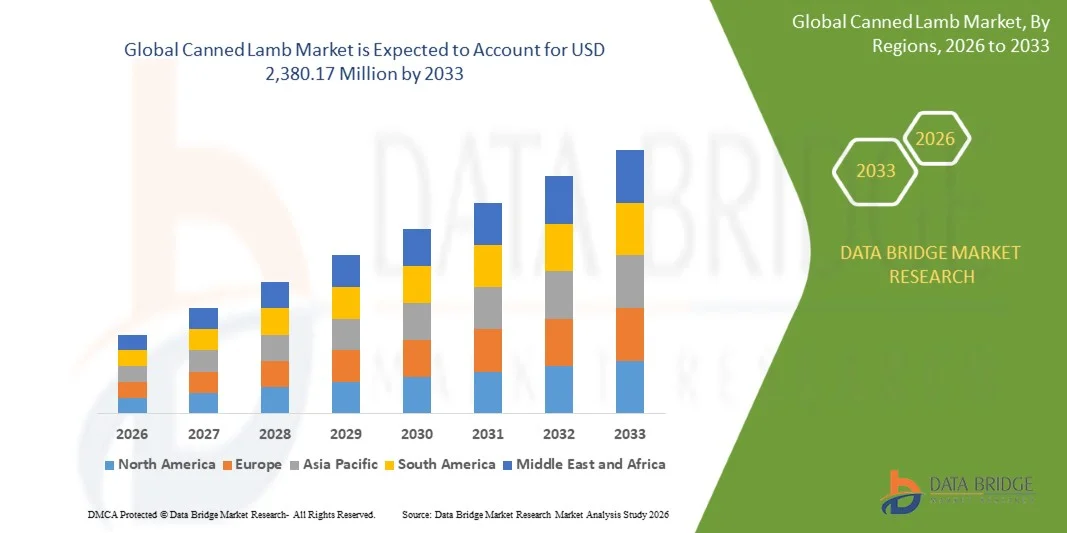
As per Data Bridge Market Research Analysis, the canned lamb market was valued at USD 1,258.64 Million in 2025 and is projected to reach USD 2,380.17 Million by 2033, growing at a CAGR of 8.29% from 2026 to 2033. The market is experiencing significant growth driven by rising consumer demand for convenient, shelf-stable protein sources, rapid urbanization, and shifting dietary preferences across developed and emerging economies.
Canned lamb refers to lamb meat that undergoes cooking, processing, and sealing in cans to extend its shelf life while preserving flavor and nutritional value. The market's expansion is further fueled by increasing meat consumption globally, with the Food and Agriculture Organization reporting global meat production rising from 364.7 million tonnes in 2022 to 370 million tonnes in 2023. Canned lamb contributes to this trend by offering a convenient, shelf-stable, and easily accessible meat option that meets modern consumers' needs for long-lasting and ready-to-use protein sources. Additionally, the rapid growth in global pet ownership is driving demand, as canned lamb is increasingly used in pet food formulations due to its high nutritional value and digestibility. The growing consumer awareness of health and nutrition is also accelerating market expansion, as canned lamb offers a high-quality protein source with essential nutrients and a long shelf life.
Market Size & Forecast
- Global Market Value (2025): USD 1,258.64 Million
- Expected Market Value (2033): USD 2,380.17 Million
- Forecast CAGR (2026–2033): 8.29%
- Leading Region in 2025: North America
- Fastest Growing Region: Asia-Pacific
Key Market Trends & Insights
- North America dominated the Canned Lamb Market in 2025, supported by a high demand for ready-to-eat and convenience foods, established distribution infrastructure, and strong consumer familiarity with canned meat products.
- Asia-Pacific is emerging as a key growth area for canned lamb, propelled by rising disposable incomes and shifting dietary preferences that favor convenient canned protein options among younger demographics.
- Demand for organic canned lamb products is increasing as consumers increasingly seek sustainable options that align with their values regarding animal welfare and environmental impact.
- Supermarkets & Hypermarkets dominate the distribution channel, owing to extensive reach and consumer familiarity, with over 60% of canned meat sales occurring through these channels.
- Online retail is gaining significant traction, appealing to tech-savvy consumers seeking convenience and broader product access.
- Technological advancements in canning processes are enhancing product quality, extending shelf life, and maintaining nutritional integrity.
- Growing demand for ready-to-eat and shelf-stable protein products for emergency preparedness and military applications is driving market expansion.
- Increasing focus on protein-rich diets, including paleo and keto diets, is boosting demand for canned lamb products.
Report Scope and Canned Lamb Market Segmentation
|
Attributes |
Canned Lamb Key Market Insights |
|
Segments Covered |
|
|
Countries Covered |
North America · U.S. · Canada · Mexico Europe · Germany · France · U.K. · Netherlands · Switzerland · Belgium · Russia · Italy · Spain · Turkey · Rest of Europe Asia-Pacific · China · Japan · India · South Korea · Singapore · Malaysia · Australia · Thailand · Indonesia · Philippines · Rest of Asia-Pacific Middle East and Africa · Saudi Arabia · U.A.E. · South Africa · Egypt · Israel · Rest of Middle East and Africa South America · Brazil · Argentina · Rest of South America |
|
Key Market Players |
· Hormel Foods Corporation (U.S.) · Campbell Soup Company (U.S.) · New Zealand Lamb Company (New Zealand) · JBS S.A. (Brazil) · Marfrig Global Foods (Brazil) · Tyson Foods Inc. (U.S.) · Cargill Incorporated (U.S.) · Kraft Heinz Company (U.S.) · National Beef Packing Company (U.S.) · Seaboard Foods (U.S.) · Golden Valley Natural (U.S.) · Superior Farms (U.S.) · San Miguel Food and Beverage (Philippines) · GraceKennedy Limited (Jamaica) · Targeter International Ltd. (UK) · Australian Meat Group (Australia) · Carthage Food Manufacturing (Tunisia) · Sichuan Huiquan (China) · Gansu Linshan (China) |
|
Market Opportunities |
· Rising demand for organic and ethically sourced canned lamb products for health-conscious consumers · Expansion of e-commerce and online grocery sales for broader consumer reach · Growing demand for ready-to-eat and shelf-stable protein products for emergency preparedness and military use · Increasing urbanization and rising disposable incomes in emerging Asia-Pacific and Latin American markets |
|
Value Added Data Infosets |
In addition to the insights on market scenarios such as market value, growth rate, segmentation, geographical coverage, and major players, the market reports curated by the Data Bridge Market Research also include in-depth expert analysis, pricing analysis, brand share analysis, consumer survey, demography analysis, supply chain analysis, value chain analysis, raw material/consumables overview, vendor selection criteria, PESTLE Analysis, Porter Analysis, and regulatory framework. |
Canned Lamb Market Trends
Trend: Rapid Expansion of E-Commerce and Online Retail Channels
E-commerce penetration is transforming distribution channels in the canned lamb market. Online grocery sales are growing significantly, enabling manufacturers to reach previously inaccessible consumer segments while reducing traditional retail overhead costs. The rise of online retailers reflects changing shopping behaviors, offering convenience and broader access to consumers. This digital shift is particularly important for reaching younger consumers and urban dwellers who prefer the convenience of online grocery shopping. The growing adoption of e-commerce platforms is expected to continue reshaping the competitive landscape and distribution strategies of canned lamb manufacturers.
Canned Lamb Market Dynamics
Key Market Driver: Growing Demand for Convenient Protein Foods and Ready-to-Eat Meals
The primary driver of the canned lamb market is the rising global demand for convenient protein sources driven by urbanization and changing dietary patterns. Increasing working population demographics and rising disposable incomes in emerging markets are driving demand for convenient, ready-to-eat protein sources. The extended shelf life, portability, and consistent protein content of canned lamb make it an ideal product for emergency preparedness, disaster relief, and military applications.
According to the Food and Agriculture Organization, global meat production rose from 364.7 million tonnes in 2022 to 370 million tonnes in 2023, underscoring the growing global appetite for meat. Regional demand is surging in Asia-Pacific as urbanization and busy lifestyles make canned lamb a preferred choice for quick meals. Additionally, the rapid growth in global pet ownership is contributing to market expansion, as canned lamb is increasingly used in premium pet food formulations due to its high nutritional value and digestibility.
Key Restraint/Challenge: Consumer Perception and Competition
A significant challenge facing the canned lamb market is consumer perception of canned products as being of lower quality compared to fresh products. Limited availability of premium quality canned lamb options and competition from other convenient protein sources such as canned chicken or tuna also pose challenges. Concerns about the sustainability and ethical practices within the lamb industry could impact consumer preferences. Additionally, fluctuating raw material costs, supply chain disruptions, and changing food safety regulations can pose challenges for manufacturers and distributors.
Key Market Opportunity: Emerging Markets and Premium Product Development
The expansion into emerging Asia-Pacific and Latin American markets presents significant growth opportunities for canned lamb manufacturers. Latin American markets demonstrate strong growth potential as urbanization accelerates and cold chain infrastructure develops across major metropolitan areas. The growing demand for organic and ethically sourced canned lamb offerings targeting health-conscious consumers represents another substantial opportunity. Manufacturers can capitalize on this trend by developing hormone-free, grass-fed, and organic canned lamb products that command premium pricing. The increasing adoption of e-commerce platforms also presents opportunities for manufacturers to reach new consumer segments and expand their market presence.
Canned Lamb Market Scope
The canned lamb market is segmented on the basis of product type, distribution channel, end use, and packaging type.
- Product Type
On the basis of product type, the Canned Lamb Market is segmented into canned lamb chops, canned lamb stews, canned lamb shoulder, canned ground lamb and others. Canned Lamb Stews lead the market, driven by their popularity as ready-to-eat meal solutions and widespread use in various culinary applications. Canned Ground Lamb is emerging as a fast-growing segment, driven by its versatility across multiple meal applications including pasta dishes, tacos, and burgers. Canned Lamb Chops and Canned Lamb Shoulder continue to hold significant market share, appealing to consumers seeking premium and gourmet canned meat options.
- Distribution Channel
On the basis of distribution channel, the Canned Lamb Market is segmented into supermarkets & hypermarkets, convenience stores, online retailers, specialty stores, wholesalers & distributors and food service providers. Supermarkets & Hypermarkets dominate the market, owing to extensive reach and consumer familiarity. These large-format retail stores offer consumers the widest variety of canned lamb products and brands under one roof. Online Retailers are gaining significant traction, reflecting changing shopping behaviors and offering convenience and broader access to consumers. Specialty stores serve consumers seeking premium and gourmet canned lamb products, while wholesalers and distributors serve the food service and institutional segments.
- End Use
On the basis of end use, the Canned Lamb Market is segmented into household consumption, food service & catering, institutional and emergency preparedness. Household Consumption dominates the market, driven by growing consumer demand for convenient, long-shelf-life protein sources for everyday meals. Food Service & Catering serves restaurants, cafes, and food service operations that use canned lamb as an ingredient in prepared dishes. Institutional demand from schools, hospitals, and other large-scale food service operations represents a significant market segment. Emergency Preparedness is a growing end-use segment, with government agencies and military procurement representing substantial demand channels.
- Packaging Type
On the basis of packaging type, the Canned Lamb Market is segmented into metal cans, aluminum cans and plastic cans. Metal Cans dominate the packaging type segment, owing to their durability, extended shelf life, and proven track record in food preservation. Tin-coated steel cans are the most common packaging format for canned lamb products, providing an effective barrier against microorganisms and environmental factors. Aluminum Cans offer lightweight and recyclable alternatives, gaining popularity among environmentally conscious consumers. Plastic Cans represent an emerging packaging format, offering convenience and cost-effectiveness for certain product applications. Sustainable plastic packaging is being developed to deliver the shelf-life of conventional practice for long-term storage. Additionally, packaging innovation includes tamper-evident, recyclable aluminum cans and QR-enabled traceability to showcase farm origin and quality assurance.
Canned Lamb Market Regional Analysis
North America Canned Lamb Market Insight
North America dominated the Canned Lamb Market in 2025, supported by a high demand for ready-to-eat and convenience foods, established distribution infrastructure, and strong consumer familiarity with canned meat products. The U.S. market is the largest contributor to regional revenue, driven by a well-established canned meat industry, extensive retail distribution networks, and growing demand for premium and organic canned lamb offerings. The region's mature food processing industry and strong consumer awareness of protein-rich diets continue to drive market growth.
Asia-Pacific Canned Lamb Market Insight
Asia-Pacific is emerging as a key growth area for canned lamb, propelled by rising disposable incomes and shifting dietary preferences that favor convenient canned protein options among younger demographics. Changing consumer preferences and urbanization are reshaping the canned lamb market landscape in the region. Countries including China, India, Japan, South Korea, and Southeast Asian nations are witnessing significant growth in canned lamb consumption, creating substantial opportunities for manufacturers and exporters. The China canned lamb market is projected to grow at a strong CAGR during the forecast period, supported by expanding retail infrastructure and increasing awareness of protein-rich diets. Rapid urbanization, busy lifestyles, and rising meat consumption in countries such as China and India are making canned lamb a preferred choice for quick meals.
Europe Canned Lamb Market Insight
Europe represents a mature and significant market for canned lamb, supported by established consumption patterns, strong retail infrastructure, and high food safety standards. The region benefits from a long tradition of canned meat consumption, particularly in countries such as the UK, Germany, and France. Increasing demand for premium and organic canned lamb offerings, along with growing consumer interest in convenience foods, is driving market growth across Western and Eastern European countries. Regulatory frameworks governing food safety and labeling continue to shape product development and market dynamics in the region.
Canned Lamb Market Share
The Canned Lamb industry is primarily led by well-established companies, including:
- Hormel Foods Corporation (U.S.)
- Campbell Soup Company (U.S.)
- New Zealand Lamb Company (New Zealand)
- JBS S.A. (Brazil)
- Marfrig Global Foods (Brazil)
- Tyson Foods Inc. (U.S.)
- Cargill Incorporated (U.S.)
- Kraft Heinz Company (U.S.)
- National Beef Packing Company (U.S.)
- Seaboard Foods (U.S.)
- Golden Valley Natural (U.S.)
- Superior Farms (U.S.)
- San Miguel Food and Beverage (Philippines)
- GraceKennedy Limited (Jamaica)
- Targeter International Ltd. (UK)
- Australian Meat Group (Australia)
- Carthage Food Manufacturing (Tunisia)
- Sichuan Huiquan (China)
- Gansu Linshan (China)
Latest Developments in Canned Lamb Market
- In October 2022, Saudi Agricultural and Livestock Investment Company (SALIC) and Brazilian meatpacker Minerva acquired Australian Lamb Company (ALC) for approximately $970 million, strengthening their position in the global lamb supply chain. SALIC's investment focus extends to supply, storage, and handling to deliver greater efficiency in food production systems.
- In March 2025, Campbell Soup Company announced the expansion of its canned meat portfolio, building on its position as the world's largest producer of soups with brands commanding an 80 percent share of the wet soup market in North America.
- In July 2024, Hormel Foods Corporation expanded its canned meat product offerings with new premium canned lamb varieties targeting health-conscious consumers seeking organic and ethically sourced options.
- In August 2025, Conagra Brands announced a significant investment in its canned meat production facilities to increase capacity and incorporate advanced canning technologies for improved product quality and shelf life.
- In January 2026, Kraft Heinz Company introduced new sustainable packaging initiatives for its canned meat product line, transitioning to eco-friendly materials to reduce environmental impact.
- In November 2025, Cargill Incorporated announced the expansion of its canned meat distribution network across Asia-Pacific markets, targeting rapidly growing demand in China and Southeast Asian countries.
- In June 2025, JBS S.A. announced increased production capacity for shelf-stable canned meat products at its North American facilities to meet growing institutional and retail demand.

- Interactive Data Analysis Dashboard
- Company Analysis Dashboard for high growth potential opportunities
- Research Analyst Access for customization & queries
- Competitor Analysis with Interactive dashboard
- Latest News, Updates & Trend analysis
- Harness the Power of Benchmark Analysis for Comprehensive Competitor Tracking
Global Canned Lamb Market, Supply Chain Analysis and Ecosystem Framework
To support market growth and help clients navigate the impact of geopolitical shifts, DBMR has integrated in-depth supply chain analysis into its Global Canned Lamb Market research reports. This addition empowers clients to respond effectively to global changes affecting their industries. The supply chain analysis section includes detailed insights such as Global Canned Lamb Market consumption and production by country, price trend analysis, the impact of tariffs and geopolitical developments, and import and export trends by country and HSN code. It also highlights major suppliers with data on production capacity and company profiles, as well as key importers and exporters. In addition to research, DBMR offers specialized supply chain consulting services backed by over a decade of experience, providing solutions like supplier discovery, supplier risk assessment, price trend analysis, impact evaluation of inflation and trade route changes, and comprehensive market trend analysis.
Data collection and base year analysis are done using data collection modules with large sample sizes. The stage includes obtaining market information or related data through various sources and strategies. It includes examining and planning all the data acquired from the past in advance. It likewise envelops the examination of information inconsistencies seen across different information sources. The market data is analysed and estimated using market statistical and coherent models. Also, market share analysis and key trend analysis are the major success factors in the market report. To know more, please request an analyst call or drop down your inquiry.
The key research methodology used by DBMR research team is data triangulation which involves data mining, analysis of the impact of data variables on the market and primary (industry expert) validation. Data models include Vendor Positioning Grid, Market Time Line Analysis, Market Overview and Guide, Company Positioning Grid, Patent Analysis, Pricing Analysis, Company Market Share Analysis, Standards of Measurement, Global versus Regional and Vendor Share Analysis. To know more about the research methodology, drop in an inquiry to speak to our industry experts.
Data Bridge Market Research is a leader in advanced formative research. We take pride in servicing our existing and new customers with data and analysis that match and suits their goal. The report can be customized to include price trend analysis of target brands understanding the market for additional countries (ask for the list of countries), clinical trial results data, literature review, refurbished market and product base analysis. Market analysis of target competitors can be analyzed from technology-based analysis to market portfolio strategies. We can add as many competitors that you require data about in the format and data style you are looking for. Our team of analysts can also provide you data in crude raw excel files pivot tables (Fact book) or can assist you in creating presentations from the data sets available in the report.













