


Canned Poultry Market Overview
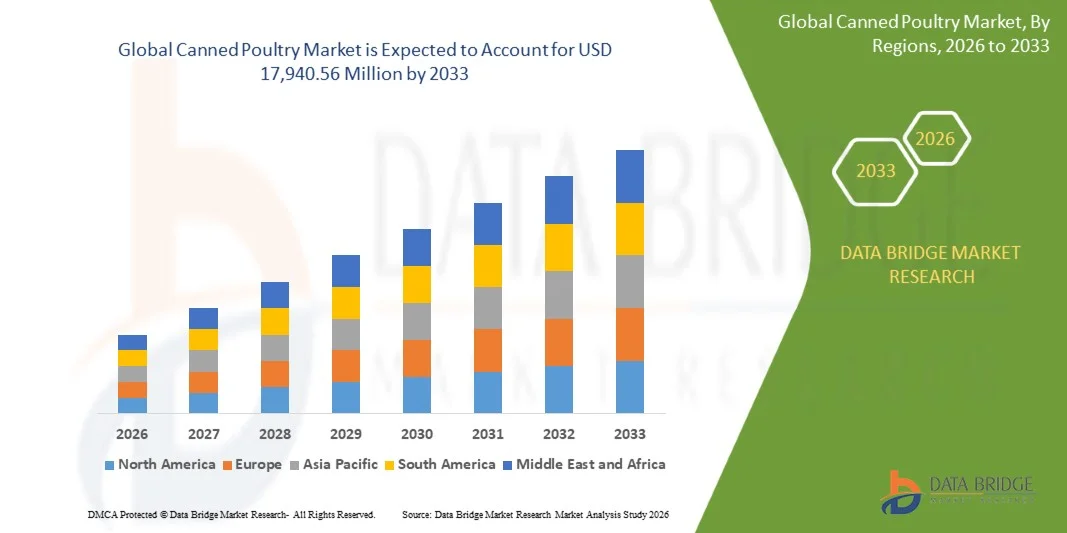
As per Data Bridge Market Research Analysis the canned poultry market was valued at USD 9,417.21 million in 2025 and is projected to reach USD 17,940.56 million by 2033, growing at a CAGR of 8.39% from 2026 to 2033. North America was the largest revenue-generating market in 2025, while India is expected to register the highest CAGR from 2026 to 2033.
The canned poultry market is experiencing robust growth driven by rising consumer demand for convenient, shelf-stable protein sources, rapid urbanization, and changing dietary preferences across developed and emerging economies. Canned poultry products are prepared by hermetically sealing poultry meat in containers and thermally processing them to destroy spoilage microorganisms, resulting in high-quality, protein-rich food that remains stable at room temperature. Canned poultry products capture a significant portion of this demand through their extended shelf life, portability, and consistent protein content. According to RaboResearch, global poultry demand is expected to grow at rates between 2.5% to 3% in 2025, following a 2.6% increase in 2024. Poultry remains an affordable protein option for consumers, especially at a time when beef and egg prices are elevated.
Market Size & Forecast
- Global Market Value (2025): USD 9,417.21 Million
- Expected Market Value (2033): USD 17,940.56 Million
- Forecast CAGR (2026–2033): 8.39%
- Leading Region in 2025: North America
- Fastest Growing Region: Asia-Pacific
Key Market Trends & Insights
- North America accounted for the largest share of the Canned Poultry Market in 2025, driven by high consumer demand for convenient, protein-rich foods and the presence of major manufacturers.
- Asia-Pacific is expected to witness the highest CAGR, driven by rising disposable income, urbanization, and increasing adoption of Western-style ready-to-eat foods.
- The Canned Chicken Breast segment leads the product type category, driven by widespread consumer preference for lean protein options and versatility in meal preparation.
- Canned Turkey is gaining traction, particularly in North American and European markets where it is popular for sandwiches, salads, and holiday meal preparations.
- Supermarkets & Hypermarkets dominate the distribution channel, owing to extensive reach and consumer familiarity.
- Online retail is gaining significant traction, reflecting changing shopping behaviors and offering convenience and broader access to consumers.
- Product innovation focusing on healthier options, including reduced sodium, antibiotic-free, and clean-label varieties, is gaining momentum among health-conscious consumers.
- Private label growth is becoming a major trend, with retailers such as Walmart, Costco, Aldi, and Lidl expanding their private label canned chicken offerings to meet consumer demand for affordable, quality protein options.
Report Scope and Canned Poultry Market Segmentation
|
Attributes |
Canned Poultry Key Market Insights |
|
Segments Covered |
|
|
Countries Covered |
North America · U.S. · Canada · Mexico Europe · Germany · France · U.K. · Netherlands · Switzerland · Belgium · Russia · Italy · Spain · Turkey · Rest of Europe Asia-Pacific · China · Japan · India · South Korea · Singapore · Malaysia · Australia · Thailand · Indonesia · Philippines · Rest of Asia-Pacific Middle East and Africa · Saudi Arabia · U.A.E. · South Africa · Egypt · Israel · Rest of Middle East and Africa South America · Brazil · Argentina · Rest of South America |
|
Key Market Players |
· Hormel Foods Corporation (U.S.) · Tyson Foods Inc. (U.S.) · Conagra Brands Inc. (U.S.) · Kraft Heinz Company (U.S.) · Perdue Farms (U.S.) · BRF S.A. (Brazil) · JBS S.A. (Brazil) · Pilgrim's Pride Corporation (U.S.) · Princes Group (UK) · Dongwon F&B Co. Ltd. (South Korea) · Ayam Brand (Singapore/Malaysia) · Campbell's (Swanson Brand) (U.S.) · Keystone Foods (U.S.) · Sweet Sue (U.S.) · Henaff (France) · Maple Leaf Foods (Canada) |
|
Market Opportunities |
· Rising demand for clean-label, reduced sodium, and antibiotic-free canned poultry products for health-conscious consumers · Expansion of e-commerce and online grocery sales for broader consumer reach · Growing demand for ready-to-eat and shelf-stable protein products for emergency preparedness and military use · Increasing urbanization and rising disposable incomes in emerging Asia-Pacific and Latin American markets |
|
Value Added Data Infosets |
In addition to the insights on market scenarios such as market value, growth rate, segmentation, geographical coverage, and major players, the market reports curated by the Data Bridge Market Research also include in-depth expert analysis, pricing analysis, brand share analysis, consumer survey, demography analysis, supply chain analysis, value chain analysis, raw material/consumables overview, vendor selection criteria, PESTLE Analysis, Porter Analysis, and regulatory framework. |
Canned Poultry Market Trends
Trend: Rise of Health-Focused, Clean-Label, and Reduced Sodium Canned Poultry Products
The canned poultry market is experiencing a notable evolution toward healthier options as consumers become more health-conscious and discerning about food quality. There has been a noticeable shift in consumer preferences towards healthier food options, extending to the canned poultry industry, where consumers are increasingly seeking products that are not only convenient but also nutritious and free from harmful additives. Consumers are actively seeking out products that align with their health and wellness goals.
Manufacturers are expanding clean-label portfolios by introducing reduced sodium, antibiotic-free, preservative-free, and minimally processed canned poultry products. Growing consumer preference for healthier protein options is encouraging companies to improve ingredient transparency, simplify labels, and adopt responsible sourcing practices. Leading manufacturers continue expanding premium canned poultry portfolios by introducing reduced sodium, preservative-light, antibiotic-free, and clean-label products targeting health-conscious consumers.
Canned Poultry Market Dynamics
Key Market Driver: Growing Demand for Convenient Protein Foods and Ready-to-Eat Meals
The primary driver of the canned poultry market is the rising global demand for convenient protein sources driven by urbanization and changing dietary patterns. The growing need for easy-to-store, ready-to-eat meals has propelled the market, with an increasing number of consumers opting for affordable, accessible protein sources. Technological advancements in food processing, packaging, and preservation have played a crucial role in expanding the capabilities and appeal of canned meat and poultry products. Increasing working population demographics and rising disposable incomes in emerging markets are driving demand for convenient, ready-to-eat protein sources. Regional demand is surging in Asia-Pacific as urbanization and busy lifestyles make canned poultry a preferred choice for quick meals. Busy lifestyles, rising dual-income households, and increasing demand for convenient shelf-stable foods continue to support market expansion.
Key Restraint/Challenge: Avian Influenza Outbreaks and Supply Chain Volatility
A significant challenge facing the canned poultry market is the impact of avian influenza (bird flu) outbreaks on poultry production and supply chain stability. The wave of bird flu outbreaks has impacted global poultry markets. These outbreaks can lead to supply shortages, increased raw material costs, and production disruptions for canned poultry manufacturers. Additionally, fluctuating feed prices and trade restrictions can impact production costs and market dynamics. Rising tinplate prices, packaging costs, and feed cost volatility also pose challenges to market growth.
Key Market Opportunity: Emerging Markets and Premium Product Development
The expansion into emerging Asia-Pacific and Latin American markets presents significant growth opportunities for canned poultry manufacturers. Asia-Pacific is witnessing rapid growth due to rising urbanization, changing dietary preferences, and increased disposable income. Countries including China, India, Japan, South Korea, and Southeast Asian nations are experiencing significant growth in processed and packaged food consumption, creating substantial opportunities for manufacturers and exporters. The growing demand for clean-label, reduced sodium, and antibiotic-free canned poultry offerings targeting health-conscious consumers represents another substantial opportunity. Manufacturers can capitalize on this trend by developing premium canned poultry products that command higher pricing. The increasing adoption of e-commerce platforms also presents opportunities for manufacturers to reach new consumer segments and expand their market presence.
Canned Poultry Market Scope
The canned poultry market is segmented on the basis of product type, packaging type, distribution channel, and end use.
-
Product Type
On the basis of product type, the Canned Poultry Market is segmented into canned chicken breast, canned dark meat chicken, canned turkey, canned duck and others. The Canned Chicken Breast segment dominated the market in 2025, driven by widespread consumer preference for lean protein options and versatility in meal preparation. Canned chicken breast is popular for use in salads, sandwiches, casseroles, and as a quick protein addition to various dishes. As a sub-segment reference, the global canned chicken market is estimated at US$3.0 billion in 2025, with the Chicken Breast segment expected to record a CAGR of 8.3% and reach US$1.7 billion by 2033. Canned Dark Meat Chicken is gaining traction among consumers seeking more flavorful and moist poultry options. Canned Turkey represents a growing segment, particularly in North American and European markets where it is popular for sandwiches, salads, and holiday meal preparations. Canned Duck is a niche segment appealing to consumers seeking gourmet and specialty poultry options.
-
Packaging Type
On the basis of packaging type, the Canned Poultry Market is segmented into metal cans, aluminum cans, retort pouches and glass jars. Metal Cans dominate the packaging type segment, owing to their durability, extended shelf life, and proven track record in food preservation. Tin-coated steel cans are the most common packaging format for shelf-stable poultry products, providing an effective barrier against microorganisms and environmental factors. Brands are shifting toward BPA-free cans, easy-open lids, and compact single-serve containers that appeal to on-the-go consumers. Aluminum Cans offer lightweight and recyclable alternatives, gaining popularity among environmentally conscious consumers. Retort Pouches represent an emerging packaging format for shelf-stable poultry, offering lightweight, space-efficient alternatives to traditional cans, particularly appealing to outdoor enthusiasts and emergency preparedness consumers. The rising preference for ready-shredded, seasoned, or pre-portioned chicken in recyclable pouches enhances ease of use in meal kits, salads, and protein-rich snack boxes. Pouches allow cold-chain-free transportation and are microwave-compatible. Glass Jars offer premium presentation and are preferred for certain gourmet and specialty products.
-
Distribution Channel
On the basis of distribution channel, the Canned Poultry Market is segmented into supermarkets/hypermarkets, convenience stores, online retailers, specialty stores, wholesalers & distributors and food service providers. Supermarkets & Hypermarkets dominate the distribution channel segment, owing to extensive reach and consumer familiarity. These large-format retailers offer consumers the widest variety of canned poultry products and brands under one roof, enabling easy comparison and trial. Online Retailers are gaining significant traction, reflecting changing shopping behaviors and offering convenience and broader access to consumers. The surge in online grocery sales has enabled manufacturers to reach previously inaccessible consumer segments. Convenience Stores play a crucial role in appealing to consumers seeking quick and convenient options for immediate consumption. Specialty Stores serve consumers seeking premium and gourmet canned poultry products, offering curated selections and expert guidance.
-
End Use
On the basis of end use, the Canned Poultry Market is segmented into household consumption, food service & catering, institutional and emergency preparedness. Household Consumption dominates the market, driven by growing consumer demand for convenient, long-shelf-life protein sources for everyday meals. The versatility of canned poultry makes it a popular choice for busy households seeking affordable, accessible protein sources. Food Service & Catering serves restaurants, cafes, and food service operations that use canned poultry as an ingredient in prepared dishes such as soups, salads, and ready-to-eat meals. Institutional demand from schools, hospitals, prisons, and other large-scale food service operations represents a significant market segment. Emergency Preparedness is a growing end-use segment, with canned poultry frequently utilized in military rations and emergency food supplies due to its long shelf life and ease of storage.
Canned Poultry Market Regional Analysis
North America Canned Poultry Market Insight
North America was the largest revenue-generating market for canned poultry in 2025. The region's dominance is driven by high consumer demand for convenient, protein-rich foods and the presence of major manufacturers. The U.S. market is the largest contributor to regional revenue, driven by a well-established processed meat industry, extensive retail distribution networks, and high per capita consumption. As a reference, the canned chicken market in the U.S. is estimated at US$928.9 million in 2025, representing a significant portion of the broader canned poultry category. The region's mature food processing industry and strong consumer awareness of protein-rich diets continue to drive market growth. The shelf-stable poultry market in North America benefits from strong distribution networks and established brands such as Hormel, Tyson Foods, and Perdue. Major players continue to drive category growth through product innovation, packaging modernization, and strategic partnerships. The United States accounts for approximately 25% of global canned poultry production.
Asia-Pacific Canned Poultry Market Insight
Asia-Pacific is expected to witness the highest CAGR in the canned poultry market, driven by rising disposable income, urbanization, and increasing adoption of Western-style ready-to-eat foods. India is expected to register the highest CAGR from 2026 to 2033. Changing consumer preferences and urbanization are reshaping the market landscape in the region. Countries including China, India, Japan, South Korea, and Southeast Asian nations are witnessing significant growth in processed and packaged food consumption, creating substantial opportunities for manufacturers and exporters. China is forecast to reach a projected market size of US$1.2 billion for canned chicken by 2032, trailing a CAGR of 10.7% over the analysis period. Regional manufacturers and multinational food companies are expanding their product portfolios and strengthening retail and e-commerce distribution networks to capitalize on increasing demand. The proliferation of e-commerce platforms and aggressive marketing campaigns by both global and local brands have further fueled adoption.
Europe Canned Poultry Market Insight
Europe represents a mature and significant market for canned poultry, supported by established consumption patterns, strong retail infrastructure, and high food safety standards. The region benefits from a long tradition of canned meat consumption and growing interest in convenience foods. Key players in the European market include Princes Group (UK), Henaff (France), offering a variety of canned poultry products tailored to European consumer preferences. Germany is forecast to grow at approximately 4.7% CAGR within Europe. Increasing demand for clean-label, reduced sodium, and premium canned poultry offerings, along with growing consumer interest in convenience foods, is driving market growth. Regulatory frameworks governing food safety and labeling continue to shape product development and market dynamics.
Latin America Canned Poultry Market Insight
Latin America represents a growing market for canned poultry, with Brazil emerging as a key player in the global poultry industry. Brazil is known for its thriving poultry industry, making it a significant contributor to the Canned Poultry Market. Companies such as JBS and BRF S.A. are among the top producers in the country, exporting poultry products to various regions around the world. Countries including Brazil and Argentina are witnessing increasing demand for processed and packaged meat products, driven by urbanization and rising disposable incomes. The region's growing middle class and changing dietary preferences are creating new opportunities for canned poultry manufacturers.
Canned Poultry Market Share
The canned poultry industry is primarily led by well-established companies, including:
- Hormel Foods Corporation (U.S.)
- Tyson Foods Inc. (U.S.)
- Conagra Brands Inc. (U.S.)
- Kraft Heinz Company (U.S.)
- Perdue Farms (U.S.)
- BRF S.A. (Brazil)
- JBS S.A. (Brazil)
- Pilgrim's Pride Corporation (U.S.)
- Princes Group (UK)
- Dongwon F&B Co. Ltd. (South Korea)
- Ayam Brand (Singapore/Malaysia)
- Campbell's (Swanson Brand) (U.S.)
- Keystone Foods (U.S.)
- Sweet Sue (U.S.)
- Henaff (France)
- Maple Leaf Foods (Canada)
Latest Developments in Canned Poultry Market
- In October 2025, JBS announced plans to invest $70 million over the next two years to expand poultry production in Paraguay, marking its first operation in the country. The investment will begin with the acquisition of a processing plant from Pollos Amanecer, which will be expanded and modernized to reach a processing capacity of 100,000 birds per day, supplying both domestic and international markets. At full capacity, the operation will employ about 1,100 workers and include 28 poultry farms, hatcheries, and a feed mill.
- In July 2025, Conagra Brands announced it is investing in supply chain resiliency, including a new chicken plant, to reduce costs and improve efficiency. The company is focusing on premiumization and innovation in its frozen and shelf-stable food segments. Conagra has taken steps to modernize its chicken production facilities to fix constraints encountered in FY25, with the project expected to be completed by early Q2 of the current fiscal year. The company's canned poultry products under brands such as Swanson continue to be a key part of its portfolio.
- In 2025, BRF S.A. continued to lead in poultry processing in Brazil and expanded its international footprint. The company introduced its first line of chicken products produced locally in Saudi Arabia as part of a strategy to expand its footprint in the Gulf nation, with implications for shelf-stable poultry exports.
- In August 2024, Pilgrim's Pride Corporation was awarded a Definitive Contract by the U.S. Department of Agriculture's Food and Nutrition Service for commodities for USG food donations, with obligations to date of $1.5 million. This demonstrates the company's ongoing role in supplying poultry products to government food distribution programs.
- In 2025, Hormel Foods continued to expand its product portfolio in the canned meat and poultry category, focusing on innovation, sustainability, and meeting evolving consumer preferences for convenient, protein-rich foods.
- In 2025, Tyson Foods continued to invest in its poultry processing capabilities to meet growing demand for convenient, protein-rich poultry products, including shelf-stable offerings, across North American and international markets.

- Interactive Data Analysis Dashboard
- Company Analysis Dashboard for high growth potential opportunities
- Research Analyst Access for customization & queries
- Competitor Analysis with Interactive dashboard
- Latest News, Updates & Trend analysis
- Harness the Power of Benchmark Analysis for Comprehensive Competitor Tracking
Global Canned Poultry Market, Supply Chain Analysis and Ecosystem Framework
To support market growth and help clients navigate the impact of geopolitical shifts, DBMR has integrated in-depth supply chain analysis into its Global Canned Poultry Market research reports. This addition empowers clients to respond effectively to global changes affecting their industries. The supply chain analysis section includes detailed insights such as Global Canned Poultry Market consumption and production by country, price trend analysis, the impact of tariffs and geopolitical developments, and import and export trends by country and HSN code. It also highlights major suppliers with data on production capacity and company profiles, as well as key importers and exporters. In addition to research, DBMR offers specialized supply chain consulting services backed by over a decade of experience, providing solutions like supplier discovery, supplier risk assessment, price trend analysis, impact evaluation of inflation and trade route changes, and comprehensive market trend analysis.
Data collection and base year analysis are done using data collection modules with large sample sizes. The stage includes obtaining market information or related data through various sources and strategies. It includes examining and planning all the data acquired from the past in advance. It likewise envelops the examination of information inconsistencies seen across different information sources. The market data is analysed and estimated using market statistical and coherent models. Also, market share analysis and key trend analysis are the major success factors in the market report. To know more, please request an analyst call or drop down your inquiry.
The key research methodology used by DBMR research team is data triangulation which involves data mining, analysis of the impact of data variables on the market and primary (industry expert) validation. Data models include Vendor Positioning Grid, Market Time Line Analysis, Market Overview and Guide, Company Positioning Grid, Patent Analysis, Pricing Analysis, Company Market Share Analysis, Standards of Measurement, Global versus Regional and Vendor Share Analysis. To know more about the research methodology, drop in an inquiry to speak to our industry experts.
Data Bridge Market Research is a leader in advanced formative research. We take pride in servicing our existing and new customers with data and analysis that match and suits their goal. The report can be customized to include price trend analysis of target brands understanding the market for additional countries (ask for the list of countries), clinical trial results data, literature review, refurbished market and product base analysis. Market analysis of target competitors can be analyzed from technology-based analysis to market portfolio strategies. We can add as many competitors that you require data about in the format and data style you are looking for. Our team of analysts can also provide you data in crude raw excel files pivot tables (Fact book) or can assist you in creating presentations from the data sets available in the report.













