


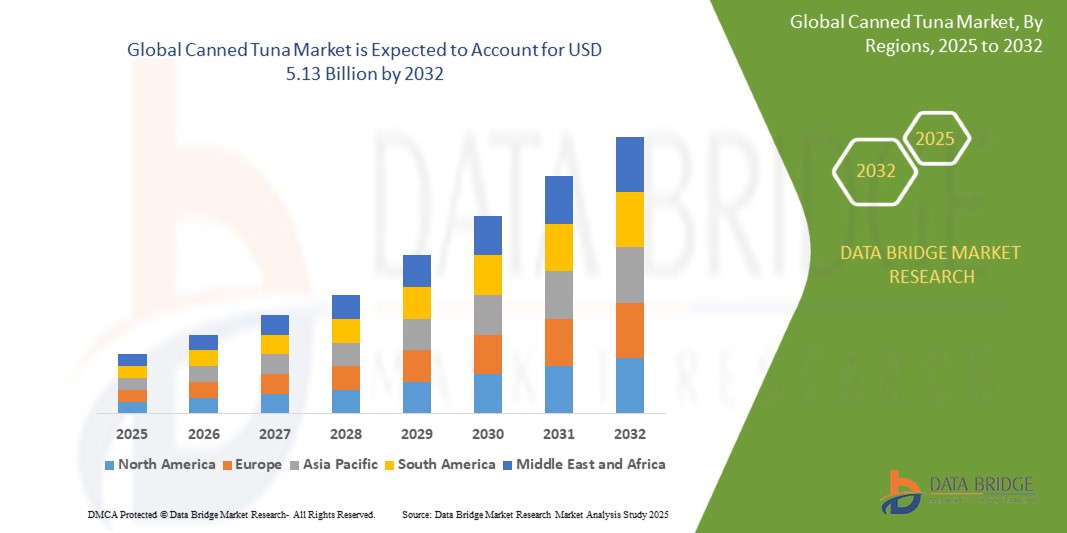
Canned Tuna Market Size
- The global canned tuna market was valued at USD 4.05 billion in 2024 and is expected to reach USD 5.13 billion by 2032
- During the forecast period of 2025 to 2032 the market is likely to grow at a CAGR of 3.00%, primarily driven by sustainability and eco-friendly practices
- This growth is driven by factors such as sustainable fishing practices, eco-friendly packaging and transparent supply chains
Canned Tuna Market Analysis
- Canned tuna refers to tuna fish that has been processed, cooked, and sealed in a can to preserve its freshness and extend its shelf life. It is typically available in various forms, such as chunks, flakes, or solid pieces, and can be packed in different liquids, including oil, water, or brine
- The market is experiencing growth due to factors such as increasing consumer demand for convenient and healthy food options, rising disposable incomes, and the growing trend toward sustainable and eco-friendly practices. As consumers become more health-conscious and time-starved, canned tuna is positioned as a go-to solution for quick, affordable, and protein-rich meals
- As consumers seek environmentally responsible products, brands are responding by adopting certifications such as MSC (Marine Stewardship Council) and shifting to recyclable or biodegradable packaging solutions
- For instance, companies such as Bumble Bee and Starkist are integrating eco-friendly initiatives such as using recyclable cans and participating in sustainable tuna sourcing programs, helping to meet the growing demand for ethical and environmentally conscious food options
- The canned tuna market is poised for steady expansion, fueled by continuous product innovation, an increasing focus on sustainability, and consumer preferences for healthier, convenient food choices. The growing demand for value-added tuna products, such as those offering different flavors or ready-to-eat meals, will continue to drive the market forward
Report Scope and Canned Tuna Market Segmentation
|
Attributes |
Canned Tuna Key Market Insights |
|
Segments Covered |
|
|
Countries Covered |
North America
Europe
Asia-Pacific
Middle East and Africa
South America
|
|
Key Market Players |
|
|
Market Opportunities |
|
|
Value Added Data Infosets |
In addition to the insights on market scenarios such as market value, growth rate, segmentation, geographical coverage, and major players, the market reports curated by the Data Bridge Market Research also include in-depth expert analysis, pricing analysis, brand share analysis, consumer survey, demography analysis, supply chain analysis, value chain analysis, raw material/consumables overview, vendor selection criteria, PESTLE Analysis, Porter Analysis, and regulatory framework. |
Canned Tuna Market Trends
“Rising Preference for Convenient & Ready-to-Eat Canned Tuna Products”
- One prominent trend in the global canned tuna market is the rising preference for convenient & ready-to-eat canned tuna products
- This trend is driven by busy lifestyles and an increasing demand for quick, nutritious meal options, prompting manufacturers to develop tuna products that require minimal preparation and cater to on-the-go consumption
- For instance, a study by the U.S. Department of Agriculture (USDA) reported that ready-to-eat meals and snacks have seen a 20% increase in sales over the past five years, with canned tuna becoming a staple in this category
- As consumers prioritize convenience without compromising on nutrition, canned tuna brands are focusing on easy-to-open packaging, portion-controlled servings, and value-added features such as added flavors or seasonings
- This shift is expected to propel continued growth in the market, with brands emphasizing product innovation, ease of use, and nutritional benefits to meet the evolving demands of time-conscious consumers
Canned Tuna Market Dynamics
Driver
“Growing Trend of Exploring International Cuisines”
- The growing trend of exploring international cuisines is a key driver of growth in the canned tuna market. As consumers become more open to trying diverse global flavors, canned tuna is increasingly being incorporated into various international dishes such as Mediterranean salads, Japanese sushi, and Hawaiian poke bowls
- This trend is pushing manufacturers to innovate and diversify their product offerings to cater to a wider range of culinary preferences
- With the demand for international and fusion cuisines on the rise, canned tuna brands are expanding their flavor profiles and packaging to appeal to consumers seeking convenient, exotic, and ready-to-eat food options
- As international flavors gain popularity, canned tuna brands are incorporating ingredients from different cultures and offering more regionally inspired recipes to meet the preferences of adventurous eaters
- Manufacturers are also focusing on creating meal-ready products that align with the global trend of fast, nutritious, and flavorful food. This shift is expected to drive continuous product innovation, ensuring that canned tuna remains a versatile ingredient in international kitchens
For instance,
- According to a report by Nielsen, the global demand for international foods grew by 15% in 2020, with seafood, including canned tuna, making up a significant portion of this demand
- Brands such as Wild Planet Foods are emphasizing on the sustainability of their sourcing bas well as on the versatility of their products, offering tuna as a premium ingredient for a wide array of international dishes
- As global culinary exploration continues to rise, the canned tuna market is expected to see sustained growth, with brands leveraging the international cuisine trend to develop new product lines and meet the demand for diverse and ready-to-eat meal solutions
Opportunity
“Easy Availability of Different Tuna Species”
- The easy availability of different tuna species presents a significant opportunity for the canned tuna market. As various tuna species such as skipjack, albacore, and yellowfin become more widely accessible, manufacturers can diversify their product offerings, catering to different consumer preferences and expanding their market reach
- With tuna being sourced from diverse regions across the globe, there is an opportunity for canned tuna producers to offer a range of products at competitive prices, meeting the growing demand for affordable, nutritious, and sustainably sourced seafood. The increasing availability of tuna species is driving cost-effective production while ensuring high-quality standards
- The accessibility of different tuna species also opens opportunities for introducing premium and value-added products such as flavored or seasonally marinated tuna. As consumers become more health-conscious and look for higher-quality, diverse food options, the demand for differentiated canned tuna products is on the rise
For instance,
- Major canned tuna producers such as Thai Union Group and Starkist utilize a variety of tuna species, sourcing from different fisheries in the Pacific and Atlantic Oceans to maintain consistent supply and offer a wide range of tuna products to consumers
- According to a report by the Food and Agriculture Organization (FAO), the global supply of skipjack and yellowfin tuna is steadily increasing, allowing brands to meet the growing need for diverse canned tuna options that appeal to varying tastes and dietary needs
- With the continued availability of different tuna species and consumer demand for varied, premium, and sustainable options, the canned tuna market is well-positioned for future growth. By capitalizing on this opportunity, producers can strengthen their competitive advantage and meet the evolving preferences of global consumers
Restraint/Challenge
“Rise in the Vegan Trend”
- The rise of the vegan trend presents a significant challenge for the canned tuna market. As more consumers adopt plant-based food, there is growing pressure on seafood companies to diversify their product lines to cater to the increasing demand for vegan and plant-based alternatives
- This trend poses a challenge for canned tuna brands, as they must respond to the growing shift toward plant-based eating while maintaining the appeal of their traditional products. Consumers increasingly expect vegan options that mimic the taste and texture of seafood, putting pressure on manufacturers to innovate in product development
- For canned tuna producers, this shift could result in declining sales unless they adapt by offering plant-based tuna alternatives or reformulating products to appeal to health-conscious and environmentally aware consumers
For instance,
- Companies such as Good Catch Foods and Ocean Hugger Foods have introduced plant-based tuna alternatives made from ingredients such as soy, chickpeas, and seaweed, catering to the growing demand for vegan options
- As the vegan trend continues to gain momentum, the canned tuna market may face significant challenges in maintaining its consumer base unless it diversifies and innovates by introducing sustainable, plant-based options alongside traditional tuna products
Canned Tuna Market Scope
The market is segmented on the basis of type, product type, and distribution channel.
|
Segmentation |
Sub-Segmentation |
|
By Type |
|
|
By Product Type |
|
|
By Distribution Channel |
|
Canned Tuna Market Regional Analysis
“Europe is the Dominant Region in the Canned Tuna Market”
- Europe dominates the canned tuna market, driven by the high adoption of convenient, ready-to-eat seafood products. The region's consumers place a strong emphasis on ease of preparation and nutritional value, making canned tuna a staple in European households
- The Germany holds a significant share due to country’s strong consumer demand for convenient, nutritious, and affordable food options. As one of the largest economies in Europe, Germany has a large population of health-conscious consumers who prioritize quick and easy meal solutions, making canned tuna a popular choice
- The European market is also bolstered by a growing trend toward sustainability and eco-conscious consumerism, with brands focusing on environmentally responsible sourcing and packaging to meet the demands of consumers who prioritize eco-friendly products
- Leading brands in the region, including Thai Union Group, Starkist, and Bumble Bee Foods, continue to expand their product lines, offering more diverse flavors and focusing on responsible fishing practices to strengthen their market presence
“Middle East and Africa is Projected to Register the Highest Growth Rate”
- The Middle East and Africa region is expected to witness the highest growth rate in the canned tuna market, driven by strong presence of emerging economies, such as Saudi Arabia, the UAE, and South Africa, where consumer demand for convenient, affordable, and nutritious food options is rising rapidly
- Urbanization in MEA is leading to changes in lifestyle, with busy working professionals and dual-income households seeking quick meal solutions. Canned tuna, being a shelf-stable and ready-to-eat product, is gaining popularity among consumers looking for easy-to-prepare meals that require minimal cooking time
- In addition, the increasing focus on health and nutrition is driving demand for protein-rich products such as canned tuna, as consumers seek healthier food choices that align with modern diets
- Local manufacturers and global brands such as Thai Union and Starkist are capitalizing on these emerging market opportunities by offering value-added canned tuna products, including those flavored with regional spices, to cater to the distinct culinary preferences in the MEA region
Canned Tuna Market Share
The market competitive landscape provides details by competitor. Details included are company overview, company financials, revenue generated, market potential, investment in research and development, new market initiatives, global presence, production sites and facilities, production capacities, company strengths and weaknesses, product launch, product width and breadth, application dominance. The above data points provided are only related to the companies' focus related to market.
The Major Market Leaders Operating in the Market Are:
- Thai Union Group PCL (Thailand)
- Bumble Bee Foods, LLC (U.S.)
- Century Pacific Food Inc. (Philippines)
- Jealsa (Spain)
- Wild Planet Foods, Inc. (U.S.)
- Aneka Tuna Indonesia (Indonesia)
- American Tuna (U.S.)
- Dongwon Group (South Korea)
- Golden Prize Canning Co., Ltd. (Thailand)
- Crown Prince, Inc. (U.S.)
- A.E.C. CANNING COMPANY LIMITED (Thailand)
- StarKist Co (U.S.)
- Shandong Lixing Tin Food Co.,Ltd. (China)
- Hermasa (Spain)
- Tri Marine (U.S.)
Latest Developments in Global Canned Tuna Market
- In August 2024, Wild Planet, a leader in sustainably sourced canned seafood, launched its Limited Edition Wild Tuna Snack Pack in collaboration with Simple Mills and Chosen Foods. This new offering, available for a limited time on Wild Planet’s website, features sustainably pole-and-line caught Skipjack Wild Tuna, seasoned with tangy diced dill pickle, lemon juice, and a touch of sea salt. This innovative product is expected to enhance Wild Planet’s market position by appealing to health-conscious consumers and those seeking sustainable, convenient snack options
- In December 2023, Tonnino launched six premium yellowfin tuna tins with unique flavors at Walmart, making convenient meals for any occasion. Known for its commitment to sustainable fishing, Tonnino strengthens its market position, appealing to consumers seeking high-quality, eco-friendly products and further solidifying its leadership in the U.S. gourmet tuna market

- Interactive Data Analysis Dashboard
- Company Analysis Dashboard for high growth potential opportunities
- Research Analyst Access for customization & queries
- Competitor Analysis with Interactive dashboard
- Latest News, Updates & Trend analysis
- Harness the Power of Benchmark Analysis for Comprehensive Competitor Tracking
Global Canned Tuna Market, Supply Chain Analysis and Ecosystem Framework
To support market growth and help clients navigate the impact of geopolitical shifts, DBMR has integrated in-depth supply chain analysis into its Global Canned Tuna Market research reports. This addition empowers clients to respond effectively to global changes affecting their industries. The supply chain analysis section includes detailed insights such as Global Canned Tuna Market consumption and production by country, price trend analysis, the impact of tariffs and geopolitical developments, and import and export trends by country and HSN code. It also highlights major suppliers with data on production capacity and company profiles, as well as key importers and exporters. In addition to research, DBMR offers specialized supply chain consulting services backed by over a decade of experience, providing solutions like supplier discovery, supplier risk assessment, price trend analysis, impact evaluation of inflation and trade route changes, and comprehensive market trend analysis.
Data collection and base year analysis are done using data collection modules with large sample sizes. The stage includes obtaining market information or related data through various sources and strategies. It includes examining and planning all the data acquired from the past in advance. It likewise envelops the examination of information inconsistencies seen across different information sources. The market data is analysed and estimated using market statistical and coherent models. Also, market share analysis and key trend analysis are the major success factors in the market report. To know more, please request an analyst call or drop down your inquiry.
The key research methodology used by DBMR research team is data triangulation which involves data mining, analysis of the impact of data variables on the market and primary (industry expert) validation. Data models include Vendor Positioning Grid, Market Time Line Analysis, Market Overview and Guide, Company Positioning Grid, Patent Analysis, Pricing Analysis, Company Market Share Analysis, Standards of Measurement, Global versus Regional and Vendor Share Analysis. To know more about the research methodology, drop in an inquiry to speak to our industry experts.
Data Bridge Market Research is a leader in advanced formative research. We take pride in servicing our existing and new customers with data and analysis that match and suits their goal. The report can be customized to include price trend analysis of target brands understanding the market for additional countries (ask for the list of countries), clinical trial results data, literature review, refurbished market and product base analysis. Market analysis of target competitors can be analyzed from technology-based analysis to market portfolio strategies. We can add as many competitors that you require data about in the format and data style you are looking for. Our team of analysts can also provide you data in crude raw excel files pivot tables (Fact book) or can assist you in creating presentations from the data sets available in the report.













