


Carbon-Negative Packaging Market Size
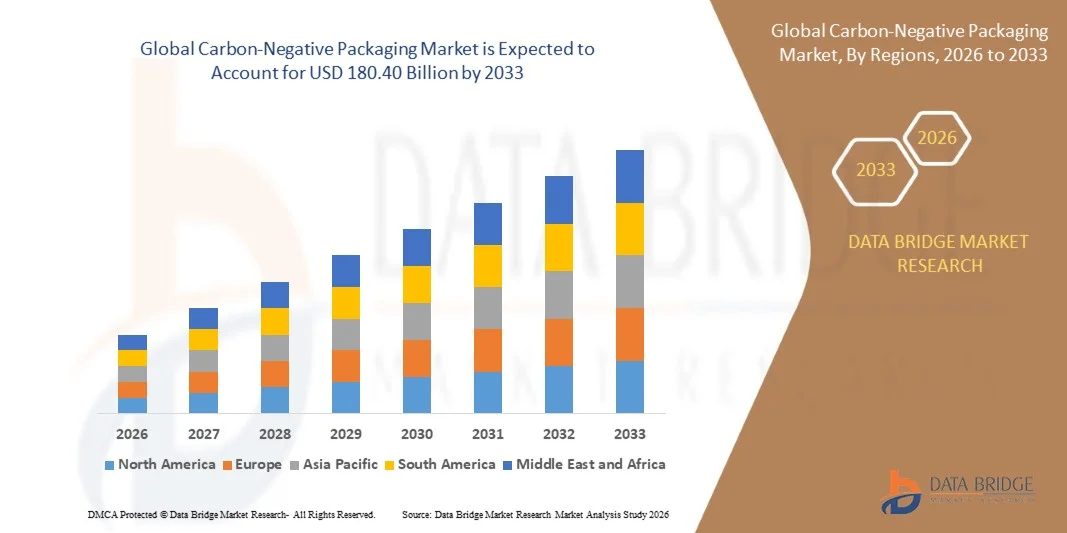
- The global carbon-negative packaging market size was valued at USD 105 billion in 2025 and is expected to reach USD 180.40 billion by 2033, at a CAGR of 7.00% during the forecast period
- The market growth is largely fueled by increasing regulatory pressure and corporate commitments toward reducing carbon emissions, leading to a strong shift toward sustainable and carbon-negative packaging solutions across multiple industries
- Furthermore, rising consumer demand for environmentally responsible products and eco-friendly packaging formats is encouraging companies to adopt innovative materials that reduce lifecycle emissions. These converging factors are accelerating the transition toward carbon-negative packaging, thereby significantly boosting the market growth
Carbon-Negative Packaging Market Analysis
- Carbon-negative packaging refers to packaging solutions that remove more carbon dioxide from the environment than they emit during production, using materials such as bioplastics, paper-based products, and algae-derived substances. These solutions are designed to support circular economy principles while minimizing environmental impact across the value chain
- The escalating demand for carbon-negative packaging is primarily driven by increasing sustainability initiatives by corporations, growing awareness regarding climate change, and the rising need to reduce plastic waste. Industries are increasingly adopting these solutions to meet regulatory standards and enhance brand value through environmentally responsible practices
- North America dominated the carbon-negative packaging market with a share of around 35% in 2025, due to strong regulatory support for sustainable packaging and increasing corporate commitments toward carbon neutrality
- Asia-Pacific is expected to be the fastest growing region in the carbon-negative packaging market during the forecast period due to rapid urbanization, rising environmental awareness, and increasing demand for sustainable packaging solutions
- Boxes & cartons segment dominated the market with a market share of 41.8% in 2025, due to their extensive use in shipping, retail, and e-commerce packaging. These formats are widely preferred due to their structural strength, reusability, and ability to incorporate recycled and carbon-sequestering materials. Growing demand for sustainable logistics solutions and increasing adoption by major retailers to reduce environmental impact further support the dominance of this segment
Report Scope and Carbon-Negative Packaging Market Segmentation
|
Attributes |
Carbon-Negative Packaging Key Market Insights |
|
Segments Covered |
|
|
Countries Covered |
North America
Europe
Asia-Pacific
Middle East and Africa
South America
|
|
Key Market Players |
|
|
Market Opportunities |
|
|
Value Added Data Infosets |
In addition to the insights on market scenarios such as market value, growth rate, segmentation, geographical coverage, and major players, the market reports curated by the Data Bridge Market Research also include import export analysis, production capacity overview, production consumption analysis, price trend analysis, climate change scenario, supply chain analysis, value chain analysis, raw material/consumables overview, vendor selection criteria, PESTLE Analysis, Porter Analysis, and regulatory framework. |
Carbon-Negative Packaging Market Trends
“Increasing Adoption of Bio-Based and Carbon-Sequestering Materials”
- A significant trend in the carbon-negative packaging market is the increasing adoption of bio-based and carbon-sequestering materials, driven by the urgent need to reduce greenhouse gas emissions and transition toward sustainable packaging ecosystems. This shift is positioning carbon-negative solutions as critical components in achieving corporate net-zero targets and advancing circular economy frameworks
- For instance, Notpla has developed seaweed-based packaging materials that naturally decompose and actively reduce environmental impact, supporting brands in eliminating plastic waste while lowering carbon footprints
- The integration of renewable materials such as algae-based polymers and engineered wood products is gaining traction as industries seek alternatives that store carbon during production. This trend is enhancing the environmental value of packaging while maintaining functional performance across applications
- The food and beverage sector is rapidly adopting carbon-negative materials to meet sustainability commitments and consumer expectations for eco-friendly packaging. This is accelerating innovation in barrier technologies that preserve product quality while minimizing emissions
- E-commerce companies are increasingly shifting toward lightweight and compostable packaging formats to reduce transportation emissions and packaging waste. This is reinforcing the demand for scalable and cost-effective carbon-negative solutions across logistics networks
- The market is witnessing continuous advancements in material science that improve durability, recyclability, and carbon absorption capacity. This growing emphasis on innovation is strengthening the role of carbon-negative packaging as a transformative solution for sustainable industrial practices
Carbon-Negative Packaging Market Dynamics
Driver
“Rising Regulatory Pressure for Carbon Reduction and Sustainable Packaging”
- The growing implementation of stringent environmental regulations and carbon reduction targets across regions is driving the adoption of carbon-negative packaging solutions. Governments and regulatory bodies are mandating reduced plastic usage and promoting sustainable alternatives, encouraging industries to transition toward low-emission materials
- For instance, European Union has introduced policies under the Circular Economy Action Plan that push companies to adopt recyclable and low-carbon packaging solutions, significantly influencing market growth and material innovation
- Corporate sustainability initiatives are further accelerating this driver as companies aim to align with global climate goals and enhance brand reputation through environmentally responsible practices. This is leading to increased investments in research and development of carbon-negative materials
- The rising demand from end-use industries such as food and beverages, personal care, and healthcare is strengthening the adoption of sustainable packaging. Companies are focusing on reducing lifecycle emissions while maintaining packaging efficiency and product safety
- The continuous push from regulatory frameworks and corporate commitments is reinforcing long-term market growth. The need to achieve carbon neutrality and reduce environmental impact is positioning carbon-negative packaging as a key driver of sustainable industrial transformation
Restraint/Challenge
“High Production Costs and Limited Scalability of Advanced Materials”
- The carbon-negative packaging market faces challenges due to the high production costs associated with advanced sustainable materials and complex manufacturing processes. These materials often require specialized technologies and raw inputs, increasing overall cost structures and limiting widespread adoption
- For instance, Sulapac Ltd. produces bio-based packaging materials using proprietary formulations that involve higher production expenses compared to conventional plastics, impacting scalability for mass-market applications
- The limited availability of raw materials such as algae-based inputs and engineered biopolymers creates supply constraints and affects cost efficiency. This restricts the ability of manufacturers to scale production while maintaining competitive pricing
- Manufacturing carbon-negative packaging involves stringent quality and performance standards to ensure durability and functionality. These requirements increase operational complexity and extend production timelines across the value chain
- The market continues to face pressure in balancing sustainability goals with economic feasibility. Overcoming cost and scalability challenges remains critical for enabling broader adoption and achieving long-term growth in the carbon-negative packaging industry
Carbon-Negative Packaging Market Scope
The market is segmented on the basis of material, product type, and end use.
• By Material
On the basis of material, the carbon-negative packaging market is segmented into bioplastics, paper & paperboard, engineered wood products, green cement, algae-based, and others. The paper & paperboard segment dominated the largest market revenue share in 2025, driven by its widespread availability, recyclability, and strong carbon sequestration potential during its lifecycle. Manufacturers are increasingly adopting paper-based solutions due to their compatibility with existing packaging infrastructure and growing regulatory support for reducing plastic waste. The segment also benefits from consumer preference for biodegradable and eco-friendly packaging, along with advancements in barrier coatings that enhance durability and moisture resistance while maintaining sustainability credentials.
The bioplastics segment is anticipated to witness the fastest growth rate from 2026 to 2033, fueled by rising investments in renewable raw materials and innovations in compostable polymer technologies. Bioplastics offer a reduced carbon footprint compared to conventional plastics, making them attractive for companies aiming to achieve carbon neutrality goals. Increasing demand from food and beverage and e-commerce sectors, coupled with improvements in performance characteristics such as flexibility and strength, is accelerating their adoption across diverse packaging applications.
• By Product Type
On the basis of product type, the carbon-negative packaging market is segmented into films, bags & pouches, boxes & cartons, trays, and others. The boxes & cartons segment dominated the largest market revenue share of 41.8% in 2025, driven by their extensive use in shipping, retail, and e-commerce packaging. These formats are widely preferred due to their structural strength, reusability, and ability to incorporate recycled and carbon-sequestering materials. Growing demand for sustainable logistics solutions and increasing adoption by major retailers to reduce environmental impact further support the dominance of this segment.
The bags & pouches segment is expected to witness the fastest CAGR from 2026 to 2033, driven by increasing demand for lightweight, flexible, and low-emission packaging formats. These solutions reduce transportation emissions due to lower weight and material usage, aligning with carbon reduction targets. Advancements in biodegradable and compostable pouch materials, along with rising adoption in food packaging and personal care industries, are significantly contributing to the rapid growth of this segment.
• By End Use
On the basis of end use, the carbon-negative packaging market is segmented into food & beverages, healthcare, personal care & cosmetics, and others. The food & beverages segment dominated the largest market revenue share in 2025, driven by stringent sustainability regulations and increasing consumer demand for eco-friendly packaging solutions. Companies in this sector are actively transitioning toward carbon-negative materials to reduce their environmental footprint while maintaining product safety and shelf life. High consumption volumes and continuous innovation in sustainable food packaging technologies further strengthen this segment’s leading position.
The personal care & cosmetics segment is anticipated to witness the fastest growth rate from 2026 to 2033, fueled by strong brand focus on sustainability and increasing consumer awareness regarding environmentally responsible products. Packaging plays a critical role in brand differentiation in this sector, encouraging the adoption of innovative carbon-negative materials. Rising demand for premium, eco-conscious products and the shift toward refillable and biodegradable packaging formats are accelerating growth in this segment.
Carbon-Negative Packaging Market Regional Analysis
- North America dominated the carbon-negative packaging market with the largest revenue share of around 35% in 2025, driven by strong regulatory support for sustainable packaging and increasing corporate commitments toward carbon neutrality
- Companies across the region are actively investing in low-emission materials and circular economy practices to reduce environmental impact while maintaining packaging efficiency
- This widespread adoption is further supported by advanced recycling infrastructure, high consumer awareness, and the presence of major packaging manufacturers focusing on innovation in carbon-negative solutions, establishing the region as a key market leader
U.S. Carbon-Negative Packaging Market Insight
The U.S. carbon-negative packaging market captured the largest revenue share in 2025 within North America, fueled by stringent environmental regulations and strong corporate sustainability initiatives. Companies are increasingly transitioning toward carbon-negative materials to meet emission reduction targets and improve brand positioning. The growing demand from food & beverages and e-commerce sectors, combined with advancements in biodegradable and recyclable materials, further accelerates market growth. Moreover, increasing investments in green technologies and sustainable supply chains significantly contribute to the expansion of the market.
Europe Carbon-Negative Packaging Market Insight
The Europe carbon-negative packaging market is projected to expand at a substantial CAGR throughout the forecast period, primarily driven by strict environmental policies and the region’s strong focus on reducing carbon emissions. The increasing adoption of sustainable materials across industries is fostering market growth. European companies are prioritizing eco-friendly packaging solutions to comply with regulations and enhance brand value. The region is witnessing strong demand across food, healthcare, and personal care sectors, with continuous innovation in biodegradable and carbon-sequestering materials supporting expansion.
U.K. Carbon-Negative Packaging Market Insight
The U.K. carbon-negative packaging market is anticipated to grow at a noteworthy CAGR during the forecast period, driven by increasing government initiatives promoting sustainable packaging and carbon reduction strategies. Businesses are focusing on adopting environmentally responsible materials to align with regulatory frameworks and consumer expectations. The rising demand for eco-friendly alternatives in retail and e-commerce sectors is further accelerating market growth. In addition, the strong presence of sustainability-focused brands is supporting the adoption of carbon-negative packaging solutions.
Germany Carbon-Negative Packaging Market Insight
The Germany carbon-negative packaging market is expected to expand at a considerable CAGR during the forecast period, fueled by strong industrial infrastructure and emphasis on sustainability and innovation. Germany’s focus on circular economy practices and waste reduction is encouraging the adoption of carbon-negative packaging materials. The increasing integration of advanced materials such as engineered wood products and bioplastics is driving market growth. Moreover, the country’s strict environmental standards and technological advancements are supporting the expansion of sustainable packaging solutions.
Asia-Pacific Carbon-Negative Packaging Market Insight
The Asia-Pacific carbon-negative packaging market is poised to grow at the fastest CAGR during the forecast period of 2026 to 2033, driven by rapid urbanization, rising environmental awareness, and increasing demand for sustainable packaging solutions. China is expected to emerge as the fastest growing country in this region, supported by expanding manufacturing capabilities and strong government initiatives promoting green materials. The region's growing demand from food & beverages, personal care, and e-commerce sectors is accelerating adoption of carbon-negative packaging solutions across developing economies.
Japan Carbon-Negative Packaging Market Insight
The Japan carbon-negative packaging market is gaining momentum due to the country’s focus on sustainability, technological advancements, and demand for eco-friendly solutions. The increasing adoption of biodegradable and recyclable materials is driving growth in the packaging sector. Companies are investing in innovative materials to reduce carbon footprint and enhance packaging performance. Moreover, strong consumer awareness and government support for environmental initiatives are contributing to market expansion.
China Carbon-Negative Packaging Market Insight
The China carbon-negative packaging market accounted for the largest market revenue share in Asia Pacific in 2025, attributed to rapid industrialization, expanding e-commerce sector, and increasing focus on sustainability. China is witnessing strong adoption of eco-friendly packaging materials across multiple industries. Government policies promoting carbon reduction and green manufacturing are further driving market growth. The presence of large-scale manufacturing facilities and continuous innovation in sustainable materials are key factors supporting the expansion of the market in China.
Carbon-Negative Packaging Market Share
The carbon-negative packaging industry is primarily led by well-established companies, including:
- SIG (Switzerland)
- Huhtamaki (Finland)
- Sandland Packaging (U.S.)
- Tetra Pak (Switzerland)
- Biome Bioplastics (U.K.)
- Sealed Air (U.S.)
- Elopak (Norway)
- NatureWorks LLC (U.S.)
- DS Smith (U.S.)
- Sulapac Ltd. (Finland)
- Smurfit Kappa (Ireland)
- TIPA Corp Ltd. (Israel)
- Econovus (India)
- Amcor plc (Switzerland)
- Notpla (U.S.)
- Emmerson Packaging (Ireland)
Latest Developments in Global Carbon-Negative Packaging Market
- In July 2024, FORTIS X introduced Africa’s first biodegradable and recyclable plant-based packaging, which marked a significant advancement in sustainable packaging across emerging economies and strengthened regional capabilities in reducing plastic waste. This initiative, aligned with the Plastic Free July movement, is accelerating the transition away from single-use plastics by offering scalable, eco-friendly alternatives while encouraging brands to adopt low-carbon packaging solutions and improve their environmental footprint
- In January 2024, Birla Carbon announced the establishment of new carbon black manufacturing facilities in India and Thailand, expanding capacity by over 240 kMT, which is enhancing supply chain resilience and addressing the growing demand for sustainable material inputs. This expansion is enabling manufacturers to integrate advanced carbon materials into packaging applications while supporting industry efforts toward improving durability and reducing lifecycle emissions
- In October 2023, Phillips Carbon Black Limited emphasized its commitment to sustainable operations by expanding production capabilities with a focus on minimizing environmental impact, which is contributing to the shift toward cleaner industrial practices. The company’s approach is strengthening the availability of environmentally responsible raw materials and supporting packaging manufacturers in meeting stricter regulatory standards and sustainability targets
- In August 2023, Cabot Corporation continued innovation in high-performance carbon black products, which is improving material efficiency and enabling the development of advanced packaging solutions with lower environmental impact. These innovations are supporting the market by enhancing product performance while aligning with sustainability requirements, thereby helping companies balance functionality with reduced carbon emissions
- In October 2020, Each & Every launched 100% plant-based sugarcane packaging tubes designed with infrared readability for improved recycling efficiency, which set an early precedent for smart sustainable packaging solutions. This development is driving industry awareness around the importance of recyclability and material traceability, encouraging wider adoption of bio-based packaging formats that support circular economy initiatives and waste reduction goals

- Interactive Data Analysis Dashboard
- Company Analysis Dashboard for high growth potential opportunities
- Research Analyst Access for customization & queries
- Competitor Analysis with Interactive dashboard
- Latest News, Updates & Trend analysis
- Harness the Power of Benchmark Analysis for Comprehensive Competitor Tracking
Global Carbon Negative Packaging Market, Supply Chain Analysis and Ecosystem Framework
To support market growth and help clients navigate the impact of geopolitical shifts, DBMR has integrated in-depth supply chain analysis into its Global Carbon Negative Packaging Market research reports. This addition empowers clients to respond effectively to global changes affecting their industries. The supply chain analysis section includes detailed insights such as Global Carbon Negative Packaging Market consumption and production by country, price trend analysis, the impact of tariffs and geopolitical developments, and import and export trends by country and HSN code. It also highlights major suppliers with data on production capacity and company profiles, as well as key importers and exporters. In addition to research, DBMR offers specialized supply chain consulting services backed by over a decade of experience, providing solutions like supplier discovery, supplier risk assessment, price trend analysis, impact evaluation of inflation and trade route changes, and comprehensive market trend analysis.
Data collection and base year analysis are done using data collection modules with large sample sizes. The stage includes obtaining market information or related data through various sources and strategies. It includes examining and planning all the data acquired from the past in advance. It likewise envelops the examination of information inconsistencies seen across different information sources. The market data is analysed and estimated using market statistical and coherent models. Also, market share analysis and key trend analysis are the major success factors in the market report. To know more, please request an analyst call or drop down your inquiry.
The key research methodology used by DBMR research team is data triangulation which involves data mining, analysis of the impact of data variables on the market and primary (industry expert) validation. Data models include Vendor Positioning Grid, Market Time Line Analysis, Market Overview and Guide, Company Positioning Grid, Patent Analysis, Pricing Analysis, Company Market Share Analysis, Standards of Measurement, Global versus Regional and Vendor Share Analysis. To know more about the research methodology, drop in an inquiry to speak to our industry experts.
Data Bridge Market Research is a leader in advanced formative research. We take pride in servicing our existing and new customers with data and analysis that match and suits their goal. The report can be customized to include price trend analysis of target brands understanding the market for additional countries (ask for the list of countries), clinical trial results data, literature review, refurbished market and product base analysis. Market analysis of target competitors can be analyzed from technology-based analysis to market portfolio strategies. We can add as many competitors that you require data about in the format and data style you are looking for. Our team of analysts can also provide you data in crude raw excel files pivot tables (Fact book) or can assist you in creating presentations from the data sets available in the report.













