


Ceramic Implant Market Overview
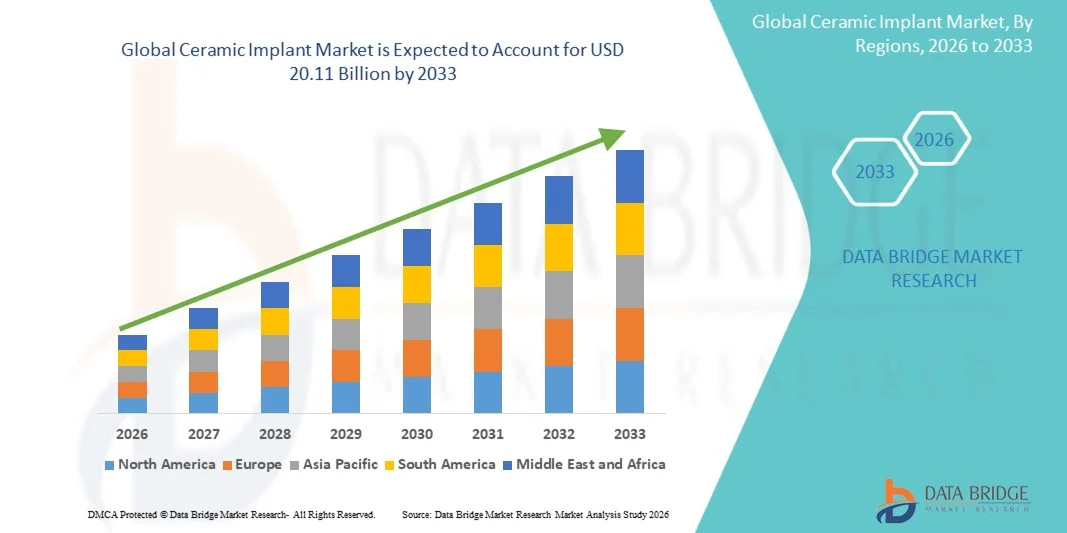
The Ceramic Implant Market was valued at USD 12.62 billion in 2025 and is projected to reach USD 20.11 billion by 2033, growing at a CAGR of 6.00% from 2026 to 2033. The market is experiencing consistent growth driven by rising demand for safe and realistic driver training solutions, rapid advancements in simulation hardware and software, and expanding applications across automotive R&D, defense, and professional motorsport.
The increasing incidence of road accidents globally, combined with stricter government regulations on driver training and road safety, is compelling transportation authorities, driving schools, and military organizations to adopt advanced simulation technologies. Fixed-base and VR/AR-enabled simulators are replacing traditional on-road training in many markets, offering cost-effective, repeatable, and risk-free environments for skill development and autonomous vehicle validation.
Key Market Trends & Insights
- North America dominated the Ceramic Implant Market with the largest revenue share of 38.6% in 2025, supported by advanced dental healthcare infrastructure, high adoption of premium dental implant technologies, increasing demand for aesthetic dentistry, and the presence of leading dental implant manufacturers. The region benefits from rising awareness regarding oral health, growing adoption of biocompatible ceramic materials such as zirconia implants, and increasing dental expenditure. Expanding cosmetic dentistry procedures, technological advancements in implant design, and favorable reimbursement conditions continue to strengthen North America’s leading position in the global market.
- The hospitals segment dominated the market with a 54.7% share in 2025, supported by the availability of advanced surgical infrastructure, specialized orthopedic and dental departments, and higher patient preference for hospital-based implant procedures.
- Asia-Pacific is expected to be the fastest-growing region at a CAGR of 9.2% from 2026 to 2033, fueled by rising dental healthcare expenditure, increasing awareness regarding oral care, expanding dental tourism, and growing adoption of advanced implant technologies across China, India, Japan, and South Korea. The region is witnessing rapid growth due to increasing prevalence of dental disorders, improving healthcare infrastructure, and rising availability of advanced dental clinics. Government initiatives supporting healthcare modernization and increasing adoption of cosmetic dentistry procedures are further accelerating market expansion.
- The single ceramic implant segment is expected to witness significant growth, projected to register a CAGR of 8.7% from 2026 to 2033, reflecting increasing demand for individual tooth replacement procedures, improved implant success rates, and growing preference for aesthetically superior dental restoration solutions. Advancements in digital dentistry, CAD/CAM-based implant planning, and customized ceramic implant designs are enhancing treatment outcomes and driving adoption among dental professionals.
- The dental clinics segment dominated the end-user category with a 45.3% revenue share in 2025, supported by increasing patient preference for specialized dental care facilities, rising implant procedures performed in private clinics, and growing availability of advanced implant technologies. Dental clinics are increasingly adopting ceramic implants due to growing demand for cosmetic dentistry, improved patient outcomes, and increasing investments in modern dental equipment and digital workflow solutions.
Market Size & Forecast
- Global Market Value (2025): USD 12.62 Billion
- Expected Market Value (2033): USD 20.11 Billion
- Forecast CAGR (2026–2033): 6.00%
- Leading Region in 2025: North America
- Fastest Growing Region: Asia-Pacific
Report Scope and Ceramic Implant Market Segmentation
|
Attributes |
Ceramic Implant Key Market Insights |
|
Segments Covered |
|
|
Countries Covered |
North America · U.S. · Canada · Mexico Europe · Germany · France · U.K. · Netherlands · Switzerland · Belgium · Russia · Italy · Spain · Turkey · Rest of Europe Asia-Pacific · China · Japan · India · South Korea · Singapore · Malaysia · Australia · Thailand · Indonesia · Philippines · Rest of Asia-Pacific Middle East and Africa · Saudi Arabia · U.A.E. · South Africa · Egypt · Israel · Rest of Middle East and Africa South America · Brazil · Argentina · Rest of South America |
|
Key Market Players |
• Institut Straumann AG (Switzerland) |
|
Market Opportunities |
· Growing Adoption of Metal-Free and Biocompatible Implant Solutions · Expansion of Digital Dentistry and Advanced Implant Technologies · Rising Demand for Dental and Orthopedic Implant Procedures in Emerging Markets |
|
Value Added Data Infosets |
In addition to the insights on market scenarios such as market value, growth rate, segmentation, geographical coverage, and major players, the market reports curated by the Data Bridge Market Research also include in-depth expert analysis, geographically represented company-wise production and capacity, network layouts of distributors and partners, detailed and updated price trend analysis and deficit analysis of supply chain and demand. |
Ceramic Implant Market Trends
Trend: Growth in Adoption of Ceramic Implants in Aesthetic Dentistry and Orthopedic Reconstruction
Dental clinics, hospitals, and specialty orthopedic centers are increasingly adopting high-performance ceramic implants to improve patient outcomes through enhanced biocompatibility, durability, and aesthetic results. Zirconia-based ceramic implants are gaining popularity as an alternative to traditional titanium implants due to their natural tooth-like appearance, corrosion resistance, and reduced risk of metal-related sensitivities. The growing demand for minimally invasive dental procedures, cosmetic dentistry, and long-term implant solutions is accelerating adoption among patients and healthcare providers. For instance, ceramic dental implants are increasingly being integrated with digital dentistry workflows, including CAD/CAM design and 3D-guided implant placement, enabling customized treatment planning and improved surgical precision. In orthopedic applications, advanced ceramic materials such as alumina and zirconia composites are being used in hip and joint implants due to their wear resistance and ability to support long-term implant performance.
Ceramic Implant Market Dynamics
Key Market Driver: Rising Demand for Biocompatible and Metal-Free Implant Solutions
The increasing preference for safe, durable, and aesthetically superior implant materials is a major driver for the Ceramic Implant Market. Patients and healthcare professionals are increasingly seeking alternatives to conventional metal-based implants due to concerns related to allergies, corrosion, and long-term tissue response. Ceramic implants, particularly zirconia-based solutions, offer excellent biocompatibility, high strength, and improved aesthetic outcomes, making them suitable for dental restoration and orthopedic reconstruction procedures. According to industry trends, the growing prevalence of tooth loss, periodontal diseases, osteoarthritis, and age-related musculoskeletal disorders is increasing demand for implant-based treatments globally. In addition, advancements in ceramic material engineering, surface modification technologies, and implant manufacturing processes are improving implant durability and expanding clinical applications. The increasing adoption of digital dentistry and computer-assisted implant procedures is further supporting market growth by enabling precise placement and personalized implant solutions.
Key Restraint/Challenge: High Cost and Limited Clinical Adoption of Ceramic Implant Technologies
A significant challenge in the Ceramic Implant Market is the higher cost associated with advanced ceramic materials, manufacturing processes, and specialized surgical procedures compared with conventional implant solutions. Ceramic implants require advanced production technologies, strict quality control, and specialized expertise, which can increase overall treatment expenses for patients and healthcare providers. Smaller dental clinics and healthcare facilities in developing regions may face adoption barriers due to limited access to advanced implant technologies and trained professionals. In addition, concerns regarding long-term clinical evidence, fracture resistance compared with certain metal implants, and limited insurance coverage for premium implant procedures may restrict widespread adoption. For example, zirconia dental implants require careful case selection and specialized handling, increasing the need for clinician training and technical expertise.
Key Market Opportunity: Integration of Digital Dentistry, 3D Printing, and Advanced Ceramic Manufacturing Technologies
The integration of digital healthcare technologies, additive manufacturing, and advanced ceramic processing presents significant growth opportunities for the Ceramic Implant market. Digital workflows combining intraoral scanning, 3D imaging, CAD/CAM systems, and computer-guided surgery are improving implant design accuracy and reducing procedure complexity. Advanced manufacturing techniques, including 3D printing of ceramic materials, are enabling the development of customized implants with improved anatomical fit and enhanced patient outcomes. For instance, the increasing adoption of digital implant planning platforms in dental practices is supporting faster treatment workflows and personalized restoration solutions. Emerging markets across Asia-Pacific, including China and India, represent major growth opportunities due to rising dental care awareness, expanding specialty clinics, increasing healthcare expenditure, and growing demand for aesthetic dental procedures. Furthermore, continuous innovation in zirconia ceramics, bioactive coatings, and next-generation implant surfaces is expected to strengthen adoption of ceramic implant technologies globally.
Ceramic Implant Market Scope
The Ceramic Implant market is segmented on the basis of product and application.
- By Product
On the basis of product, the Ceramic Implant Market is segmented into dental implants, hip implants, knee implants, and spinal implants. The Dental Implants segment dominated the market with a 38.6% share in 2025, owing to the increasing prevalence of dental disorders, rising demand for aesthetic dentistry, growing geriatric population, and increasing adoption of biocompatible ceramic materials such as zirconia implants. Ceramic dental implants are gaining popularity due to their superior aesthetics, corrosion resistance, reduced plaque accumulation, and excellent compatibility with surrounding tissues compared with traditional metal-based implants. Increasing awareness regarding oral health, rising disposable income, and expanding access to advanced dental procedures are further supporting segment growth. In addition, technological advancements in digital dentistry, CAD/CAM manufacturing, and customized implant designs are enhancing the adoption of ceramic dental implants across developed and emerging markets.
The Spinal Implants segment is expected to witness the fastest growth at a CAGR of 7.1% from 2026 to 2033, driven by the increasing prevalence of spinal disorders, degenerative disc diseases, and the rising demand for advanced implant solutions with improved durability and biocompatibility. Ceramic-based spinal implants are gaining attention due to their wear resistance, mechanical strength, and potential advantages in reducing inflammatory responses compared with conventional materials. The growing aging population, increasing number of spinal surgeries, and advancements in minimally invasive surgical techniques are accelerating demand for innovative spinal implant technologies. Furthermore, continuous research into advanced ceramic composites and next-generation biomaterials is expected to create new growth opportunities for ceramic spinal implant applications.
- By Application
On the basis of application, the Ceramic Implant Market is segmented into hospitals, ambulatory surgical centers, and others. The Hospitals segment dominated the market with a 54.7% share in 2025, supported by the availability of advanced surgical infrastructure, specialized orthopedic and dental departments, and higher patient preference for hospital-based implant procedures. Hospitals represent the primary setting for complex implant surgeries due to access to skilled surgeons, advanced diagnostic technologies, and comprehensive post-operative care facilities. Increasing healthcare expenditure, rising number of orthopedic and dental procedures, and growing adoption of advanced implant materials are strengthening the dominance of hospitals in the ceramic implant market. In addition, partnerships between implant manufacturers and healthcare institutions are improving access to innovative ceramic implant solutions and supporting wider clinical adoption.
The Ambulatory Surgical Centers (ASC) segment is projected to register the fastest growth at a CAGR of 7.4% from 2026 to 2033, driven by the increasing shift toward minimally invasive procedures, cost-effective surgical care, and shorter hospital stays. ASCs are increasingly adopting advanced implant technologies due to improved surgical efficiency, reduced treatment costs, and growing patient preference for outpatient procedures. The expansion of specialized orthopedic and dental surgical centers, especially in developed economies, is supporting the adoption of ceramic implants in ambulatory settings. Furthermore, advancements in surgical techniques, improved implant designs, and increasing investment in outpatient healthcare infrastructure are expected to accelerate the growth of this segment over the forecast period.
Ceramic Implant Market Regional Analysis
North America dominated the Ceramic Implant Market with the largest revenue share of 38.6% in 2025, supported by advanced dental healthcare infrastructure, high adoption of premium implant technologies, strong presence of leading dental implant manufacturers, and increasing demand for aesthetic and restorative dentistry procedures. The region benefits from growing awareness regarding oral health, rising acceptance of zirconia-based ceramic implants, and increasing dental expenditure among patients seeking metal-free and biocompatible implant solutions. The expansion of cosmetic dentistry, technological advancements in implant design, and availability of advanced dental care facilities continue to strengthen North America’s leading position in the Ceramic Implant Market. Increasing adoption of digital dentistry technologies, including CAD/CAM-based implant planning and 3D imaging systems, is further supporting market growth across the region.
U.S. Ceramic Implant Market Insight
The U.S. ceramic implant market is witnessing strong growth due to increasing demand for advanced dental restoration procedures, rising preference for aesthetic dentistry, and growing adoption of biocompatible implant materials. The country’s well-established dental healthcare system, presence of major dental implant companies, and high spending on oral healthcare are driving the adoption of ceramic implants across dental clinics and specialty centers. Growing patient awareness regarding metal-free dental solutions, improved durability of zirconia implants, and increasing use of digital implant planning technologies are accelerating market expansion. In addition, rising cases of tooth loss due to aging population, periodontal diseases, and lifestyle-related oral health issues are contributing to increased demand for advanced implant solutions.
Europe Ceramic Implant Market Insight
The Europe ceramic implant market remains a significant contributor to global revenue, driven by strong adoption of advanced dental technologies, increasing demand for cosmetic dentistry, and growing preference for minimally invasive dental procedures. Countries across Europe are witnessing rising utilization of zirconia ceramic implants due to their aesthetic appearance, biocompatibility, and reduced risk of metal-related sensitivities. The presence of established dental implant manufacturers, advanced dental laboratories, and favorable healthcare infrastructure supports regional growth. Increasing investments in digital dentistry, implant research, and advanced dental treatment centers are further enhancing adoption of Ceramic Implant solutions across Europe.
U.K. Ceramic Implant Market Insight
The U.K. ceramic implant market is experiencing steady growth, supported by rising awareness of dental aesthetics, increasing demand for premium dental restoration procedures, and growing adoption of advanced implant technologies. Dental clinics and specialty centers are increasingly adopting ceramic implants as patients seek natural-looking, metal-free alternatives for tooth replacement. Growth in private dental care services, increasing adoption of digital dentistry workflows, and advancements in zirconia implant manufacturing are contributing to market expansion. Furthermore, rising focus on preventive oral healthcare and improved access to specialized dental procedures are supporting the growth of ceramic implant adoption in the U.K.
Germany Ceramic Implant Market Insight
The Germany ceramic implant market is expanding steadily due to the country’s strong dental technology industry, advanced healthcare infrastructure, and high adoption of innovative dental solutions. Germany’s well-developed dental manufacturing ecosystem and strong research capabilities are supporting the development and commercialization of high-quality ceramic implant systems. Dental professionals are increasingly using zirconia-based implants for patients seeking aesthetic and biocompatible treatment options. Continuous advancements in implant surface technology, digital dentistry, and computer-assisted implant placement, along with increasing demand for cosmetic dental procedures, are further driving market growth in Germany.
Asia-Pacific Ceramic Implant Market Insight
The Asia-Pacific ceramic implant market is expected to witness rapid growth at a CAGR of 9.2% from 2026 to 2033, driven by rising dental healthcare expenditure, increasing awareness regarding oral health, expanding dental tourism, and growing adoption of advanced implant technologies across countries such as China, India, Japan, and South Korea. The region is experiencing increasing prevalence of dental disorders, growing aging population, and improving access to modern dental clinics, creating strong demand for ceramic implant solutions. Government initiatives supporting healthcare modernization, expansion of specialty dental centers, and increasing adoption of cosmetic dentistry procedures are further accelerating market growth. In addition, rising disposable income and increasing preference for aesthetic dental treatments are encouraging patients to adopt premium implant solutions.
Japan Ceramic Implant Market Insight
The Japan ceramic implant market is witnessing consistent growth due to increasing demand for advanced dental restoration solutions, rising adoption of aesthetic dentistry, and strong focus on healthcare innovation. Japan’s aging population is contributing to higher demand for dental implants to address tooth loss and age-related oral health concerns. Dental clinics and healthcare providers are increasingly adopting zirconia ceramic implants due to their biocompatibility, durability, and natural appearance. Moreover, integration of digital dentistry technologies, advanced imaging systems, and precision implant placement techniques is supporting the expansion of ceramic implant adoption in Japan.
China Ceramic Implant Market Insight
The China ceramic implant market is growing rapidly, driven by increasing dental healthcare awareness, expanding middle-class population, rising cosmetic dentistry demand, and improving availability of advanced dental treatment facilities. Growing investments in healthcare infrastructure and increasing adoption of digital dental technologies are supporting the expansion of ceramic implant procedures across hospitals and specialty dental clinics. The rising prevalence of dental disorders, increasing demand for aesthetic tooth replacement solutions, and growth of dental tourism are further contributing to market development. In addition, government initiatives focused on healthcare modernization and increasing presence of domestic and international dental implant manufacturers are positioning China as a key growth market for Ceramic Implants globally.
Ceramic Implant Market Share
The Ceramic Implant industry is primarily led by well-established companies, including:
- Institut Straumann AG (Switzerland)
- Dentsply Sirona Inc. (U.S.)
- Zimmer Biomet Holdings, Inc. (U.S.)
- Stryker Corporation (U.S.)
- Smith+Nephew plc (U.K.)
- Osstem Implant Co., Ltd. (South Korea)
- Henry Schein, Inc. (U.S.)
- Envista Holdings Corporation (U.S.)
- Nobel Biocare Services AG (Switzerland)
- Bicon, LLC (U.S.)
- CeramTec GmbH (Germany)
- Z-Systems AG (Switzerland)
- CeraRoot SL (Spain)
- KYOCERA Corporation (Japan)
- CAMLOG Biotechnologies GmbH (Switzerland)
- BioHorizons Implant Systems, Inc. (U.S.)
- Anthogyr SAS (France)
- Thommen Medical AG (Switzerland)
- BEGO GmbH & Co. KG (Germany)
- GC Corporation (Japan)
- Adin Dental Implant Systems Ltd. (Israel)
- Megagen Implant Co., Ltd. (South Korea)
- Dentium Co., Ltd. (South Korea)
- Keystone Dental, Inc. (U.S.)
- Neoss Group (U.K.)
- Southern Implants (South Africa)
- Bredent Medical GmbH & Co. KG (Germany)
- TAV Dental Ltd. (Israel)
- LASAK s.r.o. (Czech Republic)
- C-Tech Implant (Italy)
- Noris Medical Ltd. (Israel)
- Wieland Dental + Technik GmbH (Germany)
- Exactech, Inc. (U.S.)
- Corin Group (U.K.)
Latest Developments in Ceramic Implant Market
- In February 2021, Nobel Biocare, a leading dental implant solutions provider, announced the introduction of the NobelProcera Zirconia Implant Bridge, designed to provide high-strength, aesthetic, and customized implant-based restorations. The zirconia-based solution was developed to improve implant longevity, stability, and aesthetic outcomes by offering a metal-free alternative for complex dental restoration procedures. This development highlighted the increasing adoption of advanced ceramic materials and digital manufacturing technologies in implant dentistry
- In September 2021, the European Society for Ceramic Implantology (ESCI) published its consensus statement highlighting the growing clinical acceptance of zirconia ceramic implants as a metal-free alternative to titanium implants. The statement emphasized advancements in high-performance zirconium dioxide ceramics, improved biocompatibility, and increasing clinical adoption of ceramic implant solutions in dental implantology. This development supported broader acceptance of zirconia implants among dental professionals and strengthened market expansion
- In October 2021, researchers published advancements in zirconia dental implant surface modification technologies, focusing on improving osseointegration and long-term implant performance. Developments in surface treatment approaches, including enhanced coatings and structural modifications, aimed to improve bone integration and clinical reliability of ceramic implants. These innovations supported ongoing research toward next-generation zirconia implant systems with improved biological and mechanical properties
- In December 2021, Kelyniam Global, Inc. announced a strategic licensing agreement with Fin-Ceramica Faenza S.p.A. to commercialize hydroxyapatite-based ceramic implant technology in the U.S. market. The bio-inspired ceramic implant material was designed to support bone integration through its porous structure and biomimetic properties, reflecting the growing application of advanced ceramic biomaterials in implantable healthcare solutions
- In September 2022, dental implant manufacturers continued expanding digital dentistry workflows by integrating ceramic implant solutions with computer-aided design and manufacturing (CAD/CAM) technologies. The increasing use of digital implant planning, 3D imaging, and customized restoration workflows accelerated adoption of zirconia-based implants, particularly in aesthetic dentistry applications requiring improved appearance and biocompatibility
- In February 2023, clinical research continued to demonstrate the long-term potential of zirconia-based implant systems, with studies evaluating survival rates, marginal bone stability, and soft tissue response around ceramic implants. These developments supported increasing confidence among clinicians regarding zirconia implants as an alternative option for selected patients seeking metal-free dental restoration solutions
- In February 2024, ZimVie announced the launch of its next-generation TSX Implant in Japan, expanding its dental implant portfolio in the Asia-Pacific region. Although focused on titanium implant technology, the launch reflected broader market momentum toward advanced implant designs, improved osseointegration, and digitally supported implant workflows across key Asian dental markets, supporting overall growth of the advanced implant ecosystem

- Interactive Data Analysis Dashboard
- Company Analysis Dashboard for high growth potential opportunities
- Research Analyst Access for customization & queries
- Competitor Analysis with Interactive dashboard
- Latest News, Updates & Trend analysis
- Harness the Power of Benchmark Analysis for Comprehensive Competitor Tracking
Data collection and base year analysis are done using data collection modules with large sample sizes. The stage includes obtaining market information or related data through various sources and strategies. It includes examining and planning all the data acquired from the past in advance. It likewise envelops the examination of information inconsistencies seen across different information sources. The market data is analysed and estimated using market statistical and coherent models. Also, market share analysis and key trend analysis are the major success factors in the market report. To know more, please request an analyst call or drop down your inquiry.
The key research methodology used by DBMR research team is data triangulation which involves data mining, analysis of the impact of data variables on the market and primary (industry expert) validation. Data models include Vendor Positioning Grid, Market Time Line Analysis, Market Overview and Guide, Company Positioning Grid, Patent Analysis, Pricing Analysis, Company Market Share Analysis, Standards of Measurement, Global versus Regional and Vendor Share Analysis. To know more about the research methodology, drop in an inquiry to speak to our industry experts.
Data Bridge Market Research is a leader in advanced formative research. We take pride in servicing our existing and new customers with data and analysis that match and suits their goal. The report can be customized to include price trend analysis of target brands understanding the market for additional countries (ask for the list of countries), clinical trial results data, literature review, refurbished market and product base analysis. Market analysis of target competitors can be analyzed from technology-based analysis to market portfolio strategies. We can add as many competitors that you require data about in the format and data style you are looking for. Our team of analysts can also provide you data in crude raw excel files pivot tables (Fact book) or can assist you in creating presentations from the data sets available in the report.













