Ceramic Tableware Market Size
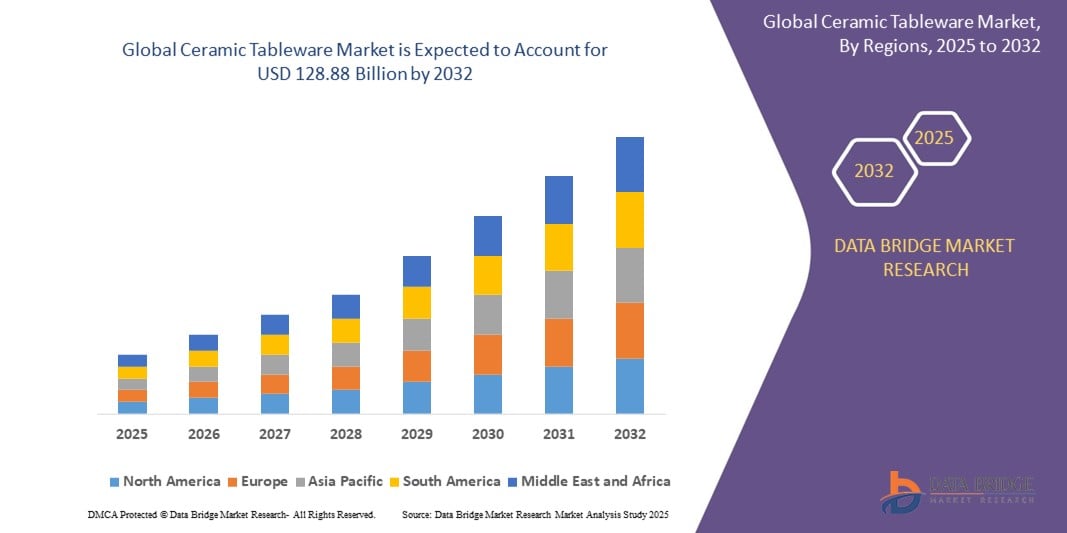
- The global Ceramic Tableware market was valued at USD 80.25 billion in 2024 and is expected to reach USD 128.88 billion by 2032
- During the forecast period of 2025 to 2032 the market is likely to grow at a CAGR of 6.10%, primarily driven by the increasing demand for premium and decorative tableware, rising disposable incomes, growing popularity of ceramic products in home decor, and the expansion of the global hospitality industry
- This growth is driven by factors such as increasing consumer preference for durable and aesthetically appealing tableware, rising disposable incomes and expanding hospitality
Ceramic Tableware Market Analysis
- The global ceramic tableware market is experiencing significant growth, fueled by changing consumer preferences for high-quality and aesthetically appealing products
- Consumers are increasingly opting for premium, durable and stylish ceramic tableware for both residential and commercial use, driven by its long-lasting nature and versatility
- Innovation in product design is helping to drive market expansion, with manufacturers blending traditional craftsmanship with modern design trends
- For instance: eco-friendly ceramics are gaining traction, as manufacturers use lead-free glazes and natural materials to meet the demand for sustainable products
- Ceramic tableware is valued not only for its functionality but also for its decorative appeal in home decor, with consumers investing in high-quality products for both practical and aesthetic purposes
- Hospitality industry growth is contributing to the demand for ceramic tableware, with restaurants, hotels, and catering businesses preferring ceramics for its durability and elegance
- For instance: top-tier restaurants are increasingly using ceramic dinnerware to create an upscale dining experience
- Technological advancements in manufacturing, such as automation in the production process, are making it easier to create intricate designs at a lower cost
- Innovations in glazing techniques are allowing manufacturers to offer a broader range of ceramic designs, making high-end products more accessible
- The market is likely to continue expanding as both consumer demand for premium tableware and sustainability trends shape future product offerings
- Competition within the market is intensifying, with manufacturers striving to meet evolving consumer needs through innovative, high-quality ceramic products
Report Scope and Ceramic Tableware Market Segmentation
|
Attributes |
Ceramic Tableware Key Market Insights |
|
Segments Covered |
|
|
Countries Covered |
North America
Europe
Asia-Pacific
Middle East and Africa
South America
|
|
Key Market Players |
|
|
Market Opportunities |
|
|
Value Added Data Infosets |
In addition to the insights on market scenarios such as market value, growth rate, segmentation, geographical coverage, and major players, the market reports curated by the Data Bridge Market Research also include in-depth expert analysis, pricing analysis, brand share analysis, consumer survey, demography analysis, supply chain analysis, value chain analysis, raw material/consumables overview, vendor selection criteria, PESTLE Analysis, Porter Analysis, and regulatory framework. |
Ceramic Tableware Market Trends
“Growing Demand for Premium and Personalized Products”
- Consumers are increasingly seeking high-quality, unique ceramic tableware that reflects their personal style and enhances their dining experience.
- For instance: Brands such as Le Creuset offer limited-edition and custom-colored ceramic pieces to cater to consumers who desire personalized tableware.
- There is a notable trend towards sustainability, with manufacturers adopting lead-free glazes, natural materials, and environmentally friendly production processes.
- For instance: has introduced a range of eco-conscious ceramic tableware, featuring sustainable sourcing and minimal waste production.
- Consumers are demanding unique, handcrafted ceramic pieces that reflect their individual tastes and preferences. Companies such as Etsy are seeing a rise in demand for personalized, handcrafted ceramics, with items designed to match specific home decor or personal styles.
- Sleek, simple designs are gaining popularity, particularly among modern households that favor clean lines and neutral colors. Muji, known for its minimalist aesthetic, offers a range of ceramic tableware that aligns with this growing trend, appealing to those seeking functional yet stylish dining products.
- Innovations such as 3D printing have allowed manufacturers to create intricate, customizable ceramic pieces at a lower cost, making high-end designs more accessible.
- For instance: Shapeways, a leader in 3D-printed ceramics, offers customized, high-quality ceramics with detailed designs for consumers who want both functionality and uniqueness in their tableware.
Ceramic Tableware Market Dynamics
Driver
“Increasing Demand for Sustainable and Eco-Friendly Products”
- A significant driver of the ceramic tableware market is the growing demand for sustainable and eco-friendly products, driven by the increasing awareness of environmental concerns among consumers
- Consumers are prioritizing products that are not only functional but also have a minimal environmental impact, seeking durable, long-lasting, and recyclable options such as ceramic tableware
- Manufacturers are responding by incorporating lead-free glazes, natural materials, and environmentally friendly production methods, in line with the trend towards sustainability
- For instance: IKEA offers eco-friendly ceramic tableware, ensuring products are made with responsibly sourced materials and free from harmful chemicals, meeting the growing consumer demand for sustainable options
- Companies are also focusing on reducing waste in the manufacturing process, implementing energy-efficient production techniques, and utilizing eco-friendly packaging to further enhance their environmental footprint
- This shift aligns with the broader trend of conscious consumerism, where consumers are increasingly informed about the environmental and ethical practices of the brands they support
- As a result, ceramic tableware is becoming a preferred choice for consumers seeking to reduce their environmental footprint due to its long-lasting and recyclable nature
- The increased emphasis on sustainability presents a significant opportunity for manufacturers to differentiate themselves from competitors by offering products that cater to the demand for eco-friendly products
- This growing trend allows companies to tap into a market that values environmental responsibility, ultimately helping them build brand loyalty and expand their consumer base
Opportunity
“Rise of Fine-Dining Restaurants and Hotels”
- Consumers are increasingly prioritizing sustainability in their purchasing decisions, leading to a higher demand for eco-friendly products, including ceramic tableware. Ceramic products, being durable and reusable, are increasingly seen as a better alternative to single-use plastic or disposable tableware
- The booming hospitality and foodservice sectors, especially in emerging markets, present substantial opportunities for ceramic tableware manufacturers. As the global foodservice industry grows, there is an increasing demand for high-quality, aesthetically pleasing, and durable tableware that can withstand frequent use
- For instance: The rise of fine-dining restaurants and hotels in regions such as Asia-Pacific (India and China) has contributed significantly to the growth in the demand for ceramic tableware. With growing disposable incomes and lifestyle changes in these regions, restaurant owners are opting for premium ceramic tableware to enhance their dining experience
- As consumers look for personalized dining experiences, there is a growing interest in custom-designed ceramic tableware. The ability to personalize ceramic items, such as plates, bowls, and mugs, with unique designs or logos, presents an excellent opportunity for growth in this segment. Brands such as Le Creuset offer customizable ceramic pieces, capitalizing on this trend to meet consumers' desire for one-of-a-kind tableware products
- The increasing popularity of e-commerce platforms presents a major opportunity for ceramic tableware brands to expand their reach. With more consumers shopping online for home decor and kitchenware, manufacturers can tap into a global market through online retail channels. Brands such as Wayfair and Amazon are experiencing growth in the ceramic tableware category, making it easier for manufacturers to reach consumers worldwide
Restraint/Challenge
“High Manufacturing and Customization Costs”
- A key challenge facing the ceramic tableware market is the high manufacturing and customization costs associated with producing high-quality, personalized items
- The process of creating intricate, handcrafted ceramic pieces requires skilled artisans, advanced technology, and time-consuming production methods, all of which contribute to increased production costs
- For instance: The use of premium materials such as fine clay and non-toxic, lead-free glazes, as well as integrating customization features such as personalized engravings or unique designs, requires specialized techniques and additional labor
- This significantly drives up the cost of the final product, making it more expensive for consumers who are willing to pay a premium for unique, high-quality tableware
- However, not all consumer segments can afford these higher price points, particularly in price-sensitive markets, where affordable options are in greater demand
- Smaller manufacturers or new entrants may struggle to balance cost-effective production with the need for quality and customization, limiting their ability to compete with established brands such as Wedgwood or Royal Copenhagen
- For Instance: The demand for eco-friendly production processes can further raise costs, as sustainable materials and energy-efficient technologies often come with a higher price tag
- These factors can limit the accessibility of high-end ceramic tableware to a broader market, particularly in regions where disposable incomes are lower, such as in developing economies
- Manufacturers need to carefully manage their production costs while meeting consumer expectations for quality, customization, and sustainability, making the high costs of manufacturing and customization a significant restraint for the ceramic tableware market
Ceramic Tableware Market Scope
The market is segmented on the basis application, material type, product type, type, and distribution channel.
|
Segmentation |
Sub-Segmentation |
|
By Application |
|
|
By Material Type |
|
|
By Product type |
|
|
By Distribution channel
|
|
|
Type |
|
Ceramic Tableware Market Regional Analysis
“Asia Pacific Region is the Dominating Market in the Global Ceramic Tableware Industry”
- Asia pacific region is the dominating market in the global ceramic tableware industry and the APAC region, particularly countries such as China, India, and Japan, has experienced rapid industrialization and urbanization. This has led to a rise in consumer spending on home décor and dining products. The growing middle class in these countries is increasingly purchasing high-quality ceramic tableware to enhance their living spaces.
- For instance: In China, consumer spending on tableware has significantly increased as urbanization continues to expand.
- As disposable incomes rise in the APAC region, especially in emerging markets such as India and China, there is greater demand for premium, aesthetically pleasing ceramic tableware. Consumers are willing to invest in quality products, which is evident in the growing popularity of ceramic tableware brands such as Corelle and Noritake, which offer both luxury and affordability.
- In countries such as Japan and China, ceramic tableware holds deep cultural significance. For instance, in Japan, ceramic tea sets and dinnerware are often considered an art form, symbolizing tradition, craftsmanship, and luxury. This cultural connection to ceramics continues to drive demand, making it a staple in many households and businesses across the region.
- The APAC region is home to some of the world's leading ceramic tableware manufacturers, such as Noritake, Lenox, and Villeroy & Boch. These companies not only serve domestic markets but also export globally. They are continuously innovating with eco-friendly materials and designs to meet the rising demand for sustainable products, as seen in Noritake's recent introduction of lead-free ceramic tableware.
- The growing hospitality sector in countries such as China and India is another key driver of demand for premium ceramic tableware. Luxury hotels, restaurants, and resorts are increasingly opting for high-quality, aesthetically appealing tableware to enhance the dining experience for customers.
- For instance: The demand for ceramic tableware in China's luxury hotel market has risen due to a focus on improving guest experiences with premium dining ware.
“Middle East and Africa (MEA) Region is Considered the Fastest-Growing Region in the Ceramic Tableware Market”
- The Middle East and Africa (MEA) region is the fastest-growing region in the ceramic tableware market, driven by a growing preference for luxury and premium-quality ceramic products
- Countries such as the United Arab Emirates (UAE) and Saudi Arabia are experiencing a surge in demand for luxury and customized ceramic products, largely due to the expansion of the retail and hospitality sectors
- As disposable incomes rise in the region, consumers are increasingly willing to invest in high-quality ceramic items for personal use and gifting purposes, further driving market growth
- The demand for luxury dining experiences is expanding, with more consumers seeking sophisticated and aesthetically appealing ceramic tableware to elevate their dining environments
- For instance: The luxury hospitality sector in the UAE, especially in cities such as Dubai, is contributing to the increased demand for premium ceramic tableware, with luxury hotels and restaurants preferring high-end, customized tableware to enhance their guest experiences
Ceramic Tableware Market Share
The market competitive landscape provides details by competitor. Details included are company overview, company financials, revenue generated, market potential, investment in research and development, new market initiatives, global presence, production sites and facilities, production capacities, company strengths and weaknesses, product launch, product width and breadth, application dominance. The above data points provided are only related to the companies' focus related to market.
The Major Market Leaders Operating in the Market Are:
- Steelite International (U.K.)
- WMF (Germany)
- Portmeirion Group PLC (U.K.)
- Degrenne (France)
- Tognana Porcellane (Italy)
- Churchill China (UK) Ltd. (U.K.)
- Libbey Glass LLC (U.S.)
- Apulum (Romania)
- Kütahya Porselen (Turkey)
- Vista Alegre (Portugal)
- Bernardaud (France)
- Denby Pottery (U.K.)
- Cerasind (Romania)
- Richard Ginori s.r.l (Italy)
- Royal Crown Derby (England)
- Porland (Turkey)
- Rosenthal GmbH (Germany)
- Villeroy & Boch (Germany)
- KAHLA/Thüringen Porzellan GmbH (Germany)
- staatliche porzellan-manufaktur meissen gmbh (Germany)
Latest Developments in Global Ceramic Tableware Market
- In January 2024, Lenox Corporation, a prominent name in the U.S. tableware market, announced its acquisition of Oneida Consumer LLC. This strategic move aims to enhance Lenox’s market position and broaden its product offerings, allowing consumers to access a more extensive range of tableware options. By merging the strengths of both brands, Lenox is poised to drive innovation and competitiveness in the ceramic tableware sector
- In November 2023, Villeroy & Boch, a leading European ceramic manufacturer, unveiled a groundbreaking eco-friendly tableware line crafted from recycled ceramic materials. This innovative collection, designed for environmentally conscious consumers, repurposes production waste and unsold items to create new tableware products. This launch reflects the growing sustainability trend within the ceramics industry and underscores Villeroy & Boch's commitment to minimizing its environmental footprint while catering to consumer preferences
- In July 2023, in response to evolving consumer shopping behaviors, Noritake Co., Limited significantly enhanced its e-commerce operations. The company introduced an upgraded online platform that provides consumers with a broader selection of its ceramic tableware products. This strategic initiative aims to tap into the increasing trend of online shopping for home goods, enabling Noritake to reach a wider audience and expand its customer base beyond traditional retail outlets
- In July 2023, Steelite International announced its acquisition of Diversified Ceramics Corporation, a strategic move aimed at expanding its ovenware and specialty product offerings for the global hospitality sector. This acquisition is set to enrich Steelite’s dinnerware portfolio, allowing the company to deliver innovative solutions that cater to the growing demands of hospitality operators worldwide, thereby enhancing its market position within this competitive industry
- In June 2023, Gemica and Kmk Granit completed the acquisition of the Italian ceramics manufacturer, Spica, known for its sanitaryware body production. This acquisition, finalized on May 3, 2023, involved Imerys selling Spica to its long-term partners Gemica and Kmk Granit, a Czech company specializing in feldspar mining and processing. This partnership aims to leverage Spica’s expertise, enhancing product offerings and strengthening their positions in the ceramics market

- Interactive Data Analysis Dashboard
- Company Analysis Dashboard for high growth potential opportunities
- Research Analyst Access for customization & queries
- Competitor Analysis with Interactive dashboard
- Latest News, Updates & Trend analysis
- Harness the Power of Benchmark Analysis for Comprehensive Competitor Tracking
Data collection and base year analysis are done using data collection modules with large sample sizes. The stage includes obtaining market information or related data through various sources and strategies. It includes examining and planning all the data acquired from the past in advance. It likewise envelops the examination of information inconsistencies seen across different information sources. The market data is analysed and estimated using market statistical and coherent models. Also, market share analysis and key trend analysis are the major success factors in the market report. To know more, please request an analyst call or drop down your inquiry.
The key research methodology used by DBMR research team is data triangulation which involves data mining, analysis of the impact of data variables on the market and primary (industry expert) validation. Data models include Vendor Positioning Grid, Market Time Line Analysis, Market Overview and Guide, Company Positioning Grid, Patent Analysis, Pricing Analysis, Company Market Share Analysis, Standards of Measurement, Global versus Regional and Vendor Share Analysis. To know more about the research methodology, drop in an inquiry to speak to our industry experts.
Data Bridge Market Research is a leader in advanced formative research. We take pride in servicing our existing and new customers with data and analysis that match and suits their goal. The report can be customized to include price trend analysis of target brands understanding the market for additional countries (ask for the list of countries), clinical trial results data, literature review, refurbished market and product base analysis. Market analysis of target competitors can be analyzed from technology-based analysis to market portfolio strategies. We can add as many competitors that you require data about in the format and data style you are looking for. Our team of analysts can also provide you data in crude raw excel files pivot tables (Fact book) or can assist you in creating presentations from the data sets available in the report.