


What is the Cerebral Vasospasm Market Size and Growth Rate?
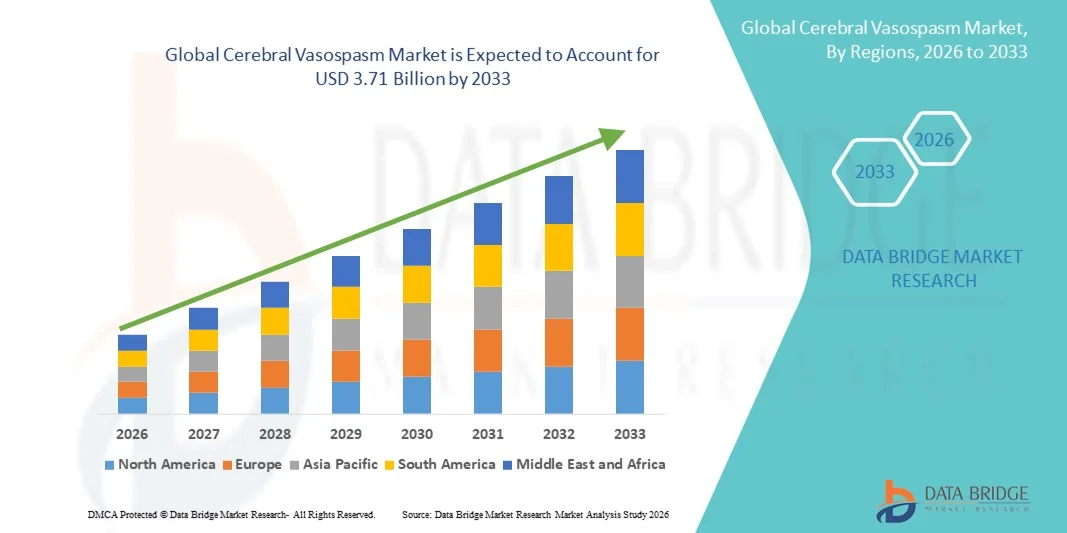
- The global cerebral vasospasm market size was valued at USD 2.43 billion in 2025 and is expected to reach USD 3.71 billion by 2033, at a CAGR of 5.44% during the forecast period
- The market growth is largely fueled by the rising incidence of subarachnoid hemorrhage and traumatic brain injuries, along with continuous technological advancements in neurovascular diagnostics and treatment approaches, leading to improved detection, monitoring, and management of cerebral vasospasm across acute care settings
- Furthermore, increasing demand for effective, timely, and minimally invasive neurovascular interventions, coupled with growing adoption of advanced pharmacological therapies and endovascular treatment solutions in hospitals and specialized neurological centers, is accelerating the uptake of cerebral vasospasm solutions, thereby significantly boosting the industry’s growth
Market Size & Forecast
- Global Market Value (2025): USD 2.43 Billion
- Expected Market Value (2033): USD 3.71 Billion
- Forecast CAGR (2026–2033): 5.44%
What are the Major Takeaways of Cerebral Vasospasm Market?
- Cerebral vasospasm, a severe neurological complication commonly occurring after subarachnoid hemorrhage, represents a critical focus area in modern neurocritical care due to its high morbidity and mortality risk, driving continuous adoption of advanced diagnostic monitoring systems and targeted therapeutic interventions across hospitals and specialized neurological centers
- The escalating demand for cerebral vasospasm management solutions is primarily fueled by the rising incidence of aneurysmal subarachnoid hemorrhage, growing awareness of early intervention benefits, and increasing availability of minimally invasive endovascular and pharmacological treatment options
- North America dominated the cerebral vasospasm market with the largest revenue share of 41.6% in 2025, supported by advanced healthcare infrastructure, high adoption of neurocritical care technologies, strong presence of leading medical device and pharmaceutical companies, and high procedure volumes in the U.S., particularly across tertiary care hospitals and comprehensive stroke centers
- Asia-Pacific is expected to be the fastest-growing region in the cerebral vasospasm market during the forecast period, registering a robust CAGR of 9.3%, driven by expanding neurology care infrastructure, rising healthcare expenditure, increasing incidence of stroke and traumatic brain injuries, and improving access to advanced neurovascular treatments in countries such as China, Japan, and India
- The Nimodipine segment accounted for the largest market revenue share of around 42.3% in 2025, primarily due to its strong clinical evidence and guideline-backed use in preventing delayed cerebral ischemia after subarachnoid hemorrhage
Report Scope and Cerebral Vasospasm Market Segmentation
|
Attributes |
Cerebral Vasospasm Key Market Insights |
|
Segments Covered |
|
|
Countries Covered |
North America
Europe
Asia-Pacific
Middle East and Africa
South America
|
|
Key Market Players |
• Medtronic (Ireland) |
|
Market Opportunities |
|
|
Value Added Data Infosets |
In addition to the insights on market scenarios such as market value, growth rate, segmentation, geographical coverage, and major players, the market reports curated by the Data Bridge Market Research also include in-depth expert analysis, patient epidemiology, pipeline analysis, pricing analysis, and regulatory framework. |
What is the Key Trend in the Cerebral Vasospasm Market?
Advancements in Early Diagnosis and Multimodal Treatment Approaches
- A significant and accelerating trend in the global cerebral vasospasm market is the growing emphasis on early diagnosis and proactive management of vasospasm, particularly following subarachnoid hemorrhage (SAH)
- Healthcare providers worldwide are increasingly adopting advanced diagnostic imaging and continuous neurological monitoring to detect vasospasm at earlier stages and improve patient outcomes
- For instance, the expanding use of transcranial Doppler ultrasonography and advanced CT angiography in neurocritical care units has improved real-time assessment of cerebral blood flow, enabling timely therapeutic interventions
- The market is also witnessing a shift toward multimodal treatment strategies, combining pharmacological therapies, endovascular interventions, and supportive neurocritical care to reduce ischemic complications associated with cerebral vasospasm
- Ongoing clinical research and technological improvements in neurointerventional devices, such as balloon angioplasty systems and intra-arterial drug delivery tools, are further supporting the adoption of comprehensive treatment protocols
- This trend reflects the broader global focus on precision medicine and improved neurological outcomes, positioning cerebral vasospasm management as a critical component of advanced stroke and neurovascular care
Cerebral Vasospasm Market Dynamics
Driver
Rising Incidence of Subarachnoid Hemorrhage and Neurovascular Disorders
- The increasing global incidence of subarachnoid hemorrhage, traumatic brain injuries, and other neurovascular conditions is a key driver fueling growth in the Cerebral Vasospasm market
- Cerebral vasospasm remains one of the most serious complications following SAH, significantly impacting morbidity and mortality rates
- For instance, growing admission rates to neurocritical care units worldwide have led to higher demand for vasospasm prevention and treatment solutions, including calcium channel blockers and endovascular therapies
- Advancements in emergency medical services and improved survival rates following aneurysmal rupture are resulting in a larger patient pool requiring post-hemorrhagic monitoring and vasospasm management
- In addition, increasing investments in neurological research, expanding access to specialized stroke centers, and rising awareness among clinicians regarding early intervention are driving market expansion across developed and emerging economies
- The integration of cerebral vasospasm management into standardized stroke and SAH treatment guidelines further reinforces sustained demand for therapeutic and diagnostic solutions
Restraint/Challenge
High Treatment Costs and Limited Access to Specialized Neurocritical Care
- The high cost associated with cerebral vasospasm diagnosis and treatment represents a significant challenge to market growth, particularly in low- and middle-income regions
- Advanced imaging systems, endovascular procedures, and prolonged intensive care stays contribute to substantial healthcare expenditure
- For instance, access to specialized neurointerventional facilities and trained neurospecialists remains limited in several developing countries, restricting timely diagnosis and effective management of cerebral vasospasm
- Variability in treatment protocols, lack of universally effective pharmacological therapies, and inconsistent reimbursement policies further complicate adoption across different healthcare systems
- In addition, delayed diagnosis due to limited monitoring infrastructure can reduce treatment efficacy, leading to poorer patient outcomes and reduced confidence in available therapies
- Overcoming these barriers through expanded healthcare infrastructure, clinician training, cost-effective treatment options, and supportive reimbursement frameworks will be essential for unlocking the full growth potential of the global Cerebral Vasospasm market
How is the Cerebral Vasospasm Market Segmented?
The market is segmented on the basis of diagnosis, treatment, and end user.
- By Diagnosis
On the basis of diagnosis, the Cerebral Vasospasm market is segmented into CT Scan, Computed Tomography Angiography (CTA), Digital Subtraction Angiography (DSA), Magnetic Resonance Angiography (MRA), and Transcranial Doppler (TCD). The Digital Subtraction Angiography (DSA) segment dominated the largest market revenue share of approximately 38.6% in 2025, owing to its status as the gold standard for detecting cerebral vasospasm with high spatial resolution. DSA allows precise visualization of cerebral arteries and enables simultaneous diagnostic assessment and interventional treatment, such as balloon angioplasty. Its widespread use in tertiary care hospitals and neurovascular centers significantly contributes to its dominance. The technique is particularly preferred in severe and refractory vasospasm cases following subarachnoid hemorrhage (SAH). High diagnostic accuracy and real-time imaging capabilities further support adoption. Despite being invasive, its clinical reliability outweighs risks in critical cases. Advanced healthcare infrastructure in North America and Europe also supports high utilization. Increasing availability of hybrid operating rooms strengthens its market share. The segment benefits from established clinical guidelines recommending DSA in complex cases. Collectively, these factors reinforce DSA’s leading position in 2025.
The Transcranial Doppler (TCD) segment is expected to witness the fastest growth, registering a CAGR of 8.9% from 2026 to 2033. This growth is driven by the non-invasive nature of TCD and its suitability for continuous bedside monitoring of cerebral blood flow velocity. TCD is increasingly used in intensive care units for early detection and monitoring of vasospasm progression. Rising demand for cost-effective and repeatable diagnostic tools supports its adoption. Technological improvements have enhanced sensitivity and operator ease. Growing use in resource-limited settings further accelerates growth. Increased awareness among neurologists regarding early vasospasm screening is a key driver. Favorable reimbursement for non-invasive diagnostics also contributes. Expanding stroke and neurocritical care units globally fuel demand. As hospitals prioritize patient safety, TCD adoption continues to rise rapidly.
- By Treatment
On the basis of treatment, the Cerebral Vasospasm market is segmented into Nimodipine, Triple-H Therapy, Balloon Angioplasty, Vasopressors, Inotropes, Thrombolytic Agents, and Anti-inflammatory Agents. The Nimodipine segment accounted for the largest market revenue share of around 42.3% in 2025, primarily due to its strong clinical evidence and guideline-backed use in preventing delayed cerebral ischemia after subarachnoid hemorrhage. Nimodipine is routinely administered as standard-of-care therapy in hospitalized SAH patients. Its oral and intravenous formulations enhance ease of administration. Widespread physician familiarity and long-standing regulatory approvals support dominance. Consistent demand across hospitals and neurocritical care units drives volume sales. The drug’s ability to improve neurological outcomes strengthens clinician confidence. Availability of generics makes it cost-effective and accessible globally. Strong inclusion in treatment protocols further reinforces usage. High prevalence of aneurysmal SAH sustains demand. These factors collectively secure Nimodipine’s leading market position.
The Balloon Angioplasty segment is projected to register the fastest CAGR of 9.7% from 2026 to 2033, driven by rising adoption in severe and refractory cerebral vasospasm cases. Advances in endovascular technologies and catheter designs have improved procedural safety and outcomes. Increasing availability of skilled neurointerventionalists supports growth. Balloon angioplasty offers immediate vessel dilation, making it effective in life-threatening cases. Growing preference for targeted mechanical intervention boosts demand. Expansion of comprehensive stroke centers globally contributes to uptake. Improved imaging guidance enhances procedural success. Rising healthcare investments in advanced neurovascular care further accelerate growth. Clinical evidence supporting long-term vessel patency post-angioplasty strengthens adoption. As minimally invasive interventions gain traction, this segment is expected to grow rapidly.
- By End User
On the basis of end user, the Cerebral Vasospasm market is segmented into Hospitals and Clinics, Ambulatory Surgical Centers, Trauma Centers, Emergency Departments, and Others. The Hospitals and Clinics segment dominated the market with a revenue share of approximately 56.8% in 2025, driven by the high incidence of cerebral vasospasm cases requiring inpatient care and continuous monitoring. Most diagnostic and treatment procedures, including DSA, nimodipine administration, and angioplasty, are performed in hospital settings. Availability of advanced neuroimaging infrastructure supports dominance. Multidisciplinary neurocritical care teams further strengthen hospital reliance. Longer patient stays post-SAH contribute to higher revenue generation. Favorable reimbursement policies for inpatient neurovascular treatments also play a role. Presence of specialized stroke and neurosurgery units drives volume. Hospitals act as primary referral centers, reinforcing dominance. High patient inflow sustains market leadership. Overall, comprehensive care capabilities secure this segment’s lead.
The Trauma Centers segment is anticipated to grow at the fastest CAGR of 8.4% from 2026 to 2033, driven by increasing cases of traumatic brain injury associated with secondary cerebral vasospasm. Rising investments in trauma care infrastructure support expansion. Rapid diagnosis and early intervention capabilities enhance adoption. Increasing establishment of Level I and Level II trauma centers globally fuels demand. Advanced monitoring protocols in trauma ICUs contribute to growth. Improved survival rates increase long-term management needs. Integration of neurocritical care services accelerates uptake. Government initiatives to strengthen emergency trauma systems further support expansion. Growing awareness of post-traumatic vasospasm drives screening. These factors collectively position trauma centers as the fastest-growing end-user segment.
Which Region Holds the Largest Share of the Cerebral Vasospasm Market?
- North America dominated the cerebral vasospasm market with the largest revenue share of 41.6% in 2025, supported by advanced healthcare infrastructure, high adoption of neurocritical care technologies, and the strong presence of leading medical device and pharmaceutical companies
- The region benefits from high procedure volumes, particularly in tertiary care hospitals and comprehensive stroke centers
- Early diagnosis, availability of advanced imaging technologies, and well-established treatment protocols further contribute to market leadership across the region
U.S. Cerebral Vasospasm Market Insight
The U.S. cerebral vasospasm market accounted for the largest share within North America in 2025, driven by high incidence rates of subarachnoid hemorrhage, widespread access to specialized neurovascular care, and robust hospital networks. Strong reimbursement frameworks, ongoing clinical research, and rapid adoption of advanced pharmacological and endovascular therapies are supporting sustained market growth. The presence of major industry players and academic medical centers further strengthens the U.S. cerebral vasospasm market.
Europe Cerebral Vasospasm Market Insight
The Europe cerebral vasospasm market is projected to expand at a steady CAGR during the forecast period, driven by increasing awareness of neurovascular disorders, improving stroke management programs, and expanding access to specialized neurological care. Favorable healthcare policies, rising investments in hospital infrastructure, and growing adoption of advanced diagnostic and treatment technologies are supporting market growth across the region.
U.K. Cerebral Vasospasm Market Insight
The U.K. cerebral vasospasm market is anticipated to grow at a notable CAGR, supported by a well-developed public healthcare system and increasing focus on early stroke and aneurysm management. Rising investments in neurocritical care units, growing adoption of evidence-based treatment protocols, and improved patient access to specialized neurological services are contributing to market expansion.
Germany Cerebral Vasospasm Market Insight
The Germany cerebral vasospasm market is expected to expand at a considerable CAGR during the forecast period, driven by advanced hospital infrastructure, strong emphasis on neurological research, and high adoption of innovative neurovascular treatment solutions. Germany’s focus on quality healthcare delivery, along with growing demand for minimally invasive interventions, is supporting sustained market growth.
Asia-Pacific Cerebral Vasospasm Market Insight
The Asia-Pacific cerebral vasospasm market is expected to be the fastest-growing region during the forecast period, registering a robust CAGR of 9.3%. Growth is driven by expanding neurology care infrastructure, rising healthcare expenditure, increasing incidence of stroke and traumatic brain injuries, and improving access to advanced neurovascular treatments. Rapid development of healthcare systems in emerging economies is significantly contributing to regional market expansion.
Japan Cerebral Vasospasm Market Insight
The Japan cerebral vasospasm market is gaining momentum due to the country’s aging population, high prevalence of cerebrovascular disorders, and advanced neurological care capabilities. Strong clinical expertise, early adoption of innovative treatment technologies, and continuous investment in healthcare modernization are supporting market growth across hospitals and specialized neurological centers.
China Cerebral Vasospasm Market Insight
China cerebral vasospasm market accounted for a significant share of the Asia-Pacific cerebral vasospasm market in 2025, driven by a large patient population, increasing incidence of stroke, and rapid expansion of healthcare infrastructure. Government initiatives to improve access to advanced neurological care, rising healthcare spending, and growing availability of modern diagnostic and therapeutic technologies are key factors propelling market growth in China.
Which are the Top Companies in Cerebral Vasospasm Market?
The Cerebral Vasospasm industry is primarily led by well-established companies, including:
• Medtronic (Ireland)
• Stryker (U.S.)
• Terumo Corporation (Japan)
• Penumbra, Inc. (U.S.)
• Boston Scientific (U.S.)
• Johnson & Johnson (U.S.)
• B. Braun SE (Germany)
• Cook Medical (U.S.)
• Merck & Co., Inc. (U.S.)
• Bayer AG (Germany)
• Pfizer Inc. (U.S.)
• Novartis AG (Switzerland)
• Abbott Laboratories (U.S.)
• GE HealthCare (U.S.)
• Siemens Healthineers (Germany)
What are Latest Developments in Global Cerebral Vasospasm Market?
- In April 2023, a study reported that endovascular delivery of nimodipine was found to be safe and effective in treating refractory post-aneurysmal cerebral vasospasm, reinforcing the role of chemical angioplasty with calcium channel blockers as a key therapeutic option. This study highlighted how intra-arterial nimodipine helps dilate spastic cerebral vessels following subarachnoid hemorrhage, supporting its clinical adoption in neurocritical care settings worldwide
- In March 2024, MicroVention introduced the SOFIA DISTAL catheter system tailored for therapeutic intra-arterial drug delivery in cerebral vasospasm treatment, featuring enhanced trackability and more effective infusion to reach affected vessel segments. This device launch improved the precision of delivering vasodilatory drugs directly to spastic cerebral arteries, which is critical in managing delayed cerebral ischemia after aneurysmal SAH
- In June 2024, Johnson & Johnson’s Cerenovus division partnered with leading academic medical centers to establish the Global Vasospasm Registry, a comprehensive international database tracking patient outcomes and device efficacy across different populations and regions. This initiative supports evidence-based clinical practice by collecting real-world treatment outcomes, helping physicians optimize vasospasm management strategies
- In March 2025, Bayer AG received European regulatory approval for its reformulated extended-release nimodipine, offering improved pharmacokinetic properties and reduced dosing frequency while maintaining therapeutic efficacy for vasospasm prevention and treatment. This regulatory milestone enhances patient compliance and broadens options for standardized prophylactic therapy in cerebral vasospasm following subarachnoid hemorrhage
- In May 2025, a meta-analysis published in Neurosurgical Review demonstrated the effectiveness and safety of intraventricular nimodipine compared with oral nimodipine in patients with aneurysmal subarachnoid hemorrhage, providing stronger evidence for alternative delivery routes to mitigate delayed cerebral ischemia. These findings point toward expanded clinical use of nimodipine in severe and refractory cases
- In October 2025, Endovascular treatment of delayed cerebral ischemia after aneurysmal subarachnoid hemorrhage — an international survey was published, offering insights into global variations in endovascular spasmolysis and angioplasty strategies, emphasizing the role of mechanical intervention as part of advanced vasospasm care. This analysis aids in harmonizing clinical approaches and refining treatment guidelines
- In August 2025, a novel multicenter initial experience with Tenzingplasty for cerebral vasospasm demonstrated feasibility, efficacy, and safety as an alternative mechanical dilation technique to conventional balloon angioplasty, opening pathways for safer and more effective endovascular management in refractory vasospasm cases. Early results showed improved arterial dilation with low complication rates

- Interactive Data Analysis Dashboard
- Company Analysis Dashboard for high growth potential opportunities
- Research Analyst Access for customization & queries
- Competitor Analysis with Interactive dashboard
- Latest News, Updates & Trend analysis
- Harness the Power of Benchmark Analysis for Comprehensive Competitor Tracking
Data collection and base year analysis are done using data collection modules with large sample sizes. The stage includes obtaining market information or related data through various sources and strategies. It includes examining and planning all the data acquired from the past in advance. It likewise envelops the examination of information inconsistencies seen across different information sources. The market data is analysed and estimated using market statistical and coherent models. Also, market share analysis and key trend analysis are the major success factors in the market report. To know more, please request an analyst call or drop down your inquiry.
The key research methodology used by DBMR research team is data triangulation which involves data mining, analysis of the impact of data variables on the market and primary (industry expert) validation. Data models include Vendor Positioning Grid, Market Time Line Analysis, Market Overview and Guide, Company Positioning Grid, Patent Analysis, Pricing Analysis, Company Market Share Analysis, Standards of Measurement, Global versus Regional and Vendor Share Analysis. To know more about the research methodology, drop in an inquiry to speak to our industry experts.
Data Bridge Market Research is a leader in advanced formative research. We take pride in servicing our existing and new customers with data and analysis that match and suits their goal. The report can be customized to include price trend analysis of target brands understanding the market for additional countries (ask for the list of countries), clinical trial results data, literature review, refurbished market and product base analysis. Market analysis of target competitors can be analyzed from technology-based analysis to market portfolio strategies. We can add as many competitors that you require data about in the format and data style you are looking for. Our team of analysts can also provide you data in crude raw excel files pivot tables (Fact book) or can assist you in creating presentations from the data sets available in the report.













