


Cerebrospinal Fluid (CSF) Management Market Size
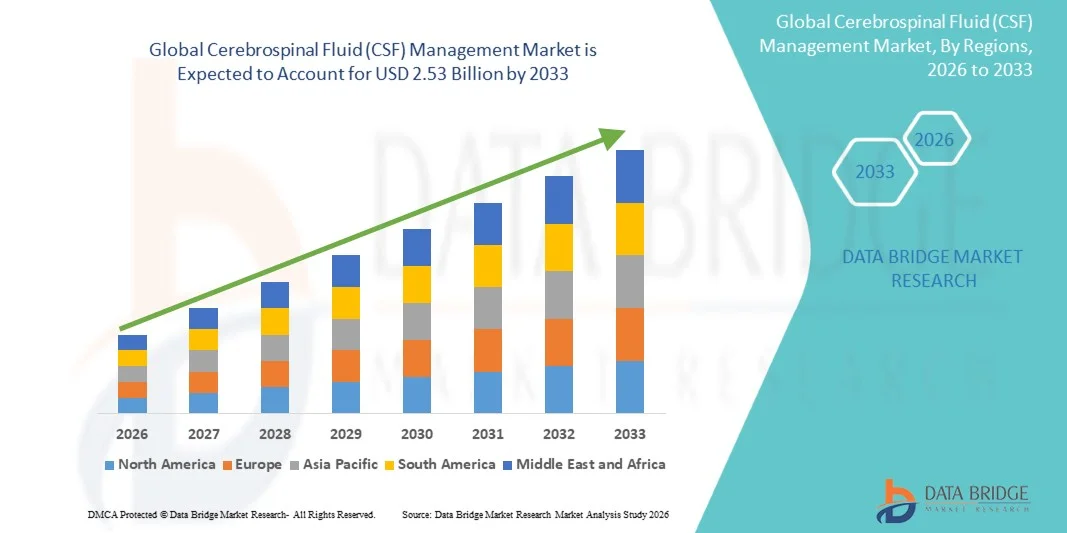
- The global cerebrospinal fluid (CSF) management market size was valued at USD 1.72 billion in 2025 and is expected to reach USD 2.53 billion by 2033, at a CAGR of 4.95% during the forecast period
- The market growth is largely fueled by increasing prevalence of neurological disorders, rising demand for advanced neurosurgical procedures, and technological progress in cerebrospinal fluid (CSF) management devices, leading to improved patient outcomes and hospital efficiency in both clinical and surgical settings
- Furthermore, growing awareness about early diagnosis and management of CSF-related conditions, coupled with rising healthcare expenditure and adoption of minimally invasive and automated CSF management solutions, is establishing CSF management systems as essential components of modern neurosurgical and critical care practices. These converging factors are accelerating the uptake of Cerebrospinal Fluid (CSF) Management solutions, thereby significantly boosting the industry's growth
Cerebrospinal Fluid (CSF) Management Market Analysis
- Cerebrospinal fluid (CSF) management systems, offering advanced monitoring, drainage, and shunting solutions, are increasingly vital components of modern neurosurgical and critical care practices in both hospital and clinical settings due to their enhanced precision, real-time monitoring capabilities, and integration with digital patient management systems
- The escalating demand for CSF management solutions is primarily fueled by the rising prevalence of neurological disorders, growing awareness regarding early intervention, and increasing adoption of minimally invasive and automated neurosurgical devices
- North America dominated the cerebrospinal fluid (CSF) management market with the largest revenue share of 41.2% in 2025, characterized by advanced healthcare infrastructure, high adoption of innovative neurosurgical technologies, and the presence of leading medical device companies driving strong installations across hospitals and specialty clinics
- Asia-Pacific is expected to be the fastest growing region in the cerebrospinal fluid (CSF) management market during the forecast period due to increasing healthcare investments, rising neurosurgical procedures, and growing awareness of advanced CSF management solutions in countries such as China, India, and Japan
- The shunts segment dominated the largest market revenue share of 62.3% in 2025, driven by their widespread adoption for the treatment of hydrocephalus and other CSF-related disorders
Report Scope and Cerebrospinal Fluid (CSF) Management Market Segmentation
|
Attributes |
Cerebrospinal Fluid (CSF) Management Key Market Insights |
|
Segments Covered |
|
|
Countries Covered |
North America
Europe
Asia-Pacific
Middle East and Africa
South America
|
|
Key Market Players |
• Medtronic (Ireland) |
|
Market Opportunities |
|
|
Value Added Data Infosets |
In addition to the insights on market scenarios such as market value, growth rate, segmentation, geographical coverage, and major players, the market reports curated by the Data Bridge Market Research also include in-depth expert analysis, patient epidemiology, pipeline analysis, pricing analysis, and regulatory framework. |
Cerebrospinal Fluid (CSF) Management Market Trends
“Enhanced Convenience Through Advanced CSF Management Systems”
- A key trend in the global Cerebrospinal Fluid (CSF) Management market is the adoption of minimally invasive and programmable shunt systems for precise control of cerebrospinal fluid levels
- For instance, Medtronic’s Strata II programmable valve allows physicians to adjust drainage pressure without surgery, improving patient outcomes
- Another emerging trend is the integration of real-time monitoring and telemetry-enabled CSF devices, allowing clinicians to track fluid dynamics remotely. For instance, Natus’ Neuro Monitoring system provides continuous intracranial pressure readings to optimize treatment protocols
- Portable and home-use CSF drainage systems are gaining traction, enabling outpatient care and reducing hospital stays. For instance, Aesculap’s CSF drainage kits are being adopted in rehabilitation centers for long-term patient monitoring
- The use of advanced biomaterials in catheters and shunts is becoming a focus, improving device longevity and reducing infection rates. For instance, B. Braun introduced antibacterial-coated ventricular catheters that have shown lower post-operative infection incidents in clinical trials
- There is a growing focus on patient-centric device designs that enhance comfort and reduce complications during long-term use. For instance, Codman Hakim shunts have a low-profile design that minimizes tissue irritation and improves mobility for pediatric patients
Cerebrospinal Fluid (CSF) Management Market Dynamics
Driver
“Growing Need Due to Rising Neurological Disorders and Advanced Treatment Adoption”
- The prevalence of hydrocephalus, traumatic brain injuries, and spinal disorders is steadily increasing globally, driving demand for advanced CSF management systems
- For instance, the U.S. reported over 10,000 new hydrocephalus cases in 2024, prompting hospitals to adopt programmable shunts and continuous monitoring devices
- Rising awareness among healthcare providers about the benefits of minimally invasive procedures is encouraging adoption. In Europe, hospitals in Germany and France are investing in advanced shunt systems to reduce post-operative complications and hospitalization times
- Expansion of neurosurgery and neurocritical care facilities in emerging markets is fueling growth. For instance, India and Brazil are witnessing increased installations of CSF management devices in tertiary care hospitals to support growing patient volumes
- Increasing investment in research and development of advanced CSF management solutions is driving innovation and clinical adoption. For instance, clinical trials conducted by Integra LifeSciences demonstrated improved outcomes with programmable shunt technologies compared to conventional systems
- The trend toward outpatient care and home-based monitoring is promoting the adoption of portable CSF drainage systems. For instance, rehabilitation centers in Japan have started using portable drainage kits for pediatric patients to reduce hospitalization duration
Restraint/Challenge
“High Costs and Technical Expertise Limitations”
- The high cost of advanced CSF management devices remains a significant adoption barrier. For instance, programmable shunts such as Medtronic Strata II can exceed USD 5,000 per unit, limiting access in small or resource-constrained hospitals
- Requirement for skilled neurosurgeons and specialized training poses challenges in developing regions
- For instance, rural hospitals in Southeast Asia struggle to implement complex shunt systems due to limited trained personnel
- Potential post-operative complications, such as infection or catheter blockage, can hinder market penetration. Clinical studies in the U.K. have reported infection rates of up to 10% in conventional shunt procedures, emphasizing the need for safer device designs
- Limited reimbursement and insurance coverage in certain regions affect adoption rates. For instance, some hospitals in Latin America delay shunt replacements due to lack of government-supported reimbursement schemes
- Regulatory approvals and quality certifications across different countries can delay market entry for new products. For instance, devices that are approved in the U.S. and Europe may require additional testing and approval before entering Asian or African markets
Cerebrospinal Fluid (CSF) Management Market Scope
The Cerebrospinal Fluid (CSF) Management market is segmented on the basis of product and end user.
• By Product
On the basis of product, the market is segmented into shunts and external drainage systems. The shunts segment dominated the largest market revenue share of 62.3% in 2025, driven by their widespread adoption for the treatment of hydrocephalus and other CSF-related disorders. Shunts provide continuous CSF diversion, reducing intracranial pressure and improving patient outcomes. Hospitals and neurosurgical centers prefer shunts due to their proven safety, clinical efficacy, and ability to manage both pediatric and adult patients. Advancements in programmable and anti-siphon shunts enhance performance and reduce complications. Increasing prevalence of neurological disorders, traumatic brain injuries, and post-operative CSF leaks contribute to market dominance. Shunts are compatible with minimally invasive procedures, increasing surgeon preference. Regulatory approvals and reimbursement support adoption in developed regions. Integration with monitoring systems improves post-operative care. Ongoing R&D focuses on reducing infections and occlusions. Patient and caregiver awareness programs further encourage adoption. Centralized supply chains and partnerships with neurosurgery providers enhance market penetration.
The external drainage systems segment is expected to witness the fastest CAGR of 18.7% from 2026 to 2033, driven by growing adoption in acute care settings and neurosurgical ICUs. External drainage systems are preferred for temporary CSF diversion in cases of trauma, intracranial hemorrhage, or during post-operative monitoring. Technological improvements, such as compact and low-infection risk systems, enhance adoption. Rising neurosurgical procedures, ICU care expansion, and hospital infrastructure growth support rapid uptake. Integration with monitoring and digital alert systems ensures precise drainage control. Increasing incidence of CNS infections and traumatic brain injuries accelerates demand. External drainage solutions are increasingly used in emergency and critical care applications. Hospitals and tertiary care centers are expanding their ICU capacity. Adoption is also supported by government and private healthcare initiatives for critical care. Training programs for neurosurgeons and ICU staff improve utilization efficiency. Overall, this segment is the fastest-growing due to its critical role in acute CSF management.
• By End User
On the basis of end user, the market is segmented into pediatric, adult, and geriatric. The pediatric segment dominated the largest market revenue share of 46.8% in 2025, largely driven by the high prevalence of congenital hydrocephalus and other CSF disorders in children. Pediatric neurosurgery centers and hospitals widely adopt shunt systems due to their long-term efficacy and ability to accommodate growth. Advanced programmable shunts and minimally invasive techniques improve outcomes. Early diagnosis and treatment through neonatal screening programs enhance market demand. Regulatory approvals for pediatric devices ensure safety and reliability. Training programs for pediatric neurosurgeons and ICU staff strengthen adoption. Specialized pediatric care centers are expanding globally. Partnerships with device manufacturers support optimized care. Awareness among parents and caregivers contributes to timely treatment. Insurance coverage and government healthcare initiatives promote affordability. Hospital infrastructure and pediatric ICU expansions further reinforce dominance.
The adult segment is expected to witness the fastest CAGR of 17.9% from 2026 to 2033, fueled by the rising incidence of hydrocephalus, brain trauma, and CSF leaks in adults due to aging, accidents, and neurological conditions. Adult patients benefit from both shunts and external drainage systems for acute and chronic CSF management. Technological advances, including programmable valves and infection-reducing coatings, enhance adoption. Hospitals and neurosurgical centers are increasingly equipped to manage adult CSF disorders. Awareness campaigns and early diagnosis programs support faster treatment. Integration with digital monitoring devices improves patient safety. Government and private healthcare investments in neurology care accelerate adoption. ICU and post-operative care facilities drive demand for external drainage systems. The adult segment also benefits from increasing research on neurodegenerative disorders. Expansion of insurance coverage and reimbursement programs strengthens growth. Hospital and outpatient neurosurgical centers contribute to rapid adoption globally.
Cerebrospinal Fluid (CSF) Management Market Regional Analysis
- North America dominated the cerebrospinal fluid (CSF) management market with the largest revenue share of 41.2% in 2025, characterized by advanced healthcare infrastructure, high adoption of innovative neurosurgical technologies, and the presence of leading medical device companies driving strong installations across hospitals and specialty clinics
- For instance, major hospitals in the U.S. have implemented programmable shunt systems from Medtronic and Codman for improved hydrocephalus management. The region benefits from strong R&D activities, supporting continuous innovation in CSF monitoring and drainage systems
- Growing awareness of neurological disorders and increasing prevalence of hydrocephalus and traumatic brain injuries further boost market demand. In addition, well-established reimbursement policies and insurance coverage in the U.S. enable broader adoption of advanced CSF management solutions across outpatient and inpatient care settings
U.S. Cerebrospinal Fluid (CSF) Management Market Insight
The U.S. cerebrospinal fluid (CSF) management market captured the largest share of the North American CSF management market, with adoption driven by the increasing number of neurosurgical procedures and advanced hospital networks. For example, top-tier hospitals such as Mayo Clinic and Cleveland Clinic have adopted programmable shunts and telemetric ICP (intracranial pressure) monitoring systems. The rising demand for minimally invasive and patient-centric treatment options has encouraged hospitals and specialty centers to invest in advanced CSF management technologies. Moreover, the integration of smart drainage systems and home-based monitoring devices supports outpatient care, reducing hospitalization time and enhancing patient quality of life. Investments in training and skilled neurosurgeons also contribute to the efficient implementation of these solutions, promoting market growth in both urban and suburban regions.
Europe Cerebrospinal Fluid (CSF) Management Market Insight
Europe cerebrospinal fluid (CSF) management market is projected to witness substantial growth in the CSF management market during the forecast period, driven by increasing healthcare expenditure and stringent regulatory standards for medical devices. Hospitals across Germany, France, and the U.K. are adopting programmable shunts and telemetric monitoring systems to reduce post-operative complications and improve patient outcomes. For instance, B. Braun’s antibacterial-coated catheters are being widely used to minimize infection rates during CSF management procedures. The rise in urbanization and modernization of hospitals has also led to increased deployment of advanced neurosurgical technologies. Additionally, European patients are increasingly seeking minimally invasive and home-care solutions for hydrocephalus and related conditions, further driving market adoption.
U.K. Cerebrospinal Fluid (CSF) Management Market Insight
The U.K. cerebrospinal fluid (CSF) management market is anticipated to grow steadily, fueled by increasing awareness of neurological disorders, advanced hospital networks, and a strong regulatory framework. For example, NHS hospitals have implemented programmable shunts and home-monitoring kits to optimize CSF drainage for pediatric and adult patients. Investments in outpatient care and rehabilitation centers further enable the adoption of portable and home-based drainage systems. Rising incidences of hydrocephalus and traumatic brain injuries in the population also encourage healthcare providers to integrate advanced CSF management solutions. The U.K.’s well-developed healthcare infrastructure, combined with patient-centric treatment approaches, is supporting sustained market growth.
Germany Cerebrospinal Fluid (CSF) Management Market Insight
Germany cerebrospinal fluid (CSF) management market is expected to be one of the fastest-growing markets in Europe due to increasing investment in neurosurgical healthcare, emphasis on technological innovation, and strong adoption of eco-conscious and safe medical devices. For instance, hospitals in Berlin and Munich have adopted advanced programmable shunts and telemetric ICP monitoring devices to improve patient outcomes. Continuous R&D initiatives, coupled with Germany’s well-established healthcare system, enable rapid adoption of new CSF management solutions. Rising awareness of neurological disorders and preventive care programs are also promoting the use of advanced drainage systems across both public and private hospitals.
Asia-Pacific Cerebrospinal Fluid (CSF) Management Market Insight
The Asia-Pacific cerebrospinal fluid (CSF) management market is poised to grow at the fastest CAGR of 24% during the forecast period, driven by increasing healthcare investments, rising neurosurgical procedures, and growing awareness of advanced CSF management solutions. For example, leading hospitals in China, India, and Japan are adopting programmable shunts and real-time ICP monitoring systems to manage hydrocephalus and other CSF-related disorders. Rapid urbanization and expanding healthcare infrastructure across India and Southeast Asia further support market penetration. Additionally, government initiatives promoting digital health technologies and training programs for neurosurgeons are accelerating the adoption of sophisticated CSF management devices. Increasing disposable incomes and patient preference for minimally invasive and home-care treatment options are further driving market growth.
Japan Cerebrospinal Fluid (CSF) Management Market Insight
Japan’s cerebrospinal fluid (CSF) management market is gaining momentum due to the country’s high-tech culture, aging population, and increasing prevalence of neurological disorders. For instance, hospitals in Tokyo and Osaka have integrated telemetric CSF monitoring systems to allow continuous patient observation, reducing post-operative complications. The emphasis on outpatient care and home-based drainage solutions supports the adoption of portable and patient-friendly devices. Moreover, Japan’s strong focus on healthcare R&D and technological innovation has facilitated the rapid deployment of advanced programmable shunts and low-profile catheters, promoting growth across both adult and pediatric care settings.
China Cerebrospinal Fluid (CSF) Management Market Insight
China cerebrospinal fluid (CSF) management market accounted for the largest market revenue share in Asia-Pacific in 2025, driven by the expanding middle class, rapid urbanization, and rising prevalence of hydrocephalus and neurological disorders. For instance, tertiary hospitals in Beijing and Shanghai have deployed programmable shunts and telemetric ICP monitoring devices to optimize treatment. The push towards smart hospitals and digital health initiatives, combined with increasing healthcare investments, is further fueling adoption. Domestic manufacturers and affordable CSF management options have improved accessibility, while ongoing training programs for neurosurgeons and increasing awareness among patients enhance market growth across residential, outpatient, and specialized care settings.
Cerebrospinal Fluid (CSF) Management Market Share
The Cerebrospinal Fluid (CSF) Management industry is primarily led by well-established companies, including:
• Medtronic (Ireland)
• Integra LifeSciences Holdings Corporation (U.S.)
• B. Braun SE (Germany)
• Sophysa SA (France)
• Aesculap AG (Germany)
• Codman & Shurtleff, Inc. (U.S.)
• Stryker Corporation (U.S.)
• NuVasive, Inc. (U.S.)
• Baxter International Inc. (U.S.)
• Natus Medical Incorporated (U.S.)
• Integra Neurosciences (U.S.)
• Medela AG (Switzerland)
• SurgiTel / Aesculap (Germany)
• ShuntTech (U.S.)
• Sophysa India Pvt Ltd (India)
• Alphatec Holdings, Inc. (U.S.)
• Globus Medical, Inc. (U.S.)
• Orthofix International N.V. (U.S.)
• Baxter Healthcare Ltd. (U.K.)
• NuVasive Specialized Orthopedics (U.S.)
Latest Developments in Global Cerebrospinal Fluid (CSF) Management Market
- In September 2022, Anuncia Medical Inc., a U.S. neurotechnology company, received U.S. FDA approval for its ReFlow System Mini to treat patients suffering from hydrocephalus and other cerebrospinal fluid disorders that require shunting, expanding non‑invasive CSF flow restoration options for clinicians and patients. The ReFlow System Mini enables noninvasive flushing of ventricular catheters to restore, increase, or maintain CSF flow and reduce complications related to shunt obstruction. This approval underscores the industry’s move toward less invasive and more patient‑centric CSF management technologies
- In March 2025, the U.S. Food and Drug Administration granted Anuncia Medical Inc. Breakthrough Device Designation for its ReFlow External Ventricular Drain (EVD) system, an advanced external CSF drainage device designed to address brain swelling and elevated intracranial pressure in critical care settings. This designation is intended to expedite development and regulatory review of technologies that have demonstrated potential for more effective treatment or diagnosis of life‑threatening neurological conditions, reflecting rising demand for improved CSF pressure control and drainage solutions
- In April 2025, CereVasc, Inc. received a second U.S. FDA Breakthrough Device Designation for its investigational eShunt® System, an endovascularly implantable cerebrospinal fluid shunt aimed at providing a less invasive alternative to traditional surgical shunts. The breakthrough designation is expected to accelerate clinical evaluation and regulatory review, underscoring the growing emphasis on next‑generation CSF diversion technologies that reduce surgical risk and improve patient outcomes
- In August 2025, CereVasc’s eShunt System was granted another FDA Breakthrough Device Designation, recognizing its potential to revolutionize management of normal pressure hydrocephalus (NPH) through a novel endovascular delivery approach designed to minimize procedural invasiveness and improve long‑term efficacy. This regulatory milestone highlights the ongoing push toward minimally invasive therapies in CSF management and the regulatory support for innovative shunt technologies

- Interactive Data Analysis Dashboard
- Company Analysis Dashboard for high growth potential opportunities
- Research Analyst Access for customization & queries
- Competitor Analysis with Interactive dashboard
- Latest News, Updates & Trend analysis
- Harness the Power of Benchmark Analysis for Comprehensive Competitor Tracking
Data collection and base year analysis are done using data collection modules with large sample sizes. The stage includes obtaining market information or related data through various sources and strategies. It includes examining and planning all the data acquired from the past in advance. It likewise envelops the examination of information inconsistencies seen across different information sources. The market data is analysed and estimated using market statistical and coherent models. Also, market share analysis and key trend analysis are the major success factors in the market report. To know more, please request an analyst call or drop down your inquiry.
The key research methodology used by DBMR research team is data triangulation which involves data mining, analysis of the impact of data variables on the market and primary (industry expert) validation. Data models include Vendor Positioning Grid, Market Time Line Analysis, Market Overview and Guide, Company Positioning Grid, Patent Analysis, Pricing Analysis, Company Market Share Analysis, Standards of Measurement, Global versus Regional and Vendor Share Analysis. To know more about the research methodology, drop in an inquiry to speak to our industry experts.
Data Bridge Market Research is a leader in advanced formative research. We take pride in servicing our existing and new customers with data and analysis that match and suits their goal. The report can be customized to include price trend analysis of target brands understanding the market for additional countries (ask for the list of countries), clinical trial results data, literature review, refurbished market and product base analysis. Market analysis of target competitors can be analyzed from technology-based analysis to market portfolio strategies. We can add as many competitors that you require data about in the format and data style you are looking for. Our team of analysts can also provide you data in crude raw excel files pivot tables (Fact book) or can assist you in creating presentations from the data sets available in the report.













