


Charles Bonnet Syndrome Market Size
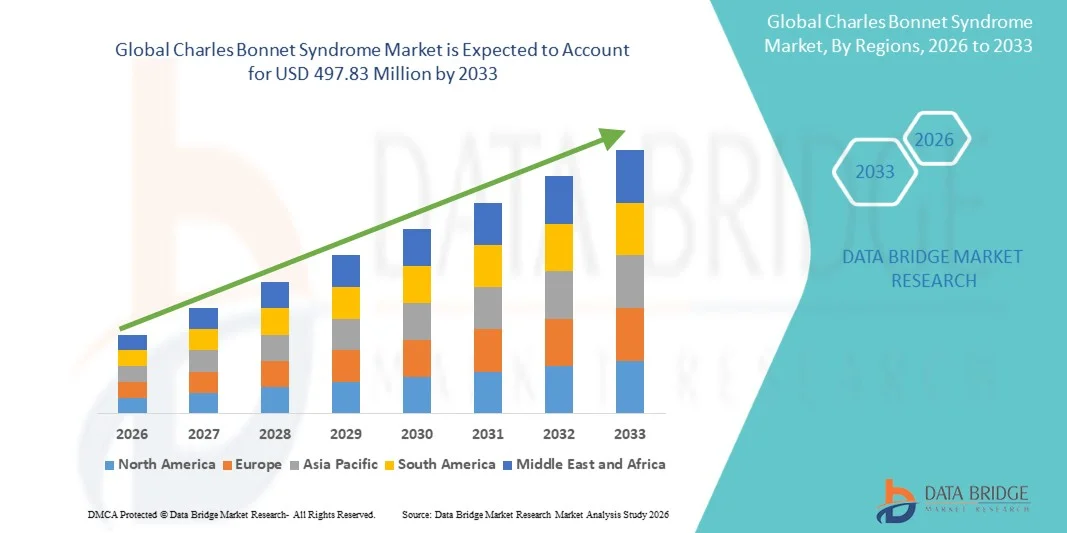
- The global Charles Bonnet Syndrome market size was valued at USD 310.00 Million in 2025 and is expected to reach USD 497.83 Million by 2033, at a CAGR of 6.10% during the forecast period
- The market growth is largely fueled by increasing awareness of visual impairment-related neurological conditions, continuous advancements in diagnostic technologies, and growing digitalization across healthcare systems, ophthalmology centers, and neurology clinics
- Furthermore, rising demand for effective, patient-friendly, and integrated treatment approaches for vision loss-associated hallucination disorders is establishing Charles Bonnet Syndrome solutions as an important component of modern neurological and ophthalmic care. These converging factors are accelerating the uptake of Charles Bonnet Syndrome solutions, thereby significantly boosting the industry's growth
Charles Bonnet Syndrome Market Analysis
- Charles Bonnet Syndrome solutions, including diagnostic services, counseling therapies, vision rehabilitation programs, and supportive neurological care, are increasingly vital components of modern ophthalmology and neurology systems due to their role in managing visual hallucinations associated with vision loss and age-related eye disorders
- The escalating demand for Charles Bonnet Syndrome solutions is primarily fueled by the growing aging population, rising prevalence of macular degeneration, glaucoma, cataracts, and diabetic retinopathy, along with increasing awareness and improved diagnosis of the condition
- North America dominated the Charles Bonnet Syndrome market with the largest revenue share of 37.6% in 2025, characterized by advanced healthcare infrastructure, strong awareness levels, increasing diagnosis rates, and broad patient access to specialized ophthalmology and neurology care, with the U.S. experiencing substantial growth in treatment adoption and supportive care programs
- Asia-Pacific is expected to be the fastest-growing region in the Charles Bonnet Syndrome market during the forecast period, projected to register a CAGR of 9.4%, due to rapidly aging populations, rising healthcare investments, increasing prevalence of vision disorders, and expanding access to specialized care services
- The oral segment held the largest market revenue share of 57.6% in 2025, driven by high patient preference for convenient tablet and capsule formulations
Report Scope and Charles Bonnet Syndrome Market Segmentation
|
Attributes |
Charles Bonnet Syndrome Key Market Insights |
|
Segments Covered |
|
|
Countries Covered |
North America
Europe
Asia-Pacific
Middle East and Africa
South America
|
|
Key Market Players |
|
|
Market Opportunities |
|
|
Value Added Data Infosets |
In addition to the insights on market scenarios such as market value, growth rate, segmentation, geographical coverage, and major players, the market reports curated by the Data Bridge Market Research also include in-depth expert analysis, patient epidemiology, pipeline analysis, pricing analysis, and regulatory framework. |
Charles Bonnet Syndrome Market Trends
“Increasing Focus on Early Diagnosis, Patient Awareness, and Vision Rehabilitation Support”
- A significant and accelerating trend in the global Charles Bonnet Syndrome market is the growing focus on early diagnosis, patient education, and integrated vision rehabilitation programs. These developments are helping improve recognition of the condition, reduce patient anxiety, and expand access to supportive treatment options for individuals experiencing visual hallucinations associated with vision loss
- For instance, ophthalmology clinics and low-vision centers are increasingly incorporating Charles Bonnet Syndrome screening into care pathways for patients with macular degeneration, glaucoma, diabetic retinopathy, and cataract-related visual impairment. Educational counseling programs are also being introduced to reassure patients that hallucinations are neurological rather than psychiatric in origin
- Advanced diagnostic approaches enable healthcare professionals to better differentiate Charles Bonnet Syndrome from dementia, schizophrenia, and other psychiatric or neurological disorders. For example, multidisciplinary assessments involving ophthalmologists, neurologists, and mental health professionals help improve treatment accuracy and patient outcomes
- The integration of low-vision aids, digital health tools, and telemedicine services is enhancing ongoing patient support. Through remote consultations and rehabilitation platforms, patients can receive counseling, symptom monitoring, and visual assistance training more conveniently
- This trend toward greater awareness and patient-centered care is reshaping expectations for the management of Charles Bonnet Syndrome. Consequently, healthcare providers, research institutes, and vision support organizations are expanding awareness initiatives and rehabilitation services
- Demand for effective supportive therapies and counseling services is rising globally as aging populations and the prevalence of chronic eye diseases continue to increase
Charles Bonnet Syndrome Market Dynamics
Driver
“Growing Need Due to Rising Prevalence of Vision Loss Disorders and Aging Population”
- The increasing prevalence of age-related eye diseases such as macular degeneration, glaucoma, cataracts, and diabetic retinopathy is a major driver for the Charles Bonnet Syndrome market. Since the syndrome commonly occurs in individuals with significant visual impairment, rising global vision loss rates are expanding the potential patient population
- For instance, in April 2025, several ophthalmology centers in Europe and North America launched awareness campaigns to improve diagnosis of visual hallucinations among elderly low-vision patients. Such initiatives are expected to support market growth during the forecast period
- As healthcare providers become more aware of the syndrome, diagnosis rates are improving, allowing more patients to access counseling, rehabilitation, and symptom management solutions
- Furthermore, the growing elderly population worldwide is increasing demand for age-related eye care services, indirectly supporting the need for Charles Bonnet Syndrome screening and treatment pathways
- Expanding telehealth services, low-vision rehabilitation programs, and multidisciplinary care models are also helping improve patient access and driving broader market development
Restraint/Challenge
“Low Awareness, Misdiagnosis, and Limited Standardized Treatments”
- Low public and clinical awareness of Charles Bonnet Syndrome remains a significant challenge to market growth. Many patients do not report symptoms due to fear of being labeled mentally ill, while clinicians may overlook the condition during routine eye care consultations
- For instance, visual hallucinations are often misdiagnosed as dementia, psychosis, or other neurological disorders, delaying appropriate reassurance and supportive management for patients
- In addition to underdiagnosis, there are currently limited standardized pharmacological treatments specifically approved for Charles Bonnet Syndrome. Most management strategies rely on counseling, optimizing vision care, and individualized symptom control approaches
- Variability in symptom severity and patient response to treatment can make management more complex, requiring personalized care rather than one universal solution
- Limited reimbursement for counseling and rehabilitation services in some healthcare systems can also restrict access to comprehensive support programs
- Overcoming these challenges through improved physician education, patient awareness campaigns, clinical guidelines, and research into targeted therapies will be vital for sustained market growth
Charles Bonnet Syndrome Market Scope
The market is segmented on the basis of drug classification, route of administration, end-users, and distribution channel.
• By Drug Classification
On the basis of drug classification, the Charles Bonnet Syndrome market is segmented into neuroleptics, Aricept, Namenda, Donepezil, anticholinergics, and others. The neuroleptics segment dominated the largest market revenue share of 31.8% in 2025, driven by their use in managing distressing visual hallucinations associated with severe Charles Bonnet Syndrome cases. Physicians often prescribe low-dose neuroleptics when reassurance and non-pharmacological interventions are insufficient. Their ability to reduce hallucination frequency and intensity supports clinical adoption. Increasing diagnosis rates among elderly visually impaired populations further boost demand. Hospitals prefer neuroleptics for supervised treatment in moderate to severe patients. Availability of generic formulations improves affordability and accessibility. Growing awareness among neurologists and psychiatrists supports wider utilization. Neuroleptics are often integrated into multidisciplinary treatment plans. Expansion of geriatric healthcare services also contributes to revenue growth. Improved monitoring protocols reduce concerns regarding adverse effects. Continued demand in advanced symptomatic cases sustains segment dominance.
The Donepezil segment is anticipated to witness the fastest CAGR of 8.9% from 2026 to 2033, fueled by growing interest in cognitive-enhancing therapies for neurological visual disorders. Donepezil is increasingly evaluated for reducing hallucinations linked with sensory deprivation syndromes. Rising physician preference for alternatives with favorable tolerability profiles supports growth. Expanding elderly populations with coexisting dementia and vision loss create new opportunities. Increased off-label prescribing in specialized centers contributes to market expansion. Research studies highlighting neurological pathway modulation strengthen adoption prospects. Improved patient compliance with oral once-daily formulations aids demand. Healthcare providers are focusing on personalized treatment approaches involving Donepezil. Awareness campaigns around early syndrome management support uptake. Growth in outpatient neurology services further accelerates prescriptions. Continuous clinical exploration is expected to sustain rapid CAGR growth.
• By Route of Administration
On the basis of route of administration, the Charles Bonnet Syndrome market is segmented into injectable, oral, and parenteral. The oral segment held the largest market revenue share of 57.6% in 2025, driven by high patient preference for convenient tablet and capsule formulations. Most symptomatic therapies prescribed for Charles Bonnet Syndrome are available in oral dosage forms. Elderly patients and caregivers favor easy at-home administration without clinical assistance. Oral drugs improve long-term adherence in chronic management settings. Broad availability through retail and hospital pharmacies supports accessibility. Lower administration costs compared with injectable therapies enhance adoption. Physicians prefer oral treatments for mild to moderate symptom control. Expansion of homecare treatment models further strengthens demand. Flexible dose adjustments are another advantage of oral medications. Growing use of cognitive and neuropsychiatric agents in tablet form supports segment leadership. Continuous launches of improved oral generics sustain revenue share.
The injectable segment is expected to witness the fastest CAGR of 9.7% from 2026 to 2033, driven by increasing use in acute hospital-managed psychiatric or neurological episodes. Injectable formulations provide rapid onset in patients with severe agitation or persistent hallucinations. Hospitals prefer injectables where immediate therapeutic response is required. Rising admissions among geriatric patients with multiple comorbidities support demand. Advancements in long-acting injectable neuropsychiatric therapies create opportunities. Better monitoring infrastructure in specialty centers encourages utilization. Injectable therapies are gaining relevance where oral adherence is poor. Expanding emergency care facilities in developing markets aid growth. Increasing physician awareness of rapid symptom stabilization benefits boosts adoption. Supportive reimbursement in institutional settings further strengthens sales. These factors are projected to drive strong CAGR growth.
• By End-Users
On the basis of end-users, the Charles Bonnet Syndrome market is segmented into hospitals, homecare, specialty clinics, ambulatory surgical centers, and others. The hospitals segment accounted for the largest market revenue share of 41.2% in 2025, driven by the concentration of diagnosis, ophthalmic evaluation, and neurological consultations in hospital settings. Complex cases often require multidisciplinary care involving ophthalmologists, psychiatrists, and geriatric specialists. Hospitals provide access to imaging and advanced diagnostic tools. Higher patient inflow of elderly visually impaired individuals supports segment demand. Availability of inpatient monitoring for medication initiation boosts treatment preference. Strong reimbursement structures in institutional care settings contribute to revenues. Tertiary hospitals are increasingly creating neuro-ophthalmology units. Rising awareness among hospital clinicians improves diagnosis rates. Hospitals also serve as referral hubs for severe hallucination cases. Integration of counseling services enhances patient outcomes. These advantages maintain hospital segment dominance.
The homecare segment is projected to witness the fastest CAGR of 10.4% from 2026 to 2033, owing to growing preference for treatment in familiar home environments among elderly patients. Many Charles Bonnet Syndrome patients can be managed through reassurance, oral medication, and caregiver support at home. Expansion of telemedicine enables regular neurological follow-up remotely. Rising healthcare costs are encouraging home-based chronic care models. Caregivers increasingly prefer avoiding repeated hospital visits. Homecare improves patient comfort and reduces anxiety linked to hallucinations. Growth in visiting nurse and geriatric support services supports adoption. Easy pharmacy delivery of medications further strengthens the segment. Digital monitoring tools enhance treatment adherence. Aging populations worldwide create strong long-term demand. These factors are expected to accelerate CAGR growth.
• By Distribution Channel
On the basis of distribution channel, the Charles Bonnet Syndrome market is segmented into hospital pharmacy, retail pharmacy, and online pharmacy. The hospital pharmacy segment accounted for the largest market revenue share of 45.9% in 2025, driven by the high share of initial diagnoses and prescriptions generated in hospital settings. Patients commonly receive first-line therapies after specialist consultations in hospitals. Hospital pharmacies ensure availability of neuropsychiatric and supportive medicines. Integrated dispensing with physician supervision improves treatment continuity. Institutional procurement contracts strengthen supply chain efficiency. Elderly patients trust hospital-based medication counseling services. Specialty formulations are often more accessible through hospital channels. Growth in tertiary care centers further boosts segment revenues. Strong reimbursement alignment also supports purchasing volumes. Expansion of geriatric and ophthalmology departments increases prescription generation. These factors sustain market leadership.
The online pharmacy segment is anticipated to witness the fastest CAGR of 12.1% from 2026 to 2033, fueled by rising digital healthcare adoption and convenient home delivery services. Elderly caregivers increasingly use e-pharmacy platforms for repeat prescriptions. Competitive pricing and discount programs attract consumers. Growth in teleconsultation services supports digital prescription fulfillment. Wider internet penetration in emerging economies boosts adoption. Online platforms improve access in remote areas with limited specialty pharmacies. Subscription refill models enhance medication adherence. Secure payment systems and faster logistics strengthen consumer trust. Expansion of chronic disease medicine portfolios supports sales. Regulatory improvements for e-pharmacy operations further aid growth. These advantages are expected to drive the highest CAGR during the forecast period.
Charles Bonnet Syndrome Market Regional Analysis
- North America dominated the Charles Bonnet Syndrome market with the largest revenue share of 37.6% in 2025, characterized by advanced healthcare infrastructure, strong awareness levels, increasing diagnosis rates, and broad patient access to specialized ophthalmology and neurology care, with the U.S. experiencing substantial growth in treatment adoption and supportive care programs
- Patients and healthcare providers in the region highly value early diagnosis, multidisciplinary disease management, counseling support, and access to advanced visual rehabilitation services that help improve quality of life for individuals affected by Charles Bonnet Syndrome
- This widespread adoption is further supported by favorable healthcare expenditure, a growing elderly population, technologically advanced care systems, and increasing emphasis on mental wellness and vision preservation, establishing North America as a leading regional market
U.S. Charles Bonnet Syndrome Market Insight
The U.S. Charles Bonnet Syndrome market captured the largest revenue share in North America in 2025, fueled by increasing awareness among healthcare professionals, strong availability of specialized ophthalmology and neurology services, and rising diagnosis rates among elderly patients with vision impairment. Patients are increasingly benefiting from supportive therapies, counseling services, and integrated care approaches. Moreover, growing healthcare investments and patient education initiatives are significantly contributing to market expansion.
Europe Charles Bonnet Syndrome Market Insight
The Europe Charles Bonnet Syndrome market is projected to expand at a substantial CAGR throughout the forecast period, primarily driven by increasing aging demographics, growing awareness of neurological and visual disorders, and rising access to advanced healthcare systems. Regional healthcare providers are emphasizing timely diagnosis, patient counseling, and integrated care pathways, supporting market growth across hospitals and specialty clinics.
U.K. Charles Bonnet Syndrome Market Insight
The U.K. Charles Bonnet Syndrome market is anticipated to grow at a noteworthy CAGR during the forecast period, driven by rising public awareness campaigns, expanding geriatric care services, and increasing focus on mental health support for visually impaired patients. The country’s advanced healthcare framework and specialist referral networks are expected to continue stimulating market growth.
Germany Charles Bonnet Syndrome Market Insight
The Germany Charles Bonnet Syndrome market is expected to expand at a considerable CAGR during the forecast period, fueled by increasing awareness of age-related vision loss, strong neurological care infrastructure, and demand for specialized patient support services. Germany’s emphasis on healthcare innovation and early intervention programs is encouraging broader diagnosis and treatment adoption.
Asia-Pacific Charles Bonnet Syndrome Market Insight
The Asia-Pacific Charles Bonnet Syndrome market is poised to grow at the fastest CAGR of 9.4% during the forecast period, driven by rapidly aging populations, rising healthcare investments, increasing prevalence of vision disorders, and expanding access to specialized care services. Growing awareness regarding age-related ophthalmic conditions and neurological complications is further accelerating regional market expansion.
Japan Charles Bonnet Syndrome Market Insight
The Japan Charles Bonnet Syndrome market is gaining momentum due to its large elderly population, advanced healthcare infrastructure, and growing demand for supportive care solutions for visually impaired patients. Increased integration of ophthalmology and neurology services, along with rising awareness campaigns, is fueling market growth.
China Charles Bonnet Syndrome Market Insight
The China Charles Bonnet Syndrome market accounted for the largest market revenue share in Asia Pacific in 2025, attributed to the country’s rapidly aging population, expanding healthcare infrastructure, and increasing prevalence of age-related eye diseases. Growing investments in specialty hospitals, improved diagnostic capabilities, and rising awareness regarding visual hallucination disorders are key factors propelling market growth in China.
Charles Bonnet Syndrome Market Share
The Charles Bonnet Syndrome industry is primarily led by well-established companies, including:
- Novartis AG (Switzerland)
- Roche Holding AG (Switzerland)
- Pfizer Inc. (U.S.)
- Johnson & Johnson (U.S.)
- Eli Lilly and Company (U.S.)
- AbbVie Inc. (U.S.)
- Merck & Co., Inc. (U.S.)
- Bristol-Myers Squibb Company (U.S.)
- Sanofi S.A. (France)
- AstraZeneca plc (U.K.)
- GlaxoSmithKline plc (U.K.)
- Teva Pharmaceutical Industries Ltd. (Israel)
- Sun Pharmaceutical Industries Ltd. (India)
- Dr. Reddy’s Laboratories Ltd. (India)
- Cipla Limited (India)
- Bayer AG (Germany)
- Boehringer Ingelheim International GmbH (Germany)
- Takeda Pharmaceutical Company Limited (Japan)
- Otsuka Holdings Co., Ltd. (Japan)
- Eisai Co., Ltd. (Japan)
Latest Developments in Global Charles Bonnet Syndrome Market
- In October 2021, leading ophthalmology organizations increased educational outreach on Charles Bonnet Syndrome (CBS) to improve recognition of visual hallucinations among patients with macular degeneration, glaucoma, and severe sight loss. The initiative aimed to reduce misdiagnosis of CBS as dementia or psychiatric illness and improve referral pathways
- In June 2022, healthcare providers across Europe and North America expanded low-vision rehabilitation programs incorporating CBS counseling and reassurance protocols, reflecting growing recognition that patient education and coping strategies remain the first-line management approach for Charles Bonnet Syndrome
- In September 2023, several vision-loss advocacy groups strengthened public awareness campaigns focused on Charles Bonnet Syndrome Awareness Day, helping patients and caregivers understand that CBS-related hallucinations are a neurological response to sight loss rather than mental illness. This contributed to increased diagnosis rates and reduced stigma globally.
- In May 2024, new international clinical discussions emphasized the need for routine CBS screening in ophthalmology clinics, especially among elderly patients with retinal disease and glaucoma. Specialists highlighted that many patients do not voluntarily report symptoms due to embarrassment or fear of psychiatric labeling
- In March 2025, a major systematic review and meta-analysis published in Brain Research Bulletin confirmed that Charles Bonnet Syndrome is common among ophthalmic patients, particularly those with low vision, retinal disorders, and glaucoma. The study reinforced the need for earlier diagnosis and broader physician awareness
- In July 2025, researchers from University College London and Moorfields Eye Hospital published updated findings showing that awareness of Charles Bonnet Syndrome has risen significantly in recent years, while calling for better clinician training and support services for visually impaired patients experiencing complex visual hallucinations
- In November 2025, ophthalmology and neurology publications highlighted increasing use of multidisciplinary care models combining eye specialists, neurologists, and mental health professionals for persistent or distressing CBS cases, especially in elderly patients with progressive vision loss
- In December 2025, updated StatPearls clinical guidance reaffirmed that Charles Bonnet Syndrome remains underdiagnosed worldwide and emphasized clinician education, vision optimization, reassurance, and selective pharmacologic treatment for severe symptoms as key management priorities

- Interactive Data Analysis Dashboard
- Company Analysis Dashboard for high growth potential opportunities
- Research Analyst Access for customization & queries
- Competitor Analysis with Interactive dashboard
- Latest News, Updates & Trend analysis
- Harness the Power of Benchmark Analysis for Comprehensive Competitor Tracking
Data collection and base year analysis are done using data collection modules with large sample sizes. The stage includes obtaining market information or related data through various sources and strategies. It includes examining and planning all the data acquired from the past in advance. It likewise envelops the examination of information inconsistencies seen across different information sources. The market data is analysed and estimated using market statistical and coherent models. Also, market share analysis and key trend analysis are the major success factors in the market report. To know more, please request an analyst call or drop down your inquiry.
The key research methodology used by DBMR research team is data triangulation which involves data mining, analysis of the impact of data variables on the market and primary (industry expert) validation. Data models include Vendor Positioning Grid, Market Time Line Analysis, Market Overview and Guide, Company Positioning Grid, Patent Analysis, Pricing Analysis, Company Market Share Analysis, Standards of Measurement, Global versus Regional and Vendor Share Analysis. To know more about the research methodology, drop in an inquiry to speak to our industry experts.
Data Bridge Market Research is a leader in advanced formative research. We take pride in servicing our existing and new customers with data and analysis that match and suits their goal. The report can be customized to include price trend analysis of target brands understanding the market for additional countries (ask for the list of countries), clinical trial results data, literature review, refurbished market and product base analysis. Market analysis of target competitors can be analyzed from technology-based analysis to market portfolio strategies. We can add as many competitors that you require data about in the format and data style you are looking for. Our team of analysts can also provide you data in crude raw excel files pivot tables (Fact book) or can assist you in creating presentations from the data sets available in the report.












