


Chemotherapy Induced Anemia Market Size
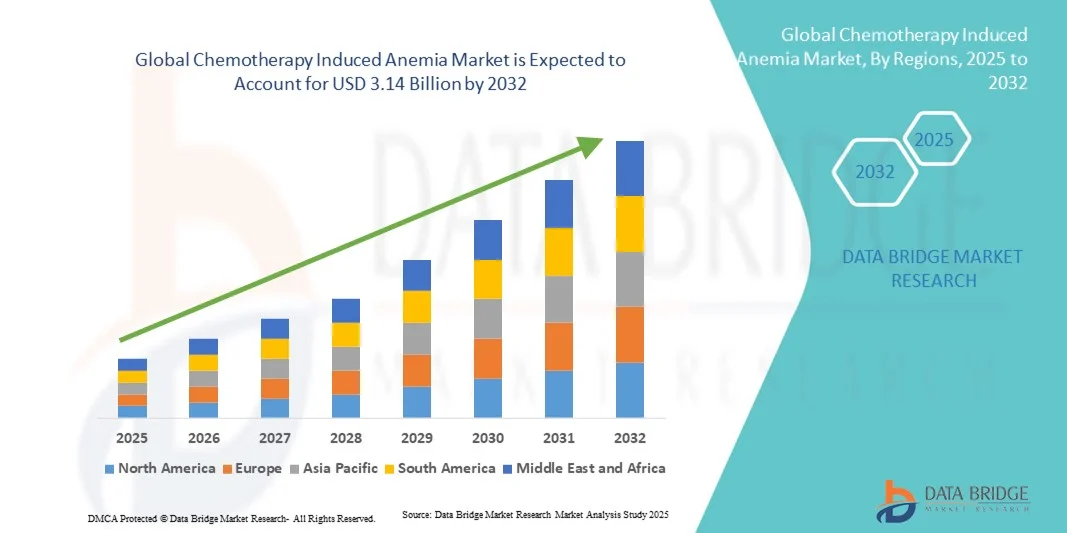
- The global chemotherapy induced anemia market size was valued at USD 1.81 billion in 2024 and is expected to reach USD 3.14 billion by 2032, at a CAGR of 7.15% during the forecast period
- The market growth is largely fueled by the increasing prevalence of cancer globally, rising adoption of chemotherapy treatments, and the associated high incidence of anemia in cancer patients undergoing chemotherapy
- Furthermore, growing awareness among healthcare providers about the importance of managing chemotherapy-induced anemia, coupled with advancements in erythropoiesis-stimulating agents (ESAs) and supportive care therapies, is accelerating the uptake of CIA treatment solutions, thereby significantly boosting the industry's growth
Chemotherapy Induced Anemia Market Analysis
- Chemotherapy Induced Anemia is a condition commonly observed in cancer patients undergoing chemotherapy, characterized by a reduction in red blood cells, which can lead to fatigue, weakness, and increased risk of infections. Effective management of this condition through supportive care, iron supplementation, and erythropoiesis-stimulating agents is critical to improving patient outcomes and quality of life
- The growing prevalence of cancer worldwide, coupled with rising awareness among physicians and patients regarding anemia management during chemotherapy, is driving the demand for targeted therapies and supportive treatments in both hospital and outpatient settings
- North America dominated the chemotherapy induced anemia market with the largest revenue share of 45.33% in 2024, driven by advanced healthcare infrastructure, strong R&D investment, and the presence of leading pharmaceutical companies. The U.S. specifically experienced substantial growth, fueled by the adoption of innovative therapies, expanding clinical trials, and increasing awareness among healthcare providers and patients about anemia management in cancer care
- Asia-Pacific is expected to be the fastest-growing region in the chemotherapy induced anemia market during the forecast period, with a projected CAGR supported by rising healthcare expenditure, increasing access to diagnostic and treatment facilities, and growing awareness of anemia management protocols
- The moderate anemia segment dominated the chemotherapy induced anemia market in 2024 with a revenue share of 42.5%, driven by its higher prevalence among chemotherapy patients and standardized treatment protocols
Report Scope and Chemotherapy Induced Anemia Market Segmentation
|
Attributes |
Chemotherapy Induced Anemia Key Market Insights |
|
Segments Covered |
|
|
Countries Covered |
North America
Europe
Asia-Pacific
Middle East and Africa
South America
|
|
Key Market Players |
|
|
Market Opportunities |
|
|
Value Added Data Infosets |
In addition to the insights on market scenarios such as market value, growth rate, segmentation, geographical coverage, and major players, the market reports curated by the Data Bridge Market Research also include in-depth expert analysis, pricing analysis, brand share analysis, consumer survey, demography analysis, supply chain analysis, value chain analysis, raw material/consumables overview, vendor selection criteria, PESTLE Analysis, Porter Analysis, and regulatory framework. |
Chemotherapy Induced Anemia Market Trends
Enhanced Focus on Personalized and Supportive Care
- A significant and accelerating trend in the global chemotherapy induced anemia (CIA) market is the increasing emphasis on personalized and supportive care approaches for oncology patients. This trend is driven by growing awareness among healthcare providers of the need to tailor anemia management strategies according to individual patient profiles, disease severity, and chemotherapy regimens
- For instance, recent clinical guidelines recommend the use of erythropoiesis-stimulating agents (ESAs) and iron supplementation in conjunction with regular hemoglobin monitoring to optimize patient outcomes, minimize fatigue, and reduce transfusion requirements
- In addition, there is a growing integration of diagnostic tools and biomarker assessments to identify patients most likely to benefit from targeted anemia therapies. These precision approaches are enabling clinicians to implement timely interventions, reducing hospital stays and improving overall quality of life for patients undergoing chemotherapy
- Pharmaceutical companies are increasingly developing patient-centric formulations, such as long-acting ESAs and oral iron therapies, which enhance adherence and reduce the burden of frequent hospital visits
- The focus on supportive care is also accompanied by patient education initiatives, helping patients and caregivers understand anemia symptoms, treatment options, and strategies to manage side effects effectively
- The overall shift towards personalized and supportive care is reshaping treatment protocols and increasing the adoption of advanced anemia therapies, further driving growth in the CIA market globally
Chemotherapy Induced Anemia Market Dynamics
Driver
Rising Prevalence of Chemotherapy-Induced Anemia and Growing Oncology Patient Population
- The increasing incidence of cancer worldwide, coupled with the widespread use of chemotherapy, is a major driver for the growing demand for CIA treatments. Patients undergoing chemotherapy are highly susceptible to anemia due to myelosuppressive effects, creating a consistent need for supportive care interventions
- For instance, in 2023, global oncology reports indicated that over 50% of patients receiving chemotherapy experience moderate to severe anemia, highlighting the urgent requirement for effective management strategies
- The availability of a diverse portfolio of therapies, including ESAs, intravenous iron, and blood transfusions, supports tailored treatment approaches for patients based on hemoglobin levels, disease stage, and comorbidities
- Increasing awareness among oncologists regarding the impact of anemia on treatment outcomes, quality of life, and overall prognosis is contributing to higher adoption rates of anemia management therapies
- Government initiatives and reimbursement policies that support the use of anemia treatments in oncology care further drive market expansion
- Rising investment in research and development by pharmaceutical companies to develop novel agents, improve drug efficacy, and reduce side effects also strengthens the market growth trajectory
Restraint/Challenge
Safety Concerns, Side Effects, and Cost Constraints
- Concerns surrounding the safety and side effects of chemotherapy induced anemia treatments pose a significant challenge to broader market adoption. Patients and healthcare providers may be cautious due to potential adverse effects associated with erythropoiesis-stimulating agents (ESAs), iron supplementation, or blood transfusions
- For instance, reports of cardiovascular complications, hypertension, or allergic reactions linked to some therapies have made certain patients hesitant to initiate or continue treatment without careful medical supervision
- Addressing these safety concerns through proper clinical guidance, monitoring protocols, and clear patient education is crucial for building trust and encouraging adherence to prescribed treatment plans. Pharmaceutical companies such as Amgen and Johnson & Johnson emphasize rigorous clinical trials, post-marketing surveillance, and patient support programs to reassure healthcare providers and patients about therapy safety
- In addition, the relatively high cost of advanced anemia treatments compared to standard care options can be a barrier for patients, especially in developing regions or for those without comprehensive healthcare coverage. While biosimilar products and generic formulations are gradually becoming available, premium therapies with enhanced efficacy or convenience often remain expensive
- Overcoming these challenges through improved patient education, cost-effective treatment options, and continued emphasis on safety monitoring will be vital for sustained growth in the Chemotherapy Induced Anemia market
Chemotherapy Induced Anemia Market Scope
The market is segmented on the basis of anemia type, treatment type, drug type, and end user.
- By Anemia Type
On the basis of anemia type, the chemotherapy induced anemia market is segmented into mild anemia, moderate anemia, severe anemia, and life-threatening anemia. The moderate anemia segment dominated the market in 2024 with a revenue share of 42.5%, driven by its higher prevalence among chemotherapy patients and standardized treatment protocols. Hospitals and cancer centers are major end users, providing interventions such as ESAs, iron supplementation, and RBC transfusions. Moderate anemia benefits from high physician awareness and established reimbursement frameworks in developed markets, ensuring accessibility. Consistent monitoring and follow-up therapy contribute to stable demand. Patient education, long-term treatment plans, and early intervention strategies further strengthen the segment’s dominance. Clinicians prefer established drugs for moderate anemia due to predictable efficacy and safety profiles. The segment also sees significant adoption in emerging markets as hospital infrastructure improves. Partnerships between pharmaceutical companies and treatment centers expand reach. Moderate anemia’s dominance is reinforced by insurance coverage, government support, and inclusion in clinical guidelines. The segment’s size is also supported by a growing oncology patient population and rising awareness among caregivers and physicians.
The severe anemia segment is expected to witness the fastest CAGR of 9.2% from 2025 to 2032, fueled by increased diagnosis of critical hemoglobin drops and urgent need for treatment. RBC transfusions and ESAs are widely used for severe anemia management. Hospitals and specialized oncology centers are expanding treatment capacity, especially in emerging markets. Patient demand for rapid relief drives therapy adoption. Physician recommendations, clinical guidelines, and awareness campaigns promote timely intervention. Adoption of combination therapies and supportive care strategies enhances effectiveness. Rising prevalence of aggressive cancers further propels growth. Government funding, insurance coverage, and early access programs increase treatment uptake. Expansion of hospital networks in Asia-Pacific supports market acceleration. Research on novel therapies for severe anemia continues to boost adoption. Safety protocols for transfusions and ESAs improve patient confidence. Overall, the increasing patient burden and improved accessibility underpin the rapid growth of this segment.
- By Treatment Type
On the basis of treatment type, the chemotherapy induced anemia market is segmented into erythropoiesis-stimulating agents (ESAs), iron supplementation, and RBC transfusions. The ESAs segment dominated the market in 2024 with a revenue share of 48.3%, owing to their proven efficacy in increasing hemoglobin levels and reducing the need for transfusions. Hospitals, cancer centers, and ambulatory surgical units are primary end users. ESAs benefit from strong clinical acceptance, robust reimbursement policies, and physician familiarity. The segment is supported by multiple drug formulations, including biosimilars, expanding patient access. Outpatient administration, long-term monitoring, and ongoing clinical trials reinforce market leadership. Strategic collaborations between pharmaceutical companies and hospitals improve penetration. Awareness programs for healthcare providers and patients drive adoption. Developed regions, including North America and Europe, contribute significantly to market dominance. Inclusion in clinical guidelines and safety profile consistency further strengthen adoption. Regulatory approvals across regions ensure availability. The segment also benefits from patient assistance programs facilitating therapy access. Physician trust in efficacy maintains market stability.
The RBC transfusions segment is expected to witness the fastest CAGR of 8.7% from 2025 to 2032, driven by immediate correction needs for critically low hemoglobin in chemotherapy patients. Acute care settings, including hospitals and cancer centers, adopt transfusions widely. Emerging markets with increasing hospital infrastructure contribute to rapid growth. Patient demand for immediate relief drives therapy utilization. Clinical guidelines, government initiatives, and blood management programs enhance accessibility. The segment benefits from technology improvements in blood storage and safety. Rising oncology treatment volumes, especially in Asia-Pacific, fuel adoption. Combination therapy with ESAs increases effectiveness and expands usage. Insurance coverage improvements promote uptake. Physician recommendations and clinical awareness support growth. Expansion of transfusion services in urban centers strengthens market presence. Overall, rapid patient need and improved infrastructure drive this segment’s CAGR.
- By Drug Type
On the basis of drug type, the chemotherapy induced anemia market is segmented into Androxy Oral, Epoetin Alfa Injection, Epogen Injection, Procrit Injection, Aranesp Injection, and others. The Epoetin Alfa Injection segment dominated the market in 2024 with a revenue share of 37.8%, owing to widespread clinical adoption, proven efficacy, and safety in chemotherapy-induced anemia. Hospitals and oncology centers are major end users. Multiple formulations and biosimilars increase access. Regulatory approvals and long-term clinical evidence ensure stable demand. Physician familiarity and guideline inclusion reinforce dominance. Patient adherence, outpatient usability, and predictable response rates contribute to growth. Strategic partnerships with hospitals improve market reach. Awareness campaigns targeting clinicians and patients increase adoption. Insurance coverage and reimbursement policies support the segment. Ongoing clinical trials validate long-term safety. Brand recognition and availability in developed markets strengthen dominance.
The Aranesp Injection segment is expected to witness the fastest CAGR of 7.9% from 2025 to 2032, driven by extended half-life, reduced dosing frequency, and improved patient compliance. Oncology clinicians increasingly prescribe Aranesp for moderate to severe anemia management. Emerging markets in Asia-Pacific and Latin America are driving adoption due to expanding hospital networks and improved access. Combination therapy approaches increase efficacy. Clinical studies and regulatory approvals support uptake. Patient assistance programs enhance affordability. Pharmaceutical promotional campaigns encourage usage. Technology improvements and long-acting formulations contribute to growth. Physician preference for convenience supports rapid adoption. Early intervention strategies accelerate market expansion. Improved access in hospitals and cancer centers strengthens penetration. Overall, Aranesp Injection is the fastest-growing drug type due to efficacy, convenience, and market expansion.
- By End User
On the basis of end user, the chemotherapy induced anemia market is segmented into hospitals, ambulatory surgical centers, multispecialty clinics, cancer research centers, and cancer rehabilitation centers. The hospitals segment dominated the market in 2024 with a revenue share of 53.4%, as they serve the majority of chemotherapy-induced anemia patients. Hospitals provide comprehensive treatment options, including ESAs, iron supplementation, and RBC transfusions, supported by advanced diagnostic infrastructure and trained staff. Urban centers in North America and Europe account for significant revenue. Government reimbursement, insurance, and early access programs further enable adoption. Hospitals also host clinical trials and new therapy launches. Physician oversight and adherence to treatment guidelines ensure consistent outcomes. Patient monitoring programs and follow-up support maintain therapy continuity. Partnerships with pharmaceutical companies improve supply chain efficiency. Inclusion in long-term care programs ensures reliable market penetration. Hospitals remain central to market dominance due to infrastructure, patient volume, and clinical expertise.
The cancer research centers segment is expected to witness the fastest CAGR of 9.0% from 2025 to 2032, driven by increased research funding, clinical trials, and novel therapeutics. These centers focus on personalized medicine and innovative anemia treatments. Collaborations with pharmaceutical companies expand access to advanced therapies. Expansion of oncology research infrastructure in Asia-Pacific and Europe enhances growth. Early detection and intervention protocols increase treatment adoption. Clinical studies involve ESAs and transfusions, boosting usage. Advanced diagnostics and laboratory capabilities facilitate therapy monitoring. Patient referral programs contribute to uptake. Regulatory incentives and grants encourage adoption. Rising chemotherapy-induced anemia prevalence expands the patient pool. Technological advancements in trial management streamline therapy delivery. Overall, research centers are critical drivers of market growth in this segment.
Chemotherapy Induced Anemia Market Regional Analysis
- The North America chemotherapy-induced anemia market dominated globally with the largest revenue share of 45.33% in 2024
- Driven by advanced healthcare infrastructure, strong research and development investment, and the presence of leading pharmaceutical companies
- The region’s growth is further supported by well-established hospital networks, specialty clinics, and high healthcare expenditure, which facilitate broad access to chemotherapy-induced anemia treatment solutions
U.S. Chemotherapy Induced Anemia Market Insight
The U.S. chemotherapy-induced anemia market captured the largest revenue share within North America in 2024, fueled by the adoption of innovative therapies, expanding clinical trials, and increasing awareness among healthcare providers and patients about anemia management in cancer care. The country’s robust healthcare system, extensive oncology centers, and strong focus on patient education have significantly contributed to the growth of chemotherapy-induced anemia treatments, positioning the U.S. as the key driver of the regional market.
Europe Chemotherapy Induced Anemia Market Insight
The Europe chemotherapy-induced anemia market is projected to expand at a substantial CAGR during the forecast period, primarily driven by increasing healthcare awareness, improved oncology care protocols, and government initiatives promoting access to anemia treatment. The presence of advanced hospital networks, specialty clinics, and established clinical guidelines across Europe is supporting the adoption of erythropoiesis-stimulating agents, iron supplementation, and RBC transfusions.
U.K. Chemotherapy Induced Anemia Market Insight
The U.K. chemotherapy-induced anemia market is witnessing noteworthy growth in the Chemotherapy-Induced Anemia market due to advanced healthcare infrastructure, growing cancer prevalence, and the increasing adoption of modern anemia management protocols. The country’s well-developed oncology centers, outpatient cancer facilities, and structured clinical guidelines are facilitating the effective delivery of treatment, thereby driving market expansion.
Germany Chemotherapy Induced Anemia Market Insight
The Germany chemotherapy-induced anemia market is expected to expand at a considerable CAGR during the forecast period, fueled by its strong healthcare infrastructure, emphasis on clinical research, and adoption of innovative treatment solutions. Hospitals and specialty clinics across Germany are increasingly utilizing erythropoiesis-stimulating agents, iron supplementation, and RBC transfusions, while patient awareness and evidence-based treatment practices continue to strengthen the market.
Asia-Pacific Chemotherapy Induced Anemia Market Insight
The Asia-Pacific chemotherapy-induced anemia market is expected to grow at the fastest CAGR during the forecast period, supported by rising healthcare expenditure, increasing access to diagnostic and treatment facilities, and growing awareness of anemia management protocols. The expansion of hospitals, cancer care centers, and specialty clinics across the region is fueling the adoption of modern treatment options, contributing to rapid market growth.
China Chemotherapy Induced Anemia Market Insight
The China chemotherapy-induced anemia market accounted for the largest market revenue share in Asia-Pacific in 2024, driven by strong domestic pharmaceutical manufacturing, government investment in oncology care, and increasing cancer prevalence. The availability of chemotherapy-induced anemia therapies across hospitals, specialty clinics, and cancer care facilities has further strengthened the market, making China the leading country in the region.
Japan Chemotherapy Induced Anemia Market Insight
The Japan chemotherapy-induced anemia market is gaining momentum due to its advanced healthcare system, high patient awareness regarding anemia management, and the aging population, which is increasing demand for effective chemotherapy-induced anemia treatments. The country’s hospitals and oncology centers are adopting innovative therapies and supportive care measures, which is expected to further drive market growth.
India Chemotherapy Induced Anemia Market Insight
The India chemotherapy-induced anemia market is emerging as the fastest-growing market in the Asia-Pacific region, supported by expanding healthcare infrastructure, increasing cancer diagnosis rates, and proactive government initiatives to improve access to chemotherapy-induced anemia treatment. Hospitals, specialty clinics, and cancer care centers are increasingly offering modern treatment protocols, driving rapid adoption and market expansion in the country.
Chemotherapy Induced Anemia Market Share
The Chemotherapy Induced Anemia industry is primarily led by well-established companies, including:
- Amgen (U.S.)
- Johnson & Johnson and its affiliates (U.S.)
- Sanofi (France)
- Pfizer Inc (U.S.)
- Hikma Pharmaceuticals plc (Jordan)
- Takeda Pharmaceutical Company Limited (Japan)
- Bayer AG (Germany)
- Cipla (India)
- Lupin Pharmaceuticals, Inc. (India)
- Novartis AG (Switzerland)
- Fresenius SE & Co. KGaA (Germany)
- Dr. Reddy’s Laboratories Ltd. (India)
- Astellas Pharma Inc. (Japan)
- Aurobindo Pharma Limited (India)
- Teva Pharmaceutical Industries Ltd. (Israel)
Latest Developments in Global Chemotherapy Induced Anemia Market
- In August 2021, FibroGen announced positive topline results from its Phase 2 clinical trial (WHITNEY) of roxadustat, an oral hypoxia-inducible factor prolyl hydroxylase inhibitor, for the treatment of chemotherapy-induced anemia. The study demonstrated that roxadustat effectively increased hemoglobin levels and reduced the need for red blood cell transfusions in patients undergoing chemotherapy, indicating its potential as a novel treatment option for CIA
- In March 2024, Akebia Therapeutics received U.S. Food and Drug Administration (FDA) approval for Vafseo (vadadustat) tablets, an oral medication for the treatment of anemia due to chronic kidney disease in adult patients on dialysis. This approval followed a previous rejection and was supported by new safety data, including extensive patient information from Japan, where vadadustat had been approved earlier
- In May 2025, a comprehensive report on the chemotherapy-induced anemia pipeline was released, highlighting ongoing clinical trials and emerging treatment strategies. The report emphasized innovative approaches for managing chemotherapy-induced anemia, including the development of next-generation erythropoiesis-stimulating agents and oral iron formulations. These advancements aim to provide more effective and convenient treatment options for patients undergoing chemotherapy

- Interactive Data Analysis Dashboard
- Company Analysis Dashboard for high growth potential opportunities
- Research Analyst Access for customization & queries
- Competitor Analysis with Interactive dashboard
- Latest News, Updates & Trend analysis
- Harness the Power of Benchmark Analysis for Comprehensive Competitor Tracking
Data collection and base year analysis are done using data collection modules with large sample sizes. The stage includes obtaining market information or related data through various sources and strategies. It includes examining and planning all the data acquired from the past in advance. It likewise envelops the examination of information inconsistencies seen across different information sources. The market data is analysed and estimated using market statistical and coherent models. Also, market share analysis and key trend analysis are the major success factors in the market report. To know more, please request an analyst call or drop down your inquiry.
The key research methodology used by DBMR research team is data triangulation which involves data mining, analysis of the impact of data variables on the market and primary (industry expert) validation. Data models include Vendor Positioning Grid, Market Time Line Analysis, Market Overview and Guide, Company Positioning Grid, Patent Analysis, Pricing Analysis, Company Market Share Analysis, Standards of Measurement, Global versus Regional and Vendor Share Analysis. To know more about the research methodology, drop in an inquiry to speak to our industry experts.
Data Bridge Market Research is a leader in advanced formative research. We take pride in servicing our existing and new customers with data and analysis that match and suits their goal. The report can be customized to include price trend analysis of target brands understanding the market for additional countries (ask for the list of countries), clinical trial results data, literature review, refurbished market and product base analysis. Market analysis of target competitors can be analyzed from technology-based analysis to market portfolio strategies. We can add as many competitors that you require data about in the format and data style you are looking for. Our team of analysts can also provide you data in crude raw excel files pivot tables (Fact book) or can assist you in creating presentations from the data sets available in the report.












