


Chilaiditi’s Syndrome Market Size
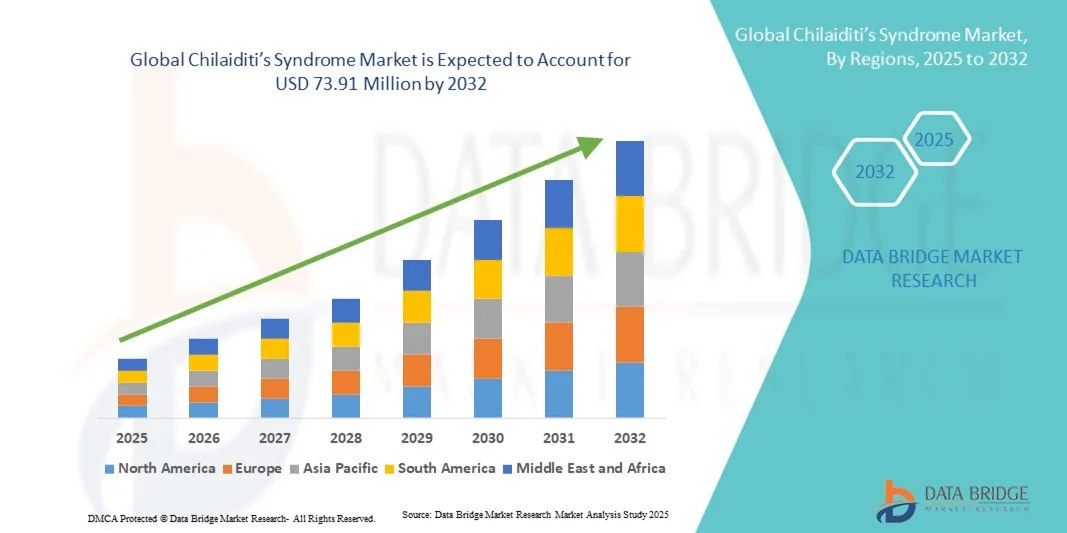
- The global Chilaiditi’s syndrome market size was valued at USD 49.23 million in 2024 and is expected to reach USD 73.91 million by 2032, at a CAGR of 5.21% during the forecast period
- The market growth is largely fueled by the growing adoption of advanced diagnostic imaging techniques and technological progress in gastrointestinal healthcare, leading to improved detection and management of Chilaiditi’s Syndrome in clinical settings
- Furthermore, rising patient awareness, coupled with increasing demand for minimally invasive and accurate diagnostic solutions, is establishing innovative imaging and endoscopic procedures as the preferred choice for clinicians. These converging factors are accelerating the uptake of Chilaiditi’s Syndrome solutions, thereby significantly boosting the industry's growth
Chilaiditi’s Syndrome Market Analysis
- Chilaiditi’s Syndrome, a rare condition characterized by the interposition of the colon between the liver and diaphragm, is gaining clinical attention due to advancements in diagnostic imaging and the need for timely intervention to prevent misdiagnosis and unnecessary surgical procedures
- The growing demand for accurate diagnostic methods in gastroenterology is primarily fueled by the increasing prevalence of gastrointestinal disorders, heightened awareness among healthcare providers, and advancements in radiological technologies such as CT and MRI scans
- North America dominated the Chilaiditi’s syndrome market with the largest revenue share of 38.7% in 2024, characterized by early adoption of advanced diagnostic technologies, high healthcare expenditure, and the presence of leading gastroenterology research centers. The U.S. experienced significant growth in Chilaiditi’s syndrome diagnoses and management, driven by innovative imaging solutions and clinical guidelines that emphasize early detection
- Asia-Pacific is expected to be the fastest growing region in the Chilaiditi’s syndrome market during the forecast period due to rapid healthcare infrastructure development, increasing awareness of rare gastrointestinal conditions, and rising disposable incomes in emerging economies
- The oral route dominated the Chilaiditi’s syndrome market with a market share of 49.2% in 2024, due to convenience, patient compliance, and widespread use of tablets and oral medications in conservative management
Report Scope and Chilaiditi’s Syndrome Market Segmentation
|
Attributes |
Chilaiditi’s Syndrome Key Market Insights |
|
Segments Covered |
|
|
Countries Covered |
North America
Europe
Asia-Pacific
Middle East and Africa
South America
|
|
Key Market Players |
|
|
Market Opportunities |
|
|
Value Added Data Infosets |
In addition to the insights on market scenarios such as market value, growth rate, segmentation, geographical coverage, and major players, the market reports curated by the Data Bridge Market Research also include in-depth expert analysis, pricing analysis, brand share analysis, consumer survey, demography analysis, supply chain analysis, value chain analysis, raw material/consumables overview, vendor selection criteria, PESTLE Analysis, Porter Analysis, and regulatory framework. |
Chilaiditi’s Syndrome Market Trends
Advancements in Diagnostic Imaging and Minimally Invasive Approaches
- A significant and accelerating trend in the global Chilaiditi’s syndrome market is the increasing use of advanced imaging modalities and minimally invasive techniques for both diagnosis and management. This progression is significantly enhancing diagnostic accuracy, reducing unnecessary surgical interventions, and improving patient outcomes
- For instance, the adoption of high-resolution CT scans and MRI has enabled clinicians to differentiate Chilaiditi’s Syndrome from life-threatening conditions such as pneumoperitoneum, reducing the chances of misdiagnosis and inappropriate surgery. Similarly, advanced imaging protocols provide greater anatomical clarity in identifying colonic interposition and related complications
- AI-enabled imaging software is beginning to play a role by highlighting subtle anatomical anomalies and alerting clinicians to unusual presentations, thereby enhancing decision support in emergency and gastroenterology settings
- Furthermore, laparoscopic colopexy and segmental resections are increasingly being preferred for severe or recurrent cases, as these procedures offer shorter recovery times, fewer complications, and better patient satisfaction compared to traditional open surgeries
- The integration of radiology, gastroenterology, and minimally invasive surgery is enabling a more unified approach to patient management. Multidisciplinary collaboration ensures timely intervention and improved outcomes for patients with symptomatic or complicated cases
- This trend toward more precise diagnostics, conservative management strategies, and minimally invasive surgical solutions is fundamentally reshaping expectations in Chilaiditi’s Syndrome care. Consequently, healthcare providers and medical device companies are focusing on innovations that emphasize safety, efficiency, and patient-centric outcomes
- The demand for advanced diagnostic tools and treatment solutions is growing rapidly across hospitals, diagnostic imaging centers, and specialty gastroenterology clinics, as both physicians and patients increasingly prioritize accuracy, safety, and effective long-term management
Chilaiditi’s Syndrome Market Dynamics
Driver
Growing Need Due to Rising Incidence and Improved Diagnostic Awareness
- The increasing prevalence of Chilaiditi’s Syndrome, coupled with growing awareness among healthcare professionals and the availability of advanced diagnostic imaging, is a major driver for the market
- For instance, in April 2024, a multi-center observational study in the U.S. reported a higher rate of incidental detection of Chilaiditi’s sign in abdominal imaging, highlighting the importance of accurate interpretation to prevent unnecessary surgical procedures. Such studies and awareness campaigns are expected to boost clinical adoption of advanced diagnostic solutions
- As physicians recognize the potential complications of the condition, including volvulus and bowel obstruction, the demand for reliable imaging and surgical solutions continues to rise. This represents a clear upgrade over traditional reliance on plain radiographs and limited clinical observations
- Furthermore, the shift toward non-invasive and precision-based diagnostic methods is making CT, MRI, and structured imaging protocols integral components of Chilaiditi’s Syndrome management
- The ability to confirm diagnosis accurately and to avoid mismanagement is a key factor driving adoption in tertiary care hospitals and specialty centers. The trend toward evidence-based practice and availability of affordable imaging services are further contributing to market growth
Restraint/Challenge
Concerns Regarding Misdiagnosis, Limited Awareness, and High Treatment Costs
- One of the most significant restraints in the Chilaiditi’s Syndrome market is the frequent misdiagnosis of the condition as other acute abdominal emergencies. This often leads to inappropriate exploratory surgeries and unnecessary patient risk
- For instance, multiple case reports have documented errors in emergency care settings where Chilaiditi’s Syndrome was mistaken for perforated viscus, resulting in avoidable surgical intervention
- Limited awareness of the condition among general practitioners and emergency physicians continues to be a barrier, particularly in regions with fewer gastroenterology specialists. In addition, the relatively high costs associated with advanced diagnostic imaging and laparoscopic surgery compared to conservative management can deter adoption in low-resource settings
- Although the costs of imaging and minimally invasive procedures are gradually decreasing, the perception of these being expensive options remains a hurdle, especially among patients with mild or incidental findings
- Overcoming these challenges will require greater emphasis on physician training, integration of clinical decision support tools, and the development of cost-effective diagnostic and surgical options. Enhancing awareness and accessibility will be critical to ensuring sustained market growth
Chilaiditi’s Syndrome Market Scope
The market is segmented on the basis of treatment, diagnosis, symptoms, dosage, route of administration, end-users, and distribution channel
- By Treatment
On the basis of treatment, the Chilaiditi’s Syndrome market is segmented into surgery, intravenous fluids, nasogastric bowel decompression, laxatives, enemas, and others. The surgery segment dominated the market with the largest revenue share of 39.6% in 2024, as surgical intervention is often required in severe or complicated cases where bowel obstruction, volvulus, or ischemia occurs. Surgery provides definitive treatment and long-term relief, reducing recurrence compared to conservative approaches. The increasing adoption of minimally invasive techniques, such as laparoscopic surgery, has further improved patient outcomes and reduced hospitalization time. Developed countries with advanced healthcare infrastructure continue to favor surgery due to accessibility and better surgical success rates. Rising awareness among gastroenterologists about early surgical intervention in complicated cases reinforces this segment’s dominance. In addition, the presence of highly skilled surgeons and specialized gastroenterology centers in North America and Europe contributes to the segment’s strong market share. Patient preference for permanent solutions and growing investments in surgical facilities further fuel market leadership. Strong clinical guidelines recommending surgery in select cases and increasing healthcare expenditure also play significant roles in maintaining the segment’s dominance.
The nasogastric bowel decompression segment is expected to witness the fastest CAGR of 8.7% from 2025 to 2032, as it is widely adopted in non-severe cases to relieve abdominal distension and pain. This conservative treatment is preferred for its non-invasive nature and cost-effectiveness, particularly in developing economies. Hospitals increasingly adopt nasogastric decompression before considering surgical intervention, supporting its rapid growth. Rising prevalence of mild to moderate cases and the need for early symptom management drive adoption. Advancements in tube design and patient comfort improvements also contribute to growth. Clinicians value this approach for quick relief, easy monitoring, and minimal side effects. Growing training programs and awareness initiatives in Asia-Pacific and Latin America are expected to accelerate adoption. Increasing hospital and outpatient use, along with enhanced guidelines for early management, ensure sustained CAGR growth.
- By Diagnosis
On the basis of diagnosis, the Chilaiditi’s Syndrome market is segmented into X-ray, computerized tomography (CT) scan, ultrasound, and others. The CT scan segment dominated the market with a share of 42.1% in 2024, due to its unmatched ability to accurately detect colonic interposition and rule out other abdominal conditions like pneumoperitoneum. CT scans provide detailed cross-sectional imaging, which is critical in differentiating complicated from uncomplicated cases. The widespread availability of advanced CT equipment in hospitals globally and the high adoption rate among radiologists support its dominance. Rising investments in hospital diagnostic infrastructure, particularly in North America and Europe, have enhanced access to CT scanning. Clinicians prefer CT scans for precise diagnosis, surgical planning, and monitoring of recurrence. Increasing awareness among healthcare professionals regarding early imaging also drives the segment. The segment benefits from technological advancements such as low-dose CT, which ensures patient safety while maintaining diagnostic accuracy. Strong reimbursement policies in developed markets further reinforce the segment’s lead. Training and certification programs for radiologists in advanced imaging contribute to increased utilization and market share.
The X-ray segment is expected to record the fastest CAGR of 7.9% from 2025 to 2032, as it remains the first-line diagnostic tool due to affordability, accessibility, and speed. X-rays are widely used in primary healthcare centers and emergency departments to provide immediate insights. The expansion of digital radiography enhances image quality, driving adoption in developing regions. Increasing awareness of Chilaiditi’s Syndrome among clinicians ensures timely use of X-ray imaging. The low cost, portability, and ease of use make it attractive for outpatient clinics and rural healthcare setups. Training programs and improved availability of X-ray equipment in Asia-Pacific and Latin America are expected to boost growth. Early-stage diagnosis using X-rays before CT confirmation supports patient management. Rising adoption in telemedicine and remote consultation settings further contributes to the CAGR growth of this segment.
- By Symptoms
On the basis of symptoms, the Chilaiditi’s Syndrome market is segmented into abdominal pain, constipation, abdominal swelling, nausea, vomiting, abnormal twisting of intestines, dyspepsia, dysphagia, and others. The abdominal pain segment held the largest revenue share of 33.4% in 2024, as it is the most commonly reported symptom prompting clinical evaluation. Abdominal pain often mimics other gastrointestinal disorders, making it a critical trigger for diagnostic imaging. Hospitals and gastroenterology clinics prioritize patients presenting with abdominal pain for CT scans or X-rays to prevent misdiagnosis. Increasing prevalence of gastrointestinal disorders worldwide supports high demand. Clinical awareness campaigns and improved physician training help identify abdominal pain caused by Chilaiditi’s Syndrome. The segment benefits from rising hospital visits and outpatient consultations related to acute and chronic abdominal pain. Technological advancements in imaging further enable accurate diagnosis in patients presenting with pain. The availability of multidisciplinary gastroenterology teams in developed regions ensures effective management. Patient education about the importance of early diagnosis reinforces this segment’s dominance.
The constipation segment is expected to grow at the fastest CAGR of 8.1% from 2025 to 2032, as chronic constipation is increasingly recognized as an early symptom of Chilaiditi’s Syndrome. Lifestyle factors such as sedentary habits, low fiber intake, and delayed bowel movements contribute to rising incidence. Growing awareness among healthcare providers encourages early investigation in constipation cases. Hospitals and clinics are adopting preventive management strategies using laxatives, enemas, and dietary interventions. The segment benefits from rising demand for outpatient care and home-based management solutions. Expansion of healthcare infrastructure in Asia-Pacific and Latin America supports access to treatment. Clinical studies highlighting the correlation between constipation and Chilaiditi’s Syndrome are driving attention. Early intervention and non-invasive management contribute to faster adoption. Online pharmacy availability of supportive therapies also boosts market growth.
- By Dosage
On the basis of dosage, the Chilaiditi’s Syndrome market is segmented into tablet, injection, and others. The tablet segment dominated the market with a revenue share of 46.5% in 2024, as oral medications such as laxatives and prokinetic drugs are most commonly prescribed. Tablets are preferred due to convenience, affordability, and ease of administration. High patient compliance and availability across retail and hospital pharmacies support dominance. Rising prevalence of mild to moderate cases managed conservatively further fuels demand. Tablets also allow for dosage flexibility and gradual symptom management, making them ideal for long-term treatment. Hospitals and clinics favor tablets for outpatient therapy, reducing the need for hospital stays. Regulatory approvals for new oral formulations and increased clinician familiarity enhance adoption. Digital healthcare platforms and home delivery services make tablets more accessible to patients. Pharmaceutical companies continue to innovate with tablet formulations, maintaining market share.
The injection segment is projected to grow at the fastest CAGR of 7.5% from 2025 to 2032, due to its use in emergency and acute care situations. Intravenous fluids, parenteral medications, and electrolyte balancing are critical in hospitals for patients presenting with severe dehydration or bowel complications. Adoption is increasing in tertiary hospitals and specialized gastroenterology centers. Advanced hospital infrastructure and growing clinical guidelines for IV therapy further support growth. Rising hospital visits, particularly in emerging economies, are fueling injection-based treatment demand. Availability of pre-filled and easy-to-administer injection formulations improves efficiency. Clinicians prefer injections for rapid symptom relief and critical care management. Expansion of healthcare services in Asia-Pacific and Latin America ensures continued growth. Government healthcare initiatives promoting hospital-based treatment also support CAGR expansion.
- By Route of Administration
On the basis of route of administration, the Chilaiditi’s Syndrome market is segmented into oral, intravenous, and others. The oral route accounted for the largest share of 49.2% in 2024, due to convenience, patient compliance, and widespread use of tablets and oral medications in conservative management. Oral administration allows outpatient treatment and reduces hospitalization requirements. Its dominance is supported by extensive availability in hospital and retail pharmacies. Oral therapy enables flexible dosing, gradual symptom relief, and easier long-term management. Rising awareness among patients and physicians of oral therapy benefits ensures consistent adoption. Availability of new formulations and improved patient adherence supports market share. Oral route usage is prevalent across developed and developing countries. Telemedicine and home care services further facilitate oral administration. Rising prevalence of mild cases manageable via oral therapy reinforces dominance. Strong insurance coverage and reimbursement policies for oral medications maintain leading market position.
The intravenous segment is expected to expand at the fastest CAGR of 8.3% from 2025 to 2032, driven by its necessity in emergency care for dehydration, bowel obstruction, and electrolyte imbalances. IV administration ensures rapid drug delivery and immediate symptom management. Hospitals increasingly rely on IV therapy for acute cases, supporting rapid adoption. Technological advances in IV delivery systems improve patient safety and efficiency. Clinicians prefer IV routes for critically ill patients or those unable to tolerate oral intake. Expansion of healthcare infrastructure in emerging economies is fueling growth. Training programs and awareness campaigns support proper administration. Increasing hospital-based treatments and advanced gastroenterology centers accelerate adoption. Home-based IV services for chronic patients also contribute to CAGR growth.
- By End-Users
On the basis of end-users, the Chilaiditi’s Syndrome market is segmented into clinics, hospitals, and others. The hospital segment dominated the market with a 57.6% share in 2024, as most diagnoses, imaging procedures, and surgical interventions occur in hospital settings. Hospitals provide access to advanced imaging, skilled surgeons, and multidisciplinary care teams. Availability of emergency care units ensures timely intervention. Rising healthcare expenditure and continuous upgrades in hospital infrastructure globally reinforce dominance. Hospitals are preferred for severe and complicated cases requiring surgery or intensive monitoring. High patient trust and strong insurance coverage support hospital utilization. Hospitals benefit from integrated electronic medical records for better patient management. Expansion of hospital networks in emerging markets enhances accessibility. The segment also benefits from ongoing training programs for healthcare professionals. Strong R&D investment in hospital-based gastroenterology centers contributes to market leadership.
The clinic segment is projected to record the fastest CAGR of 7.8% from 2025 to 2032, driven by growing outpatient visits for mild to moderate cases. Clinics provide accessible, cost-effective diagnostic and treatment options. Rising awareness among clinicians promotes early detection and management. Expansion of primary care facilities in Asia-Pacific and Latin America supports growth. Clinics increasingly adopt point-of-care imaging tools and conservative management techniques. Telemedicine integration enables remote monitoring and follow-ups. Clinics benefit from patient preference for non-hospital-based care. Outpatient treatment reduces burden on hospitals, boosting clinic adoption. Growing preventive healthcare trends support segment growth. Homecare collaborations with clinics further reinforce CAGR growth.
- By Distribution Channel
On the basis of distribution channel, the Chilaiditi’s Syndrome market is segmented into hospital pharmacy, retail pharmacy, and online pharmacy. The hospital pharmacy segment dominated with a revenue share of 44.9% in 2024, as most prescriptions and supportive care medications are dispensed within hospitals where patients are diagnosed and treated. Strong hospital infrastructure, immediate availability of drugs, and trusted supply chains reinforce dominance. Hospitals dispense medications for both inpatient and outpatient management. Integration with electronic health records enhances efficiency. Availability of specialized formulations in hospital pharmacies ensures proper treatment. Established relationships with gastroenterology departments support high adoption. Continuous hospital expansion globally maintains segment leadership. Training and awareness programs for hospital pharmacists improve compliance. High patient trust and convenience reinforce continued preference.
The online pharmacy segment is anticipated to grow at the fastest CAGR of 9.1% from 2025 to 2032, due to increasing digital adoption, convenience of home delivery, and rising patient preference for online ordering. COVID-19 accelerated reliance on online channels, a trend that continues. Expanding internet penetration in Asia-Pacific and other emerging markets fuels growth. Online pharmacies provide easy access to supportive therapies and chronic care medications. Integration with telemedicine platforms enables prescription fulfillment remotely. Digital payment adoption and secure delivery options enhance patient trust. Marketing campaigns and partnerships with healthcare providers expand reach. Availability of discounts and subscription services drives consumer adoption. Home delivery of medications for symptom management supports faster growth.
Chilaiditi’s Syndrome Market Regional Analysis
- North America dominated the Chilaiditi’s syndrome market with the largest revenue share of 38.7% in 2024, characterized by early adoption of advanced diagnostic technologies, high healthcare expenditure, and the presence of leading gastroenterology research centers
- The market experienced significant growth in chilaiditi’s syndrome diagnoses and management, driven by innovative imaging solutions, advanced minimally invasive procedures
- linical guidelines that emphasize early detection and accurate differentiation from similar abdominal conditions.
U.S. Chilaiditi’s Syndrome Market Insight
The U.S. Chilaiditi’s syndrome market captured the largest revenue share in 2024 within North America, fueled by the rapid adoption of advanced imaging technologies and increasing clinical awareness of rare gastrointestinal conditions. Hospitals and specialty clinics are focusing on early detection strategies and evidence-based management protocols, improving patient outcomes. In addition, the growing emphasis on minimally invasive interventions, such as laparoscopic colopexy, is contributing to market expansion. The availability of structured physician training programs and advanced imaging centers further strengthens the market in the U.S.
Europe Chilaiditi’s Syndrome Market Insight
The Europe Chilaiditi’s syndrome market is projected to expand at a substantial CAGR throughout the forecast period, primarily driven by rising awareness of rare gastrointestinal disorders, increasing hospital infrastructure, and adoption of modern diagnostic technologies. Urbanization and the expansion of specialty gastroenterology centers are fostering improved detection and management of Chilaiditi’s Syndrome. European healthcare providers are increasingly focusing on conservative management and minimally invasive surgical solutions, ensuring improved patient safety and outcomes.
U.K. Chilaiditi’s Syndrome Market Insight
The U.K. Chilaiditi’s syndrome market is anticipated to grow at a noteworthy CAGR during the forecast period, supported by heightened clinical awareness and improved access to advanced imaging modalities. Early and accurate diagnosis is becoming a priority among gastroenterologists and radiologists, while healthcare initiatives emphasize patient safety and risk reduction. The presence of specialized medical institutions and comprehensive treatment guidelines is expected to further drive market growth.
Germany Chilaiditi’s Syndrome Market Insight
The Germany Chilaiditi’s syndrome market is expected to expand at a considerable CAGR during the forecast period, fueled by increased healthcare expenditure, robust clinical research, and rising awareness of gastrointestinal conditions. Germany’s well-developed medical infrastructure, coupled with an emphasis on advanced diagnostic technologies and minimally invasive surgical solutions, is promoting the adoption of evidence-based management protocols. The focus on improving patient outcomes and reducing surgical complications aligns with local healthcare priorities.
Asia-Pacific Chilaiditi’s Syndrome Market Insight
The Asia-Pacific Chilaiditi’s syndrome market is poised to grow at the fastest CAGR during the forecast period, driven by rapid healthcare infrastructure development, increasing awareness of rare gastrointestinal conditions, and rising disposable incomes in emerging economies such as China, Japan, and India. Growing investments in advanced imaging technologies, expanding hospital networks, and clinical research initiatives are supporting improved diagnosis and management. In addition, increasing patient awareness and access to minimally invasive treatment options are contributing to market expansion in the region.
Japan Chilaiditi’s Syndrome Market Insight
The Japan Chilaiditi’s syndrome market is gaining momentum due to high standards of healthcare, rapid urbanization, and advanced diagnostic infrastructure. Early detection and precise management of Chilaiditi’s Syndrome are emphasized in both public and private healthcare sectors. Minimally invasive surgical procedures and structured clinical guidelines are supporting better patient outcomes, particularly among the aging population that may require safer and easier-to-manage interventions.
China Chilaiditi’s Syndrome Market Insight
The China Chilaiditi’s syndrome market accounted for the largest market revenue share in Asia-Pacific in 2024, attributed to increasing healthcare awareness, rapid urbanization, and the expanding middle-class population. Advanced imaging adoption and growing specialty gastroenterology services are enabling timely diagnosis and appropriate management of Chilaiditi’s Syndrome. Furthermore, ongoing healthcare infrastructure development and the establishment of specialized centers are key factors driving the market’s growth in China.
Chilaiditi’s Syndrome Market Share
The Chilaiditi’s Syndrome industry is primarily led by well-established companies, including:
- Dr. Reddy’s Laboratories Ltd. (India)
- Sanofi (France)
- Sun Pharmaceutical Industries Ltd. (India)
- Cipla Inc. (India)
- Fresenius Kabi AG (Germany)
- Hikma Pharmaceuticals PLC (U.K.)
- RECORDATI S.p.A. (Italy)
- L.N.K. International Inc. (India)
- Torrent Pharmaceuticals Ltd. (India)
- BIOCHEMIX HEALTHCARE PVT. LTD. (India)
Latest Developments in Global Chilaiditi’s Syndrome Market
- In July 2025, a comprehensive study titled "Development of Chilaiditi Syndrome" was published in the Journal of General Internal Medicine. This study provided an in-depth analysis of the pathophysiology, clinical presentation, and management strategies for Chilaiditi Syndrome, contributing significantly to the medical community's understanding of this rare condition
- In September 2025, a case report was published in F1000Research highlighting the diagnostic challenges of Chilaiditi Syndrome in emergency settings. The report emphasized the importance of distinguishing between Chilaiditi Syndrome and pneumoperitoneum to prevent unnecessary surgical interventions
- In April 2025, a case report published in Cureus described an overlooked case of abdominal pain and bowel dysfunction due to Chilaiditi Syndrome. The report underscored the need for heightened awareness among clinicians to accurately diagnose and manage this condition, particularly in elderly patients
- In February 2025, a diagnostic case study published in Cureus detailed the clinical presentation and management of a patient with Chilaiditi Syndrome. The study highlighted the role of imaging techniques in confirming the diagnosis and the effectiveness of conservative management strategies
- In December 2024, a surgical case review published by the American College of Surgeons discussed the management of Chilaiditi Syndrome complicated by gastric outlet obstruction due to hepatic hypermobility. The review provided insights into surgical interventions and the importance of individualized treatment plans for patients with this rare condition

- Interactive Data Analysis Dashboard
- Company Analysis Dashboard for high growth potential opportunities
- Research Analyst Access for customization & queries
- Competitor Analysis with Interactive dashboard
- Latest News, Updates & Trend analysis
- Harness the Power of Benchmark Analysis for Comprehensive Competitor Tracking
Data collection and base year analysis are done using data collection modules with large sample sizes. The stage includes obtaining market information or related data through various sources and strategies. It includes examining and planning all the data acquired from the past in advance. It likewise envelops the examination of information inconsistencies seen across different information sources. The market data is analysed and estimated using market statistical and coherent models. Also, market share analysis and key trend analysis are the major success factors in the market report. To know more, please request an analyst call or drop down your inquiry.
The key research methodology used by DBMR research team is data triangulation which involves data mining, analysis of the impact of data variables on the market and primary (industry expert) validation. Data models include Vendor Positioning Grid, Market Time Line Analysis, Market Overview and Guide, Company Positioning Grid, Patent Analysis, Pricing Analysis, Company Market Share Analysis, Standards of Measurement, Global versus Regional and Vendor Share Analysis. To know more about the research methodology, drop in an inquiry to speak to our industry experts.
Data Bridge Market Research is a leader in advanced formative research. We take pride in servicing our existing and new customers with data and analysis that match and suits their goal. The report can be customized to include price trend analysis of target brands understanding the market for additional countries (ask for the list of countries), clinical trial results data, literature review, refurbished market and product base analysis. Market analysis of target competitors can be analyzed from technology-based analysis to market portfolio strategies. We can add as many competitors that you require data about in the format and data style you are looking for. Our team of analysts can also provide you data in crude raw excel files pivot tables (Fact book) or can assist you in creating presentations from the data sets available in the report.












